


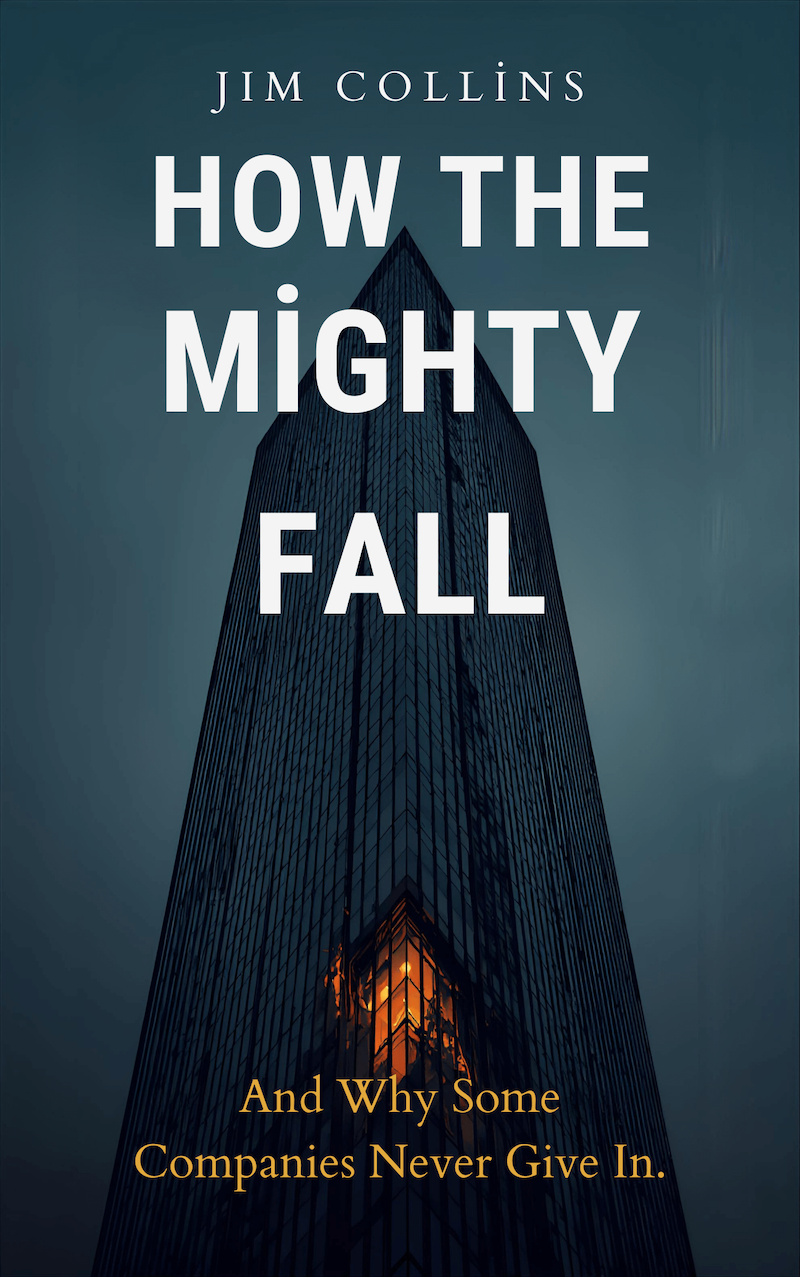
How the Mighty Fall Book Summary
This How the Mighty Fall Book Summary covers the key ideas, lessons, and takeaways in about 20 minutes.
Collins’s practical message is that long-term survival comes from the opposite behaviors: humility instead of arrogance, focused strength instead of scattered expansion, clear-eyed truth instead of wishful interpretation, disciplined action instead of frantic pivots, and resilience-building instead of high-stakes gambles. Turnarounds don’t require magic. They require adults in key seats, a return to the company’s true strengths, and a calm commitment to doing the basics well for long enough that momentum returns.
Helps with these goals
Want the complete 20-minute summary?
- Full structured summary
- Video Summary
- Podcast Summary
- Audio summary
- Key takeaways
- Exercises
- Quiz
- Highlights and notes
- Ask the book with AI
What is in the How the Mighty Fall book summary?
Below is a preview of Sumizeit’s expert-written summary of How the Mighty Fall by Jim Collins. The full summary covers the book’s key ideas in text, audio, and video.
Jim Collins wrote How the Mighty Fall to answer a brutal question: How do organizations that once looked unstoppable end up fading into irrelevance—or vanishing entirely?
Rather than spotlighting best practices from winners, he flips the lens and studies breakdown. His claim is simple: if you understand how decline actually happens, you’re more likely to spot the early drift in your own company and interrupt it before it becomes a free fall. The research he describes compares companies in the same industry, looking for patterns shared by the ones that deteriorated versus the ones that held steady. He’s careful to say this approach shows patterns that line up with failure—signals and correlations—more than it “proves” a single cause. Still, he argues the sequence is common enough to be useful as an early-warning system.
Collins’s tone isn’t just doom-and-gloom. The book is meant to be both a warning for organizations that have gotten comfortable and a rallying cry for those already sliding: decline isn’t fate, and you can fight your way back—if you recognize what stage you’re in and respond with discipline instead of drama.
The Central Idea: Companies Usually Don’t Die Suddenly
A key theme is that collapse rarely arrives like a lightning strike. It more often resembles erosion. A decision here, a cultural shift there, a missed signal, a risky bet, a frantic pivot—until the organization can’t explain what it stands for, can’t generate consistent results, and can’t fund its own recovery.
To make that slow unraveling visible, Collins outlines five phases that frequently show up in corporate decline:
Overconfidence
Overreaching
Ignoring or misreading warning signs
Overcorrecting
Surrendering
He also notes two important nuances: companies don’t always pass through every stage, and the stages don’t always appear in perfect order. But knowing the “usual suspects” helps leaders detect trouble earlier than they otherwise would.
Phase 1: Overconfidence That Quietly Turns Into Arrogance
Decline often begins right after success—when a company starts believing its own hype.
In this first phase, leaders stop treating success as something fragile that must be re-earned. Instead, they behave as if success is now a permanent property of the organization, like a brand tattoo that can’t be removed. The organization’s identity shifts from “we work hard to win” to “we’re the kind of company that wins.” That shift sounds subtle, but Collins treats it as dangerous because it changes how people interpret feedback, risk, and reality.
He describes two common ways this phase appears:
1) The organization becomes cocky and starts acting invincible.
The company begins making big moves with a casual confidence, as if normal rules no longer apply. Leaders dismiss threats, assume customers will stay loyal no matter what, and treat competitors as annoyances instead of legitimate dangers. In Collins’s examples, this arrogance shows up as strategic stubbornness: leaders cling to a path because “we’ve always been right before.”
2) The organization loses respect for the engine that made it great. Collins uses the idea of a company’s core momentum driver —the central…
Want the complete 20-minute summary?
- Full structured summary
- Video Summary
- Podcast Summary
- Audio summary
- Key takeaways
- Exercises
- Quiz
- Highlights and notes
- Ask the book with AI
Who should read How the Mighty Fall ?
How the Mighty Fall is essential for leaders, board members, and entrepreneurs who want to understand the warning signs of organizational decline before crisis hits. Whether you run a successful company that feels invulnerable or manage a struggling organization, this book helps you spot the patterns that precede collapse and take action while you still have options.
Why does How the Mighty Fall matter?
Most business books celebrate winners; Jim Collins flips that lens to study failure. By understanding how decline actually unfolds—often slowly and invisibly—organizations can interrupt the pattern before it becomes irreversible. In today's fast-changing business environment, what looked unstoppable yesterday can fade quickly, making early detection a competitive advantage.
What are the key themes in How the Mighty Fall ?
- Decline is usually a sequence of choices, not a sudden crisis
- Success breeds overconfidence and arrogance
- Growth pursued without discipline destroys organizational strength
- Warning signs are often denied or reinterpreted
- Panic-driven turnaround attempts usually fail
- Recovery requires disciplined fundamentals, not dramatic rescue
What are the key lessons from the How the Mighty Fall book summary?
Success is fragile, not permanent
Organizations that believe past wins guarantee future wins stop fighting to earn success, shifting from earned achievement to entitled complacency. This mindset change opens the door to all the phases of decline.
Respect your core business engine
Companies often neglect the central system that made them great while chasing shiny new ventures. Sustainable growth builds outward from proven strength, not into unrelated fields where you lack durable advantage.
Growth without discipline is destruction
Expansion for its own sake—more revenue, more locations, more acquisitions—stretches people, culture, and cash thin. Growth is only healthy when it reinforces operational excellence, not when it replaces it with chaos.
Warning signs appear long before crisis
Slipping performance, weakening loyalty, margin pressure, and strategic confusion send signals early. Leaders who notice and act on these signs can course-correct; those who ignore them face exponential damage.
Leaders naturally blame external forces
When results deteriorate, it's tempting to point outward—economy, competition, market shifts. While external pressures are real, focusing only on them prevents the honest diagnosis of internal choices that matter.
Denial triggers desperate, high-stakes bets
When leaders won't face the real problem, they often swing for a miracle—a make-or-break product, acquisition, or pivot. These bets frequently cripple the company if they fail because the underlying issues remain unfixed.
Reorganizations don't fix root problems
Shuffling the org chart creates an appearance of action without addressing why performance is falling. The company gets exhausted and cynical from constant reshuffling while real issues persist.
Outsider saviors rarely understand your culture
Hiring a celebrity CEO or famous consultant during crisis can backfire if they lack deep understanding of your core identity and operating system. Bold visions that don't fit reality are costly distractions.
Reinvention theater wastes critical resources
Announcing 'we're a new company now' without repairing underlying talent, cost structure, and customer value distracts from unglamorous rebuilding work that actually drives recovery.
Panic produces reactive lurching
Organizations that swing from grand plan to grand plan send the signal that nobody knows what works. Employees lose clarity about identity, strategy, and what matters, and confusion becomes the culture.
Phase 4 improvements often mask Phase 5 outcomes
A new CEO or big acquisition can create temporary momentum that masks unrepaired systems. When the bounce fades, the company is worse off—it burned resources and lost credibility on failed fixes.
Financial reserves buffer long recovery
High-risk bets and constant change burn cash, eliminating the buffer needed for steady rebuilding. Without runway, organizations lose the time required to restore discipline and rebuild strength.
Turnaround requires the right people first
Recovery starts by placing people who share your values and operate with real responsibility in key roles. You can't install values into people who don't already embody them; they need genuine alignment.
Accountability drives self-management
Adults who own results, admit mistakes, and self-direct require less supervision. In a turnaround, you need capable people who carry weight without constant oversight, freeing leadership for strategy.
Risk calibration beats high-stakes gambling
Test ideas in smaller ways before committing massive resources. Never take a bet that can sink the company if it fails; build recovery from sensible steps stacked consistently over time.
Coherence beats scattered ambition
Focusing resources where you have proven capability, customer credibility, and economic advantage generates momentum faster than chasing multiple new directions simultaneously.
Vigilance never ends, even when things go well
The threat of decline never fully disappears. Organizations that last treat success as something to protect through constant attention, not something to celebrate and then assume is permanent.
Discipline and calm beat emotion and motion
Both strong companies and struggling ones need disciplined decision-making: resisting emotional swings, refusing catastrophic bets, and building resilience to absorb shocks over time.
Decline is often a series of small, invisible choices
The moment leaders stop listening, the moment growth becomes more important than strength, and the moment warning signs are explained away are all turning points—caught early, they're recoverable.
Recovery is slow, not flashy
There is no miracle cure for decline. Reversal is built on fundamentals—right people, return to core strength, and disciplined execution—stacked consistently over time without theater or shortcuts.
Want the complete 20-minute summary?
- Full structured summary
- Video Summary
- Podcast Summary
- Audio summary
- Key takeaways
- Exercises
- Quiz
- Highlights and notes
- Ask the book with AI
How can you apply ideas from How the Mighty Fall ?
- Schedule regular reality checks where leaders explicitly examine early warning signs (performance metrics, customer feedback, employee turnover) without spinning the data optimistically
- Define your core business engine clearly and audit annually whether resources and attention match your stated priorities—look for drift toward attractive but unrelated ventures
- Build leadership depth by developing internal talent aligned with your values, reducing dependency on outside saviors during crisis and creating a bench for succession
- Test strategic bets in controlled, smaller-scale versions before committing massive resources; never make a single bet that could cripple the company if it fails
- Establish decision discipline by requiring business cases for major initiatives that clarify how new moves reinforce (not distract from) your core strength and competitive advantage
- Create psychological safety for employees to flag problems without fear of punishment, ensuring early warning signals reach leadership instead of getting buried
- Develop a post-victory routine where leaders explicitly reset from 'we won' mindset to 'we must re-earn this' mindset, protecting against the arrogance that spawns Phase 1
What common mistakes do readers make with How the Mighty Fall ?
- Assuming that past success predicts future performance, leading to overconfidence in strategic choices and dismissal of competitive threats as manageable
- Chasing growth for its own sake instead of growth that builds outward from proven strengths, stretching the organization beyond its operational and cultural capacity
- Explaining away warning signs as temporary external pressures rather than conducting honest diagnosis of internal problems, delaying recovery until crisis forces action
- Betting the company on dramatic turnarounds—celebrity hires, sweeping reorganizations, or transformational acquisitions—while ignoring the unglamorous fundamentals that actually drive recovery
Sumizeit Exercises Apply what you've learned
Turn ideas from How the Mighty Fall into action with a short guided reflection: identify the biggest takeaway, connect it to your life, and commit to one step you can take in the next 24 hours.
What is the expert analysis of How the Mighty Fall ?
Overview
How the Mighty Fall is a significant contribution to the literature on organizational dynamics and corporate longevity, authored by Jim Collins, a renowned business researcher and bestselling author. Collins is widely respected for his empirical approach to understanding what differentiates enduring companies from those that falter. This book stands out by shifting focus from success stories to the anatomy of decline, offering a rare and sobering examination of how once-mighty organizations unravel. Published in 2009, it complements Collins’s earlier works by providing a diagnostic framework that is both cautionary and actionable for leaders intent on sustaining long-term success.
Core Thesis
Collins’s central argument is that corporate collapse is rarely sudden or accidental; rather, it follows a predictable, progressive pattern marked by five distinct phases: overconfidence, overreaching, denial, overcorrecting, and surrender. These stages reveal a gradual erosion of organizational health, often beginning with a subtle shift in mindset—where past success breeds arrogance and complacency—and culminating in a loss of purpose and capability. By identifying these phases, Collins contends that leaders can detect early warning signs and intervene before decline becomes irreversible. Moreover, recovery is possible but requires disciplined, grounded action focused on core strengths, accountability, and steady execution rather than dramatic, high-risk gambits.
Strengths
- Empirical and Pattern-Based Insight: Collins’s methodical comparison of companies within the same industries lends credibility to the identification of common decline patterns, providing a practical early-warning system rather than abstract theorizing.
- Nuanced Understanding of Decline: The book avoids simplistic cause-effect narratives, acknowledging that companies may skip stages or experience them out of order, which reflects the complexity of organizational realities.
- Actionable Framework: The five-phase model is accessible and memorable, enabling leaders to diagnose their organization’s health and tailor interventions accordingly.
- Balanced Tone: Rather than fatalism, Collins offers a hopeful message that decline is not destiny, emphasizing disciplined recovery over dramatic fixes.
- Focus on Culture and Leadership: The emphasis on values alignment, leadership bench strength, and disciplined decision-making underscores the human and cultural dimensions of organizational resilience.
Critiques & Counterarguments
- Correlation vs. Causation: While Collins is careful to frame his findings as patterns rather than proven causes, critics may argue that the book underplays the complexity of external market forces and systemic shocks that can precipitate decline independently of internal missteps.
- Overemphasis on Leadership Agency: The model presumes that leaders have sufficient control and foresight to arrest decline, which may not hold in volatile industries or highly regulated environments where external constraints dominate.
- Potential Oversimplification: The five-phase sequence, while elegant, risks glossing over the multifaceted and sometimes nonlinear nature of organizational failure, where multiple factors interact dynamically over time.
- Limited Engagement with Alternative Theories: Competing perspectives from complexity science or ecological models of organizations suggest that decline can be emergent and unpredictable, challenging the linear progression Collins proposes.
- Examples and Context: Some case studies may feel dated or culturally specific, limiting the universal applicability of the framework in rapidly evolving global markets or startup ecosystems.
Who Should Read This
How the Mighty Fall is essential reading for senior executives, board members, and organizational leaders who seek a sober, research-backed understanding of decline and recovery. It is equally valuable for business strategists, consultants, and scholars interested in organizational behavior, corporate governance, and turnaround management. The book’s insights also resonate with leaders in nonprofit and public sectors where institutional longevity is critical. Readers looking for a pragmatic guide to diagnosing organizational health and fostering resilience will find Collins’s disciplined, no-nonsense approach both enlightening and applicable.
Frequently asked questions about the How the Mighty Fall book summary
What is How the Mighty Fall about?
How the Mighty Fall by Jim Collins examines why successful organizations decline and eventually fail. Rather than studying what makes companies great, Collins analyzes the recognizable sequence of choices and behaviors that leads to collapse—from overconfidence and reckless growth through denial and desperate gambles—and explains how organizations can interrupt this pattern and recover through disciplined fundamentals.
Who should read How the Mighty Fall?
Leaders, board members, entrepreneurs, and managers of any organization worried about complacency or decline should read this book. It's especially valuable for successful companies that feel invulnerable, as it reveals how decline often begins right after a win. Anyone navigating organizational turnaround will also find its framework and recovery playbook directly applicable.
What are the main takeaways from How the Mighty Fall?
The main takeaways are: (1) decline follows a predictable five-phase pattern—overconfidence, overreaching, denial of warning signs, overcorrecting, and surrender; (2) early warning signs are usually ignored or reinterpreted; (3) recovery requires disciplined fundamentals like right people, return to core strength, and calm execution—not dramatic rescue attempts; and (4) organizations must maintain vigilance even during success to prevent the slide.
What are the five phases of decline Jim Collins describes?
The five phases are: Phase 1—Overconfidence (success breeds arrogance); Phase 2—Overreaching (reckless growth without discipline); Phase 3—Denial (ignoring or misreading warning signs); Phase 4—Overcorrecting (panicked lurching toward saviors or reinvention); and Phase 5—Surrender (giving up or running out of resources). Organizations don't always pass through every phase, and they may not always appear in perfect order.
How can organizations avoid the decline pattern described in How the Mighty Fall?
Organizations can avoid decline by treating success as something fragile that must be re-earned, focusing growth outward from core strength rather than scattered expansion, creating psychological safety to surface warning signs early, placing the right people in key roles, and maintaining disciplined decision-making even during good times. The key is recognizing that decline is usually a series of small choices, each caught early, rather than an unavoidable crisis.
Does How the Mighty Fall offer solutions for companies already in decline?
Yes. Collins provides a comeback playbook focused on three commitments: (1) putting the right people—especially those aligned with organizational values—in key roles; (2) returning focus to the core business where the company has proven strength and customer credibility; and (3) rebuilding discipline through calm evaluation, controlled risk-taking, and consistent execution over time. Recovery is slow and unglamorous, not flashy, but it works.
Why does Jim Collins focus on decline instead of success like in his other books?
Collins argues that understanding how failure happens—and recognizing the early warning signs—is more useful than studying winners. If you can spot the patterns of decline in your own organization, you can interrupt the slide before it becomes irreversible. This preventive lens helps leaders act while they still have options and resources, rather than waiting until crisis forces desperate measures.
About Sumizeit
Sumizeit is a profitable Scomy LLC company based in Miami, Florida. It has been helping readers learn from nonfiction books for 7 years with expert-written summaries in text, audio, podcast, and video.
Want the complete 20-minute summary?
- Full structured summary
- Video Summary
- Podcast Summary
- Audio summary
- Key takeaways
- Exercises
- Quiz
- Highlights and notes
- Ask the book with AI
Here's why readers love Sumizeit
Join thousands of learners getting smarter every day
"Great experience. Detailed summaries. Loved the gamification feature. Makes learning fun. Good customer service. I recommend Sumizeit to anyone. You'll learn a lot."
"I always felt busy but still wanting to keep up with the book discussion in my friend group. This was a great supplement to help me keep reading the books I find fun while keeping up with important books."
"I love this website. Instead of scrolling social media, I find myself learning a lot. I use it everyday. I recommend this app for anyone who is too busy and wants to get up to speed with their favorite books."
How the Mighty Fall Book Summary PDF
Looking for a How the Mighty Fall Book Summary PDF you can save and revisit offline? Our How the Mighty Fall Book Summary PDF captures the book’s core ideas in a clean, printable format — the key frameworks, takeaways, and structure without the fluff. Download the How the Mighty Fall Book Summary PDF when you want a reference you can annotate, share with your team, or review on the go. Get your How the Mighty Fall Book Summary PDF from the download page below.
Download How the Mighty Fall Book Summary PDFPeople also liked these summaries
Readers who explored How the Mighty Fall often enjoyed these titles next.




Want the complete 20-minute summary?
- Full structured summary
- Video Summary
- Podcast Summary
- Audio summary
- Key takeaways
- Exercises
- Quiz
- Highlights and notes
- Ask the book with AI
Featured Book Titles
Popular Book Summaries at sumizeit, leading book summary app
