


As an Amazon Associate, Sumizeit earns from qualifying purchases.
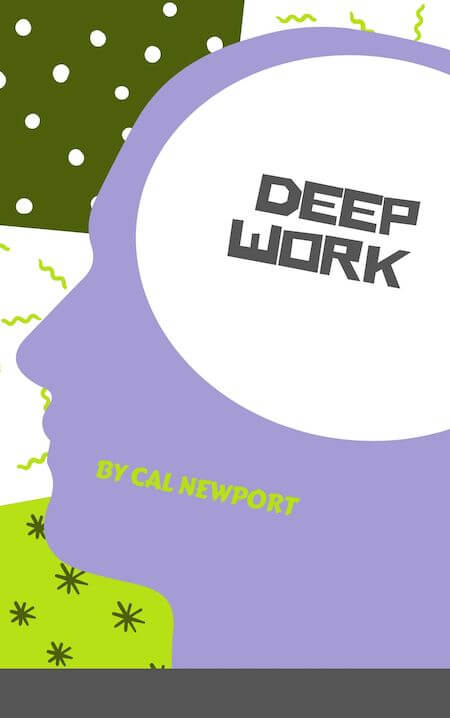
Deep Work Book Summary
This Deep Work Book Summary covers the key ideas, lessons, and takeaways in about 20 minutes.
Helps with these goals
Want the complete 20-minute summary?
- Full structured summary
- Video Summary
- Podcast Summary
- Audio summary
- Key takeaways
- Exercises
- Quiz
- Highlights and notes
- Ask the book with AI
What is in the Deep Work book summary?
Below is a preview of Sumizeit’s expert-written summary of Deep Work by Cal Newport. The full summary covers the book’s key ideas in text, audio, and video.
Deep Works--Rules for Focused Success in a Distracted World examines the cognitive demands of productivity in an environment where technology is pulling us in many directions at once. Newport emphasizes the necessity of tuning out the ‘noise’ in order to focus deeply, an ability that is becoming increasingly rare in a society of constant multi-tasking. Through specific, action-based examples, Newport introduces readers to new strategies for engaging in deep work, ones that encourage high-level performance in a significantly shortened time frame.
An Argument Against Multitasking:
In the ten minutes, you spend reading this summary, count how many notifications you receive, whether that is emails, text messages, comments on Facebook, or likes on Instagram. Chances are, your total number of ‘interruptions’ will exceed ten. In recent years, it has become commonplace to be bombarded with notifications nearly every minute throughout the course of a day.
How can any of us be expected to focus on a single task when multiple outlets are vying for our attention all at once?
In Deep Works--Rules for Focused Success in a Distracted World, Cal Newport differentiates between two key forms of productivity: deep work and shallow work.
Shallow work primarily refers to administrative tasks that do not require a high level of critical thinking, such as checking your email, performing routine data entry, and filling out paperwork. Deep work, on the other hand, refers to a mentally stimulating, challenging task.
While shallow work can often be successfully completed while multi-tasking, deep work is negatively impacted by distractions that take-away from the overall result.
So, as you simultaneously balance your coffee mug, a toddler, and this article on your lap, you may wonder: how do we fix this?
First, adjust your perception of your productivity level.
A 2012 study from the consulting firm McKinsey discovered that the average employee spends more than 60 percent of his or her working hours using online social tools and only about 30 percent of their time is dedicated to job-related tasks.
And yet, workers feel that they are now working more than ever. Why?
In reality, more time is being spent on each task, because employees are taking more frequent breaks and distracting themselves with online and social content. Distraction is the antithesis to productivity.
Second, productivity is maximized when you focus on completing a single task from start to finish and minimizing distractions.
Consider the following experiment with Group A and Group B. Group A was asked to complete several word puzzles. Shortly after starting, participants in this group were interrupted and told that they needed to review resumes and make faux hiring decisions instead. Group B, whose participants had also been completing puzzles, was able to finish working on the current charge before moving on to the second task.
In between the two tasks, researcher Sophie Leroy from the University of Minnesota, tested each group to see how many words from the puzzles (Task 1) they could remember.
Group A had been much more focused on the puzzle,…
Want the complete 20-minute summary?
- Full structured summary
- Video Summary
- Podcast Summary
- Audio summary
- Key takeaways
- Exercises
- Quiz
- Highlights and notes
- Ask the book with AI
Who should read Deep Work?
Deep Work is for professionals, students, and knowledge workers who struggle with constant distractions and want to maximize their productivity. If you find yourself multitasking throughout the day, constantly checking notifications, or feeling busy yet unproductive, this book offers concrete strategies to reclaim focus. It's especially valuable for anyone seeking to produce higher-quality work in less time.
Why does Deep Work matter?
In an era of relentless digital interruptions and shallow engagement, Deep Work by Cal Newport addresses a critical problem: our ability to concentrate on meaningful tasks is disappearing just when complex, valuable work demands it most. The book reveals that productivity isn't about working longer hours but about training your mind to engage deeply with difficult problems. As technology continues to fragment our attention, Newport's strategies become essential for anyone wanting to remain competitive and fulfilled in their work.
What are the key themes in Deep Work?
- The distinction between deep work and shallow work
- How multitasking sabotages productivity and quality
- Creating intentional routines and structures for focus
- Managing technology and social media deliberately
- Protecting mental energy and avoiding burnout
What are the key lessons from the Deep Work book summary?
Deep Work vs. Shallow Work
Deep work involves cognitively demanding tasks that require full attention and produce significant value, while shallow work consists of administrative tasks that can be done on autopilot. Understanding this distinction helps you allocate your best mental energy where it matters most.
Interruptions Create Cognitive Residue
When you switch tasks mid-project, your mind continues processing the abandoned task, reducing your effectiveness on the new one. Completing one task before moving to another preserves both the quality of your work and your ability to focus.
Productivity Doesn't Happen by Accident
Achieving deep work requires intentional strategies, routines, and training—not motivation or willpower alone. A strong work ethic is a skill that can be developed through consistent practice.
The Monastic Approach to Focus
This strategy involves secluding yourself completely from distractions by eliminating access to the internet, phones, and interruptions for designated periods. It's the most restrictive but often the most effective approach for deep work.
The Bimodal Approach
Designate specific blocks of time (like 8 AM to 4 PM) for focused, undistracted work, then keep the rest of your day free. This approach works well for those who need flexibility but can afford large uninterrupted time blocks.
The Rhythmic Approach
Break your workday into shorter focused periods of 30 to 90 minutes separated by breaks, then track your accomplishments on a calendar. This method builds sustainable habits through consistent, manageable work chunks.
The Journalistic Approach
Map out your day in advance, identifying where deep work fits in and capturing unexpected free time when it appears. This requires mental discipline and planning but maximizes flexibility within structure.
Environmental Control Matters
Your physical location directly impacts your ability to concentrate—changing your workspace to a library, coffee shop, or hotel room can dramatically reduce distractions. Even small environmental adjustments signal to your brain that focus is expected.
Disconnecting is Essential
Turning off notifications, disabling internet access, silencing your phone, and using website blockers are practical ways to eliminate temptation. Physical and digital barriers protect your attention from constant interruptions.
Self-Care Sustains Deep Work
Exercise, proper nutrition, hydration, and caffeine support your brain's ability to sustain focus over long periods. Neglecting basic needs undermines your capacity for deep work, no matter how disciplined you are.
Our Brains Are Wired for Distraction
From an evolutionary perspective, we're drawn to novelty and stimulation because they often signal opportunity or risk. Understanding this biological tendency helps you recognize why distraction feels natural and why intentional strategies are necessary.
Productive Meditation Rewires Your Brain
Transform idle moments—waiting in line, commuting, exercising—into focused thinking sessions by directing your mind to solve specific problems. This practice strengthens your attention muscles while making productive use of downtime.
Social Media Deserves a Trial Elimination
Rather than quitting cold turkey, Newport recommends a 30-day social media cleanse to objectively assess whether it genuinely enhances your life. Most people discover they don't miss it as much as they feared.
Work-Life Boundaries Protect Mental Recovery
Leaving work at the office—literally and mentally—allows your mind to fully disengage and recover, which is essential for sustained productivity. Blurring personal and professional time prevents the mental restoration your brain requires.
Time Blocking Creates Accountability
Scheduling your day in 30-minute increments forces awareness of how you actually spend time and reveals where hours disappear. This practice alone often eliminates mindless phone scrolling and aimless internet browsing.
Our Post-Work Routines Drain Energy
Passive evening habits like watching TV and scrolling social media create a false sense of rest while leaving you physically and emotionally exhausted. Intentional leisure activities that genuinely revitalize are more restorative than surface-level digital consumption.
Scheduling Protects Deep Work from Erosion
Without a plan, shallow work expands to fill available time, crowding out deep work opportunities. Explicitly blocking time for your most important tasks ensures they get protected from constant low-level demands.
Flexibility Within Structure Works Best
Your schedule doesn't need to be rigid, but it should reflect your priorities and guide decision-making throughout the day. The goal is awareness of how time is allocated, not inflexible adherence to a predetermined plan.
Want the complete 20-minute summary?
- Full structured summary
- Video Summary
- Podcast Summary
- Audio summary
- Key takeaways
- Exercises
- Quiz
- Highlights and notes
- Ask the book with AI
How can you apply ideas from Deep Work?
- Disable email and message notifications during designated deep work hours to eliminate constant interruptions
- Block off your calendar in 90-minute focus sessions followed by 15-minute breaks, treating deep work time as non-negotiable meetings
- Choose a single focus strategy (monastic, bimodal, rhythmic, or journalistic) and commit to it for at least two weeks before evaluating effectiveness
- Conduct a 30-day social media elimination and journal whether your productivity, mood, and relationships genuinely suffered without it
- Use productive meditation during commutes, workouts, or waiting periods by directing your mind to solve specific work challenges
- Create a physical or digital boundary—a 'do not disturb' sign, a separate room, or an app—that signals to others and yourself that deep work is happening
- Schedule your evening and weekend activities around genuine restoration: time with loved ones, exercise, hobbies, and technology-free time rather than passive screen consumption
What common mistakes do readers make with Deep Work?
- Assuming you can multitask effectively on cognitively demanding work—research shows constant task-switching degrades both quality and speed
- Waiting for motivation or the right mood to start deep work instead of building it as a deliberate habit through routine and structure
- Failing to protect deep work time from shallow work demands like email and meetings, allowing urgent tasks to crowd out important ones
- Treating social media elimination as an all-or-nothing proposition rather than testing a 30-day trial to objectively assess its value
Sumizeit Exercises Apply what you've learned
Turn ideas from Deep Work into action with a short guided reflection: identify the biggest takeaway, connect it to your life, and commit to one step you can take in the next 24 hours.
What is the expert analysis of Deep Work?
Overview
Deep Work: Rules for Focused Success in a Distracted World, authored by Cal Newport, a computer science professor at Georgetown University, stands as a seminal contribution to contemporary discussions on productivity and cognitive performance. Published in 2016, this work addresses the escalating challenge of maintaining deep concentration amid the relentless distractions of modern digital life. Newport’s academic background and practical insights converge to offer a compelling framework for reclaiming intellectual rigor in an age dominated by shallow multitasking.
Core Thesis
Newport’s central argument is that “deep work” — defined as cognitively demanding tasks performed in a state of distraction-free concentration — is both rare and increasingly valuable in today’s economy. He contrasts this with “shallow work,” which comprises routine, low-cognitive-value activities often performed while multitasking. The thesis posits that cultivating the ability to perform deep work leads to significantly enhanced productivity and mastery, while the pervasive distractions of technology erode this capacity. Newport advocates for intentional strategies and disciplined routines to foster deep work, thereby enabling individuals to achieve focused success.
Strengths
- Clear Conceptual Distinction: Newport’s bifurcation of work into “deep” and “shallow” categories provides a lucid framework that resonates across professional and creative domains, making the abstract concept of focus tangible and actionable.
- Actionable Strategies: The book excels in offering concrete, varied methodologies—monastic, bimodal, rhythmic, and journalistic approaches—that readers can adapt to their personal and professional contexts.
- Integration of Empirical Evidence: Newport supports his claims with relevant psychological studies and experiments, such as the impact of interruptions on task performance, lending scientific credibility to his assertions.
- Pragmatic Advice on Technology Use: His nuanced discussion on selective technology use, including social media detoxes and productive meditation, addresses the root causes of distraction rather than merely prescribing willpower.
- Holistic Perspective: By emphasizing self-care and energy restoration alongside productivity techniques, Newport acknowledges the human limits that underpin sustained cognitive effort.
Critiques & Counterarguments
- Oversimplification of Multitasking: While Newport rightly critiques multitasking, some cognitive psychology research suggests that certain forms of task-switching can be managed effectively, especially when tasks are sufficiently automated or non-overlapping in cognitive demand.
- Limited Consideration of Social and Organizational Contexts: The book focuses heavily on individual discipline but underexplores systemic factors such as workplace culture, managerial expectations, and collaborative demands that often inhibit deep work.
- Potentially Elitist Framework: The monastic or bimodal approaches may be impractical for many workers in service industries or roles requiring constant availability, limiting the universality of Newport’s prescriptions.
- Emerging Research on Attention Economy: Some scholars argue that digital distractions are not solely detrimental but can foster creativity and serendipitous insights, challenging Newport’s largely negative framing of technology’s role.
- Neglect of Emotional and Motivational Factors: The book emphasizes routines and environment but gives less attention to intrinsic motivation, emotional regulation, and the role of passion in sustaining deep work over time.
Who Should Read This
Deep Work is essential reading for professionals, academics, creatives, and knowledge workers who grapple with the challenges of maintaining focus in an environment saturated with digital distractions. It is particularly valuable for those seeking to optimize productivity through disciplined mental habits and who have the autonomy to structure their work routines. Additionally, individuals interested in cognitive psychology and the philosophy of work will find Newport’s synthesis of research and practical advice both insightful and inspiring. However, readers in highly interruptive or collaborative roles may need to adapt Newport’s strategies to their specific constraints.
Frequently asked questions about the Deep Work book summary
What is Deep Work about?
Deep Work by Cal Newport is about developing the ability to focus intensely on cognitively demanding tasks in a world full of distractions. The book distinguishes between deep work (valuable, challenging cognitive tasks) and shallow work (administrative tasks), then provides four practical strategies and behavioral techniques to help readers reclaim their attention, maximize productivity, and produce higher-quality results in less time.
Who should read Deep Work?
Anyone who struggles with focus, feels perpetually busy yet unproductive, or wants to do meaningful work should read this book. It's particularly valuable for professionals, students, entrepreneurs, and knowledge workers whose income or impact depends on their ability to think deeply and solve complex problems. If constant notifications and digital distractions fragment your workday, this book offers actionable solutions.
What are the main takeaways from Deep Work?
The core takeaways are: (1) deep work requires intentional strategies and routines, not just willpower; (2) multitasking destroys productivity on complex tasks; (3) four viable approaches—monastic, bimodal, rhythmic, and journalistic—can be adapted to your lifestyle; and (4) protecting your attention through environmental control, technology boundaries, and restorative leisure is essential for sustained high performance.
What is cognitive residue and how does it affect productivity?
Cognitive residue occurs when your mind continues processing a task you've abandoned, reducing your effectiveness on the new task you've switched to. Interrupting deep work mid-project leaves unfinished cognitive threads that interfere with focus on subsequent work. Completing tasks before moving to new ones prevents this interference and improves overall output quality.
What are the four approaches to deep work Cal Newport recommends?
The four approaches are monastic (complete seclusion from distractions), bimodal (large dedicated blocks like 8 AM-4 PM), rhythmic (consistent 30-90 minute focus sessions with breaks), and journalistic (mapping your day and capturing unexpected free time). Each suits different lifestyles and work situations, so Newport recommends experimenting to find what works for you.
How does Cal Newport suggest managing social media and technology?
Newport advocates a 30-day social media elimination to objectively assess its real value in your life, recommends productive meditation during idle moments to rewire your brain toward focus, and suggests using website blockers and phone silencing to remove temptation. He emphasizes that managing technology deliberately—rather than letting it manage you—is essential for deep work.
How can I restore energy after work according to Deep Work?
Newport recommends creating clear boundaries between work and personal time, scheduling leisure activities intentionally around family, friends, and genuine restoration rather than passive screen consumption, and leaving work at the office both literally and mentally. Your mind needs time to disconnect from constant stimulation in order to recover for sustained productivity.
About Sumizeit
Sumizeit is a profitable Scomy LLC company based in Miami, Florida. It has been helping readers learn from nonfiction books for 7 years with expert-written summaries in text, audio, podcast, and video.
Want the complete 20-minute summary?
- Full structured summary
- Video Summary
- Podcast Summary
- Audio summary
- Key takeaways
- Exercises
- Quiz
- Highlights and notes
- Ask the book with AI
Here's why readers love Sumizeit
Join thousands of learners getting smarter every day
"Great experience. Detailed summaries. Loved the gamification feature. Makes learning fun. Good customer service. I recommend Sumizeit to anyone. You'll learn a lot."
"I always felt busy but still wanting to keep up with the book discussion in my friend group. This was a great supplement to help me keep reading the books I find fun while keeping up with important books."
"I love this website. Instead of scrolling social media, I find myself learning a lot. I use it everyday. I recommend this app for anyone who is too busy and wants to get up to speed with their favorite books."
Deep Work Book Summary PDF
Looking for a Deep Work Book Summary PDF you can save and revisit offline? Our Deep Work Book Summary PDF captures the book’s core ideas in a clean, printable format — the key frameworks, takeaways, and structure without the fluff. Download the Deep Work Book Summary PDF when you want a reference you can annotate, share with your team, or review on the go. Get your Deep Work Book Summary PDF from the download page below.
Download Deep Work Book Summary PDFPeople also liked these summaries
Readers who explored Deep Work often enjoyed these titles next.



Want the complete 20-minute summary?
- Full structured summary
- Video Summary
- Podcast Summary
- Audio summary
- Key takeaways
- Exercises
- Quiz
- Highlights and notes
- Ask the book with AI
Featured Book Titles
Popular Book Summaries at sumizeit, leading book summary app
