


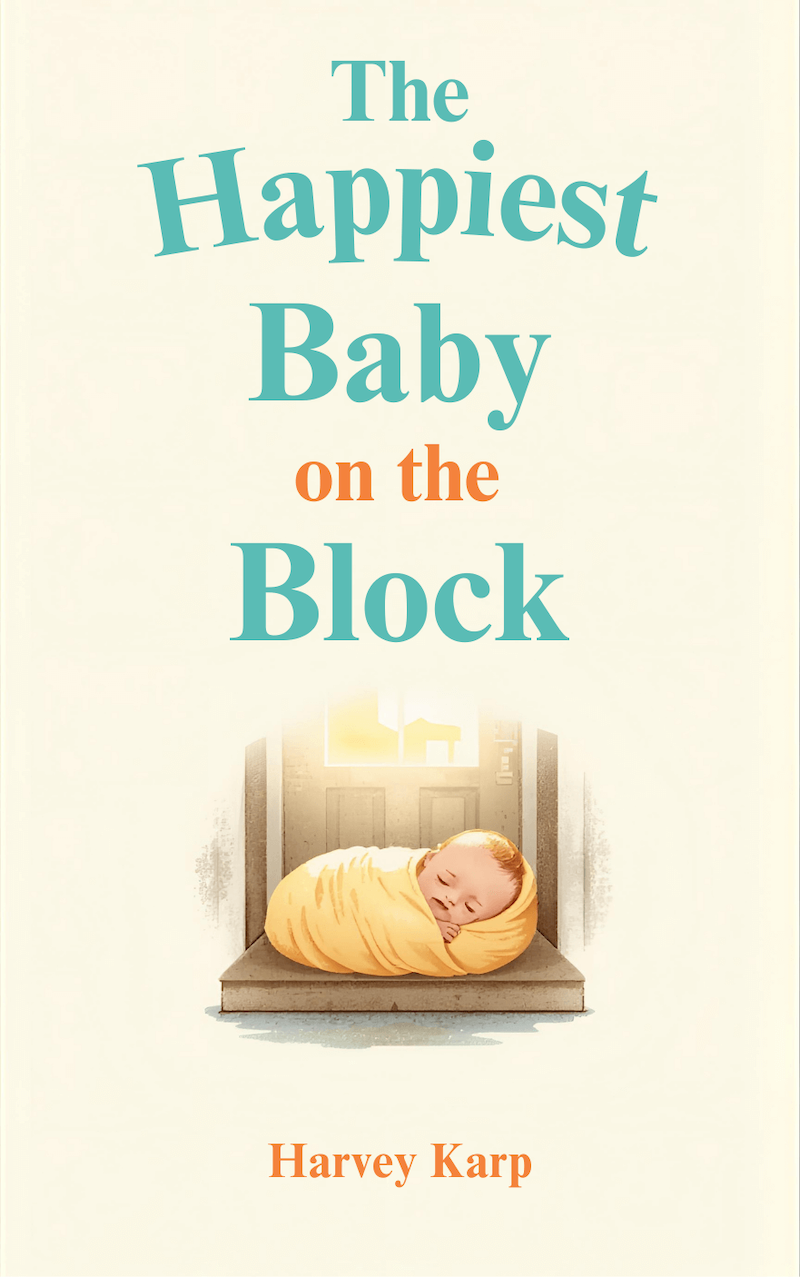
The Happiest Baby on the Block Book Summary
This The Happiest Baby on the Block Book Summary covers the key ideas, lessons, and takeaways in about 20 minutes.
Helps with these goals
Want the complete 20-minute summary?
- Full structured summary
- Video Summary
- Podcast Summary
- Audio summary
- Infographic
- Key takeaways
- Exercises
- Quiz
- Highlights and notes
- Ask the book with AI
What is in the The Happiest Baby on the Block book summary?
Below is a preview of Sumizeit’s expert-written summary of The Happiest Baby on the Block by Harvey Karp. The full summary covers the book’s key ideas in text, audio, and video.
For many new parents, the early months of caring for an infant can be filled with exhaustion, short nights, and a sense of helplessness as a crying newborn becomes the unpredictable center of daily life. Dr. Harvey Karp, a pediatrician widely known for his work with infant behavior and development, addresses the challenge most parents face—excessive crying and colic—and introduces a practical framework to help soothe newborns and restore peace in the home. The heart of Karp’s message is that crying does not necessarily mean something is wrong; rather, it’s often a symptom of a baby’s underdeveloped nervous system adapting to life outside the womb. The book encourages parents to think of the first months after birth as a “fourth trimester,” a period where infants still crave the environment and sensory rhythms of the womb, and therefore require intentional soothing strategies to feel safe and settled.
Karp argues that most newborn distress, including what is medically diagnosed as colic, comes not from illness but from overstimulation or understimulation. Babies entering the world move from a warm, rhythmic, cushioned existence into a landscape full of sudden noises, changing temperatures, and unpredictable touch. They must now manage hunger, digestion, and their own bodily sensations—experiences that are entirely new. Because they aren’t yet neurologically mature enough to self-regulate, infants respond with the only communication tool they have: crying. The goal for caregivers, then, is not to eliminate crying completely but to activate what Karp calls the calming reflex, an innate switch triggered by sensory cues similar to conditions inside the womb.
This reflex forms the foundation of Karp’s famous Five S’s method, a sequence of strategies designed to settle even the fussiest baby. These techniques—swaddling, holding the baby on its side or stomach, shushing, swinging, and sucking—work by mimicking womb-like sensations and creating the safety and comfort newborns crave. Each strategy reinforces soothing through touch, sound, motion, or containment, and parents are encouraged to combine them based on what their baby responds to best. Karp emphasizes that consistency and technique matter: when done correctly, these methods can dramatically reduce crying, improve sleep patterns, and restore confidence for overwhelmed parents.
Why Babies Cry More Than We Expect
Karp explains that the nervous system of a newborn is not yet ready for the sensory intensity of the outside world. In utero, the fetus experiences a constant symphony of sound—blood rushing, heartbeat rhythms, digestive noises—and a gentle yet persistent rocking motion whenever the mother moves. Light is dim, sound is muffled, and temperature is stable. After birth, however, even silence can feel uncomfortable compared to the familiar noise of the womb. A baby might cry not because something is wrong but because the world is overwhelmingly unfamiliar or insufficiently stimulating. Their neurological circuits for calming themselves have not yet developed, which means they rely fully on caregivers to soothe them.
Karp also highlights that self-soothing isn’t innate at birth; instead, it’s learned gradually with help from caregivers.
Want the complete 20-minute summary?
- Full structured summary
- Video Summary
- Podcast Summary
- Audio summary
- Infographic
- Key takeaways
- Exercises
- Quiz
- Highlights and notes
- Ask the book with AI
Who should read The Happiest Baby on the Block?
This book is essential for new and expectant parents struggling with excessive crying, colic, or sleep deprivation in their newborns. It's also valuable for grandparents, caregivers, and pediatric professionals who want evidence-based strategies to soothe infants and support family wellbeing. Anyone feeling overwhelmed by a baby's unpredictable crying will find both reassurance and practical tools here.
Why does The Happiest Baby on the Block matter?
Infant crying is one of the most common sources of parental stress and exhaustion in the early months, yet most parents lack a structured framework to address it. The Happiest Baby on the Block reframes excessive crying not as a parenting failure but as a normal developmental phase, offering parents science-backed techniques that can dramatically reduce distress and restore confidence. In a landscape flooded with conflicting parenting advice, Karp's approach provides clarity, empowerment, and relief during one of life's most challenging seasons.
What are the key themes in The Happiest Baby on the Block?
- The fourth trimester: treating the early months as an extension of pregnancy where babies need womb-like sensory experiences
- The calming reflex: an innate neurological response triggered by specific sensory cues that can rapidly soothe distressed infants
- Understanding crying as communication: recognizing that excessive crying reflects a baby's underdeveloped nervous system, not illness or parental inadequacy
- Co-regulation and dependency: infants rely on caregivers to help them calm before developing independent self-soothing skills
- The Five S's toolkit: a practical, combinable set of soothing strategies that replicate womb conditions
- Sleep as a critical foundation: recognizing that rest quality directly impacts overall crying patterns and infant wellbeing
- Medical awareness: distinguishing behavioral crying from rare underlying medical issues like allergies or constipation
What are the key lessons from the The Happiest Baby on the Block book summary?
Newborns are neurologically unprepared for the outside world
Babies' nervous systems haven't fully developed the ability to self-regulate when they exit the womb, meaning they cry not from misbehavior but from overstimulation or inadequate sensory input. Understanding this biological reality shifts parental perspective from blame to compassion.
The fourth trimester explains early infant behavior
Treating the first three months as a continuation of pregnancy helps parents understand why babies crave womb-like conditions—constant sound, gentle pressure, rhythmic motion, and stable temperature. This mental shift guides caregivers toward more effective soothing strategies.
Colic is not a disease requiring medication but a sensory regulation challenge
Medical colic (three or more hours of daily crying) resolves naturally as the nervous system matures, typically by three to four months. Rather than waiting passively, parents can use the Five S's to ease their baby's distress during this transition period.
Swaddling recreates the security of the womb
Proper swaddling reduces startle reflexes and creates the physical containment infants crave, often triggering instant calming. The technique requires correct technique—snug around arms while preserving hip and leg mobility—to be both effective and safe.
Side or stomach holding activates fetal comfort during soothing
Holding a baby on their side or stomach (for soothing, not sleep) mimics the curled position from pregnancy and can ease abdominal discomfort. This position works best when combined with other S techniques and must transition to back sleeping for actual rest.
White noise replaces the loud, constant soundscape of the womb
The womb is surprisingly noisy—equivalent to a running dishwasher—so silence can feel unsettling to newborns. Consistent white noise at appropriate volume (around 60 decibels) mimics prenatal sound and prevents sudden silence from re-triggering fussiness.
Rhythmic movement is deeply familiar and powerfully soothing
Gentle, controlled motion replicates the constant jostling babies experienced during pregnancy. Swings, stroller walks, car rides, and rhythmic patting all activate this calming pathway when done with proper head and neck support.
Sucking is an instinctive soothing reflex with developmental roots
Non-nutritive sucking on pacifiers builds on behaviors babies practiced in the womb, making it a natural calming tool. Introducing pacifiers after other S techniques have begun working tends to be most effective.
The Five S's work best as a combined toolkit, not isolated techniques
While each S can soothe individually, combining multiple techniques—such as swaddling plus white noise plus gentle motion—amplifies the calming effect and can settle even the fussiest babies within minutes.
Co-regulation precedes self-regulation in infant development
Babies cannot calm themselves without external support initially; consistent caregiver response teaches them to associate specific sensations with comfort. This foundational co-regulation becomes the basis for emotional regulation skills later in childhood.
Allergens transmitted through breast milk are a common medical cause of colic
Food sensitivities to dairy, eggs, soy, nuts, or wheat account for a small percentage of excessive crying. Parents can identify culprits through systematic elimination trials, reintroducing foods individually to pinpoint reactions.
Constipation and digestive discomfort deserve medical attention
Hard stools, visible straining, or difficulty with bowel movements can contribute to infant fussiness. Solutions like gentle leg movements, abdominal massage, or minor dietary adjustments often provide relief.
Sleep cycles mature gradually, requiring intentional caregiver support
Newborns lack circadian rhythms for weeks or months, shifting randomly between light and deep sleep. Parents can gradually shape healthy sleep by strategically timing feedings, managing nap duration, and creating consistent routines.
Teaching self-soothing begins with gentle partial awakening during sleep transitions
Placing a baby down drowsy and lightly jostling them to near-wakefulness conditions them to fall asleep independently. This practice reduces reliance on parental intervention for every sleep cycle.
Consistent routines signal safety and reduce crying during transitions
Repeating the same soothing sequence—swaddle, white noise, gentle motion—helps babies associate predictable cues with relaxation. Consistency becomes the foundation for both immediate calming and long-term sleep improvement.
Most excessive crying stems from overstimulation or inadequate sensory input, not illness
Only 5-10% of colic results from medical causes; the vast majority reflects a baby's struggle to process the sensory intensity of the outside world. Recognizing this helps parents focus on soothing rather than unnecessary medical investigation.
Vigilance for warning signs prevents missing rare serious conditions
While serious illness causes less than 1% of crying, parents should monitor for persistent high-pitched sounds, poor weight gain, abnormal temperature, severe vomiting, or lethargy. Quick medical evaluation protects infant health.
Parental stress and baby distress form a feedback loop
When parents feel overwhelmed and anxious, babies sense this tension and may cry more. The Five S's help break this cycle by giving caregivers effective tools, restoring confidence, and creating moments of calm for both parent and infant.
The fourth trimester ends naturally, making early intervention worthwhile
Because most colic resolves by three to four months as the nervous system matures, parents who implement soothing strategies early gain weeks or months of relief and preserved family peace during this intense window.
Understanding newborn behavior as adaptation, not misbehavior, transforms parental perspective
Viewing crying through a biological lens—as a sign the baby's nervous system is overwhelmed, not that the parent is failing—reduces guilt and shame while increasing empathy and patience.
Want the complete 20-minute summary?
- Full structured summary
- Video Summary
- Podcast Summary
- Audio summary
- Infographic
- Key takeaways
- Exercises
- Quiz
- Highlights and notes
- Ask the book with AI
How can you apply ideas from The Happiest Baby on the Block?
- Master the Five S's technique by practicing each strategy independently until combining them becomes natural, creating a go-to soothing sequence during peak fussy hours
- Create a calm sleep environment using white noise machines or fans at consistent volume to mimic the womb's acoustic landscape and minimize startling
- Implement strategic dream feeds before midnight to help infants sleep longer stretches and reduce overnight crying and waking
- Conduct a one-week elimination trial of common allergens (dairy, eggs, soy) from your diet if breastfeeding and infant crying seems related to feeding times
- Establish a consistent bedtime routine that combines swaddling, white noise, and gentle motion to condition your baby to associate these cues with sleep and relaxation
- Use the technique of gentle partial awakening during sleep transitions to gradually teach self-soothing and reduce dependence on caregiver intervention for every sleep cycle
- Monitor your baby's stool patterns and abdominal comfort, using gentle leg movements or massage if constipation appears to contribute to fussiness
- Track crying patterns in a log to identify peak times (often evening witching hours) and plan extra support or soothing preparation during those windows
What common mistakes do readers make with The Happiest Baby on the Block?
- Assuming all crying signals illness or emergency, leading to unnecessary medical visits when the behavior is normal developmental response to sensory transition
- Using white noise inconsistently or at insufficient volume, failing to activate the full calming effect that constant, adequately loud sound provides
- Attempting to teach self-soothing before the baby's nervous system is ready, rather than providing consistent co-regulation first during the early weeks
- Abandoning swaddling or other techniques after initial resistance, rather than gently persisting or adjusting the method to find what works for the individual baby
- Treating each S technique as isolated rather than combining multiple strategies, missing the amplified soothing effect of a complete toolkit approach
Sumizeit Exercises Apply what you've learned
Turn ideas from The Happiest Baby on the Block into action with a short guided reflection: identify the biggest takeaway, connect it to your life, and commit to one step you can take in the next 24 hours.
What is the expert analysis of The Happiest Baby on the Block?
Overview
The Happiest Baby on the Block is a seminal work by Dr. Harvey Karp, a respected pediatrician and child development expert. The book stands out for its practical approach to one of the most challenging aspects of early parenthood: soothing a crying newborn. Karp’s contribution is particularly significant because it reframes infant crying not as mere distress or misbehavior but as a developmental phenomenon linked to neurological immaturity and sensory adaptation. His work has influenced parenting culture globally by offering accessible, evidence-informed techniques that empower caregivers during the vulnerable “fourth trimester.”
Core Thesis
Karp’s central argument is that excessive infant crying and colic primarily stem from overstimulation or understimulation as newborns adjust from the womb’s rhythmic, contained environment to the unpredictable external world. Because infants lack mature self-regulation capacities, they rely on external sensory cues to activate an innate “calming reflex.” The author proposes the Five S’s—swaddling, side/stomach holding, shushing, swinging, and sucking—as a behavioral toolkit designed to replicate womb-like conditions and soothe babies effectively. This approach not only reduces crying but also supports healthier sleep patterns and emotional regulation development.
Strengths
- Innovative Framework: The concept of the “fourth trimester” offers a compassionate lens for understanding newborn behavior, shifting blame away from parents and infants alike.
- Practical Application: The Five S’s method is clearly articulated, actionable, and adaptable, allowing parents to tailor soothing techniques to their baby’s responses.
- Integration of Neuroscience and Behavior: Karp grounds his recommendations in infant neurological development, emphasizing co-regulation and the gradual acquisition of self-soothing skills.
- Holistic Consideration: The book acknowledges medical causes of crying and advocates for vigilant symptom monitoring, balancing behavioral strategies with appropriate medical awareness.
- Parental Empowerment: By providing a tangible toolkit, Karp reduces parental helplessness and stress, fostering confidence and emotional resilience during early caregiving.
Critiques & Counterarguments
- Evidence Base Limitations: While Karp’s methods are widely popular, some critics note that empirical validation through randomized controlled trials remains limited, and outcomes can vary significantly across infants.
- Oversimplification of Crying Etiology: The book’s focus on sensory overstimulation understates the complexity of infant distress, which can also be influenced by temperament, attachment styles, and environmental factors beyond sensory mimicry.
- Potential Overreliance on Techniques: Some developmental psychologists argue that excessive use of swaddling or pacifiers might impede motor development or breastfeeding success if not carefully managed.
- Contrasting Schools of Thought: Attachment theory advocates for responsive, on-demand caregiving without rigid routines, which can conflict with Karp’s more structured approach to sleep and soothing.
- Cultural Variability: The Five S’s are rooted in Western caregiving norms and may not translate seamlessly across diverse cultural contexts where infant care practices differ substantially.
Who Should Read This
This book is ideal for new and expecting parents seeking evidence-informed, practical strategies to navigate the challenges of newborn care. Pediatricians, doulas, and early childhood educators will also find value in Karp’s framework for understanding infant behavior and promoting caregiver confidence. Additionally, those interested in the intersection of developmental neuroscience and parenting will appreciate the book’s synthesis of biology and behavior. However, readers should approach the book as one tool among many, integrating its insights with personalized caregiving philosophies and medical advice.
Frequently asked questions about the The Happiest Baby on the Block book summary
What is The Happiest Baby on the Block about?
The Happiest Baby on the Block by Dr. Harvey Karp is a guide to understanding and soothing newborn crying through the lens of the 'fourth trimester'—the idea that babies need womb-like sensory experiences to feel safe. The book introduces the Five S's (swaddling, side/stomach holding, shushing, swinging, and sucking), a practical toolkit designed to activate infants' innate calming reflex and reduce excessive crying and colic.
Who should read The Happiest Baby on the Block?
New and expectant parents, especially those anticipating or experiencing excessive infant crying, will find this book invaluable. It's also recommended for grandparents, caregivers, and healthcare providers seeking evidence-based strategies for soothing distressed babies. Anyone feeling overwhelmed by a baby's unpredictable crying or wanting to understand infant behavior more deeply will benefit from Karp's compassionate, science-based approach.
What are the main takeaways from The Happiest Baby on the Block?
The primary message is that excessive newborn crying stems from the baby's underdeveloped nervous system adapting to life outside the womb, not from illness or parental failure. Key takeaways include treating the first months as a 'fourth trimester' requiring womb-like sensory support, mastering the Five S's to activate the calming reflex, understanding co-regulation as the foundation for infant emotional development, and distinguishing rare medical causes of crying from normal developmental colic.
How do the Five S's work to soothe babies?
The Five S's—swaddling, side/stomach holding, shushing, swinging, and sucking—replicate the sensory environment of the womb through touch, sound, motion, and containment. Each technique activates an innate calming reflex by mimicking familiar prenatal conditions. When combined as a toolkit rather than used in isolation, these strategies often soothe even fussy babies within minutes by reducing overstimulation and recreating the safety babies experienced before birth.
What is the fourth trimester and why does it matter?
The fourth trimester refers to the first three months after birth, viewed as a continuation of pregnancy rather than the start of independent life. During this period, babies' nervous systems are still developing and unprepared for the sensory intensity of the outside world. Understanding and supporting the fourth trimester helps parents provide appropriate comfort, reduces guilt about crying, and guides the use of strategies like the Five S's to help infants transition gradually to extrauterine life.
Can the Five S's help with colic?
Yes, the Five S's are specifically designed to address colic—excessive crying of three or more hours daily. While colic resolves naturally as the baby's nervous system matures (typically by three to four months), the techniques can significantly reduce crying during this period. The book emphasizes that most colic stems from overstimulation or inadequate sensory input rather than illness, making behavioral soothing strategies highly effective.
When should I consider medical causes for my baby's crying?
While only 5-10% of excessive crying results from medical issues, parents should consider allergies, constipation, or other problems if crying seems intense or doesn't respond to soothing techniques. The book recommends tracking patterns and conducting elimination diets for common allergens if breastfeeding. Warning signs requiring medical evaluation include persistent high-pitched crying, poor weight gain, abnormal temperature, severe vomiting, lethargy, or difficulty with bowel movements.
How does sleep connect to reducing infant crying?
Sleep plays a critical role in overall crying patterns; well-rested babies cry less and calm more easily. Newborns lack developed circadian rhythms, so parents must intentionally shape healthy sleep through strategic feedings, consistent routines, and the Five S's techniques—especially white noise and swaddling. Teaching early self-soothing skills and managing nap duration help extend nighttime sleep and reduce nighttime crying as the baby's nervous system matures.
About Sumizeit
Sumizeit is a profitable Scomy LLC company based in Miami, Florida. It has been helping readers learn from nonfiction books for 7 years with expert-written summaries in text, audio, podcast, and video.
Want the complete 20-minute summary?
- Full structured summary
- Video Summary
- Podcast Summary
- Audio summary
- Infographic
- Key takeaways
- Exercises
- Quiz
- Highlights and notes
- Ask the book with AI
Here's why readers love Sumizeit
Join thousands of learners getting smarter every day
"Great experience. Detailed summaries. Loved the gamification feature. Makes learning fun. Good customer service. I recommend Sumizeit to anyone. You'll learn a lot."
"I always felt busy but still wanting to keep up with the book discussion in my friend group. This was a great supplement to help me keep reading the books I find fun while keeping up with important books."
"I love this website. Instead of scrolling social media, I find myself learning a lot. I use it everyday. I recommend this app for anyone who is too busy and wants to get up to speed with their favorite books."
The Happiest Baby on the Block Book Summary PDF
Looking for a The Happiest Baby on the Block Book Summary PDF you can save and revisit offline? Our The Happiest Baby on the Block Book Summary PDF captures the book’s core ideas in a clean, printable format — the key frameworks, takeaways, and structure without the fluff. Download the The Happiest Baby on the Block Book Summary PDF when you want a reference you can annotate, share with your team, or review on the go. Get your The Happiest Baby on the Block Book Summary PDF from the download page below.
Download The Happiest Baby on the Block Book Summary PDFPeople also liked these summaries
Readers who explored The Happiest Baby on the Block often enjoyed these titles next.


Want the complete 20-minute summary?
- Full structured summary
- Video Summary
- Podcast Summary
- Audio summary
- Infographic
- Key takeaways
- Exercises
- Quiz
- Highlights and notes
- Ask the book with AI
Featured Book Titles
Popular Book Summaries at sumizeit, leading book summary app
