


As an Amazon Associate, Sumizeit earns from qualifying purchases.
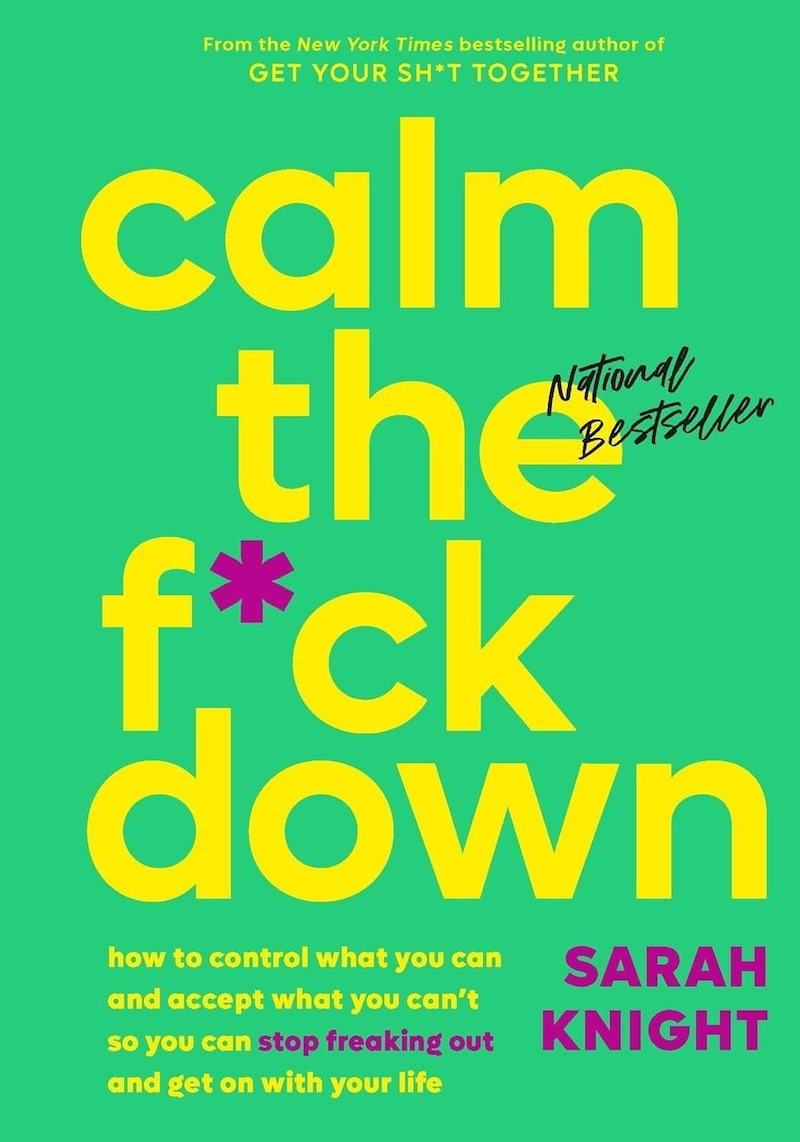
Calm the Fck Down Book Summary
This Calm the Fck Down Book Summary covers the key ideas, lessons, and takeaways in about 20 minutes.
Helps with these goals
Want the complete 20-minute summary?
- Full structured summary
- Video Summary
- Podcast Summary
- Audio summary
- Infographic
- Key takeaways
- Exercises
- Quiz
- Highlights and notes
- Ask the book with AI
What is in the Calm the Fck Down book summary?
Below is a preview of Sumizeit’s expert-written summary of Calm the Fck Down by Sarah Knight. The full summary covers the book’s key ideas in text, audio, and video.
Sarah Knight’s Calm the Fck Down* is a guide for people who, in her words, tend to emotionally combust like a firecracker anytime life tosses something unexpected their way. Instead of drowning under waves of stress, uncertainty, worst-case scenario fantasies, or emotional drama, Knight teaches readers how to step back, sort their thoughts, and respond with clarity rather than panic. The tone is humorous, blunt, and refreshingly non-clinical. She isn’t trying to become your therapist—she wants to be the wise friend who tells you to breathe, unclench your jaw, and stop letting your brain run around like a toddler with scissors.
The central promise is straightforward: when you learn how to manage your reaction to stressors, you regain power over your life. Problems don’t magically vanish. Deadlines still arrive, relationships still wobble, and flat tires don’t fix themselves. But the real enemy is not the problem—it’s the frantic response to it. Knight argues that the energy wasted on panicking could instead be used to solve the damn thing. Her mission is to teach readers how to stop spiraling, evaluate problems realistically, conserve emotional resources, and move forward without losing their minds in the process.
Understanding Our Freakout Patterns
Knight begins by explaining that most people confront stress using predictable emotional masks—what she calls “Freakout Faces.” These represent four broad styles of reacting when life throws a wrench into the machine:
Some people respond to stress with frantic mental chatter. Anxiety-driven freakouts involve obsessing over everything that might go wrong—real or imagined. This group is prone to racing thoughts, catastrophizing, feeling physically tense, and behaving as if thoughts themselves are emergencies. Their motto could be: If there are 100 possible outcomes and one is bad, guess which one we’ll focus on.
In this state, even minor issues trigger sweating palms, spiraling thoughts, and the emotional equivalent of an overheating engine. Anxiety keeps the mind busy but unproductive—like sprinting on a treadmill and wondering why you’re still in the same place.
Others collapse inward. Rather than panic outwardly, Sadness freakouts look like self-pity, rumination, and feeling stuck. A breakup becomes a tragic life-ending narrative. A bad day becomes “the universe hates me.” Social media gets involved, tissues pile up, and motivation evaporates.
It isn’t weakness—it’s emotional exhaustion dressed as lethargy. But when sadness becomes the dominant reaction to challenges, actual solutions drift further away, replaced with scrolling, comfort snacks, and resignation.
Then there are those who explode rather than implode. Their heartbeat skyrockets, faces redden, voices sharpen, fists clench, and logic evaporates. Anger freakouts respond aggressively—to people, to situations, to printers that refuse to cooperate.
This emotional mask can be destructive, leading to impulsive decisions, damaged relationships, or regret once the volcanic ash settles. As Knight notes, anger narrows perspective—when everything feels like a personal attack, rational thinking becomes endangered.
Finally, the Avoiders. They pretend the problem isn’t real, hoping it will shrink or disappear through magical procrastination. Bills go unopened. Conversations are dodged.
Want the complete 20-minute summary?
- Full structured summary
- Video Summary
- Podcast Summary
- Audio summary
- Infographic
- Key takeaways
- Exercises
- Quiz
- Highlights and notes
- Ask the book with AI
Who should read Calm the Fck Down?
Calm the Fck Down is for anyone who spirals into panic, overthinks problems, or lets stress hijack their decision-making. Whether you're an anxious overthinker, someone who shuts down emotionally, tends toward anger, or avoids challenges altogether, this book speaks directly to your default stress response. If you want practical tools to manage anxiety without therapy-speak or judgment, Sarah Knight's blunt, humorous approach is your antidote.
Why does Calm the Fck Down matter?
In today's high-pressure, uncertain world, most people waste enormous emotional energy worrying about things they can't control. Calm the Fck Down reframes stress management as a skill you can learn, not a personality flaw you're stuck with. By teaching readers how to distinguish real problems from imaginary catastrophes and channel anxiety into productive action, Knight offers a path to reclaiming mental clarity and personal power when everything feels overwhelming.
What are the key themes in Calm the Fck Down?
- Recognizing your emotional default patterns (Freakout Faces)
- Mental decluttering as a foundation for calm
- Distinguishing controllable from uncontrollable stressors
- Converting worry into productive preparation
- Emotional containment without suppression
- Acceptance as a tool for resilience
What are the key lessons from the Calm the Fck Down book summary?
Your Freakout Face Is Your Starting Point
Everyone has a default stress response—anxiety, sadness, anger, or avoidance. Recognizing yours is the first step toward interrupting the pattern and choosing a better reaction.
Anxiety Is An Overthinking Machine That Solves Nothing
Racing thoughts and catastrophizing feel productive but waste energy on unlikely scenarios. The goal is to interrupt the spiral before panic takes over.
Sadness Freakouts Trap You in Emotional Quicksand
Collapsing inward and ruminating may feel justified, but resignation and lethargy prevent you from addressing the actual problem or finding solutions.
Anger Narrows Your Perspective and Destroys Relationships
Explosive reactions feel powerful in the moment but lead to impulsive decisions, damaged relationships, and regret once emotions cool down.
Avoidance Compounds Problems in the Dark
Pretending problems don't exist feels safe temporarily, but unopened bills, dodged conversations, and delayed decisions quietly escalate into bigger crises.
Every Emotion Has a Productive Flipside
Anxiety can become prepared alertness, sadness can deepen reflection, anger can fuel protective action, and avoidance can transform into strategic patience. The goal is transformation, not elimination.
Mental Clutter Drains Energy Like Physical Clutter Does
Useless worries, worst-case scenarios, and regrets take up cognitive real estate. Decluttering your mind by sorting what matters from what doesn't frees mental resources for actual solutions.
Probability Puts Panic in Perspective
Ranking potential problems by likelihood (almost certainly not happening to basically guaranteed) prevents emotional overreaction to unlikely scenarios and appropriate action for real threats.
The Control Question Cuts Anxiety in Half
Asking 'Can I control this?' instantly separates problems worth worrying about from those worth releasing. If you can't control it, you can't solve it by panicking.
Emotions Are Like Puppies—They Need Training, Not Banishment
Rather than suppress or deny feelings, you can temporarily contain intense emotions when logic is needed, then return to them later once you're calm. This maintains emotional honesty without derailing decisions.
Freakout Funds Are Your Limited Mental Currency
Your emotional energy, attention, and mental bandwidth are finite resources. Spending 90% of them on imaginary disasters leaves nothing for real problems that need action.
Worry Is an Expensive Investment With No Return
Replaying embarrassing moments, stressing over strangers' opinions, and agonizing over uncontrollable events waste freakout funds. Preparation and action yield actual returns.
PHEW Turns Anxiety Into Actionable Preparation
Productive Helpful Effective Worrying acknowledges concerns, identifies what you can influence, and channels worry into concrete steps. Anxiety becomes fuel for preparation, not a paralyzing force.
Take Stock, Find Realistic Goals, Then Triage Tasks
Instead of reacting blindly to problems, gather facts, define an achievable outcome (not a fantasy), and prioritize action. This structured approach grounds decision-making in reality.
Acceptance Is Not Surrender—It's Acknowledging Truth
Fighting unchangeable reality (breakups, traffic, weather, other people's choices) is emotional quicksand. Acceptance frees you to redirect energy toward what you actually can influence.
Action Shrinks Fear and Builds Momentum
Even small steps toward solving a problem reduce anxiety more effectively than any amount of worrying. Progress creates a sense of control that stabilizes emotions.
Panic Is Optional—Stress Responses Are Learned Habits
Life will always include uncertainty and setbacks, but the panicked reaction isn't inevitable. Like any habit, your stress response can be recognized, interrupted, and replaced with calmer choices.
Humor and Honesty Make Difficult Lessons Stick
By using humor, profanity, and relatable stories rather than sanctimonious advice, Knight makes self-improvement accessible and less intimidating. Laughter lowers emotional defenses.
Calm Is a Skill You Can Build, Not a Personality Trait
Whether you're naturally anxious, reactive, or avoidant, calmness is achievable through practice and deliberate strategy. It's not about never feeling overwhelmed—it's about handling overwhelm effectively.
You Always Control Your Response, Even When You Can't Control Events
While external circumstances are often beyond your power, your reaction to them is always yours to choose. This distinction is where true personal power lives.
Want the complete 20-minute summary?
- Full structured summary
- Video Summary
- Podcast Summary
- Audio summary
- Infographic
- Key takeaways
- Exercises
- Quiz
- Highlights and notes
- Ask the book with AI
How can you apply ideas from Calm the Fck Down?
- Identify your dominant Freakout Face and notice when it activates, so you can interrupt the pattern before panic takes over
- Use the Shitstorm Scale to rank worries by probability, downgrading emotional investment in unlikely scenarios and preparing appropriately for real threats
- Apply the control question regularly: 'Can I control this?' to instantly separate solvable problems from ones worth releasing
- Schedule your freakout—give yourself permission to feel emotions intensely for a set time, then contain them temporarily while you handle what needs to be done
- Create a freakout budget and audit where you're spending emotional energy, redirecting resources away from uncontrollable events and toward preparation and action
- Use PHEW (Productive Helpful Effective Worrying) to transform anxiety into concrete preparation steps, turning what-ifs into actionable checklists
- Apply the three-step problem-solving method (Take Stock, Identify Realistic Goals, Triage Tasks) to everyday challenges at work, relationships, and personal life
What common mistakes do readers make with Calm the Fck Down?
- Trying to eliminate emotions entirely instead of managing them—suppressing feelings never works and only builds pressure for a bigger explosion
- Treating every worry as equally urgent and deserving of panic, rather than sorting problems by likelihood and actual impact
- Spending mental energy on things completely outside your control, like other people's opinions, the past, or uncontrollable events
- Mistaking acceptance for surrender or giving up, when really it's about redirecting energy toward what you can actually influence
Sumizeit Exercises Apply what you've learned
Turn ideas from Calm the Fck Down into action with a short guided reflection: identify the biggest takeaway, connect it to your life, and commit to one step you can take in the next 24 hours.
What is the expert analysis of Calm the Fck Down?
Overview
Calm the Fck Down is a contemporary self-help book authored by Sarah Knight, a writer renowned for her candid, humorous, and profanity-laden approach to personal development. Knight’s work stands out in the crowded self-improvement genre by eschewing clinical jargon and adopting the tone of a wise, blunt friend who encourages readers to manage their emotional responses rather than eliminate stress altogether. Building on her previous success with the “No F*cks Given Guides,” Knight offers practical strategies for emotional regulation and mental decluttering, making this book significant for those seeking accessible, no-nonsense tools to navigate life’s inevitable uncertainties.
Core Thesis
The central argument of Calm the Fck Down is that while stress and problems are unavoidable, the chaotic emotional reactions they provoke are optional and manageable. Knight posits that the true adversary is not the external problem but the internal panic it triggers. By identifying one’s habitual “freakout face” (anxiety, sadness, anger, or avoidance), organizing thoughts through mental decluttering, and applying practical frameworks like the “Shitstorm Scale” and the PHEW method, individuals can transform paralyzing worry into productive action. Ultimately, the book champions emotional mastery as a skill that empowers people to respond to life’s challenges with clarity and calm rather than chaos.
Strengths
- Relatable and Engaging Tone: Knight’s humor and bluntness make complex psychological concepts approachable and less intimidating, fostering reader engagement and retention.
- Clear, Practical Frameworks: Tools such as the “Freakout Faces,” “Shitstorm Scale,” and PHEW method provide actionable steps rather than abstract advice, enhancing usability.
- Emphasis on Emotional Acceptance: Rather than advocating suppression, Knight promotes acknowledging and harnessing emotions, aligning with contemporary psychological understanding.
- Mental Decluttering Metaphor: Applying decluttering principles to thought management offers a fresh and intuitive way to conceptualize cognitive overload.
- Inclusivity of Emotional Styles: Recognizing diverse stress responses allows readers to identify personal patterns, making the advice personalized and adaptable.
Critiques & Counterarguments
- Oversimplification of Complex Emotions: While the categorization of “Freakout Faces” is useful, it risks reducing nuanced emotional experiences into broad archetypes, potentially overlooking deeper psychological factors or comorbidities such as clinical anxiety or depression.
- Limited Engagement with Clinical Research: The book’s informal style and anecdotal tone mean it does not deeply engage with or cite empirical psychological studies, which may limit its credibility among readers seeking evidence-based interventions.
- Potential Underestimation of Structural Stressors: Knight’s focus on individual emotional management may inadvertently downplay systemic or external factors (e.g., socioeconomic pressures, trauma) that contribute to stress and are not always controllable through mindset shifts alone.
- Competing Psychological Models: Approaches such as Acceptance and Commitment Therapy (ACT) or Dialectical Behavior Therapy (DBT) offer more nuanced frameworks for emotional regulation that emphasize mindfulness and values-based action, which may provide deeper or more sustainable change than the book’s more pragmatic but surface-level strategies.
- Risk of Minimizing Legitimate Anxiety: The encouragement to “calm down” and “chill” might be misinterpreted by some readers as dismissive of their struggles, especially those with anxiety disorders where professional intervention is warranted.
Who Should Read This
Calm the Fck Down is ideally suited for readers who:
- Experience frequent, everyday stress and emotional overwhelm but are not necessarily diagnosed with clinical mental health conditions.
- Appreciate a candid, humorous, and irreverent tone that cuts through conventional self-help platitudes.
- Seek practical, straightforward tools to manage anxiety, anger, sadness, or avoidance tendencies in real-world situations.
- Prefer self-guided strategies over therapeutic or academic texts and want a mental framework to regain control over their emotional responses.
- Are open to reframing their relationship with stress and emotions, learning to harness rather than suppress their feelings.
Conversely, readers looking for in-depth psychological theory, clinical treatment advice, or those facing severe mental health challenges may find this book less suitable as a standalone resource.
Frequently asked questions about the Calm the Fck Down book summary
What is Calm the Fck Down about?
Calm the Fck Down by Sarah Knight is a practical guide to managing stress and anxiety by recognizing your default emotional response patterns and learning to channel worry into productive action. Rather than offering clinical advice, Knight uses humor and straight talk to teach readers how to declutter their minds, distinguish real problems from imaginary catastrophes, and reclaim control over their reactions to life's inevitable challenges.
Who should read Calm the Fck Down?
This book is ideal for anyone who struggles with anxiety, overthinking, emotional overwhelm, or stress-driven decision-making. Whether you tend toward panic, shutdown, anger, or avoidance, Knight's framework applies to all stress response styles. If you prefer practical, no-nonsense advice delivered with humor rather than therapeutic jargon, this is the book for you.
What are the main takeaways from Calm the Fck Down?
The core takeaways include: recognizing your Freakout Face (anxiety, sadness, anger, or avoidance), decluttering mental clutter, asking 'Can I control this?' to separate solvable from unsolvable problems, using worry as fuel for preparation rather than letting it paralyze you, and understanding that calm is a learnable skill, not a personality trait. Ultimately, the book teaches that while you can't control everything that happens, you always control your response.
How does the Shitstorm Scale help with anxiety?
The Shitstorm Scale ranks potential problems on a likelihood scale from almost certainly not happening to basically guaranteed. This tool prevents emotional overreaction by helping you calibrate your worry to actual probability. Instead of panicking equally about unlikely and likely scenarios, you can downgrade anxiety for Category 1 worries (unlikely) and focus energy on real threats.
What is PHEW and how do you use it?
PHEW stands for Productive Helpful Effective Worrying. It transforms anxiety into actionable preparation by having you acknowledge the concern, identify what part you can control, take action however small, and use worry as momentum. For example, travel anxiety becomes a packing checklist and confirmation of reservations rather than lying awake imagining disasters.
Can you really turn anxiety into something useful?
Yes, according to Knight. Anxiety becomes useful when you channel it into preparation and problem-solving instead of letting it loop endlessly in your head. The goal is emotional transformation—flipping anxiety into alert preparedness, sadness into reflection, anger into protective action, and avoidance into strategic patience. Emotions themselves aren't the problem; how you respond to them is.
What makes Sarah Knight's approach different from other self-help books?
Knight combines humor, profanity, and brutal honesty with practical strategies, avoiding the sanctimonious tone common in self-help. She treats anxiety and stress as learnable habits you can interrupt, not character flaws you're stuck with. Her relatable examples and comedic edge make difficult emotional work feel less intimidating and more accessible.
About Sumizeit
Sumizeit is a profitable Scomy LLC company based in Miami, Florida. It has been helping readers learn from nonfiction books for 7 years with expert-written summaries in text, audio, podcast, and video.
Want the complete 20-minute summary?
- Full structured summary
- Video Summary
- Podcast Summary
- Audio summary
- Infographic
- Key takeaways
- Exercises
- Quiz
- Highlights and notes
- Ask the book with AI
Here's why readers love Sumizeit
Join thousands of learners getting smarter every day
"Great experience. Detailed summaries. Loved the gamification feature. Makes learning fun. Good customer service. I recommend Sumizeit to anyone. You'll learn a lot."
"I always felt busy but still wanting to keep up with the book discussion in my friend group. This was a great supplement to help me keep reading the books I find fun while keeping up with important books."
"I love this website. Instead of scrolling social media, I find myself learning a lot. I use it everyday. I recommend this app for anyone who is too busy and wants to get up to speed with their favorite books."
Calm the Fck Down Book Summary PDF
Looking for a Calm the Fck Down Book Summary PDF you can save and revisit offline? Our Calm the Fck Down Book Summary PDF captures the book’s core ideas in a clean, printable format — the key frameworks, takeaways, and structure without the fluff. Download the Calm the Fck Down Book Summary PDF when you want a reference you can annotate, share with your team, or review on the go. Get your Calm the Fck Down Book Summary PDF from the download page below.
Download Calm the Fck Down Book Summary PDFPeople also liked these summaries
Readers who explored Calm the Fck Down often enjoyed these titles next.


Want the complete 20-minute summary?
- Full structured summary
- Video Summary
- Podcast Summary
- Audio summary
- Infographic
- Key takeaways
- Exercises
- Quiz
- Highlights and notes
- Ask the book with AI
Featured Book Titles
Popular Book Summaries at sumizeit, leading book summary app
