
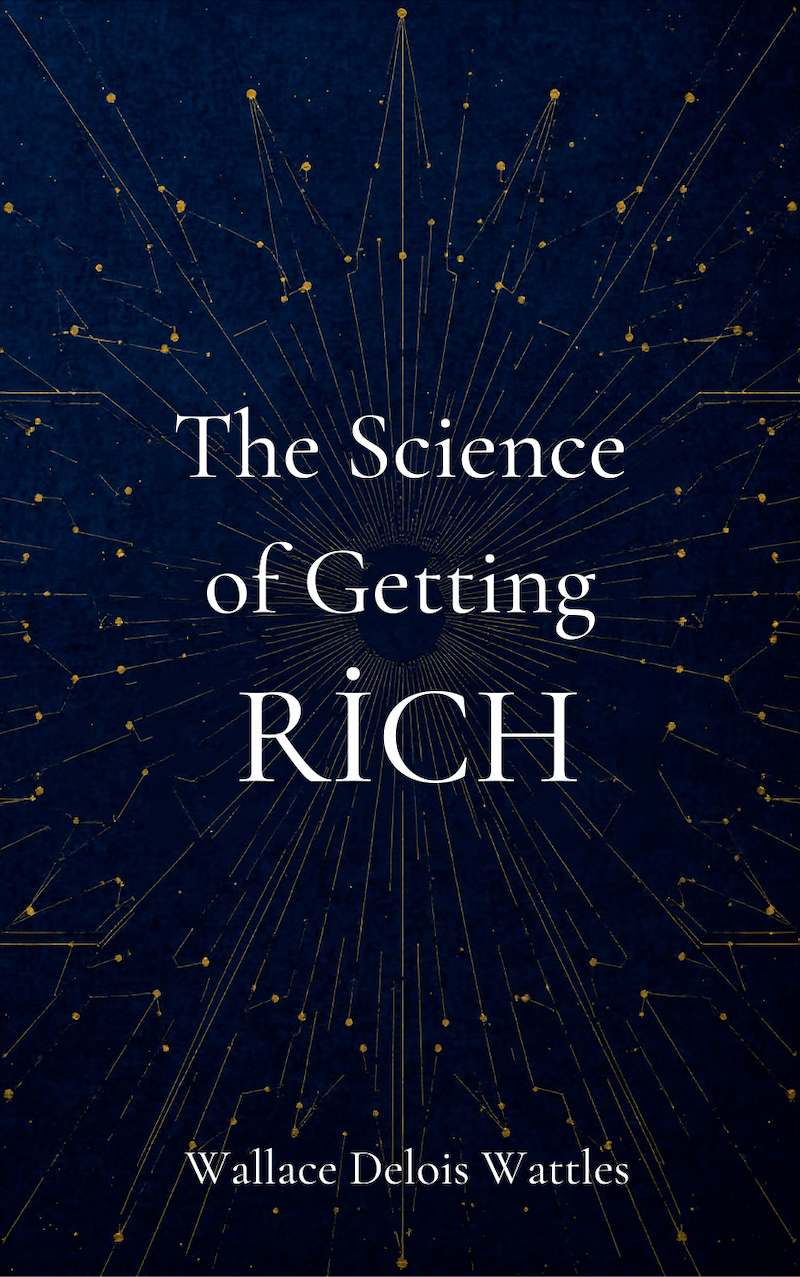
The Science of Getting Rich Book Summary
This The Science of Getting Rich Book Summary covers the key ideas, lessons, and takeaways in about 20 minutes.
Want the complete 20-minute summary?
- Full structured summary
- Video Summary
- Podcast Summary
- Audio summary
- Key takeaways
- Exercises
- Quiz
- Highlights and notes
- Ask the book with AI
What is in the The Science of Getting Rich book summary?
Below is a preview of Sumizeit’s expert-written summary of The Science of Getting Rich by Wallace Delois Wattles. The full summary covers the book’s key ideas in text, audio, and video.
Wallace D. Wattles’ The Science of Getting Rich is not written as a motivational cheerleading book about money, but instead as a structured blueprint explaining wealth as the outcome of specific mental laws. Wattles argues that financial success is not random luck, not talent-dependent, and not limited to a chosen few—it is the predictable result of thinking and acting according to universal principles that govern prosperity. Rather than treat money as something people fight over, the book reframes wealth as something created through an internal process that begins in the mind. It claims that riches are accessible to every person willing to align thought, gratitude, belief, and purposeful effort with the natural order of abundance.
The work emphasizes that humans are meant to advance, grow, and express themselves fully. Wealth is simply the means by which people acquire the tools needed to reach that potential. Therefore, wanting to be rich is not selfish—it’s seen as a desire to expand one’s capability, contribute more, and experience life more fully. The author insists that poverty benefits no one; development and goodness thrive where resources are plentiful. To get rich, one must first accept that becoming wealthy is rightful and natural.
The Creative Power of Thought: The First Pillar of Wealth
Wattles proposes that thought is the root cause behind every physical result. The world, in his explanation, is filled with an invisible energetic substance that responds to directed mental images. When a person holds a persistent thought firmly and clearly, this unseen substance begins organizing circumstances to match that mental blueprint. This is not wishful thinking—rather, it is a disciplined mental practice requiring unwavering focus.
He explains that many people desire wealth abstractly, yet clutter their minds with conflicting beliefs, fears, and doubt. When inner dialogue warns “money is hard to get” or “only certain people succeed,” the creative power of thought weakens. To generate wealth, one must think wealth—not poverty, debt, or limitation. In Wattles’ philosophy, every negative belief about money slows or even blocks progress.
The process begins internally: one imagines the life they want with detail, holds it in consciousness, and refuses thoughts that counter it. The clearer and more emotionally charged the vision, the stronger its creative power. In modern language, this resembles visualization techniques, mindset training, and affirmations. Wattles declares thought is the engine of manifestation—but thought alone is not enough, which is where action comes in later.
Abundance as a Natural Law: Moving Away from Scarcity Thinking
One of the largest mental shifts the book demands is abandoning the belief that resources are limited. Instead of picturing wealth as a pie that shrinks when someone else gets a slice, Wattles teaches that the universe continually expands. Opportunity is not something to steal—it is something to generate.
A person must learn to celebrate the success of others rather than envy it. Jealousy aligns the mind with lack, while admiration reinforces the idea that wealth is achievable.
Want the complete 20-minute summary?
- Full structured summary
- Video Summary
- Podcast Summary
- Audio summary
- Key takeaways
- Exercises
- Quiz
- Highlights and notes
- Ask the book with AI
Who should read The Science of Getting Rich?
The Science of Getting Rich is for anyone seeking to understand wealth not as luck or privilege, but as a learnable science. If you're an entrepreneur, professional, or individual tired of financial struggle who believes personal growth and mindset matter, this book offers a structured blueprint. It's ideal for those ready to examine their beliefs about money and commit to aligning their thoughts and actions with abundance.
Why does The Science of Getting Rich matter?
In a world of economic uncertainty and financial anxiety, The Science of Getting Rich by Wallace D. Wattles reframes prosperity as accessible through universal principles rather than circumstance or talent. The book's core insight—that wealth begins in the mind and flows through deliberate thought, gratitude, and purposeful action—remains deeply relevant today. It provides a counternarrative to scarcity thinking and competitive struggle, offering instead a philosophy of creation and increase that applies whether you're building a business, advancing a career, or transforming your relationship with money.
What are the key themes in The Science of Getting Rich?
- Wealth as a science driven by universal mental laws, not random luck
- The creative power of thought and vivid visualization in shaping reality
- Abundance mindset versus scarcity thinking and competition
- Gratitude and faith as energetic fuel for attracting opportunity
- Action in the present moment as the bridge between thought and results
- Becoming a person of increase who adds value to others
- Personal growth and continuous self-improvement as pathways to greater capacity
- Operating from creation rather than competition in business and life
What are the key lessons from the The Science of Getting Rich book summary?
Thought Is the Root Cause of Financial Results
The mind functions like a blueprint, and persistent, clear mental images direct invisible creative substance to organize circumstances toward those visions. Every negative belief about money weakens your ability to attract it, while focused positive thoughts strengthen your creative power.
Abandon Scarcity Thinking; Embrace Abundance
Wealth is not a fixed pie to fight over; the universe continually expands with new opportunities and created value. Celebrating others' success and believing in unlimited resources aligns your mind with abundance rather than fear and jealousy.
Gratitude Is an Energetic Connection to Prosperity
Gratitude is not mere politeness but a powerful practice that anchors your mind in possibility and attracts opportunity. Regular, deliberate gratitude strengthens faith, opens your awareness to solutions, and maintains the emotional state necessary for wealth creation.
Faith Must Persist Through Delay and Doubt
Real progress requires unwavering confidence that your desired outcome is already forming, even when external evidence hasn't yet appeared. Abandoning belief when results aren't immediate interrupts the manifestation process and weakens your creative power.
Vision Must Be Specific, Vivid, and Emotionally Charged
Vague desires like 'I want more money' are insufficient; you must create a detailed mental picture of your ideal life, income, lifestyle, and purpose. This clarity functions as architectural instructions for your mind and directs attention toward aligned opportunities.
Action Now Is More Valuable Than Perfect Timing
Thought creates direction, but only present-moment action creates material results. Waiting for ideal conditions wastes creative power; instead, work with excellence using what you have today, demonstrating readiness for greater opportunities.
Efficiency in Action Multiplies Results
Quality execution of fewer tasks exceeds rushed mediocrity of many. Prioritize actions that move you toward your vision, eliminate distractions, and perform each task with skill and enthusiasm to signal your capacity for advancement.
Become a Person of Increase to Attract Wealth
People naturally gravitate toward those who uplift and improve circumstances. By consistently adding value through products, service, attitude, or support, you build trust and create networks that multiply opportunities and wealth.
Give More Value Than Expected
Business success grows from exceeding expectations and seeking mutual prosperity rather than taking from others. This approach builds lasting relationships, referrals, and collaborative networks far more powerful than competition or aggressive negotiation.
Personal Growth Unlocks New Opportunities
Wealth requires continuous advancement in skills, perspective, and emotional resilience. As you expand internally through learning and development, new external avenues appear, and your capacity to manage greater wealth increases.
Challenges Are Stepping Stones to the Next Level
Obstacles teach essential lessons required for advancement; welcoming development rather than resisting it transforms setbacks into progress. Every difficulty evolves you into someone capable of managing greater responsibility and wealth.
Thought and Action Must Work Together
Mindset without execution remains fantasy; execution without creative belief becomes exhausting struggle. The synergy between clear intention and decisive action creates momentum where seemingly coincidental opportunities naturally arise.
Set Intention Before Acting; Reflect Afterward
Before each action, clarify what outcome it moves you toward. After acting, reflect on alignment with your vision and refine your approach. This feedback loop strengthens progress and keeps efforts purposeful.
Align Work With Passion and Natural Skill
Wealth comes more easily when engaged in work that fits your strengths and interests; passion increases persistence and skill increases capability. Begin where you are, and adjust direction as clarity grows through action.
Operate From the Creative Plane, Not the Competitive
Competition views success as conflict and causes anxiety; creation sees business as contribution and sparks innovation. The creative mindset invents solutions, grows abundance, and builds cooperation rather than fighting over existing resources.
Innovation and Value Creation Expand Horizons
Ask how you can serve better and what improvements you can introduce rather than imitating competitors. Abundance flows to those who uplift society and create new value, not those who fight for existing shares.
Wealth Is a Side Effect of Personal Transformation
Material riches emerge as a natural outcome of becoming more capable, more aware, more purposeful, and more giving. Focus on who you are becoming rather than chasing trophies, and prosperity becomes inevitable.
Align Internal Beliefs With External Behavior
When your internal worldview harmonizes with your outward actions—when gratitude fuels confidence and value is contributed generously—the results naturally compound. This alignment creates the conditions for sustainable wealth.
The Universe Responds to Focused Thought and Decisive Effort
What appear as coincidences are actually natural responses of creative substance to clear mental direction and consistent action. Opportunity arrives when both elements work in sync.
Prosperity Is Your Natural Right and Responsibility
Wanting to be rich is not selfish; it is a desire to expand capability, contribute more fully, and live deliberately. Poverty benefits no one; development and goodness thrive where resources are plentiful, making wealth-building an act of service.
Want the complete 20-minute summary?
- Full structured summary
- Video Summary
- Podcast Summary
- Audio summary
- Key takeaways
- Exercises
- Quiz
- Highlights and notes
- Ask the book with AI
How can you apply ideas from The Science of Getting Rich?
- Create a detailed written vision of your ideal life including specific income, lifestyle, home, daily routine, and purpose; review and mentally rehearse this vision daily
- Practice deliberate gratitude every morning and evening, acknowledging three specific things you appreciate to anchor your mind in abundance
- Identify your natural strengths and passions; redirect your career or business efforts toward work that excites your purpose and uses your talents
- Commit to one meaningful improvement in your current role or business that adds clear value to others; execute it with excellence
- Replace competitive thinking with creative problem-solving by asking 'How can I serve better?' rather than 'How can I beat my competition?'
- Audit your daily thoughts and replace scarcity-based self-talk ('money is hard to get,' 'I'm not that type of person') with abundance-affirming statements
- Establish a skill-building plan focused on continuous learning in your field, emotional resilience, and communication abilities
- Apply the present-moment principle by taking one immediate action today toward your vision rather than waiting for perfect conditions
What common mistakes do readers make with The Science of Getting Rich?
- Visualizing wealth but harboring conflicting inner beliefs about deserving it; vague mental pictures fail because they lack the clarity and emotional charge needed to direct creative power
- Taking action without clear intention or purpose; busy work without vision consumes energy without moving you toward meaningful goals
- Abandoning faith when results don't appear immediately; interrupting the creative process by doubting before manifestation is complete
- Operating from competition and envy rather than creation and contribution; this scarcity mindset restricts opportunity and breeds anxiety instead of attracting collaboration
- Choosing work misaligned with passion or skill to chase quick money; this reduces persistence and capability, making wealth harder to sustain
- Neglecting personal growth and continuous improvement; stagnant skills and perspectives limit the capacity to recognize and manage new opportunities
Sumizeit Exercises Apply what you've learned
Turn ideas from The Science of Getting Rich into action with a short guided reflection: identify the biggest takeaway, connect it to your life, and commit to one step you can take in the next 24 hours.
What is the expert analysis of The Science of Getting Rich?
Overview
The Science of Getting Rich by Wallace Delois Wattles stands as a seminal work in the early 20th-century New Thought movement, bridging philosophy, psychology, and practical self-improvement. Wattles, an American writer with a background of modest means, crafted this book as a systematic guide to wealth acquisition grounded not in luck or talent, but in mental laws and disciplined thought. His influence extends into contemporary personal development literature, notably impacting figures like Rhonda Byrne. The book’s significance lies in its reframing of wealth as a natural, accessible outcome of aligning mindset, gratitude, and purposeful action with universal principles of abundance.
Core Thesis
Wattles’ central argument is that riches are not a product of external competition or scarcity but the predictable result of creative mental processes combined with effective action. Wealth emerges when one holds a clear, emotionally charged vision of prosperity, maintains unwavering faith and gratitude, and acts decisively in the present moment. This process taps into an invisible, creative substance responsive to focused thought, enabling individuals to manifest abundance by operating from a mindset of increase rather than competition. Ultimately, becoming rich is portrayed as the natural extension of personal growth, service to others, and alignment with universal laws governing prosperity.
Strengths
l>Critiques & Counterarguments
l>Who Should Read This
This book is ideal for readers interested in the intersection of philosophy, psychology, and wealth-building who seek a mindset-oriented approach to prosperity. Entrepreneurs, self-improvement enthusiasts, and those drawn to New Thought or spiritual perspectives on success will find Wattles’ work inspiring and foundational. It serves as a valuable complement to more empirically grounded business or economic texts by offering a mental and emotional paradigm for wealth creation. However, readers should approach it with a critical mind, integrating its insights with an awareness of broader socioeconomic realities.
Frequently asked questions about the The Science of Getting Rich book summary
What is The Science of Getting Rich about?
The Science of Getting Rich by Wallace D. Wattles presents wealth not as luck or privilege, but as a predictable outcome of specific mental laws and principles. The book teaches that prosperity flows from clear visualization, unwavering faith, daily gratitude, and purposeful action aligned with creative rather than competitive thinking. It argues that anyone willing to align their thoughts, beliefs, and behaviors with universal laws of abundance can achieve financial success.
Who should read The Science of Getting Rich?
This book is ideal for entrepreneurs, professionals, and individuals who want to understand the relationship between mindset and financial success. It's suited for those seeking to overcome scarcity thinking, build sustainable wealth, or understand why previous financial efforts have stalled. Anyone committed to personal growth and willing to examine their beliefs about money will find practical value in Wattles' approach.
What are the main takeaways from The Science of Getting Rich?
The core takeaways are: wealth is driven by thought, gratitude, and clear vision; abundance is unlimited and created rather than competed for; action in the present moment bridges thought and results; becoming a person of increase attracts opportunity; and personal growth continuously unlocks new capacity. Ultimately, prosperity emerges when you align internal beliefs with external actions and shift from competition to creation.
How does visualization work in The Science of Getting Rich?
Visualization functions like architectural planning for your life; the mind needs a clear blueprint to direct effort toward the right opportunities. You create a detailed mental picture of your ideal life—specific income, lifestyle, daily routine, and purpose—then rehearse this scene emotionally and vividly until it feels mentally real. This clarity activates your awareness toward aligned opportunities and influences decisions that move you closer to that vision.
What is the difference between competitive and creative thinking in Wattles' philosophy?
Competitive thinking views business and life as conflict where success requires beating others and fighting over limited resources; it breeds anxiety and imitation. Creative thinking sees business as contribution and service; it generates new value, opens markets, and builds cooperation. Wattles argues that the creative plane attracts greater opportunity and lasting wealth than the competitive plane.
Why does Wattles emphasize gratitude so strongly?
In Wattles' model, gratitude is not mere politeness but an energetic practice that anchors your mind in possibility rather than fear. Gratitude strengthens faith, opens awareness to opportunities a fearful mind would overlook, and maintains the elevated emotional state necessary for attracting abundance. Daily, deliberate gratitude creates a cycle where appreciation invites more to be grateful for.
How does The Science of Getting Rich address the role of action?
Wattles teaches that thought creates direction but only action creates material results; neither alone is sufficient. You must act now with the resources you have, performing each task with excellence and purpose. Action demonstrates readiness for greater opportunities, and efficient, intentional effort—rather than frantic busyness—multiplies results when aligned with your vision.
Can The Science of Getting Rich be applied regardless of current circumstances?
Yes; Wattles emphasizes that wealth-building principles work from where you are now with what you have. You begin by taking purposeful action in your current role, continuously improving your skills and mindset, and allowing clarity to grow through experience. The method adapts as you gain understanding; the vision remains constant while the strategy can evolve.
About Sumizeit
Sumizeit is a profitable Scomy LLC company based in Miami, Florida. It has been helping readers learn from nonfiction books for 7 years with expert-written summaries in text, audio, podcast, and video.
Want the complete 20-minute summary?
- Full structured summary
- Video Summary
- Podcast Summary
- Audio summary
- Key takeaways
- Exercises
- Quiz
- Highlights and notes
- Ask the book with AI
Here's why readers love Sumizeit
Join thousands of learners getting smarter every day
"Great experience. Detailed summaries. Loved the gamification feature. Makes learning fun. Good customer service. I recommend Sumizeit to anyone. You'll learn a lot."
"I always felt busy but still wanting to keep up with the book discussion in my friend group. This was a great supplement to help me keep reading the books I find fun while keeping up with important books."
"I love this website. Instead of scrolling social media, I find myself learning a lot. I use it everyday. I recommend this app for anyone who is too busy and wants to get up to speed with their favorite books."
The Science of Getting Rich Book Summary PDF
Looking for a The Science of Getting Rich Book Summary PDF you can save and revisit offline? Our The Science of Getting Rich Book Summary PDF captures the book’s core ideas in a clean, printable format — the key frameworks, takeaways, and structure without the fluff. Download the The Science of Getting Rich Book Summary PDF when you want a reference you can annotate, share with your team, or review on the go. Get your The Science of Getting Rich Book Summary PDF from the download page below.
Download The Science of Getting Rich Book Summary PDFPeople also liked these summaries
Readers who explored The Science of Getting Rich often enjoyed these titles next.




Want the complete 20-minute summary?
- Full structured summary
- Video Summary
- Podcast Summary
- Audio summary
- Key takeaways
- Exercises
- Quiz
- Highlights and notes
- Ask the book with AI
Featured Book Titles
Popular Book Summaries at sumizeit, leading book summary app
