


As an Amazon Associate, Sumizeit earns from qualifying purchases.
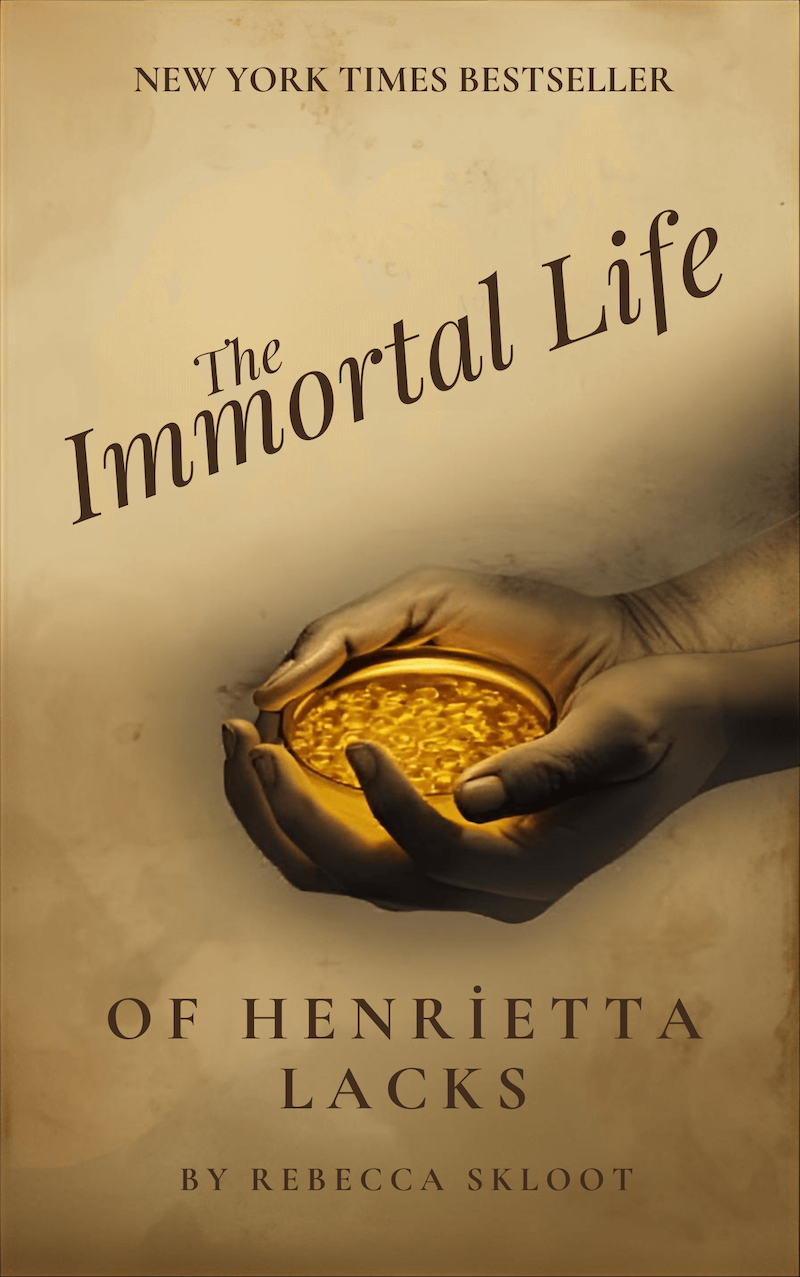
The Immortal Life of Henrietta Lacks Book Summary
This The Immortal Life of Henrietta Lacks Book Summary covers the key ideas, lessons, and takeaways in about 20 minutes.
The story forces us to confront the responsibility of science to respect humanity, illuminating the need for ethical reform that protects people even as research pushes boundaries.
Henrietta’s legacy is not only scientific—it is moral. Her story challenges us to build a scientific world where progress and justice coexist.
Helps with these goals
Want the complete 20-minute summary?
- Full structured summary
- Video Summary
- Podcast Summary
- Audio summary
- Key takeaways
- Exercises
- Quiz
- Highlights and notes
- Ask the book with AI
What is in the The Immortal Life of Henrietta Lacks book summary?
Below is a preview of Sumizeit’s expert-written summary of The Immortal Life of Henrietta Lacks by Rebecca Skloot. The full summary covers the book’s key ideas in text, audio, and video.
Henrietta Lacks was born in 1920 in Roanoke, Virginia, and grew up in the rural tobacco-farming community of Clover after her mother died giving birth to her tenth child. Her large family was divided among relatives, and Henrietta went to live with her grandfather in a wooden cabin that once served as slave quarters. Life demanded labor rather than education—Henrietta stopped attending school after sixth grade.
Henrietta shared a room with her cousin David “Day” Lacks, who later became her husband. Together they worked the tobacco fields, tended livestock, and struggled to survive in a segregated, impoverished South. She was known as beautiful, confident, generous, and devoted to her children. At fourteen she gave birth to her first child, followed by another at eighteen, all while living in harsh conditions that left little room for childhood.
In 1941 Henrietta married Day, and inspired by promises of wartime manufacturing jobs, the couple moved to Turner Station near Baltimore. The relocation seemed a chance at a stable future and better opportunities for their growing family. There they raised five children: Lawrence, Elsie, Sonny, Deborah, and Joe.
The Discovery of Cancer
In 1951 Henrietta discovered unusual vaginal bleeding and found a lump on her cervix during a self-exam. Day took her to a local doctor who referred her to Johns Hopkins Hospital, one of the few institutions treating African Americans during segregation.
At Hopkins, gynecologist Howard Jones examined the mass and noted its unusual appearance and rapid growth. A biopsy revealed a severe, fast-spreading cervical cancer. Treatments at the time were aggressive and painful. Henrietta underwent radium therapy, in which rods containing radioactive material were physically inserted near the tumor.
Unbeknownst to Henrietta, during her first treatment the surgeon also removed samples of both cancerous and healthy cervical tissue and sent them to researcher George Gey, who had spent years attempting to grow human cells outside the body without success.
The Birth of an Immortal Cell Line
Human cells prior to Henrietta’s typically died shortly after removal from the body. Scientists could not culture cells long enough to study disease or test drugs effectively. But Henrietta’s cancer cells were unlike any scientific specimen ever observed.
Her cells not only survived—they multiplied at astonishing speed, doubling every 24 hours and continuing to divide indefinitely. Gey labeled them “HeLa” using the first two letters of Henrietta’s first and last name. He realized he had discovered the first immortal human cell line, a scientific leap that would alter the course of medicine forever.
HeLa could be grown in enormous quantities, frozen and revived without damage, sent around the world, and subjected to experiments impossible with living patients. Researchers gained, for the first time, a renewable window into human biology.
The Decline and Death of Henrietta Lacks
While HeLa cells thrived, Henrietta’s health deteriorated rapidly. Radiation severely burned her skin, tumors invaded multiple organs, and pain medications offered little relief. Doctors attempted to shrink the tumors to ease her suffering, but nothing worked.
Want the complete 20-minute summary?
- Full structured summary
- Video Summary
- Podcast Summary
- Audio summary
- Key takeaways
- Exercises
- Quiz
- Highlights and notes
- Ask the book with AI
Who should read The Immortal Life of Henrietta Lacks?
This book is essential for anyone interested in medical ethics, scientific accountability, and social justice. It's particularly valuable for healthcare professionals, researchers, students, and readers who want to understand how scientific progress can come at the expense of vulnerable populations. Anyone concerned with informed consent, patient rights, and racial equity in medicine will find this narrative both enlightening and deeply humanizing.
Why does The Immortal Life of Henrietta Lacks matter?
The Immortal Life of Henrietta Lacks exposes a foundational gap between scientific innovation and ethical responsibility that remains unresolved today. In an era of advancing biotechnology, genetic research, and commercial medicine, this book forces crucial questions about who owns biological material, who benefits from research, and whose consent actually matters. Henrietta's story illustrates how systemic inequities continue to shape modern healthcare and research practices, making this work essential for anyone advocating for patient rights and medical justice.
What are the key themes in The Immortal Life of Henrietta Lacks?
- Medical exploitation and informed consent
- Racial inequality in healthcare and scientific research
- The tension between scientific progress and human dignity
- Institutional accountability and transparency
- Family trauma and intergenerational consequences of injustice
- Commercialization of human biological material
What are the key lessons from the The Immortal Life of Henrietta Lacks book summary?
Scientific breakthroughs can obscure human cost
HeLa cells revolutionized medicine, but this achievement was built on the uncompensated, non-consensual use of a vulnerable woman's body. Progress and exploitation are not mutually exclusive—they often coexist.
Informed consent requires genuine understanding, not just signatures
Henrietta never knew her cells were taken or used globally for decades. True consent demands that people understand what is happening to their bodies and why, not merely bureaucratic compliance.
Race and poverty determined Henrietta's vulnerability
Henrietta's race, class status, and lack of education left her powerless to question doctors or protect her interests. Medical injustice is inseparable from systemic racism and economic inequality.
Institutions will not voluntarily reform without external pressure
Johns Hopkins and other research institutions continued exploitative practices for decades until public outcry forced accountability. Ethical change requires scrutiny and persistent advocacy.
Silence compounds injustice across generations
The Lacks family's ignorance about Henrietta's living cells and commercial value left them powerless for over 20 years. Transparency is essential to breaking cycles of exploitation.
Legal ownership of tissue doesn't align with ethical ownership
Court rulings confirmed that people have no legal claim to tissue removed from their bodies, even when it generates millions in profit. Law and ethics remain dangerously misaligned.
Researchers had power; patients had none
The power imbalance in the doctor-patient relationship meant Henrietta could not refuse treatment, question procedures, or protect her biological material. This asymmetry must be acknowledged and addressed.
Personal stories make abstract ethics concrete
Henrietta's humanity—her beauty, confidence, love for her children, and suffering—is what makes the ethical violations real. Numbers and principles alone cannot capture the human cost of injustice.
Scientific contamination reveals broader systemic failures
HeLa cells contaminating other cell lines invalidated years of research, exposing how poor practices and lack of oversight damage scientific credibility and waste resources.
Seeking answers about injustice carries emotional and physical costs
Deborah Lacks' quest to understand her mother's story triggered severe stress and illness. Justice work is not abstract—it carries real consequences for those seeking accountability.
Scientific institutions reflect society's inequities
Johns Hopkins treated Black patients in segregated wards while using their cells without consent. Medicine cannot be separated from the broader social context in which it operates.
Profit motive conflicts with patient protection
Companies profited enormously from HeLa cells while the Lacks family struggled without healthcare access. When human material becomes a commodity, the people it came from become invisible.
Apologies without action perpetuate distrust
Institutions that exploited Henrietta and her family offered rhetoric about ethics without meaningful compensation or systemic change, deepening the family's justified skepticism.
Unresolved ethical questions undermine scientific progress
Without clear frameworks for ownership, compensation, and consent in biological research, science remains ethically unstable and vulnerable to repeat exploitation.
Vulnerability is not a character flaw but a structural condition
Henrietta was vulnerable not because of who she was but because of segregation, poverty, gender, and lack of education. Ethical science must address structural vulnerability, not blame individuals.
Memory and documentation matter for justice
Henrietta was buried in an unmarked grave and nearly erased from history. Memorialization and accurate historical record are essential to honoring those exploited by science.
Journalist accountability can rival institutional accountability
Rebecca Skloot's decade-long investigation and relationship-building with the Lacks family achieved what institutions wouldn't: honest accounting and sustained attention to injustice.
Cells can be immortal while humans are not
The irony that Henrietta's cells live forever while she died at 31 underscores the profound inequity at the heart of her story and the need for human-centered ethics in research.
Want the complete 20-minute summary?
- Full structured summary
- Video Summary
- Podcast Summary
- Audio summary
- Key takeaways
- Exercises
- Quiz
- Highlights and notes
- Ask the book with AI
How can you apply ideas from The Immortal Life of Henrietta Lacks?
- Evaluate your own healthcare interactions: Are you receiving genuine informed consent or merely signing forms? Ask questions and ensure you understand what is being proposed.
- Advocate for institutional transparency regarding tissue use and research: Demand that hospitals and clinics clearly disclose how patient material will be used, stored, and potentially commercialized.
- Support policy changes requiring compensation for commercial use of human biological material: Push for legislation that protects donors when their tissue generates profit.
- Examine consent procedures in your workplace or institution: If you work in healthcare or research, critically assess whether current practices meet ethical standards for transparency and genuine understanding.
- Educate yourself about your medical rights: Understand laws in your jurisdiction regarding tissue ownership, genetic privacy, and research participation.
- Engage with marginalized communities in healthcare: Recognize historical and ongoing inequities and actively work to build trust through transparency and accountability.
- Question the commercialization of human biology: When encountering gene patents or cell-line sales, consider who profits and who bears the cost.
What common mistakes do readers make with The Immortal Life of Henrietta Lacks?
- Assuming scientific progress requires ethical shortcuts—in fact, sustainable science demands ethical integrity from the start.
- Believing that informed consent is primarily a legal/administrative issue rather than a continuous conversation requiring genuine understanding.
- Viewing historical injustice as resolved by apologies or minor reforms without meaningful institutional or compensatory change.
- Separating scientific ethics from broader social inequities like racism and poverty—they are fundamentally interconnected.
Sumizeit Exercises Apply what you've learned
Turn ideas from The Immortal Life of Henrietta Lacks into action with a short guided reflection: identify the biggest takeaway, connect it to your life, and commit to one step you can take in the next 24 hours.
What is the expert analysis of The Immortal Life of Henrietta Lacks?
Overview
The Immortal Life of Henrietta Lacks, authored by Rebecca Skloot, stands as a seminal work at the intersection of science, ethics, and biography. Skloot, an acclaimed science journalist, dedicates over a decade to uncovering the life of Henrietta Lacks, whose cells—taken without her consent—became the first immortal human cell line, revolutionizing biomedical research. The book is significant not only for its groundbreaking scientific narrative but also for its profound exploration of racial injustice, medical ethics, and the human cost behind scientific progress.
Core Thesis
Skloot’s central argument pivots on the tension between extraordinary scientific advancement and the ethical void that allowed Henrietta Lacks’s cells to be harvested and commercialized without her or her family’s informed consent. The book asserts that while HeLa cells catalyzed medical breakthroughs, the exploitation and marginalization of Henrietta and her family reveal systemic failures in respecting patient autonomy, particularly within the context of race and socioeconomic status. It calls for a reevaluation of consent, ownership, and justice in biomedical research, emphasizing that scientific progress must not come at the expense of human dignity.
Strengths
- Interdisciplinary Narrative: Skloot masterfully weaves together biography, medical history, and ethical inquiry, creating a narrative that is both scientifically informative and deeply human.
- Empathetic Storytelling: The author’s close relationship with the Lacks family, especially Deborah Lacks, lends emotional depth and authenticity, transforming abstract ethical debates into lived experience.
- Illumination of Ethical Issues: The book serves as a critical case study in medical ethics, foregrounding issues of informed consent, racial inequality in healthcare, and the commercialization of human biological materials.
- Accessibility: Complex scientific concepts and historical contexts are rendered accessible without oversimplification, broadening the book’s appeal beyond specialist audiences.
- Historical Contextualization: The narrative situates Henrietta’s story within the broader landscape of segregation-era America and evolving biomedical research, enriching understanding of systemic factors at play.
Critiques & Counterarguments
- Potential Oversimplification of Scientific Agency: While the book highlights ethical lapses, it occasionally frames researchers as either villains or heroes, which may obscure the nuanced motivations and constraints within scientific practice at the time.
- Limited Exploration of Contemporary Legal Frameworks: The discussion of tissue ownership and consent could benefit from deeper engagement with evolving legal precedents and bioethical scholarship post-publication, which complicate the narrative of exploitation.
- Competing Ethical Perspectives: Some bioethicists argue that the utilitarian benefits of HeLa cells justify the lack of consent under the era’s standards, presenting a counterpoint that the book touches on but does not fully interrogate.
- Scientific Contamination Debate: The contamination of other cell lines by HeLa cells, while noted, could be further analyzed to assess how this undermined or redirected research, challenging the unmitigated positive framing of HeLa’s impact.
- Broader Socioeconomic Factors: The narrative’s focus on race and ethics might underemphasize the complex interplay of poverty, healthcare access, and systemic neglect that also shaped the Lacks family’s experience and medical treatment outcomes.
Who Should Read This
This book is essential for readers interested in the ethical dimensions of medical research, the history of science, and social justice. It appeals to:
- Medical and Bioethics Professionals: Offering a foundational case study that informs contemporary debates on consent and patient rights.
- Historians and Sociologists of Science: Providing rich contextual detail on mid-20th-century biomedical research and racial dynamics in America.
- General Readers: Those seeking a compelling narrative that humanizes scientific discovery and exposes its moral complexities.
- Policy Makers and Legal Scholars: Who grapple with questions of tissue ownership, genetic privacy, and equitable healthcare.
- Students in Science, Ethics, and Humanities: As a multidisciplinary text bridging empirical research and humanistic inquiry.
Frequently asked questions about the The Immortal Life of Henrietta Lacks book summary
What is The Immortal Life of Henrietta Lacks about?
The Immortal Life of Henrietta Lacks by Rebecca Skloot tells the true story of Henrietta Lacks, a Black woman whose cervical cancer cells were taken without her knowledge in 1951 and became the foundation of modern medical research. While her cells—known as HeLa—revolutionized science and saved countless lives, Henrietta herself was never informed, never compensated, and the discovery compounded her family's suffering for decades. The book traces both the scientific breakthrough and the ethical violations at its core.
Who should read The Immortal Life of Henrietta Lacks?
This book is essential for healthcare professionals, researchers, students, and anyone interested in medical ethics and social justice. It's particularly valuable for those concerned with informed consent, patient rights, racial equity in medicine, and institutional accountability. Anyone affected by historical or ongoing medical injustice, as well as those seeking to understand how scientific progress and human exploitation intersect, will find this narrative both illuminating and transformative.
What are the main takeaways from The Immortal Life of Henrietta Lacks?
The book's central takeaways include: scientific breakthroughs and human exploitation are not mutually exclusive; informed consent requires genuine understanding, not just bureaucratic compliance; racial inequality and poverty determine medical vulnerability; and institutional reform requires external pressure and transparency. Ultimately, Henrietta's story reveals the ethical cost of progress and the urgent need to align scientific advancement with justice and human dignity.
How did Henrietta Lacks' cells become so important to science?
Henrietta's cervical cancer cells were unlike any previous human cells—they multiplied rapidly and survived indefinitely in laboratory culture, whereas other cells typically died shortly after removal from the body. Researcher George Gey labeled them HeLa and recognized their unprecedented value for studying disease and testing treatments. HeLa cells became the first immortal human cell line, enabling breakthroughs in vaccines, cancer research, genetics, and countless other medical fields.
Did Henrietta Lacks or her family receive compensation for HeLa cells?
No, Henrietta received no compensation during her lifetime, and her family was left impoverished and without adequate healthcare even as companies made millions selling HeLa cells. For over 20 years, the family didn't even know Henrietta's cells were alive or being used commercially. While the story prompted discussions about patient rights and compensation, meaningful financial restitution remained limited, and unresolved legal questions about tissue ownership persist today.
What ethical violations occurred in Henrietta Lacks' case?
Henrietta's tissue was taken without her knowledge or consent during cancer treatment. She was never informed that her cells were being used in research or would be sold commercially. Her family was similarly kept in the dark for decades and was later exploited by researchers seeking blood samples without clear explanation. Additionally, her case exemplifies broader injustices including segregated healthcare, use of vulnerable patients in unethical experiments, and the lack of legal protections for tissue donors.
How did Henrietta's family eventually learn the truth?
In 1973, more than 20 years after Henrietta's death, researchers contacted the Lacks family requesting blood samples to help distinguish HeLa contamination, but failed to explain why. This prompted the family to investigate and eventually discover that Henrietta's cells were alive, widely used in research, and generating profit. The revelation triggered decades of legal battles, media attention, and the family's struggle for recognition, compensation, and justice.
What role did race and poverty play in Henrietta's exploitation?
Henrietta's vulnerability was rooted in systemic racism, segregation, and poverty. As a poor Black woman in 1950s Maryland, she was treated in segregated hospital wards, lacked education to question medical authority, and had no legal recourse to protect her interests. Her marginalized status made her invisible—doctors felt no obligation to inform her or respect her autonomy. The book shows how medical injustice is inseparable from racial inequality and economic exploitation.
About Sumizeit
Sumizeit is a profitable Scomy LLC company based in Miami, Florida. It has been helping readers learn from nonfiction books for 7 years with expert-written summaries in text, audio, podcast, and video.
Want the complete 20-minute summary?
- Full structured summary
- Video Summary
- Podcast Summary
- Audio summary
- Key takeaways
- Exercises
- Quiz
- Highlights and notes
- Ask the book with AI
Here's why readers love Sumizeit
Join thousands of learners getting smarter every day
"Great experience. Detailed summaries. Loved the gamification feature. Makes learning fun. Good customer service. I recommend Sumizeit to anyone. You'll learn a lot."
"I always felt busy but still wanting to keep up with the book discussion in my friend group. This was a great supplement to help me keep reading the books I find fun while keeping up with important books."
"I love this website. Instead of scrolling social media, I find myself learning a lot. I use it everyday. I recommend this app for anyone who is too busy and wants to get up to speed with their favorite books."
The Immortal Life of Henrietta Lacks Book Summary PDF
Looking for a The Immortal Life of Henrietta Lacks Book Summary PDF you can save and revisit offline? Our The Immortal Life of Henrietta Lacks Book Summary PDF captures the book’s core ideas in a clean, printable format — the key frameworks, takeaways, and structure without the fluff. Download the The Immortal Life of Henrietta Lacks Book Summary PDF when you want a reference you can annotate, share with your team, or review on the go. Get your The Immortal Life of Henrietta Lacks Book Summary PDF from the download page below.
Download The Immortal Life of Henrietta Lacks Book Summary PDFPeople also liked these summaries
Readers who explored The Immortal Life of Henrietta Lacks often enjoyed these titles next.




Want the complete 20-minute summary?
- Full structured summary
- Video Summary
- Podcast Summary
- Audio summary
- Key takeaways
- Exercises
- Quiz
- Highlights and notes
- Ask the book with AI
Featured Book Titles
Popular Book Summaries at sumizeit, leading book summary app
