


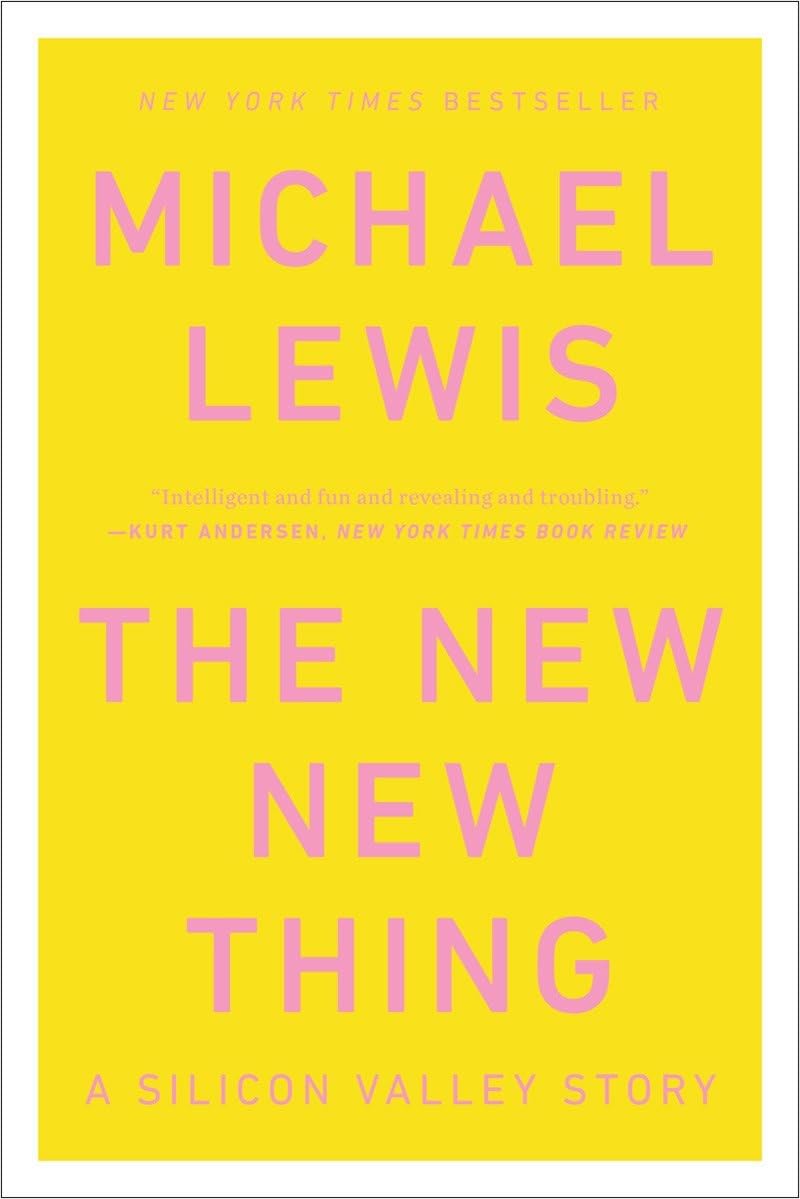
The New New Thing: A Silicon Valley Story Book Summary
This The New New Thing: A Silicon Valley Story Book Summary covers the key ideas, lessons, and takeaways in about 20 minutes.
The book illustrates both the transformative power and the destabilizing consequences of this worldview. The pursuit of revolutionary ideas generated extraordinary wealth, groundbreaking innovation, and technologies that reshaped society. Yet it also produced volatility, speculative mania, and cycles of boom and collapse.
Lewis shows that the real engine of the digital age is a mindset: the relentless pursuit of the next breakthrough, the refusal to settle, and the belief that the future belongs to those willing to leap into uncertainty. The “new new thing” is not a product—it is a philosophy.
Helps with these goals
Want the complete 20-minute summary?
- Full structured summary
- Video Summary
- Podcast Summary
- Audio summary
- Key takeaways
- Exercises
- Quiz
- Highlights and notes
- Ask the book with AI
What is in the The New New Thing: A Silicon Valley Story book summary?
Below is a preview of Sumizeit’s expert-written summary of The New New Thing: A Silicon Valley Story by Michael Lewis. The full summary covers the book’s key ideas in text, audio, and video.
Michael Lewis’s The New New Thing offers a vivid, deeply human portrait of Silicon Valley during one of the most explosive periods of technological and economic transformation in modern history. Rather than writing a conventional business history, Lewis tells a story that centers on the chaotic energy, personalities, and cultural shifts that fueled the Internet boom of the 1990s.
At the heart of the narrative is Jim Clark, a relentless and unconventional entrepreneur whose rise from a turbulent childhood to billionaire innovator encapsulates the ethos of Silicon Valley: a place where bold ideas and disregard for traditional limits can reshape the future almost overnight.
The book explores the mindset of innovators who push boundaries, the atmosphere of manic pursuit surrounding new technological frontiers, and the culture of wealth creation that redefined American capitalism. Lewis uses Clark’s ventures—including Silicon Graphics, Netscape, and Healtheon—as windows into a much broader story about how the world changed when the Internet burst from obscurity into the center of global economic life.
Jim Clark: A Reluctant Hero of the Digital Revolution
Jim Clark emerges in Lewis’s narrative as a figure equal parts visionary, rebel, and obsessive experimenter. Raised in a troubled household in rural Texas, Clark was not destined for prestige or stability. School provided little refuge—he barely completed high school, frequently clashed with authority figures, and drifted through early adulthood without direction.
His path shifted dramatically after entering academia and discovering computer science, which became the outlet through which his restless intellect could operate without restriction. Clark refused to accept rules or structures as fixed. He built a career out of challenging assumptions, ignoring hierarchy, and rejecting bureaucratic stagnation in traditional engineering environments.
Abrupt departures and personal conflicts trailed him, but so did extraordinary accomplishments. His reputation for refusing to compromise—and for forcing others to confront choices they were afraid to make—grew into legend. What set him apart was not just intelligence, but a psychological makeup wired for disruption.
Silicon Graphics and the Birth of High-Performance Computer Graphics
Clark’s breakthrough came with the founding of Silicon Graphics, a company that transformed digital graphics and provided the computational power required for early 3D modeling, animated effects, and scientific visualization.
The technology shaped industries ranging from film production to aerospace research, enabling breakthroughs such as realistic cinematic effects, advanced simulation environments, and real-time imaging. Despite the enormous success of Silicon Graphics, Clark grew frustrated as the company matured and shifted toward conservative corporate management.
He resented the transition from experimental innovation to risk-averse administration. Public investors, budgeting constraints, and business politics replaced the creative chaos he thrived in. Feeling hemmed in, he walked away from the company he founded, leaving behind a fortune and global influence in pursuit of new challenges.
Netscape and the Acceleration of the Internet Age
Clark returned to Silicon Valley determined to build something bigger and more transformative than Silicon Graphics. He saw potential in the relatively obscure Internet, which at the time was used primarily by academics.
Want the complete 20-minute summary?
- Full structured summary
- Video Summary
- Podcast Summary
- Audio summary
- Key takeaways
- Exercises
- Quiz
- Highlights and notes
- Ask the book with AI
Who should read The New New Thing: A Silicon Valley Story?
The New New Thing is essential reading for entrepreneurs, business leaders, and anyone fascinated by how technology transforms economies and society. It appeals to those curious about Silicon Valley's culture, the Internet revolution, and the psychology of disruptive innovation. If you want to understand the mindset that built the modern tech industry and the personalities who drove it, this book reveals the human stories behind the machines.
Why does The New New Thing: A Silicon Valley Story matter?
Michael Lewis captures a pivotal moment when the Internet shifted from academic obscurity to global economic force, fundamentally reshaping capitalism. The book remains relevant because it explores timeless questions about risk, ambition, and how breakthrough ideas actually get built in the real world. Understanding the Silicon Valley ethos and the boom-and-bust cycles Lewis describes provides crucial context for evaluating today's tech landscape and startup culture.
What are the key themes in The New New Thing: A Silicon Valley Story?
- The relentless pursuit of the next breakthrough over settling for success
- Disruption and chaos as engines of innovation rather than obstacles
- The power of compelling narratives to drive investment and technological direction
- Technology's collision with traditional institutions and industries
- Wealth creation as a high-speed lottery powered by speculation and promise
- The psychology of visionary entrepreneurs who reject established limits
What are the key lessons from the The New New Thing: A Silicon Valley Story book summary?
Restlessness drives innovation more than satisfaction
The most transformative entrepreneurs are psychologically wired to feel bored by success and compelled to pursue the next challenge, treating completion as a trigger to move on rather than an ending point.
Storytelling is as powerful as engineering in tech
In the Silicon Valley economy, the ability to translate complex technology into compelling visions that inspire confidence and investment becomes as competitive an advantage as technical skill itself.
Volatility and chaos fuel creative breakthroughs
Traditional corporate culture seeks stability and predictability, but innovation emerges through experimentation, rapid iteration, and willingness to abandon what no longer works—qualities that thrive in chaotic environments.
Rule-breaking is sometimes more valuable than rule-following
Visionaries who challenge assumptions and ignore established hierarchies often accomplish what others consider impossible because they refuse to accept conventional constraints as permanent.
Maturation and corporate structure can stifle innovators
Even founders of highly successful companies may abandon them when growth transitions from experimental innovation to risk-averse administration and bureaucratic constraints.
Potential and promise outweigh proven performance in boom cycles
Valuations and investment decisions often reflect belief in future possibilities rather than current profitability, creating a system where momentum becomes a business model.
Disruption can penetrate any industry, no matter how entrenched
Traditional industries believed to be immune to rapid change—healthcare, finance, retail—proved vulnerable when entrepreneurs applied new technologies and bypassed established gatekeepers.
Outsiders with limited resources can overturn dominant players
The Internet democratized market entry by removing traditional barriers, allowing upstarts with bold ideas to compete directly with established institutions that lacked agility.
Failure becomes a badge of honor in innovation cultures
Silicon Valley celebrates risk-taking and learning from failure rather than punishing it, fundamentally shifting how entrepreneurs evaluate and pursue high-stakes ventures.
Technology's arrival forces traditional institutions to choose: adapt or decline
Established corporations structured for control and predictability struggle against agile competitors operating like guerrilla forces that attack inefficiency with irreverence and speed.
Speed and velocity matter more than longevity
Progress in Silicon Valley is measured by how fast you move and innovate, not by how long you maintain a position, creating pressure for constant evolution.
Personal psychology shapes technological outcomes
The character traits and psychological drives of key individuals—their willingness to take risks, abandon security, and pursue uncertain futures—directly shape which technologies get built and how they're deployed.
Wealth creation can happen at extraordinary speed
Stock options, early IPOs, and speculative valuations transform the timeline of financial success from decades to years or even months, fundamentally altering how people make career decisions.
Vision becomes currency in technology markets
The power to inspire belief in a future possibility generates billions before products mature, making emotional resonance and narrative conviction essential business assets.
Technology pushes at the boundaries of what's physically possible
Ambitious projects like Clark's Hyperion yacht demonstrate that entrepreneurs often attempt to orchestrate all aspects of the physical world through digital systems, even when theoretical design conflicts with reality.
The 'new new thing' is a philosophy, not a product
The real driving force behind tech revolutions is a mindset—the relentless pursuit of breakthroughs, refusal to settle, and belief that the future belongs to those willing to leap into uncertainty.
Discomfort with tradition accelerates innovation
Entrepreneurs who instinctively reject established ways of doing things often discover better solutions precisely because they won't accept the premise that current methods are inevitable.
Spectacle and media attention become competitive advantages
Visibility and celebrity status around technology leaders influence investment flows, employee recruitment, and market perception in ways that amplify both success and failure cycles.
Risk appetite is not evenly distributed
Some individuals are psychologically predisposed to pursue uncertain futures with resources they can afford to lose, and this trait is rare enough to become exceptionally valuable in innovation ecosystems.
Boom-and-bust cycles emerge from the collision of speculation and innovation
The intensity of wealth creation attracts herd behavior and unsustainable valuations, creating inevitable corrections that destroy some ventures while allowing others to survive and reshape industries.
Want the complete 20-minute summary?
- Full structured summary
- Video Summary
- Podcast Summary
- Audio summary
- Key takeaways
- Exercises
- Quiz
- Highlights and notes
- Ask the book with AI
How can you apply ideas from The New New Thing: A Silicon Valley Story?
- Evaluate your own psychological orientation toward risk and change—understanding whether you're energized or paralyzed by uncertainty helps determine if you're suited for entrepreneurial ventures
- Develop the ability to articulate your vision as a compelling narrative that inspires confidence, not just explain the technical specifications of what you're building
- Treat failure and course correction as essential learning tools rather than career setbacks, embracing rapid iteration over prolonged planning
- Identify which established industries or processes have become inefficient enough that outsiders with new technology could disrupt them
- Consider whether your organization has shifted from innovation mode to risk-aversion mode, and whether you need to create separate teams or environments to maintain creative momentum
- Monitor how media attention and narrative momentum shape market valuations and investor behavior in your industry, and use storytelling strategically
- Build flexibility into your career planning around the reality that rapid technological change reshapes job markets and can quickly make skills or positions obsolete
What common mistakes do readers make with The New New Thing: A Silicon Valley Story?
- Assuming that successful companies naturally evolve into bigger successes—mature organizations often lose the chaos and flexibility that made them innovative
- Underestimating how quickly technology can disrupt industries considered stable or immune to change by traditional standards
- Evaluating ventures based solely on current profitability rather than understanding that in boom cycles, narrative and momentum can justify extreme valuations
- Treating stability and predictability as universal values rather than recognizing that innovation thrives in environments comfortable with volatility and experimentation
Sumizeit Exercises Apply what you've learned
Turn ideas from The New New Thing: A Silicon Valley Story into action with a short guided reflection: identify the biggest takeaway, connect it to your life, and commit to one step you can take in the next 24 hours.
What is the expert analysis of The New New Thing: A Silicon Valley Story?
Overview
The New New Thing: A Silicon Valley Story by Michael Lewis is a seminal work that captures the frenetic energy and transformative spirit of Silicon Valley during the 1990s Internet boom. Lewis, an acclaimed journalist and bestselling author, is known for his ability to distill complex economic and technological phenomena into engaging narratives centered on compelling individuals. This book stands out not merely as a chronicle of technological innovation, but as a cultural and psychological portrait of the era’s entrepreneurial zeitgeist, epitomized by the enigmatic figure of Jim Clark.
Core Thesis
At its core, Lewis argues that Silicon Valley’s revolutionary impact stems less from specific technologies than from a distinctive mindset: an obsession with constant reinvention, a willingness to embrace chaos and risk, and a cultural valorization of disruption over stability. Through the life and ventures of Jim Clark, the book illustrates how this ethos redefined capitalism, technology, and ambition by prioritizing imagination, speed, and narrative over traditional metrics of success. The “new new thing” is thus a philosophy—a relentless pursuit of the next breakthrough that challenges established limits and reshapes society.
Strengths
- Vivid Characterization: Lewis excels at humanizing the technological revolution through the figure of Jim Clark, providing psychological depth to the archetype of the Silicon Valley entrepreneur.
- Cultural Insight: The book captures the intangible cultural forces—such as the glorification of risk, the cult of innovation, and the role of storytelling—that drove the Internet boom beyond mere technical achievements.
- Accessible Narrative: Complex technological and economic concepts are rendered approachable without sacrificing nuance, making the book engaging for both specialists and general readers.
- Broader Economic Context: Lewis situates Silicon Valley’s rise within the larger transformation of American capitalism, highlighting how speculative finance and media spectacle intertwined with technological innovation.
- Metaphorical Use of Technology: The detailed account of Hyperion, Clark’s computerized yacht, serves as a powerful metaphor for Silicon Valley’s ambition and inherent contradictions.
Critiques & Counterarguments
- Overemphasis on Individual Agency: While Jim Clark’s story is compelling, the book’s focus on a single visionary may understate the collaborative and systemic nature of technological innovation in Silicon Valley, where many contributors and structural factors played critical roles.
- Romanticization of Chaos: The celebration of volatility and risk glosses over the social and economic costs of boom-and-bust cycles, including job losses, inequality, and market instability that accompanied the dot-com era.
- Limited Critical Engagement with Consequences: The narrative largely sidesteps deeper ethical and societal implications of rapid technological disruption, such as privacy concerns, labor displacement, and the digital divide.
- Competing Perspectives on Innovation: Alternative schools of thought emphasize sustainable, incremental innovation and institutional stability as equally vital to technological progress, challenging the book’s valorization of disruption as the primary engine of change.
- Historical Context and Dated Examples: Given its focus on the 1990s, some examples and market dynamics may feel dated to contemporary readers, especially in light of the evolution of the tech industry and regulatory environment over the past two decades.
Who Should Read This
This book is ideal for readers interested in the intersection of technology, business, and culture who seek a richly textured narrative rather than a dry technical manual. Entrepreneurs, investors, and professionals in the tech sector will find valuable insights into the psychological and cultural drivers behind innovation. Additionally, scholars and students of economic history, business strategy, and organizational behavior will appreciate Lewis’s nuanced portrayal of Silicon Valley’s unique ecosystem. Finally, general readers fascinated by stories of visionary individuals and transformative eras will find The New New Thing both informative and compelling.
Frequently asked questions about the The New New Thing: A Silicon Valley Story book summary
What is The New New Thing: A Silicon Valley Story about?
The New New Thing is Michael Lewis's portrait of Silicon Valley during the Internet revolution, centered on entrepreneur Jim Clark's journey founding companies like Silicon Graphics, Netscape, and Healtheon. Lewis explores how visionary individuals with disregard for traditional limits reshaped capitalism, technology, and ambition through their willingness to pursue constant innovation and disruption.
Who should read The New New Thing: A Silicon Valley Story?
This book appeals to entrepreneurs, business leaders, investors, and anyone interested in understanding the psychology and culture behind tech innovation. It's essential for those wanting to grasp how the Internet boom happened, how disruptive technologies overturn established industries, and what drives visionary risk-takers to abandon success in pursuit of the next breakthrough.
What are the main takeaways from The New New Thing: A Silicon Valley Story?
The central insight is that the 'new new thing' is a philosophy—relentless pursuit of breakthroughs, refusal to settle, and belief that the future belongs to those willing to leap into uncertainty. Lewis shows that chaos accelerates innovation, storytelling rivals engineering in importance, and individuals psychologically wired for disruption can reshape entire industries and economies through their restless ambition.
What does Michael Lewis reveal about Jim Clark's character in The New New Thing?
Lewis portrays Clark as a relentless visionary who rose from a troubled childhood to become a billionaire by refusing to accept established limits or remain satisfied with success. Clark's defining trait is his inability to settle—he abandons companies even at their peak because he fears stagnation more than failure, embodying Silicon Valley's obsession with constant reinvention.
How does Michael Lewis explain the Internet boom and its economic impact in The New New Thing?
Lewis shows the Internet boom as a cultural and financial revolution driven by individuals who rejected traditional business logic. Young entrepreneurs became multimillionaires overnight through stock options, valuations soared based on promise rather than profit, and a gold-rush mentality drove speculation that generated extraordinary wealth alongside inevitable cycles of boom and collapse.
What role does storytelling play in The New New Thing's portrayal of Silicon Valley?
Lewis emphasizes that in the Silicon Valley economy, the ability to translate complex technology into compelling visions that inspire confidence and investment is as powerful as technical skill itself. Narrative becomes currency—belief becomes infrastructure—and the power to tell stories about possible futures directly shapes valuations and technological outcomes.
What is the significance of Hyperion in The New New Thing?
Hyperion, Clark's technologically advanced computerized yacht, serves as both a literal project and metaphor for Silicon Valley's belief that technology can orchestrate all aspects of physical reality. Despite technical failures and contradictions between design and reality, it embodies the region's conviction that perfection is possible and innovation can solve any problem.
How does The New New Thing explain why traditional industries struggle against tech disruption?
Michael Lewis argues that established institutions are structured for control and predictability—qualities incompatible with rapid innovation. Silicon Valley operators attack inefficiency with irreverence and speed, while traditional companies lack the agility to adapt, allowing outsiders with bold ideas and new technologies to penetrate markets once impossible to challenge.
About Sumizeit
Sumizeit is a profitable Scomy LLC company based in Miami, Florida. It has been helping readers learn from nonfiction books for 7 years with expert-written summaries in text, audio, podcast, and video.
Want the complete 20-minute summary?
- Full structured summary
- Video Summary
- Podcast Summary
- Audio summary
- Key takeaways
- Exercises
- Quiz
- Highlights and notes
- Ask the book with AI
Here's why readers love Sumizeit
Join thousands of learners getting smarter every day
"Great experience. Detailed summaries. Loved the gamification feature. Makes learning fun. Good customer service. I recommend Sumizeit to anyone. You'll learn a lot."
"I always felt busy but still wanting to keep up with the book discussion in my friend group. This was a great supplement to help me keep reading the books I find fun while keeping up with important books."
"I love this website. Instead of scrolling social media, I find myself learning a lot. I use it everyday. I recommend this app for anyone who is too busy and wants to get up to speed with their favorite books."
The New New Thing: A Silicon Valley Story Book Summary PDF
Looking for a The New New Thing: A Silicon Valley Story Book Summary PDF you can save and revisit offline? Our The New New Thing: A Silicon Valley Story Book Summary PDF captures the book’s core ideas in a clean, printable format — the key frameworks, takeaways, and structure without the fluff. Download the The New New Thing: A Silicon Valley Story Book Summary PDF when you want a reference you can annotate, share with your team, or review on the go. Get your The New New Thing: A Silicon Valley Story Book Summary PDF from the download page below.
Download The New New Thing: A Silicon Valley Story Book Summary PDFPeople also liked these summaries
Readers who explored The New New Thing: A Silicon Valley Story often enjoyed these titles next.



Want the complete 20-minute summary?
- Full structured summary
- Video Summary
- Podcast Summary
- Audio summary
- Key takeaways
- Exercises
- Quiz
- Highlights and notes
- Ask the book with AI
Featured Book Titles
Popular Book Summaries at sumizeit, leading book summary app
