


As an Amazon Associate, Sumizeit earns from qualifying purchases.
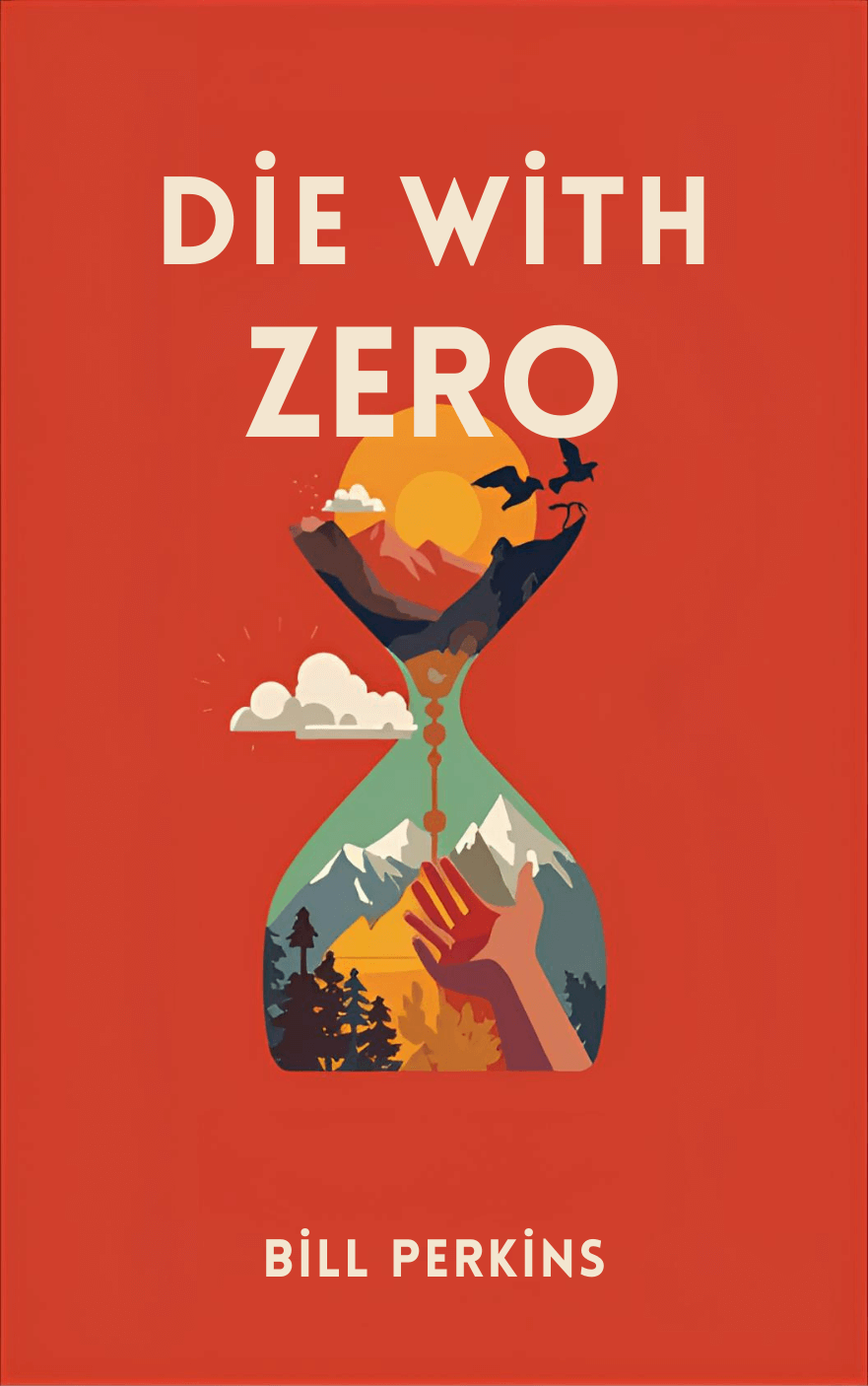
Die With Zero Book Summary
This Die With Zero Book Summary covers the key ideas, lessons, and takeaways in about 20 minutes.
Helps with these goals
Want the complete 20-minute summary?
- Full structured summary
- Video Summary
- Podcast Summary
- Audio summary
- Key takeaways
- Exercises
- Quiz
- Highlights and notes
- Ask the book with AI
What is in the Die With Zero book summary?
Below is a preview of Sumizeit’s expert-written summary of Die With Zero by Bill Perkins. The full summary covers the book’s key ideas in text, audio, and video.
Bill Perkins’ Die with Zero presents a radical shift in how we think about money, time, and the purpose of life. Instead of treating wealth as a scorecard and retirement as the long-awaited reward, he argues that life’s aim is to maximize meaningful experiences—before age, responsibilities, and mortality get in the way. You can always earn more money, but you cannot generate more time or regain lost health. The book encourages us to become intentional stewards of our lives: spending wisely, not for consumption’s sake, but to create memories and fulfillment that compound over a lifetime. He challenges conventional financial advice by urging readers to design their financial strategy around living fully in the present while still preparing wisely for the future.
Life Is Limited: Spend Your Energy Where It Counts
Perkins stresses a truth most people try not to acknowledge: our time is finite. Yet many live like they have endless years ahead, piling up savings without a clear purpose for them. When confronted with aging or mortality, people often look back and wonder why they waited so long to truly live. The core idea is that delaying joy too long only increases the tragedy of missed moments. Money is merely stored life energy—time and effort already spent. Hoarding that energy without converting it into life experiences means your investment never pays off. A person who dies with a large untouched bank account has essentially wasted years of opportunity. Instead, Perkins urges a balanced approach: protect your future—but not at the cost of sacrificing your best years to caution and restraint.
Experiences Are Worth More Than Possessions
Research consistently shows that experiences bring deeper, longer-lasting happiness than material goods. Physical objects fade into the background of life, but experiences create identity, stories, relationships, inspiration, and joy that last far beyond the moment they occur. A trip taken in your twenties may shape friendships, worldview, and a sense of adventure for decades. A sports car may feel thrilling for a few weeks but soon becomes a fixture in the garage. Perkins emphasizes that experiences are portable. They stay with you no matter what life takes away. They continue to reward you emotionally every time you think back on them, share them, or use them as inspiration for future choices.
The Memory Dividend: Compounding Happiness Over Time
Experiences deliver an additional benefit that Perkins calls the “memory dividend.” Much like a financial investment continues to grow, memories continue giving joy long after the experience ends. A vacation with friends delivers excitement in the moment, but recalling the laughs and adventures can brighten countless future days. Investing in experiences when young gives those memories more years to compound. The earlier you create meaningful experiences, the larger your potential return. This is why Perkins argues that waiting until later in life to “finally enjoy yourself” is a flawed strategy. Your capacity to enjoy is highest when you have both physical energy and the freedom to explore aggressively.
Want the complete 20-minute summary?
- Full structured summary
- Video Summary
- Podcast Summary
- Audio summary
- Key takeaways
- Exercises
- Quiz
- Highlights and notes
- Ask the book with AI
Who should read Die With Zero?
Die With Zero is for anyone tired of the endless grind of saving without purpose, particularly high-income earners and those approaching or in their peak earning years. This book resonates with people who suspect they're prioritizing accumulation over living, and those wondering if their financial strategy actually serves their life vision.
Why does Die With Zero matter?
In a world obsessed with wealth accumulation and delayed gratification, Bill Perkins' Die With Zero challenges the assumption that more money equals a better life. As mortality becomes harder to ignore and regret more costly, this framework offers a radically different approach: intentionally converting money into meaningful experiences before time, health, and opportunity run out.
What are the key themes in Die With Zero?
- Time and health are more valuable than money because they cannot be earned back
- Experiences create lasting happiness and memory dividends that compound over decades
- Money is stored life energy meant to be converted into fulfillment, not hoarded
- Life design requires matching experiences to the seasons of life when they're most achievable
- Oversaving from habit or fear is as damaging as overspending, just with different regrets
What are the key lessons from the Die With Zero book summary?
Experiences deliver compound returns through memory
Unlike possessions that fade, meaningful experiences generate happiness that returns every time you recall them. A trip at 25 delivers joy for decades through memories and stories.
Your net worth peak arrives earlier than you think
Most people reach peak earning capacity between ages 45 and 60, signaling a shift from accumulation to intentional spending. Recognizing this moment prevents years of pointless hoarding.
Youth is the ideal time for bold risk-taking
When you have few dependents and limited assets to lose, downside risk is small while upside potential is enormous. Deferring ambitious plans to later compounds regret.
Time-bucketing transforms vague dreams into scheduled reality
Dividing life into five or ten-year buckets and assigning specific experiences to each creates accountability. It clarifies which opportunities must happen soon or be lost forever.
Three resources peak at different life stages
Young people have time and health but little money; middle-aged people have money but less time; older people have money and time but declining capacity. Alignment is everything.
Giving while living beats giving after death
Inheritances often arrive when children are middle-aged and past their critical decision-making years. Support during early adulthood—marriage, career, home buying—creates far greater impact.
Financial tools remove the fear that paralyzes spending
Annuities, long-term care insurance, and life expectancy calculators secure basic needs, freeing you to spend the rest without fear of destitution in old age.
Oversaving is a disguised form of self-deprivation
Saving becomes habitual and divorced from purpose, leaving people with unused wealth they never enjoy. The damage appears as lifelong regret rather than debt.
Money's value declines as your remaining lifespan shrinks
Each dollar means less the older you get and fewer years remain to experience it. This psychological insight helps motivate letting go of excess wealth.
Your life will be remembered as a story, not a spreadsheet
When people reflect on your life, they recall experiences, relationships, and impact—never your final bank balance. Design your narrative intentionally.
Passive living is the greatest hidden risk
Drifting through decades hoping enjoyment will arrive guarantees half-lived years. Proactive choice-making aligned with your values is the antidote.
Dying with zero means perfect decumulation, not recklessness
The goal is to strategically convert every dollar earned into satisfaction and fulfillment, leaving nothing wasted—not to spend wildly without thought.
Early experiences compound more fully than late ones
A profound experience at 30 generates 50+ years of memory returns; the same at 70 generates perhaps 15. Timing matters enormously for return on life investment.
Fear and habit, not logic, drive most hoarding behavior
People often save to soothe anxiety or because it's what they've always done, not because they've calculated actual financial need. Reassessing the source reveals opportunities to redirect capital.
Experiences are portable; possessions are anchors
Travel, learning, and adventure move with you through every phase of life and can inspire future choices. Physical goods become burdensome and forgotten.
A strategic spending plan beats both recklessness and asceticism
The middle path—clear purpose for each dollar, protection of core needs, aggressive spending on high-impact experiences—optimizes fulfillment without jeopardizing security.
Want the complete 20-minute summary?
- Full structured summary
- Video Summary
- Podcast Summary
- Audio summary
- Key takeaways
- Exercises
- Quiz
- Highlights and notes
- Ask the book with AI
How can you apply ideas from Die With Zero?
- Create a time-bucket plan dividing your next 30 years into five-year phases, assigning specific experiences to each window before opportunities close
- Calculate your net worth peak and plan a deliberate shift from earning mode to spending mode when income stabilizes
- Audit your savings: identify whether you're saving for specific goals or hoarding from habit, then redirect excess toward meaningful experiences
- Install financial guardrails using annuities or insurance products for essential needs, freeing discretionary wealth for intentional living without fear
- Design a 'giving while living' strategy with family and charities, providing support and shared experiences now rather than posthumous inheritances
- Schedule one high-impact experience per year in your peak earning and health years, treating it as non-negotiable investment in memory returns
- Track experiences as seriously as finances, building a portfolio of stories and relationships that define your actual wealth
What common mistakes do readers make with Die With Zero?
- Waiting until retirement to finally live, only to discover health or energy has declined too much to pursue planned adventures
- Saving endlessly without a clear target, leaving untouched wealth that represents years of unconverted life energy
- Assuming money and experiences will always be available later, missing the window when health and freedom align for bold action
- Equating experiences with extravagant spending, when meaningful moments often arise from presence and intention rather than expense
Sumizeit Exercises Apply what you've learned
Turn ideas from Die With Zero into action with a short guided reflection: identify the biggest takeaway, connect it to your life, and commit to one step you can take in the next 24 hours.
What is the expert analysis of Die With Zero?
Overview
Die With Zero by Bill Perkins is a provocative and insightful contribution to the literature on personal finance and life philosophy. Perkins, an entrepreneur and hedge fund manager with a reputation for unconventional thinking, challenges entrenched financial orthodoxies that prioritize accumulation and delayed gratification. Instead, he advocates for a life strategy that centers on maximizing meaningful experiences throughout one’s lifespan. The book’s significance lies in its fusion of financial pragmatism with existential urgency, urging readers to rethink wealth not as an end but as a means to a fulfilling life. Perkins’ unique background and personal philosophy lend credibility and a distinctive voice to this countercultural message.
Core Thesis
At the heart of Die With Zero is the argument that time and health are finite resources that money alone cannot replace. Perkins contends that traditional financial advice—focused on saving aggressively for an often uncertain retirement—misses the point that the true value of money is in the experiences it enables, especially when one is physically and mentally capable of enjoying them. He introduces the concept of the “memory dividend,” where experiences compound happiness over time, and advocates for a balanced, intentional approach to spending that aims to exhaust one’s financial resources by the end of life. This thesis reframes wealth as “stored life energy” that should be consciously converted into fulfillment rather than hoarded.
Strengths
- Innovative Perspective: Perkins offers a fresh lens on financial planning by integrating psychological and philosophical insights about mortality and happiness.
- Practical Frameworks: Concepts like “time bucketing” and identifying one’s “net worth peak” provide actionable tools that encourage readers to align spending with life stages.
- Emphasis on Experience Over Possessions: The book is well-supported by psychological research showing that experiences yield longer-lasting satisfaction than material goods.
- Balanced Approach: Perkins does not advocate reckless spending but rather a thoughtful strategy that safeguards essential needs while maximizing life’s joys.
- Psychological Depth: The exploration of the emotional difficulty in “letting go” of money adds nuance to the financial advice, addressing behavioral barriers.
Critiques & Counterarguments
- Evidence Base and Generalizability: While Perkins draws on psychological research about happiness and experiences, the book leans heavily on anecdotal evidence and personal philosophy. More rigorous empirical data or longitudinal studies could strengthen claims about optimal spending timing and life satisfaction.
- Socioeconomic Limitations: The premise assumes a degree of financial flexibility that may not be accessible to lower-income individuals, for whom the priority remains basic security rather than experience optimization.
- Risk of Oversimplification: The advice to “die with zero” may understate complexities such as unforeseen medical expenses, economic instability, or familial obligations that necessitate financial reserves.
- Opposing Schools of Thought: Traditional financial planning emphasizes the precautionary principle—saving to mitigate risk and uncertainty. Behavioral economists warn that premature spending can lead to regret if unforeseen circumstances arise, challenging Perkins’ call for aggressive decumulation.
- Cultural Variability: The book’s individualistic ethos may not resonate universally, particularly in cultures where intergenerational wealth transfer and communal obligations are paramount.
Who Should Read This
Die With Zero is ideally suited for financially stable readers who find themselves caught in the conventional paradigm of relentless saving and deferred enjoyment. It appeals to those seeking a more intentional, values-driven approach to money that prioritizes life fulfillment over accumulation. Entrepreneurs, mid-career professionals, and retirees open to reexamining their financial and existential priorities will find Perkins’ insights both challenging and liberating. Additionally, readers interested in the intersection of psychology, philosophy, and personal finance will appreciate the book’s integrative perspective. However, those facing financial precarity or strict cultural expectations around wealth may find the book’s prescriptions less applicable.
Frequently asked questions about the Die With Zero book summary
What is Die With Zero about?
Die With Zero by Bill Perkins argues that the goal of life should be to convert all earned money into meaningful experiences and fulfillment before death, rather than accumulating unused wealth. The book challenges conventional financial advice by proposing that time and health matter far more than money, and that experiences—not possessions—create lasting happiness that compounds throughout life.
Who should read Die With Zero?
Die With Zero suits high-income earners, people in their peak earning years (40s–50s), and anyone who suspects their financial strategy isn't serving their actual life vision. It's also valuable for those approaching major life transitions or feeling trapped between the competing demands of work and living fully.
What are the main takeaways from Die With Zero?
The core takeaways include: experiences create more lasting happiness than possessions, memories generate compounding returns over decades, your earning peak likely arrives before traditional retirement age, youth is the optimal time for bold experiences and risk-taking, and financial tools like annuities can secure your foundation while freeing you to spend meaningfully. Most importantly, intentional living aligned with your values beats both recklessness and fear-driven hoarding.
What is the 'memory dividend' Perkins describes?
The memory dividend refers to the compounding happiness an experience generates long after it ends. A vacation delivers joy in the moment, but recalling and sharing those memories provides renewed happiness for decades. Experiences taken early in life maximize the return on this dividend, making timing critical.
How does Die With Zero address the fear of running out of money?
Perkins recommends using financial tools like annuities and long-term care insurance to guarantee essential living expenses, which removes the paralyzing fear that prevents spending. Once basic security is ensured through these guardrails, the remaining wealth can be spent confidently on meaningful experiences without risking destitution.
What is time-bucketing and how does it work?
Time-bucketing is dividing your remaining life into five or ten-year periods and assigning specific experiences to each bucket. This clarifies which opportunities must happen soon or will be lost forever—like hiking before joint problems develop or living abroad before family obligations take over. It transforms vague aspirations into accountable plans.
Does Die With Zero promote irresponsible spending?
No. Die With Zero advocates intentional spending guided by values, not reckless consumption. The goal is to strategically convert earned money into experiences and relationships that create lasting fulfillment, while maintaining a secure financial foundation. The title 'Die With Zero' means perfectly aligned spending, not careless waste.
About Sumizeit
Sumizeit is a profitable Scomy LLC company based in Miami, Florida. It has been helping readers learn from nonfiction books for 7 years with expert-written summaries in text, audio, podcast, and video.
Want the complete 20-minute summary?
- Full structured summary
- Video Summary
- Podcast Summary
- Audio summary
- Key takeaways
- Exercises
- Quiz
- Highlights and notes
- Ask the book with AI
Here's why readers love Sumizeit
Join thousands of learners getting smarter every day
"Great experience. Detailed summaries. Loved the gamification feature. Makes learning fun. Good customer service. I recommend Sumizeit to anyone. You'll learn a lot."
"I always felt busy but still wanting to keep up with the book discussion in my friend group. This was a great supplement to help me keep reading the books I find fun while keeping up with important books."
"I love this website. Instead of scrolling social media, I find myself learning a lot. I use it everyday. I recommend this app for anyone who is too busy and wants to get up to speed with their favorite books."
Die With Zero Book Summary PDF
Looking for a Die With Zero Book Summary PDF you can save and revisit offline? Our Die With Zero Book Summary PDF captures the book’s core ideas in a clean, printable format — the key frameworks, takeaways, and structure without the fluff. Download the Die With Zero Book Summary PDF when you want a reference you can annotate, share with your team, or review on the go. Get your Die With Zero Book Summary PDF from the download page below.
Download Die With Zero Book Summary PDFPeople also liked these summaries
Readers who explored Die With Zero often enjoyed these titles next.




Want the complete 20-minute summary?
- Full structured summary
- Video Summary
- Podcast Summary
- Audio summary
- Key takeaways
- Exercises
- Quiz
- Highlights and notes
- Ask the book with AI
Featured Book Titles
Popular Book Summaries at sumizeit, leading book summary app
