


As an Amazon Associate, Sumizeit earns from qualifying purchases.
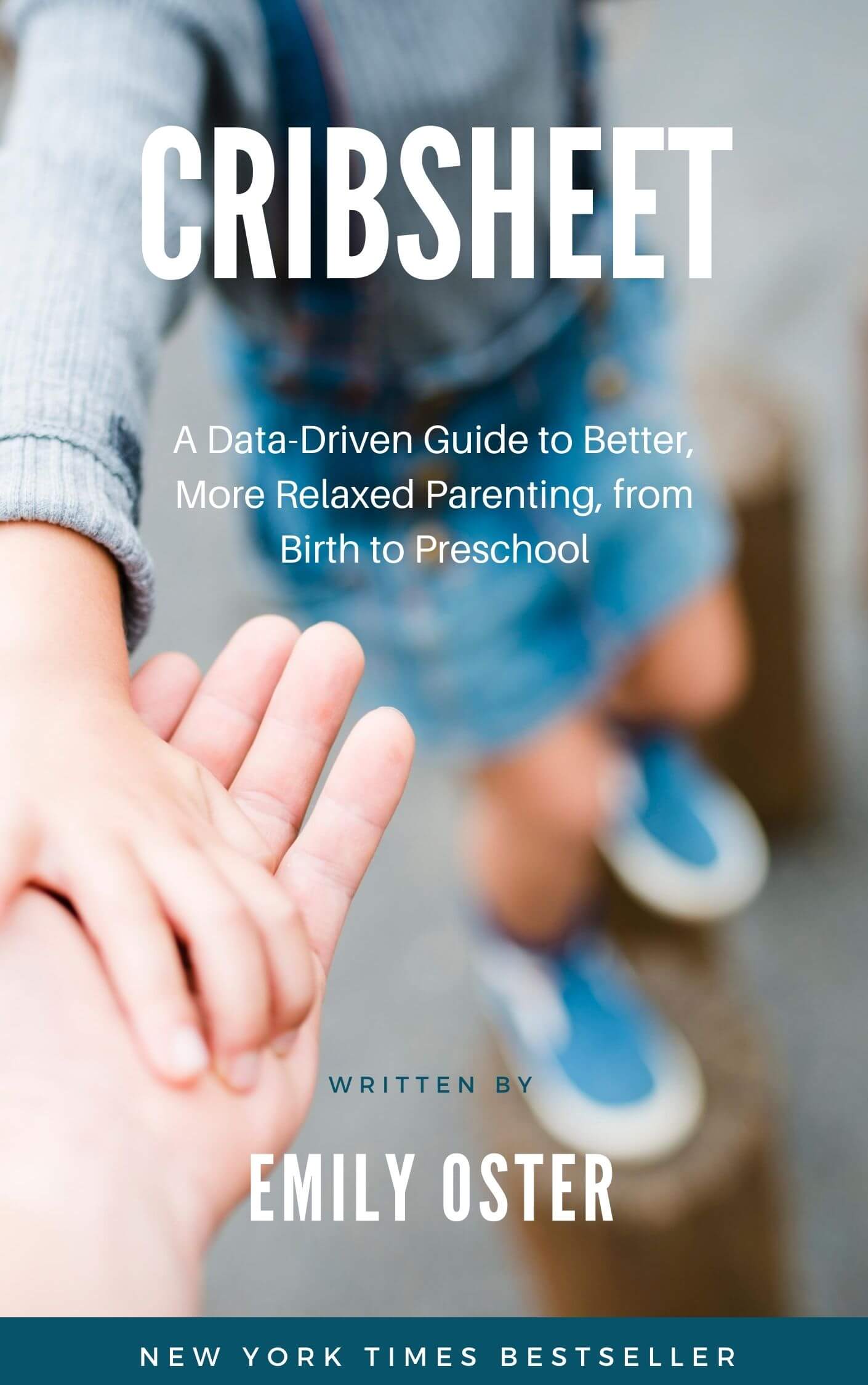
Cribsheet Book Summary
This Cribsheet Book Summary covers the key ideas, lessons, and takeaways in about 20 minutes.
Additionally, many parenting choices can be made based on a personal decision-making framework alone. If you consider what it is that you value most, be it time, money, or quality of care for your child, you can keep these opportunity costs in mind when making decisions while also considering the marginal value in each situation. At the end of the day, there’s not one way to do parenting right. If there was, we would have figured it out a long time ago!
Helps with these goals
Want the complete 20-minute summary?
- Full structured summary
- Video Summary
- Podcast Summary
- Key takeaways
- Exercises
- Quiz
- Highlights and notes
- Ask the book with AI
What is in the Cribsheet book summary?
Below is a preview of Sumizeit’s expert-written summary of Cribsheet by Emily Oster. The full summary covers the book’s key ideas in text, audio, and video.
From an outside perspective, you might think it unlikely that an economist would have valuable insight to add to a conversation about early-childhood parenting. However, that’s exactly where you are wrong.
Not only does economist Emily Oster’s second book, Cribsheet, offer a detailed analysis of the interplay between economic trends and behaviors among young children, but the text also provides a practical, hands-on guide for effective parenting in an era of information overload. Oster separates the valuable advice from the ‘clutter’ and parents (or soon-to-be parents) have much to look forward to with this data-driven how-to (and how-to-not) guide.
Why You Need a Crib Sheet
You may have never heard of a ‘crib sheet’ before. Let us enlighten you. A crib sheet is also known as a ‘cheat sheet’ or a piece of paper with helpful hints and notes that a student is allowed to take into their exam for extra assistance.
In the context of parenting, the crib sheet is the set of notes you should always keep handy as you move through the trials and triumphs of becoming a new parent.
So, what sort of information do the most useful crib sheets include?
The answer varies, but here are a few suggestions:
While this note-keeping practice might seem academic in nature, it serves a vital purpose in parenting as well: allowing us, as caretakers for tiny humans, to make competent, informed decisions based on cost and benefit analyses, as we will examine in more detail later on.
How Economics Makes Us Better Parents
Imagine a scenario where you are forced to make a difficult parenting decision: send your child to daycare or hire a full-time nanny. In choosing between these options, you are likely to consider several factors including cost, quality of the experience, and perhaps even the physical distance to the location. By weighing the pros and cons of each option, you are already making economic considerations without even realizing it. Some--like the cost of the service--are monetary while others--such as the quality of the experience--are non-monetary inputs.
The bottom line? We all place a different level of importance on each factor in a decision. For this reason, there is no right or wrong answer from an economic standpoint. Instead, there is variability among the choices we make and we need to accept that what works for our family might be distinctly different from what works for another. Every situation holds variables that are unique.
In the end, our economic decisions are value-based ones. They are dependent on personal priorities. If it is more important to you to have your child raised in your home environment, you might want to hire the nanny. If it is more important to you that your child develop strong social skills with other kids, you may prefer to send them to daycare.
Let’s look at a framework that can help guide us through these challenging choices.
Opportunity Cost:
The opportunity cost in a decision refers to what you are giving up.
Want the complete 20-minute summary?
- Full structured summary
- Video Summary
- Podcast Summary
- Key takeaways
- Exercises
- Quiz
- Highlights and notes
- Ask the book with AI
Who should read Cribsheet?
Cribsheet is for new parents and parents-to-be who feel overwhelmed by conflicting parenting advice and want to make informed decisions grounded in evidence. If you're tired of mommy-blog dogma and looking for a practical, data-driven approach to early childhood decisions, this book offers the clarity you need.
Why does Cribsheet matter?
In an era of information overload and parenting anxiety, Cribsheet by Emily Oster cuts through the noise by teaching parents how to evaluate research critically and apply economic thinking to real family decisions. The book empowers parents to trust their own values and priorities rather than defaulting to one-size-fits-all advice, making it essential for anyone navigating the complexity of modern parenting.
What are the key themes in Cribsheet?
- Evidence-based parenting decision-making
- Understanding research quality and limitations
- Opportunity cost and marginal value in family choices
- Personal values drive parenting priorities
- Skepticism toward misleading correlations
- Economics as a parenting framework
What are the key lessons from the Cribsheet book summary?
Not All Research Is Created Equal
Randomized controlled trials and large observational studies provide more reliable evidence than case studies or anecdotal examples, so parents should prioritize these stronger research methods when evaluating parenting claims.
Correlation Does Not Imply Causation
Two things can go hand-in-hand without one causing the other; confounding variables often hide the real story behind parenting research, requiring skepticism about what studies actually prove.
Understand Opportunity Cost in Family Decisions
Every parenting choice involves giving up something else; recognizing what you sacrifice helps you make intentional decisions aligned with your true priorities rather than defaulting to external expectations.
Marginal Value Guides Smart Trade-offs
Compare the actual benefit gained against the cost incurred—whether monetary or temporal—to understand whether a parenting choice truly serves your family's needs.
Your Values Should Drive Your Choices
Whether you prioritize time with your child, financial savings, or developmental opportunities, your personal values (not universal rules) should determine which parenting option makes sense for your family.
Beware of Confounding Variables
Hidden factors like parental education, socioeconomic status, or genetics often drive parenting outcomes attributed to specific practices, so dig deeper before accepting a study's conclusions.
Large Sample Sizes Matter
The larger and more diverse the research sample, the more confident you can be in its findings; small studies or those conducted on narrow populations may not apply to your situation.
Case Studies Are Illustrations, Not Evidence
A researcher can always find an individual example to support almost any claim, making anecdotal evidence unreliable for broad parenting guidance.
Randomization Reduces Bias
When researchers randomly divide parents into study groups, similar traits distribute across groups naturally, providing fairer comparisons than observational data.
Observational Studies Reveal Real-World Trends
Watching how diverse parents actually behave and tracking outcomes in natural settings offers valuable insights, especially when sample sizes are large enough to reveal genuine patterns.
Question the Source of Parenting Advice
Before adopting any parenting recommendation, investigate what type of research supports it and whether that research actually proves what people claim it does.
There's No Single 'Right' Way to Parent
Accepting that parenting has multiple valid approaches—each aligned with different values and circumstances—reduces guilt and enables more confident decision-making.
Build Your Personal Decision-Making Framework
By clarifying what you value most in parenting decisions, you create a consistent lens for evaluating choices rather than fluctuating based on the latest trend.
Monetary and Non-Monetary Costs Both Matter
Some parenting trade-offs involve money, while others involve time, convenience, or emotional energy; both types deserve equal consideration in your decision-making.
Relax Your Grip on Perfection
Once you understand the evidence, give yourself permission to prioritize what actually matters to your family rather than chasing every parenting optimization.
Want the complete 20-minute summary?
- Full structured summary
- Video Summary
- Podcast Summary
- Key takeaways
- Exercises
- Quiz
- Highlights and notes
- Ask the book with AI
How can you apply ideas from Cribsheet?
- Create a personal values checklist to clarify what matters most to you before making major childcare or parenting decisions
- Evaluate any parenting study or advice by asking: Is this based on randomized trials, observational data, or just anecdotes?
- Use opportunity cost analysis when choosing between childcare options, education approaches, or time investments with your child
- Build a spreadsheet comparing the costs, benefits, and trade-offs of major parenting choices (daycare vs. nanny, public vs. private school, etc.)
- Research the background of parenting experts and claims; ask what confounding variables might explain the results they cite
- Develop a personal crib sheet documenting your doctor's contact info, childcare options, costs, and your family's decision criteria for quick reference
- Challenge yourself to identify at least one confounding variable in any parenting claim before accepting it as truth
What common mistakes do readers make with Cribsheet?
- Treating all parenting research as equally valid when randomized trials and large observational studies are far more reliable than case studies
- Assuming that because two things correlate (like breastfeeding and high IQ), one definitely causes the other, ignoring hidden confounding variables
- Making parenting decisions based on what works for other families without analyzing your own priorities and opportunity costs
- Following parenting advice that conflicts with your family's values simply because it's popular or backed by anecdotal evidence
Sumizeit Exercises Apply what you've learned
Turn ideas from Cribsheet into action with a short guided reflection: identify the biggest takeaway, connect it to your life, and commit to one step you can take in the next 24 hours.
What is the expert analysis of Cribsheet?
Overview
Cribsheet is authored by Emily Oster, a distinguished economist and professor at Brown University known for applying rigorous economic analysis to parenting and health decisions. Published as a follow-up to her acclaimed Expecting Better, this book stands out by bridging the gap between empirical research and everyday parenting dilemmas. Oster’s unique vantage point as an economist allows her to dissect parenting decisions through the lens of data, opportunity cost, and marginal value, offering a refreshing antidote to the often contradictory and overwhelming advice that inundates new parents.
Core Thesis
At its heart, Cribsheet advances the argument that parenting decisions, while deeply personal, can be approached systematically using economic principles and sound data interpretation. Oster contends that by understanding concepts such as opportunity cost and marginal value, parents can navigate complex choices—like daycare versus nanny care—more confidently. Furthermore, she emphasizes the critical importance of scrutinizing the quality and methodology of parenting research, urging readers to distinguish correlation from causation and to prioritize randomized controlled trials over observational or case studies. Ultimately, Oster advocates for a pragmatic, individualized approach to parenting, grounded in both data and personal values.
Strengths
- Innovative Application of Economics: Oster’s application of economic frameworks to parenting decisions is both novel and practical, empowering readers to quantify and weigh trade-offs in a domain often dominated by emotion and anecdote.
- Clarity in Research Literacy: The book excels at demystifying complex research methodologies, educating parents on how to critically evaluate studies and avoid common pitfalls such as confounding variables and misleading correlations.
- Balanced Perspective: Oster resists one-size-fits-all prescriptions, instead highlighting the variability of family circumstances and values, which fosters a more inclusive and less judgmental discourse around parenting choices.
- Accessible Yet Rigorous: The prose is approachable without sacrificing intellectual rigor, making it suitable for both lay readers and those with a background in social science.
Critiques & Counterarguments
- Potential Oversimplification of Parenting Nuances: While economic models provide clarity, they may underrepresent the emotional, psychological, and cultural complexities inherent in parenting decisions that resist quantification.
- Limitations of Data Availability: The book relies heavily on existing studies, many of which are constrained by sample biases or lack longitudinal depth, potentially limiting the generalizability of conclusions.
- Opposing Views on Attachment and Development: Some developmental psychologists argue that certain parenting practices—such as breastfeeding or co-sleeping—have benefits that extend beyond what economic cost-benefit analyses can capture, emphasizing long-term emotional bonding and neurodevelopment.
- Critique from Behavioral Economics: Behavioral economists highlight that human decision-making often deviates from rational actor models due to cognitive biases and heuristics, suggesting that purely economic frameworks may inadequately predict or guide parenting choices.
- Real-World Constraints: Socioeconomic disparities and systemic barriers can limit the feasibility of choices that Oster frames as rational options, underscoring the need for a broader socio-political lens in parenting discourse.
Who Should Read This
Cribsheet is ideally suited for prospective and new parents who seek a data-informed, pragmatic approach to navigating early childhood decisions amidst the noise of popular parenting advice. It also appeals to readers interested in research methodology and critical thinking, as well as professionals in health economics, public policy, and child development who appreciate interdisciplinary insights. Those who value an analytical framework balanced with empathy and flexibility will find Oster’s work both enlightening and empowering.
Frequently asked questions about the Cribsheet book summary
What is Cribsheet about?
Cribsheet by Emily Oster is a data-driven parenting guide that teaches parents how to evaluate research critically and apply economic thinking to family decisions. Rather than prescribing one correct way to parent, the book helps readers understand the evidence behind parenting claims and make choices aligned with their personal values and priorities.
Who should read Cribsheet?
Cribsheet is ideal for new parents, expectant parents, and anyone overwhelmed by conflicting parenting advice who want a more evidence-based and rational approach to decision-making. It's especially useful for parents who feel pressured by conventional wisdom but want to understand the actual research supporting (or not supporting) common parenting claims.
What are the main takeaways from Cribsheet?
The main takeaways include: not all research is equally reliable (prioritize randomized trials over anecdotes), correlation doesn't prove causation, every parenting choice involves opportunity costs that should align with your values, and there is no single right way to parent. Oster encourages parents to think economically about their decisions and relax their grip on perfectionism once they've evaluated the evidence.
How does Emily Oster suggest parents evaluate parenting research?
Oster recommends prioritizing randomized controlled trials and large observational studies over case studies or anecdotal evidence, being skeptical of correlations without proven causation, and identifying confounding variables that might explain research findings. She emphasizes that larger sample sizes and random assignment both increase research reliability and applicability to your own family.
What is the economic framework Oster uses for parenting decisions?
Oster applies two key economic concepts: opportunity cost (what you give up when choosing one option) and marginal value (the actual benefit gained relative to the cost). By understanding these concepts, parents can make trade-offs consciously based on their priorities—whether that's financial savings, time together, or quality of care—rather than defaulting to external expectations.
Why does Cribsheet criticize case studies in parenting research?
Case studies are individual examples that cannot be reliably generalized to larger populations because a researcher can always find an anecdote to support almost any claim. Oster argues that single stories or small examples are illustrations rather than evidence and should not drive broad parenting decisions affecting your family.
What does Oster mean by a 'crib sheet' in parenting?
A crib sheet (or cheat sheet) is a personal reference document where parents gather key information like doctors' contact details, childcare costs and options, supply lists, and their decision-making criteria. This tool helps parents make competent, informed decisions by having their priorities and options organized and accessible during the busy early parenting years.
About Sumizeit
Sumizeit is a profitable Scomy LLC company based in Miami, Florida. It has been helping readers learn from nonfiction books for 7 years with expert-written summaries in text, audio, podcast, and video.
Want the complete 20-minute summary?
- Full structured summary
- Video Summary
- Podcast Summary
- Key takeaways
- Exercises
- Quiz
- Highlights and notes
- Ask the book with AI
Here's why readers love Sumizeit
Join thousands of learners getting smarter every day
"Great experience. Detailed summaries. Loved the gamification feature. Makes learning fun. Good customer service. I recommend Sumizeit to anyone. You'll learn a lot."
"I always felt busy but still wanting to keep up with the book discussion in my friend group. This was a great supplement to help me keep reading the books I find fun while keeping up with important books."
"I love this website. Instead of scrolling social media, I find myself learning a lot. I use it everyday. I recommend this app for anyone who is too busy and wants to get up to speed with their favorite books."
Cribsheet Book Summary PDF
Looking for a Cribsheet Book Summary PDF you can save and revisit offline? Our Cribsheet Book Summary PDF captures the book’s core ideas in a clean, printable format — the key frameworks, takeaways, and structure without the fluff. Download the Cribsheet Book Summary PDF when you want a reference you can annotate, share with your team, or review on the go. Get your Cribsheet Book Summary PDF from the download page below.
Download Cribsheet Book Summary PDFPeople also liked these summaries
Readers who explored Cribsheet often enjoyed these titles next.



Want the complete 20-minute summary?
- Full structured summary
- Video Summary
- Podcast Summary
- Key takeaways
- Exercises
- Quiz
- Highlights and notes
- Ask the book with AI
Featured Book Titles
Popular Book Summaries at sumizeit, leading book summary app