


As an Amazon Associate, Sumizeit earns from qualifying purchases.
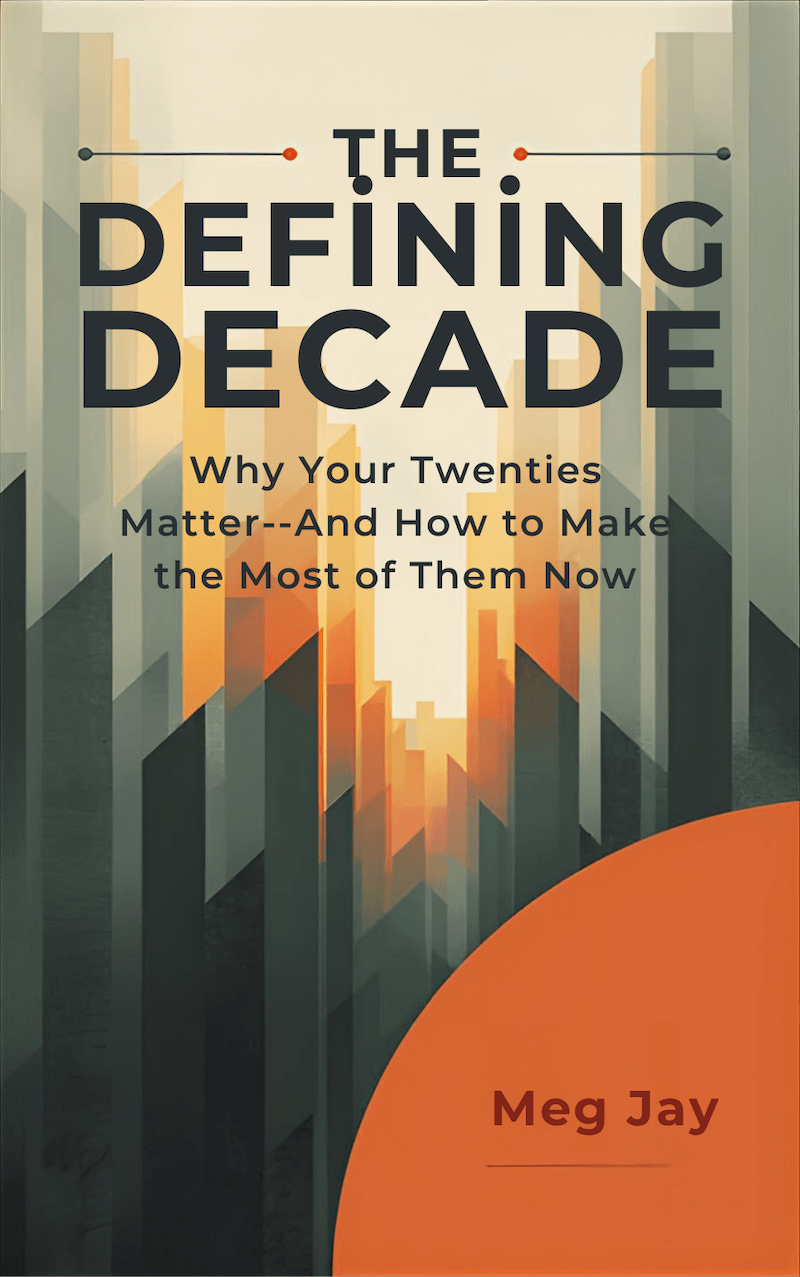
The Defining Decade Book Summary
This The Defining Decade Book Summary covers the key ideas, lessons, and takeaways in about 20 minutes.
Helps with these goals
Want the complete 20-minute summary?
- Full structured summary
- Video Summary
- Podcast Summary
- Audio summary
- Key takeaways
- Exercises
- Quiz
- Highlights and notes
- Ask the book with AI
What is in the The Defining Decade book summary?
Below is a preview of Sumizeit’s expert-written summary of The Defining Decade by Meg Jay, PHD. The full summary covers the book’s key ideas in text, audio, and video.
Your twenties are frequently portrayed as a decade meant for experimentation, freedom, and postponement of responsibility. Society often frames this stage as a rehearsal period before adulthood truly begins, implying that real decisions can wait. Meg Jay challenges this narrative by asserting that the twenties are a decisive and powerful chapter in human development—a time that fundamentally shapes the rest of life. Instead of being a transitional holding zone, this decade actively constructs the framework for adulthood.
Research in neuroscience reveals that the frontal lobe, responsible for reasoning, planning, emotional regulation, and long-term decision-making, undergoes a critical period of growth during this decade. Neural pathways become strengthened or weakened based on lived experience. This means that the habits, environments, relationships, and commitments chosen in the twenties leave enduring marks on identity and ability. In essence, the brain is sculpting itself according to what individuals practice and prioritize.
Because of this neurological reality, decisions made during this period carry disproportionate weight. Drifting through temporary jobs, unclear relationships, or avoidance of responsibility may feel harmless in the moment, but these patterns become increasingly difficult to change later. Many individuals reach their late twenties or early thirties overwhelmed by a sudden rush of urgency, wishing they had acted sooner. Jay emphasizes that the twenties are not disposable years; they are foundational.
Identity Capital: Building the Assets That Shape the Future
Identity capital is the set of personal resources a person accumulates over time—skills, credentials, networks, achievements, and experiences that make an individual valuable and capable. Meg Jay argues that young adults should treat their twenties as a period of intentional investment rather than indefinite exploration. Temporary or low-stakes jobs may provide comfort or convenience, but they rarely build meaningful identity capital and often lead to underemployment and self-doubt.
By contrast, seeking roles that build capability expands opportunity. Identity capital grows through experiences that involve discipline, resilience, and skill development. This includes internships, demanding workplaces, advanced education, professional certifications, creative projects, volunteer leadership, or entrepreneurial attempts. Even unconventional paths can be valuable if they contribute something substantial to personal growth and future direction.
Identity capital also shapes narrative. Employers, collaborators, and partners respond strongly to clarity of purpose and the ability to tell a coherent story about one’s journey. This does not require a perfectly linear history; it requires thoughtful reflection on how past experiences inform future goals. Without identity capital, young adults may struggle to articulate direction or vision, leading to stagnation. With it, they gain leverage, confidence, and momentum.
The Power of Weak Ties: Expanding Possibility Through Connection
While close friends offer emotional support and belonging, they typically inhabit the same environments, share similar networks, and provide similar information. Weak ties—acquaintances, former colleagues, distant contacts, or friends-of-friends—function differently. They open doors to unfamiliar spaces and opportunities that lie outside one’s immediate circle.
Jay highlights sociological research demonstrating that career advancements and transformative opportunities frequently originate from weak ties rather than close relationships.
Want the complete 20-minute summary?
- Full structured summary
- Video Summary
- Podcast Summary
- Audio summary
- Key takeaways
- Exercises
- Quiz
- Highlights and notes
- Ask the book with AI
Who should read The Defining Decade?
The Defining Decade is essential for anyone in their twenties who feels uncertain about their direction, as well as for parents, mentors, and educators seeking to guide young adults effectively. If you're wondering whether your choices now really matter or if you can figure things out later, this book offers both scientific validation and practical strategies for intentional living during this critical period.
Why does The Defining Decade matter?
In a culture that often portrays the twenties as a carefree rehearsal for real life, Meg Jay's evidence-based argument that this decade fundamentally shapes your future has never been more relevant. As career paths become less linear, relationship timelines more complex, and social media amplifies comparison culture, understanding how to invest in yourself now—rather than drift—directly determines your long-term happiness, stability, and fulfillment.
What are the key themes in The Defining Decade?
- Brain development and neuroplasticity during the twenties
- Building identity capital through intentional choices
- The power of weak ties and diverse networks
- Overcoming present bias and planning forward
- Mastery through challenging work and discomfort
- Intentional relationships versus sliding into commitment
- Fertility awareness and informed family planning
What are the key lessons from the The Defining Decade book summary?
Your twenties are not rehearsal—they're construction
The frontal lobe undergoes critical development during your twenties, and the neural pathways you strengthen now shape your brain's architecture for decades. Treating these years as disposable comes with real neurological consequences.
Identity capital is your greatest asset
Skills, credentials, networks, and meaningful experiences accumulated in your twenties create leverage for future opportunity. Investing in capability-building roles pays dividends far beyond the initial discomfort.
Weak ties create bigger opportunities than close friends
Acquaintances and distant contacts often connect you to information and opportunities that your immediate circle cannot access. Building diverse networks deliberately expands what becomes possible.
Present bias blinds you to future consequences
The psychological tendency to prioritize immediate comfort over long-term benefit causes many young adults to drift in jobs and relationships that limit their future options. Recognizing this bias is the first step to counteracting it.
Confidence is built from the outside in through mastery
Real confidence emerges from overcoming challenges, receiving feedback, and persisting through difficulty—not from encouragement or positive thinking. Each small success rewires your brain to trust your capability.
Discomfort signals growth, not danger
Deliberately choosing roles that stretch your abilities may feel uncomfortable, but this is where emotional regulation, resilience, and genuine self-assurance develop. Avoidance keeps you stuck in insecurity.
Decide rather than slide in relationships
Moving in together, staying in a relationship, or avoiding difficult conversations because change feels hard creates unstable partnerships. Intentional relationship choices based on compatibility and shared values are mature, not premature.
Partner choice determines how you live for decades
Who you commit to affects where you live, how you spend time, your financial security, and your overall life trajectory. This decision deserves thoughtful consideration of long-term alignment, not just chemistry.
Fertility is biological, not cultural
Fertility declines measurably in the early thirties and more sharply after thirty-five, regardless of cultural narratives about delaying motherhood. Informed awareness enables better family planning.
Personality transformation comes through deliberate experience
Traits like emotional regulation, empathy, and responsibility are actively shaped during your twenties through meaningful challenge and exposure to diversity. Reflection amplifies growth from experience.
Reflection turns experience into wisdom
Journaling, therapy, mentorship, and seeking feedback transform raw experience into deeper self-knowledge and intentional evolution. Passive experience without reflection limits growth potential.
Shoulds paralyze; clarity comes from personal definition
External expectations from family, culture, and social media create confusion about what you actually want. Defining your own values and priorities activates agency and alignment.
Authenticity beats performance
Building a life aligned with your true desires—rather than the version you think you should want—creates genuine fulfillment. Comparison culture obscures what's actually important to you.
Structure creates freedom, not the reverse
Financial planning, health routines, professional development, and committed relationships provide the stability and momentum that enable real opportunity. Avoidance of commitment leads to stagnation.
Action produces clarity; waiting produces anxiety
You don't need perfect clarity before starting. Taking deliberate action—even small steps—clarifies your direction and builds the identity capital that makes future choices easier.
Forward planning isn't restrictive; it's liberating
Setting concrete goals, creating timelines, and building routines aligned with your values eliminate the anxiety of aimless drifting. Planning generates opportunity rather than limiting it.
Time passes whether you choose direction or not
Adulthood doesn't begin at a magical age; it begins when you choose to take responsibility for your own direction. The years will pass—the question is whether you'll guide them intentionally.
Networking is mutual goodwill, not opportunism
Most people enjoy helping motivated others because it reinforces their own value. Reframing networking as genuine connection rather than transaction makes it feel less awkward and more authentic.
Communication improves through weak ties
Articulating your goals to acquaintances (who lack shared context) develops clearer communication than relying on unspoken understanding with close friends. This skill transfers across all relationships.
Your twenties define what becomes possible later
The habits, environments, relationships, and commitments you choose now shape not just your immediate future but your capacity for success, resilience, and fulfillment for decades.
Want the complete 20-minute summary?
- Full structured summary
- Video Summary
- Podcast Summary
- Audio summary
- Key takeaways
- Exercises
- Quiz
- Highlights and notes
- Ask the book with AI
How can you apply ideas from The Defining Decade?
- Seek jobs and experiences that build meaningful skills and professional networks, even if they feel challenging or pay less initially, rather than choosing comfort over capability
- Deliberately cultivate weak ties by attending industry events, reconnecting with former colleagues, and engaging authentically on professional networks like LinkedIn
- Create a five-year vision: write down concrete goals for career, relationships, health, and finances, then work backward to identify the steps needed to reach them
- Practice saying yes to discomfort: volunteer for demanding projects, take on leadership roles you're not yet sure you can handle, and view struggle as evidence of growth
- Have explicit conversations with romantic partners about long-term compatibility—finances, family goals, career priorities, and lifestyle values—early rather than avoiding difficult topics
- Develop a personal definition of success by journaling about your values, what matters most to you, and what you'd choose if external judgment weren't a factor
- Build financial discipline and awareness now through budgeting, savings, and basic investment knowledge, as stability in your twenties compounds for decades
What common mistakes do readers make with The Defining Decade?
- Assuming your twenties are a rehearsal period where decisions don't count, then feeling urgent panic by thirty when you realize years have passed with limited progress
- Staying in comfortable but low-growth jobs or roles that don't build identity capital, mistaking short-term ease for long-term advantage
- Avoiding difficult relationship conversations and allowing partnerships to drift forward through inertia rather than intentional commitment or conscious exit
- Dismissing fertility as something that can be conveniently postponed without biological consequence, then facing regret or rushed family planning when biological realities become undeniable
Sumizeit Exercises Apply what you've learned
Turn ideas from The Defining Decade into action with a short guided reflection: identify the biggest takeaway, connect it to your life, and commit to one step you can take in the next 24 hours.
What is the expert analysis of The Defining Decade?
Overview
The Defining Decade by Meg Jay, PhD, stands as a pivotal contribution to the discourse on early adulthood, blending rigorous clinical psychology with accessible narrative to challenge prevailing cultural myths about the twenties. Jay, a clinical psychologist and professor specializing in adult development, leverages her extensive clinical experience alongside contemporary neuroscience to argue that this decade is not a mere interlude of experimentation but a foundational period with enduring consequences. Her work resonates deeply in a cultural moment where the transition to adulthood is increasingly protracted and ambiguous, offering a clarion call for intentionality and self-authorship during these formative years.
Core Thesis
Jay’s central argument dismantles the widespread notion that the twenties are a disposable or transitional phase, instead positing that this decade is a critical window for identity formation, cognitive development, and life trajectory shaping. Drawing on neuroscience, she highlights the malleability of the frontal lobe during this period, which governs executive functions such as planning and emotional regulation. The choices young adults make—regarding work, relationships, and self-investment—literally sculpt their brains and futures. Through the concept of “identity capital,” Jay emphasizes the accumulation of meaningful experiences and skills as essential assets that enable agency and opportunity. Furthermore, she underscores the importance of intentional commitment, forward planning, and cultivating “weak ties” to expand possibilities, while cautioning against present bias and passive drifting.
Strengths
- Integration of Neuroscience and Psychology: Jay adeptly synthesizes scientific findings about brain development with psychological theory, grounding her advice in empirical evidence that enhances the book’s credibility and urgency.
- Practical Frameworks: Concepts like identity capital and the power of weak ties provide actionable frameworks that empower readers to translate abstract developmental science into concrete life strategies.
- Holistic Approach: The book addresses a broad spectrum of life domains—career, relationships, personality growth, fertility—offering a comprehensive roadmap for navigating early adulthood.
- Accessible and Engaging Style: Jay’s writing is clear and relatable, enriched by clinical anecdotes and real-world examples that resonate with young adults and professionals alike.
- Counter-Cultural Perspective: By challenging the cultural narrative that delays responsibility, Jay reorients readers toward a proactive stance that values early investment in self-development.
Critiques & Counterarguments
- Potential Overemphasis on Early Commitment: While Jay’s advocacy for intentionality is compelling, critics might argue that her framework underestimates the value of exploration and flexibility in a rapidly changing socio-economic landscape where career paths and relationships are less linear than before.
- Socioeconomic and Cultural Limitations: The book’s advice presumes a level of privilege and access to resources (education, stable employment, supportive networks) that may not be universally available, potentially marginalizing those facing systemic barriers.
- Neuroscience Interpretations: Some neuroscientists caution against deterministic readings of brain plasticity, noting that while the twenties are important, neurodevelopment continues well beyond this decade, allowing for substantial change later in life.
- Alternative Developmental Models: Opposing schools of thought, such as those emphasizing lifelong learning and multiple life stages of identity formation (e.g., Eriksonian or lifespan developmental psychology), suggest that defining moments and growth opportunities are not confined to the twenties.
- Real-World Variability: Empirical evidence from diverse populations indicates that many individuals who delay traditional markers of adulthood still achieve fulfilling careers and relationships, challenging the notion that early decisions irrevocably determine future outcomes.
Who Should Read This
The Defining Decade is essential reading for young adults navigating the uncertainties of their twenties who seek a scientifically grounded, practical guide to intentional living. It also serves as a valuable resource for educators, counselors, and mental health professionals working with this demographic. Additionally, parents and mentors aiming to support emerging adults will find Jay’s insights instrumental in fostering constructive dialogue about responsibility, growth, and future planning. Finally, readers interested in developmental psychology and the intersection of neuroscience and life course theory will appreciate the book’s thoughtful integration of research and real-world application.
Frequently asked questions about the The Defining Decade book summary
What is The Defining Decade about?
The Defining Decade by Meg Jay is a science-based guide arguing that your twenties are the most crucial developmental period in modern adulthood, not a disposable rehearsal phase. The book combines neuroscience, psychology, and real-world client stories to show how the choices you make during this decade—in work, relationships, networks, and personal growth—directly shape your long-term happiness, career success, and stability.
Who should read The Defining Decade?
The Defining Decade is essential for anyone in their twenties struggling with direction, uncertainty, or the pressure to figure everything out immediately. It's also valuable for parents, educators, mentors, and professionals working with young adults who want to understand how to guide them toward more intentional choices. If you feel stuck, aimless, or overwhelmed by external expectations, this book provides both validation and practical strategies.
What are the main takeaways from The Defining Decade?
The core takeaways are: your twenties physically reshape your brain and determine future capability; building identity capital through meaningful work matters far more than comfort; weak ties and diverse networks open doors that close friendships cannot; intentional decisions about relationships and career beat passive drifting; real confidence comes from mastering challenges, not from encouragement; and fertility requires biological awareness for informed planning. The fundamental message is that your twenties aren't disposable—they define what becomes possible later.
How does identity capital relate to my future success?
Identity capital is the accumulation of skills, credentials, networks, experiences, and achievements that make you valuable and capable. During your twenties, every job, project, relationship, and challenge either builds or fails to build this capital. Choosing roles that stretch your ability and create meaningful experiences creates leverage for future opportunity, while staying comfortable in low-growth positions leaves you underprepared and less competitive as your thirties approach.
Why does the book emphasize weak ties over close friendships?
Weak ties—acquaintances, former colleagues, and distant contacts—connect you to information, opportunities, and networks outside your immediate circle. Sociological research shows that career advancement and life-changing opportunities more often originate from weak ties than close friendships, because weak ties expose you to new ideas and communities. Building diverse networks intentionally expands what becomes possible in your career and life.
What does Meg Jay mean by sliding versus deciding in relationships?
Sliding means drifting into relationship milestones—moving in together, getting engaged—because it's convenient, rather than actively deciding whether the partnership aligns with your long-term values and goals. Deciding means having explicit conversations about compatibility, finances, family plans, and lifestyle early on. Relationships built on intention and alignment thrive; those built on inertia often become unstable.
How does The Defining Decade address the topic of having children?
The book emphasizes that fertility declines measurably starting in the early thirties and drops more sharply after thirty-five, regardless of cultural narratives celebrating later parenthood. The point isn't to create pressure but to promote informed awareness, so that those who want children can make intentional choices about timing, medical testing, or reproductive options rather than facing regretful surprises later.
About Sumizeit
Sumizeit is a profitable Scomy LLC company based in Miami, Florida. It has been helping readers learn from nonfiction books for 7 years with expert-written summaries in text, audio, podcast, and video.
Want the complete 20-minute summary?
- Full structured summary
- Video Summary
- Podcast Summary
- Audio summary
- Key takeaways
- Exercises
- Quiz
- Highlights and notes
- Ask the book with AI
Here's why readers love Sumizeit
Join thousands of learners getting smarter every day
"Great experience. Detailed summaries. Loved the gamification feature. Makes learning fun. Good customer service. I recommend Sumizeit to anyone. You'll learn a lot."
"I always felt busy but still wanting to keep up with the book discussion in my friend group. This was a great supplement to help me keep reading the books I find fun while keeping up with important books."
"I love this website. Instead of scrolling social media, I find myself learning a lot. I use it everyday. I recommend this app for anyone who is too busy and wants to get up to speed with their favorite books."
The Defining Decade Book Summary PDF
Looking for a The Defining Decade Book Summary PDF you can save and revisit offline? Our The Defining Decade Book Summary PDF captures the book’s core ideas in a clean, printable format — the key frameworks, takeaways, and structure without the fluff. Download the The Defining Decade Book Summary PDF when you want a reference you can annotate, share with your team, or review on the go. Get your The Defining Decade Book Summary PDF from the download page below.
Download The Defining Decade Book Summary PDFPeople also liked these summaries
Readers who explored The Defining Decade often enjoyed these titles next.



Want the complete 20-minute summary?
- Full structured summary
- Video Summary
- Podcast Summary
- Audio summary
- Key takeaways
- Exercises
- Quiz
- Highlights and notes
- Ask the book with AI
Featured Book Titles
Popular Book Summaries at sumizeit, leading book summary app
