


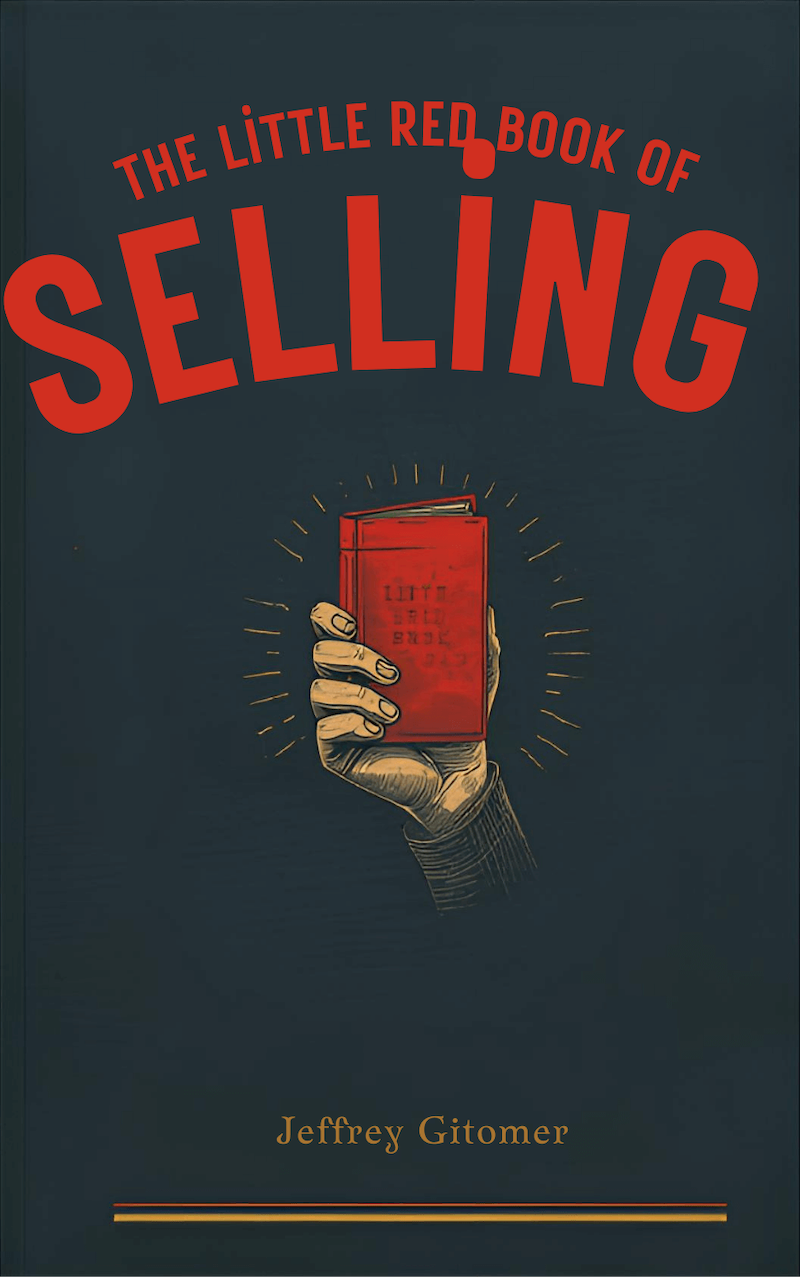
Prefer the print book? Buy on Amazon
As an Amazon Associate, Sumizeit earns from qualifying purchases.
The Little Red Book of Selling Book Summary
This The Little Red Book of Selling Book Summary covers the key ideas, lessons, and takeaways in about 20 minutes.
Short Description:
The Little Red Book of Selling creates sales through discipline and relationships.
Helps with these goals
Want a Free Weekly Read?
Get a free summary every week straight to your mailbox.
Preview the The Little Red Book of Selling book summary
Below is a preview of Sumizeit’s comprehensive human-written summary of The Little Red Book of Selling by Jeffrey Gitomer. The full summary is 15-20 minutes long and covers the book’s key ideas in text, audio, visual, and video formats. Unlock the full 20 Minute Summary
Jeffrey Gitomer’s The Little Red Book of Selling reframes the entire concept of sales by shifting attention away from techniques, scripts, and persuasion tactics and instead focusing on the psychology behind why people choose to buy. Gitomer argues that selling should not feel like an adversarial negotiation or a performance designed to force agreement. Rather than trying to push someone into purchasing something they may not want, the most successful salespeople create circumstances in which the buyer becomes motivated to decide independently that they want the product or service. People love the feeling of making their own choices, and they resent being manipulated. The job of a salesperson is to cultivate an environment where buying feels natural, enjoyable, and advantageous. Instead of obsessing over “how to sell,” Gitomer believes the real question is: Why do people buy? Exploring this question deeply, he identifies elements such as trust, likability, belief in value, emotional connection, and confidence in the product and salesperson as the primary drivers behind purchasing decisions. If a customer likes and respects the salesperson, feels that the offering is unique, and perceives real benefit, the sale becomes inevitable. The book’s structure is organized around 13 principles—his roadmap for creating lasting success in sales—not quick tricks or closing hacks but enduring habits, preparation methods, and relationship strategies that expand influence and credibility. The emphasis is always on long-term success, not single transactions.
Building the Inner Foundation for Sales Success
According to Gitomer, external sales strategies will never compensate for internal weaknesses. The strongest performers in sales are those who take ownership of their growth rather than waiting for motivation to appear. He rejects the idea that a manager, mentor, or circumstance is responsible for a salesperson’s results. Instead, the individual must drive themselves relentlessly, even when progress feels slow or challenges mount. Those who wait to be inspired, trained, or rescued, he argues, will remain stuck in mediocrity. Many salespeople fall into cycles of complaint—blaming conditions like low lead volume, unresponsive prospects, or inadequate training. Gitomer insists that every complaint is an excuse for inaction. Instead of saying prospects never call back, develop better voicemail strategies. Instead of dwelling on a slump, reconstruct the approach, work harder, ask mentors for critique, and immerse yourself in improvement. Instead of waiting for training programs, study independently through books, tapes, workshops, and real-world practice. Motivation, in his view, is not a moment of excitement but a discipline—an everyday requirement. A salesperson must renew their drive through affirmations, personal goals, continual learning, and refusing to accept mediocrity. Working hard matters, but working intelligently matters more. Success belongs to those who consistently put in focused effort before, during, and after opportunities arise, pushing beyond comfort while others stop when tired.
Eliminating Distractions and Focusing on Results
One of Gitomer’s early principles emphasizes staying focused on your own performance rather than becoming entangled in workplace drama, office politics, or gossip.
Want the complete 20-minute summary?
- Full structured summary
- Video Summary
- Podcast Summary
- Audio summary
- Key takeaways
- Exercises
- Quiz
- Highlights and notes
- Ask the book with AI
Who should read The Little Red Book of Selling?
The Little Red Book of Selling is for salespeople, entrepreneurs, and business professionals who want to move beyond aggressive tactics and scripts to build lasting customer relationships. This book suits anyone who feels stuck in traditional sales approaches or struggles to connect authentically with prospects. Whether you're new to sales or a seasoned veteran, Gitomer's philosophy applies to anyone ready to shift from pushing products to creating genuine buyer motivation.
Why does The Little Red Book of Selling matter?
In today's skeptical market, customers see through manipulation and reject high-pressure tactics more than ever. The Little Red Book of Selling offers a framework that aligns modern buyer psychology with ethical, relationship-driven sales—making it essential for professionals competing in transparent, trust-based environments. As businesses increasingly value long-term partnerships over transactional deals, Gitomer's principles provide a sustainable competitive advantage.
What are the key themes in The Little Red Book of Selling?
- Sales as creating buyer motivation rather than persuasion
- Personal discipline and self-management as the foundation of success
- Building credibility and personal brand before attempting to sell
- Strategic networking and relationship development
- Value delivery preceding requests for commitment
- Understanding human psychology and decision-making
- Asking powerful questions instead of delivering pitches
How can you apply ideas from The Little Red Book of Selling?
- Research prospects and companies thoroughly before meetings to ask intelligent questions and demonstrate respect for their business
- Create a personal brand by publishing content, speaking publicly, or participating in industry associations to build visibility and attract inbound interest
- Develop strategic questions that help prospects discover their own needs rather than pitching features; focus on their goals and current frustrations
- Collect and use detailed, measurable testimonials and case studies as proof points when addressing buyer concerns and objections
- Attend networking events with research, clear value proposition, and intention to engage new contacts rather than exchange generic business cards
- Identify and proactively address sources of buyer risk—cost, implementation, performance—through guarantees, phased rollouts, or clear success metrics
- Build systems for capturing ideas and opportunities in daily conversations, then follow up quickly before momentum fades
What common mistakes do readers make with The Little Red Book of Selling?
- Relying on manipulation, scripts, and closing tricks instead of understanding why people actually buy and what builds trust
- Blaming external circumstances (leads, training, market conditions) instead of taking ownership of personal growth and effort
- Wasting time with non-decision-makers or becoming distracted by office politics rather than focusing on high-impact activities
- Leading with your company, products, or pricing instead of demonstrating value and relevance to the prospect's specific situation
Sumizeit Exercises Apply what you've learned
Turn ideas from The Little Red Book of Selling into action with a short guided reflection: identify the biggest takeaway, connect it to your life, and commit to one step you can take in the next 24 hours.
What is the expert analysis of The Little Red Book of Selling?
Overview
The Little Red Book of Selling is a seminal work by Jeffrey Gitomer, a renowned sales trainer and author known for his dynamic approach to sales and customer loyalty. The book stands out in the crowded field of sales literature by shifting the focus from mechanical tactics and scripts to the psychological underpinnings of why customers choose to buy. Gitomer’s reputation as a speaker and business consultant lends credibility to his insights, positioning this book as a practical yet philosophically grounded guide for sales professionals seeking lasting success.
Core Thesis
At its core, Gitomer’s thesis challenges the traditional adversarial model of selling. He argues that effective salesmanship is less about persuasion or pressure and more about creating an environment where buyers feel empowered to make independent decisions. The key drivers behind purchasing decisions are trust, likability, belief in value, emotional connection, and confidence in both the product and the salesperson. By cultivating these elements through disciplined self-management, strategic networking, and authentic value delivery, sales success becomes a natural outcome rather than a forced transaction.
Strengths
- Psychological Insight: Gitomer’s emphasis on understanding the buyer’s mindset and emotional needs elevates the book beyond a mere sales manual to a study in human behavior.
- Practical Framework: The 13 principles offer a structured yet flexible roadmap that integrates preparation, personal branding, relationship building, and strategic questioning.
- Focus on Self-Discipline: The insistence on internal motivation and continuous self-improvement addresses a common blind spot in sales training, where external factors are often blamed for failure.
- Holistic Approach: By incorporating elements such as humor, creativity, and risk mitigation, Gitomer presents a multifaceted approach that resonates with real-world complexities.
- Enduring Relevance: The book’s focus on long-term relationship building and credibility over quick wins aligns with contemporary shifts toward consultative and value-based selling.
Critiques & Counterarguments
- Overemphasis on Individual Responsibility: While self-discipline is vital, Gitomer’s dismissal of external factors such as organizational support, market conditions, or systemic barriers may oversimplify the challenges salespeople face.
- Limited Empirical Evidence: The book relies heavily on anecdotal insights and Gitomer’s personal experience without robust empirical data or academic research to substantiate some claims.
- Potential Underestimation of Complex Sales Cycles: The model may be less applicable to highly technical or multi-stakeholder sales environments where decision-making is more convoluted and less emotionally driven.
- Competing Schools of Thought: Behavioral economics and decision science research sometimes highlight irrational or subconscious biases in buyer behavior that challenge the notion of buyers making fully independent, rational choices as Gitomer suggests.
- Risk of Oversimplification: The focus on likability and personal branding, while important, might overshadow the critical role of product innovation, competitive pricing, and market dynamics in driving sales outcomes.
Who Should Read This
The Little Red Book of Selling is ideally suited for sales professionals at all levels who seek to deepen their understanding of the buyer’s psychology and develop sustainable, ethical sales practices. It is particularly valuable for those frustrated by traditional sales scripts and eager to cultivate authenticity and long-term relationships. Additionally, entrepreneurs, small business owners, and anyone involved in client-facing roles will find Gitomer’s principles applicable to building trust and credibility. However, readers looking for data-driven research or strategies tailored to complex B2B environments may need to supplement this book with more specialized resources.
Frequently asked questions about the The Little Red Book of Selling book summary
What is The Little Red Book of Selling about?
The Little Red Book of Selling by Jeffrey Gitomer reframes sales as the process of creating conditions where buyers willingly choose to purchase, rather than using pressure tactics or manipulation. The book shifts focus from sales techniques to understanding buyer psychology—emphasizing trust, value delivery, preparation, and relationship building as the true drivers of long-term sales success.
Who should read The Little Red Book of Selling?
This book is essential for salespeople, entrepreneurs, and business professionals who want to move beyond aggressive tactics and build authentic customer relationships. It applies to anyone new to sales seeking a foundation, as well as experienced professionals who feel stuck in traditional approaches or want to align their methods with modern buyer psychology.
What are the main takeaways from The Little Red Book of Selling?
Key takeaways include: personal discipline and self-management form the foundation of sales success; value must be delivered before asking for commitment; understanding why people buy matters more than knowing how to sell; preparation and credibility attract opportunities rather than requiring aggressive outreach; and authentic relationships and trust—not pressure or discounts—drive sustainable sales performance.
Does The Little Red Book of Selling teach closing techniques?
No, The Little Red Book of Selling deliberately moves away from closing tricks and manipulative techniques. Instead, Gitomer argues that when trust, value, and credibility are established, the sale becomes a natural conclusion. The book emphasizes asking powerful questions, understanding buyer motivation, and removing risk rather than pressuring prospects into agreement.
How does The Little Red Book of Selling define value in sales?
In Gitomer's framework, value is not a discount or free bonus—it is something that genuinely improves the prospect's business or life, such as increased revenue, improved efficiency, reduced risk, or enhanced competitive performance. Value must precede any sales request, and demonstrating usefulness builds credibility and trust far better than leading with price.
What role does personal branding play in The Little Red Book of Selling?
Personal branding is central to sales success in Gitomer's approach. By building visibility through content, speaking, community involvement, and consistent professional presence, you become recognized and respected before ever meeting a prospect. Strong branding shifts the dynamic from begging for attention to attracting inbound interest and opening doors with decision-makers.
How can I overcome objections using The Little Red Book of Selling?
Gitomer's approach to objections focuses on proactive risk elimination rather than defensive rebuttal. Identify buyer concerns—financial, professional, or implementation risk—and address them upfront using guarantees, case studies, testimonials, and clear success metrics. When perceived reward outweighs perceived risk, buyers move forward confidently without needing to overcome objections.
About Sumizeit
Sumizeit is a profitable Scomy LLC company based in Miami, Florida. Our founders, Clemens Raemy and Weina Scott, are successful entrepreneurs with several exits. Sumizeit is a popular book summary app / micro learning app used by busy professionals and entrepreneurs with over 2,500 non-fiction book summaries and 10,000 podcast summaries in text, audio, visual, podcast, and video format. We also have stellar retention tools to make ideas stick - such as flashcards with spaced repetition, quizzes, streaks, highlighting and notes, daily challenges, riddles, mini-courses, meditation, and more. You won't only learn the idea, but also remember it. Over 90% of our users change their habits with Sumizeit.
Upgrade Now
Here's why readers love Sumizeit
Join thousands of learners getting smarter every day
"Great experience. Detailed summaries. Loved the gamification feature. Makes learning fun. Good customer service. I recommend Sumizeit to anyone. You'll learn a lot."
"I always felt busy but still wanting to keep up with the book discussion in my friend group. This was a great supplement to help me keep reading the books I find fun while keeping up with important books."
"I love this website. Instead of scrolling social media, I find myself learning a lot. I use it everyday. I recommend this app for anyone who is too busy and wants to get up to speed with their favorite books."
The Little Red Book of Selling Book Summary PDF
Looking for a The Little Red Book of Selling Book Summary PDF you can save and revisit offline? Our The Little Red Book of Selling Book Summary PDF captures the book’s core ideas in a clean, printable format — the key frameworks, takeaways, and structure without the fluff. Download the The Little Red Book of Selling Book Summary PDF when you want a reference you can annotate, share with your team, or review on the go. Get your The Little Red Book of Selling Book Summary PDF from the download page below.
Download The Little Red Book of Selling Book Summary PDFPeople also liked these summaries
Readers who explored The Little Red Book of Selling often enjoyed these titles next.



Ready to read the whole thing?
- Full structured summary
- Video Summary
- Podcast Summary
- Audio summary
- Key takeaways
- Exercises
- Quiz
- Highlights and notes
- Ask the book with AI
Featured Book Titles
Popular Book Summaries at sumizeit, leading book summary app