


As an Amazon Associate, Sumizeit earns from qualifying purchases.
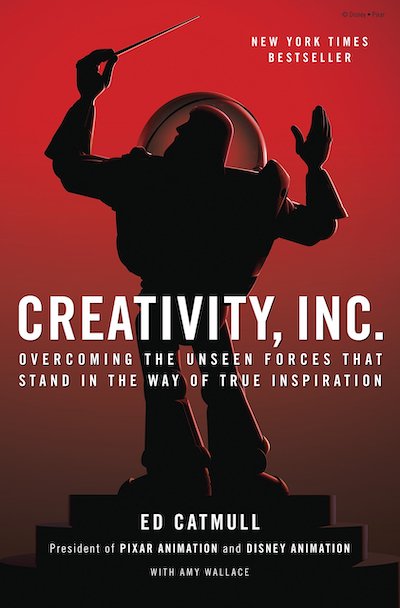
Creativity, Inc. Book Summary
This Creativity, Inc. Book Summary covers the key ideas, lessons, and takeaways in about 20 minutes.
Helps with these goals
Want the complete 20-minute summary?
- Full structured summary
- Video Summary
- Podcast Summary
- Audio summary
- Key takeaways
- Exercises
- Quiz
- Highlights and notes
- Ask the book with AI
What is in the Creativity, Inc. book summary?
Below is a preview of Sumizeit’s expert-written summary of Creativity, Inc. by Ed Catmull, Amy Wallace. The full summary covers the book’s key ideas in text, audio, and video.
It’s the goal to be creative and innovative in the development of your company.
But, oftentimes creativity gets stifled because of the fear of risk, as risk often can lead to a loss in profits.
In “Creativity, Inc” Ed Catmull uses anecdotes to tell his success story. Catmull is the founder of Pixar and has created a multi-billion dollar company out of his dream.
“Failure isn’t a necessary evil. In fact, it isn’t evil at all. It is a necessary consequence of doing something new.”- Ed Catmull
He delves into the mistakes management oftentimes make which hinder the creative aspects of the business. And, as a result stops them from growing.
Catmull explains what you need in a creative team in order for it to succeed.
Honest Employee Feedback
In a hierarchical structure, it’s hard to tell your boss how you really feel. Likewise, it’s hard to present ideas for the company’s improvement, even if they’re genius. This results in a lot of problems going unfixed, simply because no one has the guts to tell the guy in charge.
Feedback systems are important for company success. For example, with Pixar, a Notes Day was established in order to give employees the chance to speak their ideas on the improvement of the company. It was a safe space for open dialogue because the employees knew the boss wanted to hear it.
By employees being able to speak their minds, they feel greater accountability for their work. If they spot a problem, they will be more likely to address it rather than ignoring it.
Workers should feel that their concerns are valid and that their ideas will be taken seriously. And, that environment needs to be created by the leader.
Ed Catmull of Pixar makes the effort to talk to all of his employees individually so that they know they are valued in the company.
Fear of Failure
People don’t like change. This is because they correlate it to failure. For example, if a new system is put into place at work and they are not familiar with it, they will hate it because it brings stress upon them. They think that the new system will make them fail or make a mistake.
Teachers expect their students to make mistakes, as it’s just another part of learning. And, business is no different. The environment the leader establishes should promote the idea that making mistakes is ok. Without mistakes, there are no new innovations.
When companies are unwilling to explore ‘the new’ and make changes, they become stagnant and inflexible which can take away a lot of new opportunities for them.
“If you aren’t experiencing failure, then you are making a far worse mistake: You are being driven by the desire to avoid it.”- Catmull
Catmull believes in having a goal, but being flexible with it. Goals are not meant to constrain you, but rather direct you.
Shortcomings
As humans, we tend to more easily accept information that confirms our opinions.
Want the complete 20-minute summary?
- Full structured summary
- Video Summary
- Podcast Summary
- Audio summary
- Key takeaways
- Exercises
- Quiz
- Highlights and notes
- Ask the book with AI
Who should read Creativity, Inc.?
Creativity, Inc. is essential reading for business leaders, managers, and entrepreneurs who want to build innovative organizations. It's also valuable for anyone working in creative industries or leading teams where innovation is crucial to success. If you're struggling with company culture, employee engagement, or fostering breakthrough ideas, this book offers practical wisdom from one of the most successful creative companies ever built.
Why does Creativity, Inc. matter?
In today's competitive landscape, companies that fail to innovate get left behind, yet most organizations inadvertently stifle creativity through fear-based management and rigid hierarchies. Creativity, Inc. reveals how to build a culture where risk-taking, failure, and honest feedback aren't just tolerated but celebrated as necessary ingredients for success. Ed Catmull's proven methods from building Pixar into a multi-billion dollar powerhouse offer a blueprint for any organization seeking to unlock its creative potential and adapt to an ever-changing world.
What are the key themes in Creativity, Inc.?
- Failure as a necessary component of innovation
- Building psychological safety through honest feedback
- The primacy of people over ideas
- Leadership through trust rather than control
- Creating environments where risk-taking flourishes
- Overcoming cognitive biases and confirmation bias
- Team diversity as a creative strength
- Balancing vision with flexibility
What are the key lessons from the Creativity, Inc. book summary?
Failure Is Not the Enemy—Avoiding It Is
Companies that shield themselves from failure through overly cautious decision-making actually damage their long-term prospects. Embracing calculated risk and learning from mistakes accelerates innovation and competitive advantage.
Hire People Smarter Than You
Managers should actively recruit talent that exceeds their own expertise in specific domains. This approach builds stronger teams and requires leaders to adopt a mindset of humility and continuous learning.
Psychological Safety Enables Honest Feedback
Employees will only speak up about problems, ideas, and concerns when they trust leadership genuinely wants to hear them. Establishing safe spaces for feedback—like Pixar's Notes Day—transforms organizational problem-solving.
Ideas Are Secondary to Team Quality
A mediocre idea executed by an exceptional team will outperform a brilliant idea executed by an average team. The caliber of people matters far more than the brilliance of any single concept.
Diversity Strengthens Creative Problem-Solving
Teams with diverse backgrounds, perspectives, and expertise identify blind spots and generate solutions that homogeneous groups miss. Cognitive diversity directly supports breakthrough thinking.
Trust Reduces the Need for Micromanagement
Empowering capable people to use their judgment and creative initiative produces better results than oversight and control. Leaders who trust their teams unlock discretionary effort and innovation.
The Physical Environment Influences Creativity
Workspace design, personalization, and flexibility affect employee morale and creative output. Thoughtful environmental choices signal that the organization values its people and their wellbeing.
Overcome Confirmation Bias to See Clearly
Leaders naturally gravitate toward information confirming their existing beliefs, blinding them to better ideas and approaches. Actively seeking opposing viewpoints and employee input corrects this distortion.
Goals Direct Without Constraining
Goals should provide direction and purpose rather than act as rigid constraints that limit exploration. Flexibility in how goals are achieved allows teams to discover unexpected paths to success.
Create Recovery Systems Before Failure Strikes
Rather than trying to prevent all failures, managers should establish processes for rapid recovery and learning. Having recovery plans in place reduces fear and enables more confident risk-taking.
Engage Directly With People Across All Levels
Leaders who take time to connect individually with employees communicate that each person matters. These relationships build trust, reveal insights, and strengthen organizational cohesion.
Fear Blocks Innovation and Adaptation
When people fear change, failure, or speaking up, they default to safe behaviors and status quo thinking. Leaders must actively address and dissolve sources of fear to unlock creative potential.
Give People Time for Personal Creative Exploration
Allocating time and resources for employees to pursue personal projects keeps them energized and engaged. Paradoxically, this investment in non-work projects often enhances their core work output.
Leadership Is About Clearing the Path
The manager's role isn't to control or direct every decision, but to remove obstacles, foster dialogue, and create conditions where talented people can do their best work. Serve your team, don't command it.
Reflection Transforms Failure Into Learning
After failures occur, structured reflection sessions help teams extract lessons and build resilience. These debrief meetings turn setbacks into organizational knowledge that strengthens future efforts.
A Shared Meaningful Purpose Drives Excellence
Employees perform at their highest level when they understand how their work contributes to something larger than themselves. Purpose-driven work generates intrinsic motivation and commitment.
Acknowledge What You Don't Know
Humility about knowledge gaps creates space for breakthroughs and prevents costly mistakes from unchecked assumptions. Leaders who openly admit limitations encourage their teams to share insights more freely.
Risk Management Is About Preparation, Not Avoidance
Smart leaders don't eliminate risk; they prepare for it through planning and team resilience. Being ready to respond quickly and collectively to challenges makes risk-taking sustainable.
Want the complete 20-minute summary?
- Full structured summary
- Video Summary
- Podcast Summary
- Audio summary
- Key takeaways
- Exercises
- Quiz
- Highlights and notes
- Ask the book with AI
How can you apply ideas from Creativity, Inc.?
- Establish regular feedback forums or town halls where employees at all levels can voice ideas and concerns without fear of repercussion
- Redesign hiring criteria to prioritize candidates with specialized expertise that exceeds current leadership capabilities
- Implement post-project retrospectives to extract lessons from both successes and failures, building organizational learning
- Allocate discretionary time or days for employees to pursue creative projects outside their core responsibilities
- Audit your physical workspace for opportunities to enhance creativity—lighting, color, personalization, collaboration areas
- Actively solicit opposing viewpoints and dissenting opinions in decision-making meetings to counteract confirmation bias
- Create cross-functional teams that intentionally blend different perspectives, skills, and backgrounds
What common mistakes do readers make with Creativity, Inc.?
- Assuming that strict control and close oversight prevent mistakes when they actually stifle initiative and innovation
- Treating failure as something to hide or punish rather than mine for insights that improve future performance
- Building teams of similar thinkers and backgrounds, missing the creative advantage of diversity
- Keeping organizational goals vague or disconnected from daily work, leaving employees unclear about the larger purpose of their efforts
Sumizeit Exercises Apply what you've learned
Turn ideas from Creativity, Inc. into action with a short guided reflection: identify the biggest takeaway, connect it to your life, and commit to one step you can take in the next 24 hours.
What is the expert analysis of Creativity, Inc.?
Overview
Creativity, Inc. is a seminal work co-authored by Ed Catmull, the co-founder and former president of Pixar and Walt Disney Animation Studios, alongside Amy Wallace. This book is significant not only as a memoir of Pixar’s rise but also as a comprehensive manual on fostering creativity within organizations. Catmull’s unique perspective as a pioneer in computer graphics and animation technology lends the book a rare blend of technical insight and leadership philosophy. It stands out in the crowded field of business and self-improvement literature by focusing on the often-overlooked dynamics of creative culture and management.
Core Thesis
At its core, Creativity, Inc. argues that creativity is not a mystical talent but a tangible process that can be nurtured through deliberate organizational practices. Catmull contends that fear of failure and rigid hierarchies stifle innovation, and that leaders must cultivate an environment where risk-taking is encouraged, honest feedback is solicited, and employees feel trusted and valued. The book posits that failure is an inevitable and necessary byproduct of innovation, and that a company’s success hinges more on the quality and diversity of its people than on any singular idea.
Strengths
- Practical Leadership Insights: Catmull’s anecdotes from Pixar provide vivid, actionable examples of how to build and sustain a creative culture, making abstract concepts concrete.
- Emphasis on Psychological Safety: The book highlights the importance of creating safe spaces for candid dialogue, such as Pixar’s “Notes Day,” which fosters open communication across hierarchical boundaries.
- Balanced View of Failure: By reframing failure as a necessary step toward innovation rather than a setback, Catmull challenges conventional business risk aversion.
- Focus on People and Diversity: The recognition that diverse teams generate superior outcomes underscores the human-centric approach to organizational success.
- Integration of Technology and Creativity: Catmull’s background in computer science enriches the narrative, offering a rare synthesis of technical innovation and creative management.
Critiques & Counterarguments
- Overreliance on Pixar’s Unique Context: While Pixar’s success is impressive, the book’s lessons sometimes feel tailored to a highly specialized creative industry, raising questions about their generalizability to other sectors.
- Potential Oversimplification of Failure: The celebratory tone toward failure may underplay the real costs and complexities involved in risk-taking, especially in industries with less tolerance for error.
- Limited Engagement with Contrasting Views: The book largely champions a particular leadership style without deeply engaging with alternative models such as more directive or hierarchical approaches that may be effective in different contexts.
- Competing Research on Creativity: Some psychological studies suggest that too much emphasis on open feedback and failure tolerance can lead to ambiguity and reduced accountability, indicating a nuanced balance is necessary.
- Real-World Evidence of Risk Management: In highly regulated or safety-critical industries, risk avoidance is paramount, which challenges Catmull’s advocacy for embracing failure as a norm.
Who Should Read This
Creativity, Inc. is ideal for executives, managers, and entrepreneurs seeking to understand how to cultivate innovation within their organizations. It is particularly valuable for leaders in creative industries such as technology, media, and design who face the challenge of balancing artistic freedom with business imperatives. Additionally, scholars and students of organizational behavior and leadership will find Catmull’s insights a compelling case study in managing creative teams. Readers looking for a nuanced exploration of the interplay between creativity, risk, and leadership will benefit from this thoughtful and inspiring work.
Frequently asked questions about the Creativity, Inc. book summary
What is Creativity, Inc. about?
Creativity, Inc. by Ed Catmull and Amy Wallace is a memoir and business guide that shares how Catmull built Pixar into one of the world's most innovative companies. The book explores how to foster creative culture, manage risk and failure, build high-performing teams, and establish psychological safety where employees feel empowered to take risks and share ideas.
Who should read Creativity, Inc.?
This book is essential for executives, managers, and leaders across all industries who want to build more innovative, agile organizations. It's particularly valuable for creative professionals, entrepreneurs, and anyone responsible for cultivating team culture, encouraging breakthrough thinking, or managing through change and uncertainty.
What are the main takeaways from Creativity, Inc.?
The core insights include: failure is necessary for innovation, hiring great people matters more than having great ideas, psychological safety and honest feedback drive excellence, diversity strengthens problem-solving, and leaders should trust and empower their teams rather than micromanage them. Catmull emphasizes that organizational culture and people are the true drivers of creative success.
How does Catmull define a creative culture?
Catmull defines creative culture as an environment where employees feel psychologically safe to speak up, take calculated risks, and learn from failures without fear of repercussion. It requires leaders who trust their teams, solicit honest feedback, hire exceptional talent, embrace diverse perspectives, and remove obstacles rather than impose control.
What role does failure play in Creativity, Inc.?
Catmull argues that failure is not an evil to avoid but a necessary consequence of doing something new. Rather than trying to prevent all failures, organizations should prepare recovery systems, encourage early small failures so people build resilience, and conduct reflective debriefs to extract learning and prevent future mistakes.
How can managers foster honest feedback in their organizations?
Catmull demonstrates this through Pixar's Notes Day, a dedicated time when employees can voice ideas for company improvement in a safe environment. Managers can create psychological safety by directly engaging with employees, signaling that feedback is genuinely valued, acknowledging legitimate concerns, and demonstrating that ideas from all levels are taken seriously.
Why does Catmull emphasize hiring people smarter than you?
Hiring people with expertise that exceeds your own builds stronger teams, accelerates learning, and requires leaders to cultivate humility and openness. This approach prevents the narrow thinking that comes from surrounding yourself with yes-people and creates an environment where breakthrough insights are more likely to emerge.
About Sumizeit
Sumizeit is a profitable Scomy LLC company based in Miami, Florida. It has been helping readers learn from nonfiction books for 7 years with expert-written summaries in text, audio, podcast, and video.
Want the complete 20-minute summary?
- Full structured summary
- Video Summary
- Podcast Summary
- Audio summary
- Key takeaways
- Exercises
- Quiz
- Highlights and notes
- Ask the book with AI
Here's why readers love Sumizeit
Join thousands of learners getting smarter every day
"Great experience. Detailed summaries. Loved the gamification feature. Makes learning fun. Good customer service. I recommend Sumizeit to anyone. You'll learn a lot."
"I always felt busy but still wanting to keep up with the book discussion in my friend group. This was a great supplement to help me keep reading the books I find fun while keeping up with important books."
"I love this website. Instead of scrolling social media, I find myself learning a lot. I use it everyday. I recommend this app for anyone who is too busy and wants to get up to speed with their favorite books."
Creativity, Inc. Book Summary PDF
Looking for a Creativity, Inc. Book Summary PDF you can save and revisit offline? Our Creativity, Inc. Book Summary PDF captures the book’s core ideas in a clean, printable format — the key frameworks, takeaways, and structure without the fluff. Download the Creativity, Inc. Book Summary PDF when you want a reference you can annotate, share with your team, or review on the go. Get your Creativity, Inc. Book Summary PDF from the download page below.
Download Creativity, Inc. Book Summary PDFPeople also liked these summaries
Readers who explored Creativity, Inc. often enjoyed these titles next.



Want the complete 20-minute summary?
- Full structured summary
- Video Summary
- Podcast Summary
- Audio summary
- Key takeaways
- Exercises
- Quiz
- Highlights and notes
- Ask the book with AI
Featured Book Titles
Popular Book Summaries at sumizeit, leading book summary app
