


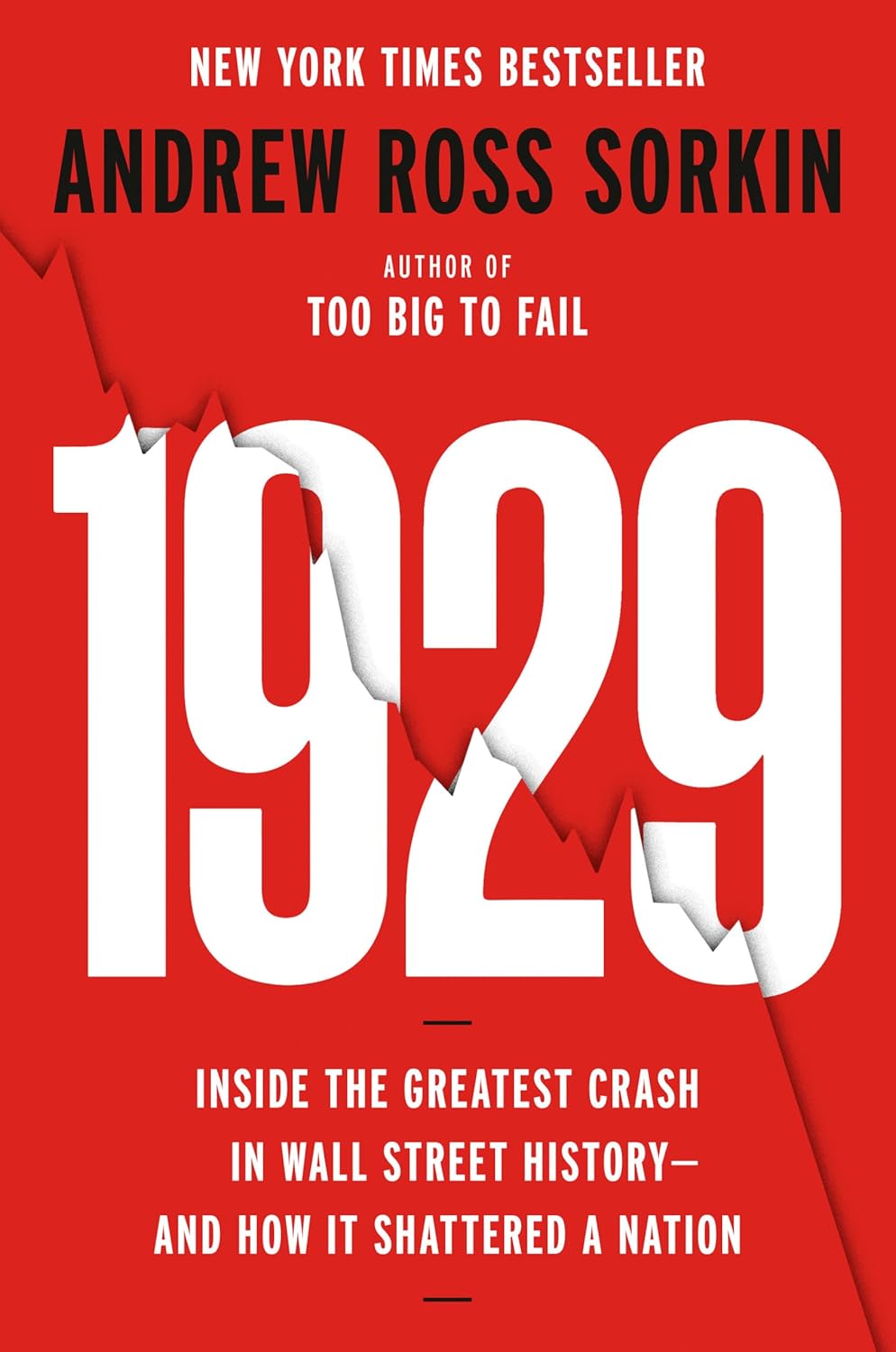
1929: Inside the Greatest Crash in Wall Street History--and How It Shattered a Nation Book Summary
This 1929: Inside the Greatest Crash in Wall Street History--and How It Shattered a Nation Book Summary covers the key ideas, lessons, and takeaways in about 20 minutes.
The legacy of 1929 reminds us that no system is immune to the consequences of human excess. Regulations can slow temptation, but they cannot erase it. True safety lies in humility—recognizing that progress is not permanent, markets are not infallible, and history repeats when forgotten. The story is both a tragedy and a warning: whenever society assumes it has outsmarted uncertainty, it is preparing to fall the hardest.
Helps with these goals
Want the complete 20-minute summary?
- Full structured summary
- Video Summary
- Podcast Summary
- Audio summary
- Key takeaways
- Exercises
- Quiz
- Highlights and notes
- Ask the book with AI
What is in the 1929: Inside the Greatest Crash in Wall Street History--and How It Shattered a Nation book summary?
Below is a preview of Sumizeit’s expert-written summary of 1929: Inside the Greatest Crash in Wall Street History--and How It Shattered a Nation by Andrew Ross Sorkin. The full summary covers the book’s key ideas in text, audio, and video.
The decade leading up to 1929 unfolded like an intoxicating dream. America emerged from World War I energized by a surge of technological innovation, cultural transformation, and economic optimism. The rapid spread of automobiles, radios, refrigerators, and home appliances implied that modern life had arrived, reshaping daily routines and redefining social expectations. These products, once luxurious extravagances, quickly became household staples—not because incomes rose dramatically, but because borrowing did. Installment plans and consumer credit placed previously unimaginable comforts within reach of almost anyone, cultivating the belief that prosperity was not only attainable but inevitable.
This idea of limitless advancement seeped into the stock market, where participation exploded far beyond professional financiers. Teachers, farmers, secretaries, and factory workers—many with little savings—rushed to buy shares. The idea was simple: invest now, get rich later, and join the ranks of an emerging class of “financial citizens.” Buying shares on margin, where an investor paid only a sliver of the total cost up front, allowed breathtaking leverage. With just 10 percent down, gains appeared exponential. Every uptick in the Dow seemed to confirm a new economic order where downturns were relics of an outdated past.
Warnings existed, but they were ignored. Economists like Roger Babson repeatedly cautioned that the booming market bore the classic signs of instability. Rural America was suffering deeply, agricultural prices remained depressed, and income inequality was widening rapidly. But these signals clashed with the euphoric narrative dominating the national mood. Pessimism was not only unfashionable—it was condemned. The country collectively convinced itself that prosperity was permanent and that modern finance had solved the ancient problem of cycles. Few questioned whether borrowing endlessly could support growth forever. Even fewer paused to ask what would happen if the upward slope changed direction.
The stock market became not merely a financial tool but a cultural spectacle. Newspapers celebrated record-setting spikes. Radio broadcasters glorified stock-picking celebrities. The public watched ticker tape updates with the same enthusiasm others reserved for sports scores. A national enthusiasm emerged—an almost religious faith in rising numbers. In hindsight, it was a fever fueled by imagination, amplified by credit, and divorced from economic reality.
A Struggle for Control Between Wall Street and Washington
As speculation devoured more and more credit, the Federal Reserve Board in Washington began sounding alarms. In February 1929, concerned that too much money was flowing into stock speculation rather than productive enterprise, the Fed issued a stern warning urging banks to curb margin lending. Its hope was that moral persuasion—rather than direct intervention—might cool market excesses without triggering panic. The decision revealed a central institution unsure of its authority and reluctant to exert firm control over an economy running at full sprint.
Wall Street responded with open defiance. Charles Mitchell, chairman of National City Bank and one of the most powerful financiers of the era, emerged as the Fed’s most aggressive opponent. To him, credit was the lifeblood of expansion, and any attempt to restrict it amounted to sabotage.
Want the complete 20-minute summary?
- Full structured summary
- Video Summary
- Podcast Summary
- Audio summary
- Key takeaways
- Exercises
- Quiz
- Highlights and notes
- Ask the book with AI
Who should read 1929: Inside the Greatest Crash in Wall Street History--and How It Shattered a Nation?
This book is essential for investors, policy makers, students of economic history, and anyone seeking to understand how financial bubbles form and collapse. Whether you're curious about the psychology behind market manias, concerned about recognizing warning signs in modern economies, or simply want to understand a pivotal moment that shaped American finance, Andrew Ross Sorkin's account speaks to readers across backgrounds.
Why does 1929: Inside the Greatest Crash in Wall Street History--and How It Shattered a Nation matter?
The 1929 crash fundamentally transformed how Americans understand finance, regulation, and the relationship between Wall Street and government—lessons that remain relevant as markets cycle through recurring booms and busts. Understanding how confidence, credit, and collective delusion created catastrophe helps explain not only the Great Depression but also modern crises like 2008 and ongoing debates about financial oversight. Sorkin reveals that financial collapse is ultimately a human story, driven by psychology and incentives rather than pure mathematics—a insight that applies to every market cycle since.
What are the key themes in 1929: Inside the Greatest Crash in Wall Street History--and How It Shattered a Nation?
- The psychology of bubbles and how collective optimism blinds society to warning signs
- The tension between Wall Street autonomy and government regulation
- Credit and leverage as amplifiers of speculation
- How financial elites weaponize wealth and influence for political power
- The collapse of trust as the true driver of economic depression
- Institutional failure and the limits of heroic intervention
- The cyclical nature of human excess and market booms and busts
What are the key lessons from the 1929: Inside the Greatest Crash in Wall Street History--and How It Shattered a Nation book summary?
Optimism untethered from caution becomes mass delusion
When entire societies convince themselves that prosperity is permanent and downturns belong to the past, they lose the ability to recognize obvious danger signs. The 1920s faith in an 'economic order' free from cycles blinded millions to evidence of instability.
Credit availability can disguise inequality and unsustainable growth
Installment plans and margin buying made luxuries and stocks accessible to ordinary people, creating the illusion of shared prosperity even as real income stagnated and wealth inequality widened. Easy credit masked deepening fragility.
Regulatory authority means nothing if markets refuse to recognize it
The Federal Reserve's warnings in 1929 proved toothless when Wall Street figures like Charles Mitchell openly defied them. Without enforcement power or unified belief in the system's authority, regulation cannot restrain dangerous behavior.
Market participants profit from the ignorance of ordinary investors
Pooling schemes, insider coordination, and rumor-spreading were rampant and legal in 1929. The market celebrated as democratic was fundamentally rigged by those with information advantages and connections.
Wealthy individuals can weaponize money to shape political outcomes
John Raskob's use of personal fortune to finance political campaigns and anti-Hoover propaganda demonstrated how financial elites could directly manipulate electoral and policy landscapes through coordinated, hidden influence.
Reputation and theatrics cannot rescue fragile systems
The bankers' attempted rescue in October 1929, mirroring J.P. Morgan's successful 1907 intervention, failed because the system had grown too large and too leveraged. When confidence shatters, no amount of grandstanding can restore it.
Economic collapse devastates across all social classes equally
Millionaires, elites, and ordinary workers all experienced ruin, suicide, and despair when the bubble burst. Wealth and status provided no protection against the psychological and financial consequences of systemic failure.
Loss of trust in institutions causes deeper damage than market mathematics
People stopped spending not because they lacked purchasing power but because they no longer believed banks, brokers, or leaders could be trusted. Psychological collapse preceded and deepened economic collapse.
Ideological rigidity in government leadership worsens crises
Hoover's classical economic beliefs—that government interference worsens problems and markets self-correct—paralyzed policy response as suffering mounted. Ideology disconnected from human reality cannot address systemic failure.
Confidence and communication matter as much as policy mechanics
Roosevelt's success came not from superior economic theory but from projecting energy, clarity, and direct connection with citizens through fireside chats. People needed to feel seen and reassured more than they needed perfect policies.
Public outrage creates the political will for structural reform
Ferdinand Pecora's Senate hearings exposed the hidden mechanisms of financial corruption, transforming abstract anger into specific accountability. Revelation enabled demands for systemic change rather than voluntary restraint.
Structural separation of conflicting financial functions reduces systemic risk
Glass-Steagall's division between commercial and investment banking addressed the core conflict of interest that fueled speculation. Separating functions where institutions profit from their customers' ignorance provides meaningful protection.
Deposit insurance restores public confidence by eliminating catastrophic risk
The FDIC guarantee transformed savings from a terrifying gamble into a protected asset, allowing people to re-engage with banking institutions. Psychological reassurance translated into economic stabilization.
History repeats when memory fades and regulations relax
Wall Street quickly moved past 1929, enthusiasm for risk revived, and future booms like 2000 and 2008 proved the same lessons must be learned again. Societies forget the agony and revisit the same cycles.
Financial crises reveal the truth about power and inequality
The crash exposed that prosperity was never equally distributed and that those with inside information could profit while ordinary people lost everything. Crisis strips away illusions about meritocracy and fairness.
Humility about progress and markets is essential for stability
Assuming that modern finance has 'solved' cycles, or that prosperity is permanent, sets the stage for catastrophic falls. True safety requires accepting that uncertainty cannot be eliminated, only managed.
Speculation divorced from productive enterprise drains real economy resources
As more money flowed into stock speculation instead of productive business investment, the real economy weakened even as stock prices climbed. The bubble eventually disconnects so completely from reality that collapse becomes inevitable.
Celebrity and myth-making in finance distort market behavior
Figures like Jesse Livermore became oracles whose mere opinions could ignite market movements. When markets hang on celebrities' words rather than fundamentals, crowd psychology overrides rational pricing.
Margin buying amplifies both gains and losses catastrophically
With only 10 percent down on stocks, small price moves created exponential gains or losses. This leverage made ordinary people believe in easy riches while exposing them to total wipeout when leverage reversed.
No system is too advanced or complex to avoid human excess
Modern finance's complexity and sophistication provided no protection against bubble mentality. Systems cannot be engineered to eliminate human psychology; they can only be designed to slow its worst consequences.
Want the complete 20-minute summary?
- Full structured summary
- Video Summary
- Podcast Summary
- Audio summary
- Key takeaways
- Exercises
- Quiz
- Highlights and notes
- Ask the book with AI
How can you apply ideas from 1929: Inside the Greatest Crash in Wall Street History--and How It Shattered a Nation?
- Develop personal frameworks for recognizing euphoric market narratives and question whether current 'new orders' claim to have eliminated historical cycles
- Assess your own portfolio for over-leverage and concentration risk, especially during periods of rising asset prices and easy credit availability
- Stay informed about regulatory debates around financial system safeguards and deposit insurance—understand how structural separations protect your savings
- Cultivate skepticism toward celebrity investors and financial celebrities whose opinions move markets; focus instead on fundamental analysis and independent judgment
- Monitor warning signs in your community and broader economy—widening inequality, distressed rural regions, high unemployment—that often precede financial crises despite bullish asset markets
- Build cash reserves and avoid margin or excessive debt during periods when credit becomes widely available and risk premiums compress
- Engage critically with financial media narratives that suggest current conditions are fundamentally different or exempt from historical patterns
What common mistakes do readers make with 1929: Inside the Greatest Crash in Wall Street History--and How It Shattered a Nation?
- Assuming that modern financial markets or regulatory frameworks have permanently eliminated boom-bust cycles, leaving you vulnerable to believing 'this time is different'
- Overleveraging personal finances through margin, debt-funded investing, or concentration in appreciating assets during periods of euphoria
- Confusing correlation between rising stock prices and broad-based prosperity—bubbles often coincide with stagnant wages and deepening inequality
- Placing trust in financial leaders' public reassurances about market stability without examining their hidden financial incentives or conflicts of interest
Sumizeit Exercises Apply what you've learned
Turn ideas from 1929: Inside the Greatest Crash in Wall Street History--and How It Shattered a Nation into action with a short guided reflection: identify the biggest takeaway, connect it to your life, and commit to one step you can take in the next 24 hours.
What is the expert analysis of 1929: Inside the Greatest Crash in Wall Street History--and How It Shattered a Nation?
Overview
1929: Inside the Greatest Crash in Wall Street History—and How It Shattered a Nation is authored by Andrew Ross Sorkin, a distinguished financial journalist and bestselling author renowned for his incisive explorations of Wall Street and its interplay with public policy. Sorkin’s expertise, honed through years of reporting for The New York Times and anchoring CNBC’s Squawk Box, lends the book a compelling blend of narrative vigor and analytical depth. This work stands as a significant contribution to financial history literature, offering a richly detailed account of the 1929 stock market crash that precipitated the Great Depression. By weaving together economic analysis, political dynamics, and human psychology, Sorkin provides readers with a multidimensional understanding of one of the most consequential economic events of the twentieth century.
Core Thesis
Sorkin’s central argument posits that the 1929 crash was not merely a mechanical failure of markets but a profound psychological collapse fueled by collective overconfidence, speculative excess, and regulatory impotence. He contends that the era’s pervasive belief in permanent prosperity, underpinned by easy credit and speculative mania, blinded a nation to mounting economic vulnerabilities. This illusion was sustained by cultural enthusiasm for stock speculation, the complicity of financial elites, and a political environment resistant to meaningful intervention. Ultimately, the crash exposed the fragile foundations of a system driven more by emotion and myth than by sound economic principles, underscoring the cyclical nature of financial crises rooted in human behavior.
Strengths
- Comprehensive Historical Narrative: Sorkin excels at contextualizing the 1920s economic boom and bust within broader social, political, and cultural currents, enriching the reader’s understanding beyond mere financial data.
- Integration of Human Psychology: The book’s exploration of optimism, denial, and mass hysteria illuminates the emotional drivers behind market behavior, a perspective often underemphasized in economic histories.
- Detailed Character Studies: By profiling key figures such as Charles Mitchell, Jesse Livermore, and John Raskob, Sorkin humanizes complex financial machinations and reveals the interplay of personal ambition and systemic risk.
- Insight into Regulatory Failures: The analysis of the Federal Reserve’s hesitance and the political resistance to intervention provides a nuanced critique of institutional shortcomings that contributed to the crisis.
- Clear Linkage to Contemporary Issues: The narrative draws implicit parallels to later financial crises, emphasizing the enduring relevance of the 1929 lessons for modern readers and policymakers.
Critiques & Counterarguments
- Potential Overemphasis on Psychological Factors: While the focus on human emotion enriches the narrative, it risks underplaying structural economic variables such as global trade imbalances, monetary policy constraints, and agricultural sector weaknesses that also critically shaped the crisis.
- Limited Engagement with Alternative Economic Theories: The book largely aligns with Keynesian interpretations of the crash and its aftermath but gives less attention to competing schools, such as Austrian economics, which attribute the boom-bust cycle to prior credit expansions and malinvestments.
- Reliance on Prominent Figures’ Narratives: The emphasis on Wall Street elites and political leaders may overshadow the experiences and agency of broader social groups, including laborers and rural communities, whose struggles were pivotal to the era’s economic dynamics.
- Scope of Regulatory Analysis: The portrayal of the Glass-Steagall Act as a lasting solution might be critiqued for glossing over the complexities and eventual repeal that contributed to future crises, suggesting a more cyclical regulatory environment than the book fully explores.
- Historical Determinism Risk: The narrative’s framing of inevitable human folly and repeated financial cycles might understate the potential for institutional learning and reform, potentially fostering a somewhat fatalistic view of economic crises.
Who Should Read This
This book is ideal for readers with a sophisticated interest in financial history, economic policy, and the psychology of markets. Scholars and professionals in economics, finance, and political science will find Sorkin’s detailed case studies and institutional critiques valuable. Additionally, thoughtful general readers seeking to understand the human and systemic causes behind financial collapses—and the enduring lessons for contemporary economic governance—will appreciate the book’s accessible yet rigorous approach. Its narrative style also suits those interested in the intersection of biography, history, and economics, offering a compelling portrait of an era that continues to resonate in today’s financial landscape.
Frequently asked questions about the 1929: Inside the Greatest Crash in Wall Street History--and How It Shattered a Nation book summary
What is 1929: Inside the Greatest Crash in Wall Street History--and How It Shattered a Nation about?
Andrew Ross Sorkin's 1929 is a narrative history of the stock market crash and Great Depression that explores the human psychology, financial mechanisms, and regulatory failures behind one of history's greatest economic catastrophes. The book reveals how speculation, easy credit, defiant Wall Street leadership, and collective delusion created an unsustainable bubble that devastated millions when it burst, and how that crisis transformed American finance and government.
Who should read 1929: Inside the Greatest Crash in Wall Street History--and How It Shattered a Nation?
This book is essential for investors seeking to understand bubble dynamics, policy makers working on financial regulation, students of economic history, and anyone curious about how financial crises happen and what they reveal about society. Even readers without financial backgrounds will find Sorkin's narrative approach accessible and gripping, as he focuses on the human stories and decisions that shaped the era.
What are the main takeaways from 1929: Inside the Greatest Crash in Wall Street History--and How It Shattered a Nation?
The main takeaways include: optimism untethered from caution becomes collective delusion; easy credit can mask inequality and unsustainability; regulatory authority means nothing without enforcement and respect; trust and confidence matter as much as economic policy; and financial history repeats because societies forget its lessons. Sorkin emphasizes that crashes are ultimately human stories driven by psychology and incentives, not just mechanical market failures.
How did credit and margin buying contribute to the 1929 bubble?
Installment plans and margin buying allowed ordinary people with little savings to participate in stock markets and consumer purchases. With only 10 percent down on stocks, small price increases appeared to produce enormous gains, creating the illusion of guaranteed wealth. This leverage amplified both euphoria and catastrophic losses when sentiment reversed, leaving millions wiped out or deeply in debt.
Why did the Federal Reserve's warnings fail to prevent the crash?
The Federal Reserve issued moral warnings against speculation in 1929 but lacked enforcement authority and faced open defiance from powerful Wall Street figures like Charles Mitchell, who publicly injected capital into the market to undermine the Fed's position. The Fed's weakness revealed a deeper problem: the nation's financial leaders did not believe in regulatory authority, and confidence-driven markets ignored cautionary signals as unfashionable pessimism.
What did Glass-Steagall accomplish and why does it matter?
Glass-Steagall separated commercial banking from investment banking to eliminate conflicts of interest where institutions could profit from speculative failures of their own customers. It also created federal deposit insurance, restoring public trust in banks. The law proved effective in stabilizing finance for decades, and its repeal in 1999 reopened debates about whether regulators had forgotten the lessons of 1929.
How did the stock market crash lead to the Great Depression?
The crash destroyed savings and confidence in financial institutions and leaders. Even more damaging than lost wealth was the psychological collapse: people stopped spending and stopped trusting banks. Hoarding replaced consumption, and fear replaced ambition. This loss of confidence spread through the real economy, causing unemployment to soar and creating a self-reinforcing cycle of contraction that Hoover's ideological approach to government could not arrest.
What lessons from 1929 still apply to modern financial markets?
Modern finance remains vulnerable to the same human psychology that drove 1929: herding, euphoria, the belief that 'this time is different,' and the weaponization of wealth for political influence. Later crises in 2000 and 2008 proved these patterns repeat when memory fades and regulations weaken. Sorkin's core insight—that financial crises are ultimately human stories shaped by emotion and incentive rather than mathematical certainties—remains eternally relevant.
About Sumizeit
Sumizeit is a profitable Scomy LLC company based in Miami, Florida. It has been helping readers learn from nonfiction books for 7 years with expert-written summaries in text, audio, podcast, and video.
Want the complete 20-minute summary?
- Full structured summary
- Video Summary
- Podcast Summary
- Audio summary
- Key takeaways
- Exercises
- Quiz
- Highlights and notes
- Ask the book with AI
Here's why readers love Sumizeit
Join thousands of learners getting smarter every day
"Great experience. Detailed summaries. Loved the gamification feature. Makes learning fun. Good customer service. I recommend Sumizeit to anyone. You'll learn a lot."
"I always felt busy but still wanting to keep up with the book discussion in my friend group. This was a great supplement to help me keep reading the books I find fun while keeping up with important books."
"I love this website. Instead of scrolling social media, I find myself learning a lot. I use it everyday. I recommend this app for anyone who is too busy and wants to get up to speed with their favorite books."
1929: Inside the Greatest Crash in Wall Street History--and How It Shattered a Nation Book Summary PDF
Looking for a 1929: Inside the Greatest Crash in Wall Street History--and How It Shattered a Nation Book Summary PDF you can save and revisit offline? Our 1929: Inside the Greatest Crash in Wall Street History--and How It Shattered a Nation Book Summary PDF captures the book’s core ideas in a clean, printable format — the key frameworks, takeaways, and structure without the fluff. Download the 1929: Inside the Greatest Crash in Wall Street History--and How It Shattered a Nation Book Summary PDF when you want a reference you can annotate, share with your team, or review on the go. Get your 1929: Inside the Greatest Crash in Wall Street History--and How It Shattered a Nation Book Summary PDF from the download page below.
Download 1929: Inside the Greatest Crash in Wall Street History--and How It Shattered a Nation Book Summary PDFPeople also liked these summaries
Readers who explored 1929: Inside the Greatest Crash in Wall Street History--and How It Shattered a Nation often enjoyed these titles next.


Want the complete 20-minute summary?
- Full structured summary
- Video Summary
- Podcast Summary
- Audio summary
- Key takeaways
- Exercises
- Quiz
- Highlights and notes
- Ask the book with AI
Featured Book Titles
Popular Book Summaries at sumizeit, leading book summary app
