


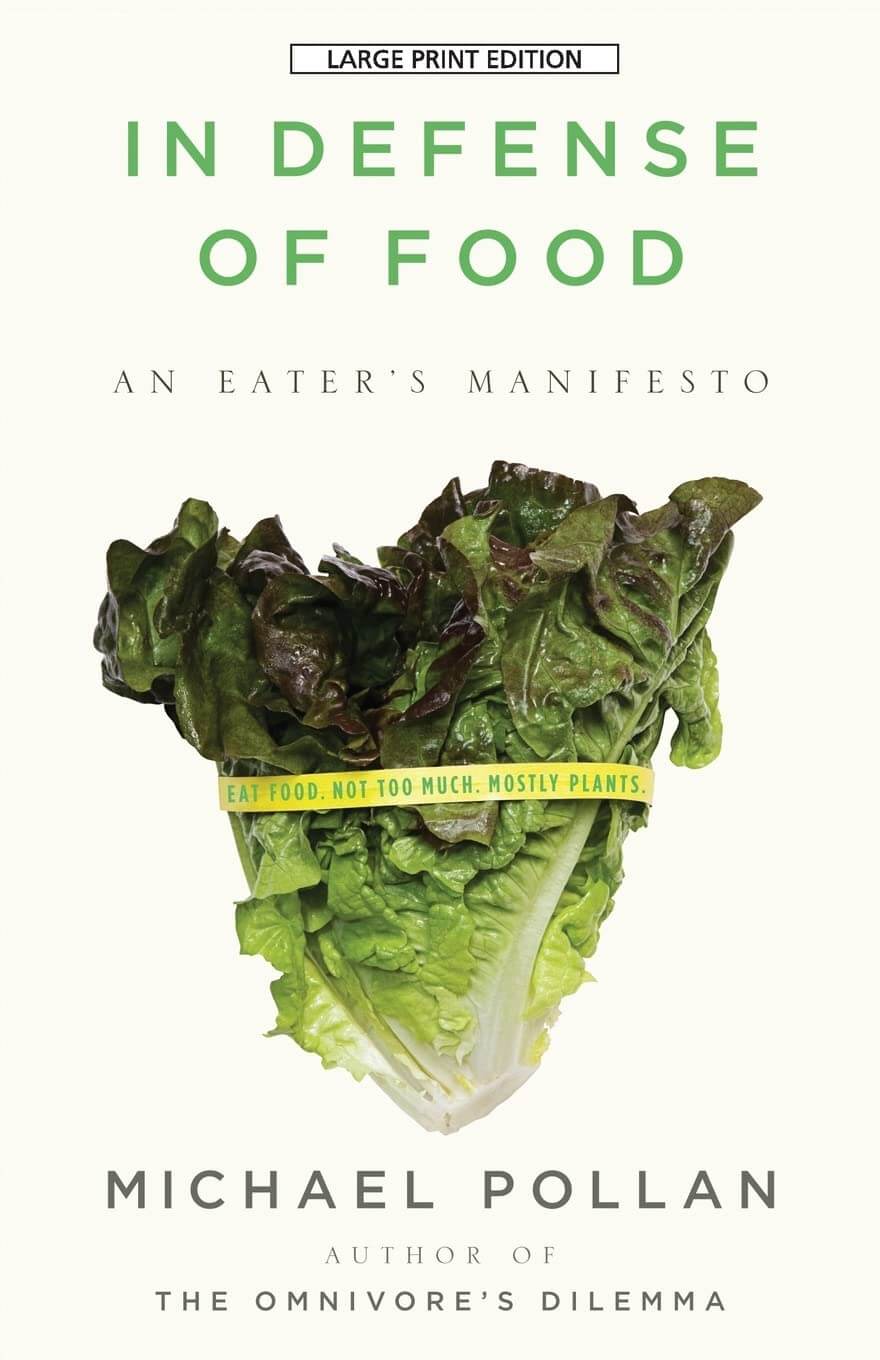
In Defense of Food Book Summary
This In Defense of Food Book Summary covers the key ideas, lessons, and takeaways in about 20 minutes.
Pollan’s message is not about adopting restrictive diets, counting calories, or following trends. It is about simplicity, quality, and mindfulness. Eating real whole foods, preparing meals with care, eating socially, and valuing plants over processed products support both physical and emotional health. Pollan believes that if individuals return to traditional foods, home cooking, and responsible agriculture, society can reverse modern chronic diseases, rebuild community, and heal ecological damage created by industrial agriculture.
Ultimately, the book is about empowerment: trusting common sense and culture rather than marketing and pseudoscience.
Helps with these goals
Want the complete 20-minute summary?
- Full structured summary
- Video Summary
- Podcast Summary
- Audio summary
- Key takeaways
- Exercises
- Quiz
- Highlights and notes
- Ask the book with AI
What is in the In Defense of Food book summary?
Below is a preview of Sumizeit’s expert-written summary of In Defense of Food by Michael Pollan. The full summary covers the book’s key ideas in text, audio, and video.
In Defense of Food: An Eater’s Manifesto by Michael Pollan is a deeply researched and compelling examination of how modern society lost its way when it comes to eating, and how individuals can reclaim control of their health by abandoning processed food culture and returning to real, traditional foods. Pollan argues that the contemporary Western diet—dominated by refined grains, added sugars, highly processed oils, chemical additives, factory-farmed animal products, and fast food—has produced an epidemic of chronic illnesses such as diabetes, heart disease, obesity, cancer, and autoimmune disorders. He contends that the paradox of modern life is that people know more about nutrients than ever, yet have never been more confused about what to eat or more unhealthy. We have traded home cooking and cultural traditions for industrial convenience and scientific reductionism, and the results have been disastrous.
Pollan’s core argument is expressed in a phrase that has become famous: “Eat food. Not too much. Mostly plants.” This simple manifesto counters decades of complicated dietary advice and scientific claims that have prioritized nutrients over food, industry profits over public health, and marketing slogans over common sense. Pollan dismantles the ideology of nutritionism, exposes the flaws and biases in food science, critiques the political ties between government and agribusiness, and offers a practical roadmap to restore a healthier, more joyful relationship with food.
The Rise of Nutritionism
Pollan begins with an exploration of nutritionism, a belief system that dominates the way modern societies think about food. Nutritionism reduces food to its nutrient components—carbohydrates, fats, proteins, vitamins, minerals, antioxidants, and phytochemicals—and assumes that the value of a food lies in the presence or absence of these individual parts rather than in the integrity of the whole food itself. Pollan argues that nutritionism is problematic for several reasons.
First, nutritionism presumes that scientists fully understand how nutrients work in the human body and how they interact with one another. But scientific history shows the opposite. For example, when researchers in the 20th century attempted to isolate the benefits of whole grains by refining wheat and adding back synthetic vitamins, they discovered that these fortified products still failed to replicate the health benefits of real whole wheat. It later became clear that whole grains include fibers, oils, enzymes, and phytonutrients—compounds not fully understood or even identified—that interact synergistically. Nutritional science struggles to account for this complex biological ecosystem.
Second, nutritionism has elevated good nutrients and demonized bad nutrients, leading to fads and confusion. For decades fat was the enemy, and low-fat products dominated grocery stores; yet heart disease and obesity only increased. When fat was removed, sugar was added, and refined carbohydrates replaced natural fats, creating highly addictive but nutritionally empty foods. Later carbohydrates became the villain, spawning high-protein diets like Atkins and keto. Omega-6 seed oils were once celebrated as heart-healthy replacements for butter, only to later be linked to inflammation.
Pollan argues that the constant flip-flopping reveals the instability of nutrition science and strengthens food companies who profit from…
Want the complete 20-minute summary?
- Full structured summary
- Video Summary
- Podcast Summary
- Audio summary
- Key takeaways
- Exercises
- Quiz
- Highlights and notes
- Ask the book with AI
Who should read In Defense of Food?
In Defense of Food is for anyone confused by conflicting dietary advice, struggling with chronic health issues, or concerned about the quality of modern food. It appeals to health-conscious readers, parents seeking better nutrition for their families, and anyone interested in understanding how food systems shape our bodies and society.
Why does In Defense of Food matter?
With epidemic rates of obesity, diabetes, and heart disease directly linked to processed food consumption, Michael Pollan's critique of modern eating habits offers both a diagnosis and a practical solution. In an era of misleading health claims and corporate influence over nutrition science, this book empowers readers to reclaim control of their health through common sense and cultural wisdom rather than marketing hype.
What are the key themes in In Defense of Food?
- The dangers of nutritionism and reductionist thinking about food
- How industrial agriculture prioritizes profit over nutrition
- The role of corporate influence in dietary guidelines
- The power of traditional and cultural food wisdom
- Cooking as an act of resistance and reclamation
- The importance of mindful, social eating practices
What are the key lessons from the In Defense of Food book summary?
Nutritionism reduces food to isolated nutrients and misses the whole picture
Breaking down food into individual nutrients like fats, carbs, and vitamins ignores the complex interactions between compounds and the synergistic benefits of whole foods. Science struggles to replicate the health benefits of real whole foods through synthetic fortification.
Nutrition science is unstable and driven by industry interests
Decades of flip-flopping dietary advice—from demonizing fat to attacking carbs—reveal that nutrition science is shaped more by corporate lobbying than rigorous evidence. Food companies profit from reformulating products to match whatever nutrient is currently vilified.
The Western diet is linked to nearly all modern chronic diseases
Populations that adopt Western processed foods rapidly experience spikes in obesity, diabetes, heart disease, and cancer within a single generation, regardless of their ancestral diets. The problem is not the food itself but industrial processing and ingredients.
Traditional cultures encoded nutritional wisdom through centuries of practice
Long-lived populations in Blue Zones like Okinawa and Sardinia developed diets through observation and experience that outperform modern medically-micromanaged eating. Their food traditions contain knowledge that science has not yet fully understood.
Industrial food is engineered for addiction, not nourishment
Ultra-processed foods use precise combinations of sugar, salt, and fat—the bliss point—designed to trigger addictive responses and override natural satiety signals. Food companies optimize for speed, stimulation, and habitual consumption rather than health.
The USDA has a fundamental conflict of interest in dietary guidance
The agency that advises Americans on food also exists to promote U.S. agriculture, creating inherent conflicts when scientific evidence contradicts industry interests. Dietary guidelines are shaped by livestock and grain lobbies, not scientific consensus.
Whole foods contain compounds science has not yet identified or understood
Real whole grains, fruits, and vegetables contain fibers, enzymes, phytonutrients, and oils that interact in complex ways science is still unraveling. Attempts to isolate and replicate these benefits through fortification consistently fail.
Simple rules beat complex nutritional calculations
Pollan's manifesto—Eat food. Not too much. Mostly plants.—provides clearer health guidance than years of confusing nutritional research. Common sense and cultural practice are more reliable guides than percentages and food labels.
Food with health claims on the packaging often needs marketing because it is not actually healthy
Truly nourishing foods like apples, fish, and vegetables do not require promotional claims or misleading labels. The more aggressive the marketing, the more likely the product is engineered for profit rather than health.
Modern portions are engineered to encourage overeating
Processed foods dissolve quickly in the mouth, lack fiber, and deliver rapid dopamine reward—bypassing the body's natural satiety signals. Larger portions and distracting environments further amplify overconsumption.
Cooking at home is a direct path to better health
Home-cooked meals naturally contain fewer calories, fewer additives, and more real ingredients than restaurant or packaged food. Cooking also reconnects people to food's meaning, pleasure, and social value.
Eating should be slow, social, and mindful, not rushed and solitary
Cultural practices like French meals and the Japanese principle of hara hachi bu (eating until 80% full) demonstrate that eating rituals and social connection reduce overeating and increase satisfaction. Industrial culture promotes speed and distraction, which fuels overconsumption.
Plant-based diets dominate the longest-living populations
Blue Zone communities with the highest longevity derive 70-90% of calories from plants, using meat as flavoring rather than a centerpiece. Abundant research confirms that plant-centered eating supports longevity and disease prevention.
Grass-fed animal products have vastly different nutritional profiles than grain-fed
Grass-fed beef contains significantly more omega-3s and CLA, while grain-fed beef from industrial farms promotes inflammation. The way animals are raised fundamentally changes the nutrients consumers receive.
Fermented foods are cultural technologies for health and preservation
Fermented foods like yogurt, kimchi, and sauerkraut developed across cultures to improve gut microbial health and preserve vegetables. Traditional fermentation practices contain encoded wisdom about digestive health that modern science is only beginning to validate.
Food engineering exploits natural human preferences for salt, sugar, and fat
Industrial food scientists use precise formulations to manipulate taste and override the body's natural appetite regulation. The bliss point is engineered to make products more addictive than natural foods.
Chemical fertilizers increased yield but degraded nutritional density
Industrial agriculture prioritized crop volume over soil health, resulting in produce with fewer minerals and micronutrients than vegetables grown decades ago. Monoculture depleted soil biodiversity and weakened crops' nutritional value.
Marketing claims often contradict nutritional reality
Foods like fruit yogurt with more sugar than candy, or whole-grain bread containing caramel coloring and refined flour, are marketed as healthy through misleading labeling and claims. Reading ingredient lists reveals the truth marketing obscures.
Trusting cultural wisdom and common sense beats following pseudoscientific trends
Instead of chasing diet fads and nutritional pseudoscience, readers can rely on traditional food practices and basic observation. Cultures that have nourished themselves for millennia offer more reliable guidance than conflicting modern nutrition claims.
Food autonomy and health are inseparable from connection to food's origins
When people understand where food comes from and how to prepare it, they make better choices and reclaim power from corporations. Disconnection from food production and cooking creates dependence on processed food systems.
Want the complete 20-minute summary?
- Full structured summary
- Video Summary
- Podcast Summary
- Audio summary
- Key takeaways
- Exercises
- Quiz
- Highlights and notes
- Ask the book with AI
How can you apply ideas from In Defense of Food?
- Shop the perimeter of the supermarket where real foods like produce, meat, and dairy are located, avoiding the processed interior aisles
- Apply the five-ingredient rule: avoid products with more than five ingredients, and skip anything you cannot pronounce or would not use in home cooking
- Cook most meals at home rather than relying on restaurant or packaged food, which automatically reduces additives and excess calories
- Build meals around plants, using meat as a flavoring or side rather than the centerpiece, following the pattern of longest-lived populations
- Eat slowly at a table with others, practicing mindfulness and the 80% fullness principle to improve digestion and satisfaction
- Replace ultra-processed snacks with whole foods that can rot, signaling that they are alive with nutrients rather than preserved with chemicals
- Incorporate fermented foods like yogurt, sauerkraut, and kimchi into regular meals to support gut health and leverage traditional preservation wisdom
- Question health claims on packaging and prioritize foods without marketing, recognizing that truly healthy foods do not need to advertise
What common mistakes do readers make with In Defense of Food?
- Treating nutritional labels and percentages as more reliable than common sense observation of how foods affect your body and energy levels
- Assuming that fortified or synthetic versions of nutrients work the same way as nutrients from whole foods
- Falling for marketing claims about health benefits without examining ingredient lists and remembering that marketing is profit-driven, not science-driven
- Eating while distracted or rushed, which bypasses satiety signals and leads to overeating even with otherwise healthy food
- Replacing one demonized nutrient with another (e.g., swapping fat for sugar or carbs for processed protein) instead of focusing on whole foods
- Ignoring cultural and traditional food practices as outdated, when they often contain nutrition wisdom that modern science validates too slowly
Sumizeit Exercises Apply what you've learned
Turn ideas from In Defense of Food into action with a short guided reflection: identify the biggest takeaway, connect it to your life, and commit to one step you can take in the next 24 hours.
What is the expert analysis of In Defense of Food?
Overview
In Defense of Food: An Eater’s Manifesto is a seminal work by Michael Pollan, a distinguished journalist and professor known for his incisive exploration of food, culture, and ecology. Published in the early 21st century, this book stands as a critical intervention in contemporary debates about diet, health, and the industrial food complex. Pollan’s influence extends beyond mere dietary advice; he challenges the very framework through which modern societies understand nutrition and food consumption, making the book a cornerstone for anyone interested in the intersection of health, culture, and sustainability.
Core Thesis
Pollan’s central argument is elegantly encapsulated in his now-famous maxim: “Eat food. Not too much. Mostly plants.” He critiques the reductionist ideology of nutritionism, which fragments food into isolated nutrients and fosters confusion and misinformation. Pollan contends that this scientific reductionism, coupled with the rise of industrially processed foods and corporate influence over dietary guidelines, has precipitated a public health crisis characterized by chronic diseases linked to the Western diet. His thesis advocates a return to whole, traditional foods and cultural eating practices as a pathway to reclaiming health, ecological balance, and culinary wisdom.
Strengths
- Clarity and Accessibility: Pollan distills complex nutritional science and food politics into clear, memorable principles that resonate widely without sacrificing intellectual rigor.
- Interdisciplinary Approach: The book weaves together anthropology, history, biology, and political economy, providing a holistic understanding of food systems and their societal impacts.
- Cultural Sensitivity: By highlighting diverse traditional diets and indigenous knowledge, Pollan honors cultural food wisdom often marginalized in Western nutritional discourse.
- Practical Guidance: Beyond critique, the book offers actionable advice that empowers readers to make healthier, more conscious food choices.
- Political Economy Insight: Pollan’s exposure of the conflicts of interest within governmental dietary guidelines and corporate lobbying adds a critical dimension rarely addressed in popular nutrition books.
Critiques & Counterarguments
- Oversimplification of Nutrition Science: While Pollan rightly critiques nutritionism, his dismissal of nutrient-focused research may underplay the advances and nuances in nutritional biochemistry and epidemiology that inform public health.
- Romanticizing Tradition: The valorization of traditional diets sometimes glosses over their limitations or the socio-economic contexts that shaped them, which may not be fully transferable to modern urban settings.
- Limited Engagement with Food Accessibility: Pollan’s recommendations presuppose access to fresh, whole foods and time for home cooking, which may not be feasible for lower-income populations or those in food deserts.
- Competing Research: Some studies suggest that certain processed foods, when fortified and consumed in moderation, can contribute positively to nutrition, challenging Pollan’s wholesale skepticism of processed products.
- Opposing Schools of Thought: The low-carbohydrate and ketogenic diet communities argue that plant-heavy diets are not universally optimal, advocating for individualized approaches based on genetics and metabolism.
Who Should Read This
In Defense of Food is essential reading for a sophisticated audience interested in the broader implications of diet beyond calories and nutrients. It is particularly valuable for:
- Health professionals and nutritionists seeking a critical perspective on the cultural and political dimensions of food.
- Policy makers and advocates aiming to understand the systemic forces shaping dietary guidelines and public health.
- Intellectual readers curious about the intersection of science, culture, and industry in shaping modern eating habits.
- Individuals committed to mindful eating, sustainability, and reconnecting with culinary traditions.
- Students and scholars in food studies, anthropology, and environmental sciences exploring the societal impacts of industrialized food systems.
Frequently asked questions about the In Defense of Food book summary
What is In Defense of Food about?
In Defense of Food: An Eater's Manifesto by Michael Pollan examines how modern industrial food culture has created an epidemic of chronic disease and how consumers can reclaim their health by returning to real, whole foods and traditional eating practices. Pollan critiques nutritionism—the reduction of food to isolated nutrients—and reveals how corporate interests and flawed science have shaped confusing dietary guidelines that prioritize profit over health.
Who should read In Defense of Food?
Anyone confused by conflicting dietary advice, struggling with health issues, or concerned about food quality will benefit from this book. It appeals to parents seeking better nutrition, health-conscious readers, and anyone interested in understanding how food systems affect both personal health and society. The book requires no special dietary knowledge and offers practical guidance grounded in common sense.
What are the main takeaways from In Defense of Food?
Pollan's core message is expressed in a simple manifesto: Eat food. Not too much. Mostly plants. The book argues that whole, unprocessed foods are far superior to fortified versions, that cooking at home and eating mindfully reduce disease risk, and that traditional food cultures contain wisdom that outperforms modern nutritional trends. Finally, Pollan emphasizes that reclaiming control over food—through home cooking and rejecting processed products—is an act of empowerment and resistance against corporate food systems.
What is nutritionism and why does Pollan criticize it?
Nutritionism is the belief that food's value lies in its individual nutrient components rather than the whole food itself. Pollan argues it is flawed because science does not fully understand how nutrients interact in the body, it has driven unstable and contradictory dietary advice, and it has shifted power from cultural food wisdom to corporate marketing. Nutritionism treats sugary cereals with added vitamins the same as real apples, ignoring the fundamental biological difference.
How does industrial food engineering affect our health?
Industrial food uses precise combinations of sugar, salt, and fat designed to trigger addictive responses and override natural satiety signals. Ultra-processing strips whole foods of fiber and nutrients, while chemical fertilizers and factory farming degrade the nutritional density of crops and animal products. These engineered foods prioritize speed, profit, and habitual consumption over nourishment, directly contributing to obesity, diabetes, and chronic disease.
What does Pollan say about the politics of dietary guidelines?
Pollan reveals that the USDA, which advises Americans on nutrition, also exists to promote U.S. agriculture—creating a fundamental conflict of interest. Dietary guidelines are shaped by livestock and grain industry lobbying rather than scientific evidence; for example, the agency changed language from Eat less meat to Choose lean meats after pressure from industry. Major nutrition studies are often funded by the industries benefiting from their results, compromising scientific objectivity.
Why does Pollan emphasize cooking and traditional foods?
Home cooking automatically reduces additives and excess calories while reconnecting people to food's meaning and pleasure. Traditional food cultures like those in Blue Zones developed sustainable eating patterns over centuries that still outperform modern diets. Pollan argues that cooking is resistance to corporate food systems and that fermented foods, slow meals, and plant-based diets encode nutritional wisdom that modern science is only beginning to validate.
What should I do to implement Pollan's advice?
Start by eating whole foods with few ingredients, shopping the supermarket perimeter, and cooking most meals at home. Build meals around plants, eat mindfully at a table rather than while distracted, and prioritize foods that can rot over ultra-processed products. Avoid foods with misleading health claims, include fermented foods for gut health, and trust cultural food wisdom and observation of how foods affect you over confusing nutritional labels and trends.
About Sumizeit
Sumizeit is a profitable Scomy LLC company based in Miami, Florida. It has been helping readers learn from nonfiction books for 7 years with expert-written summaries in text, audio, podcast, and video.
Want the complete 20-minute summary?
- Full structured summary
- Video Summary
- Podcast Summary
- Audio summary
- Key takeaways
- Exercises
- Quiz
- Highlights and notes
- Ask the book with AI
Here's why readers love Sumizeit
Join thousands of learners getting smarter every day
"Great experience. Detailed summaries. Loved the gamification feature. Makes learning fun. Good customer service. I recommend Sumizeit to anyone. You'll learn a lot."
"I always felt busy but still wanting to keep up with the book discussion in my friend group. This was a great supplement to help me keep reading the books I find fun while keeping up with important books."
"I love this website. Instead of scrolling social media, I find myself learning a lot. I use it everyday. I recommend this app for anyone who is too busy and wants to get up to speed with their favorite books."
In Defense of Food Book Summary PDF
Looking for a In Defense of Food Book Summary PDF you can save and revisit offline? Our In Defense of Food Book Summary PDF captures the book’s core ideas in a clean, printable format — the key frameworks, takeaways, and structure without the fluff. Download the In Defense of Food Book Summary PDF when you want a reference you can annotate, share with your team, or review on the go. Get your In Defense of Food Book Summary PDF from the download page below.
Download In Defense of Food Book Summary PDFPeople also liked these summaries
Readers who explored In Defense of Food often enjoyed these titles next.




Want the complete 20-minute summary?
- Full structured summary
- Video Summary
- Podcast Summary
- Audio summary
- Key takeaways
- Exercises
- Quiz
- Highlights and notes
- Ask the book with AI
Featured Book Titles
Popular Book Summaries at sumizeit, leading book summary app
