


As an Amazon Associate, Sumizeit earns from qualifying purchases.
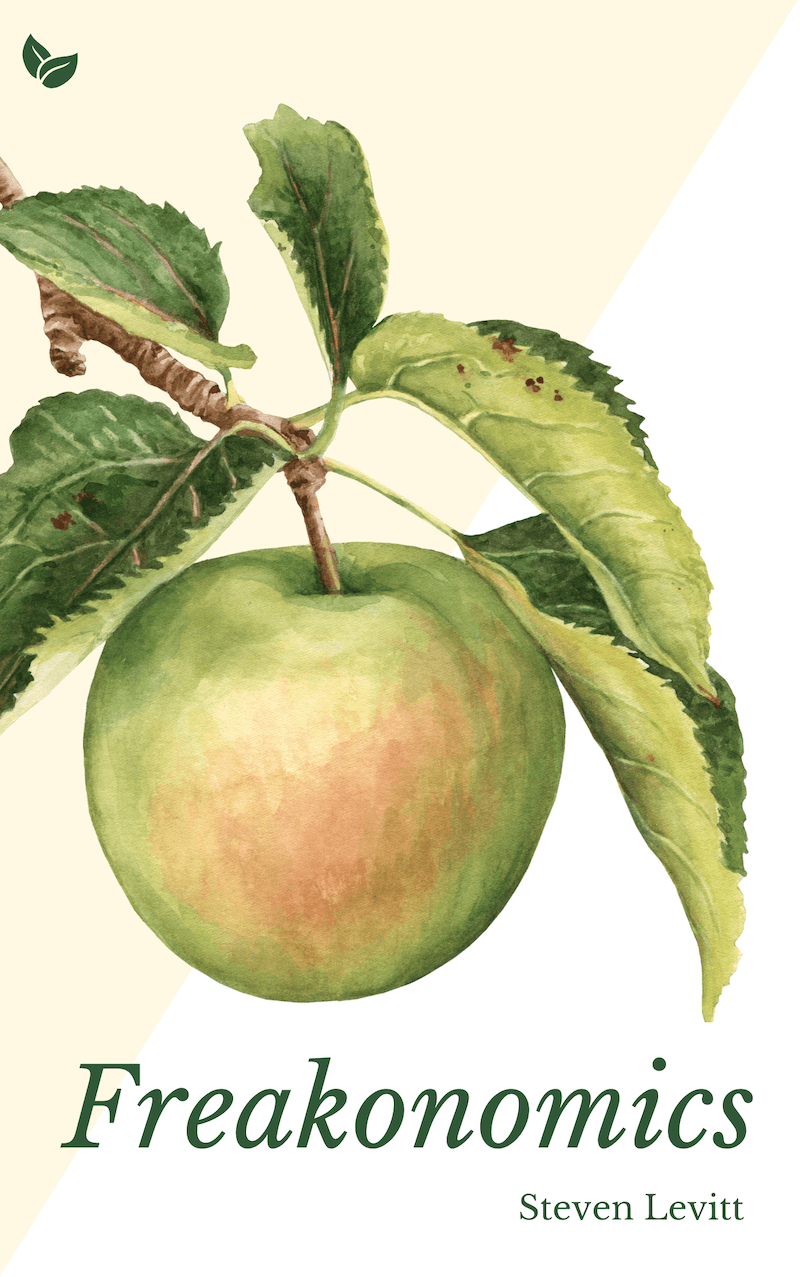
Freakonomics Book Summary
This Freakonomics Book Summary covers the key ideas, lessons, and takeaways in about 20 minutes.
Helps with these goals
Want the complete 20-minute summary?
- Full structured summary
- Video Summary
- Podcast Summary
- Audio summary
- Key takeaways
- Exercises
- Quiz
- Highlights and notes
- Ask the book with AI
What is in the Freakonomics book summary?
Below is a preview of Sumizeit’s expert-written summary of Freakonomics by Steven D. Levitt. The full summary covers the book’s key ideas in text, audio, and video.
Freakonomics is an unconventional exploration of human behavior through the lens of economic reasoning. Steven Levitt and Stephen Dubner argue that economics is not merely the study of money or markets, but rather the science of understanding how people respond to incentives and how data can uncover hidden motives and unexpected outcomes. Instead of focusing on classic economic subjects like inflation or interest rates, the authors investigate real-world topics such as cheating in sports and education, what influences crime rates, how parent decisions affect children, why drug dealers often remain poor, and how experts use information to manipulate decision-making. By applying statistical analysis and empirical evidence, Freakonomics demonstrates that many widely accepted beliefs collapse under scrutiny and that truth often hides behind layers of emotion, ideology, and assumption. The book teaches readers to ask different questions—ones that cut beneath conventional narratives and challenge comfortable explanations.
Understanding Incentives: The Central Engine of Human Behavior
Levitt argues that nearly every choice humans make is shaped by incentives. He identifies three primary types: economic (material gain or loss), social (public approval or disapproval), and moral (internal values or conscience). These incentives coexist, overlap, and compete, creating complex motivations that often lead to surprising outcomes. For example, financial incentives can motivate performance or productivity, but they can also encourage dishonesty if rewards are high and the risk of consequences is low.
A powerful illustration of this concept comes from the analysis of standardized test cheating among schoolteachers. Under intense government pressure to raise test scores—often tied to salary bonuses or job security—some teachers altered students’ answer sheets. Levitt used intricate statistical modeling to detect suspicious answer patterns, such as improbably consistent strings of correct responses followed by sudden random mistakes. These irregularities exposed specific classrooms where tampering occurred. In one case, entire test booklets were found to have been rewritten after students left the room. After authorities implemented stricter test monitoring, the frequency of these irregularities dropped dramatically, showing how modifying incentives directly changes behavior. This example also reveals that cheating is not limited to criminals; ordinary people justify unethical actions when incentives are misaligned.
Crime, Context, and Misunderstood Causation
One of the most provocative concepts in Freakonomics concerns the sharp decline in crime rates during the 1990s in the United States. At the time, politicians and journalists attributed the drop to strategic policing, increased incarceration, technological advancements, better community programs, and improved economic conditions. Levitt challenges these explanations by arguing that a major contributor was the impact of legalized abortion following the 1973 Roe v. Wade decision. According to his research, unwanted children—who are statistically more likely to face challenging conditions and grow up in neglected or unstable environments—have historically faced a higher risk of becoming involved in criminal activity. With access to legal abortion, many women who felt unprepared for motherhood avoided unwanted births. Roughly two decades later, when these unborn children would have reached the riskiest age group for violent crime, the crime rates fell sharply.
Levitt acknowledges that the topic…
Want the complete 20-minute summary?
- Full structured summary
- Video Summary
- Podcast Summary
- Audio summary
- Key takeaways
- Exercises
- Quiz
- Highlights and notes
- Ask the book with AI
Who should read Freakonomics?
Freakonomics is ideal for curious readers who question conventional wisdom and want to understand what really drives human behavior. Whether you're interested in economics, social trends, or just explaining why people do seemingly irrational things, this book appeals to critical thinkers across all backgrounds who enjoy data-driven insights presented in engaging narratives.
Why does Freakonomics matter?
In a world of misinformation and oversimplified explanations, Freakonomics teaches you to distinguish correlation from causation and to follow evidence over emotion. By understanding how incentives shape behavior—from teacher cheating to crime rates to parenting decisions—you gain practical tools for making better decisions in your own life and evaluating claims in news and policy debates.
What are the key themes in Freakonomics?
- Incentives as the primary driver of human behavior
- Questioning conventional wisdom through data analysis
- Information asymmetry and expert manipulation
- Distinguishing correlation from true causation
- Hidden motivations behind seemingly irrational choices
- How context and environment shape moral decisions
What are the key lessons from the Freakonomics book summary?
Three Types of Incentives Shape All Decisions
Economic, social, and moral incentives compete and overlap to motivate behavior. Understanding which incentives dominate in any situation reveals why people make the choices they do.
Misaligned Incentives Lead to Cheating
When rewards are high and consequences are low, ordinary people justify dishonesty. Teachers under pressure to raise test scores, real estate agents focused on quick sales, and executives all demonstrate that cheating emerges from incentive structures, not character.
Test Cheating Patterns Can Be Detected Statistically
Levitt used data analysis to identify suspicious answer strings and detect teacher cheating on standardized tests, proving that statistical irregularities reveal hidden behavior.
Crime Decline Had Unexpected Causes
Rather than improved policing or economic conditions alone, legalized abortion's delayed demographic effects significantly contributed to 1990s crime reduction, illustrating how policy consequences emerge years later in unexpected ways.
Experts Often Have Conflicting Incentives
Real estate agents sell their own homes at higher prices than client properties because their commission structure incentivizes speed over maximizing value, revealing the gap between marketed expertise and actual behavior.
Information Asymmetry Creates Power Imbalances
Professionals in real estate, medicine, law, and finance profit from consumers' lack of knowledge. When information becomes democratized through technology, this advantage diminishes.
The Internet Has Democratized Expert Knowledge
Online platforms have shifted power from experts to consumers by providing transparent pricing, comparisons, and data—reducing the manipulation opportunities that once defined professional services.
Drug Dealing Organizations Function Like Corporate Hierarchies
Street-level dealers earn below minimum wage while facing high risk of death or imprisonment, yet the system persists because workers irrationally hope to climb to lucrative leadership positions.
Tournament Incentive Structures Exploit Lower-Tier Participants
In systems like drug dealing, professional sports, and entertainment, millions compete for few high-paying positions, keeping lower-tier workers motivated by false hope of advancement.
Parental Actions Matter Less Than Parental Characteristics
Data shows that parental education and socioeconomic status correlate far more strongly with child success than specific parenting activities like reading aloud or expensive preschools.
Expensive Enrichment Programs Have Minimal Measurable Impact
Many parents invest in costly interventions believing they drive achievement, but statistical analysis reveals these activities have far less influence than household stability and environment.
Fear and Reality Diverge in Risk Perception
Parents often fear rare, media-covered events while ignoring statistically common hazards. Media coverage distorts perception of actual danger.
Cheating Emerges When Three Conditions Align
High rewards, low detection likelihood, and moral justification create the perfect environment for dishonesty across bagel honor systems, sports, taxes, and corporate fraud.
Workplace Culture Predicts Honesty Levels
Data from honor-system bagel sales showed that positive workplace morale correlated with payment compliance, while high-stress environments saw increased cheating.
Emotional State and Context Influence Moral Behavior
People cheat more during holidays, stressful seasons, and bad weather—proving that situational factors override stable moral principles.
Names Reflect Parent Characteristics, Not Destiny
Naming trends migrate down the socioeconomic ladder as wealthy families seek new status markers, but a child's name itself does not determine success—it signals parental background.
Causation Is Often Confused with Correlation
Successful people may share common traits, but those traits are often symptoms of their parents' characteristics rather than causes of their own achievement.
Conventional Wisdom Persists Because It Feels Comfortable
Easy explanations and emotionally satisfying narratives dominate public discourse even when data contradicts them, making critical thinking essential.
Ask Unexpected Questions to Reveal Hidden Truths
Freakonomics teaches that unconventional inquiry—examining why drug dealers stay poor or how to detect teacher cheating—reveals insights that standard analysis misses.
Data Analysis Uncovers What Emotion and Ideology Obscure
Economic reasoning and statistical evidence strip away assumptions and reveal the actual mechanisms driving human behavior across crime, education, parenting, and commerce.
Want the complete 20-minute summary?
- Full structured summary
- Video Summary
- Podcast Summary
- Audio summary
- Key takeaways
- Exercises
- Quiz
- Highlights and notes
- Ask the book with AI
How can you apply ideas from Freakonomics?
- Evaluate incentive structures in your workplace or personal decisions to predict behavior and identify misaligned motivations
- Question media narratives about causation by asking what data actually supports the claim versus what feels intuitively true
- Recognize when experts have conflicting incentives and use transparency tools (like online pricing) to reduce information asymmetry
- Reconsider parenting anxiety by focusing on foundational factors like family stability rather than expensive enrichment programs
- Assess your own risk perception by comparing statistical likelihood to emotional fear, especially regarding rare events
- Identify when three cheating conditions align (high reward, low detection, moral justification) to understand or prevent dishonesty in systems you design or join
- Examine your own behavior for rationalized dishonesty by asking what incentives and context might drive you toward unethical choices
What common mistakes do readers make with Freakonomics?
- Assuming a successful person's name, school, or activity directly caused their success instead of recognizing these are signals of parental background
- Trusting expert advice without questioning whether their incentives align with your best interests
- Confusing correlation with causation when two events occur together, ignoring the actual mechanisms at work
- Believing that spending money on visible parenting activities (tutoring, elite preschool) matters more than unmeasurable factors like household stability
Sumizeit Exercises Apply what you've learned
Turn ideas from Freakonomics into action with a short guided reflection: identify the biggest takeaway, connect it to your life, and commit to one step you can take in the next 24 hours.
What is the expert analysis of Freakonomics?
Overview
Freakonomics, authored by economist Steven D. Levitt and journalist Stephen J. Dubner, represents a landmark in popular nonfiction that redefines the boundaries of economic inquiry. By applying rigorous economic analysis to unconventional subjects—ranging from crime rates to parenting strategies—the book challenges traditional perceptions of economics as solely concerned with markets and finance. Levitt’s academic expertise, paired with Dubner’s narrative skill, produces a compelling synthesis that appeals to both scholarly and general audiences. The book’s significance lies in its methodological innovation and its invitation to interrogate everyday phenomena through data-driven skepticism.
Core Thesis
The central argument of Freakonomics is that human behavior is fundamentally shaped by incentives—economic, social, and moral—and that by examining these incentives with empirical rigor, one can uncover hidden motives and counterintuitive truths that defy conventional wisdom. Levitt and Dubner contend that many accepted explanations for social phenomena are superficial or ideologically driven, and that a careful analysis of data reveals complex causations and unexpected correlations. The work emphasizes the importance of distinguishing correlation from causation and advocates for questioning comfortable narratives by asking novel, incisive questions.
Strengths
- Innovative Application of Economics: The book excels at extending economic analysis beyond traditional domains, demonstrating its explanatory power in diverse social contexts such as crime, education, and parenting.
- Empirical Rigor: Levitt’s use of sophisticated statistical techniques to detect cheating, analyze crime trends, and decode incentive structures lends credibility and depth to the findings.
- Engaging Storytelling: Dubner’s journalistic craftsmanship transforms complex data and abstract concepts into accessible, compelling narratives that engage a broad readership.
- Challenging Conventional Wisdom: The book’s insistence on questioning accepted beliefs encourages intellectual humility and critical thinking, fostering a mindset that values evidence over ideology.
- Interdisciplinary Insight: By integrating economics with psychology, sociology, and behavioral science, Freakonomics offers a holistic perspective on human motivation and social dynamics.
Critiques
- Overreliance on Quantitative Data: While data-driven, some arguments may underappreciate qualitative nuances and contextual factors that resist statistical measurement.
- Potential for Oversimplification: The provocative nature of the conclusions sometimes risks reducing complex social issues to single causal narratives, which may obscure multifaceted realities.
- Controversial Interpretations: Certain claims, such as the impact of legalized abortion on crime rates, have sparked ethical debates and criticisms regarding moral implications and alternative explanations.
- Selection Bias in Case Studies: The choice of examples, while illustrative, may not always represent broader populations or account for confounding variables.
- Limited Prescriptive Guidance: The book focuses more on diagnosis than on offering actionable solutions, which may frustrate readers seeking direct advice.
Who Should Read This
- Academics and Students: Particularly those in economics, sociology, psychology, and public policy, who seek innovative methodological approaches and interdisciplinary perspectives.
- Data Enthusiasts and Analysts: Readers interested in how empirical evidence can challenge assumptions and reveal hidden patterns in social behavior.
- Professionals in Social Sciences and Public Policy: Those aiming to understand incentive structures and the unintended consequences of policies and social programs.
- General Readers with Intellectual Curiosity: Individuals who appreciate thought-provoking, accessible explorations of everyday phenomena and enjoy questioning accepted narratives.
- Critics of Conventional Wisdom: Anyone skeptical of simplistic explanations and eager to cultivate a more nuanced, evidence-based worldview.
Frequently asked questions about the Freakonomics book summary
What is Freakonomics about?
Freakonomics by Steven D. Levitt and Stephen J. Dubner is an exploration of human behavior through economic reasoning. The book argues that economics is fundamentally about understanding incentives and that data can uncover hidden motivations behind seemingly irrational choices—from teacher cheating and crime trends to parenting decisions and professional manipulation.
Who should read Freakonomics?
Freakonomics appeals to curious readers who question conventional wisdom and enjoy data-driven explanations. It's ideal for anyone interested in understanding what really drives human behavior, whether in economics, social trends, parenting, crime, or professional contexts.
What are the main takeaways from Freakonomics?
The core message is that incentives—economic, social, and moral—shape human behavior more powerfully than good intentions. Freakonomics teaches readers to distinguish correlation from causation, question comfortable explanations, and recognize that experts often have conflicting interests. The book demonstrates that truth often hides beneath emotional narratives and requires critical analysis of actual data.
How does Freakonomics explain the 1990s crime decline?
Rather than attributing the decline solely to improved policing or economic growth, Levitt argues that legalized abortion following Roe v. Wade was a major contributor. Women who felt unprepared for motherhood avoided unwanted births; roughly two decades later, when those unborn children would have reached the age group most likely to commit violent crimes, crime rates fell sharply.
What does Freakonomics reveal about real estate agents?
Levitt discovered that real estate agents sell their own homes at significantly higher prices than client properties, keeping them on the market longer to field more bids. Because agents earn only a small percentage of additional profit, they have an incentive to push quick sales rather than maximize value for clients—a classic example of conflicting incentives hidden by expert marketing.
Does Freakonomics support traditional parenting advice?
No. Freakonomics challenges the belief that expensive enrichment programs, elite preschools, and structured activities significantly impact child success. Data shows that parental education and socioeconomic status correlate far more strongly with outcomes than specific parenting activities, suggesting anxiety-driven investment often overshadows evidence-based priorities.
How does Freakonomics explain why people cheat?
Levitt argues that cheating emerges when three conditions align: high rewards, low likelihood of detection, and ability to morally justify the action. His analysis of honor-system bagel sales showed that workplace culture, emotional state, and context influence honesty—proving that ordinary people calculate risks and rationalize dishonesty based on circumstances, not character.
About Sumizeit
Sumizeit is a profitable Scomy LLC company based in Miami, Florida. It has been helping readers learn from nonfiction books for 7 years with expert-written summaries in text, audio, podcast, and video.
Want the complete 20-minute summary?
- Full structured summary
- Video Summary
- Podcast Summary
- Audio summary
- Key takeaways
- Exercises
- Quiz
- Highlights and notes
- Ask the book with AI
Here's why readers love Sumizeit
Join thousands of learners getting smarter every day
"Great experience. Detailed summaries. Loved the gamification feature. Makes learning fun. Good customer service. I recommend Sumizeit to anyone. You'll learn a lot."
"I always felt busy but still wanting to keep up with the book discussion in my friend group. This was a great supplement to help me keep reading the books I find fun while keeping up with important books."
"I love this website. Instead of scrolling social media, I find myself learning a lot. I use it everyday. I recommend this app for anyone who is too busy and wants to get up to speed with their favorite books."
Freakonomics Book Summary PDF
Looking for a Freakonomics Book Summary PDF you can save and revisit offline? Our Freakonomics Book Summary PDF captures the book’s core ideas in a clean, printable format — the key frameworks, takeaways, and structure without the fluff. Download the Freakonomics Book Summary PDF when you want a reference you can annotate, share with your team, or review on the go. Get your Freakonomics Book Summary PDF from the download page below.
Download Freakonomics Book Summary PDFPeople also liked these summaries
Readers who explored Freakonomics often enjoyed these titles next.


Want the complete 20-minute summary?
- Full structured summary
- Video Summary
- Podcast Summary
- Audio summary
- Key takeaways
- Exercises
- Quiz
- Highlights and notes
- Ask the book with AI
Featured Book Titles
Popular Book Summaries at sumizeit, leading book summary app