


Prefer the print book? Buy on Amazon
As an Amazon Associate, Sumizeit earns from qualifying purchases.
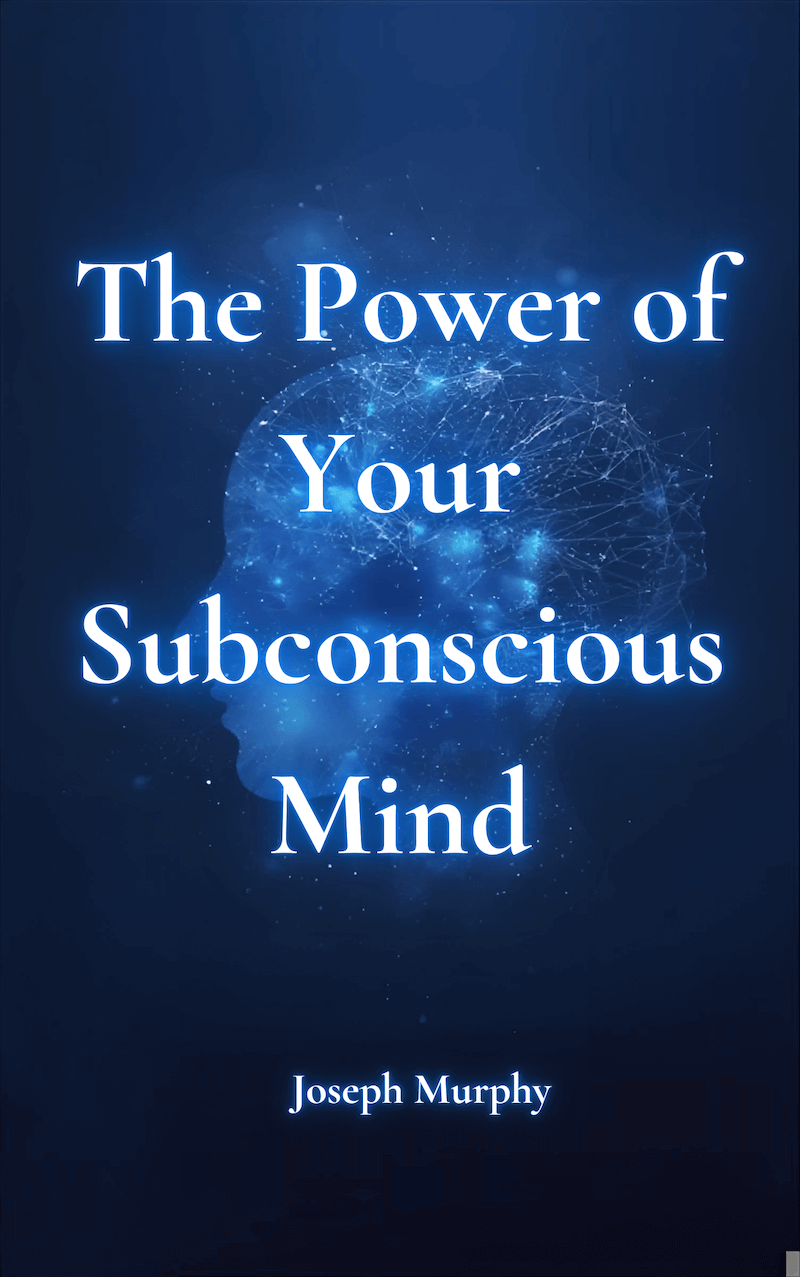
The Power of Your Subconscious Mind Book Summary
This The Power of Your Subconscious Mind Book Summary covers the key ideas, lessons, and takeaways in about 20 minutes.
Short Description:
The Power of Your Subconscious Mind shapes life through thought patterns.
Want the complete 20-minute summary?
- Full structured summary
- Video Summary
- Podcast Summary
- Audio summary
- Key takeaways
- Exercises
- Quiz
- Highlights and notes
- Ask the book with AI
Want a Free Weekly Read?
Get a free summary every week straight to your mailbox.
Preview the The Power of Your Subconscious Mind book summary
Below is a preview of Sumizeit’s comprehensive human-written summary of The Power of Your Subconscious Mind by Joseph Murphy. The full summary is 15-20 minutes long and covers the book’s key ideas in text, audio, visual, and video formats. Unlock the full 20 Minute Summary
Joseph Murphy’s The Power of Your Subconscious Mind is built on a powerful premise: everything that unfolds in your life reflects the ideas and expectations embedded in your subconscious mind. Murphy argues that the subconscious operates as an unquestioning creative engine—absorbing repeated thoughts, emotional states, and dominant internal narratives, and transforming them into lived reality. He maintains that by learning to intentionally guide the subconscious with deliberate thought, imagination, and belief, anyone can dramatically influence their circumstances, health, relationships, and success.
Murphy describes the subconscious mind as a limitless intelligence connected to a universal creative force. This connection means that when your inner world aligns with positive expectation, faith, and emotional harmony, you open the pathway for remarkable outcomes—serendipitous opportunities, rapid healing, financial growth, and purposeful relationships. Conversely, chronic worry, fear, or resentment block this creative flow and generate situations that reinforce hardship or limitation. The book is a guide to understanding this mechanism and training the subconscious to work for rather than against you.
How the Mind Is Structured
Murphy explains that the mind functions in two distinct layers. The conscious mind is the surface layer responsible for reasoning, deliberate thinking, analysis, and decision-making. It focuses attention and interprets immediate sensory experience. Though powerful in logic, the conscious mind is limited: it can concentrate on only one idea at a time, and it cannot store information permanently.
The subconscious mind resides beneath conscious awareness and is infinitely more expansive. It stores memories, learned behaviors, beliefs, emotional patterns, and every sensory impression accumulated across a lifetime. It manages physical processes—heartbeat, cell regeneration, digestion—and governs automatic behaviors such as breathing or driving a familiar route without thinking. It processes millions of bits of data constantly, acting as a master computer that never shuts down.
Unlike the conscious mind, the subconscious cannot evaluate information. It does not differentiate between truth and falsehood, or between beneficial and harmful ideas. Whatever the conscious mind repeats or emotionally reinforces becomes a directive that the subconscious executes. If someone continually thinks, I can never succeed, the subconscious accepts this as an instruction and shapes behavior and perception to produce failure. If another person continually affirms, opportunities always emerge for me, the subconscious constructs experiences that match this belief.
A practical example: imagine two students studying for a major exam. One tells himself repeatedly, I always panic during tests; I’m terrible at remembering things. The other affirms daily, I learn quickly and stay calm under pressure. Both students may study the same number of hours, but the first arrives filled with dread and performs poorly because his subconscious triggers nervous system responses that disrupt clarity. The second, believing in his capability, remains calm and retrieves information smoothly. Their subconscious beliefs shaped their outcomes more than their effort.
How Thought Shapes Experience
Murphy maintains that repetitive thinking forms mental blueprints. These patterns solidify into beliefs stored in the subconscious, and later manifest as tangible circumstances.
Want the complete 20-minute summary?
- Full structured summary
- Video Summary
- Podcast Summary
- Audio summary
- Key takeaways
- Exercises
- Quiz
- Highlights and notes
- Ask the book with AI
Who should read The Power of Your Subconscious Mind?
This book is for anyone seeking to understand why their life unfolds as it does and how to actively shape their future. Whether you're struggling with limiting beliefs, health challenges, financial constraints, or relationship difficulties, The Power of Your Subconscious Mind by Joseph Murphy offers a framework for recognizing that your inner mental patterns are the root cause—and the solution. It's ideal for individuals ready to take responsibility for their thoughts and beliefs rather than blaming external circumstances.
Why does The Power of Your Subconscious Mind matter?
In a world where many feel powerless over their circumstances, Murphy's work reveals that you possess an untapped resource within yourself: your subconscious mind. Understanding how your repeated thoughts and beliefs become lived reality is crucial for breaking cycles of failure, illness, and limitation that persist despite conscious effort. This book matters today because it bridges psychology and spirituality, offering practical techniques grounded in how the mind actually works, making personal transformation achievable rather than mystical.
What are the key themes in The Power of Your Subconscious Mind?
- The subconscious mind as a creative force that materializes beliefs into reality
- The distinction between conscious reasoning and subconscious processing
- Repetitive thought patterns as blueprints for life outcomes
- Emotional conviction rather than words alone as the driver of change
- The role of visualization and imagination in programming success
- Fear and negative beliefs as self-sabotaging mechanisms
- Forgiveness and emotional release as pathways to healing
Want the complete 20-minute summary?
- Full structured summary
- Video Summary
- Podcast Summary
- Audio summary
- Key takeaways
- Exercises
- Quiz
- Highlights and notes
- Ask the book with AI
How can you apply ideas from The Power of Your Subconscious Mind?
- Write and repeat present-tense affirmations daily to reprogram limiting beliefs about money, health, relationships, or capability
- Practice visualization before sleep, imagining desired outcomes with full sensory detail to activate subconscious alignment
- Pose a specific question to your subconscious before sleep and trust the answer to emerge as intuitive clarity upon waking
- Identify and release resentment through forgiveness practices, freeing your subconscious from painful emotional patterns that manifest as illness or relationship conflict
- Use gradual exposure to fears in manageable steps, allowing your subconscious to rewire associations from threat to safety
- Cultivate emotional conviction behind affirmations by visualizing success until you genuinely feel the feeling associated with achievement
- Create a mental blueprint of financial or career success through daily visualization, allowing your subconscious to direct behavior toward recognizing and seizing opportunities
What common mistakes do readers make with The Power of Your Subconscious Mind?
- Repeating affirmations without emotional conviction, sending mixed signals to the subconscious that result in no change
- Using future-tense language like 'I will succeed' instead of present-tense affirmations, signaling absence rather than current reality
- Expecting immediate results and abandoning the practice before the subconscious has consolidated new beliefs through sufficient repetition
- Focusing intensely on fears or negative outcomes during visualization, unintentionally programming the subconscious to materialize the very results you're trying to avoid
Sumizeit Exercises Apply what you've learned
Turn ideas from The Power of Your Subconscious Mind into action with a short guided reflection: identify the biggest takeaway, connect it to your life, and commit to one step you can take in the next 24 hours.
What is the expert analysis of The Power of Your Subconscious Mind?
Overview
The Power of Your Subconscious Mind, authored by Joseph Murphy, stands as a seminal work within the self-improvement and New Thought traditions. First published in 1963, it synthesizes spiritual insight with psychological principles to articulate a transformative vision of human potential. Murphy, a minister and scholar of diverse religious and healing traditions, presents the subconscious mind as a powerful, creative force capable of shaping reality through belief and mental programming. The book’s enduring popularity attests to its significance as a foundational text for those exploring the interplay between mind, emotion, and external circumstance.
Core Thesis
Murphy’s central argument is that the subconscious mind functions as an unquestioning creative engine that manifests the dominant thoughts, emotions, and beliefs impressed upon it. By deliberately guiding the subconscious through affirmations, visualization, and emotional alignment, individuals can reprogram limiting beliefs and unlock pathways to health, prosperity, harmonious relationships, and personal growth. The subconscious is portrayed as connected to a universal creative intelligence, making internal mental states the primary determinants of external experience. Thus, mastery over one’s inner narrative equates to mastery over one’s destiny.
Strengths
- Integration of Spiritual and Psychological Concepts: Murphy adeptly bridges metaphysical ideas with practical psychological techniques, making abstract notions of universal intelligence accessible and actionable.
- Clear, Practical Methodologies: The book offers concrete tools such as autosuggestion, visualization, and relaxation exercises, empowering readers to actively engage in mental reprogramming.
- Compelling Use of Illustrative Examples: Through relatable anecdotes—such as students’ differing test outcomes or individuals overcoming fear—Murphy vividly demonstrates the subconscious mind’s influence on behavior and results.
- Emphasis on Emotional Conviction: Highlighting the necessity of emotional resonance in affirmations adds psychological depth often missing in similar works.
- Holistic View of Human Experience: The book addresses mental, emotional, physical, and relational dimensions, presenting a comprehensive framework for transformation.
Critiques & Counterarguments
- Empirical Ambiguity: Murphy’s claims, while compelling, largely lack rigorous scientific validation. The mechanisms by which subconscious beliefs translate into physical or material outcomes remain speculative, relying heavily on anecdotal evidence and metaphysical assumptions.
- Oversimplification of Complex Phenomena: The book tends to reduce multifaceted issues—such as illness, poverty, and interpersonal conflict—to subconscious belief patterns, potentially neglecting structural, genetic, or socio-economic factors that also shape outcomes.
- Risk of Victim-Blaming: By emphasizing internal thought as the primary cause of external conditions, there is an implicit suggestion that individuals are responsible for their misfortunes, which can overlook systemic injustices or uncontrollable circumstances.
- Contrasting Psychological Theories: Contemporary cognitive-behavioral and neuroscientific research suggests that while thoughts influence emotions and behavior, subconscious processes are not as malleable or unilateral as Murphy implies. The subconscious mind is not a passive recipient but interacts dynamically with conscious cognition and environmental feedback.
- Alternative Philosophical Perspectives: Schools such as existentialism or critical theory challenge the notion of a universal creative intelligence governing outcomes, emphasizing instead human freedom, social context, and randomness, which complicate the deterministic optimism presented.
Who Should Read This
The Power of Your Subconscious Mind is ideally suited for readers interested in the intersection of spirituality, psychology, and personal development who seek a hopeful and empowering framework for self-transformation. It appeals to those open to metaphysical perspectives and eager for practical mental techniques to enhance well-being and success. However, readers grounded in empirical science or skeptical of metaphysical claims may find the book’s assertions less convincing. Ultimately, it serves as a valuable resource for individuals committed to exploring the power of mindset and belief as catalysts for change.
Frequently asked questions about the The Power of Your Subconscious Mind book summary
What is The Power of Your Subconscious Mind about?
The Power of Your Subconscious Mind by Joseph Murphy explores how your subconscious mind operates as a creative force that materializes your beliefs, expectations, and repeated thoughts into lived reality. Murphy argues that by intentionally directing your subconscious through affirmations, visualization, emotional alignment, and relaxation, you can dramatically reshape your circumstances, health, relationships, and success. The book provides practical techniques for reprogramming the subconscious to work for you rather than against you.
Who should read The Power of Your Subconscious Mind?
This book is ideal for anyone seeking to understand why their life unfolds as it does and wanting to actively shape their future. It's particularly valuable for people struggling with limiting beliefs, chronic health issues, financial constraints, relationship difficulties, or recurring patterns of failure. The Power of Your Subconscious Mind appeals to both those new to self-development and experienced practitioners looking to deepen their understanding of how the mind creates reality.
What are the main takeaways from The Power of Your Subconscious Mind?
The main takeaways are that your subconscious mind accepts and executes whatever beliefs, emotions, and thoughts you repeat, regardless of truth; that visualization and emotional conviction reprogram the subconscious more effectively than willpower alone; and that relaxation and sleep access the subconscious's problem-solving capacity. Joseph Murphy emphasizes that transforming your inner world—through affirmations, forgiveness, and expectation of good—naturally transforms your outer circumstances, making personal change achievable through consistent mental practice rather than external force.
How does visualization work according to The Power of Your Subconscious Mind?
Murphy explains that when you vividly imagine a desired outcome with sensory richness—feeling the emotions, seeing the details, hearing the sounds—your subconscious interprets the imagery as real experience. This activates the same neurological and emotional pathways as actual execution, preparing your mind and body to manifest success externally. Elite athletes and performers use this principle to mentally rehearse routines thousands of times before competing, programming the subconscious to perform confidently and accurately.
Can The Power of Your Subconscious Mind help with anxiety and fear?
Yes. Murphy teaches that fear is rarely based on real present danger but on memories or inherited beliefs stored in the subconscious. By gradually exposing yourself to feared situations in manageable steps, you rewire the subconscious to associate safety rather than threat. Using affirmations like 'I am calm and steady in every situation' combined with visualization of peaceful outcomes gradually replaces anxiety-based programming with confidence-based neural pathways.
What is the difference between the conscious and subconscious mind in Murphy's framework?
According to Joseph Murphy, the conscious mind is the surface layer responsible for reasoning, analysis, and deliberate decision-making; it can concentrate on one idea at a time and lacks permanent memory storage. The subconscious mind is infinitely more expansive, storing all memories, beliefs, emotional patterns, and sensory impressions; it manages physical processes and cannot evaluate information or distinguish truth from falsehood. Whatever the conscious mind repeats or emotionally reinforces, the subconscious accepts as literal instruction and executes.
How long does it take to reprogram the subconscious using The Power of Your Subconscious Mind techniques?
Murphy emphasizes that transformation requires sustained repetition, emotional intensity, and faith, but doesn't specify a fixed timeline because results depend on consistency and the depth of beliefs being replaced. Some people report shifts within weeks of daily practice, while deeper patterns may require months of sustained effort. The key is maintaining faith in the process rather than abandoning practice prematurely—the subconscious consolidates new beliefs through repetition, and personality reorganization is neurological as well as psychological.
About Sumizeit
Sumizeit is a profitable Scomy LLC company based in Miami, Florida. Our founders, Clemens Raemy and Weina Scott, are successful entrepreneurs with several exits. Sumizeit is a popular book summary app / micro learning app used by busy professionals and entrepreneurs with over 2,500 non-fiction book summaries and 10,000 podcast summaries in text, audio, visual, podcast, and video format. We also have stellar retention tools to make ideas stick - such as flashcards with spaced repetition, quizzes, streaks, highlighting and notes, daily challenges, riddles, mini-courses, meditation, and more. You won't only learn the idea, but also remember it. Over 90% of our users change their habits with Sumizeit.
Upgrade Now
Want the complete 20-minute summary?
- Full structured summary
- Video Summary
- Podcast Summary
- Audio summary
- Key takeaways
- Exercises
- Quiz
- Highlights and notes
- Ask the book with AI
Here's why readers love Sumizeit
Join thousands of learners getting smarter every day
"Great experience. Detailed summaries. Loved the gamification feature. Makes learning fun. Good customer service. I recommend Sumizeit to anyone. You'll learn a lot."
"I always felt busy but still wanting to keep up with the book discussion in my friend group. This was a great supplement to help me keep reading the books I find fun while keeping up with important books."
"I love this website. Instead of scrolling social media, I find myself learning a lot. I use it everyday. I recommend this app for anyone who is too busy and wants to get up to speed with their favorite books."
The Power of Your Subconscious Mind Book Summary PDF
Looking for a The Power of Your Subconscious Mind Book Summary PDF you can save and revisit offline? Our The Power of Your Subconscious Mind Book Summary PDF captures the book’s core ideas in a clean, printable format — the key frameworks, takeaways, and structure without the fluff. Download the The Power of Your Subconscious Mind Book Summary PDF when you want a reference you can annotate, share with your team, or review on the go. Get your The Power of Your Subconscious Mind Book Summary PDF from the download page below.
Download The Power of Your Subconscious Mind Book Summary PDFPeople also liked these summaries
Readers who explored The Power of Your Subconscious Mind often enjoyed these titles next.





Want the complete 20-minute summary?
- Full structured summary
- Video Summary
- Podcast Summary
- Audio summary
- Key takeaways
- Exercises
- Quiz
- Highlights and notes
- Ask the book with AI
Featured Book Titles
Popular Book Summaries at sumizeit, leading book summary app