


As an Amazon Associate, Sumizeit earns from qualifying purchases.
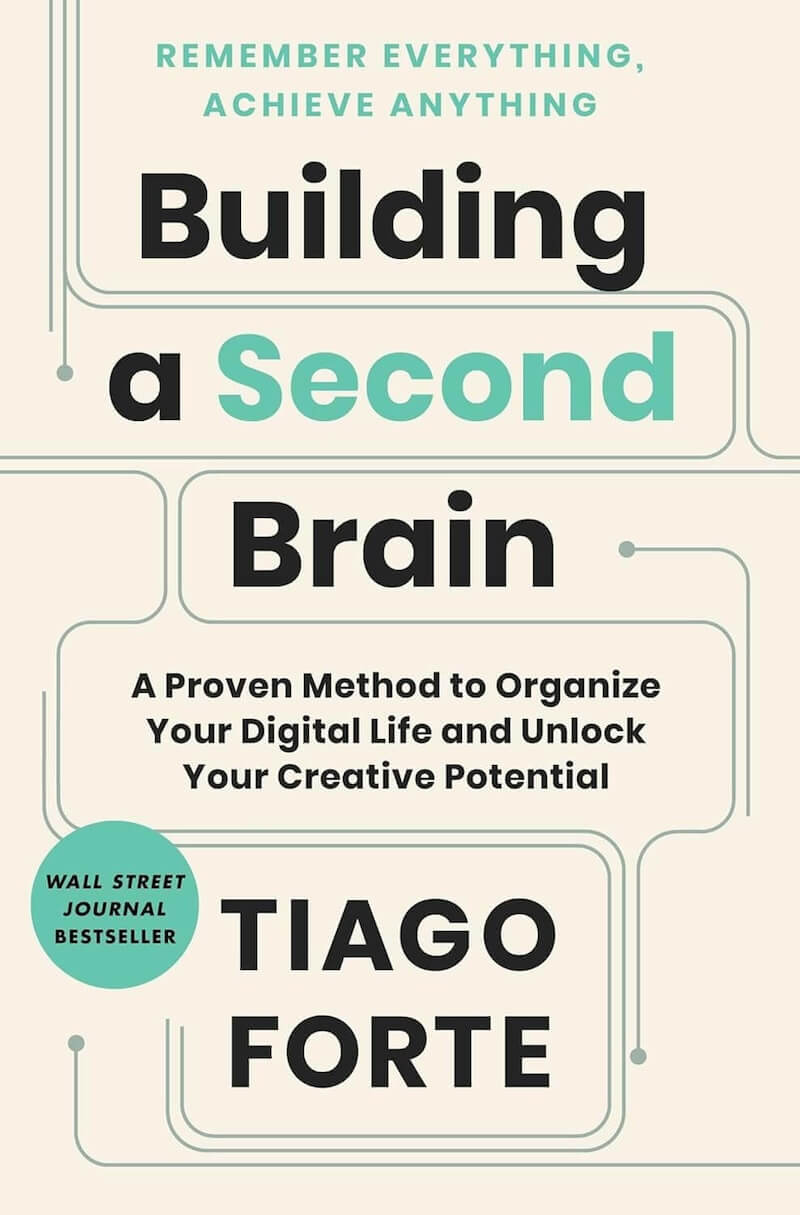
Building a Second Brain Book Summary
This Building a Second Brain Book Summary covers the key ideas, lessons, and takeaways in about 20 minutes.
The book’s deeper message is that knowledge only becomes valuable when applied. Productivity is not about doing more, but about creating outcomes aligned with purpose. Every insight saved today becomes the seed of tomorrow’s achievements. Over time, the Second Brain becomes a record of growth, a companion in decision-making, and a platform for expression that amplifies human potential in a world overflowing with information.
Helps with these goals
Want the complete 20-minute summary?
- Full structured summary
- Video Summary
- Podcast Summary
- Audio summary
- Key takeaways
- Exercises
- Quiz
- Highlights and notes
- Ask the book with AI
What is in the Building a Second Brain book summary?
Below is a preview of Sumizeit’s expert-written summary of Building a Second Brain by Tiago Forte. The full summary covers the book’s key ideas in text, audio, and video.
Modern professionals live in a world overflowing with information—endless emails, articles, podcasts, lessons, social media streams, research papers, meeting notes, and ideas that arrive at inconvenient moments. Ironically, the more information we have access to, the harder it becomes to make use of any of it. Many people struggle with mental clutter, unfinished plans, forgotten goals, and the frustrating sense that they could accomplish so much more if only they could remember and apply what they learn. In Building a Second Brain, Tiago Forte offers a systematic approach to organizing digital knowledge so it can be reused, expanded upon, and converted into meaningful output. Rather than storing valuable information only in memory, Forte encourages constructing a digital extension of the mind—a Second Brain—that captures insights, organizes them for practical use, distills them into clarity, and ultimately supports creative expression.
Forte’s central thesis is that the human brain evolved to survive immediate threats and respond to the present moment. It was never designed to hold the endless stream of knowledge required to thrive in an information economy. Attempting to process and retain everything personally drains mental energy and leads to burnout, constant distraction, and unfinished work. A Second Brain functions as a trusted external system that offloads storage, reduces overwhelm, and enables clearer thinking. Instead of trying to remember everything, individuals can rely on an organized digital structure that makes the right information available at exactly the right time.
The Challenge of Working Memory and Cognitive Overload
Our working memory is astonishingly limited. Even though the brain processes millions of sensory details every second, only a tiny fraction becomes consciously accessible. Research suggests that the mind can hold only around four to seven items at once. That means that attempting to mentally track tasks, commitments, ideas, and ongoing responsibilities creates cognitive overload almost instantly. This explains why brilliant ideas vanish moments later, why projects stall despite good intentions, and why people feel perpetually behind even while constantly busy.
Consider a common scenario: someone reads a powerful insight in a book and thinks, This could really help me, only for the idea to disappear entirely by the next morning. Or imagine trying to write a report but realizing you previously encountered research that would help—yet you cannot remember where it was stored or what it said. Another example is the habitual gathering of useful articles that never get reread because they are scattered across different apps and platforms.
The Second Brain addresses precisely these problems. By offloading information into an organized system that never forgets, mental stress is replaced with clarity. Instead of mentally juggling everything, individuals can confidently let thoughts go, knowing they are safely captured. This frees internal brainpower for creativity and problem-solving rather than memorization.
What a Second Brain Is and Why It Matters
A Second Brain is a digital repository that holds saved insights, collected knowledge, project resources, and personal reflections in a structured format that is easy to navigate and reuse.
Want the complete 20-minute summary?
- Full structured summary
- Video Summary
- Podcast Summary
- Audio summary
- Key takeaways
- Exercises
- Quiz
- Highlights and notes
- Ask the book with AI
Who should read Building a Second Brain?
Building a Second Brain is for anyone overwhelmed by digital clutter who wants to transform scattered information into actionable knowledge. Whether you're a writer, entrepreneur, manager, creative professional, or student, this book helps if you struggle to remember what you've learned, finish projects, or access insights when you need them most.
Why does Building a Second Brain matter?
In today's information-saturated world, the ability to capture, organize, and apply knowledge separates those who thrive from those who burn out. Tiago Forte's framework shows that your brain wasn't designed to store endless information—it was designed to think. By building a digital extension of your mind, you reclaim mental energy, reduce overwhelm, and unlock creative potential that information overload typically blocks.
What are the key themes in Building a Second Brain?
- Offloading information to reduce cognitive overload
- Selective curation over information hoarding
- Actionable organization aligned with real goals
- Progressive distillation of knowledge into clarity
- Converting stored knowledge into tangible creative output
- The creative rhythm of divergence and convergence
- Building reusable modular components for faster work
- Mindset shift from scarcity to abundance thinking
What are the key lessons from the Building a Second Brain book summary?
Your Brain Has Limited Working Memory
The human brain can hold only 4-7 items in conscious awareness at once. Attempting to mentally track everything creates immediate overwhelm and causes brilliant ideas to vanish within hours.
Selective Capture Beats Hoarding
Rather than saving everything, capture only what resonates emotionally or intellectually. A few distilled insights prove far more valuable than gigabytes of unread articles and half-remembered research.
PARA Creates Universal Organization
The PARA framework—Projects, Areas, Resources, Archives—provides a consistent structure for all digital tools. Organizing by actionability rather than topic ensures information surfaces when you need it most.
Progressive Summarization Compounds Value Over Time
Layering notes through highlighting, bolding, and summarization transforms dense text into instant insight. Each distillation pass makes information more reusable without erasing original context.
Knowledge Only Matters When Applied
The true purpose of a Second Brain is not perfect archival but generating meaningful output. Until ideas become writing, designs, strategies, or decisions, they remain potential rather than progress.
Intermediate Packets Unlock Reusability
Breaking large projects into modular, self-contained units—templates, checklists, paragraphs, sketches—lets you reuse components across future work and reduces the friction of starting from scratch.
Divergence and Convergence Are Distinct Phases
Creative work alternates between expanding possibilities (divergence) and narrowing to a final form (convergence). Recognizing which phase you're in prevents both endless exploration and premature closure.
Weekly and Monthly Reviews Sustain the System
Small, regular rituals—processing inbox, reorganizing folders, assessing progress—prevent digital clutter from accumulating and keep your Second Brain aligned with current priorities.
Context Preservation Matters as Much as Content
Saving a quote alongside why it resonated or what problem it solves makes the insight reusable. Stripped of context, even powerful ideas become orphaned data.
A Second Brain Reflects Identity and Growth
What you choose to capture reveals what matters to you. Over years, your Second Brain becomes a mirror of personal evolution, not a random warehouse of digital noise.
Starting a Project Is Easier With Existing Material
When a new opportunity arises, having pre-collected research, inspiration, and resources eliminates blank-page paralysis and lets you begin from momentum rather than zero.
Lightness in Capture Leads to Depth in Use
Extract the two powerful graphs instead of hoarding thirty pages. Extracting the one insight instead of copying fifty lines ensures your Second Brain remains navigable and valuable.
Trusted Systems Free Mental Energy for Creativity
When you know captured ideas are safely stored and organized, you can confidently stop thinking about them. This mental rest redirects brainpower toward actual creation and problem-solving.
Information Becomes Intellectual Assets Over Time
Each saved idea and completed project enriches the next one. Years of accumulated, organized knowledge compounds into a personal competitive advantage and creative foundation.
Architecture Matters More Than Tools
The underlying system—capture, organize, distill, express—transcends any single app. A good structure works across notebooks, cloud storage, task managers, and whatever tools emerge next.
Perfectionism Stalls; Shipping Sustains
Building a Second Brain shifts identity from consuming toward creating. Imperfect output that exists beats perfect ideas that remain in your head or digital folders.
Want the complete 20-minute summary?
- Full structured summary
- Video Summary
- Podcast Summary
- Audio summary
- Key takeaways
- Exercises
- Quiz
- Highlights and notes
- Ask the book with AI
How can you apply ideas from Building a Second Brain?
- Create a PARA folder structure in your note-taking app today and begin sorting existing notes into Projects, Areas, Resources, and Archives
- Start a weekly 15-minute review ritual to process new captures, move completed projects to archives, and identify what needs attention
- Practice progressive summarization on your next saved article: bold key lines, highlight the most critical phrases, then write a one-sentence summary
- Break your current largest project into 3-5 Intermediate Packets (checklists, templates, research summaries) that you can reuse in future work
- Before your next creative work session, spend 10 minutes in your Second Brain gathering pre-collected materials relevant to the task
- When you encounter a powerful insight, capture it alongside a personal note explaining why it resonates or how it connects to your current challenges
- Use divergence and convergence awareness to diagnose why a project feels stuck—are you exploring without deciding, or deciding without exploring?
What common mistakes do readers make with Building a Second Brain?
- Attempting to capture everything, creating an unnavigable digital dumping ground that becomes more burden than asset
- Organizing by topic or source instead of actionability, making it impossible to find relevant information when working on specific projects
- Capturing without distilling, leaving notes so raw and lengthy that they never get reused because rereading them feels overwhelming
- Building a beautiful Second Brain but never actually using it to create output, mistaking the system itself for the goal
Sumizeit Exercises Apply what you've learned
Turn ideas from Building a Second Brain into action with a short guided reflection: identify the biggest takeaway, connect it to your life, and commit to one step you can take in the next 24 hours.
What is the expert analysis of Building a Second Brain?
Overview
Building a Second Brain by Tiago Forte emerges as a seminal work in the domain of personal knowledge management and productivity. Forte, a respected authority on creative workflow and cognitive optimization, addresses a pervasive challenge of the digital age: the overwhelming influx of information that professionals must navigate daily. His book offers a structured, methodical approach to transforming scattered digital content into a dynamic, reusable repository of knowledge—a "Second Brain"—that amplifies human creativity and effectiveness. The significance of this work lies in its synthesis of behavioral psychology, design thinking, and practical digital tools, providing a comprehensive framework that resonates across disciplines and professional contexts.
Core Thesis
Forte’s central argument is that the human brain, evolved for immediate survival rather than the demands of an information-saturated environment, is ill-equipped to retain and process the vast quantities of knowledge required for modern success. Attempting to do so leads to cognitive overload, burnout, and inefficiency. The solution is to externalize memory and knowledge into a carefully curated digital system—the Second Brain—that captures, organizes, distills, and expresses information in ways that support creativity and purposeful action. This system not only mitigates mental clutter but also fosters a mindset shift from scarcity to abundance, enabling individuals to leverage accumulated insights as a foundation for ongoing growth and productivity.
Strengths
Practical Framework: Forte’s CODE methodology (Capture, Organize, Distill, Express) and the PARA organizational system provide clear, actionable steps that demystify knowledge management and make it accessible to a broad audience.
Integration of Cognitive Science: The book’s grounding in working memory limitations and cognitive overload lends scientific credibility and helps readers understand the rationale behind externalizing knowledge.
Focus on Creativity and Expression: Unlike many productivity texts that emphasize task completion, Forte highlights the transformation of knowledge into meaningful output, bridging the gap between information and impact.
Modularity and Scalability: Concepts like Intermediate Packets and the divergence-convergence creative cycle offer nuanced insights into managing complex projects incrementally, which is valuable for both individual creators and teams.
Mindset Transformation: The emphasis on shifting from scarcity to abundance thinking addresses the psychological barriers to productivity and encourages a healthier relationship with information and creativity.
Critiques & Counterarguments
Potential Oversimplification of Cognitive Processes: While the book effectively outlines working memory constraints, it may underrepresent the complexity and variability of individual cognitive styles and memory strategies, potentially limiting its universal applicability.
Dependence on Digital Tools: The framework presumes access to and proficiency with digital note-taking and organizational software, which may alienate readers less comfortable with technology or those in environments with limited digital infrastructure.
Risk of Over-Structuring Creativity: Critics from more spontaneous or intuitive creative traditions might argue that the regimented system could stifle serendipity and organic insight, favoring order over the chaotic nature of innovation.
Competing Research on Memory and Learning: Some cognitive psychologists emphasize the importance of active recall and spaced repetition over externalization for deep learning, suggesting that reliance on a Second Brain might inadvertently weaken internal memory retention.
Real-World Constraints: In fast-paced or unpredictable environments, the time investment required to maintain such a system through regular reviews and distillation might be impractical, potentially limiting its effectiveness for certain professionals.
Who Should Read This
Building a Second Brain is ideally suited for knowledge workers, creatives, entrepreneurs, and professionals who grapple daily with information overload and seek to enhance their productivity through structured knowledge management. It appeals to those who value deliberate systems, continuous learning, and the integration of technology with cognitive science. Readers invested in personal development, digital organization, and creative output will find Forte’s methodology both inspiring and actionable. However, those who prefer less structured approaches or who operate in low-tech contexts may find the system challenging to adopt fully.
Frequently asked questions about the Building a Second Brain book summary
What is Building a Second Brain about?
Building a Second Brain by Tiago Forte is a practical guide to organizing digital information so it becomes a reusable asset for creative work. The book introduces the CODE framework—Capture, Organize, Distill, Express—and the PARA system to help you transform information overload into structured knowledge that fuels meaningful output and reduces mental overwhelm.
Who should read Building a Second Brain?
Anyone struggling with digital clutter, forgotten insights, or unfinished projects will benefit from this book. It's especially valuable for writers, entrepreneurs, managers, students, and creative professionals who accumulate information but struggle to apply it—or for anyone who feels perpetually behind despite constant busyness.
What are the main takeaways from Building a Second Brain?
The core takeaways are: (1) your brain's working memory is too limited for modern information volume, (2) selective capture and organization by actionability creates a usable system, (3) progressive distillation transforms raw notes into reusable insights, and (4) the real value emerges only when you convert stored knowledge into creative output and tangible results.
What is the PARA framework and how do I use it?
PARA stands for Projects (time-bound goals), Areas (ongoing responsibilities), Resources (topics for future use), and Archives (completed or inactive items). You apply it as a universal folder structure across all your digital tools, organizing information based on how actionable it is right now rather than by topic, making relevant materials instantly findable when you need them.
What is Progressive Summarization and why does it matter?
Progressive Summarization is a technique where you layer notes by highlighting key lines, bolding critical phrases, and writing brief summaries in your own words. This process makes dense source material instantly reusable by surfacing the essential insights at a glance, transforming overwhelming articles into actionable takeaways.
What are Intermediate Packets and how do they accelerate work?
Intermediate Packets are modular, self-contained units of work like templates, checklists, paragraphs, or sketches that can be reused across multiple projects. They eliminate blank-page paralysis by giving you building blocks to start with, reduce wasted effort by ensuring nothing is created once, and let each new project benefit from accumulated progress.
How often should I review and maintain my Second Brain?
Tiago Forte recommends weekly reviews to process new captures, clean inboxes, and reorganize folders, plus monthly reviews to assess long-term direction and progress. These small, regular rituals prevent digital clutter from accumulating and keep your system aligned with current priorities without requiring major overhauls.
About Sumizeit
Sumizeit is a profitable Scomy LLC company based in Miami, Florida. It has been helping readers learn from nonfiction books for 7 years with expert-written summaries in text, audio, podcast, and video.
Want the complete 20-minute summary?
- Full structured summary
- Video Summary
- Podcast Summary
- Audio summary
- Key takeaways
- Exercises
- Quiz
- Highlights and notes
- Ask the book with AI
Here's why readers love Sumizeit
Join thousands of learners getting smarter every day
"Great experience. Detailed summaries. Loved the gamification feature. Makes learning fun. Good customer service. I recommend Sumizeit to anyone. You'll learn a lot."
"I always felt busy but still wanting to keep up with the book discussion in my friend group. This was a great supplement to help me keep reading the books I find fun while keeping up with important books."
"I love this website. Instead of scrolling social media, I find myself learning a lot. I use it everyday. I recommend this app for anyone who is too busy and wants to get up to speed with their favorite books."
Building a Second Brain Book Summary PDF
Looking for a Building a Second Brain Book Summary PDF you can save and revisit offline? Our Building a Second Brain Book Summary PDF captures the book’s core ideas in a clean, printable format — the key frameworks, takeaways, and structure without the fluff. Download the Building a Second Brain Book Summary PDF when you want a reference you can annotate, share with your team, or review on the go. Get your Building a Second Brain Book Summary PDF from the download page below.
Download Building a Second Brain Book Summary PDFPeople also liked these summaries
Readers who explored Building a Second Brain often enjoyed these titles next.



Want the complete 20-minute summary?
- Full structured summary
- Video Summary
- Podcast Summary
- Audio summary
- Key takeaways
- Exercises
- Quiz
- Highlights and notes
- Ask the book with AI
Featured Book Titles
Popular Book Summaries at sumizeit, leading book summary app