


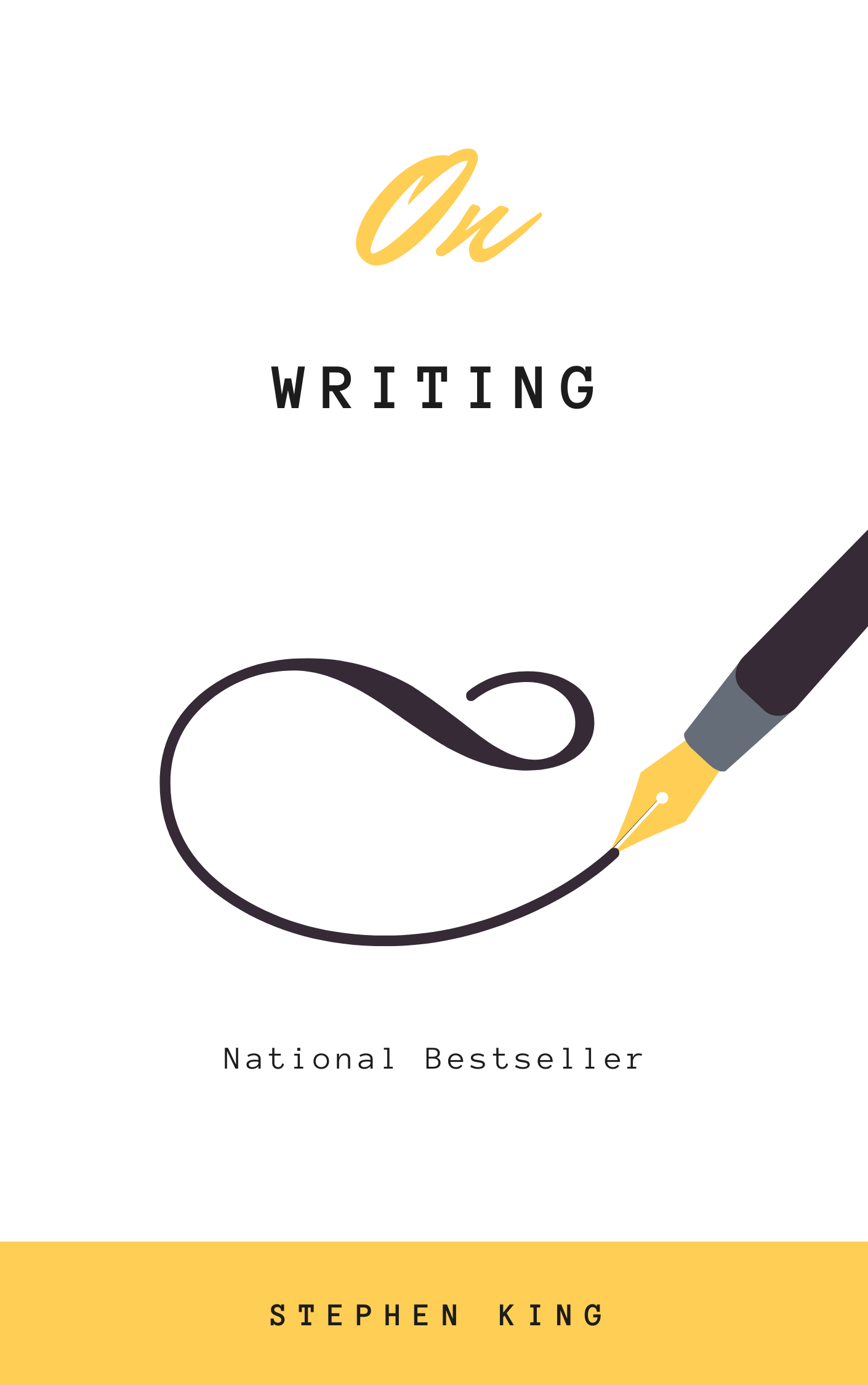
Prefer the print book? Buy on Amazon
As an Amazon Associate, Sumizeit earns from qualifying purchases.
On Writing Book Summary
This On Writing Book Summary covers the key ideas, lessons, and takeaways in about 20 minutes.
Helps with these goals
Want the complete 20-minute summary?
- Full structured summary
- Video Summary
- Podcast Summary
- Audio summary
- Key takeaways
- Exercises
- Quiz
- Highlights and notes
- Ask the book with AI
Not ready to upgrade?
Get this summary + 2 more picks sent to your inbox, free.
What is in the On Writing book summary?
Below is a preview of Sumizeit’s expert-written summary of On Writing by Stephen King. The full summary covers the book’s key ideas in text, audio, and video.
In On Writing: A Memoir of the Craft, Stephen King fuses autobiography and craft manual into a vivid chronicle of his evolution as a storyteller. Born in Portland, Maine in 1947, King grew up in modest circumstances after his father disappeared when he was two years old. His mother, Nellie Ruth, worked multiple low-paying jobs—laundry, caregiving, bakery work—to support Stephen and his older brother, David. The family moved constantly around New England, and the instability taught King early lessons about hardship, perseverance, and empathy—qualities that would later saturate his fiction.
As a frail, frequently ill child, King spent long hours in bed, losing himself in comic books and pulp magazines. His earliest creative attempts involved copying the stories he read in Tales from the Crypt and Superman comics word for word. His mother encouraged him to stop imitating and create his own tales instead. When she read one of his first stories about four adventurous animals and laughed out loud, she told him, “You’re good enough to be in a book someday.” That single moment, King recalls, “was worth more than any paycheck.”
In adolescence, he discovered his first audience: his classmates. He sold homemade horror booklets for a quarter each before a teacher confiscated them, telling him he was “better than this junk.” The rebuke didn’t stop him—it fueled him. He began submitting stories to magazines, hammering rejection slips onto a nail above his desk until the nail bent under their weight. By fourteen, he had replaced it with a railroad spike.
When he finally received a personalized note from an editor saying, “You have talent—keep trying,” it was enough to convince him that he was on the right path. After college, King married Tabitha Spruce, a fellow writer, and took a teaching job to support their growing family. They were barely scraping by—living in a trailer, counting every penny, and sometimes borrowing money to pay medical bills. King wrote at night on a small desk wedged between the washer and dryer in their laundry room.
The breakthrough came when he began Carrie. Inspired by his days as a janitor cleaning girls’ locker rooms and an article on telekinesis, King wrote a short scene about a girl getting her first period and being mocked by her classmates. Convinced the story was too strange, he threw it away—but Tabitha rescued it from the trash, telling him it had promise. When Carrie sold for $400,000 in paperback rights, the Kings went from poverty to financial freedom overnight. King never forgot that lesson: sometimes the best stories begin as discarded scraps.
The Foundation of Good Writing
King insists that writing is not a mystical gift—it’s a craft honed through discipline. His two non-negotiable rules for success are: read a lot and write a lot. Reading, he explains, is the writer’s apprenticeship. He reads between 70 and 80 books each year—everything from classics like The Great Gatsby to thrillers by John D. MacDonald and modern bestsellers.
Want the complete 20-minute summary?
- Full structured summary
- Video Summary
- Podcast Summary
- Audio summary
- Key takeaways
- Exercises
- Quiz
- Highlights and notes
- Ask the book with AI
Who should read On Writing?
On Writing by Stephen King is essential for aspiring writers, novelists, and anyone serious about developing their craft. Whether you're a beginner struggling with your first draft or an experienced writer seeking to refine your technique, King's practical guidance and personal insights speak to writers at all levels. This book is also valuable for readers curious about the creative process behind one of literature's most prolific and celebrated authors.
Why does On Writing matter?
In an age of self-publishing and social media-driven writing culture, On Writing cuts through the noise with timeless principles rooted in discipline and authenticity. King debunks the romantic myth of the "inspired genius" and replaces it with actionable, grounded advice on how to build a sustainable writing practice. His message—that great writing is a craft learned through persistent work, not an innate gift—remains as relevant today as when the book was published, offering hope and practical direction to writers navigating a competitive literary landscape.
What are the key themes in On Writing?
- Writing is a craft that can be learned through discipline and repetition
- Daily writing habits and consistent practice are more important than inspiration
- Honesty and authenticity are the foundation of powerful storytelling
- Revision and feedback are where stories are truly written
- Readers should inform the writer's process as much as personal vision
- Simplicity and clarity in language create stronger impact than complexity
- Character and situation matter more than rigid plot outlines
Want the complete 20-minute summary?
- Full structured summary
- Video Summary
- Podcast Summary
- Audio summary
- Key takeaways
- Exercises
- Quiz
- Highlights and notes
- Ask the book with AI
How can you apply ideas from On Writing?
- Set a daily writing quota (1,000-2,000 words) and treat it as a non-negotiable appointment, even on holidays and days when inspiration feels absent
- Create a reading routine across diverse genres to absorb different styles, structures, and voices that will naturally influence your own writing
- Establish a dedicated writing space with a closed door where you can isolate from all distractions and train yourself to enter deep focus at the same time each day
- Revise first drafts by cutting approximately 10 percent of the text to sharpen pacing and clarity, then read the result aloud to catch weak sentences and rhythm problems
- Identify your Ideal Reader—someone honest and discerning—and imagine their reactions while writing; gather their unfiltered feedback on completed drafts to identify consistent problem areas
- Start new stories with a compelling "what if?" question rather than detailed outlines, then allow characters' choices and circumstances to determine plot direction naturally
- Practice showing emotion and tension through action, dialogue, and context rather than relying on adverbs and passive voice constructions
What common mistakes do readers make with On Writing?
- Waiting for inspiration before writing instead of recognizing that consistent practice generates the creative momentum that inspiration follows
- Over-editing the first draft or seeking feedback too early, which interrupts momentum and introduces self-doubt before the raw story has fully emerged
- Using elaborate vocabulary and passive voice in an attempt to sound intelligent, when simple, active language is far more powerful and accessible
- Creating overly detailed plot outlines that trap characters and limit the organic discovery that makes stories feel alive to both writer and reader
Sumizeit Exercises Apply what you've learned
Turn ideas from On Writing into action with a short guided reflection: identify the biggest takeaway, connect it to your life, and commit to one step you can take in the next 24 hours.
What is the expert analysis of On Writing?
Overview
On Writing: A Memoir of the Craft by Stephen King stands as a seminal work that transcends the conventional boundaries of a writing manual. Authored by one of the most prolific and influential storytellers of our time, King intertwines his personal narrative with practical guidance, offering readers a rare glimpse into the alchemy of literary creation. This book is significant not only for its candid memoir elements but also for its pragmatic, no-nonsense approach to the discipline of writing, making it a touchstone for aspiring authors and seasoned writers alike.
Core Thesis
King’s central argument dismantles the myth of innate genius in writing, positing instead that mastery is achieved through relentless discipline, honesty, and immersion in the craft. His thesis emphasizes two cardinal rules: read extensively and write consistently. Writing, for King, is less an act of inspiration and more a rigorous vocation requiring daily commitment, a well-stocked “toolbox” of vocabulary, grammar, and style, and a willingness to embrace revision and critique. Ultimately, King champions authenticity and joy as the true drivers of enduring literary work.
Strengths
- Integration of Memoir and Craft: King’s personal anecdotes enrich the instructional content, grounding abstract advice in lived experience and making the book deeply relatable.
- Accessible yet Authoritative Voice: The prose is straightforward and engaging, avoiding pretension while conveying profound insights drawn from decades of professional writing.
- Practical Framework: The “writer’s toolbox” metaphor and clear stages of drafting, resting, and revising provide a structured, actionable roadmap for writers.
- Emphasis on Authenticity: King’s insistence on writing “the truth” even in genre fiction elevates the emotional resonance and moral complexity of storytelling.
- Inspiration and Resilience: The narrative of overcoming poverty, rejection, and personal adversity offers a compelling testament to perseverance in creative pursuits.
Critiques & Counterarguments
- Potential Oversimplification of Craft: While King’s advice is practical, it may underplay the complexity of literary innovation and the role of innate talent or unique cognitive styles in writing excellence.
- Limited Engagement with Diverse Literary Traditions: King’s examples and recommendations lean heavily on Western, particularly American, literary models, which might narrow the applicability of his guidance in a global context.
- Questionable Universality of Daily Quotas: The prescription of fixed daily word counts may not accommodate the creative rhythms or constraints of all writers, potentially fostering undue pressure rather than inspiration.
- Contrasting Schools of Thought: Some contemporary writing theorists emphasize the importance of extensive planning and plotting, which King dismisses in favor of discovery writing; this divergence invites debate about the most effective creative methodologies.
- Empirical Evidence on Writing Productivity: Psychological research on creativity suggests that incubation periods and non-linear work patterns can be crucial, challenging King’s emphasis on relentless daily output without interruption.
Who Should Read This
On Writing is ideally suited for aspiring novelists, genre writers, and anyone interested in the mechanics and mindset of storytelling. It offers invaluable encouragement to those struggling with self-doubt or rejection, as well as practical strategies for developing a disciplined writing habit. Additionally, readers fascinated by the intersection of personal history and creative work will find King’s memoir elements compelling. However, those seeking highly theoretical or experimental approaches to writing might look elsewhere, as King’s style is rooted in traditional narrative craft and accessible prose.
Frequently asked questions about the On Writing book summary
What is On Writing about?
On Writing: A Memoir of the Craft by Stephen King is both an autobiography and a practical writing guide. King weaves his personal journey—from poverty and rejection to literary success—with concrete advice on craft elements like vocabulary, grammar, revision, and the importance of daily writing discipline. The book argues that writing is a learnable skill, not an innate gift, and that great writers are forged through persistence, honesty, and thousands of hours of reading and writing.
Who should read On Writing?
On Writing is essential for aspiring writers, novelists, and creative professionals serious about developing their craft. It's equally valuable for experienced writers seeking refinement and for readers curious about the creative process behind one of literature's most prolific authors. Whether you're struggling with your first draft or refining advanced techniques, King's practical guidance speaks to writers at every level.
What are the main takeaways from On Writing?
The core principles are: write every day as a disciplined practice, read voraciously to develop your voice, use simple and active language, complete first drafts quickly without perfectionism, revise ruthlessly by cutting roughly 10 percent, and write truthfully from genuine emotion rather than chasing trends. Above all, King emphasizes that great writing results from persistent daily work, honest storytelling, and the willingness to revise based on feedback—not from inspiration or innate talent.
How much should a writer read according to Stephen King?
King reads between 70 and 80 books each year across all genres—from classics like The Great Gatsby to thrillers and modern bestsellers. He emphasizes that reading is the writer's apprenticeship, teaching rhythm, voice, structure, and what to avoid. He reads everywhere: while eating breakfast, waiting in lines, and at baseball games, because every word teaches something valuable.
What is King's daily writing routine?
King writes 2,000 words every single day—including holidays and even the day he was hit by a van—and recommends beginners aim for 1,000 words daily. He works in a quiet, isolated room mid-morning through early afternoon with no phone, internet, or visitors. He treats writing as a job, not a hobby, and believes that consistent daily practice builds endurance and keeps the imagination alive.
What does Stephen King say about the revision process?
King divides the revision process into two stages: first, complete the draft "with the door closed" (no feedback). Then rest for six weeks to gain perspective. Finally, revise "with the door open," applying his rule that Second Draft = First Draft – 10%, cutting roughly 10 percent of text to sharpen clarity and pacing. He reads his work aloud to catch sentences that "taste wrong in your mouth."
How does Stephen King approach plot and character in On Writing?
King distrusts rigid plot outlines and instead views stories as "fossils" to excavate gently. He begins with a compelling "what if?" situation and lets characters determine the story's direction through their choices and circumstances. He admits he often doesn't know how a book will end when he starts, believing this discovery-based approach keeps stories alive and prevents forcing characters through artificial plot constraints.
About Sumizeit
Sumizeit is a profitable Scomy LLC company based in Miami, Florida. It has been helping readers learn from nonfiction books for 7 years with expert-written summaries in text, audio, podcast, and video.
Want the complete 20-minute summary?
- Full structured summary
- Video Summary
- Podcast Summary
- Audio summary
- Key takeaways
- Exercises
- Quiz
- Highlights and notes
- Ask the book with AI
Here's why readers love Sumizeit
Join thousands of learners getting smarter every day
"Great experience. Detailed summaries. Loved the gamification feature. Makes learning fun. Good customer service. I recommend Sumizeit to anyone. You'll learn a lot."
"I always felt busy but still wanting to keep up with the book discussion in my friend group. This was a great supplement to help me keep reading the books I find fun while keeping up with important books."
"I love this website. Instead of scrolling social media, I find myself learning a lot. I use it everyday. I recommend this app for anyone who is too busy and wants to get up to speed with their favorite books."
On Writing Book Summary PDF
Looking for a On Writing Book Summary PDF you can save and revisit offline? Our On Writing Book Summary PDF captures the book’s core ideas in a clean, printable format — the key frameworks, takeaways, and structure without the fluff. Download the On Writing Book Summary PDF when you want a reference you can annotate, share with your team, or review on the go. Get your On Writing Book Summary PDF from the download page below.
Download On Writing Book Summary PDFPeople also liked these summaries
Readers who explored On Writing often enjoyed these titles next.


Want the complete 20-minute summary?
- Full structured summary
- Video Summary
- Podcast Summary
- Audio summary
- Key takeaways
- Exercises
- Quiz
- Highlights and notes
- Ask the book with AI
Featured Book Titles
Popular Book Summaries at sumizeit, leading book summary app