


As an Amazon Associate, Sumizeit earns from qualifying purchases.
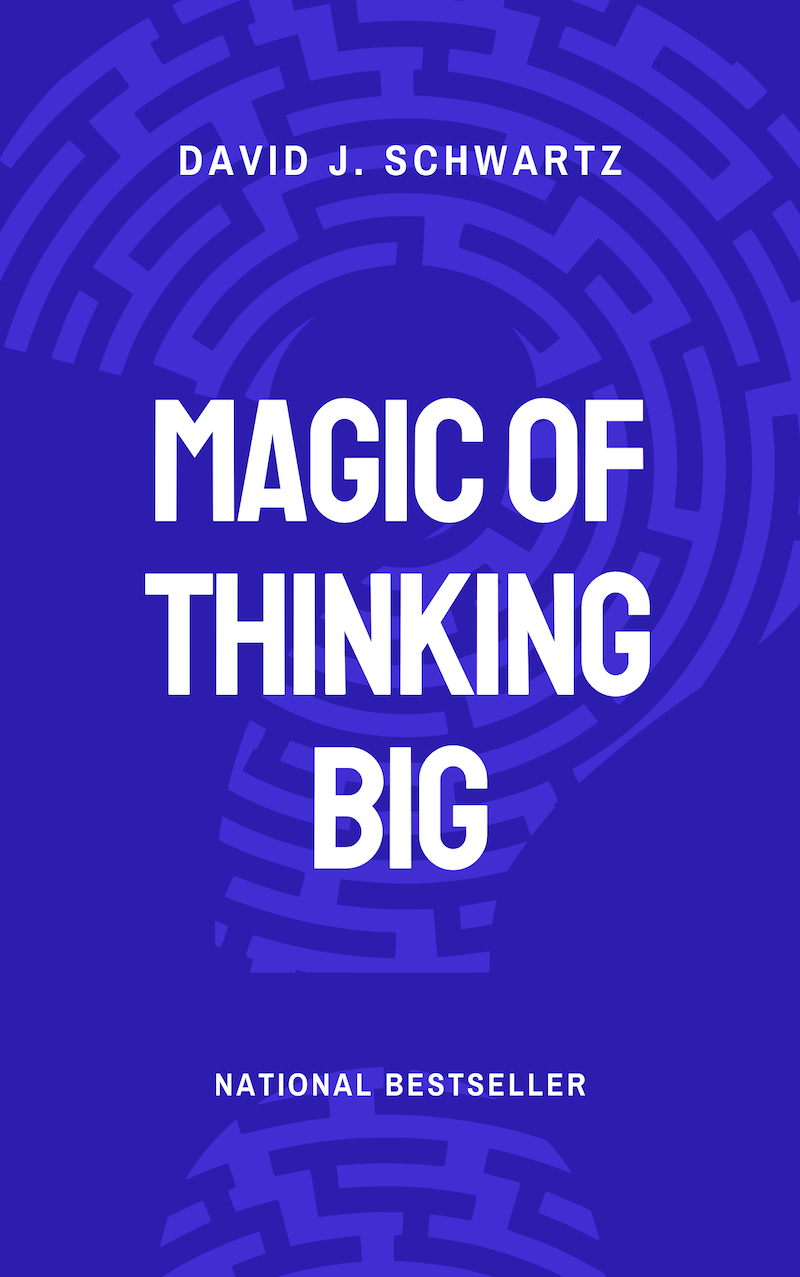
The Magic of Thinking Big Book Summary
This The Magic of Thinking Big Book Summary covers the key ideas, lessons, and takeaways in about 20 minutes.
The book is a lifelong playbook for confidence and achievement. Thinking big means refusing to live small—refusing to let fear, negativity, or laziness dictate your destiny. When you believe deeply in your potential, take ethical action, and maintain a positive environment, success ceases to be accidental—it becomes inevitable.
Want the complete 20-minute summary?
- Full structured summary
- Video Summary
- Podcast Summary
- Audio summary
- Key takeaways
- Exercises
- Quiz
- Highlights and notes
- Ask the book with AI
What is in the The Magic of Thinking Big book summary?
Below is a preview of Sumizeit’s expert-written summary of The Magic of Thinking Big by David J. Schwartz . The full summary covers the book’s key ideas in text, audio, and video.
David J. Schwartz’s The Magic of Thinking Big teaches that success isn’t a matter of luck, genius, or privilege—it’s the result of mindset. The people who achieve greatness are not necessarily more intelligent or better educated than others; rather, they think bigger, expect more of themselves, and act with unwavering belief in their potential.
Schwartz explains that every achievement begins in the mind. When you believe you can succeed, your brain begins to generate ideas and energy to make success happen. Conversely, when you doubt yourself, your mind becomes paralyzed by fear and hesitation. He likens belief to a “power switch” that determines the strength of your thoughts and actions. For instance, a young engineer who believes he can lead a project will naturally begin planning, networking, and proposing solutions. But if he convinces himself he’s unqualified, he’ll miss opportunities to prove himself.
He recounts how successful people—from top salesmen to business owners—share one mental trait: they visualize success and act as though it’s inevitable. Henry Ford’s famous saying, “Whether you think you can or you think you can’t—you’re right,” perfectly summarizes this philosophy. Schwartz even points to ordinary people who achieved remarkable things simply by raising their expectations: a small-town teacher who believed she could revolutionize her school’s reading program and eventually earned national recognition, or a mechanic who believed he could run his own shop and did so by taking small, consistent steps.
Thinking big is not daydreaming—it’s strategic optimism. It means expanding your definition of what’s possible and rejecting limitations that others impose on you.
Breaking the Habit of Excuses
Schwartz identifies “excusitis”—the disease of making excuses—as one of the biggest obstacles to success. People use excuses to rationalize failure instead of taking control of their future. He breaks down the most common forms: health excuses, intelligence excuses, age excuses, and luck excuses.
He shares stories of people who overcame each. For example, one businessman blamed his declining health for his lack of success. Schwartz challenged him to exercise lightly, rest properly, and focus on what he could do. Within months, his energy and confidence returned—and so did his business results. The problem had never been his health, but his mindset.
The intelligence excuse is equally destructive. Schwartz argues that overestimating others’ intelligence and underestimating your own leads to paralysis. He recalls a conversation with a company executive who had built a multimillion-dollar business after flunking out of school. When asked how he did it, the man replied, “I hire smart people, but I think bigger than they do.” Intelligence, Schwartz insists, is less important than persistence and enthusiasm.
For the age excuse, he reminds readers that success is not bound by youth. He gives examples of people who began new careers at fifty or sixty—like Colonel Sanders founding KFC in his sixties, or Grandma Moses beginning her painting career in her seventies. Instead of saying, “I’m too old,” such people ask, “Why not now?”
As for luck, Schwartz dismantles the myth…
Want the complete 20-minute summary?
- Full structured summary
- Video Summary
- Podcast Summary
- Audio summary
- Key takeaways
- Exercises
- Quiz
- Highlights and notes
- Ask the book with AI
Who should read The Magic of Thinking Big?
The Magic of Thinking Big is essential for anyone feeling stuck in their career, relationships, or personal growth who believes their circumstances are fixed. Whether you're an entrepreneur, professional, student, or someone simply tired of settling for less, this book speaks to those ready to elevate their thinking and take control of their future regardless of age, education level, or background.
Why does The Magic of Thinking Big matter?
In a world where self-doubt, fear, and negative self-talk sabotage millions of people daily, David J. Schwartz's timeless philosophy cuts through the noise with a radical truth: success is primarily a mindset challenge, not a circumstance problem. This book matters because it dismantles the excuses and limiting beliefs that keep people small, offering a practical framework for transforming how you think about yourself and your potential—which directly transforms your results.
What are the key themes in The Magic of Thinking Big?
- Belief as the foundation of achievement
- Eliminating excuses and victim mentality
- Confidence through integrity and consistent action
- Fear is overcome through action, not avoidance
- Your environment shapes your mindset and results
- Leadership is a choice, not a title
- Failure is feedback, not final judgment
What are the key lessons from the The Magic of Thinking Big book summary?
Belief is the power switch
Your belief in your ability to succeed directly determines whether your mind generates ideas and energy toward that goal or shuts down from doubt and fear. When you genuinely believe you can accomplish something, your subconscious begins working toward it automatically.
Excuses are the disease of the mediocre
Health, intelligence, age, and luck are the most common excuses people use to justify their mediocrity. Each excuse is a lie we tell ourselves; the real obstacle is the mindset that accepts the excuse as unchangeable.
Integrity builds unshakeable confidence
Confidence built on ethical behavior is permanent and powerful because it's grounded in self-respect. Confidence built on dishonesty crumbles under the weight of guilt and fear, ultimately sabotaging your success.
Act your way into confidence
Confidence is not a feeling you wait for—it's a behavior you practice. Sitting forward, walking with purpose, making eye contact, and speaking up are actions that train your mind to feel more confident over time.
Action dissolves fear instantly
Fear only disappears after you take the first step toward what scares you, not before. The moment you act despite fear, it loses its power, and you gain the confidence that comes from proving to yourself you can handle it.
Other people are less intimidating than you think
Authority figures and successful people seem invincible only because you overestimate them and underestimate your own capabilities. Everyone—regardless of status—faces insecurities, problems, and worries just like you do.
Your environment programs your subconscious
The books you read, the people you spend time with, the places you frequent, and how you dress all send messages to your subconscious about who you are and what you deserve. Curate your environment intentionally to match your goals.
Visualization rewires your brain for success
When you vividly imagine your desired outcome until it feels real, your subconscious mind begins working toward that image. Athletes and successful entrepreneurs use this technique to prime their minds for victory before it happens.
Attitude is a magnetic force
A positive, enthusiastic attitude attracts people, opportunities, and collaboration; a negative one repels all three. Your attitude is not just a feeling—it's a force that shapes whether people and circumstances are drawn toward you or away from you.
Service creates opportunity
When your primary focus shifts from 'What can I get?' to 'How can I add value?', you become magnetic to others. Leaders and successful people advance faster because they view their role as serving others, not serving themselves.
Luck is preparation meeting opportunity
People labeled as 'lucky' are simply those who prepare thoroughly and remain alert enough to seize opportunities others miss. A prepared mind attracts good fortune because it recognizes and acts on possibilities in the moment.
Defeat is temporary unless you accept it as permanent
Every setback contains a lesson and is a setup for a comeback. The difference between those who bounce back and those who don't is whether they treat failure as feedback to learn from or as a verdict on their worth.
Never wait for perfect conditions
The 'right time' never arrives—conditions improve only after you start. Big thinkers distinguish themselves by launching ideas imperfectly rather than planning perfectly in perpetuity. Start small, adjust as you go, and let momentum carry you.
Ideas without action are worthless
The world is full of idea people who never execute. Real progress comes from those who take imperfect action immediately rather than waiting for the perfect plan. A mediocre idea executed beats a perfect idea never started.
Your physical behavior shapes your mental state
How you carry your body—your posture, pace, eye contact, and expressions—isn't just a reflection of your internal state; it actively shapes it. By adopting the physical behaviors of confident people, you train your mind to become more confident.
Leadership is a mindset, not a title
You don't need permission or a promotion to think and act like a leader. Leaders take initiative, solve problems without complaint, lift others up, and admit mistakes. This mindset leads to advancement regardless of your current position.
Enthusiasm is contagious and powerful
Genuine passion and excitement for what you do inspire trust and collaboration in others. Enthusiasm isn't frivolous—it's one of the most powerful predictors of whether people will follow you and whether you'll achieve your goals.
Responsibility keeps power in your hands
When you blame others for your failures, you surrender power over your future. When you accept responsibility, you maintain the power to learn, improve, and succeed next time. Responsibility is the entrance to freedom.
Intelligence matters less than persistence and enthusiasm
Highly intelligent people often underachieve because they overthink and doubt themselves, while less intelligent people who persist and believe in themselves achieve remarkable things. Success is determined more by your willingness to keep going than your raw ability.
First-class environments produce first-class results
Everything from your workspace organization to your wardrobe sends signals to your subconscious about your capabilities and worth. When you intentionally create surroundings that reflect quality and success, you attract those same qualities in your life and work.
Want the complete 20-minute summary?
- Full structured summary
- Video Summary
- Podcast Summary
- Audio summary
- Key takeaways
- Exercises
- Quiz
- Highlights and notes
- Ask the book with AI
How can you apply ideas from The Magic of Thinking Big?
- Sit at the front of meetings, speak up in discussions, and make direct eye contact to build confidence through consistent physical behavior
- Create a written visualization of your goal with vivid sensory details and review it daily until the outcome feels inevitable
- Conduct a personal audit of your environment: identify one person to spend less time with and one high-achiever to learn from
- Replace one excuse from your vocabulary each week by identifying what you can actually control and taking one small action toward your goal
- When facing a setback, immediately write down the lesson and one way you'll act differently next time rather than dwelling on the failure
- Practice the 'you-are-important' attitude by asking one person each day how you can help them or add value to their situation
- Start one neglected project today with imperfect action rather than waiting for ideal conditions; commit to improvement as you go
What common mistakes do readers make with The Magic of Thinking Big?
- Waiting until you feel confident before taking action—confidence is built through action, not the other way around
- Believing your intelligence, age, or background permanently limits your potential instead of recognizing these as excuses holding you back
- Surrounding yourself with negative or complacent people while hoping to achieve extraordinary results
- Treating a single failure as permanent defeat rather than extracting the lesson and immediately trying again with adjusted strategy
Sumizeit Exercises Apply what you've learned
Turn ideas from The Magic of Thinking Big into action with a short guided reflection: identify the biggest takeaway, connect it to your life, and commit to one step you can take in the next 24 hours.
What is the expert analysis of The Magic of Thinking Big?
Overview
The Magic of Thinking Big by David J. Schwartz stands as a seminal work in the self-improvement and motivational genre. First published in 1959, it has endured as a cornerstone text that transcends its era through timeless principles about mindset and success. Schwartz, a marketing professor and leadership trainer, crafted a philosophy centered on the transformative power of belief and expansive thinking. His work remains significant for anyone interested in the psychological underpinnings of achievement and the practical application of optimism and confidence in personal and professional realms.
Core Thesis
At its heart, Schwartz’s central argument is that success is not predicated on innate intelligence, luck, or external circumstances but rather on the capacity to think big and cultivate a mindset of unwavering belief in one’s potential. He posits that the mind is the origin point of all achievement, and that by expanding one’s expectations, rejecting excuses, and acting decisively, individuals can unlock extraordinary outcomes. This thesis reframes success as a deliberate mental and behavioral choice rather than a matter of fate or talent.
Strengths
- Practical and Accessible Framework: Schwartz distills complex psychological concepts into actionable advice, making the book approachable for a broad audience without sacrificing depth.
- Use of Vivid Anecdotes: The inclusion of real-world stories—from entrepreneurs to everyday individuals—grounds abstract ideas in relatable experience, enhancing the book’s motivational impact.
- Holistic View of Success: The emphasis on integrity, environment, and leadership broadens the scope beyond mere positive thinking to encompass ethical behavior and social dynamics.
- Timelessness: Despite its mid-20th-century origin, the principles of overcoming excuses, fear, and negativity resonate across decades, maintaining relevance in contemporary self-help discourse.
- Integration of Mindset and Action: Schwartz’s insistence that “action cures fear” and that ideas without execution are worthless provides a balanced approach that champions both thought and deed.
Critiques & Counterarguments
- Oversimplification of Complex Realities: While empowering, Schwartz’s dismissal of “luck” and external barriers may underplay systemic factors such as socioeconomic status, discrimination, and structural inequalities that impact success.
- Limited Empirical Evidence: The book relies heavily on anecdotal evidence and motivational rhetoric rather than rigorous scientific studies, which may weaken its credibility among critical scholars.
- Potential for Toxic Positivity: The unrelenting focus on optimism and personal responsibility can inadvertently marginalize those facing genuine hardships, fostering a narrative that failure is solely due to mindset deficits.
- Contrasting Psychological Research: Contemporary psychology highlights the role of factors like emotional intelligence, grit, and social support, which receive less emphasis here, suggesting a more nuanced model of success.
- Opposing Philosophical Views: Schools of thought such as existentialism or stoicism might critique Schwartz’s emphasis on external achievement and “thinking big” as potentially neglecting inner contentment and acceptance.
Who Should Read This
The Magic of Thinking Big is ideally suited for readers embarking on personal development journeys, entrepreneurs seeking motivational frameworks, and professionals aiming to cultivate leadership qualities. It appeals to those who appreciate a blend of practical advice and inspirational storytelling, especially individuals willing to challenge self-imposed limitations and embrace proactive change. However, discerning readers should approach the book with a critical eye toward its more optimistic assertions, supplementing it with perspectives that address structural and psychological complexities beyond mindset alone.
Frequently asked questions about the The Magic of Thinking Big book summary
What is The Magic of Thinking Big about?
The Magic of Thinking Big by David J. Schwartz is about how mindset, not circumstances, determines success. The book teaches that belief, confidence, integrity, and decisive action are the real drivers of achievement, and that anyone can transform their life by eliminating excuses, conquering fear, and adopting a success-oriented way of thinking regardless of their background or current situation.
Who should read The Magic of Thinking Big?
This book is ideal for anyone feeling stuck, underperforming, or limited by self-doubt—including entrepreneurs, professionals, students, and people in career transitions. It's especially valuable for those who tend to make excuses based on age, intelligence, health, or luck, and who are ready to take responsibility for creating the life they want.
What are the main takeaways from The Magic of Thinking Big?
The core takeaways are: belief is the foundation of achievement; excuses are the primary barrier to success; confidence is built through ethical action, not inherited; fear dissolves through action; your environment shapes your results; and leadership is a mindset choice available to everyone. Schwartz emphasizes that success is predictable when you eliminate limiting beliefs, take consistent action, and maintain integrity.
How does Schwartz define 'thinking big'?
Thinking big is not daydreaming or wishful thinking—it's strategic optimism grounded in action. It means expanding your definition of what's possible, refusing to accept limitations others impose on you, and committing to achievement through deliberate thought patterns, visualization, and persistent action despite fear or imperfect conditions.
What does Schwartz say about failure and setbacks?
Schwartz teaches that failure is not the opposite of success but a stepping stone toward it. Every defeat contains a lesson if you look for it. Rather than accepting failure as permanent, he advises treating setbacks as feedback, extracting the lesson, accepting responsibility, and taking action again immediately—turning what looks like a setback into a setup for a comeback.
How can I build genuine confidence according to this book?
Schwartz explains that genuine confidence comes from two sources: acting confidently through deliberate physical behaviors like strong posture and eye contact, and maintaining absolute integrity in your actions. Confidence built on ethical behavior is unshakeable, while confidence based on dishonesty creates guilt and fear that eventually sabotage your success.
What is 'excusitis' and how do I overcome it?
Excusitis is the habit of using health, intelligence, age, or bad luck as reasons for failure. Schwartz argues these are excuses that rationalize mediocrity rather than real obstacles. You overcome it by accepting responsibility for your results, focusing on what you can control, and taking action despite these perceived limitations—proving to yourself they're far less limiting than you believed.
About Sumizeit
Sumizeit is a profitable Scomy LLC company based in Miami, Florida. It has been helping readers learn from nonfiction books for 7 years with expert-written summaries in text, audio, podcast, and video.
Want the complete 20-minute summary?
- Full structured summary
- Video Summary
- Podcast Summary
- Audio summary
- Key takeaways
- Exercises
- Quiz
- Highlights and notes
- Ask the book with AI
Here's why readers love Sumizeit
Join thousands of learners getting smarter every day
"Great experience. Detailed summaries. Loved the gamification feature. Makes learning fun. Good customer service. I recommend Sumizeit to anyone. You'll learn a lot."
"I always felt busy but still wanting to keep up with the book discussion in my friend group. This was a great supplement to help me keep reading the books I find fun while keeping up with important books."
"I love this website. Instead of scrolling social media, I find myself learning a lot. I use it everyday. I recommend this app for anyone who is too busy and wants to get up to speed with their favorite books."
The Magic of Thinking Big Book Summary PDF
Looking for a The Magic of Thinking Big Book Summary PDF you can save and revisit offline? Our The Magic of Thinking Big Book Summary PDF captures the book’s core ideas in a clean, printable format — the key frameworks, takeaways, and structure without the fluff. Download the The Magic of Thinking Big Book Summary PDF when you want a reference you can annotate, share with your team, or review on the go. Get your The Magic of Thinking Big Book Summary PDF from the download page below.
Download The Magic of Thinking Big Book Summary PDFPeople also liked these summaries
Readers who explored The Magic of Thinking Big often enjoyed these titles next.



Want the complete 20-minute summary?
- Full structured summary
- Video Summary
- Podcast Summary
- Audio summary
- Key takeaways
- Exercises
- Quiz
- Highlights and notes
- Ask the book with AI
Featured Book Titles
Popular Book Summaries at sumizeit, leading book summary app