


As an Amazon Associate, Sumizeit earns from qualifying purchases.
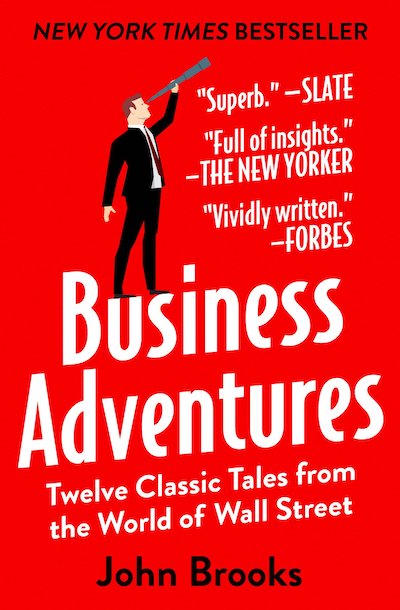
Business Adventures Book Summary
This Business Adventures Book Summary covers the key ideas, lessons, and takeaways in about 20 minutes.
Helps with these goals
Want the complete 20-minute summary?
- Full structured summary
- Video Summary
- Podcast Summary
- Audio summary
- Key takeaways
- Exercises
- Quiz
- Highlights and notes
- Ask the book with AI
What is in the Business Adventures book summary?
Below is a preview of Sumizeit’s expert-written summary of Business Adventures by John Brooks. The full summary covers the book’s key ideas in text, audio, and video.
What do many of the top companies in the business world have in common? For each of these companies, there is a specific moment in their history, either good or bad, that helped to define them.
In Business Adventures: Twelve Classic Tales from the World of Wall Street, John Brooks looks at the defining moments of 12 iconic companies. Whether these moments were about fame or notoriety, each one helped to define the company in a way that is still relevant today.
This is a chance to get an in-depth look at some iconic companies, while also learning more about the intricacies of the corporate world as they were when each of these events took place.
Why Business Adventures is still critical reading today
No matter what business story the author looked at, from the 1962 market crash to a brokerage firm crashing, there is one thing that becomes clear - history often repeats itself.
In an effort to prevent history from repeating itself, it is important to learn from the mistakes of the past.
This is a chance to not only learn more about business, but also what they all have in common with each other. No matter how different each of these stories are, they still have a common thread that brings them together.
Stock Market crash of 1962 shows that the market is unpredictable and investors can be irrational
In 1962, a flash crash of the market left many investors in a panic, even as it proved how volatile the Stock Market can be. After six months of decline, on May 28, 1962, a crash was initiated when investors panicked over a 45 minute lag in stock price updates.
With the central office being late to update the price of stocks, investors panicked over fears that the price had dropped, which led to a large scale sell off of stocks. By selling off so many stocks so quickly, the investors ultimately created a downward spiral for the market.
However, this panic also led to the fast turn around for the market to recover. For investors, there is a common understanding that the Dow Jones Index which measures the value of the Stock Market should not drop below 500 points. As the selling frenzy crashed the market, and investors watch the market drop towards the 500 point mark, it led to those same investors quickly buying up stocks.
In just three days, millions of dollars were wiped out and then quickly replaced. All of this to prove that not only is the Stock Market unpredictable, but so are the people investing. The mood of the people is just as important as any other factor when it comes to the market.
Ford launches the Edsel and shows the world a product debut that is unsuccessful
In the late 1950s, Ford was getting ready to debut the Edsel, which was set to be the company’s flagship product of the time.
Want the complete 20-minute summary?
- Full structured summary
- Video Summary
- Podcast Summary
- Audio summary
- Key takeaways
- Exercises
- Quiz
- Highlights and notes
- Ask the book with AI
Who should read Business Adventures?
Business Adventures is essential reading for investors, business professionals, and anyone interested in understanding how markets and corporations actually work. Whether you're making investment decisions, leading a company, or simply want to grasp the patterns that repeat across business history, this book provides invaluable real-world context that most business education overlooks.
Why does Business Adventures matter?
John Brooks demonstrates that history repeats itself in business and finance—the same mistakes, pressures, and human behaviors that caused crises decades ago still drive market volatility and corporate failures today. By learning from these twelve defining moments in business history, readers gain the pattern recognition needed to avoid costly mistakes and make better decisions in their own careers and investments.
What are the key themes in Business Adventures?
- Market irrationality and investor psychology
- The cost of poor communication in organizations
- Product innovation and market timing
- Insider trading and corporate ethics
- The power and limits of regulatory oversight
- How small decisions create ripple effects across industries
What are the key lessons from the Business Adventures book summary?
Market crashes are often driven by panic, not fundamentals
The 1962 flash crash occurred not because of economic collapse, but because a 45-minute delay in stock price updates triggered investor panic and mass sell-offs. This demonstrates that market movements are as much about psychology and emotion as they are about actual company performance.
Timing matters more than hype in product launches
Ford's Edsel failed not because it was a terrible car, but because consumer tastes shifted between planning and launch, and the company had spent $250 million on marketing instead of building a genuinely superior product. Massive hype cannot compensate for poor timing and mediocre execution.
Executives often hide behind communication failures
When General Electric was caught in a massive price-fixing scandal, executives avoided accountability by claiming middle managers had misinterpreted their orders. This reveals how organizational structure and vague directives can enable wrongdoing while protecting those at the top.
Insider trading harms market integrity and fairness
The Texas Gulf Sulphur case established that corporate insiders cannot legally profit from non-public information while misleading the public. This regulatory milestone proved that fair markets require everyone to have access to the same information.
Success can be lost as quickly as it's gained
Xerox achieved $500 million in revenue in just six years with their copy machines, but competitive pressure and failure to innovate led to a steep decline. Sustained dominance requires continuous innovation, not just an initial breakthrough.
Regulatory intervention can prevent financial collapse
When Ira Haupt & Co. faced bankruptcy in 1963, the New York Stock Exchange rescued the brokerage to prevent systemic failure and market panic. Sometimes stabilizing one failing institution protects the entire financial system.
Stockholders have theoretical power they rarely exercise
While shareholders technically own corporations and elect their boards, most never challenge management decisions. If investors actively used their voting power, corporations would face stronger accountability.
Employment freedom requires legal protection from former employers
The Wohlgemuth case established that employees cannot be prevented from taking new jobs based on assumptions they might reveal trade secrets—only proven misconduct matters. This legal principle opened opportunities for talented workers to change employers.
Tax policy can disproportionately burden the middle class
The U.S. income tax structure has drifted far from its 1913 design, with loopholes protecting the wealthy while higher rates impact middle-income earners. Tax systems require regular reform to remain fair and efficient.
Self-interested trading can destabilize innovative companies
Piggly Wiggly's owner attempted to stop short-sellers from attacking his company's stock, but the battle over stock price ultimately bankrupted him and nearly killed the self-service supermarket concept. Market mechanics can damage genuine innovation.
Business success and ethical behavior are compatible
David Lilienthal left government service to work in the private sector and became wealthy while maintaining integrity and accountability. Profit-making and conscience are not mutually exclusive.
Financial speculators can overcome institutional defenses
In 1964, speculators betting against the British pound sterling eventually overwhelmed the coordinated defense by central banks and policymakers. Market forces can ultimately defeat even powerful institutional efforts.
Warnings go unheeded until crisis arrives
Most of the corporate and market failures in these stories had warning signs that insiders recognized but failed to act upon. Institutional inertia often prevents preventative action until disaster forces change.
Corporate culture filters down from leadership
Whether executives explicitly ordered misconduct or created conditions that enabled it, the tone from the top shapes what happens in organizations. Leaders are responsible for the environment they create.
Information asymmetry creates unfair advantages
Before modern disclosure regulations, people with inside knowledge could profit enormously while the public remained ignorant. Fair markets require equal access to material information.
Innovation requires more than engineering—it needs business acumen
Xerox's copy machine succeeded not just because it was technologically advanced, but because the business model and market timing were right. Technology alone doesn't guarantee commercial success.
Small decisions can trigger cascading consequences
Delayed stock price updates, poor communication, deceptive press releases, and fraudulent warehouse receipts—seemingly minor decisions—triggered major market movements and institutional crises. Attention to detail and integrity matter at every level.
Regulatory systems evolve in response to abuse
Insider trading only became truly illegal after the Texas Gulf case forced courts and the SEC to enforce rules. Regulation often lags behind misconduct but eventually catches up.
Consumer preferences shift faster than large organizations adapt
Ford's Edsel planning began when mid-range cars were in demand, but by launch time consumers wanted cheaper vehicles. Large companies struggle to pivot when market conditions change during long development cycles.
History provides the best textbook for business decision-making
By studying how past leaders navigated crises, market crashes, innovation challenges, and ethical dilemmas, modern business professionals can recognize similar patterns and avoid repeating costly mistakes.
Want the complete 20-minute summary?
- Full structured summary
- Video Summary
- Podcast Summary
- Audio summary
- Key takeaways
- Exercises
- Quiz
- Highlights and notes
- Ask the book with AI
How can you apply ideas from Business Adventures?
- Develop personal investment discipline that resists panic selling during market volatility by remembering that prices often recover quickly once panic subsides
- Evaluate product launches not just on hype and marketing spend, but on timing, market readiness, and actual product quality differentiation
- Create clear, documented corporate policies and communication channels to prevent middle managers from claiming they misinterpreted leadership intentions
- Review your company's disclosure practices to ensure all stakeholders have equal access to material information that affects valuations
- Audit your organization's competitive strategy to ensure you're investing in genuine innovation, not just defending yesterday's success
- Understand your rights as a shareholder and consider voting on important board elections rather than defaulting to management recommendations
- Build ethical guardrails into your hiring and competition practices to avoid legal exposure around trade secrets and non-compete issues
What common mistakes do readers make with Business Adventures?
- Assuming that because a company has dominated its market, it will continue to do so without ongoing innovation and adaptation
- Ignoring market psychology and treating price movements as purely rational responses to company fundamentals
- Spending lavishly on marketing and hype while neglecting actual product quality and differentiation
- Relying on verbal or implied expectations instead of documented policies, creating plausible deniability for misconduct at senior levels
Sumizeit Exercises Apply what you've learned
Turn ideas from Business Adventures into action with a short guided reflection: identify the biggest takeaway, connect it to your life, and commit to one step you can take in the next 24 hours.
What is the expert analysis of Business Adventures?
Overview
Business Adventures: Twelve Classic Tales from the World of Wall Street is a seminal work by John Brooks, a distinguished financial journalist renowned for his incisive narratives on corporate America. Originally published in 1969, this collection of twelve meticulously researched essays delves into pivotal moments that shaped some of the most iconic companies and financial events of the 20th century. Brooks’ background as a contributor to The New Yorker and other prestigious publications lends the book a literary quality that elevates it beyond mere business reportage, making it a timeless exploration of the human and institutional dramas behind economic phenomena. Its enduring significance is underscored by endorsements from luminaries such as Bill Gates, who regard it as essential reading for understanding the complexities of Wall Street and corporate governance.
Core Thesis
At its core, Business Adventures argues that the defining moments of business history—whether triumphs or failures—are not isolated incidents but rather illustrative case studies that reveal enduring truths about market behavior, corporate strategy, and human psychology. Brooks contends that history is cyclical in the business world, with patterns of irrational investor behavior, managerial hubris, regulatory evolution, and ethical lapses recurring over time. By dissecting these twelve episodes, the author demonstrates that understanding the past is crucial for navigating the present and future of business, as the same fundamental forces and challenges persist regardless of technological or temporal change.
Strengths
- Narrative Excellence: Brooks’ storytelling prowess transforms complex financial and corporate events into compelling narratives that engage both specialists and general readers.
- Historical Depth: The book’s detailed recounting of events such as the 1962 stock market crash, the Ford Edsel debacle, and the Texas Gulf insider trading case provides rich context that deepens understanding of systemic issues.
- Humanizing Business: By focusing on the decisions, personalities, and ethical dilemmas of executives and investors, Brooks reveals the human element behind economic abstractions.
- Timeless Insights: The themes of market unpredictability, corporate accountability, and the interplay between regulation and innovation remain relevant decades after publication.
- Cross-disciplinary Appeal: The book’s blend of business history, psychology, and ethics makes it valuable for readers interested in more than just financial mechanics.
Critiques & Counterarguments
- Historical Context Limitations: While Brooks’ mid-20th-century case studies are illuminating, some examples may feel dated in light of contemporary market structures, technological advancements, and globalization, potentially limiting direct applicability.
- Selective Narrative Bias: The choice of twelve stories, though diverse, may overemphasize dramatic failures and crises, potentially skewing perceptions of business as predominantly fraught with scandal and mismanagement.
- Insufficient Quantitative Analysis: The book prioritizes qualitative storytelling over rigorous empirical data, which may leave quantitatively minded readers seeking more robust statistical validation.
- Counterpoint - Efficient Market Hypothesis (EMH): Brooks highlights market irrationality, yet the EMH school argues that markets generally reflect all available information; critics might contend that Brooks’ anecdotes represent anomalies rather than norms.
- Alternative Views on Corporate Governance: The book suggests shareholder passivity as a problem, but some governance theorists argue that active management and regulatory oversight, rather than shareholder activism alone, are more effective in ensuring corporate accountability.
- Modern Ethical Frameworks: Contemporary business ethics emphasize corporate social responsibility and stakeholder theory, which may challenge Brooks’ more traditional focus on shareholder primacy and legalistic interpretations of misconduct.
Who Should Read This
Business Adventures is ideally suited for readers who seek a profound and nuanced understanding of business history beyond textbooks and technical manuals. It appeals to:
- Business professionals and executives interested in learning from historical successes and failures to inform strategic decision-making.
- Investors and financial analysts who wish to appreciate the psychological and institutional dynamics that influence markets.
- Students and scholars of business, economics, and corporate law looking for richly detailed case studies that humanize abstract concepts.
- General readers with a curiosity about the interplay of human behavior, ethics, and economics within the corporate world.
- Anyone interested in the cyclical nature of financial markets and the lessons history offers for avoiding repeated mistakes.
Frequently asked questions about the Business Adventures book summary
What is Business Adventures about?
Business Adventures by John Brooks examines twelve defining moments in corporate and financial history, from the 1962 stock market crash to the rise and fall of Xerox to the insider trading scandal at Texas Gulf Sulphur. Each story illustrates how pivotal decisions, market psychology, and corporate ethics shape the business world, with lessons that remain relevant today.
Who should read Business Adventures?
Business Adventures is essential for investors, executives, entrepreneurs, and anyone seeking to understand how markets actually work beyond textbook theory. It appeals to readers interested in business history, corporate ethics, market psychology, and the patterns that repeat across decades of financial and business crises.
What are the main takeaways from Business Adventures?
The main takeaways are that history repeats itself in business, that market movements are driven by psychology and emotion as much as fundamentals, that small decisions create large ripple effects, and that ethical problems often stem from poor communication and organizational culture. By understanding how past leaders navigated crises and misconduct, readers can recognize similar patterns and avoid repeating costly mistakes.
Why is the 1962 stock market crash story important?
The 1962 crash demonstrates that markets can crash based on panic and incomplete information rather than actual economic collapse. A simple 45-minute delay in stock price updates triggered mass sell-offs, showing how investor psychology and fear can move markets independently of company fundamentals or real economic conditions.
What did the Texas Gulf Sulphur case establish?
The Texas Gulf Sulphur case established that insider trading is illegal and that corporate insiders cannot profit from non-public information while misleading the public. This landmark SEC enforcement case made clear that fair markets require everyone to have access to the same material information.
Why did Ford's Edsel fail?
The Edsel failed due to poor timing, shifting consumer preferences, and misplaced priorities. While planning began when mid-range cars were in demand, by launch time consumers wanted cheaper vehicles. Ford also invested $250 million in marketing and psychological aspects rather than building a genuinely superior, well-crafted car.
How does Business Adventures relate to modern business challenges?
Business Adventures shows that the same patterns of market irrationality, ethical lapses, innovation failures, and organizational misconduct that occurred decades ago still occur today. By recognizing these patterns—panic selling, miscommunication enabling wrongdoing, short-term thinking—modern leaders can avoid repeating history's mistakes.
Who wrote Business Adventures and why is it recommended?
Business Adventures was written by John Brooks, an acclaimed financial journalist for The New Yorker. Bill Gates has called it one of his favorite books. Brooks brings firsthand expertise in Wall Street and corporate world dynamics, making the stories both credible and deeply insightful into how business and markets actually operate.
About Sumizeit
Sumizeit is a profitable Scomy LLC company based in Miami, Florida. It has been helping readers learn from nonfiction books for 7 years with expert-written summaries in text, audio, podcast, and video.
Want the complete 20-minute summary?
- Full structured summary
- Video Summary
- Podcast Summary
- Audio summary
- Key takeaways
- Exercises
- Quiz
- Highlights and notes
- Ask the book with AI
Here's why readers love Sumizeit
Join thousands of learners getting smarter every day
"Great experience. Detailed summaries. Loved the gamification feature. Makes learning fun. Good customer service. I recommend Sumizeit to anyone. You'll learn a lot."
"I always felt busy but still wanting to keep up with the book discussion in my friend group. This was a great supplement to help me keep reading the books I find fun while keeping up with important books."
"I love this website. Instead of scrolling social media, I find myself learning a lot. I use it everyday. I recommend this app for anyone who is too busy and wants to get up to speed with their favorite books."
Business Adventures Book Summary PDF
Looking for a Business Adventures Book Summary PDF you can save and revisit offline? Our Business Adventures Book Summary PDF captures the book’s core ideas in a clean, printable format — the key frameworks, takeaways, and structure without the fluff. Download the Business Adventures Book Summary PDF when you want a reference you can annotate, share with your team, or review on the go. Get your Business Adventures Book Summary PDF from the download page below.
Download Business Adventures Book Summary PDFPeople also liked these summaries
Readers who explored Business Adventures often enjoyed these titles next.





Want the complete 20-minute summary?
- Full structured summary
- Video Summary
- Podcast Summary
- Audio summary
- Key takeaways
- Exercises
- Quiz
- Highlights and notes
- Ask the book with AI
Featured Book Titles
Popular Book Summaries at sumizeit, leading book summary app