


As an Amazon Associate, Sumizeit earns from qualifying purchases.
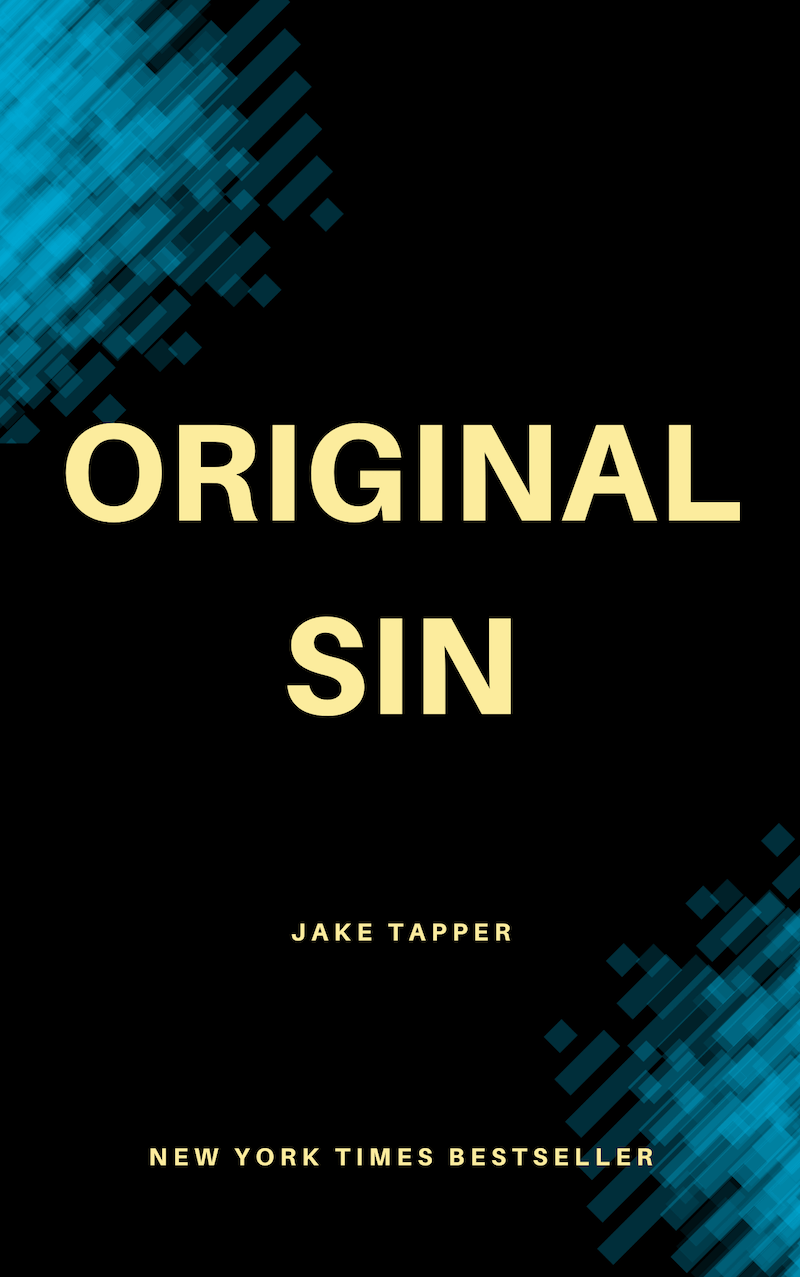
Original Sin Book Summary
This Original Sin Book Summary covers the key ideas, lessons, and takeaways in about 20 minutes.
The book’s deeper message is about institutional fragility. When political parties prioritize optics over honesty, and when leaders equate self-preservation with virtue, the mechanisms of democracy fail. Tapper presents Original Sin as both autopsy and warning: that the American presidency, reimagined as performance rather than governance, can no longer sustain the weight of denial without breaking public faith entirely.
Want the complete 20-minute summary?
- Full structured summary
- Video Summary
- Podcast Summary
- Audio summary
- Key takeaways
- Exercises
- Quiz
- Highlights and notes
- Ask the book with AI
What is in the Original Sin book summary?
Below is a preview of Sumizeit’s expert-written summary of Original Sin by Jake Tapper. The full summary covers the book’s key ideas in text, audio, and video.
Jake Tapper’s Original Sin: President Biden’s Decline, Its Cover-Up, and His Disastrous Choice to Run Again exposes a complex political and personal tragedy—a presidency sustained by faith, loyalty, and secrecy rather than transparency and accountability. Drawing on over 200 interviews with aides, lawmakers, family associates, and donors, Tapper and coauthor Alex Thompson uncover how President Joe Biden’s cognitive and physical decline became an open secret within the Democratic Party. The authors reveal how his closest confidants, driven by devotion and fear of Donald Trump’s return, concealed the truth from the public, the media, and even from Biden himself.
The Theology of “Getting Up”
The foundation of Biden’s political identity was resilience. From childhood, his father’s mantra—“It’s not how many times you get knocked down; it’s how quickly you get up”—became a lifelong philosophy. He overcame a debilitating stutter, the tragic death of his wife and daughter in a car crash, and multiple failed presidential runs. Tapper shows that this narrative of survival evolved into something like a creed, a moral obligation to “get up” no matter the cost.
This mindset shaped Biden’s decision to seek reelection. After defeating Trump in 2020, Biden viewed himself as the only man capable of doing it again. In his mind, stepping aside would mean betraying both destiny and democracy. His 2020 success—winning amid a pandemic and leading a deeply polarized nation—reinforced his belief that his perseverance could transcend age and frailty. When aides cautiously raised concerns, he dismissed them as “hand-wringing.” Jill Biden echoed his conviction, telling staff that her husband was “not done yet” and that doubting him was an act of disloyalty.
This “Biden theology,” as Tapper calls it, became a culture of unquestioning faith. Staffers who voiced skepticism were sidelined, while those who affirmed Biden’s vitality gained influence. As one adviser told Tapper, “Questioning Joe was like questioning God.”
The Politburo: The Power Behind the Curtain
Tapper details the inner sanctum of Biden’s White House—a small, fiercely loyal group of aides dubbed “the Politburo.” The three dominant figures were Mike Donilon, Steve Ricchetti, and Bruce Reed. Donilon, Biden’s longtime strategist, acted as a gatekeeper, controlling access to the president and filtering all polling data. Ricchetti, a veteran Washington dealmaker, ran operations with corporate precision, while Reed, a policy technician, coordinated legislative strategy.
These men, Tapper writes, effectively “ran the country while managing the image of a man who could barely run his own schedule.” They tightly limited Biden’s exposure, scripting every interaction. Even Cabinet members complained that they could rarely meet the president directly. Instead, decisions were filtered through the Politburo, which shaped talking points, policy briefings, and even medical updates.
Two figures reinforced this protective barrier: Jill Biden’s aide Anthony Bernal—nicknamed “the loyalty police”—and Annie Tomasini, Biden’s personal aide. Bernal reportedly kept lists of officials who had expressed doubts about the president’s health and worked to freeze them out of key meetings. This culture of fear made honest discussion impossible.
Want the complete 20-minute summary?
- Full structured summary
- Video Summary
- Podcast Summary
- Audio summary
- Key takeaways
- Exercises
- Quiz
- Highlights and notes
- Ask the book with AI
Who should read Original Sin?
Original Sin is essential reading for anyone seeking to understand the 2024 presidential election, institutional breakdown, and how political systems fail under pressure. Voters, political professionals, journalists, and citizens concerned about democratic accountability and truth-telling in government will find Tapper's investigation both illuminating and deeply relevant.
Why does Original Sin matter?
This book exposes how denial, loyalty, and institutional secrecy can erode public trust and democratic institutions at the highest levels. In an era of declining confidence in media and government, Original Sin reveals the mechanics of how a presidency sustained by deception ultimately damaged not just one administration but Americans' faith in the entire political system.
What are the key themes in Original Sin?
- The psychology of denial and its role in political decision-making
- How grief and family loyalty can distort judgment at the highest levels
- The tension between personal resilience narratives and objective reality
- Institutional capture and the creation of echo chambers within power structures
- The cost of prioritizing optics and image management over transparency
- Democratic accountability when leadership circles prioritize loyalty over truth
What are the key lessons from the Original Sin book summary?
Resilience as identity can become a liability
Biden's lifelong philosophy of "getting up" after hardship evolved into a theological conviction that made him unable to accept his own limits. When personal mythology becomes inseparable from self-worth, leaders lose the ability to make rational decisions about stepping back.
Small circles of power amplify self-deception
The "Politburo" of trusted aides created an ecosystem where dissent was suppressed and contrary information filtered out. Inner sanctums designed for efficiency become chambers of denial when gatekeepers prevent honest feedback.
Grief unprocessed becomes a hidden driver of decisions
Biden's unhealed wounds from Beau's death and Hunter's troubles manifested as cognitive lapses and emotional vulnerability that aides witnessed but concealed. Untreated psychological pain at the highest levels affects governance in ways the public never sees.
Loyalty policing prevents organizational health
When questioning leadership becomes an act of disloyalty, organizations lose the corrective mechanisms necessary for sound decision-making. Fear-based hierarchies prioritize compliance over competence.
Strategic concealment requires increasingly elaborate infrastructure
Managing Biden's decline required scripting, video editing, scheduling restrictions, and adjusted lighting—ultimately creating a presidency more focused on image control than actual governance. The machinery of deception becomes more visible and fragile over time.
External validation can mask internal reality
The 2020 election victory reinforced Biden's belief in his indispensability despite accumulating evidence of decline. Past success can blind leaders to present deterioration.
Family dynamics can override institutional advice
Jill Biden's conviction that her husband was "not done yet" wielded power equal to or greater than cabinet officials' concerns. Personal relationships often trump organizational expertise in high-stakes decisions.
Public relations strategy cannot ultimately override reality
The White House's aggressive pushback against Robert Hur's report only magnified the damage rather than containing it. Denying documented problems accelerates rather than prevents their public exposure.
Isolated incidents reveal systemic problems
The June 2024 debate wasn't an anomaly but a public manifestation of decline that insiders had known about for months. When one moment of truth breaks through a wall of concealment, it retroactively delegitimizes all prior messaging.
Democratic institutions depend on voluntary withdrawal from power
Biden's reluctant withdrawal only happened after overwhelming pressure from party leadership. Systems that rely on self-correction are vulnerable when leaders resist acknowledging their own limitations.
Succession under crisis conditions inherits compounded problems
Kamala Harris faced not just an election but the burden of explaining away months of denied decline. Those who inherit leadership during institutional collapse must overcome both external opponents and internal credibility deficits.
Justifying deception as patriotic duty corrupts institutions
When aides rationalize concealment as necessary to prevent Trump's return, they reframe dishonesty as moral action. This logic ultimately undermines the democratic institutions they claim to be protecting.
Institutional trust erodes faster than it rebuilds
The revelation of prolonged cover-up damaged public confidence in multiple institutions—media, government, and intelligence agencies—simultaneously. Betrayed trust cascades across systemic levels.
Performance cannot indefinitely substitute for governance
A presidency reimagined as theater rather than executive function eventually collapses under its own weight. The machinery of image management cannot create actual policy capability.
Political mythology requires constant reinforcement
The narrative of Biden's inevitable necessity had to be continuously defended through edited videos, controlled access, and loyalty enforcement. Myths unsupported by reality require increasing effort to maintain.
Information monopolies concentrate power dangerously
Biden's aides' control over his schedule, medical updates, and access to information gave them de facto governance authority. When one person's reality is mediated entirely by others, accountability disappears.
Grief and ambition can combine to cloud judgment
Biden's determination to "get up" again after decades of hardship, combined with unresolved loss, made him unable to distinguish between appropriate perseverance and damaging denial. Emotional wounds and professional ambition can reinforce each other destructively.
Organizational structures reveal actual power distribution
The dominance of Donilon, Ricchetti, and Reed showed that formal titles masked the real decision-making hierarchy. Examining who actually filtered information and made choices reveals systems that organizational charts hide.
Crisis exposures compound when multiple systems fail simultaneously
The Hur Report, the debate, and donor pressure converged to shatter the concealment infrastructure all at once. Single points of failure become catastrophic when multiple safeguards depend on the same underlying deception.
Want the complete 20-minute summary?
- Full structured summary
- Video Summary
- Podcast Summary
- Audio summary
- Key takeaways
- Exercises
- Quiz
- Highlights and notes
- Ask the book with AI
How can you apply ideas from Original Sin?
- Establish independent health and capability assessments for senior leaders that cannot be mediated by loyalty networks or inner circles
- Create organizational cultures where dissent and honest feedback are protected and rewarded rather than punished through exclusion
- Implement term limits or mandatory review processes for leaders in decline, removing the burden of self-recognition
- Separate image management from governance functions to prevent entire institutions from becoming focused on concealment
- Build institutional redundancy in decision-making so that no single gatekeeper can control information flow to leadership
- Train senior staff to recognize and address unprocessed grief or trauma in leadership that may affect judgment
- Establish transparent protocols for succession planning that activate before crisis rather than during institutional collapse
What common mistakes do readers make with Original Sin?
- Assuming that past success automatically translates to current capability; treating historical victories as guarantees of future fitness
- Confusing loyalty with competence, promoting gatekeepers based on devotion rather than their ability to provide honest counsel
- Using media management and image control as substitutes for actual problem-solving, which only delays and amplifies eventual exposure
- Allowing personal relationships and family dynamics to override institutional advice and professional expertise on fundamental leadership questions
Sumizeit Exercises Apply what you've learned
Turn ideas from Original Sin into action with a short guided reflection: identify the biggest takeaway, connect it to your life, and commit to one step you can take in the next 24 hours.
What is the expert analysis of Original Sin?
Overview
Original Sin by Jake Tapper is a penetrating investigative work that dissects the fraught final chapter of Joe Biden’s presidency. Tapper, an acclaimed journalist and CNN anchor with a strong background in political reporting, leverages over 200 interviews to unveil the hidden realities behind Biden’s cognitive and physical decline, the culture of secrecy that enveloped his administration, and the consequential political fallout. This book is significant not only for its detailed narrative of a presidency in crisis but also for its broader meditation on the fragility of democratic institutions when confronted with denial and loyalty overriding transparency.
Core Thesis
Tapper’s central argument is that Biden’s defining trait—resilience—transformed from a source of strength into a fatal flaw. The president’s refusal to acknowledge his own limitations, combined with a loyal inner circle’s systematic concealment of his decline, created a “theology of getting up” that ultimately undermined both his presidency and the Democratic Party’s credibility. This “original sin” of denial and deception, justified as protecting democracy from perceived existential threats, instead corroded public trust and exposed institutional vulnerabilities, culminating in political collapse and a crisis of governance.
Strengths
- Comprehensive Investigative Reporting: Tapper’s access to a wide array of insiders—from aides to family members—provides a richly detailed and nuanced portrait of the inner workings of the Biden White House.
- Humanizing Political Power: The book excels in connecting Biden’s personal tragedies and psychological burdens with his political decisions, offering a textured understanding of how grief and loyalty shape leadership.
- Insightful Analysis of Political Culture: The concept of “Biden theology” and the “Politburo” offers a compelling framework to understand the interplay of faith, fear, and control within modern presidential politics.
- Broader Institutional Critique: Beyond the individual, Tapper’s work serves as a cautionary tale about the dangers of prioritizing image management over democratic accountability, making it relevant for scholars of political science and governance.
- Engaging Narrative Style: Tapper’s journalistic storytelling renders complex political dynamics accessible without sacrificing depth, maintaining reader engagement throughout a dense and sensitive subject matter.
Critiques & Counterarguments
- Potential Bias and Partisan Framing: While Tapper is a respected journalist, critics might argue that the narrative leans heavily on a critical portrayal of Biden, which could reflect partisan perspectives or selective sourcing within the Democratic establishment.
- Overemphasis on Individual Decline: The focus on Biden’s cognitive and physical deterioration risks overshadowing systemic factors—such as institutional inertia, partisan polarization, and media dynamics—that also contribute to political dysfunction.
- Reliance on Anonymous Sources: The extensive use of unnamed aides and insiders, while common in political exposés, invites skepticism about the verifiability and motivations behind some claims, potentially weakening the evidentiary foundation.
- Competing Views on Leadership Resilience: Some political psychologists and leadership theorists might contest the framing of resilience as a liability, arguing instead that persistence in leadership, even amid adversity, can be a pragmatic necessity in turbulent times.
- Historical Comparisons: Scholars may point to precedents of presidents with declining health who managed to govern effectively or transition power gracefully, suggesting that the narrative of collapse is not inevitable but contingent on broader political contexts.
Who Should Read This
Original Sin is essential reading for political analysts, historians, and informed citizens interested in the intersection of personal vulnerability and public leadership. It offers valuable insights for students of political communication, governance, and democratic theory, as well as for those seeking to understand the contemporary American political landscape’s complexities. Readers drawn to investigative journalism and political biographies will find Tapper’s work both enlightening and sobering, providing a critical lens on how mythmaking and denial can imperil democratic institutions.
Frequently asked questions about the Original Sin book summary
What is Original Sin about?
Original Sin: President Biden's Decline, Its Cover-Up, and His Disastrous Choice to Run Again by Jake Tapper is an investigative account of how President Joe Biden's cognitive and physical decline became an open secret within the Democratic Party, and how his closest advisers, staff, and family concealed this reality from the public. Based on over 200 interviews, the book reveals the institutional mechanisms of denial, the inner circle that managed the presidency, and the consequences of prioritizing loyalty and narrative over transparency.
Who should read Original Sin?
Anyone interested in understanding the 2024 presidential election, how institutions fail under pressure, or the mechanisms of political deception should read Original Sin. Voters, political professionals, journalists, students of governance, and citizens concerned about democratic accountability will find Tapper's investigation essential to understanding how denial and loyalty can erode institutions at the highest levels.
What are the main takeaways from Original Sin?
The main takeaways from Original Sin include: personal resilience narratives can blind leaders to their own limitations; small circles of loyal advisers create echo chambers that prevent honest feedback; grief and family loyalty can override institutional checks on power; and when political systems prioritize optics over truth, they eventually lose public trust catastrophically. Ultimately, Tapper argues that Biden's refusal to accept his own limits became the "original sin" that damaged not just his presidency but public faith in democracy itself.
How did Biden's aides conceal his decline?
Biden's staff employed multiple concealment tactics including limiting public appearances to times when he was most alert, editing video footage to remove gaffes, using teleprompters and note cards for routine interactions, adjusting lighting at press events, and controlling access to the president through a powerful inner circle. Once in office, the Politburo of trusted aides filtered information, silenced skeptics, and maintained a culture where questioning Biden's fitness was treated as an act of disloyalty.
What was the significance of Biden's June 2024 debate performance?
The June 27, 2024 debate between Biden and Trump was the breaking point that shattered the concealment infrastructure surrounding his decline. His visible confusion, hoarse voice, and verbal gaffes made undeniable what insiders had known for months. The debate's immediate aftermath saw Democratic donors, lawmakers, and media figures publicly calling for Biden to step aside, forcing the party to reckon with realities it had been denying.
Who were the key figures in Biden's inner circle, and what was their role?
The "Politburo" consisted of Mike Donilon (longtime strategist and gatekeeper), Steve Ricchetti (operations manager), and Bruce Reed (policy coordinator). These three effectively ran the country while managing Biden's schedule and image, with critical support from Anthony Bernal (Jill Biden's loyalty enforcer) and Annie Tomasini (Biden's personal aide). Together, they controlled access to the president and filtered information in ways that concentrated power and prevented honest feedback.
Why did Biden resist stepping aside despite clear signs of decline?
Biden resisted withdrawing because his entire identity was built on the philosophy of "getting up" after hardship, a belief reinforced by his childhood, his victories over personal tragedy, and his 2020 election victory. He believed he was uniquely necessary to defeat Trump and viewed stepping aside as a betrayal of destiny and democracy. This conviction was reinforced by his inner circle and Jill Biden, who discouraged dissent and maintained that he was "not done yet."
What was the broader impact of the concealment on American democracy?
The concealment and subsequent exposure damaged trust across multiple institutions—government, media, and intelligence agencies. When the cover-up was revealed, Americans across the political spectrum concluded that the system was rigged to protect power rather than truth. This loss of faith in institutional honesty undermined confidence in democratic accountability and gave ammunition to critics claiming elite hypocrisy, ultimately affecting the political landscape well beyond Biden's presidency.
About Sumizeit
Sumizeit is a profitable Scomy LLC company based in Miami, Florida. It has been helping readers learn from nonfiction books for 7 years with expert-written summaries in text, audio, podcast, and video.
Want the complete 20-minute summary?
- Full structured summary
- Video Summary
- Podcast Summary
- Audio summary
- Key takeaways
- Exercises
- Quiz
- Highlights and notes
- Ask the book with AI
Here's why readers love Sumizeit
Join thousands of learners getting smarter every day
"Great experience. Detailed summaries. Loved the gamification feature. Makes learning fun. Good customer service. I recommend Sumizeit to anyone. You'll learn a lot."
"I always felt busy but still wanting to keep up with the book discussion in my friend group. This was a great supplement to help me keep reading the books I find fun while keeping up with important books."
"I love this website. Instead of scrolling social media, I find myself learning a lot. I use it everyday. I recommend this app for anyone who is too busy and wants to get up to speed with their favorite books."
Original Sin Book Summary PDF
Looking for a Original Sin Book Summary PDF you can save and revisit offline? Our Original Sin Book Summary PDF captures the book’s core ideas in a clean, printable format — the key frameworks, takeaways, and structure without the fluff. Download the Original Sin Book Summary PDF when you want a reference you can annotate, share with your team, or review on the go. Get your Original Sin Book Summary PDF from the download page below.
Download Original Sin Book Summary PDFPeople also liked these summaries
Readers who explored Original Sin often enjoyed these titles next.




Want the complete 20-minute summary?
- Full structured summary
- Video Summary
- Podcast Summary
- Audio summary
- Key takeaways
- Exercises
- Quiz
- Highlights and notes
- Ask the book with AI
Featured Book Titles
Popular Book Summaries at sumizeit, leading book summary app