


As an Amazon Associate, Sumizeit earns from qualifying purchases.
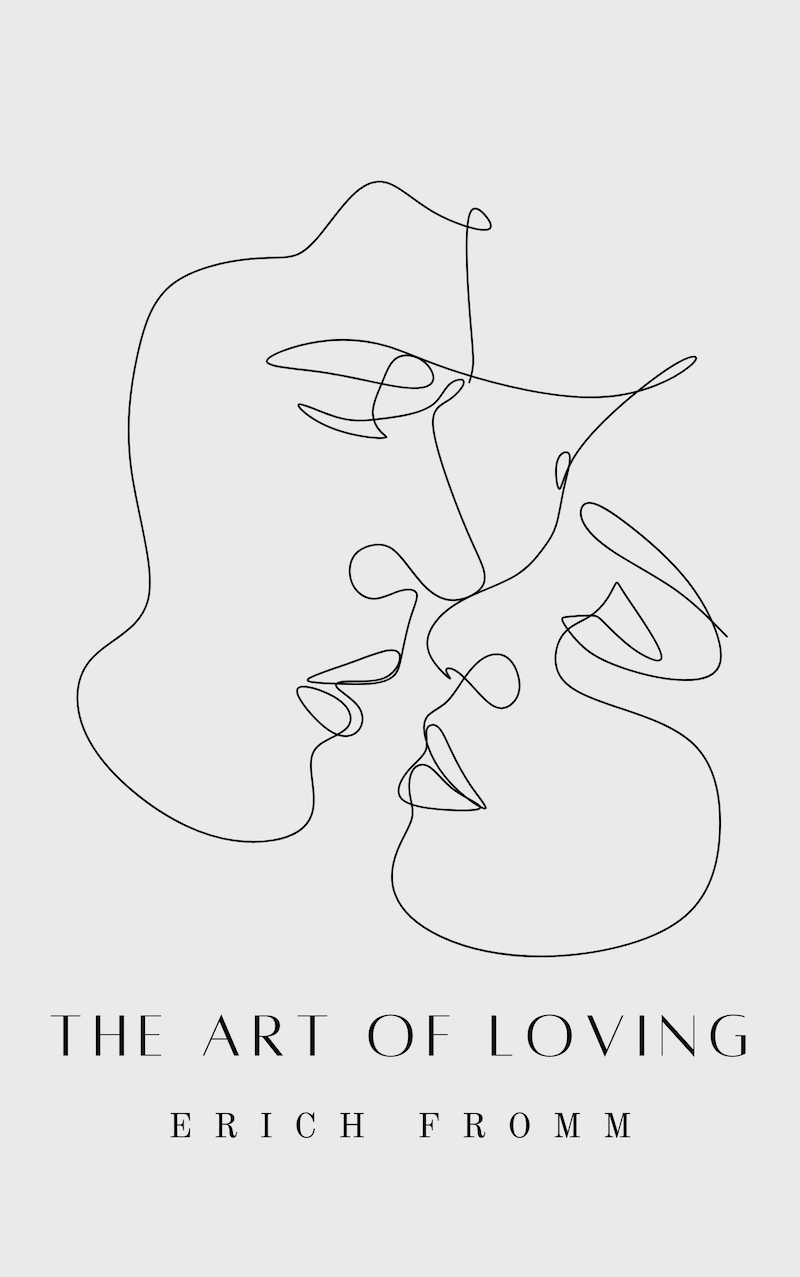
The Art of Loving Book Summary
This The Art of Loving Book Summary covers the key ideas, lessons, and takeaways in about 20 minutes.
Through genuine love, we transcend ego and reconnect with the world in a way that affirms existence. Love is both the highest form of human maturity and the most profound act of freedom.
To love is to participate in the ongoing creation of life. It requires effort, faith, humility, and a deep commitment to growth. It demands that we cultivate inner strength rather than rely on fleeting emotions or external validation.
In an age dominated by speed, consumption, and self-interest, Fromm’s message endures as both a philosophical challenge and a moral call: love is not a luxury — it is a discipline, a practice, and the ultimate expression of what it means to be truly alive.
Helps with these goals
Want the complete 20-minute summary?
- Full structured summary
- Video Summary
- Podcast Summary
- Audio summary
- Key takeaways
- Exercises
- Quiz
- Highlights and notes
- Ask the book with AI
What is in the The Art of Loving book summary?
Below is a preview of Sumizeit’s expert-written summary of The Art of Loving by Erich Fromm. The full summary covers the book’s key ideas in text, audio, and video.
Love as a Learned Art
Erich Fromm begins by posing a provocative question: Is love an art?
If it is, he argues, then it requires knowledge, dedication, and consistent practice — not luck or fate. Most people assume that love simply happens, that finding the right person will automatically lead to lasting happiness. Fromm insists this belief is misguided. Love is not a sudden emotion or an accident; it’s a discipline that must be developed like any other skill — through study, effort, and experience.
He compares the art of loving to mastering music or painting. To play the violin beautifully, one must learn theory, practice technique, and devote years to disciplined training. Likewise, to love well, one must learn what love is, understand human nature, and work continually to refine emotional awareness and empathy. Love isn’t about finding someone perfect; it’s about becoming capable of giving and receiving love genuinely.
Fromm also notes that in modern capitalist societies, people approach love as if it were a marketplace exchange — each person trying to make themselves more desirable “merchandise” to attract a worthy partner. This approach reduces love to a form of mutual benefit or utility. Genuine love, however, begins only when one stops viewing relationships through a transactional lens and instead learns to give freely without the expectation of return.
The Search for Connection
Fromm believes that the longing for love originates from a deeper human problem: the painful awareness of isolation. From childhood onward, as individuals develop a sense of self distinct from their parents and surroundings, they also experience the anxiety of separateness. Every human act — whether art, religion, work, or politics — can be traced back to this desire to overcome loneliness and reconnect with others or with life itself.
Throughout history, people have tried to bridge this gap in many ways. Some sought connection through ecstatic or “orgiastic” states — rituals, dances, drugs, or collective ceremonies that temporarily dissolve the sense of self. Others conform to social norms and lose themselves in collective identity, finding comfort in sameness rather than individuality. But these are only substitutes, fleeting or shallow forms of unity. The most enduring way to transcend isolation, Fromm argues, is through love: an active and conscious union that preserves individuality while connecting deeply with others.
Mature Love: Unity Without Loss of Self
True love, according to Fromm, is not about merging identities or losing oneself in another person. Instead, it is a union that allows two separate individuals to remain whole and autonomous while forming a bond based on care, respect, and understanding. Immature love says, “I love you because I need you.” Mature love says, “I need you because I love you.”
It’s a love grounded in freedom rather than dependency.
Fromm identifies four essential components of mature love:
Care – A genuine concern for another’s life and growth, expressed through nurturing and support.
Want the complete 20-minute summary?
- Full structured summary
- Video Summary
- Podcast Summary
- Audio summary
- Key takeaways
- Exercises
- Quiz
- Highlights and notes
- Ask the book with AI
Who should read The Art of Loving?
The Art of Loving by Erich Fromm is for anyone seeking to understand love as a discipline rather than luck, and for those struggling with loneliness, dependency, or unfulfilling relationships. It speaks to individuals questioning modern society's approach to connection, as well as to philosophers, therapists, and people committed to personal growth and authentic intimacy.
Why does The Art of Loving matter?
In an age of transactional relationships, social media performance, and consumer culture, Fromm's message that love is an active, learned skill—not a marketplace exchange—remains profoundly relevant. The book challenges the myth that the right person will automatically make us happy, and instead calls us to develop the emotional maturity, discipline, and self-knowledge required for genuine connection and human fulfillment.
What are the key themes in The Art of Loving?
- Love as a learned discipline requiring knowledge, practice, and dedication
- The problem of human isolation and the desire for authentic connection
- Mature love as a union that preserves individuality and autonomy
- Love as an active choice and creative power, not a passive emotion
- The foundation of self-love in enabling love for others
- The corrupting influence of capitalist values and the marketing mindset on relationships
- Faith, objectivity, and humility as essential conditions for genuine love
What are the key lessons from the The Art of Loving book summary?
Love is an art, not an accident
Like mastering music or painting, loving well requires study, deliberate practice, and years of disciplined effort. Love doesn't simply happen to us; we must actively develop the capacity to give and receive it authentically.
Immature love is need-based; mature love is freedom-based
Immature love stems from needing another to fill our emptiness, while mature love arises from our wholeness and desire to enhance another's life. True love says 'I need you because I love you,' not 'I love you because I need you.'
Care is the foundation of love
Love expresses itself through genuine concern for another's growth and well-being. Care is an act of will that seeks to nurture and support, regardless of what we receive in return.
Responsibility means responding without coercion
True responsibility in love is the voluntary ability and willingness to meet another's needs emotionally and physically, without obligation or resentment. It flows from genuine commitment, not duty.
Respect requires seeing the other person as they truly are
Respect means recognizing another's individuality and freedom, allowing them to grow and change without attempting to mold them into an ideal. It prevents possession and control from masquerading as love.
Knowledge of the beloved goes beyond surface observation
Genuine understanding of another person requires empathy, attention, and the effort to perceive their inner life. Superficial knowledge based on appearance or assumption undermines authentic connection.
Self-love is the prerequisite for loving others
Self-love—the respectful care and understanding we offer ourselves—enables us to maintain emotional balance, set healthy boundaries, and give freely from abundance rather than neediness. Without it, we seek validation through others.
Narcissism is the opposite of self-love
True self-love accepts oneself as part of life and extends that acceptance outward, while narcissism is rooted in emptiness and the inability to see others as separate, real beings. Narcissists cannot perceive anyone beyond their own needs.
Love is active giving, not passive receiving
Love expresses itself through giving—sharing one's knowledge, joy, care, and vitality. This giving is creative and enriching, not sacrificial; it enhances both the giver and receiver through shared participation in life.
False love fades when initial attraction diminishes
Relationships based on excitement, need, or ego satisfaction collapse once those feelings wear off, because they lack the discipline and choice that sustain real love. True love endures because it rests on commitment and mutual growth.
Brotherly love recognizes shared humanity
Brotherly love—compassion and solidarity for all people—is grounded in the recognition that everyone shares the same fundamental human condition. It desires to alleviate suffering and affirm the dignity of all.
Motherly love gives unconditionally yet allows separation
Motherly love affirms another's existence and provides nurturing without demand, yet its deepest expression lies in enabling the loved one to grow, develop, and eventually separate. Control disguised as love betrays this principle.
Erotic love is most intense when it includes care, responsibility, respect, and knowledge
The sexual and emotional longing for complete union with one person reaches its fullest expression only when it integrates all four elements of mature love. Without them, erotic love remains fragile and ultimately unfulfilling.
Faith in love is trust without certainty
Genuine faith in love means being willing to invest oneself without guarantee, to give without assurance of return, and to persist despite unknown outcomes. Without faith, fear and doubt destroy the possibility of loving.
Courage is essential to love because it requires vulnerability
To love authentically means risking rejection, disappointment, and loss. Courage is the willingness to open oneself despite these dangers, choosing love anyway as an affirmation of life.
Objectivity and reason clarify love and prevent distortion
The ability to see others clearly, without the distortion of narcissism or projection, requires humility to acknowledge our limitations and reason to perceive reality. Together these create the emotional clarity that sustains genuine relationships.
Discipline in love means staying committed despite difficulty
Consistent, loving actions maintained even when inconvenient or emotionally unrewarding build the character and reliability that genuine relationships require. Discipline transforms love from a fleeting mood into a stable practice.
Concentration enables deep presence and meaningful engagement
The ability to be fully present with another person—to listen deeply, attend carefully, and engage without distraction—is essential to loving well. Fragmented attention prevents real knowledge and connection.
Patience recognizes that love must be allowed to mature
Deep relationships cannot be rushed or forced into predetermined timelines. Love grows through persistent, unhurried attention over time, developing depth and resilience that quick connections never achieve.
Intentional living enables love to flourish
Love thrives when one's life energy is consciously directed toward growth, meaning, and compassion. Passive living in unconscious conformity starves the capacity to love; purposeful living nourishes it.
Want the complete 20-minute summary?
- Full structured summary
- Video Summary
- Podcast Summary
- Audio summary
- Key takeaways
- Exercises
- Quiz
- Highlights and notes
- Ask the book with AI
How can you apply ideas from The Art of Loving?
- Examine whether you approach relationships transactionally (like a marketplace exchange) and consciously practice giving without expecting returns
- Develop self-knowledge through reflection and honest assessment of your own patterns, fears, and capacity for genuine intimacy
- Practice active listening and full presence with loved ones, minimizing distractions and judgments to truly understand their inner lives
- Cultivate self-love by treating yourself with the same care, respect, and understanding you offer to others, including setting healthy boundaries
- Build discipline into relationships through consistent, loving actions even when emotions fluctuate or circumstances challenge you
- Apply the four elements of mature love—care, responsibility, respect, and knowledge—intentionally to your most important relationships
- Question and resist the cultural messaging that equates success, status, and appearance with worth, anchoring instead in authenticity and inner development
What common mistakes do readers make with The Art of Loving?
- Confusing love with the initial excitement and attraction of falling in love, then abandoning the relationship when those feelings fade
- Approaching relationships as emotional transactions where you calculate what you get in return, losing sight of the creative power of giving
- Expecting another person to complete you or heal your loneliness, rather than developing wholeness and self-love first
- Mistaking possession, control, or dependency for love, attempting to mold partners into ideals rather than respecting their autonomy and growth
Sumizeit Exercises Apply what you've learned
Turn ideas from The Art of Loving into action with a short guided reflection: identify the biggest takeaway, connect it to your life, and commit to one step you can take in the next 24 hours.
What is the expert analysis of The Art of Loving?
Overview
The Art of Loving, written by Erich Fromm in 1956, stands as a seminal exploration of love from a psychological, philosophical, and sociological perspective. Fromm, a distinguished social psychologist and humanist philosopher, challenges the conventional romanticized notion of love as a spontaneous emotion or mere happenstance. Instead, he presents love as an art form—an active, disciplined practice requiring knowledge, effort, and maturity. The book’s significance lies in its interdisciplinary approach, bridging Freudian psychoanalysis, Marxist critique, and existential philosophy to reveal love as a fundamental human capacity essential for overcoming isolation and achieving authentic connection in a fragmented modern world.
Core Thesis
Fromm’s central argument is that love is not an accidental feeling but a skill that must be consciously cultivated. Love is an “art” analogous to mastering music or painting, demanding dedication, discipline, and a deep understanding of human nature. He contends that mature love unites care, responsibility, respect, and knowledge, enabling two autonomous individuals to form a genuine bond without losing their individuality. Furthermore, Fromm critiques capitalist societies for commodifying relationships, reducing love to transactional exchanges, which undermines its true essence. Ultimately, love is portrayed as a transformative power that transcends isolation, fosters human growth, and embodies freedom rather than dependency.
Strengths
- Interdisciplinary Depth: Fromm’s synthesis of psychology, sociology, and philosophy enriches the analysis, providing a multifaceted understanding of love that resonates across disciplines.
- Timeless Relevance: The critique of commodification and superficiality in relationships anticipates contemporary concerns about consumer culture’s impact on intimacy, making the work enduringly pertinent.
- Practical Framework: By delineating love’s components—care, responsibility, respect, knowledge—and emphasizing discipline and faith, Fromm offers a concrete, actionable guide rather than abstract theorizing.
- Humanistic Optimism: The book affirms human potential for growth and connection, positioning love as a moral and existential imperative rather than mere sentiment.
- Nuanced View of Self-Love: Fromm’s distinction between healthy self-love and narcissism provides a sophisticated understanding of self-regard as foundational to genuine relationships.
Critiques & Counterarguments
- Idealization of Love as Discipline: While framing love as an art elevates its seriousness, it may underplay the role of spontaneity and emotional complexity inherent in human relationships, potentially imposing an overly rationalized model.
- Limited Empirical Support: Fromm’s theories, rooted in psychoanalytic and existential traditions, often lack rigorous empirical validation by contemporary psychological research, which increasingly emphasizes attachment styles, neurobiology, and social cognition.
- Overgeneralization of Capitalist Effects: The critique of capitalist “marketing orientation” toward love, though insightful, risks reductionism by attributing complex relational dynamics primarily to economic structures, neglecting cultural and individual variability.
- Competing Psychological Models: Attachment theory, for example, offers a nuanced account of love and bonding grounded in developmental science, highlighting innate patterns and emotional regulation mechanisms that Fromm’s framework does not fully address.
- Philosophical Alternatives: Existentialist thinkers like Sartre emphasize the inherent conflict and freedom in relationships, sometimes portraying love as a site of struggle rather than harmonious union, challenging Fromm’s more integrative and optimistic vision.
Who Should Read This
The Art of Loving is ideal for readers seeking a profound, reflective, and ethically grounded exploration of love beyond popular psychology or self-help clichés. It appeals to scholars and students of psychology, philosophy, and sociology interested in the intersection of individual development and social critique. Additionally, those engaged in psychotherapy, humanistic counseling, or spiritual practice will find Fromm’s insights valuable for understanding love as an active, creative force. Finally, anyone grappling with the challenges of intimacy and connection in contemporary society will benefit from its timeless call to cultivate love as a disciplined art and existential commitment.
Frequently asked questions about the The Art of Loving book summary
What is The Art of Loving about?
The Art of Loving by Erich Fromm argues that love is not a feeling that happens by chance, but a discipline that must be learned and practiced like any other art. The book explores how genuine love—rooted in care, responsibility, respect, and knowledge—is the key to overcoming human isolation and achieving authentic fulfillment. Fromm contrasts mature love with the shallow, transactional approach to relationships that modern capitalist society encourages.
Who should read The Art of Loving?
The Art of Loving is for anyone seeking a deeper understanding of love beyond romance, including those struggling with loneliness, unfulfilling relationships, or dependency issues. It appeals to philosophers, therapists, and people committed to personal growth, as well as those questioning modern society's approach to connection and seeking meaning in an increasingly materialistic culture.
What are the main takeaways from The Art of Loving?
The main takeaways include: love is a learned skill requiring discipline, not luck; mature love unites two whole people while respecting individuality; self-love is the foundation for loving others; love is active and creative giving, not passive emotion; and modern capitalist values corrupt genuine relationships by treating them as exchanges. Additionally, cultivating faith, objectivity, concentration, and patience are essential practices for developing the capacity to love.
How does Fromm distinguish between mature and immature love?
Fromm defines immature love as 'I love you because I need you'—a dependency rooted in using another to fill our own emptiness. Mature love is 'I need you because I love you'—a conscious choice between whole people to enhance each other's lives. Immature love is passive and fragile; mature love is active, disciplined, and enduring because it flows from freedom rather than need.
What are the four elements of mature love according to Fromm?
Fromm identifies care (genuine concern for another's growth), responsibility (willingness to respond to another's needs), respect (recognizing and honoring another's individuality and freedom), and knowledge (the effort to truly understand another person beyond appearances). Together these elements create the foundation for lasting, authentic love that preserves both people's autonomy.
How does capitalism affect our ability to love according to The Art of Loving?
Fromm argues that capitalist culture trains people to view relationships as marketplace exchanges, where each person packages themselves as attractive 'merchandise' to win a partner. This 'marketing orientation' reduces love to mutual benefit calculations and prevents genuine giving. Unless society shifts from consumption and conformity to creativity and care, individuals will remain spiritually impoverished despite material abundance.
What role does self-love play in Fromm's philosophy?
Self-love is the foundation of all love and is not selfish or narcissistic but rather respect, care, and understanding directed toward oneself. Healthy self-love enables emotional balance, healthy boundaries, and the ability to give freely from abundance. Without self-love, people become insecure and trapped in dependency or narcissism, unable to offer genuine love to others.
What does Fromm mean by love as an 'active power'?
Fromm emphasizes that love is not a passive feeling or accident but an active choice and deliberate practice—something we build through conscious effort, discipline, and commitment. True love expresses itself through giving: sharing knowledge, joy, care, and vitality with another. This active giving is creative and enriching, strengthening both the giver and receiver through shared participation in life.
About Sumizeit
Sumizeit is a profitable Scomy LLC company based in Miami, Florida. It has been helping readers learn from nonfiction books for 7 years with expert-written summaries in text, audio, podcast, and video.
Want the complete 20-minute summary?
- Full structured summary
- Video Summary
- Podcast Summary
- Audio summary
- Key takeaways
- Exercises
- Quiz
- Highlights and notes
- Ask the book with AI
Here's why readers love Sumizeit
Join thousands of learners getting smarter every day
"Great experience. Detailed summaries. Loved the gamification feature. Makes learning fun. Good customer service. I recommend Sumizeit to anyone. You'll learn a lot."
"I always felt busy but still wanting to keep up with the book discussion in my friend group. This was a great supplement to help me keep reading the books I find fun while keeping up with important books."
"I love this website. Instead of scrolling social media, I find myself learning a lot. I use it everyday. I recommend this app for anyone who is too busy and wants to get up to speed with their favorite books."
The Art of Loving Book Summary PDF
Looking for a The Art of Loving Book Summary PDF you can save and revisit offline? Our The Art of Loving Book Summary PDF captures the book’s core ideas in a clean, printable format — the key frameworks, takeaways, and structure without the fluff. Download the The Art of Loving Book Summary PDF when you want a reference you can annotate, share with your team, or review on the go. Get your The Art of Loving Book Summary PDF from the download page below.
Download The Art of Loving Book Summary PDFPeople also liked these summaries
Readers who explored The Art of Loving often enjoyed these titles next.
Want the complete 20-minute summary?
- Full structured summary
- Video Summary
- Podcast Summary
- Audio summary
- Key takeaways
- Exercises
- Quiz
- Highlights and notes
- Ask the book with AI
Featured Book Titles
Popular Book Summaries at sumizeit, leading book summary app
