


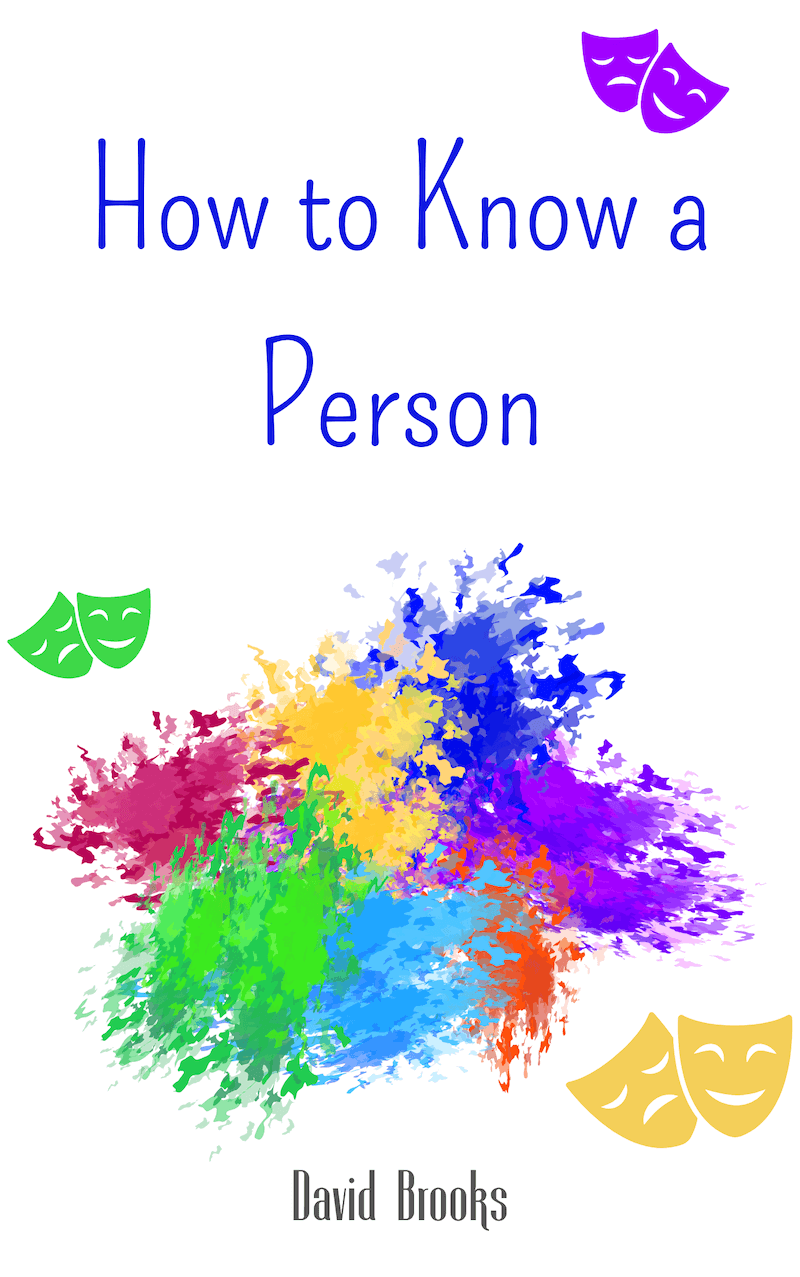
How To Know A Person Book Summary
This How To Know A Person Book Summary covers the key ideas, lessons, and takeaways in about 20 minutes.
Every single person we encounter carries a rich perspective that’s shaped by their culture, upbringing, and past experiences. Many unseen challenges and factors influence us and others, from how we speak to how we see the world, to our specific needs and wants.
“How To Know A Person” by David Brooks teaches us to approach conversations with curiosity, rather than judgment. This method suggests we take the time to ask thoughtful questions, offer our full attention, and create a safe space for others to share.
Getting to know someone is never easy. It requires patience, presence, and persistence. But it makes people feel worthy, special, and cared for. By learning to see people for the unique individual they are, we are promoting deep, healthy, and compassionate connections.
Helps with these goals
Want the complete 20-minute summary?
- Full structured summary
- Video Summary
- Podcast Summary
- Audio summary
- Key takeaways
- Exercises
- Quiz
- Highlights and notes
- Ask the book with AI
What is in the How To Know A Person book summary?
Below is a preview of Sumizeit’s expert-written summary of How To Know A Person by David Brooks. The full summary covers the book’s key ideas in text, audio, and video.
Key Insights
In “How To Know A Person” by David Brooks, the topic of loneliness is explored, which has become an increasingly pressing issue in our world. With easy-to-implement techniques, Brooks teaches readers how to beat loneliness by connecting with others on a deeper level.
We often talk about creating community and social connection, but how do we really do that effectively? In “How To Know A Person,” Brooks dives into the questions to ask to grow a friendship, as well as how to set aside our own opinions and beliefs in order to understand others.
The skills that can be learned through Brooks’s teachings can be utilized in daily life to help build your community. We all crave friends we can talk to about anything and everything, but it’s not always easy to find them.
With Brooks’s help, you will be able to find those friends by making others feel seen, treating people with the utmost consideration, and understanding those around you.
The Power Of Seeing And Being Seen
One of the rudest and cruelest things you can do to another human being is to treat them as if they don’t exist. But, on the other side of the coin, one of the greatest gifts you can offer someone is understanding them.
In fact, understanding someone can change their life. It feels really good when someone understands exactly what you’re feeling and can give you what you need in crucial moments. At times, others may understand you more than you understand yourself and commend you for a positive attribute you may not even know you have. Just imagine how good that would feel!
Seeing others makes us feel fulfilled and satisfied, but there are a great number of reasons to work on this skill. First off, it can aid you in making important life decisions. For example, when contemplating a proposal to your partner, you have to be able to see beyond their outside appearance and their career to truly understand if it’s the right fit or if there are underlying things that could hinder the growth of your relationship into marriage.
If you’re looking at the bigger picture of our modern world, you will see that the goal is multicultural societies based on equality and tolerance. In order for these societies to effectively thrive, the people need to be able to see beyond factors such as race and ideology.
Unfortunately, seeing beyond the exterior is a skill that many people lack, and it affects how people feel as members of a society. For example, Black people don’t feel that white people understand the systemic inequalities that they face. The feeling of being misunderstood can be seen among a plethora of different groups.
Although it sounds overwhelming to fix, repairing our social connections doesn’t mean we have to tackle all of the issues at once. In fact, tackling the issue starts with you, the individual.
Once we can improve our own ability to see and understand those around us,…
Want the complete 20-minute summary?
- Full structured summary
- Video Summary
- Podcast Summary
- Audio summary
- Key takeaways
- Exercises
- Quiz
- Highlights and notes
- Ask the book with AI
Who should read How To Know A Person?
How To Know A Person is for anyone struggling with loneliness or seeking deeper connections in their relationships and communities. Whether you're navigating polarized conversations, building friendships, or working to understand people different from yourself, this book offers practical tools for becoming someone who truly sees and values others.
Why does How To Know A Person matter?
In an era of unprecedented isolation and polarization, David Brooks addresses the loneliness epidemic by showing how individual acts of genuine understanding can bridge divides and transform communities. The skills outlined in this book are essential for building the empathetic, multicultural societies we aspire to create, starting with how we listen and connect one person at a time.
What are the key themes in How To Know A Person?
- The power of being truly seen and understood by others
- Moving from diminishers to illuminators in how we treat people
- The role of curiosity and genuine questions in deepening connection
- How culture and personal experience shape each person's unique perspective
- Empathy as a learnable skill rather than an innate trait
- The importance of full presence and active listening in conversations
What are the key lessons from the How To Know A Person book summary?
Understanding others changes their lives
When someone truly feels seen and understood, it profoundly impacts their well-being and sense of worth. This simple act of recognition is one of the greatest gifts we can offer another person.
Diminishers versus illuminators
People either diminish others by making them feel small and misunderstood, or they illuminate them by showing genuine curiosity and respect. The choice of which role you play shapes every relationship you have.
Curiosity as a gateway to connection
Asking thoughtful questions at the right moments demonstrates that you value another person's perspective and creates the foundation for meaningful dialogue and mutual understanding.
Small talk is a necessary bridge
Rather than dismiss casual conversation, view small talk as a low-pressure way to build comfort and respect, creating the psychological safety needed for deeper connections to develop.
Full attention is non-negotiable
Treating focus like an on-off switch rather than a dimmer ensures the other person feels truly valued and respected, making them more willing to open up and share authentically.
Pauses in conversation are natural and valuable
Embracing silence allows you to genuinely process what someone has said rather than rehearse your response, demonstrating authentic presence and deepening the quality of exchange.
Everyone perceives reality differently
A person's background, current circumstances, culture, and experiences shape how they see the world. Recognizing this prevents assumptions and opens space for genuine learning about their unique perspective.
Culture and upbringing shape worldview
To truly know someone, you must understand how their cultural heritage, family history, and faith traditions influence their values, behaviors, and ways of seeing situations.
Hard conversations deepen connection
Rather than avoid difficult topics, approaching them with genuine listening and without defensiveness can bridge divides and create stronger bonds based on mutual understanding.
Validation matters more than solutions
When someone is struggling, acknowledging their feelings and staying present is more healing than trying to fix their problem or cheer them up.
Mentalizing builds empathy
By recalling your own similar experiences and imagining the complex emotions others feel, you move beyond surface judgments to deeper, more compassionate understanding.
Caring requires understanding different needs
What comforts or helps you may not help another person in the same situation. Genuine care means discovering what they actually need rather than imposing your own solutions.
Empathy is a learnable skill
You don't need to be born naturally empathetic. Through practice in mentalizing, perspective-taking, and active listening, empathy becomes a developed capacity anyone can strengthen.
Environment influences vulnerability
Creating physical and emotional safety in conversations allows people to feel more comfortable opening up. Noticing and easing someone's discomfort shows respect and builds trust.
See the whole person, not the exterior
Beyond appearance, career, or background, every person contains a complex, unique soul worthy of gentleness and respect. Illuminators recognize and honor this depth in everyone they meet.
Listening is an active, visible practice
Engaged listening involves not just silence but responsive body language, vocal affirmations, and visible emotional reactions that encourage others to share more freely.
Stereotypes obscure individual complexity
Overcoming reliance on stereotypes requires asking genuine questions and withholding judgment, allowing you to see the unique person in front of you rather than a category.
Political groups can mask loneliness
While joining a politically aligned group may feel like connection, real community requires mutual understanding rather than shared outrage toward opponents.
Spiraling negativity can be interrupted
When difficult conversations go off track, stepping back to identify what went wrong helps reset the dialogue and realign both parties toward the original constructive purpose.
Being seen is fundamental to human flourishing
The opposite of loneliness is not just connection but being truly known and valued for who you are. This requires consistent practice in how we show up for others.
Want the complete 20-minute summary?
- Full structured summary
- Video Summary
- Podcast Summary
- Audio summary
- Key takeaways
- Exercises
- Quiz
- Highlights and notes
- Ask the book with AI
How can you apply ideas from How To Know A Person?
- Practice asking open-ended questions about how others see situations rather than assuming you already know their perspective
- Develop the habit of fully engaging in conversations by treating your attention as an on-off switch, not a dimmer
- Before difficult conversations, research or reflect on the other person's background, culture, and experiences to build context and empathy
- When someone is struggling emotionally, practice validation and presence rather than offering solutions or trying to fix their mood
- Use mentalizing by recalling your own similar experiences to understand the layered emotions others might be feeling beyond surface reactions
- Observe and adopt responsive listening habits like vocal affirmations and engaged body language to encourage deeper sharing
- Notice environmental factors in conversations and work to create physical and emotional safety for people outside their comfort zones
What common mistakes do readers make with How To Know A Person?
- Assuming you already understand someone without asking clarifying questions about their unique perspective and experiences
- Believing that quiet presence means you're listening when your mind is actually preoccupied with your own thoughts and responses
- Trying to cheer up or fix someone in emotional pain rather than simply acknowledging their feelings and staying present with them
- Offering help based on what you would need in their situation instead of asking what they actually need and want
Sumizeit Exercises Apply what you've learned
Turn ideas from How To Know A Person into action with a short guided reflection: identify the biggest takeaway, connect it to your life, and commit to one step you can take in the next 24 hours.
What is the expert analysis of How To Know A Person?
Overview
How To Know A Person is a thoughtful exploration of loneliness and human connection authored by David Brooks, a distinguished cultural commentator and longtime columnist for The New York Times. Brooks leverages his extensive background in sociology, journalism, and cultural analysis to address the increasingly urgent societal issue of isolation. This book stands out for its practical approach to fostering deeper interpersonal relationships through empathy, attentive listening, and cultural awareness, making it a significant contribution to contemporary discussions on social cohesion and mental well-being.
Core Thesis
At the heart of Brooks’s argument is the assertion that truly knowing another person requires more than superficial interaction; it demands a deliberate suspension of one’s own judgments and narratives to fully see and understand the other’s unique perspective. He posits that loneliness stems largely from a failure to be seen and understood, and that cultivating skills such as empathy, active listening, and cultural sensitivity can bridge this divide. By becoming “illuminators” rather than “diminishers,” individuals can foster authentic connections that not only alleviate personal loneliness but also contribute to the health of multicultural societies.
Strengths
- Practical Guidance: Brooks offers accessible, actionable techniques for improving social interactions, such as adopting curiosity-driven questioning and embracing small talk as a foundation for deeper dialogue.
- Integration of Empathy and Psychology: The book thoughtfully incorporates psychological concepts like mentalizing and empathy as learnable skills, grounding its recommendations in cognitive science.
- Cultural Sensitivity: Brooks emphasizes the importance of understanding cultural backgrounds and personal histories, enriching the conversation about connection beyond simplistic or stereotypical frameworks.
- Use of Illustrative Anecdotes: The narrative is enlivened by compelling examples, such as the story of Harry Nyquist at Bell Labs and Brooks’s personal reflections on his friend Pete’s struggle with depression, which humanize abstract concepts.
- Addressing Contemporary Social Issues: The book situates loneliness within broader societal trends, including political polarization and systemic inequalities, underscoring its relevance.
Critiques & Counterarguments
- Potential Oversimplification: While Brooks advocates for individual responsibility in bridging social gaps, the book may understate structural and systemic barriers to connection, such as socioeconomic disparities and institutional racism, which require collective action beyond interpersonal skills.
- Limited Empirical Evidence: The book relies heavily on anecdotal and psychological insights but offers less rigorous empirical data or engagement with countervailing research on social networks and loneliness.
- Idealization of Empathy: The portrayal of empathy as a universally learnable and effective solution may overlook complexities such as empathy fatigue, power imbalances, and situations where empathy alone cannot resolve deep-rooted conflicts.
- Competing Research on Social Connection: Scholars in social psychology and sociology have highlighted that some forms of social connection, especially in digital contexts, can paradoxically increase feelings of isolation, a nuance that Brooks’s approach does not fully address.
- Philosophical Debates on Objectivity: The book’s emphasis on seeing others’ perspectives aligns with phenomenological approaches but may conflict with more critical or postmodern views that question the possibility of truly understanding “the other” without imposing one’s own frameworks.
Who Should Read This
This book is ideally suited for readers interested in the intersection of psychology, sociology, and cultural studies who seek practical strategies to enhance their interpersonal relationships. It will particularly resonate with those experiencing or witnessing the effects of social isolation—such as mental health professionals, community organizers, educators, and thoughtful individuals committed to fostering empathy and social cohesion in an increasingly fragmented world. Additionally, readers who appreciate reflective, narrative-driven works that blend personal anecdote with social critique will find Brooks’s style engaging and insightful.
Frequently asked questions about the How To Know A Person book summary
What is How To Know A Person about?
How To Know A Person by David Brooks is about developing the skills to truly understand and connect with others on a deeper level. The book addresses the loneliness epidemic by teaching readers how to listen with genuine curiosity, see beyond stereotypes and appearances, and create meaningful relationships across differences in culture, perspective, and experience.
Who should read How To Know A Person?
Anyone struggling with loneliness, seeking to deepen their relationships, or wanting to bridge divides in polarized communities should read this book. It's particularly valuable for people navigating difficult conversations, building authentic friendships, working across cultural differences, or simply wanting to become someone who truly sees and values others.
What are the main takeaways from How To Know A Person?
The main takeaways include: understanding others is both a learnable skill and a profound gift that changes lives; everyone perceives reality differently based on their culture, background, and experiences; being an illuminator—someone who brings out the best in others—requires genuine curiosity and full presence; and empathy involves acknowledging feelings, staying present, and understanding that people have different needs. The book emphasizes that deep connection requires setting aside our own narratives to truly see the unique, complex person in front of us.
What is the difference between diminishers and illuminators?
Diminishers make people feel unseen, misunderstood, and small by being self-absorbed, relying on stereotypes, and failing to truly listen. Illuminators, in contrast, are curious about others, ask thoughtful questions at the right moments, and make people feel seen, valued, and important. An illuminator like Harry Nyquist from Bell Labs brought out the best in those around him through genuine interest and attentive listening.
How can I become a better listener?
To become a better listener, treat your focus and attention like an on-off switch rather than a dimmer—be fully engaged when in conversation. Practice responsive listening through vocal affirmations and visible body language. Embrace natural pauses instead of rehearsing your response. Ask genuine questions rather than making assumptions, and remember that truly listening means understanding the other person's perspective without jumping to defend your own.
How does culture influence how people see the world?
Culture, upbringing, faith traditions, and family history deeply shape how individuals perceive situations, make decisions, and interpret meaning. For example, the value placed on loyalty to friends versus honesty under oath varies significantly across cultures. To truly know someone, you must understand these cultural influences rather than relying on stereotypes or your own cultural assumptions.
What should I do when someone I care about is struggling emotionally?
Rather than trying to cheer them up or offer solutions, acknowledge their feelings and stay present with them. Validate that their emotions are real and acceptable, which shows respect and love regardless of their emotional state. Practice mentalizing by recalling your own similar experiences, and ask what they actually need rather than assuming what would help you.
Can empathy be learned?
Yes, empathy is a learnable skill that anyone can develop and strengthen through practice. Key tools include mentalizing (understanding why someone feels a certain emotion), caring (recognizing others may need different things than you do), and consistently practicing perspective-taking. With intentional effort, you can become more empathetic and build deeper, more compassionate connections.
About Sumizeit
Sumizeit is a profitable Scomy LLC company based in Miami, Florida. It has been helping readers learn from nonfiction books for 7 years with expert-written summaries in text, audio, podcast, and video.
Want the complete 20-minute summary?
- Full structured summary
- Video Summary
- Podcast Summary
- Audio summary
- Key takeaways
- Exercises
- Quiz
- Highlights and notes
- Ask the book with AI
Here's why readers love Sumizeit
Join thousands of learners getting smarter every day
"Great experience. Detailed summaries. Loved the gamification feature. Makes learning fun. Good customer service. I recommend Sumizeit to anyone. You'll learn a lot."
"I always felt busy but still wanting to keep up with the book discussion in my friend group. This was a great supplement to help me keep reading the books I find fun while keeping up with important books."
"I love this website. Instead of scrolling social media, I find myself learning a lot. I use it everyday. I recommend this app for anyone who is too busy and wants to get up to speed with their favorite books."
How To Know A Person Book Summary PDF
Looking for a How To Know A Person Book Summary PDF you can save and revisit offline? Our How To Know A Person Book Summary PDF captures the book’s core ideas in a clean, printable format — the key frameworks, takeaways, and structure without the fluff. Download the How To Know A Person Book Summary PDF when you want a reference you can annotate, share with your team, or review on the go. Get your How To Know A Person Book Summary PDF from the download page below.
Download How To Know A Person Book Summary PDFPeople also liked these summaries
Readers who explored How To Know A Person often enjoyed these titles next.




Want the complete 20-minute summary?
- Full structured summary
- Video Summary
- Podcast Summary
- Audio summary
- Key takeaways
- Exercises
- Quiz
- Highlights and notes
- Ask the book with AI
Featured Book Titles
Popular Book Summaries at sumizeit, leading book summary app
