


As an Amazon Associate, Sumizeit earns from qualifying purchases.
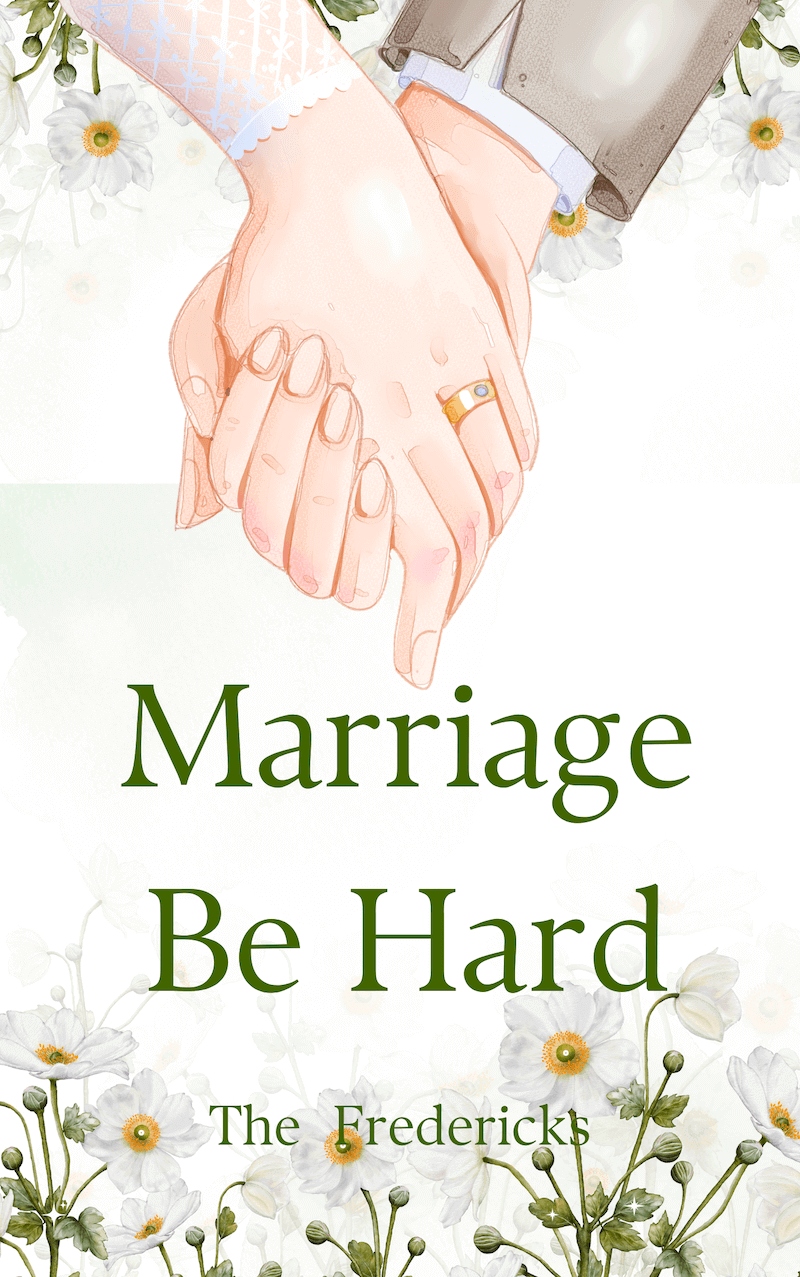
Marriage Be Hard Book Summary
This Marriage Be Hard Book Summary covers the key ideas, lessons, and takeaways in about 20 minutes.
By dismantling stigmas and normalizing conversations about topics often deemed uncomfortable, couples can create a safe space where both individuals feel seen and valued.
Overall, a fulfilling marriage requires work, but it is work worth doing. It is not about achieving perfection or avoiding conflict but about approaching the partnership with humility, empathy, and a willingness to learn. By embracing the challenges as opportunities for growth, couples can create a relationship that is not only resilient but also deeply rewarding—a union rooted in love, understanding, and shared purpose.
Helps with these goals
Want the complete 20-minute summary?
- Full structured summary
- Video Summary
- Podcast Summary
- Audio summary
- Key takeaways
- Exercises
- Quiz
- Highlights and notes
- Ask the book with AI
What is in the Marriage Be Hard book summary?
Below is a preview of Sumizeit’s expert-written summary of Marriage Be Hard by Kevin Fredericks,Melissa Fredericks. The full summary covers the book’s key ideas in text, audio, and video.
What Will You Learn
Who Is This For
"Marriage Be Hard," published on September 13, 2022, is a candid exploration of marital challenges by Kevin and Melissa Fredericks, a couple who transitioned from high school sweethearts to marriage in college. Despite their seemingly ideal relationship, they encountered significant obstacles, including communication breakdowns and personal resentments. Their experiences, combined with insights from experts and nearly two decades of marriage, form the foundation of this book. The Fredericks delve into topics often considered taboo, such as jealousy, divorce, and maintaining a Christian perspective on sexuality. Their narrative emphasizes that real marriage requires continuous effort and open dialogue. By sharing personal anecdotes and lessons learned, they aim to provide readers with practical tools to navigate the complexities of married life, highlighting that understanding and addressing issues head-on can strengthen the marital bond.
Communicating Sexual Desires
Sex is a crucial aspect of romantic relationships and one that often requires extensive and open communication. Partners’ wants, needs, and expectations regarding intimacy can differ greatly, and without discussions to navigate these differences, misunderstandings and frustrations can arise. For many, conversations about sex can feel awkward, especially if they have grown up in environments where sex was stigmatized or surrounded by silence. This was the case for Melissa and Kevin, who decided to wait until marriage to engage in sexual activity. While they were focused on abstinence before marriage, they never discussed how to approach intimacy afterward. As a result, they entered their marriage with unrealistic and unspoken expectations.
Melissa, for instance, assumed she would immediately feel comfortable with sex and her own sexuality once married. However, she faced lingering insecurities long after consummating her relationship. Kevin, on the other hand, expected frequent sexual intimacy, believing marriage would eliminate any barriers to desire. These mismatched expectations led to a need for deeper communication between them. Melissa’s lower libido compared to Kevin’s higher drive often created tension, as Kevin occasionally interpreted her lack of desire as a personal rejection.
Partners with lower sexual desire need to communicate openly about their feelings, emphasizing that a lack of interest in the moment is not a reflection of their attraction or love for their partner. Furthermore, maintaining an open mind about intimacy, even when not in the mood, while also avoiding forced or pressured participation is highly beneficial. Finding a balance between honoring personal boundaries and nurturing the sexual aspect of the relationship is key.
Failing to address intimacy issues can lead to prolonged periods of disconnection, potentially harming the relationship. Open dialogue about desires, insecurities, and needs fosters understanding and helps create a mutually fulfilling sexual relationship. Lastly, consistent communication, combined with self-awareness and empathy, is essential for building and maintaining a healthy and satisfying partnership.
Dealing with Expectations
Expectations are an inherent part of every relationship, shaping how we envision our roles, dynamics, and the fulfillment we seek from our partnerships. However, unexpressed or unrealistic expectations can lead to misunderstandings and disappointment.
Want the complete 20-minute summary?
- Full structured summary
- Video Summary
- Podcast Summary
- Audio summary
- Key takeaways
- Exercises
- Quiz
- Highlights and notes
- Ask the book with AI
Who should read Marriage Be Hard?
Marriage Be Hard is for couples at any stage of their relationship—whether you're engaged, newly married, or navigating decades together. It's especially valuable for those struggling with unspoken expectations, differing approaches to intimacy, or the challenges of balancing parenthood with partnership. Anyone seeking to strengthen their communication and build a more resilient marriage will find practical wisdom here.
Why does Marriage Be Hard matter?
Modern marriages face unique pressures that traditional relationship models didn't address, from evolving gender roles to managing dual careers and parenting. Marriage Be Hard cuts through the silence surrounding taboo topics like sexual intimacy, jealousy, and resentment, helping couples build authentic connections instead of relying on assumptions. In a world where many believe marriage should simply 'work,' this book reframes the relationship as an ongoing practice that requires intentional effort and honest dialogue to thrive.
What are the key themes in Marriage Be Hard?
- The power of open communication in resolving unspoken tensions
- How societal expectations shape marital roles and can create conflict
- The necessity of discussing intimacy and sexual compatibility
- Redefining marriage roles for modern partnerships
- Intentionality and continuous effort as foundations for lasting love
- Navigating major life transitions without losing the spousal connection
- Professional support and therapy as tools for relationship strength
What are the key lessons from the Marriage Be Hard book summary?
Unspoken assumptions are a hidden relationship killer
Many couples enter marriage with deeply held but never-discussed expectations about roles, intimacy, and daily life. These silent assumptions become sources of resentment and conflict when reality doesn't match the fantasy.
Sexual compatibility requires explicit conversation
Partners often have vastly different desires, comfort levels, and expectations around intimacy. Without open dialogue, mismatched libidos and unspoken insecurities can create disconnection and misinterpretation of rejection.
Traditional gender roles persist even in modern marriages
Many people unconsciously carry deeply ingrained beliefs about who should earn, who should manage the home, and who should prioritize childcare. These inherited expectations often clash with the realities of contemporary partnerships.
Parenthood reshapes the marital dynamic in unexpected ways
The arrival of children fundamentally transforms a couple's time, energy, and priorities. Without proactive communication, partners can feel unsupported, resentful, and disconnected from each other during this demanding phase.
Regular check-ins prevent expectation gaps from widening
By periodically asking partners what assumptions they brought into the marriage and whether expectations have been met, couples can identify misalignments before they become entrenched conflicts.
Lower desire is not a reflection of love or attraction
Partners with mismatched libidos need reassurance that one person's lower sexual interest doesn't diminish their affection or commitment. Clear communication prevents desire differences from being internalized as personal rejection.
Opposites can thrive with intentional understanding
Couples with contrasting temperaments—planners versus spontaneous, social versus introverted—don't need to be aligned on everything to build a strong partnership. Mutual respect and dialogue bridge those differences.
Therapy is a proactive strength-building tool, not a last resort
Seeking professional guidance during transitions or tensions helps couples develop communication skills and conflict resolution strategies before resentment accumulates. Therapy is preventive medicine for relationships.
Marital roles must be renegotiated as life circumstances change
The role division that works when both partners are working full-time without children may need complete restructuring when careers shift, children arrive, or other major life events occur. Flexibility and conversation are essential.
The marital bond requires deliberate nurturing amidst life's demands
Parenthood, career ambitions, and daily responsibilities can crowd out connection. Couples must consciously prioritize date nights, shared experiences, and intimate moments to keep their relationship alive.
Gratitude and celebration strengthen partnership resilience
Recognizing and celebrating shared achievements—no matter how small—and expressing appreciation for each partner's contributions reinforces the bond and counteracts the negativity bias that stress creates.
Parenting is a shared endeavor, not a competition for affection
When couples frame child-rearing as a joint responsibility rather than a zero-sum game, they model healthy relationship dynamics for their children and avoid the resentment that comes from unequal burden-sharing.
Normalizing difficult conversations creates safety and vulnerability
By openly discussing taboo topics like jealousy, fear of divorce, sexuality, and financial anxiety, couples remove the shame that keeps secrets. This transparency allows both partners to feel truly seen and understood.
Self-awareness in each partner strengthens the whole partnership
Understanding your own triggers, insecurities, and communication style helps you take responsibility for your contributions to conflict rather than blaming your partner. This accountability accelerates growth.
Marriage requires humility, empathy, and a willingness to learn
Successful long-term partnerships are built not on perfection or conflict-avoidance, but on approaching the relationship with curiosity, flexibility, and genuine care for your partner's experience and needs.
Life transitions test and reshape the marriage foundation
Career changes, financial stress, loss, and other major disruptions can unsettle even strong relationships. Couples who communicate proactively about these challenges and seek support can emerge with a deeper bond.
Boundaries around personal needs protect the relationship long-term
Partners with lower desire need to maintain boundaries against pressure or guilt, while partners with higher desire need to respect those boundaries. This mutual honoring of limits paradoxically deepens intimacy and trust.
Marriage is an ongoing journey, not a destination
The mindset shift from 'marriage should be easy' to 'marriage requires continuous effort and growth' transforms how couples respond to challenges. Difficulty becomes an opportunity to deepen understanding rather than evidence of failure.
Shared vision and future planning create purpose and direction
Couples who actively discuss mutual goals, dreams, and the life they want to build together maintain a sense of partnership and direction that helps them weather difficult seasons.
Creating cherished memories together sustains connection through hard seasons
Regular date nights, vacations, and celebration of milestones serve as emotional deposits that strengthen the relationship account. These shared joy experiences remind partners why they chose each other.
Want the complete 20-minute summary?
- Full structured summary
- Video Summary
- Podcast Summary
- Audio summary
- Key takeaways
- Exercises
- Quiz
- Highlights and notes
- Ask the book with AI
How can you apply ideas from Marriage Be Hard?
- Schedule monthly check-in conversations where you ask each other: What assumptions did you bring into this marriage? Have those expectations been met? In what ways has the relationship exceeded them?
- Have an explicit conversation about sexual desires, comfort levels, and expectations before marriage or early in the relationship to prevent years of misalignment and unmet needs.
- Create a shared responsibility chart for household tasks and childcare that reflects both partners' work schedules and preferences, then revisit it quarterly as circumstances change.
- Establish a regular date night routine (weekly or bi-weekly) and protect it as non-negotiable time to reconnect and nurture the spousal bond away from parenting and work pressures.
- Normalize difficult conversations by setting aside dedicated time to discuss taboo topics like jealousy, financial fears, or sexual insecurities without judgment or defensiveness.
- Consider couples therapy as a preventive tool during major life transitions (new baby, career change, relocation) rather than waiting until resentment is entrenched.
- Practice expressing gratitude for your partner's specific contributions to the household and family at least weekly, actively countering the default negativity bias during stressful seasons.
What common mistakes do readers make with Marriage Be Hard?
- Assuming your partner shares the same expectations about roles, intimacy, and daily responsibilities without ever discussing them explicitly—then blaming them for not reading your mind.
- Avoiding difficult conversations about sex, desire, and boundaries to spare feelings, which only allows resentment and misunderstanding to grow.
- Viewing therapy as a sign of weakness or relationship failure rather than a proactive tool for strengthening communication and preventing deeper problems.
- Neglecting the marital bond once children arrive, believing that prioritizing the kids will automatically keep the marriage strong when actually the opposite is true.
- Failing to renegotiate marital roles when major life circumstances change, leading one partner to feel unsupported and the other to feel unappreciated.
Sumizeit Exercises Apply what you've learned
Turn ideas from Marriage Be Hard into action with a short guided reflection: identify the biggest takeaway, connect it to your life, and commit to one step you can take in the next 24 hours.
What is the expert analysis of Marriage Be Hard?
Overview
Marriage Be Hard: 12 Conversations to Keep You Laughing, Loving, and Learning with Your Partner is a candid and contemporary exploration of the complexities inherent in marital relationships, authored by Kevin and Melissa Fredericks. As a couple with nearly two decades of marriage experience and public personas in comedy and digital influence, the Fredericks bring a unique blend of personal narrative and practical insight. Their work stands out for its openness in addressing often-taboo subjects such as sexual intimacy, evolving marital roles, and the challenges of maintaining connection through life’s transitions. The book’s significance lies in its accessible yet nuanced approach to fostering communication and mutual understanding in modern marriages, making it a relevant contribution to relationship literature.
Core Thesis
The central argument of Marriage Be Hard is that successful, enduring marriages demand intentional, ongoing effort characterized by open communication, self-awareness, and adaptability. The Fredericks assert that many marital difficulties stem from unspoken assumptions and rigid adherence to traditional roles that no longer fit contemporary realities. By engaging in honest conversations about expectations, intimacy, and partnership dynamics, couples can navigate challenges collaboratively and cultivate a resilient, fulfilling relationship. The book positions marriage not as a static achievement but as a dynamic process requiring vulnerability, empathy, and continuous learning.
Strengths
- Authentic Personal Narrative: The authors’ willingness to share their own struggles and growth lends credibility and relatability, inviting readers into an empathetic dialogue rather than a prescriptive lecture.
- Practical Communication Frameworks: The book offers concrete strategies for initiating difficult conversations, particularly around sensitive topics like sexual desire and role expectations, which are often neglected in mainstream discourse.
- Integration of Contemporary Social Context: By addressing the evolving nature of marital roles and the impact of societal norms, the Fredericks acknowledge the complexity of modern partnerships beyond traditional binaries.
- Holistic View of Marriage: The text balances emotional intimacy, practical responsibilities, and external pressures, including parenting and career demands, providing a comprehensive perspective on marital maintenance.
- Encouragement of Professional Support: Advocating for therapy as a proactive tool destigmatizes seeking help and underscores the importance of external resources in sustaining healthy relationships.
Critiques & Counterarguments
- Potential Oversimplification of Complex Dynamics: While the book emphasizes communication, it may understate structural and systemic factors—such as economic inequality, cultural differences, and mental health issues—that profoundly affect marital stability and are not easily resolved through dialogue alone.
- Limited Engagement with Diverse Relationship Models: The focus remains largely on heteronormative, monogamous marriage, which may not fully address the experiences of non-traditional partnerships, polyamorous arrangements, or culturally distinct marital frameworks.
- Reliance on Personal Anecdotes: Although compelling, the Fredericks’ experiences may not generalize across socioeconomic or cultural spectrums, and the book could benefit from broader empirical research or integration of established psychological theories on marriage.
- Contrasting Research on Sexual Desire Discrepancies: Some clinical studies suggest that mismatched libidos can be deeply rooted in neurobiological or psychological factors that require specialized intervention beyond communication strategies, indicating that dialogue alone may be insufficient.
- Opposing Views on Marital Roles: Feminist and sociological critiques argue that the negotiation of roles within marriage is often influenced by entrenched power imbalances and gender norms, which may not be fully dismantled by individual conversations without broader social change.
Who Should Read This
- Couples Preparing for or Early in Marriage: Those seeking to establish a foundation of open communication and realistic expectations will find practical guidance and relatable insights.
- Married Partners Facing Role Conflicts or Intimacy Challenges: Readers experiencing tension due to unspoken assumptions or mismatched desires may benefit from the book’s frameworks for dialogue and mutual understanding.
- Relationship Counselors and Therapists: Professionals can gain perspective on the lived experiences of couples navigating modern marital complexities, enriching their empathetic engagement and intervention strategies.
- Individuals Interested in Contemporary Marriage Dynamics: Those curious about how traditional norms evolve within current societal contexts will appreciate the book’s thoughtful examination of role negotiation and partnership maintenance.
- Readers Seeking a Balanced, Non-Judgmental Approach to Marriage: The book’s tone and content suit those who value humility, empathy, and practical wisdom over idealized or dogmatic portrayals of marital life.
Frequently asked questions about the Marriage Be Hard book summary
What is Marriage Be Hard about?
Marriage Be Hard by Kevin Fredericks and Melissa Fredericks is a candid guide to navigating real-world marriage challenges through honest communication. The book addresses taboo topics like sexual compatibility, evolving marital roles, unspoken expectations, and the impact of parenthood on partnerships, drawing on the authors' nearly two decades of marriage experience combined with expert insights.
Who should read Marriage Be Hard?
This book is ideal for engaged couples wanting to establish clear expectations before marriage, married couples struggling with communication or unspoken tensions, and anyone navigating life transitions like parenthood or career changes. It's also valuable for relationship counselors and anyone seeking to deepen understanding and openness in their partnership.
What are the main takeaways from Marriage Be Hard?
The core message of Marriage Be Hard is that successful marriages require intentionality, continuous effort, and ongoing honest communication. Key takeaways include the importance of discussing expectations and roles explicitly, addressing sexual compatibility openly, viewing therapy as a relationship-strengthening tool, and prioritizing the marital bond even during demanding seasons like parenthood.
How does Marriage Be Hard address sexual compatibility in marriage?
The book emphasizes that mismatched libidos and unspoken expectations around intimacy are common sources of tension. Kevin and Melissa Fredericks share their own experience of entering marriage with unaddressed assumptions about sex, then offer practical strategies for partners to communicate desires, insecurities, and boundaries without shame or pressure.
What does Marriage Be Hard say about marital roles and responsibilities?
Marriage Be Hard addresses how traditional gender role expectations—often absorbed unconsciously—can create conflict in modern partnerships. The authors discuss the importance of openly negotiating who handles finances, childcare, and household management, and emphasize that these roles should be renegotiated whenever major life changes occur.
How does parenthood affect marriage according to Marriage Be Hard?
The book highlights that parenthood fundamentally reshapes a couple's time, energy, and priorities, often creating resentment if partners don't communicate proactively about role changes and expectations. Kevin and Melissa stress that couples must deliberately nurture their marital bond during this demanding phase and treat parenting as a shared endeavor rather than a competition.
Does Marriage Be Hard recommend therapy for couples?
Yes, Marriage Be Hard frames therapy as a proactive strength-building tool rather than a sign of weakness or relationship failure. The authors encourage couples to seek professional guidance during major life transitions or moments of disconnection, noting that a therapist provides a neutral space to address hidden patterns and develop effective communication strategies.
What Christian perspective does Marriage Be Hard offer?
While the book addresses sexuality from a Christian viewpoint—the authors waited until marriage—it tackles often-taboo topics like sexual desire and fulfillment within that framework, helping couples with similar values navigate intimacy without shame. The authors aim to normalize conversations about sexuality while maintaining their faith perspective.
About Sumizeit
Sumizeit is a profitable Scomy LLC company based in Miami, Florida. It has been helping readers learn from nonfiction books for 7 years with expert-written summaries in text, audio, podcast, and video.
Want the complete 20-minute summary?
- Full structured summary
- Video Summary
- Podcast Summary
- Audio summary
- Key takeaways
- Exercises
- Quiz
- Highlights and notes
- Ask the book with AI
Here's why readers love Sumizeit
Join thousands of learners getting smarter every day
"Great experience. Detailed summaries. Loved the gamification feature. Makes learning fun. Good customer service. I recommend Sumizeit to anyone. You'll learn a lot."
"I always felt busy but still wanting to keep up with the book discussion in my friend group. This was a great supplement to help me keep reading the books I find fun while keeping up with important books."
"I love this website. Instead of scrolling social media, I find myself learning a lot. I use it everyday. I recommend this app for anyone who is too busy and wants to get up to speed with their favorite books."
Marriage Be Hard Book Summary PDF
Looking for a Marriage Be Hard Book Summary PDF you can save and revisit offline? Our Marriage Be Hard Book Summary PDF captures the book’s core ideas in a clean, printable format — the key frameworks, takeaways, and structure without the fluff. Download the Marriage Be Hard Book Summary PDF when you want a reference you can annotate, share with your team, or review on the go. Get your Marriage Be Hard Book Summary PDF from the download page below.
Download Marriage Be Hard Book Summary PDFPeople also liked these summaries
Readers who explored Marriage Be Hard often enjoyed these titles next.




Want the complete 20-minute summary?
- Full structured summary
- Video Summary
- Podcast Summary
- Audio summary
- Key takeaways
- Exercises
- Quiz
- Highlights and notes
- Ask the book with AI
Featured Book Titles
Popular Book Summaries at sumizeit, leading book summary app