


As an Amazon Associate, Sumizeit earns from qualifying purchases.
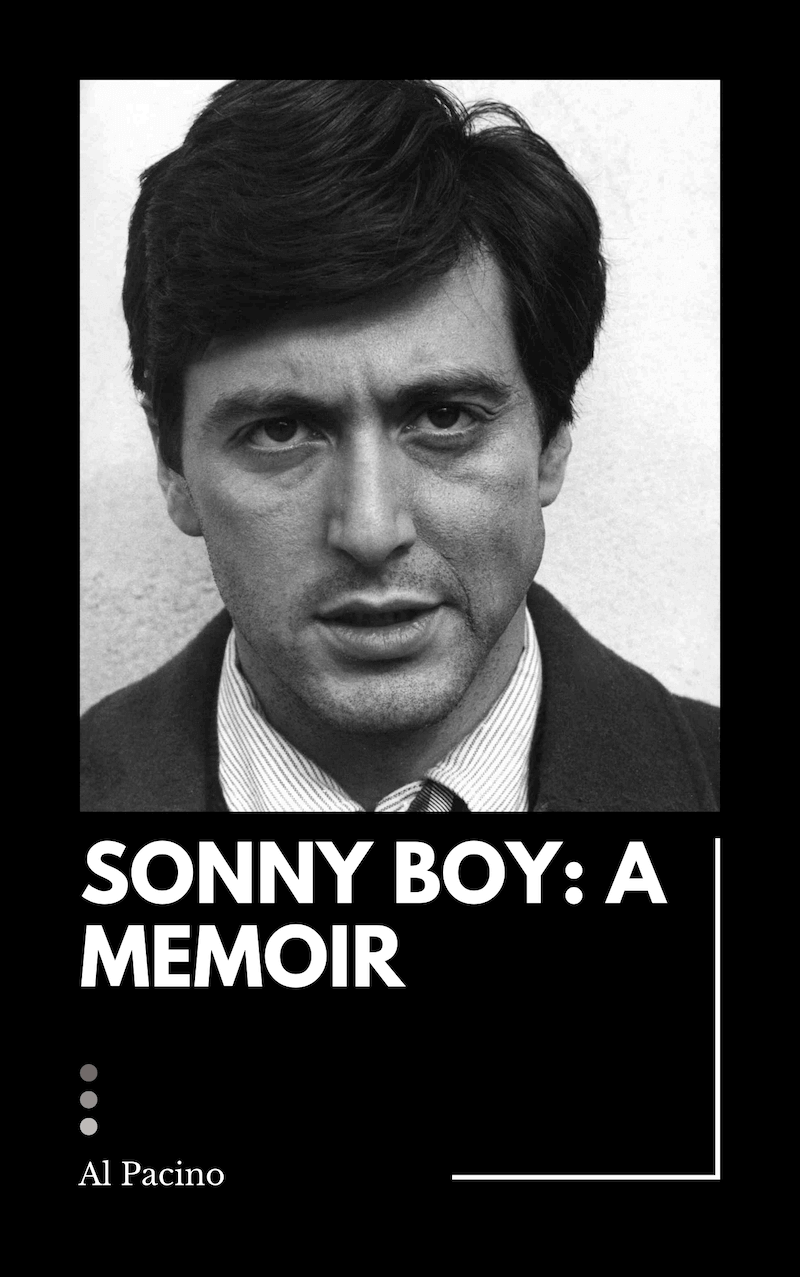
Sonny Boy: A Memoir Book Summary
This Sonny Boy: A Memoir Book Summary covers the key ideas, lessons, and takeaways in about 20 minutes.
Pacino’s story is one of contrasts—a shy boy from a working-class Sicilian family who grew into the fiery, audacious personas of Michael Corleone and Tony Montana. Yet, amidst fame and accolades, he remained an artist at heart, always prioritizing the craft over the glitz. Whether it was recreating scenes in his childhood apartment or methodically preparing for complex roles, Pacino’s career epitomises the relentless pursuit of excellence.
His legacy goes beyond the awards and iconic roles—it lies in his ability to fully embody his characters, making them unforgettable. Pacino's life teaches us that success isn’t just about achievements; it’s about embracing challenges, learning from setbacks, and staying true to one’s vision. As he continues to explore new roles and inspire future generations, his career stands as a testament to the enduring power of passion and authenticity.
Helps with these goals
Want the complete 20-minute summary?
- Full structured summary
- Video Summary
- Podcast Summary
- Audio summary
- Key takeaways
- Exercises
- Quiz
- Highlights and notes
- Ask the book with AI
What is in the Sonny Boy: A Memoir book summary?
Below is a preview of Sumizeit’s expert-written summary of Sonny Boy: A Memoir by Al Pacino. The full summary covers the book’s key ideas in text, audio, and video.
In Sonny Boy, Al Pacino reflects on his storied life, from his Bronx upbringing to his legendary status in Hollywood. The memoir chronicles the trials, triumphs, and artistic discoveries that shaped him into one of the most revered actors of his generation. Growing up in the working-class neighborhoods of New York City, Pacino’s early experiences were marked by loss, resilience, and an unrelenting passion for performance. He draws readers into the emotional landscape of his formative years, revealing the personal struggles that defined his journey to stardom.
Pacino’s career trajectory is intimately tied to the rise of method acting, a discipline he embraced at The Actors Studio under the mentorship of legends like Lee Strasberg. With candid reflections, he dissects his breakthrough as Michael Corleone in The Godfather trilogy, his transformation into Tony Montana in Scarface, and his commitment to deeply nuanced characters in films like Dog Day Afternoon and Scent of a Woman.
The book goes beyond Pacino’s professional milestones to explore the man behind the fame, his insecurities, and his continuous pursuit of artistic truth. With a blend of wit and introspection, Sonny Boy provides a profound look into a career built on risk, relentless preparation, and an enduring love for the craft. Readers gain unparalleled insight into Pacino’s creative process, his relationships with directors and co-stars, and the legacy he hopes to leave behind.
Early Life
Alfredo James Pacino was born in New York City on April 25, 1940, the only child of Italian immigrants from Sicily. His parents separated when he was just a toddler, leaving Pacino to be raised by his mother and grandparents in the South Bronx. His father relocated to California, leaving a significant void in Pacino’s early life. Despite being shy as a child, young Al began to show an interest in acting during his teenage years, often entertaining his family and imitating characters from movies he admired.
He was accepted into the prestigious High School of Performing Arts, but the structured academics of high school proved difficult for Pacino. Struggling with poor grades and a lack of focus, he dropped out at 17, leaving behind traditional education to find his path in the world. Over the next few years, Pacino worked a variety of jobs, including janitor and messenger, all while dreaming of an acting career.
In 1959, Pacino moved to Greenwich Village, a haven for aspiring artists, and began studying theatre at the Herbert Berghof Studio. His dedication paid off when he landed his first significant role in the 1963 off-Broadway production of Hello, Out There by William Saroyan. The turning point came in 1966 when Pacino was accepted into the Actors Studio, studying under the legendary Lee Strasberg. Immersed in Strasberg’s Method acting approach, Pacino honed his craft and began building a reputation as a promising talent.
His breakthrough came with his performance in the 1969 Broadway production of Does a Tiger Wear a Necktie?, for which he won a Tony Award.
Want the complete 20-minute summary?
- Full structured summary
- Video Summary
- Podcast Summary
- Audio summary
- Key takeaways
- Exercises
- Quiz
- Highlights and notes
- Ask the book with AI
Who should read Sonny Boy: A Memoir?
Sonny Boy: A Memoir is essential for aspiring actors seeking inspiration from one of cinema's greatest talents, film enthusiasts wanting to understand the making of iconic movies like The Godfather and Scarface, and anyone drawn to stories of perseverance and artistic excellence. It's also valuable for students of method acting, Al Pacino fans eager to learn his personal journey, and readers interested in how working-class immigrants pursued their dreams in America.
Why does Sonny Boy: A Memoir matter?
Al Pacino's memoir offers rare insight into the creative process behind some of cinema's most transformative performances and reveals how dedication to craft can overcome industry skepticism and personal doubt. In an era of celebrity culture, Sonny Boy reminds us that true artistic legacy is built on integrity, relentless preparation, and an unwavering commitment to storytelling rather than fame alone. The book also documents the rise of method acting in American cinema and its profound impact on modern film and performance.
What are the key themes in Sonny Boy: A Memoir?
- The power of perseverance in the face of rejection and doubt
- Method acting as a discipline for accessing emotional truth
- Humble origins and the immigrant experience shaping artistic vision
- The tension between commercial demands and artistic integrity
- Vulnerability and emotional authenticity as performance tools
- The journey from stage to screen and back again
- Mentorship and the influence of legendary teachers like Lee Strasberg
What are the key lessons from the Sonny Boy: A Memoir book summary?
Doubt from others is not a barrier to greatness
Despite being dismissed by studio executives and producers as too short and unproven, Pacino became one of cinema's greatest actors because his director believed in him and he believed in himself. Sometimes the most transformative opportunities come when you're least expected to succeed.
Preparation without rigidity creates authentic spontaneity
Pacino's philosophy is that meticulous preparation—from studying accent to mastering a gun—creates the foundation for genuine, instinctive performance. The preparation paradoxically allows actors to be more free and spontaneous when the cameras roll.
Method acting demands personal vulnerability
By drawing from his own emotional landscape and life experiences, Pacino brought depth to his characters that transcended surface acting. True character work requires exposing your own wounds and insecurities to create believable performances.
Commercial success and artistic integrity can coexist
While Tony Montana became a cultural phenomenon, Pacino never compromised the character's tragic complexity for commercial appeal. The film's enduring power comes from its refusal to moralize or simplify its story.
The stage is the heartbeat of an actor's craft
Throughout his career, Pacino returned to theatre because it provided the intimate, immediate feedback and creative freedom that cinema couldn't. Stage work kept him grounded in the fundamentals of his art.
Mentorship shapes artistic philosophy for life
Lee Strasberg's influence on Pacino extended far beyond specific techniques; it became a foundational philosophy about how to approach acting as a search for truth. A great mentor imparts principles, not just methods.
Setbacks and rejections are part of the journey, not barriers to it
From dropping out of high school to being rejected for major roles, Pacino's path included numerous apparent failures. Each setback provided learning and resilience that strengthened his eventual success.
Characters reveal themselves through physical and vocal specificity
Whether perfecting a Cuban accent for Tony Montana or mastering blindness for Frank Slade, Pacino understood that the specific, granular details of a character's physicality unlock psychological truth. Attention to detail is not superficial—it's transformative.
The pursuit of excellence is a lifelong practice, not a destination
Even in his eighties, Pacino continues seeking roles that challenge and test him. Artistic growth isn't something you achieve; it's something you practice and refine throughout your life.
Quiet intensity can be more powerful than bombast
Michael Corleone's simmering rage and controlled presence proved more captivating than overt displays of power. Sometimes the most memorable performances come from what's held back, not what's released.
Directors and actors thrive through trust and mutual vision
Coppola's belief in Pacino despite industry pressure, and Pacino's willingness to trust Coppola's vision, created one of cinema's greatest collaborations. Great performances emerge from relationships, not just individual talent.
Working-class roots ground you in authenticity
Pacino's Bronx upbringing and early jobs as a janitor and messenger kept him connected to real human experience, which became the wellspring for his character work. Privilege can sometimes insulate you from the emotional truths great acting requires.
The moment you stop searching is the moment you lose the magic
Pacino's philosophy that acting is a perpetual process of discovery means that complacency is the enemy of great performance. True artists maintain a beginner's mind regardless of their accomplishments.
Artistic projects outside your main medium sustain creative vitality
Looking for Richard and Pacino's Shakespeare explorations kept him engaged as an artist beyond commercial film roles. Diversifying artistic expression prevents creative staleness and reignites passion.
Loss and absence shape emotional depth
Pacino's early experience of his father's departure left an emotional void that he transformed into his craft. Sometimes the wounds we carry become the instruments through which we create meaningful art.
Winning accolades matters less than the integrity of your work
Pacino's famous quip at winning his Oscar—'Well, you broke my streak'—suggests that the validation he truly sought came from within himself and his craft, not from external awards. Recognition is meaningful, but it shouldn't drive your choices.
Want the complete 20-minute summary?
- Full structured summary
- Video Summary
- Podcast Summary
- Audio summary
- Key takeaways
- Exercises
- Quiz
- Highlights and notes
- Ask the book with AI
How can you apply ideas from Sonny Boy: A Memoir?
- Study your craft relentlessly: Just as Pacino trained extensively for specific roles, invest deep preparation time in any major challenge, whether professional or personal, to build confidence and authenticity.
- Embrace mentorship: Seek out teachers and guides who can shape your foundational philosophy, not just teach you techniques. Their influence will guide you long after formal instruction ends.
- Use personal experience as creative material: Mine your own emotional history and vulnerabilities to bring depth to your work and connect more authentically with others.
- Balance specialized focus with diverse exploration: Maintain a core practice while exploring adjacent creative projects to prevent stagnation and discover unexpected sources of inspiration.
- Stay curious and question yourself: Adopt Pacino's philosophy that the moment you stop searching is the moment you lose the magic. Regularly challenge your assumptions and explore new territory.
- Build trust with collaborators: Invest in relationships with directors, colleagues, or partners who share your vision, and be willing to advocate for collective goals even when outside pressure is intense.
- Let preparation enable spontaneity: Use rigorous preparation not as a script to follow robotically, but as a foundation that allows you to be more present and responsive in the moment.
- Ground yourself in working reality: Stay connected to authentic human experience through diverse work and relationships; avoid becoming isolated in rarefied circles that disconnect you from the real world.
What common mistakes do readers make with Sonny Boy: A Memoir?
- Assuming early rejection or criticism means you're not cut out for your chosen path—many gatekeepers lack vision or are driven by commercial calculations rather than artistic merit.
- Letting external validation (awards, roles, praise) become your primary motivation rather than the integrity and authenticity of your work itself.
- Over-intellectualizing your craft to the point where spontaneity and genuine emotion are lost—preparation should unlock freedom, not constrain it.
- Abandoning your artistic foundation (such as stage work for actors) in pursuit of commercial opportunities; losing touch with the core practices that keep you grounded and vital.
Sumizeit Exercises Apply what you've learned
Turn ideas from Sonny Boy: A Memoir into action with a short guided reflection: identify the biggest takeaway, connect it to your life, and commit to one step you can take in the next 24 hours.
What is the expert analysis of Sonny Boy: A Memoir?
Overview
Sonny Boy: A Memoir is a compelling autobiographical work by Al Pacino, one of the most influential actors in modern cinematic history. Known for his transformative performances and deep commitment to method acting, Pacino offers readers an intimate glimpse into his life—from his humble beginnings in the Bronx to his rise as a Hollywood legend. This memoir stands out not only for its rich recounting of iconic film roles but also for its exploration of the artistic philosophy and personal struggles that have shaped Pacino’s enduring career.
Core Thesis
At its core, Sonny Boy posits that true artistic mastery arises from relentless dedication, emotional vulnerability, and an unyielding pursuit of authenticity. Pacino argues that acting is not merely a profession but a profound process of self-discovery and transformation. Through his journey, the memoir illustrates how personal adversity, rigorous preparation, and a deep connection to one’s craft coalesce to create performances that resonate across generations and cultural contexts.
Strengths
- Intimate and Candid Narrative: Pacino’s willingness to reveal his insecurities, early struggles, and creative rituals lends the memoir a rare emotional depth, making it resonate beyond standard celebrity autobiographies.
- Insight into Method Acting: The detailed exploration of the method acting discipline, including Pacino’s time at The Actors Studio, offers invaluable perspectives for actors and enthusiasts interested in the craft’s transformative potential.
- Contextualizing Iconic Roles: The memoir enriches understanding of landmark films like The Godfather and Scarface by recounting the casting controversies, preparation processes, and cultural impact behind these performances.
- Balanced Focus on Personal and Professional Life: Pacino’s reflections on balancing fame with personal integrity and artistic exploration provide a nuanced portrait of a man committed to authenticity in all facets of life.
- Legacy and Influence: The book situates Pacino’s work within broader cultural and artistic movements, highlighting his role in shaping contemporary cinema and pop culture.
Critiques & Counterarguments
- Narrative Subjectivity: As with many memoirs, the book occasionally leans heavily on personal perspective, which may gloss over or simplify complex industry dynamics and collaborative contributions from others.
- Selective Emphasis: While Pacino’s focus on method acting is illuminating, it risks overshadowing other equally valid acting methodologies and schools of thought that challenge or complement his approach.
- Potential Romanticization of Struggle: The memoir’s portrayal of adversity as a necessary catalyst for artistic greatness may inadvertently perpetuate a trope that undervalues privilege and structural support in creative success.
- Competing Research on Acting Techniques: Contemporary performance studies emphasize a diversity of acting techniques—including improvisation, physical theatre, and non-Western traditions—that complicate the singular elevation of method acting presented here.
- Reception and Cultural Impact Nuance: The depiction of films like Scarface as unambiguously transformative may underplay ongoing debates about their portrayal of violence, ethnicity, and the American Dream, which remain contested in critical discourse.
Who Should Read This
- Aspiring Actors and Theatre Students: Those seeking an insider’s view of method acting and the dedication required to excel in performance arts will find this memoir both instructive and inspiring.
- Film Scholars and Enthusiasts: Readers interested in the behind-the-scenes evolution of landmark American films and the cultural forces shaping Hollywood’s golden era will appreciate Pacino’s firsthand accounts.
- Cultural Historians: The memoir offers valuable insights into the intersections of ethnicity, class, and artistry in 20th-century America, particularly through the lens of Italian-American identity and urban experience.
- General Readers Drawn to Biographical Narratives: Anyone fascinated by stories of perseverance, creative passion, and personal transformation will find Sonny Boy a richly rewarding read.
- Practitioners and Students of Artistic Disciplines: Beyond acting, the book’s reflections on discipline, risk-taking, and authenticity hold lessons applicable across creative fields.
Frequently asked questions about the Sonny Boy: A Memoir book summary
What is Sonny Boy: A Memoir about?
Sonny Boy: A Memoir is Al Pacino's candid account of his extraordinary journey from a working-class Bronx upbringing to becoming one of cinema's greatest actors. The book chronicles his early struggles, his training under legendary mentor Lee Strasberg at the Actors Studio, his iconic roles in films like The Godfather and Scarface, and his unwavering commitment to artistic integrity throughout a career that has spanned decades.
Who should read Sonny Boy: A Memoir?
Sonny Boy is essential for aspiring actors seeking inspiration and insights into the craft, film enthusiasts interested in understanding the making of cinematic masterpieces, and Al Pacino fans wanting an intimate look at his personal journey. It's also valuable for anyone interested in method acting, stories of perseverance, and how passion and integrity can overcome industry skepticism and personal doubt.
What are the main takeaways from Sonny Boy: A Memoir?
The main takeaways include the importance of perseverance in the face of rejection, the power of mentorship in shaping artistic philosophy, and the value of maintaining integrity over commercial concerns. Pacino's life demonstrates that true artistic legacy comes from relentless preparation, emotional vulnerability, and a lifelong commitment to the pursuit of excellence and truth in one's craft.
How did Al Pacino get cast as Michael Corleone in The Godfather?
Despite being a relative unknown and facing strong industry opposition, Al Pacino was cast as Michael Corleone because director Francis Ford Coppola believed in his raw talent and vision for the role. Pacino's portrayal of Michael's quiet intensity and simmering rage transformed what could have been a secondary character into one of cinema's most iconic performances, proving Coppola's faith in him was justified.
What does Pacino say about method acting?
In Sonny Boy, Pacino credits method acting with transforming his approach to performance. He describes it as a discipline of deep character exploration that draws from personal emotional experience to create authentic portrayals. His philosophy is that meticulous preparation paradoxically enables genuine spontaneity, and that acting is fundamentally about accessing and expressing emotional truth on screen.
How did Pacino prepare for his iconic roles?
Pacino's preparation was meticulously detailed: for Scarface, he immersed himself in Cuban culture to perfect the accent and physicality; for Scent of a Woman, he trained extensively to handle firearms while blindfolded to authentically portray blindness. His approach demonstrates that preparation isn't about memorizing lines—it's about inhabiting every aspect of a character's reality.
What is Pacino's philosophy on acting and performance?
Pacino views acting as an all-consuming art form centered on the pursuit of truth rather than fame or technique alone. He believes that the moment you stop searching for deeper understanding is the moment you lose the magic, that vulnerability and courage are essential tools, and that stage work remains the heartbeat of an actor's craft regardless of film success. For him, performance is fundamentally about being instinctive, authentic, and forever committed to discovery.
About Sumizeit
Sumizeit is a profitable Scomy LLC company based in Miami, Florida. It has been helping readers learn from nonfiction books for 7 years with expert-written summaries in text, audio, podcast, and video.
Want the complete 20-minute summary?
- Full structured summary
- Video Summary
- Podcast Summary
- Audio summary
- Key takeaways
- Exercises
- Quiz
- Highlights and notes
- Ask the book with AI
Here's why readers love Sumizeit
Join thousands of learners getting smarter every day
"Great experience. Detailed summaries. Loved the gamification feature. Makes learning fun. Good customer service. I recommend Sumizeit to anyone. You'll learn a lot."
"I always felt busy but still wanting to keep up with the book discussion in my friend group. This was a great supplement to help me keep reading the books I find fun while keeping up with important books."
"I love this website. Instead of scrolling social media, I find myself learning a lot. I use it everyday. I recommend this app for anyone who is too busy and wants to get up to speed with their favorite books."
Sonny Boy: A Memoir Book Summary PDF
Looking for a Sonny Boy: A Memoir Book Summary PDF you can save and revisit offline? Our Sonny Boy: A Memoir Book Summary PDF captures the book’s core ideas in a clean, printable format — the key frameworks, takeaways, and structure without the fluff. Download the Sonny Boy: A Memoir Book Summary PDF when you want a reference you can annotate, share with your team, or review on the go. Get your Sonny Boy: A Memoir Book Summary PDF from the download page below.
Download Sonny Boy: A Memoir Book Summary PDFPeople also liked these summaries
Readers who explored Sonny Boy: A Memoir often enjoyed these titles next.



Want the complete 20-minute summary?
- Full structured summary
- Video Summary
- Podcast Summary
- Audio summary
- Key takeaways
- Exercises
- Quiz
- Highlights and notes
- Ask the book with AI
Featured Book Titles
Popular Book Summaries at sumizeit, leading book summary app