


As an Amazon Associate, Sumizeit earns from qualifying purchases.
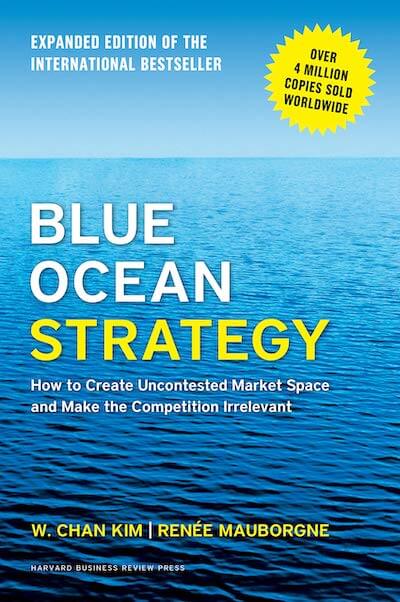
Blue Ocean Strategy Book Summary
This Blue Ocean Strategy Book Summary covers the key ideas, lessons, and takeaways in about 20 minutes.
Helps with these goals
Want the complete 20-minute summary?
- Full structured summary
- Video Summary
- Podcast Summary
- Audio summary
- Key takeaways
- Exercises
- Quiz
- Highlights and notes
- Ask the book with AI
What is in the Blue Ocean Strategy book summary?
Below is a preview of Sumizeit’s expert-written summary of Blue Ocean Strategy by W. Chan Kim. The full summary covers the book’s key ideas in text, audio, and video.
The key to making your business soar is to navigate through uncharted waters. The marketplace is full of gaps that entrepreneurs can easily fill.
But, how?
“We call it value innovation because instead of focusing on beating the competition, you focus on making the competition irrelevant by creating a leap in value for buyers and your company, thereby opening up new and uncontested market space.”- W. Chan Kim
In “Blue Ocean Strategy: How to Create Uncontested Market Space and Make the Competition Irrelevant” by. W. Chan Kim and Renee A. Mauborgne, you will learn how to create your own ‘blue ocean’ business that will rise above your competitors through finding an untouched customer base that will lead to expansive growth opportunities.
Through these insights, you will discover why just creating a new product isn’t enough to rise above the market.
Create A New Market
To build a blue ocean business, you must tap into a market that is untouched, which requires finding new value in what you’re selling and what people need.
Building a blue ocean business allows you to enter into a new marketplace without any competition.
For success, the business must be aligned. The price of the product or service for the consumer, the usefulness, and the cost for the company must all make sense.
A blue ocean business must work to keep their costs to a minimum while still creating value for their consumers. They must also keep their opportunities high and their risks low.
It’s important to note that not every company is meant to be a blue ocean company, there are some companies that may do better amongst other competitors.
A solid example of a blue ocean business is Tesla Motors. Instead of competing with the traditional top-dogs of the automobile world such as GM, Ford, and Chevrolet, Tesla decided to develop an electric car. This was the first of its kind because of the way it was marketed to consumers appeal rather than appealing to green technology and government regulations.
What Is A Red Ocean Business?
A red ocean business tends to focus on their competition. This oftentimes leads to them resembling their competition.
Red ocean businesses should become blue ocean businesses by observing the gaps in the marketplace and taking notes on what the competition isn’t doing rather than what they are doing. A good strategy is to look at market trends and try to predict what is needed.
Blue ocean companies look for a new group of consumers rather than trying to appeal to the ones their competition is serving.
“Blue ocean strategy challenges companies to break out of the red ocean of bloody competition by creating uncontested market space that makes the competition irrelevant.”- W. Chan Kim
Zocdoc is a prime example of a blue ocean company. There were already many scheduling programs in the market, however, none of them were consumer-faced, which means the patient still had to go through the doctor’s office.
Want the complete 20-minute summary?
- Full structured summary
- Video Summary
- Podcast Summary
- Audio summary
- Key takeaways
- Exercises
- Quiz
- Highlights and notes
- Ask the book with AI
Who should read Blue Ocean Strategy?
Blue Ocean Strategy is ideal for entrepreneurs, business leaders, and managers who want to break free from cutthroat competition and create new market opportunities. If you're tired of competing on price and features in crowded markets, or you're looking to differentiate your company by serving unmet customer needs, this book provides the framework you need. It's also valuable for innovation teams and strategists who want to think beyond incremental improvements.
Why does Blue Ocean Strategy matter?
In today's hyper-competitive global marketplace, traditional competitive advantage is eroding faster than ever. Blue Ocean Strategy by W. Chan Kim and Renee A. Mauborgne offers a proven methodology to escape the commoditization trap by creating uncontested market space where competition becomes irrelevant. With social media amplifying customer voices and technology enabling rapid market disruption, companies must learn to innovate strategically rather than simply outspend rivals—making this book essential reading for sustainable growth.
What are the key themes in Blue Ocean Strategy?
- Value innovation over competitive advantage
- Creating uncontested market space (blue oceans)
- Eliminating red ocean thinking and bloody competition
- Strategic focus on non-customers and untapped markets
- Alignment of price, value, and cost
- Organizational execution and fair process leadership
- Continuous vision revision in changing markets
What are the key lessons from the Blue Ocean Strategy book summary?
Focus on Value Innovation, Not Competition
Instead of beating competitors at their game, create a leap in value for buyers by making competition irrelevant. This shift in mindset is the foundation of building a sustainable, high-growth business.
Identify and Target Non-Customers
Blue ocean businesses succeed by reaching people outside the traditional customer base rather than fighting over existing customers. Look for groups of people who've been excluded or overlooked by current market offerings.
The Four Questions Framework
Ask what to eliminate to reduce costs, what to reduce below industry standards, what to raise above standards, and what to create that the industry has never offered. This framework clarifies your differentiation.
Break Industry Conventions
Blue ocean companies don't follow preestablished rules or industry structures. Challenge assumptions about how things 'should be done' and reinvent the marketplace around customer needs.
Align Price, Value, and Cost
A viable blue ocean strategy requires that your pricing attracts customers while remaining profitable, your value proposition is compelling, and your cost structure supports both. All three must work in harmony.
Create a Clear, Memorable Tagline
If you can't articulate your company's mission in a quick, catchy phrase, your value proposition may be too complicated. A strong tagline signals that your offering is intuitive and accessible.
Visualize Your Strategy for Team Alignment
Use charts, graphs, vision boards, and visual media to communicate your blue ocean strategy to all team members. Visual learning combined with verbal instruction increases retention and buy-in.
Implement Fair Process Leadership
Engage employees in decision-making, be transparent about company direction, and explain the reasoning behind choices. Fair process builds team commitment and reduces resistance to strategic changes.
Secure Buy-In Before Execution
Blue ocean strategies fail without organizational alignment. Every team member must understand the strategy and be willing to execute it consistently, or the competitive advantage will not materialize.
Overcome Internal Resistance Strategically
The biggest obstacles to blue ocean transformation are internal: employee skepticism, limited resources, low motivation, and politics. Skilled leaders persuade stakeholders to embrace change rather than forcing it.
Monitor the Marketplace for Mimicry
Once you've created a blue ocean, competitors will attempt to copy your niche. Stay alert for market changes and be prepared to evolve your strategy before the blue ocean turns red again.
Continuously Reevaluate Your Long-Term Vision
Markets and consumer needs shift constantly due to technology and social change. Blue ocean companies must regularly reassess their vision and pivot strategically to maintain relevance.
Leverage Customer Feedback as Strategic Intelligence
Social media, reviews, and online platforms give customers unprecedented power to shape market perception. Use this transparency as an advantage by delivering exceptional experiences customers want to champion.
Think Globally, Not Just Locally
The internet expands your addressable market beyond local boundaries. Blue ocean companies must consider global customer needs and competition from the outset.
Use Non-Customers as a Market Expansion Strategy
There are typically more non-customers than existing customers. By designing offerings that overcome barriers to entry for these groups, you dramatically expand total addressable market.
Profit Through Simplicity and Accessibility
Blue ocean businesses often succeed by making products or services more convenient, affordable, or understandable than competitors. Focus on removing friction rather than adding complexity.
Balance Cost Reduction With Value Creation
Eliminate services or features that cost the company significantly but provide little customer value. This allows you to lower prices while maintaining profitability and creating more value.
Avoid Obsessing Over Daily Metrics and Competitors
Blue ocean companies stay focused on their strategic vision rather than reacting to short-term performance data or competitive moves. This mental discipline prevents distraction from the long-term mission.
Not Every Company Is Cut Out for Blue Ocean Strategy
Some businesses may thrive as specialized red ocean competitors rather than attempting disruptive innovation. Assess your company's capabilities, resources, and market conditions before committing to a blue ocean approach.
Want the complete 20-minute summary?
- Full structured summary
- Video Summary
- Podcast Summary
- Audio summary
- Key takeaways
- Exercises
- Quiz
- Highlights and notes
- Ask the book with AI
How can you apply ideas from Blue Ocean Strategy?
- Conduct a market gap analysis to identify underserved customer segments or non-customers in your industry
- Apply the four questions framework to your current product or service to determine what to eliminate, reduce, raise, and create
- Develop a compelling one-line tagline that captures your value proposition and test it with potential customers
- Create visual strategy maps and dashboards to communicate your blue ocean direction to all stakeholders
- Implement fair process in your leadership approach by involving team members in strategic decisions and explaining the rationale behind changes
- Design customer feedback loops through social media and review platforms to identify emerging market needs and emerging competitors
- Benchmark non-customer barriers and design offerings that remove them to expand your addressable market
What common mistakes do readers make with Blue Ocean Strategy?
- Competing primarily on price or features instead of creating fundamentally new value and market space
- Focusing exclusively on existing customers while ignoring the larger pool of non-customers who could benefit from your offering
- Failing to align pricing, value delivery, and cost structure, resulting in a strategy that isn't profitable or scalable
- Launching a blue ocean strategy without securing organizational buy-in and fair process engagement, leading to disengaged teams and poor execution
- Becoming complacent after initial success and failing to monitor the market for competitors entering and copying your blue ocean
Sumizeit Exercises Apply what you've learned
Turn ideas from Blue Ocean Strategy into action with a short guided reflection: identify the biggest takeaway, connect it to your life, and commit to one step you can take in the next 24 hours.
What is the expert analysis of Blue Ocean Strategy?
Overview
Blue Ocean Strategy, authored by W. Chan Kim and Renee A. Mauborgne, stands as a seminal work in the fields of business strategy and innovation. Kim, a distinguished professor at INSEAD and co-director of the Blue Ocean Strategy Institute, brings academic rigor and practical insight to this influential text. Since its publication in 2005, the book has reshaped how organizations conceptualize competition and market creation, urging leaders to transcend traditional boundaries and seek uncontested market spaces—“blue oceans”—rather than battling rivals in saturated “red oceans.” Its significance lies in offering a strategic framework that combines creativity with economic logic, making it a cornerstone for entrepreneurs, executives, and scholars alike.
Core Thesis
The central argument of Blue Ocean Strategy is that companies achieve sustainable growth not by outperforming competitors within existing markets, but by creating new, uncontested market spaces that render competition irrelevant. This is achieved through “value innovation,” a simultaneous pursuit of differentiation and low cost, which unlocks new demand and opens expansive growth opportunities. The strategy emphasizes identifying latent customer needs, eliminating unnecessary features or costs, and aligning the entire business model—price, utility, and cost structure—to deliver unprecedented value. By focusing on non-customers and market gaps, firms can break free from the zero-sum game of competition and chart new paths to profitability and market leadership.
Strengths
- Innovative Conceptual Framework: The book introduces a clear and actionable framework that challenges conventional competitive strategies, encouraging firms to think beyond rivalry and commoditization.
- Practical Tools and Questions: The inclusion of diagnostic tools, such as the Four Actions Framework (eliminate, reduce, raise, create), provides managers with concrete steps to reconstruct market boundaries.
- Compelling Case Studies: Real-world examples like Tesla, Zocdoc, and Petfinder illustrate the applicability of the strategy across diverse industries, enhancing the book’s credibility and accessibility.
- Emphasis on Execution and Organizational Alignment: The authors stress the importance of internal buy-in, visualization techniques, and “fair process” in overcoming organizational inertia and resistance to change.
- Holistic View of Market Dynamics: The book acknowledges the evolving role of consumers, technology, and social media in shaping market opportunities, underscoring the need for continuous strategic renewal.
Critiques & Counterarguments
- Overgeneralization of Market Creation: While the concept of uncontested market space is compelling, the book sometimes oversimplifies the difficulty of identifying and sustaining such spaces, especially in highly dynamic or regulated industries.
- Limited Attention to Competitive Response: The strategy underestimates how quickly incumbents can imitate innovations or erect barriers, potentially eroding the blue ocean advantage.
- Evidence Base and Empirical Validation: Critics have noted that some case studies are selectively presented, lacking rigorous longitudinal data to prove sustained success attributable solely to blue ocean strategies.
- Competing Schools of Thought: Traditional competitive strategy frameworks, such as Michael Porter’s Five Forces, emphasize the inevitability of competition and the importance of positioning within existing markets. These perspectives argue that blue ocean strategies may be risky or infeasible for many firms.
- Real-World Constraints: Organizational inertia, resource limitations, and market unpredictability often inhibit the radical innovation and alignment the book advocates, suggesting that blue ocean creation may be more aspirational than universally practical.
Who Should Read This
Blue Ocean Strategy is essential reading for senior executives, entrepreneurs, innovation leaders, and strategists seeking to break free from cutthroat competition and foster transformative growth. It is particularly valuable for those operating in mature or highly competitive industries who aspire to identify new customer segments and redefine market boundaries. Additionally, academics and students of business strategy will find its conceptual contributions and case studies enriching. However, readers should approach the book with a critical mindset, recognizing the challenges of implementation and the necessity to adapt its principles to specific organizational contexts.
Frequently asked questions about the Blue Ocean Strategy book summary
What is Blue Ocean Strategy about?
Blue Ocean Strategy by W. Chan Kim and Renee A. Mauborgne explains how companies can escape fierce competition by creating uncontested market space rather than competing in crowded industries. The book contrasts 'blue oceans' (new, untapped markets) with 'red oceans' (existing competitive industries where companies fight over the same customers). It provides frameworks and real-world examples for identifying market gaps, innovating value, and building sustainable competitive advantage.
Who should read Blue Ocean Strategy?
This book is essential for entrepreneurs, business leaders, managers, and strategists who want to differentiate their companies and achieve breakthrough growth. It's particularly valuable for those struggling in commoditized markets, innovation teams seeking new frameworks, and executives responsible for long-term strategic direction. Anyone interested in business strategy and competitive advantage will benefit from Kim and Mauborgne's methodology.
What are the main takeaways from Blue Ocean Strategy?
The core takeaways are: focus on value innovation rather than outcompeting rivals, identify and serve non-customers to expand your market, use the four questions framework to clarify what to eliminate and create, align your price, value, and cost structure, secure organizational buy-in through fair process leadership, and continuously reevaluate your strategy as markets evolve. Success requires both strategic insight and disciplined execution.
What is the difference between blue ocean and red ocean strategy?
Red ocean strategy involves competing directly with existing competitors in established markets, leading to price wars and commoditization. Blue ocean strategy focuses on creating new market space where competition becomes irrelevant by serving unmet customer needs. Red oceans are bloody and congested; blue oceans are vast and full of growth potential.
Can you give examples of successful blue ocean businesses?
Notable examples include Tesla, which revolutionized the automotive industry by marketing electric cars as desirable technology rather than just an environmental choice; Zocdoc, which created the first consumer-facing medical appointment scheduling app; Petfinder.com, which made pet adoption accessible and comfortable online; and National Geographic, which expanded into television when competitors threatened its print magazine niche. Each identified gaps in existing markets and created entirely new value propositions.
What are the four questions of Blue Ocean Strategy?
The four questions are: What factors the industry takes for granted should be eliminated to reduce costs? What factors should be reduced below industry standards? What factors should be raised above industry standards? What factors should be created that the industry has never offered? Answering these clarifies your strategy for differentiation and value creation.
How do you implement Blue Ocean Strategy in an organization?
Implementation requires securing organizational buy-in through fair process leadership, which means engaging employees in decisions, being transparent about direction, and delegating clearly. Visualize your strategy using charts and vision boards, ensure every team member can articulate the mission in simple terms, and align price, value, and cost. Monitor the market for competitors entering your blue ocean and be prepared to evolve your vision as market conditions change.
What obstacles prevent companies from successfully executing blue ocean strategy?
The four main obstacles are internal resistance to change, limited resources for transformation, lack of motivation from team members, and organizational politics. Leaders overcome these by building fair process, persuading stakeholders rather than forcing change, clearly communicating the vision, and demonstrating how the new strategy serves employees' interests as well as the company's.
About Sumizeit
Sumizeit is a profitable Scomy LLC company based in Miami, Florida. It has been helping readers learn from nonfiction books for 7 years with expert-written summaries in text, audio, podcast, and video.
Want the complete 20-minute summary?
- Full structured summary
- Video Summary
- Podcast Summary
- Audio summary
- Key takeaways
- Exercises
- Quiz
- Highlights and notes
- Ask the book with AI
Here's why readers love Sumizeit
Join thousands of learners getting smarter every day
"Great experience. Detailed summaries. Loved the gamification feature. Makes learning fun. Good customer service. I recommend Sumizeit to anyone. You'll learn a lot."
"I always felt busy but still wanting to keep up with the book discussion in my friend group. This was a great supplement to help me keep reading the books I find fun while keeping up with important books."
"I love this website. Instead of scrolling social media, I find myself learning a lot. I use it everyday. I recommend this app for anyone who is too busy and wants to get up to speed with their favorite books."
Blue Ocean Strategy Book Summary PDF
Looking for a Blue Ocean Strategy Book Summary PDF you can save and revisit offline? Our Blue Ocean Strategy Book Summary PDF captures the book’s core ideas in a clean, printable format — the key frameworks, takeaways, and structure without the fluff. Download the Blue Ocean Strategy Book Summary PDF when you want a reference you can annotate, share with your team, or review on the go. Get your Blue Ocean Strategy Book Summary PDF from the download page below.
Download Blue Ocean Strategy Book Summary PDFPeople also liked these summaries
Readers who explored Blue Ocean Strategy often enjoyed these titles next.





Want the complete 20-minute summary?
- Full structured summary
- Video Summary
- Podcast Summary
- Audio summary
- Key takeaways
- Exercises
- Quiz
- Highlights and notes
- Ask the book with AI
Featured Book Titles
Popular Book Summaries at sumizeit, leading book summary app