

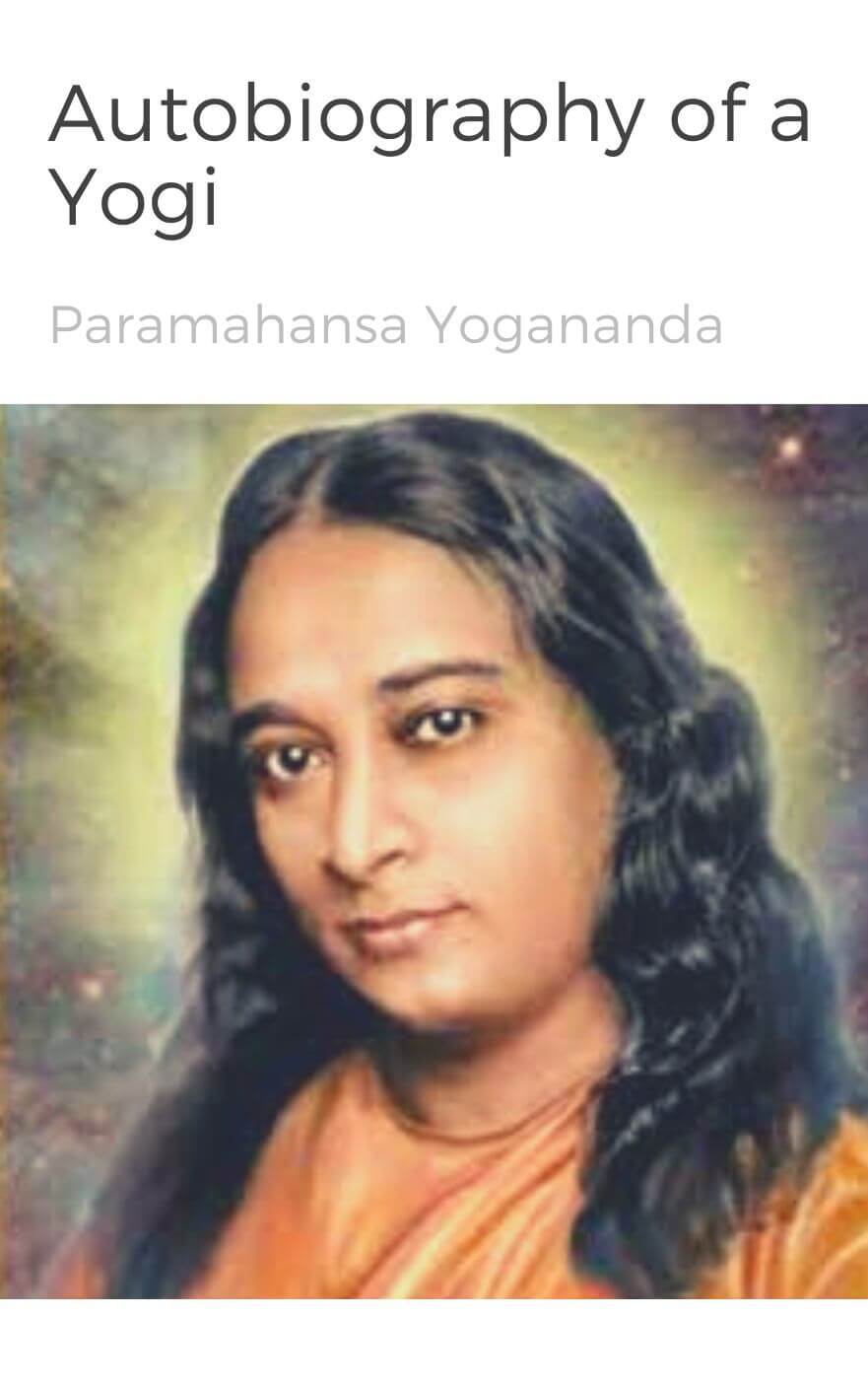
"Autobiography of a Yogi" is a spiritual memoir by Paramahansa Yogananda, first published in 1946. It tells the story of Yogananda's life, from his childhood in India to his journey to the United States as a young man, where he founded the Self-Realization Fellowship.
Throughout the book, Yogananda shares his experiences with various spiritual teachers and gurus, including his own guru, Sri Yukteswar. He also recounts his experiences with miraculous events and supernatural phenomena, such as levitation and materialization.
The book offers insights into Eastern spiritual practices, including yoga and meditation, and describes Yogananda's own spiritual awakening and the teachings he received from his guru. It has become a classic in the field of spirituality and has influenced many people around the world in their quest for spiritual growth and self-realization.
As an Amazon Associate, Sumizeit earns from qualifying purchases.
"Autobiography of a Yogi" is a spiritual memoir written by Paramahansa Yogananda, a renowned Indian yogi and guru. The book was first published in 1946 and has since become a spiritual classic, selling millions of copies worldwide and influencing generations of spiritual seekers.
The book is structured as a series of interconnected chapters that recount Yogananda's life story, from his childhood in India to his spiritual journey and teachings in America. Throughout the book, Yogananda shares his experiences of meeting and learning from various spiritual masters, including his own guru, Sri Yukteswar Giri.
In the early chapters of the book, Yogananda describes his childhood in India and his early spiritual experiences, including his encounter with the yogi Lahiri Mahasaya, who became his first guru. He also describes his experiences studying with other spiritual teachers and practicing meditation and yoga.
As Yogananda grows older, he becomes increasingly committed to his spiritual path and decides to dedicate his life to the study and teaching of yoga and meditation. He travels to America in the 1920s and begins teaching yoga and giving lectures on spirituality. He encounters many challenges and obstacles, but through his unwavering commitment to his spiritual ideals, he overcomes them and gains a large following of devoted students.
The book also includes many stories of miraculous events and encounters with spiritual beings, including Yogananda's experiences with the great spiritual master Babaji, who is said to have been alive for centuries. Yogananda also shares many of the teachings and insights he gained from his own guru and other spiritual teachers, including the importance of meditation, the power of positive thinking, and the ultimate goal of spiritual liberation.
The book begins with a description of Yogananda's childhood in India and his early experiences with spiritual figures and practices. The first 10 chapters cover Yogananda's life up until his departure for the United States to establish the Self-Realization Fellowship.
In the first chapter, Yogananda describes his childhood in Gorakhpur, India, and his family's connection to the spiritual master Lahiri Mahasaya. He also relates an early experience of divine communion and the beginning of his spiritual path. In chapter two, Yogananda recounts his first meeting with his guru, Swami Sri Yukteswar, who became his primary teacher and guide. Sri Yukteswar introduced Yogananda to the teachings of Kriya Yoga and trained him in spiritual practices.
Chapter three tells the story of Yogananda's first public lecture, which took place when he was just 17 years old. He went on to become a successful speaker and spiritual teacher in India, with a wide following. In chapter four, Yogananda describes his meeting with the great yogi, Babaji, who is said to be hundreds of years old and to live in the Himalayas. Babaji gave Yogananda further instruction in Kriya Yoga and revealed to him the unity of all religions.
Chapter five covers Yogananda's travels throughout India, where he met many spiritual figures and learned about different paths and practices. In chapter six, he describes his experience with a group of monks who were able to levitate, and in chapter seven he tells of his visit to the saintly woman Ananda Moyi Ma, who lived in a state of constant divine ecstasy. Chapter eight relates Yogananda's time in Varanasi, the holy city on the banks of the Ganges, and his deepening understanding of the role of karma in spiritual evolution.
In chapter nine, Yogananda tells of his visit to the royal palace of the Raja of Kasimbazar, where he met with a group of wealthy and influential men who were interested in spiritual teachings. He was able to speak to them in a way that resonated with their hearts and souls, and many became devoted students. Finally, in chapter ten, Yogananda recounts his decision to travel to America and establish the Self-Realization Fellowship, through which he could share the teachings of Kriya Yoga with Westerners. He sets sail from India with a sense of purpose and determination to fulfill his mission.
In Chapter 11, he narrates his meeting with the saintly figure, Master Mahasaya, who was known for his miraculous healing powers. Yogananda is amazed at the simplicity and humility of the master and becomes his devoted disciple.
Chapter 12 explores the concept of Kriya Yoga, which is a technique for attaining spiritual enlightenment through the control of breath and mind. Yogananda learns this technique from his guru, Swami Sri Yukteswar, and attests to its profound impact on his spiritual growth.
Kriya Yoga Explained: One of the primary techniques used in Kriya Yoga is the "Kriya breath." This is a specific breathing technique that involves inhaling deeply and exhaling with a series of rapid, forceful breaths. This helps to purify the body and mind, as well as increase the flow of prana (life force) in the body. Other techniques used in Kriya Yoga include various mudras and visualizations. For example, one of the most common mudras used in Kriya Yoga is the "khechari mudra," which involves placing the tongue behind the upper palate. This helps to stimulate the production of nectar, which is believed to have a purifying and rejuvenating effect on the body and mind. Meditation is also an essential part of Kriya Yoga. Through meditation, practitioners learn to still their minds and connect with the Divine. There are various meditation techniques used in Kriya Yoga, including concentration on the breath, visualization, and chanting of mantras.
In Chapter 13, Yogananda recalls his encounter with the great saint, Lahiri Mahasaya, who had mastered the art of Kriya Yoga and initiated Yogananda into this technique. Yogananda describes the inner experiences he had during his initiation and how they transformed his consciousness.
Chapter 14 discusses Yogananda's experiences with his own students and the challenges he faced in teaching them. He describes how he adapted to the individual needs of each student and used various techniques to guide them on their spiritual path.
Chapter 15 recounts Yogananda's journey to the Himalayan mountains and his encounter with the great saint, Babaji. Yogananda is amazed at Babaji's youthful appearance and his mastery over the physical and spiritual worlds.
In Chapter 16, Yogananda shares his experiences with the miraculous healing powers of his guru, Swami Sri Yukteswar. He describes how Sri Yukteswar's touch could heal physical ailments and how he was able to enter into a state of samadhi or deep meditation at will.
Chapter 17 narrates Yogananda's travels to various parts of India, including his visit to the holy city of Varanasi. He encounters many spiritual figures along the way, including a monk who had attained samadhi through the practice of Jnana Yoga.
In Chapter 18, Yogananda describes his experiences with the spiritual master, Ram Gopal Muzumdar, who was known for his ability to perform miracles. Yogananda is amazed at Ram Gopal's ability to bring people back to life and to heal the sick.
Chapter 19 discusses Yogananda's encounter with the spiritual figure, Master Mahasaya, who had predicted many of Yogananda's experiences before they happened. Yogananda describes how Master Mahasaya's teachings helped him to deepen his spiritual understanding and experience.
Chapter 20 explores the concept of astral planes and the experiences that Yogananda had in these realms. He describes meeting many spiritual figures and masters in these planes, as well as his encounters with angels and other celestial beings.
Chapter 21, "We Do Not Visit Kashmir," recounts Yogananda's encounter with a group of yogis who had come to his ashram. One of them, Swami Kebalananda, tells him about his experiences in Kashmir and urges him to visit the region. Yogananda declines, saying that he wants to focus on his spiritual practice.
In Chapter 22, "The Heart of a Stone Image," Yogananda describes his visit to the Temple of Jagannath in Puri, where he experiences a profound spiritual awakening. He sees a stone image of Lord Krishna and feels a powerful sense of love and devotion. He realizes that the image is not just a lifeless stone but a manifestation of the divine.
Chapter 23, "The Cauliflower Robbery," tells the story of how Yogananda and his brother, Bishnu, stole some cauliflower from a neighbor's garden as children. Their father, Bhagabati Charan Ghosh, punishes them for their misdeed but also uses the incident as a teaching moment, telling them that stealing is wrong and that they should always strive to be honest.
In Chapter 24, "An Experience in Cosmic Consciousness," Yogananda describes a powerful experience of cosmic consciousness that he has while meditating. He feels a deep sense of oneness with the universe and realizes that everything in creation is interconnected.
Chapter 25, "The Resurrection of Sri Yukteswar," recounts Yogananda's experience of his guru's death and resurrection. He describes how he and other disciples gather around Sri Yukteswar's body and chant mantras, and how the guru suddenly opens his eyes and speaks to them.
In Chapter 26, "The Science of Kriya Yoga," Yogananda explains the principles and practices of Kriya Yoga, a form of yoga that he learned from his guru. He describes how Kriya Yoga can help practitioners attain spiritual liberation and overcome the limitations of the physical body.
Chapter 27, "Founding of a Yoga School at Ranchi," tells the story of how Yogananda and a group of disciples founded a yoga school in Ranchi, India. He describes the challenges they faced and the successes they achieved, including helping many students achieve profound spiritual experiences.
Chapter 28, "Kashi, Reborn and Rediscovered," recounts Yogananda's visit to the ancient city of Kashi (also known as Varanasi) and his experiences there. He describes the city's many sacred sites and his encounters with various yogis and holy men.
In Chapter 29, "Rama is Raised from the Dead," Yogananda tells the story of how his guru, Sri Yukteswar, brings a dead man back to life. He describes how Sri Yukteswar uses his spiritual powers to revive the man and explains the spiritual significance of the event.
In Chapter 31, Yogananda describes meeting with the great Bengali poet and philosopher Rabindranath Tagore, who was a major influence on him. He also describes the healing powers of his guru, Sri Yukteswar, and how he was able to cure a number of people who were suffering from physical ailments.
Chapter 32 describes Yogananda's visit to the Kumbha Mela, a major religious gathering that takes place every twelve years in India. Yogananda describes the incredible atmosphere of the festival, as well as the many sadhus and holy men who attend.
In Chapter 33, Yogananda describes his journey to the Himalayas, where he spent time meditating and seeking spiritual guidance. He also discusses the science of Kriya Yoga and how it can be used to achieve spiritual enlightenment.
Chapter 34 focuses on Yogananda's experiences with various saints and holy men, including Swami Pranabananda and Lahiri Mahasaya. He describes their extraordinary powers and the profound impact they had on his spiritual development.
Chapter 35 describes Yogananda's time in the ashram of his guru, Sri Yukteswar, where he continued to deepen his spiritual practice and learn more about the teachings of Kriya Yoga.
In Chapter 36, Yogananda discusses the importance of developing a spiritual practice that is grounded in love and devotion. He also describes the transformative power of selfless service.
Chapter 37 tells the story of how Yogananda met his future wife, who was a disciple of his guru. He describes their courtship and eventual marriage, as well as the challenges they faced as a couple.
In Chapter 38, Yogananda describes his experiences traveling throughout India and meeting with various spiritual leaders and teachers. He also discusses the role of women in the spiritual life.
Chapter 39 focuses on Yogananda's experiences with death and dying. He describes how death is a natural part of the cycle of life and how it can be approached with grace and acceptance.
Finally, in Chapter 40, Yogananda reflects on the ultimate purpose of life: to achieve spiritual enlightenment and reunite with the divine. He emphasizes the importance of developing a personal relationship with God and living a life of service to others.
In Chapter 41, Yogananda describes his encounters with Mahatma Gandhi and his impression of him as a humble and selfless leader. In Chapter 42, Yogananda narrates his experiences with a levitating saint, known as Jnanavatar, whom he met in Varanasi.
In Chapter 43, Yogananda talks about his experience with a Yogi who possessed the power to materialize objects, and in Chapter 44, he describes his encounter with a master who could produce visible light from his forehead.
Chapter 45 details Yogananda's meeting with a saint who had lived for more than 300 years, while Chapter 46 narrates his experiences with a Yogi who could control his body temperature and remain unaffected by extreme cold or heat.
In Chapter 47, Yogananda recounts his encounters with Babaji, an immortal saint who had been living in the Himalayas for centuries. Chapter 48 describes his experience with a Yogi who had mastered the art of levitation, while Chapter 49 details Yogananda's interactions with a saint who had achieved complete control over his senses.
Throughout these chapters, Yogananda emphasizes the importance of spiritual seeking and the benefits of spiritual practices such as meditation and Kriya Yoga. He shares his own experiences of meeting various saints and yogis who possessed extraordinary abilities and used them for the benefit of others.
In these chapters, Yogananda also touches on the concept of karma and reincarnation, and explains how they relate to the spiritual journey of a seeker. He stresses the importance of understanding the laws of karma and the need to live a righteous life in order to progress spiritually.
Overall, these chapters provide a fascinating insight into the world of Indian spirituality and the remarkable experiences that can be encountered by those on the spiritual path.
The key takeaways from the book are:
Paramahansa Yogananda was an Indian yogi and guru who introduced millions of Westerners to the teachings of meditation and Kriya Yoga through his book "Autobiography of a Yogi" and his founding of the Self-Realization Fellowship/Yogoda Satsanga Society of India. Born in 1893 in Gorakhpur, India, Yogananda was drawn to the spiritual path at a young age and began training with his guru, Sri Yukteswar Giri, at the age of 17. He later traveled to America in 1920 to spread the teachings of Kriya Yoga and established the Self-Realization Fellowship in Los Angeles in 1925.
Looking for a Autobiography of a Yogi Book Summary PDF you can save and revisit offline? Our Autobiography of a Yogi Book Summary PDF captures the book’s core ideas in a clean, printable format — the key frameworks, takeaways, and structure without the fluff. Download the Autobiography of a Yogi Book Summary PDF when you want a reference you can annotate, share with your team, or review on the go. Get your Autobiography of a Yogi Book Summary PDF from the download page below.
Download Autobiography of a Yogi Book Summary PDFGet full access to 2,500+ book summaries with audio and video
Start Free Trial →