


As an Amazon Associate, Sumizeit earns from qualifying purchases.
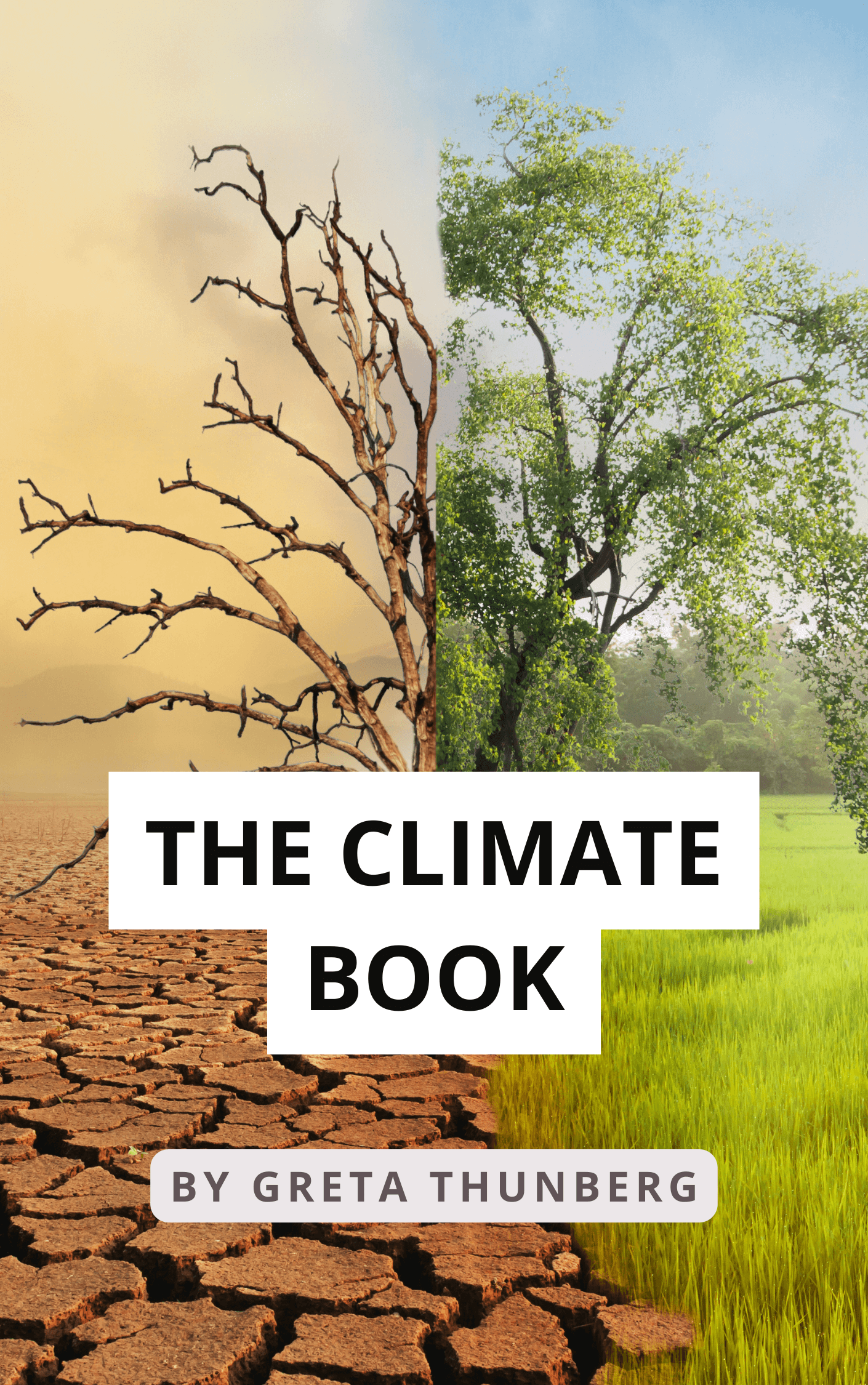
The Climate Book Book Summary
This The Climate Book Book Summary covers the key ideas, lessons, and takeaways in about 20 minutes.
Want the complete 20-minute summary?
- Full structured summary
- Video Summary
- Podcast Summary
- Audio summary
- Key takeaways
- Exercises
- Quiz
- Highlights and notes
- Ask the book with AI
What is in the The Climate Book book summary?
Below is a preview of Sumizeit’s expert-written summary of The Climate Book by Greta Thunberg. The full summary covers the book’s key ideas in text, audio, and video.
"The Climate Book" by Greta Thunberg is a collection of speeches and essays by the young Swedish climate activist. The book provides a comprehensive overview of Thunberg's views on climate change and the urgent need for action to address this global crisis.
Thunberg began her activism in 2018, when she began skipping school to protest outside the Swedish parliament, demanding action on climate change. Her "school strike for the climate" sparked a global movement, with millions of young people around the world joining in protests and rallies.
In "The Climate Book", Thunberg shares her personal journey and the experiences that led her to become a climate activist. She also discusses the science of climate change and the urgent need for action to address this crisis.
Thunberg argues that climate change is not a distant problem, but a present one, and that urgent action is needed to prevent catastrophic consequences. She advocates for a rapid transition to renewable energy, the protection of biodiversity, and the need for political leaders to take bold action to address this crisis.
Throughout the book, Thunberg emphasizes the importance of listening to the voices of young people and Indigenous communities, who are often most impacted by the effects of climate change. She also highlights the role of civil disobedience in effecting change, citing the nonviolent protests of Gandhi and Martin Luther King Jr. as examples of how social movements can bring about political change.
"The Climate Book" is a powerful call to action for individuals, communities, and political leaders to take immediate and sustained action to address the climate crisis. Thunberg's passionate and articulate voice has inspired millions around the world, and her book provides a compelling argument for urgent action to address this critical issue.
Section 1 - Our Crisis
Section 1 of "The Climate Book" by Greta Thunberg sets the stage for the urgency and severity of the climate crisis facing the world today. Thunberg begins by stating that we are in a climate emergency, with global temperatures rapidly rising and causing catastrophic effects such as extreme weather events, loss of biodiversity, and food and water scarcity.
Thunberg argues that the root cause of this crisis is the burning of fossil fuels, which releases greenhouse gases that trap heat in the atmosphere and cause global warming. She also notes that the world's current response to the crisis has been inadequate, with governments and businesses prioritizing economic growth over environmental protection.
To illustrate the severity of the crisis, Thunberg presents alarming statistics and facts about the impacts of climate change. She notes that 2020 tied with 2016 as the hottest year on record, with wildfires, heatwaves, and hurricanes causing widespread damage and loss of life. Thunberg also highlights how the climate crisis disproportionately affects vulnerable communities, including indigenous peoples and low-income populations.
Thunberg then discusses the role of individual action in addressing the climate crisis. She argues that while individual choices such as reducing meat consumption and using public transportation can have an impact, they…
Want the complete 20-minute summary?
- Full structured summary
- Video Summary
- Podcast Summary
- Audio summary
- Key takeaways
- Exercises
- Quiz
- Highlights and notes
- Ask the book with AI
Who should read The Climate Book?
The Climate Book is essential for anyone concerned about our planet's future, especially young people and those seeking to understand the urgency of climate action. It's particularly valuable for activists, educators, and citizens who want to move beyond climate anxiety toward meaningful engagement and collective solutions.
Why does The Climate Book matter?
In an era of climate denial and political inaction, Greta Thunberg's voice cuts through the noise with clarity and moral urgency backed by science. The book matters because it connects the abstract threat of climate change to real-world impacts while demonstrating how grassroots movements can pressure institutions toward systemic change.
What are the key themes in The Climate Book?
- Climate crisis as a present emergency, not a distant threat
- The inadequacy of individual action alone versus the necessity of systemic change
- Youth activism and the power of grassroots movements
- Hope and determination in the face of overwhelming challenges
- Climate justice and disproportionate impacts on vulnerable communities
- Renewable energy and the economic opportunity of sustainable transition
What are the key lessons from the The Climate Book book summary?
The climate crisis demands urgency, not incremental progress
Thunberg argues that the scientific evidence is overwhelming and the window for action is closing. Gradual policy changes and voluntary corporate measures are insufficient given the scale of the emergency we face.
Individual lifestyle choices have limited impact on systemic problems
While personal actions like reducing meat consumption matter symbolically, they cannot solve a crisis rooted in fossil fuel infrastructure and economic systems. Structural change must be the primary focus.
Young people have a unique moral authority in this debate
Those inheriting the consequences of climate change have every right to demand action from decision-makers, and their voices carry particular weight precisely because they will live with the outcomes.
Collective action and social movements create political pressure
Thunberg demonstrates how organized grassroots activism, particularly youth-led strikes and protests, can force governments and corporations to acknowledge the crisis and shift policy priorities.
The climate crisis is inseparable from issues of inequality and justice
Climate change disproportionately harms indigenous peoples, low-income communities, and developing nations that contributed least to the problem, making climate action fundamentally a justice issue.
Renewable energy transition is both necessary and economically viable
Solar, wind, and geothermal technologies are increasingly affordable and efficient, and shifting investment toward them would create jobs and stimulate economic growth while reducing emissions.
Ecosystem protection is essential climate mitigation
Forests, wetlands, and other natural systems store carbon and regulate climate; preserving and restoring them is as critical to addressing the crisis as reducing fossil fuel use.
Political will and funding must be redirected from fossil fuels to solutions
Carbon pricing, divestment campaigns, and shifting subsidies from coal and oil to clean energy are practical mechanisms to realign economic incentives with climate imperatives.
Despair and grief about the climate crisis are valid but need not paralyze action
Thunberg acknowledges the emotional weight of the climate emergency while insisting that hope rooted in collective action is both necessary and justified by real progress already achieved.
Peaceful civil disobedience has historical precedent as a tool for social change
Drawing on examples from Gandhi and Martin Luther King Jr., Thunberg argues that disruptive protest can be a morally legitimate and effective strategy for forcing institutional attention to urgent injustices.
Media attention and public awareness are prerequisites for political change
Without making climate change impossible to ignore, governments and businesses will continue prioritizing short-term profits over planetary survival, making visibility a critical activist strategy.
Global solidarity is essential because climate change is inherently global
No single nation can address this crisis alone; solutions require international cooperation and commitment to shared responsibility regardless of differing levels of historical emissions.
Energy consumption must be reduced alongside shifting to renewable sources
Efficiency improvements in buildings, transportation, and manufacturing are necessary complements to renewable energy adoption to achieve meaningful emissions reductions.
Inclusive movements that center marginalized voices are stronger and more just
Climate activism must actively include and prioritize the perspectives of those most impacted by climate change, rather than being dominated by privilege voices.
Hope is a choice and a responsibility, not a luxury
Thunberg argues that maintaining belief in the possibility of positive change is not naive optimism but a necessary condition for sustaining the long-term effort that climate action requires.
Technology alone cannot solve the climate crisis without behavioral and policy change
While innovations like carbon capture and more efficient renewables are valuable, they cannot substitute for reducing overall consumption, shifting energy sources, and reforming economic systems.
Small actions matter within the context of a larger movement
While individual choices cannot solve the crisis alone, participating in activism and staying engaged—even in modest ways—contributes to the collective pressure needed for systemic change.
The climate crisis reveals fundamental failures of political leadership
Thunberg criticizes adults and politicians for prioritizing economic growth over environmental protection despite overwhelming evidence of the crisis, calling for accountability and bold action.
Transparency and science-based communication are crucial to public understanding
The book emphasizes that politicians and media must communicate the true severity and urgency of climate science rather than downplaying the crisis to avoid alarming the public.
Want the complete 20-minute summary?
- Full structured summary
- Video Summary
- Podcast Summary
- Audio summary
- Key takeaways
- Exercises
- Quiz
- Highlights and notes
- Ask the book with AI
How can you apply ideas from The Climate Book?
- Join or start a local climate action group focused on systemic change rather than solely individual consumption choices
- Engage in advocacy directed at elected officials and corporate leaders to demand emissions reductions and renewable energy investment
- Participate in or organize peaceful protests and strikes to draw public and media attention to climate inaction
- Support divestment campaigns that pressure institutions to withdraw funding from fossil fuel companies
- Advocate for and support policies such as carbon pricing and renewable energy subsidies in your community
- Reduce personal energy consumption while simultaneously pushing for larger structural changes in infrastructure and industry
- Amplify the voices and leadership of those most affected by climate change, particularly indigenous communities and low-income populations
What common mistakes do readers make with The Climate Book?
- Believing that individual consumer choices alone can solve the climate crisis without systemic policy and business change
- Dismissing youth activism as naive idealism rather than recognizing its moral authority and political effectiveness
- Viewing hope and determined action as incompatible with acknowledging the severity and urgency of the climate emergency
- Waiting for perfect solutions or perfect activism rather than supporting imperfect but necessary steps toward systemic transformation
Sumizeit Exercises Apply what you've learned
Turn ideas from The Climate Book into action with a short guided reflection: identify the biggest takeaway, connect it to your life, and commit to one step you can take in the next 24 hours.
What is the expert analysis of The Climate Book?
Overview
"The Climate Book" is authored by Greta Thunberg, the Swedish climate activist who emerged as a global figurehead for urgent environmental action starting in 2018. This work consolidates her speeches, essays, and reflections into a comprehensive manifesto on the climate crisis. Its significance lies not only in its urgent call to action but also in its embodiment of youth-led activism that has reshaped global discourse on climate change. Thunberg’s unique position as both an activist and a communicator bridges scientific data, moral urgency, and grassroots mobilization, making the book a pivotal contribution to contemporary environmental literature.
Core Thesis
The central argument of "The Climate Book" is that climate change is an immediate and existential emergency caused primarily by fossil fuel emissions, requiring systemic and collective action rather than isolated individual efforts. Thunberg insists that political inertia and economic prioritization of growth over sustainability have exacerbated the crisis. She advocates for a rapid transition to renewable energy, protection of biodiversity, and inclusive activism that elevates marginalized voices, particularly those of youth and Indigenous communities. Ultimately, the book is a clarion call for urgent, large-scale political and social transformation supported by grassroots movements.
Strengths
- Compelling Moral Urgency: Thunberg’s passionate and clear articulation of the climate emergency galvanizes readers to recognize the immediacy and severity of the crisis.
- Integration of Science and Activism: The book effectively synthesizes climate science with social and political analysis, grounding activism in empirical evidence.
- Amplification of Marginalized Voices: By emphasizing the perspectives of Indigenous peoples and youth, Thunberg broadens the narrative beyond traditional environmental discourse.
- Holistic Approach to Solutions: The discussion spans renewable energy, systemic economic change, and ecosystem preservation, providing a multifaceted roadmap for action.
- Inspirational Call to Collective Action: The encouragement of grassroots activism and civil disobedience connects historical social movements to contemporary climate efforts, inspiring engagement.
Critiques & Counterarguments
- Limited Depth in Policy Nuance: While the book passionately advocates for systemic change, it sometimes oversimplifies the complexity of global economic and political systems, offering limited concrete policy pathways beyond broad calls for divestment and renewable transition.
- Youthful Perspective and Expertise: Critics argue that Thunberg’s relative youth and lack of formal expertise in climate science or policy may lead to a less nuanced understanding of certain technical or geopolitical challenges, though her role is primarily as an activist rather than a policy expert.
- Potential Overemphasis on Disruptive Activism: The valorization of civil disobedience and school strikes may alienate moderate stakeholders or policymakers who favor incremental or negotiated approaches, potentially limiting broader coalition-building.
- Competing Research on Technological Solutions: Some climate scholars emphasize the potential of emerging technologies such as nuclear energy or geoengineering, which Thunberg’s framework largely sidelines or critiques, raising debate about the best technological pathways forward.
- Economic Growth and Development Tensions: The book’s critique of economic growth as incompatible with sustainability contrasts with alternative schools of thought advocating for green growth or sustainable development models that seek to reconcile environmental and economic objectives.
Who Should Read This
"The Climate Book" is essential reading for activists, policymakers, educators, and engaged citizens seeking a passionate and accessible synthesis of the climate crisis framed through the lens of urgent activism. It is particularly valuable for young readers and those new to climate discourse who wish to understand the moral and scientific imperatives driving the global movement. However, scholars and professionals interested in detailed policy analysis or technological debates may find it a compelling complement rather than a comprehensive technical manual. Ultimately, the book serves as a rallying cry for collective responsibility and action in the face of one of humanity’s most pressing challenges.
Frequently asked questions about the The Climate Book book summary
What is The Climate Book about?
The Climate Book by Greta Thunberg is a collection of essays and speeches that provides a comprehensive overview of the climate crisis, its urgent solutions, and the power of grassroots activism. The book combines scientific evidence about the severity of climate change with Thunberg's personal activism journey and a call for immediate systemic action by governments and institutions.
Who should read The Climate Book?
The Climate Book is essential for young people concerned about their future, activists seeking to understand movement strategy, educators wanting to engage students on climate issues, and anyone interested in understanding why rapid climate action is both scientifically necessary and politically achievable. It appeals to readers seeking both information and inspiration to take action.
What are the main takeaways from The Climate Book?
The main takeaways include: the climate crisis requires urgent action beyond incremental change; individual actions alone are insufficient without systemic transformation; grassroots activism can effectively pressure institutions; the crisis is fundamentally a justice issue affecting vulnerable communities disproportionately; and hope combined with collective action is both necessary and justified. Thunberg emphasizes that while the challenge is severe, real progress is possible if we work together.
Does Greta Thunberg offer solutions in The Climate Book?
Yes, Thunberg discusses concrete solutions including transitioning to renewable energy sources like solar and wind, improving energy efficiency, protecting and restoring ecosystems, redirecting government funding and subsidies away from fossil fuels toward clean energy, and implementing carbon pricing mechanisms. She emphasizes that these solutions are economically viable and require primarily political will rather than technological breakthroughs.
How does The Climate Book address climate anxiety and despair?
Thunberg acknowledges that anxiety, grief, and despair about the climate crisis are natural and valid emotional responses. Rather than dismissing these feelings, she argues that hope rooted in collective action and real progress already achieved is both justified and necessary to sustain the long-term effort required for climate solutions.
What role do young people play according to The Climate Book?
Thunberg argues that young people have unique moral authority because they will inherit the consequences of climate inaction. The book highlights how youth-led movements like Fridays for Future have effectively drawn global attention to the crisis and pressured institutions toward policy change, demonstrating that age is not a barrier to meaningful activism.
Does The Climate Book discuss climate justice?
Yes, The Climate Book emphasizes that climate change disproportionately impacts indigenous peoples, low-income communities, and developing nations despite their minimal contribution to the crisis. Thunberg argues that addressing climate change is fundamentally a justice issue and that climate solutions must center the voices and experiences of those most affected.
About Sumizeit
Sumizeit is a profitable Scomy LLC company based in Miami, Florida. It has been helping readers learn from nonfiction books for 7 years with expert-written summaries in text, audio, podcast, and video.
Want the complete 20-minute summary?
- Full structured summary
- Video Summary
- Podcast Summary
- Audio summary
- Key takeaways
- Exercises
- Quiz
- Highlights and notes
- Ask the book with AI
Here's why readers love Sumizeit
Join thousands of learners getting smarter every day
"Great experience. Detailed summaries. Loved the gamification feature. Makes learning fun. Good customer service. I recommend Sumizeit to anyone. You'll learn a lot."
"I always felt busy but still wanting to keep up with the book discussion in my friend group. This was a great supplement to help me keep reading the books I find fun while keeping up with important books."
"I love this website. Instead of scrolling social media, I find myself learning a lot. I use it everyday. I recommend this app for anyone who is too busy and wants to get up to speed with their favorite books."
The Climate Book Book Summary PDF
Looking for a The Climate Book Book Summary PDF you can save and revisit offline? Our The Climate Book Book Summary PDF captures the book’s core ideas in a clean, printable format — the key frameworks, takeaways, and structure without the fluff. Download the The Climate Book Book Summary PDF when you want a reference you can annotate, share with your team, or review on the go. Get your The Climate Book Book Summary PDF from the download page below.
Download The Climate Book Book Summary PDFPeople also liked these summaries
Readers who explored The Climate Book often enjoyed these titles next.




Want the complete 20-minute summary?
- Full structured summary
- Video Summary
- Podcast Summary
- Audio summary
- Key takeaways
- Exercises
- Quiz
- Highlights and notes
- Ask the book with AI
Featured Book Titles
Popular Book Summaries at sumizeit, leading book summary app