


As an Amazon Associate, Sumizeit earns from qualifying purchases.
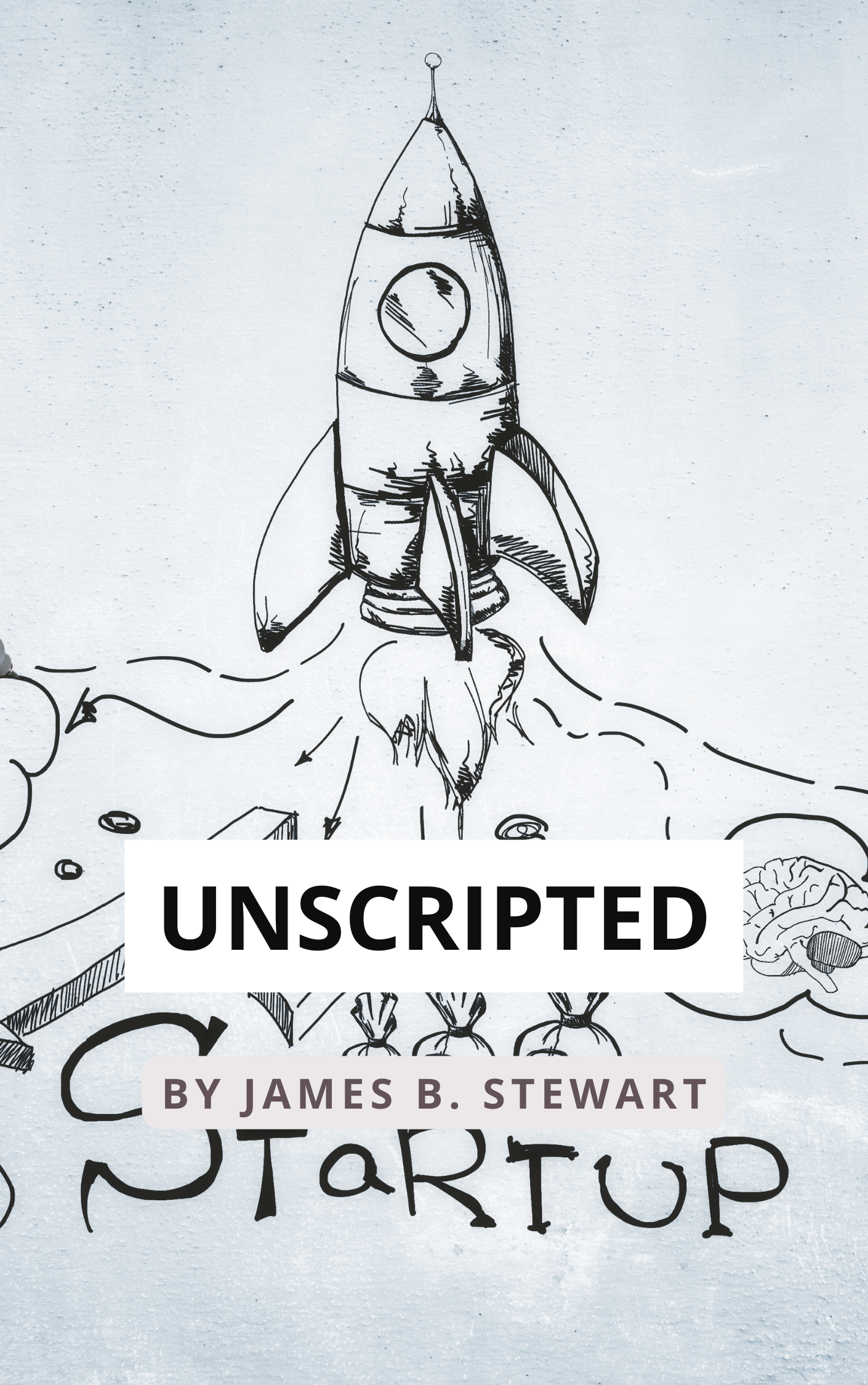
Unscripted Book Summary
This Unscripted Book Summary covers the key ideas, lessons, and takeaways in about 20 minutes.
Helps with these goals
Want the complete 20-minute summary?
- Full structured summary
- Video Summary
- Podcast Summary
- Audio summary
- Key takeaways
- Exercises
- Quiz
- Highlights and notes
- Ask the book with AI
What is in the Unscripted book summary?
Below is a preview of Sumizeit’s expert-written summary of Unscripted by James B. Stewart and Rachel Abrams. The full summary covers the book’s key ideas in text, audio, and video.
"Unscripted: Life, Liberty, and the Pursuit of Entrepreneurship" is a book by James B. Stewart and Rachel Abrams that aims to inspire readers to break free from the conventional path of a scripted life and take control of their own destiny by pursuing entrepreneurship.
The book begins with the authors' own stories of how they broke free from their scripted lives to become successful entrepreneurs. They share the lessons they learned along the way, including the importance of taking risks, being persistent, and surrounding oneself with a network of supportive people.
The authors then go on to discuss the flaws in the traditional path of going to school, getting a job, and working for someone else. They argue that this path often leads to a life of mediocrity, where one is trapped in a cycle of earning just enough to pay bills, without ever achieving true financial freedom or fulfillment.
Instead, the authors encourage readers to embrace the principles of entrepreneurship, including taking calculated risks, finding a need in the market, creating a unique value proposition, and building a team of like-minded individuals to help achieve one's goals.
The authors also provide practical advice for aspiring entrepreneurs, such as how to find a mentor, how to overcome fear and self-doubt, and how to balance work and life. They stress the importance of continuous learning and personal development, and encourage readers to be adaptable and willing to pivot when necessary.
Throughout the book, the authors use real-world examples of successful entrepreneurs to illustrate their points and inspire readers. They emphasize that there is no one-size-fits-all approach to entrepreneurship, and that each person's journey will be unique.
Overall, "Unscripted" is a powerful and inspiring call to action for anyone who feels trapped in a scripted life and wants to pursue their dreams of financial freedom and personal fulfillment through entrepreneurship. The book offers practical advice, real-world examples, and a wealth of wisdom and inspiration for anyone who is ready to take the leap and create their own unscripted life.
Detailed Summary
Chapter 1: Introduction - The authors introduce the concept of "The Script," which is the societal belief that one should go to school, get a job, work hard, save money, and retire at 65. They argue that this script is outdated and no longer works in today's economy, and that the only way to truly achieve financial freedom is through entrepreneurship.
Chapter 2: The Unscripted Entrepreneurial Framework - The authors introduce the Unscripted Entrepreneurial Framework, which is a way of thinking about entrepreneurship that emphasizes the importance of creating value, solving problems, and providing a unique offering to the marketplace. They argue that this framework is essential for anyone looking to start their own business.
Chapter 3: Fastlane to the Slow Lane - The authors contrast the Fastlane (entrepreneurship) with the Slow Lane (traditional employment). They argue that the Slow Lane is a trap that keeps people stuck in the rat race, while the Fastlane offers the potential for real wealth…
Want the complete 20-minute summary?
- Full structured summary
- Video Summary
- Podcast Summary
- Audio summary
- Key takeaways
- Exercises
- Quiz
- Highlights and notes
- Ask the book with AI
Who should read Unscripted?
Unscripted by James B. Stewart and Rachel Abrams is for anyone feeling trapped in traditional employment who yearns for financial independence and control over their destiny. This book speaks to aspiring entrepreneurs, career-changers, and individuals skeptical of the conventional school-to-job-to-retirement path. If you're ready to challenge societal expectations and build wealth on your own terms, this guide offers both inspiration and practical frameworks to get started.
Why does Unscripted matter?
In today's rapidly changing economy, the traditional script of lifetime employment and pension security no longer guarantees financial freedom or fulfillment. Unscripted provides a timely alternative roadmap for building genuine wealth through entrepreneurship and strategic thinking. As economic uncertainty grows, understanding how to create value, build systems, and leverage opportunities becomes increasingly critical to achieving the life you want.
What are the key themes in Unscripted?
- Breaking free from societal scripts and conventional paths
- Value creation as the foundation of wealth building
- The entrepreneurial mindset and its cultivation
- Systems thinking and business scalability
- Financial discipline and multiple income streams
- Taking calculated risks and learning from failure
- Building teams and networks of aligned people
What are the key lessons from the Unscripted book summary?
The Script is Broken
The traditional path of school, job, and retirement is outdated and no longer guarantees financial security or fulfillment. Breaking free requires recognizing this reality and choosing an alternative approach.
Entrepreneurship is the Path to True Wealth
Unlike employment where income is capped by your time, entrepreneurship allows you to create multiple revenue streams and leverage your efforts exponentially. This is the primary vehicle for achieving financial freedom.
Identify Real Problems, Not Ideas
Successful businesses solve genuine problems that people willingly pay to resolve. Rather than starting with a product idea, begin by discovering a specific market need and building a solution around it.
Value Creation Over Feature Focus
Customers care about benefits and outcomes, not technical features. Structure your business around solving specific pain points for a defined audience rather than trying to appeal to everyone.
Overcome Mental Traps
Conformity, entitlement, and victimhood are mental barriers that keep people stuck in mediocrity. Recognizing and actively combating these thought patterns is essential for entrepreneurial success.
Build Systems, Not Just Businesses
The goal is to create a business that operates independently of your constant input. Systems and processes enable scalability and free up your time for strategic activities.
Test and Iterate, Don't Perfect
Traditional business plans often waste time and resources. Instead, launch quickly, gather customer feedback, and continuously refine your offering based on real-world data.
Assemble the Right Team
Surrounding yourself with aligned, capable people who share your values is crucial to scaling your business. Hiring well is one of the highest-leverage decisions an entrepreneur can make.
Leverage is the Key to Scaling
Success comes from multiplying your impact through technology, systems, and people rather than working harder. Identify high-return activities and delegate or automate low-value tasks.
Financial Discipline Creates Freedom
Wealth isn't just about earning more—it's about managing expenses wisely and investing surplus capital into appreciating assets. A minimalist approach to personal spending accelerates financial independence.
Embrace a Growth Mindset
Successful entrepreneurs view challenges as learning opportunities and actively seek feedback. Continuous personal development and adaptability are what separate winners from those who stagnate.
Vision Guides Long-Term Success
Short-term profits matter less than building a business with staying power. A clear, compelling long-term vision keeps you focused on decisions that create lasting value.
Execution Beats Planning
Taking imperfect action today is more valuable than waiting for perfect conditions or detailed plans. Speed and adaptability in execution matter more than extensive upfront analysis.
Innovation Opportunities are Everywhere
Truly original ideas are rare, but successful entrepreneurs excel at spotting and capitalizing on opportunities for improvement within existing markets. Focus on execution of good ideas rather than searching for the perfect one.
Marketing Resonates Through Pain Points
Effective marketing speaks directly to customer problems and desires, not product specs. Craft your message around the transformation your solution provides.
Customer Service Builds Loyalty
Exceptional service differentiates you in competitive markets and creates loyal advocates. This is a sustainable way to build a moat around your business.
Maintain Entrepreneurial Fitness
Physical, emotional, and mental health directly impact your performance as an entrepreneur. Staying balanced through exercise, mindfulness, and self-care enables sustained high performance.
Set Clear Goals and Priorities
Breaking long-term vision into actionable milestones keeps you motivated and accountable. Regular goal-setting and priority management prevent drift and maintain momentum.
Plan for Your Exit
Understanding your options for exiting a business—sale, merger, or other means—helps you build toward specific outcomes. Clear exit strategy guides strategic decisions throughout your business journey.
Take Full Ownership of Your Destiny
Financial freedom requires personal responsibility for decisions, actions, and consequences. Victim mentality guarantees mediocrity, while ownership mentality creates possibility.
Want the complete 20-minute summary?
- Full structured summary
- Video Summary
- Podcast Summary
- Audio summary
- Key takeaways
- Exercises
- Quiz
- Highlights and notes
- Ask the book with AI
How can you apply ideas from Unscripted?
- Audit your current spending and lifestyle to identify areas where you can reduce expenses and redirect capital toward income-producing ventures
- List three problems you encounter regularly or problems you see others facing; validate which ones people would pay to solve by talking to potential customers
- Create a simple business model canvas instead of a lengthy business plan to clarify your value proposition, target customer, and revenue model
- Identify high-leverage activities in your current work or business and delegate or automate low-value tasks to free up time for strategic work
- Build a personal advisory board or mastermind group of like-minded individuals ahead of you on the entrepreneurial path
- Define your ideal long-term vision for the next 10 years and work backward to establish 1-year, quarterly, and monthly milestones
- Design one system or process in your business that could operate without your direct involvement and document it thoroughly
- Craft a customer-focused marketing message that leads with benefits and pain-point resolution rather than product features
What common mistakes do readers make with Unscripted?
- Waiting for the perfect idea or plan before taking action; paralysis by analysis delays progress and delays learning from real-world feedback
- Trying to appeal to everyone instead of focusing on solving a specific problem for a specific audience; this dilutes messaging and product fit
- Confusing hard work with smart work; long hours without leverage and systems don't lead to scalable wealth or freedom
- Neglecting personal health and balance in pursuit of business growth; burnout undermines decision-making and sustainable performance
- Hiring for skills alone without checking cultural and values alignment; misaligned teams create internal friction and slow growth
Sumizeit Exercises Apply what you've learned
Turn ideas from Unscripted into action with a short guided reflection: identify the biggest takeaway, connect it to your life, and commit to one step you can take in the next 24 hours.
What is the expert analysis of Unscripted?
Overview
Unscripted: Life, Liberty, and the Pursuit of Entrepreneurship is a collaborative work by James B. Stewart and Rachel Abrams, both accomplished journalists with deep experience in business and finance reporting. Stewart, a Pulitzer Prize-winning author, and Abrams, a seasoned writer on finance and technology, bring a journalistic rigor and narrative clarity to this exploration of entrepreneurship. The book stands out as a contemporary manifesto urging readers to reject conventional societal expectations—the so-called "script"—and instead embrace entrepreneurship as a pathway to financial freedom and personal fulfillment. Its significance lies in its comprehensive, practical approach to entrepreneurship, combining personal anecdotes, real-world examples, and actionable frameworks designed to inspire and guide aspiring entrepreneurs.
Core Thesis
The central argument of Unscripted is that the traditional life script—education, employment, saving, and retirement—is increasingly obsolete in a rapidly evolving economy. Stewart and Abrams contend that true financial independence and meaningful fulfillment are attainable primarily through entrepreneurship. They propose a paradigm shift: from passive participation in the workforce to active creation and value generation via entrepreneurial ventures. The authors emphasize the necessity of adopting an entrepreneurial mindset characterized by risk tolerance, adaptability, and relentless value creation. They advocate for a flexible, iterative approach to business development, underscoring the importance of solving real market problems, building scalable systems, and cultivating supportive teams.
Strengths
- Comprehensive Frameworks: The book offers well-structured frameworks such as the Entrepreneurial Loop, the Three Ds, and the Four Ps, which provide readers with clear, actionable models to navigate the complexities of entrepreneurship.
- Practical and Inspirational: By blending motivational narratives with pragmatic advice—ranging from mindset cultivation to financial management—the authors create a balanced guide that appeals to both the aspirational and the pragmatic reader.
- Journalistic Rigor and Real-World Examples: Leveraging their backgrounds, Stewart and Abrams incorporate compelling case studies and examples that ground their theories in reality, enhancing credibility and relatability.
- Holistic Approach: The inclusion of chapters on entrepreneurial fitness, personal development, and emotional resilience broadens the scope beyond mere business tactics, emphasizing the entrepreneur’s well-being and long-term sustainability.
- Challenge to Conventional Wisdom: The book’s critique of the "script" challenges deeply ingrained societal norms, encouraging readers to rethink assumptions about career success and financial security.
Critiques & Counterarguments
- Overgeneralization of the "Script": While the book convincingly critiques traditional employment, it tends to paint the "script" as universally limiting, overlooking the nuanced realities where stable employment provides security and fulfillment for many individuals.
- Entrepreneurship as a Panacea: The authors’ strong emphasis on entrepreneurship may underplay the significant risks and high failure rates associated with startups, potentially romanticizing entrepreneurship without adequately addressing structural barriers or the role of privilege.
- Evidence and Data Limitations: The book relies heavily on anecdotal evidence and illustrative examples rather than rigorous empirical data, which may weaken the generalizability of its claims.
- Competing Research on Financial Security: Research in behavioral economics and labor studies suggests that diversified income strategies, including stable employment combined with side ventures, can be more effective and less risky than full entrepreneurial immersion, a nuance somewhat underexplored in the book.
- Philosophical Counterpoint - The Value of Stability: From a philosophical perspective, the valorization of constant risk-taking and disruption may conflict with values of community, stability, and long-term societal cohesion, which some schools of thought argue are equally vital for individual and collective well-being.
Who Should Read This
Unscripted is ideally suited for ambitious individuals dissatisfied with conventional career trajectories—those who are contemplating entrepreneurship or seeking practical guidance on how to break free from traditional employment paradigms. It will resonate with readers who appreciate a blend of motivational narrative and actionable frameworks, particularly aspiring entrepreneurs, early-stage startup founders, and professionals interested in personal development and financial independence. Additionally, readers with an interest in contemporary critiques of economic and social norms will find the book thought-provoking. However, those seeking an academic or deeply data-driven analysis of entrepreneurship may find the book’s approach more inspirational than empirical.
Frequently asked questions about the Unscripted book summary
What is Unscripted about?
Unscripted by James B. Stewart and Rachel Abrams is a comprehensive guide encouraging readers to abandon the traditional script of school-to-job-to-retirement and instead pursue entrepreneurship as a path to true financial freedom and fulfillment. The book combines personal entrepreneurial journeys with practical frameworks, real-world examples, and actionable strategies for building successful businesses that create lasting wealth and personal control.
Who should read Unscripted?
Unscripted is ideal for aspiring entrepreneurs, career-changers, and anyone feeling trapped in traditional employment who wants to take control of their financial future. It's particularly valuable for people skeptical of conventional career paths, those seeking meaningful work aligned with personal values, and individuals ready to embrace calculated risk-taking and continuous learning.
What are the main takeaways from Unscripted?
Key takeaways include rejecting outdated societal scripts, taking full ownership of your life and career, and focusing on creating genuine value for others as the foundation of wealth. The book emphasizes building scalable systems rather than trading time for money, assembling aligned teams, maintaining financial discipline, and developing an entrepreneurial mindset that embraces challenges and rapid iteration over perfect planning.
How does Unscripted define the difference between entrepreneurship and traditional employment?
The book contrasts the Fastlane (entrepreneurship) with the Slow Lane (traditional employment), arguing that employment caps income based on time available while entrepreneurship allows for leveraged, scalable wealth creation. Entrepreneurship enables you to build systems and multiply your impact through people, technology, and processes rather than limiting growth to your personal work hours.
What frameworks does Unscripted provide for building a business?
The book introduces several frameworks including the Entrepreneurial Loop (iterative problem-solving), the Three Ds (Discovery, Development, Deployment), the Four Ps (Product, People, Processes, Profit), and the Golden Rules of Entrepreneurship. These frameworks help entrepreneurs focus on customer needs, maintain adaptability, take calculated risks, build strong teams, and stay financially disciplined.
Does Unscripted provide practical business advice or just theory?
Unscripted combines both inspiration and practical guidance, offering actionable strategies on finding mentors, overcoming fear and self-doubt, identifying market opportunities, building teams, managing finances, creating effective marketing, and scaling systems. The authors emphasize that execution matters more than perfect planning and encourage testing ideas quickly with real customers.
What does Unscripted say about financial freedom?
The book defines financial freedom not just as earning more money but as creating multiple income streams, managing expenses mindfully, and building scalable systems that don't require your constant input. True financial freedom comes through entrepreneurship and strategic value creation rather than climbing the corporate ladder or hoping for pension security.
Is Unscripted suitable for first-time entrepreneurs with no business experience?
Yes, Unscripted is designed for readers at various stages, from those just considering entrepreneurship to experienced business builders. The book emphasizes that entrepreneurial traits can be developed and nurtured by anyone, and it provides foundational frameworks and mindset guidance that prepare new entrepreneurs to identify opportunities, validate ideas, and take action despite uncertainty.
About Sumizeit
Sumizeit is a profitable Scomy LLC company based in Miami, Florida. It has been helping readers learn from nonfiction books for 7 years with expert-written summaries in text, audio, podcast, and video.
Want the complete 20-minute summary?
- Full structured summary
- Video Summary
- Podcast Summary
- Audio summary
- Key takeaways
- Exercises
- Quiz
- Highlights and notes
- Ask the book with AI
Here's why readers love Sumizeit
Join thousands of learners getting smarter every day
"Great experience. Detailed summaries. Loved the gamification feature. Makes learning fun. Good customer service. I recommend Sumizeit to anyone. You'll learn a lot."
"I always felt busy but still wanting to keep up with the book discussion in my friend group. This was a great supplement to help me keep reading the books I find fun while keeping up with important books."
"I love this website. Instead of scrolling social media, I find myself learning a lot. I use it everyday. I recommend this app for anyone who is too busy and wants to get up to speed with their favorite books."
Unscripted Book Summary PDF
Looking for a Unscripted Book Summary PDF you can save and revisit offline? Our Unscripted Book Summary PDF captures the book’s core ideas in a clean, printable format — the key frameworks, takeaways, and structure without the fluff. Download the Unscripted Book Summary PDF when you want a reference you can annotate, share with your team, or review on the go. Get your Unscripted Book Summary PDF from the download page below.
Download Unscripted Book Summary PDFPeople also liked these summaries
Readers who explored Unscripted often enjoyed these titles next.


Want the complete 20-minute summary?
- Full structured summary
- Video Summary
- Podcast Summary
- Audio summary
- Key takeaways
- Exercises
- Quiz
- Highlights and notes
- Ask the book with AI
Featured Book Titles
Popular Book Summaries at sumizeit, leading book summary app