


As an Amazon Associate, Sumizeit earns from qualifying purchases.
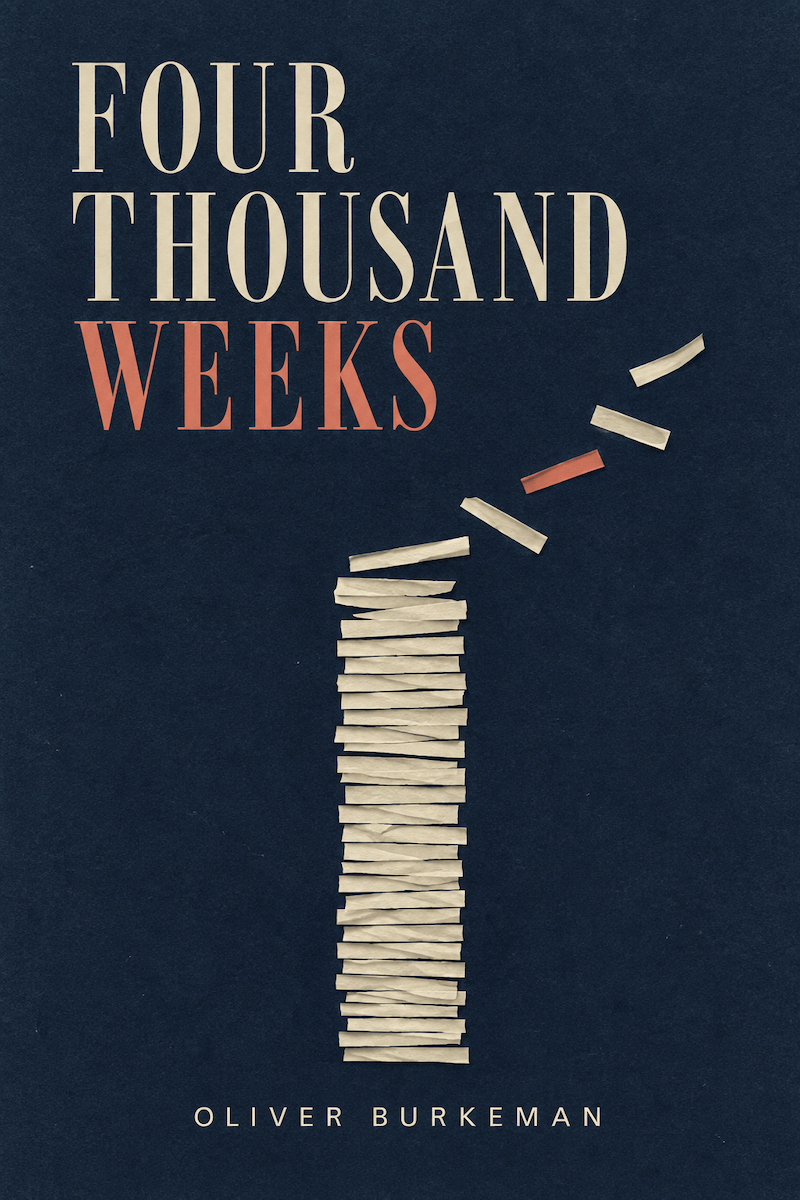
Four Thousand Weeks Book Summary
This Four Thousand Weeks Book Summary covers the key ideas, lessons, and takeaways in about 20 minutes.
In Four Thousand Weeks by Oliver Burkeman, we learn how to manage our time without feeling stressed and tired. The book will teach us how to effectively spend our time without feeling rushed and hampered by a world that constantly keeps track of it. He teaches us the art of accepting that time will tick away and being okay with it. By basing on various works by classic and modern philosophers, writers, and thinkers, Oliver Burkeman shows his readers the path towards living a fulfilled life while acknowledging its limitations.
Helps with these goals
Want the complete 20-minute summary?
- Full structured summary
- Video Summary
- Podcast Summary
- Audio summary
- Infographic
- Key takeaways
- Exercises
- Quiz
- Highlights and notes
- Ask the book with AI
What is in the Four Thousand Weeks book summary?
Below is a preview of Sumizeit’s expert-written summary of Four Thousand Weeks by Oliver Burkeman. The full summary covers the book’s key ideas in text, audio, and video.
Humans have always obsessed about time. Since human life is limited and usually ends after around 80 to 85 years, it’s no wonder that people put emphasis on how they spend their time.
Nowadays, people are haunted by becoming productive and always making the most of their time. Of course, the saying “time is gold” wouldn’t become so popular if we didn’t value our time so much. However, with counting each and every second and focusing so much on efficiency, many may feel stressed and empty in their journey in life. Time management shouldn’t be so difficult and it should also be enjoyed. In the book, Four Thousand Weeks written by Oliver Burkeman, we learn how to manage our time well without making our lives feel timed.
Accept that time will keep ticking.
For us humans, we try our hardest to become so successful that we start working multiple jobs. Especially nowadays that the “hustle” culture has become such a hit. However, there have been multiple studies that show that wealth doesn’t necessarily equate into an enjoyable and peaceful life.
Essentially, the “hustle” culture was born out of capitalism. Spending years trying to organize one’s day like scheduling it into 15-minute blocks or even planning ahead can make us anxious instead of productive. Until one day, the author realized that optimizing time is futile because it will just keep ticking. More tasks will keep springing up and the to-do list will never run out of pages. Due to this, the author highlighted that the more we conquer time, the more frustrated, empty, and anxious we feel. This is what the author calls the paradox of limitation. In essence, this means that we’ll never be able to accomplish everything we’d want to. And through acknowledging this, we can start living our lives by spending our time meaningfully.
Another way to accept that time will keep ticking is to not dwell on how limited time we have left. While we have the present, there will always be tomorrow. In premodern times, people weren’t as worried about time as we are now. Farmers rose whenever the sun did and slept whenever the moon came. This thinking only did change when wagers started paying laborers based on their time. If we were paid by the hour, then we had to keep track of the hour. Additionally, we should also face our finitude positively and accept it as motivation to live our lives to the fullest.
In the work of German philosopher Martin Heidegger Being and Time, Heidegger argues that our finite time defines our existence. This means that our time on Earth shouldn’t be lived unhappily and shouldn’t be based solely on productivity. Another philosopher, Martin Hagglund enjoys spending his summer vacations in the Baltic coast of Sweden. This is because he acknowledges that he won’t have forever to go to summer vacations and should make the best of the time that he has now. Embracing our finitude means acknowledging our mortality.
Want the complete 20-minute summary?
- Full structured summary
- Video Summary
- Podcast Summary
- Audio summary
- Infographic
- Key takeaways
- Exercises
- Quiz
- Highlights and notes
- Ask the book with AI
Who should read Four Thousand Weeks?
Four Thousand Weeks is for anyone caught in the productivity trap—busy professionals, ambitious entrepreneurs, and overwhelmed individuals who feel perpetually behind. If you're exhausted by hustle culture and wondering whether constant optimization actually improves your life, this book offers a refreshing perspective on what truly matters.
Why does Four Thousand Weeks matter?
In an era of endless to-do lists and digital distractions, Oliver Burkeman's Four Thousand Weeks challenges the assumption that more efficiency equals more happiness. This book is timely because it directly confronts the anxiety and emptiness many feel despite achieving their productivity goals, offering a philosophical framework for reclaiming meaning in an age of distraction.
What are the key themes in Four Thousand Weeks?
- The futility of perfect time management
- Embracing human finitude and mortality
- Breaking free from hustle culture
- Living in the present moment instead of for an idealized future
- Strategic prioritization and saying no
- The role of leisure and hobbies in well-being
- Accepting limitations as a path to freedom
What are the key lessons from the Four Thousand Weeks book summary?
The Paradox of Limitation
The more we try to optimize and conquer time, the more frustrated and anxious we become. Accepting that we cannot accomplish everything paradoxically leads to greater peace and meaning.
Time Management Creates Anxiety, Not Freedom
Breaking your day into rigid 15-minute blocks and obsessively scheduling every moment generates stress rather than productivity. True effectiveness comes from working with your natural rhythms, not against them.
Finitude Defines Purpose
Recognizing that your time on Earth is limited should motivate you to live deliberately and meaningfully, not to squeeze more tasks into each day. Our finite existence is what gives weight to our choices.
The 'When-I-Finally' Trap
Postponing joy and presence until you achieve a future milestone means you never truly live in the present. Life becomes a perpetual waiting game rather than an experience to be savored now.
Reject Hustle Culture's False Promise
Wealth and constant productivity do not automatically lead to happiness or peace. Capitalism's emphasis on relentless work often leaves people empty despite external success.
Prioritize by Paying Yourself First
Instead of fitting activities you enjoy around work obligations, commit to your meaningful pursuits first and treat that time as non-negotiable. This reframes how you allocate your most valuable resource.
Fewer Projects, Greater Impact
Working on too many initiatives simultaneously prevents completion and creates a sense of perpetual incompleteness. Focusing on fewer things allows you to see them through and experience genuine accomplishment.
Say No to Second-Tier Priorities
Not everything deserves your time, and it's healthy to explicitly reject activities that don't align with your values or goals. Learning to decline is as important as learning to commit.
Hobbies Are Not Productivity Vehicles
Hobbies pursued purely for pleasure—without profit motive or performance standards—offer unique restorative value that no productive activity can replicate. They are essential, not frivolous.
Leisure Prevents Depression
Research shows that time spent with loved ones and engaged in genuine rest has tangible mental health benefits. Leisure is not a luxury but a necessity for well-being.
Digital Distractions Are Avoidance Mechanisms
We reach for phones and screens not because they're addictive, but because meaningful work exposes our limitations. Addressing the avoidance directly is more effective than willpower alone.
Time Consciousness Is Recent and Cultural
Before industrial capitalism, humans tracked time by natural rhythms rather than clocks. Our modern anxiety about time is largely a product of how we've been conditioned to value labor.
Living for the Moment Is an Act of Rebellion
Savoring a experience instead of documenting or analyzing it breaks the cycle of perpetual optimization. Presence itself becomes a form of resistance to efficiency obsession.
Procrastination Is Unavoidable—Learn to Use It
Rather than fighting procrastination as a character flaw, understand it as a natural part of human psychology and develop strategies to channel it toward worthwhile priorities.
Filling Free Time with 'Productive' Activities Exhausts You
When leisure itself becomes optimized and measured, it loses its restorative power. True rest requires releasing the impulse to make every moment count.
Your Finitude Is Your Freedom
Limited time is not a curse but a clarifying force that helps you identify what genuinely matters. Embracing mortality liberates you from chasing every possibility.
Want the complete 20-minute summary?
- Full structured summary
- Video Summary
- Podcast Summary
- Audio summary
- Infographic
- Key takeaways
- Exercises
- Quiz
- Highlights and notes
- Ask the book with AI
How can you apply ideas from Four Thousand Weeks?
- Schedule one non-negotiable activity you genuinely enjoy each week and protect it as fiercely as a work meeting
- Create a written list of second-tier priorities you commit to declining, so you're clear on your boundaries
- Replace time-blocking strategies with identifying 3-5 truly important projects and working on only those simultaneously
- Set a specific end time for work each day and use evening hours for relationships, hobbies, or simple rest
- Practice being fully present during one meal per day without checking devices or planning ahead
- Join a hobby or interest group where the goal is enjoyment, not achievement or monetization
- Audit your digital tools and notifications; remove those that create the most distraction from meaningful work
What common mistakes do readers make with Four Thousand Weeks?
- Believing that finding the 'perfect' productivity system will finally make you feel in control and happy
- Treating leisure time as another category to optimize rather than as genuine rest and disconnection
- Postponing meaningful relationships and experiences until you achieve a financial or professional milestone
- Measuring the worth of an activity by whether it generates income or visible progress
Sumizeit Exercises Apply what you've learned
Turn ideas from Four Thousand Weeks into action with a short guided reflection: identify the biggest takeaway, connect it to your life, and commit to one step you can take in the next 24 hours.
What is the expert analysis of Four Thousand Weeks?
Overview
Four Thousand Weeks is a thought-provoking work by Oliver Burkeman, a respected author and former Guardian columnist known for his incisive explorations of self-improvement and psychological well-being. The book addresses the perennial human preoccupation with time, offering a philosophical and practical critique of contemporary hustle culture and time management orthodoxies. Burkeman’s significance lies in his ability to synthesize philosophical insights with modern-day anxieties about productivity, making the book a vital contribution to the ongoing discourse on how to live meaningfully in a time-pressured world.
Core Thesis
At its core, Four Thousand Weeks argues that the finite nature of human life—roughly four thousand weeks—necessitates a radical rethinking of our relationship with time. Burkeman contends that the relentless pursuit of efficiency and productivity, emblematic of hustle culture, is ultimately counterproductive and leads to stress, emptiness, and dissatisfaction. Instead, he advocates embracing our limitations and finitude as a liberating condition that can motivate us to prioritize what truly matters, live in the present moment, and accept that we cannot accomplish everything. This philosophical acceptance, informed by thinkers like Heidegger and Hagglund, reframes time management from a mechanical optimization problem into an existential challenge.
Strengths
- Philosophical Depth: Burkeman’s integration of existential philosophy—particularly Heidegger’s concept of finitude—adds intellectual rigor and depth, elevating the book beyond typical self-help fare.
- Critique of Hustle Culture: The book incisively deconstructs the cultural obsession with productivity, exposing its psychological toll and the paradox of limitation where more effort to control time only exacerbates anxiety.
- Practical Wisdom: Burkeman offers actionable advice on prioritization, procrastination, and leisure that is grounded in both research and lived experience, making the philosophical insights accessible and applicable.
- Balanced Perspective on Leisure: The emphasis on hobbies and meaningful social connections as antidotes to burnout is a refreshing counterpoint to the productivity imperative, supported by empirical studies.
- Engaging Narrative Style: The book’s use of anecdotes, historical context, and references to cultural figures enriches the reading experience and helps illustrate abstract ideas concretely.
Critiques & Counterarguments
- Potential Oversimplification of Productivity: While critiquing hustle culture, the book may underappreciate the nuanced ways in which disciplined time management can empower individuals, especially those balancing multiple responsibilities.
- Limited Engagement with Socioeconomic Factors: The argument largely assumes a degree of autonomy over one’s time that may not be accessible to all readers, particularly those constrained by economic precarity or systemic inequalities.
- Philosophical Selectivity: The reliance on Heidegger and Hagglund, while illuminating, might overlook alternative philosophical traditions (e.g., Stoicism, Eastern philosophies beyond Zen) that offer complementary or competing views on time and mortality.
- Empirical Evidence Scope: Some claims, such as the psychological benefits of leisure or the negative impact of hustle culture, would benefit from a broader engagement with contemporary psychological and sociological research to substantiate their universality.
- Competing Schools of Thought: Research in positive psychology and behavioral economics sometimes suggests that goal-setting and future-oriented planning can enhance well-being and motivation, challenging the book’s caution against the “when-I-finally” mindset.
Who Should Read This
Four Thousand Weeks is ideally suited for readers who are intellectually curious about the intersection of philosophy, psychology, and self-improvement, particularly those feeling overwhelmed by modern demands on their time. It appeals to professionals, creatives, and anyone disillusioned by the productivity rat race seeking a more mindful and meaningful approach to life. Moreover, readers interested in existential philosophy and the psychology of happiness will find Burkeman’s synthesis both enlightening and practical. However, those looking for a conventional time-management manual or quick-fix productivity hacks may find the book’s reflective and sometimes abstract approach less immediately actionable.
Frequently asked questions about the Four Thousand Weeks book summary
What is Four Thousand Weeks about?
Four Thousand Weeks by Oliver Burkeman is a philosophical critique of productivity culture and time management obsession. The title refers to the average human lifespan in weeks, emphasizing how finite our time actually is. Rather than offering another time-management system, the book argues that accepting our limitations and rejecting the pursuit of perfect efficiency is the path to a genuinely fulfilling life.
Who should read Four Thousand Weeks?
This book is ideal for anyone feeling trapped by productivity expectations, chronically busy professionals, entrepreneurs chasing the next milestone, or people who implement every time-management hack yet still feel empty. It's particularly valuable for those beginning to question whether constant optimization actually delivers happiness.
What are the main takeaways from Four Thousand Weeks?
The key insights are: accepting that you cannot accomplish everything is liberating, not depressing; living in the present moment is more valuable than sacrificing now for an idealized future; and genuine rest and hobbies are essential, not optional. Burkeman teaches that embracing your finite existence, rather than denying it, is what gives life meaning and urgency.
How does Four Thousand Weeks challenge productivity culture?
Burkeman argues that hustle culture's core promise—that perfect time management leads to peace and success—is false. He shows that the more rigidly we optimize our schedules, the more anxious and empty we become because the to-do list never ends. True peace comes from accepting limitations, not conquering them.
What does Burkeman say about hobbies and leisure?
Burkeman emphasizes that hobbies pursued purely for pleasure—with no profit motive or performance standard—are essential for well-being and cannot be replaced by productive activities. He argues that leisure has wrongly become treated as a luxury rather than a necessity, and that time spent with loved ones actually has measurable mental health benefits.
Does Four Thousand Weeks offer practical time management strategies?
Rather than traditional time-management systems, Burkeman offers philosophical principles like paying yourself first with your time, limiting simultaneous projects, and saying no to second-tier priorities. His approach focuses on changing your mindset about time rather than implementing new scheduling techniques.
How does Four Thousand Weeks address the fear of mortality?
Burkeman draws on philosophers like Heidegger to argue that acknowledging your finite existence should be motivating, not paralyzing. Facing your mortality helps clarify what actually matters and pushes you to live deliberately rather than on autopilot, transforming the fear of death into a reason to live fully now.
About Sumizeit
Sumizeit is a profitable Scomy LLC company based in Miami, Florida. It has been helping readers learn from nonfiction books for 7 years with expert-written summaries in text, audio, podcast, and video.
Want the complete 20-minute summary?
- Full structured summary
- Video Summary
- Podcast Summary
- Audio summary
- Infographic
- Key takeaways
- Exercises
- Quiz
- Highlights and notes
- Ask the book with AI
Here's why readers love Sumizeit
Join thousands of learners getting smarter every day
"Great experience. Detailed summaries. Loved the gamification feature. Makes learning fun. Good customer service. I recommend Sumizeit to anyone. You'll learn a lot."
"I always felt busy but still wanting to keep up with the book discussion in my friend group. This was a great supplement to help me keep reading the books I find fun while keeping up with important books."
"I love this website. Instead of scrolling social media, I find myself learning a lot. I use it everyday. I recommend this app for anyone who is too busy and wants to get up to speed with their favorite books."
Four Thousand Weeks Book Summary PDF
Looking for a Four Thousand Weeks Book Summary PDF you can save and revisit offline? Our Four Thousand Weeks Book Summary PDF captures the book’s core ideas in a clean, printable format — the key frameworks, takeaways, and structure without the fluff. Download the Four Thousand Weeks Book Summary PDF when you want a reference you can annotate, share with your team, or review on the go. Get your Four Thousand Weeks Book Summary PDF from the download page below.
Download Four Thousand Weeks Book Summary PDFPeople also liked these summaries
Readers who explored Four Thousand Weeks often enjoyed these titles next.
Want the complete 20-minute summary?
- Full structured summary
- Video Summary
- Podcast Summary
- Audio summary
- Infographic
- Key takeaways
- Exercises
- Quiz
- Highlights and notes
- Ask the book with AI
Featured Book Titles
Popular Book Summaries at sumizeit, leading book summary app