


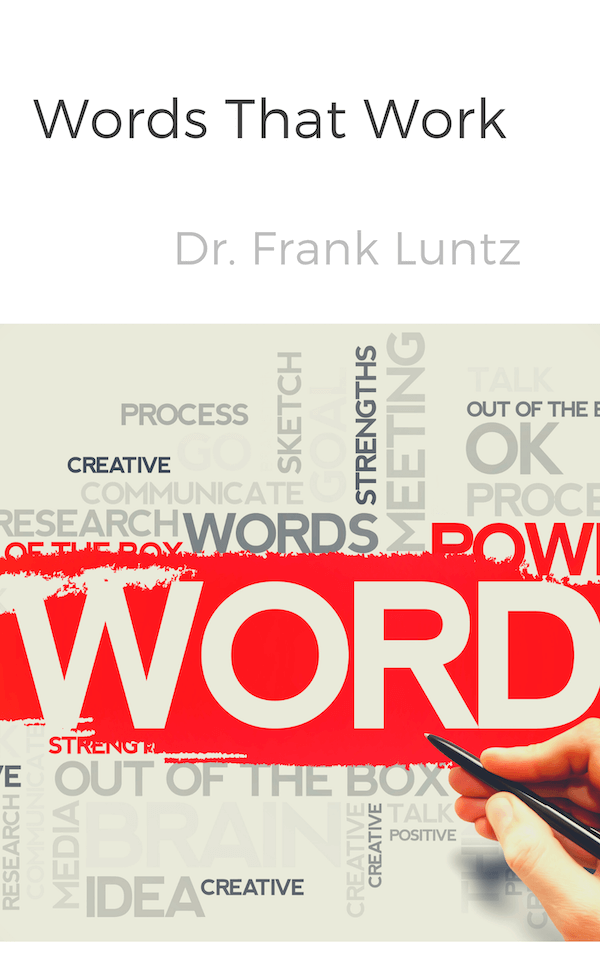
As an Amazon Associate, Sumizeit earns from qualifying purchases.
Words That Work Book Summary
This Words That Work Book Summary covers the key ideas, lessons, and takeaways in about 20 minutes.
Helps with these goals
Want the complete 20-minute summary?
- Full structured summary
- Video Summary
- Podcast Summary
- Audio summary
- Key takeaways
- Exercises
- Quiz
- Highlights and notes
- Ask the book with AI
What is in the Words That Work book summary?
Below is a preview of Sumizeit’s expert-written summary of Words That Work by Frank Luntz. The full summary covers the book’s key ideas in text, audio, and video.
In this book, communications expert Frank Luntz advises readers on the best language to use when talking to an audience. He writes with business people and politicians in mind: professionals hoping to reach a large and general audience. He argues that by changing how we speak, we can better carry our ideas to more people and simple language is the key to getting our message across.
Understand that what you say and what people hear is different. Tailor your language to what your audience hears.
Have you ever been in a situation where you meant to say one thing but your conversation partner heard something completely different? Luntz explains that every single person has a slightly different understanding of words. In order to communicate effectively, we have to understand how people hear things.
For example, welfare and assisting the poor mean virtually the same thing, but Americans hear totally different phrases: 23% say the country needs more welfare while 68% say the country needs to help the poor. This is because people picture two separate things when hearing this difference in language. The first evokes images of laziness and welfare queens while the second conjures a picture of kindness and charity.
When we speak, we should consider our audience’s worldview and how words filter through them. One way to do this, Luntz writes, is to take a cue from George Orwell and allow the audience to leave room for the imagination. In 1984, he wrote of Room 101, a place where each person is confronted with their fears. By leaving it up to the reader to imagine their own personal fears, Room 101 was clearly communicated as a room of terror.
The best communicators use short words and brief sentences.
Think of the last time you picked up a dictionary to check the meaning of a word. Luntz writes that it is rare for people to look up words these days. So, communicating using words that the average person does not know will misfire.
If you speak to broad audiences, understand that most people have not graduated from college and spend most of their days at practical jobs. A majority of people do not have time to grow their vocabulary. To keep more people engaged, use the simplest language possible. Using obscure words will only make people resent you.
Luntz gives the example of Apple’s branding change. When they switched their product’s name from Macintosh to Mac, its popularity jumped.
Be mindful of your sentences too. Short sentences are as important as simple words. Luntz recommends reducing your message to the shortest phrase possible and using active verbs. For example, Dwight D. Eisenhower made his campaign slogan “I like Ike” after his nickname. The phrase made him more accessible as a candidate, and the phrase caught like wildfire.
Luntz also believes that complicated language cost John Kerry the election in 2004. Kerry used obscure words and said things like “progressive internationalism” and “myopic unilateralism”.
Want the complete 20-minute summary?
- Full structured summary
- Video Summary
- Podcast Summary
- Audio summary
- Key takeaways
- Exercises
- Quiz
- Highlights and notes
- Ask the book with AI
Who should read Words That Work?
Words That Work is for business leaders, politicians, marketers, and anyone seeking to persuade or influence audiences at scale. If you communicate to broad audiences—whether through speeches, advertising, campaigns, or brand messaging—this book reveals the psychology behind why certain messages resonate while others fall flat. Essential reading for professionals who want their ideas to stick and their words to move people to action.
Why does Words That Work matter?
In an age of information overload and shortened attention spans, the ability to communicate clearly and persuasively is a competitive advantage. Frank Luntz demonstrates that the difference between winning and losing elections, building beloved brands, or gaining public trust often comes down to word choice, not ideology or facts alone. Understanding how audiences actually hear and interpret language—rather than what you intend to say—is crucial for anyone trying to drive change or influence opinion in today's world.
What are the key themes in Words That Work?
- The gap between what speakers intend and what audiences hear
- Simplicity and brevity as the foundation of clear communication
- Authenticity and credibility as non-negotiable trust-builders
- The power of repetition balanced with freshness
- Emotional resonance and sensory appeal in messaging
- Context and relevance: connecting your message to audience values
- Reframing and renaming to shift perception
- Understanding the real American audience beyond stereotypes
What are the key lessons from the Words That Work book summary?
Perception shapes reality in communication
What people hear matters far more than what you say. The same concept framed differently—like 'welfare' versus 'helping the poor'—triggers completely different emotional and mental responses, even though the meanings are nearly identical.
Use simple words that don't require a dictionary
Most people won't look up unfamiliar words, so using obscure vocabulary alienates rather than impresses. Simplicity makes your message accessible and increases the likelihood that it will stick with broad audiences.
Short sentences beat long ones
Brevity forces clarity and holds attention. Memorable slogans like 'I like Ike' work because they're concise and active, making them impossible to forget.
Repetition requires discipline but delivers results
Repeating your core message consistently is more effective than constantly introducing new points. Not everyone hears you the first time, and reinforcement builds retention.
Keep repetition fresh by repackaging ideas
Say the same thing, but make it entertaining or relevant to current events. This prevents your message from becoming stale while maintaining consistency and recognition.
Credibility is earned through alignment between words and actions
If you say one thing and do another, audiences sense the contradiction immediately. Trust erodes when your message doesn't match your behavior or when it contradicts obvious reality.
Silence is read as admission of guilt
When attacked or misunderstood, respond quickly, decisively, and honestly. Delayed or absent responses suggest weakness and reinforce negative perceptions.
Context explains why your message matters
Connect your message to your audience's values, daily lives, and concerns. Without context showing relevance, even the most eloquent message falls flat.
Words have music—pay attention to sound and rhythm
Rhyming, alliteration, and rhythmic phrasing make messages memorable. Phrases like 'snap, crackle, pop' or 'melts in your mouth' succeed because they sound as good as they sell.
Let audiences imagine—don't spell everything out
Vivid language and the word 'imagine' invite personal interpretation. People remember what they picture for themselves more than what you describe to them.
Appeal to universal human experiences
Emotions are created through humanization and personalization. Messages that touch on shared struggles or dreams resonate across diverse audiences.
Questions are more persuasive than declarations
Ask audiences to draw their own conclusions rather than telling them what to think. Reagan's 'Are you better off today than four years ago?' changed voters' minds by prompting self-reflection.
People remember how you made them feel, not what you said
Emotional impact creates lasting memory. Rational arguments fade, but the feeling your words inspire—hope, safety, belonging—stays with the listener.
Understand ten myths about Americans to avoid miscommunication
Avoid stereotypes: Americans aren't as educated, read, or patriotic as commonly assumed, and they value authenticity and future-focused messaging more than past references or ideology.
Appeal to real American values: opportunity, community, common sense, and security
Successful messages connect to the American Dream, belonging, practical solutions, and protection of family and community—not abstract ideals or intellectualism.
Rebranding or renaming can reshape how something is perceived
Changing 'gambling' to 'gaming' or 'estate tax' to 'death tax' fundamentally shifts associations. Words carry historical and emotional baggage; new framing opens new possibilities.
Personality and authenticity trump policy positions for voters
Most Americans don't deeply follow candidates' detailed positions. They respond to image, vibe, authenticity, and whether they trust the person—not their stance papers.
Businesses need a human face, not just corporate messaging
People distrust large corporations in daily life, even if they admire them from afar. Personalized, relatable brand communication builds loyalty better than corporate-speak.
Tailor your message to your specific audience's worldview
A CEO's speech to other executives should differ entirely from their address to employees or the public. Understanding what each audience values and hears shapes effectiveness.
Hope and future-oriented language inspire action more than nostalgia
Americans prefer messages about building toward the future rather than returning to the past. Optimism and opportunity motivate voters and consumers better than backward-looking narratives.
Want the complete 20-minute summary?
- Full structured summary
- Video Summary
- Podcast Summary
- Audio summary
- Key takeaways
- Exercises
- Quiz
- Highlights and notes
- Ask the book with AI
How can you apply ideas from Words That Work?
- Test your message with focus groups or real audiences to learn what they actually hear versus what you intend, then adjust language accordingly
- Audit your website copy, speeches, and marketing materials for jargon and unnecessarily complex words—simplify to eighth-grade level or lower
- Create a single core message and discipline yourself to repeat it across all communications, varying presentation to keep it fresh
- Develop a memorable slogan or tagline that embodies your brand or cause in active, simple language—test it for sound quality and emotional resonance
- Build messaging around your audience's real values and concerns rather than what you assume they should care about
- Use sensory and emotional language to help audiences visualize and feel your message, adding concrete imagery or asking 'Imagine if...'
- When you face criticism or misunderstanding, respond quickly and honestly rather than remaining silent
- Reframe or rename key concepts in your industry to shift perception—consider what new language might open doors with resistant audiences
What common mistakes do readers make with Words That Work?
- Using complex vocabulary or jargon thinking it makes you sound authoritative—it actually alienates most audiences and breeds resentment
- Introducing new talking points constantly instead of repeating your core message—most people don't absorb on the first exposure
- Letting what others say about you define your response rather than staying true to your authentic message and correcting the record quickly
- Ignoring the gap between your words and your actions—audiences sense hypocrisy immediately, destroying credibility faster than any competitor can
Sumizeit Exercises Apply what you've learned
Turn ideas from Words That Work into action with a short guided reflection: identify the biggest takeaway, connect it to your life, and commit to one step you can take in the next 24 hours.
What is the expert analysis of Words That Work?
Overview
Words That Work is authored by Frank Luntz, a prominent political and communications consultant known for shaping Republican messaging and advising Fortune 500 companies. The book stands out as a practical manual on the art and science of effective communication, particularly in political and business contexts. Luntz’s expertise in crafting language that resonates with broad audiences lends the book its significance, positioning it as a key resource for those seeking to influence public opinion and consumer behavior through strategic word choice.
Core Thesis
Luntz’s central argument is that the power of language lies not in what is said, but in how it is heard by the audience. Effective communication requires tailoring words to the listener’s perceptions, values, and emotional triggers. Simplicity, brevity, authenticity, and sensory vividness are essential tools for making messages memorable and persuasive. Repetition combined with novelty, contextual relevance, and emotional appeal are critical for building trust and ensuring that messages stick. Ultimately, understanding the audience’s worldview and avoiding common myths about them enables communicators to craft language that truly works.
Strengths
- Practical and Actionable Advice: Luntz provides concrete strategies—such as using simple words, short sentences, and emotionally resonant imagery—that readers can immediately apply in political campaigns, marketing, and everyday communication.
- Insight into Audience Perception: The book’s emphasis on the difference between speaker intent and audience interpretation highlights a nuanced understanding of communication psychology.
- Use of Memorable Examples: Historical and contemporary case studies, from Eisenhower’s “I like Ike” slogan to Volkswagen’s “think small,” effectively illustrate how language shapes public perception.
- Integration of Emotional and Sensory Appeals: Luntz’s focus on the sound, texture, and emotional impact of words enriches the traditional view of communication as purely informational.
- Addressing American Cultural Myths: The identification and debunking of common misconceptions about the American public provide a valuable framework for tailoring messages to real audience values and behaviors.
Critiques & Counterarguments
- Overemphasis on Simplification: While simplicity aids clarity, critics might argue Luntz underestimates the audience’s capacity for complex ideas, potentially encouraging pandering or intellectual dilution.
- Manipulative Potential: The strategic use of language to shape perception borders on manipulation, raising ethical concerns about authenticity and transparency in communication.
- Limited Scope of Evidence: The book relies heavily on anecdotal examples and political campaign outcomes, which may not generalize across cultures or communication contexts.
- Counterpoint from Critical Discourse Analysis: Scholars in this field emphasize that language both reflects and constructs power relations, suggesting that Luntz’s approach may oversimplify the complex interplay between language, ideology, and social structures.
- Opposing Views on Emotional Appeals: Some psychological research warns that emotional persuasion can backfire if audiences perceive it as manipulative, potentially eroding trust rather than building it.
Who Should Read This
This book is ideal for business leaders, political strategists, marketers, and communication professionals who seek to refine their messaging to influence broad audiences effectively. It also benefits writers and speakers aiming to enhance clarity and emotional impact in their work. Readers interested in the intersection of language, psychology, and persuasion will find Luntz’s insights particularly valuable, though those seeking a more critical or ethical analysis of communication might consider supplementing it with academic perspectives.
Frequently asked questions about the Words That Work book summary
What is Words That Work about?
Words That Work by Frank Luntz is a guide to persuasive communication that reveals why certain messages resonate with audiences while others fail. Luntz, a renowned political and communications consultant, explains that the gap between what speakers intend and what audiences hear is vast, and success comes from choosing words, framing, and messaging that align with how people actually think and feel. The book covers techniques used in politics, branding, and business to move audiences through clarity, authenticity, emotional appeal, and strategic repetition.
Who should read Words That Work?
Words That Work is essential for business leaders, politicians, marketers, advertisers, and anyone who communicates to broad audiences. If you give speeches, write copy, manage a brand, run campaigns, or need to persuade people to your cause, this book directly applies to your work. Frank Luntz designed it specifically for professionals seeking to strengthen their communication clarity and impact.
What are the main takeaways from Words That Work?
The core takeaways are: use simple words and short sentences; maintain authenticity and credibility; repeat your core message with discipline while keeping it fresh; give context so audiences understand relevance; appeal to emotions and sensory experience; understand your real audience beyond stereotypes; and remember that what people hear and how they feel matters more than what you intended to say. Success in communication comes from meeting audiences where they are, not where you wish them to be.
How does Frank Luntz explain the difference between what speakers say and what audiences hear?
Luntz uses examples like 'welfare' versus 'helping the poor'—nearly identical concepts that trigger completely different emotional responses. He explains that every person filters words through their own worldview, experiences, and associations, so the same phrase means different things to different people. To communicate effectively, you must understand your audience's perspective and choose language that aligns with how they naturally interpret and respond to ideas.
Why does Frank Luntz emphasize simplicity in communication?
Luntz argues that most people won't look up unfamiliar words and many haven't graduated from college. Obscure vocabulary alienates audiences and makes them resent the speaker. Simple, active language keeps people engaged and ensures your message is actually understood. He points to successful examples like Apple's shift from 'Macintosh' to 'Mac' and 'I like Ike,' which succeeded partly because they were memorable and easy to understand.
What role does authenticity play in Words That Work?
Authenticity is foundational to credibility and trust. Luntz emphasizes that if you say one thing and do another, audiences will see through the contradiction and abandon you. He cites political examples like Al Gore's claim about inventing the internet and George Bush's misread teleprompter moment to show how inauthenticity damages messaging. People trust and follow leaders who are genuine and whose words align with their actions.
How can businesses apply the principles in Words That Work?
Businesses can apply Luntz's principles by developing simple, memorable slogans that embody their brand truth; using relatable, personalized language instead of corporate-speak; reframing or renaming products or concepts to shift perception (like casinos changing 'gambling' to 'gaming'); and presenting a human face rather than an impersonal corporate presence. The goal is to connect emotionally with customers by speaking their language and addressing their real values and concerns.
What are the ten myths about Americans that Luntz warns against?
Luntz identifies myths including that Americans are well-educated, read regularly, respond to patriotic appeals, prefer messages rooted in the past, and like big business. In reality, fewer than half have college degrees, readership is declining, people prefer future-focused optimism over nostalgia, and while people admire corporations in theory, they distrust them in practice. Understanding these misconceptions helps communicators craft messages that actually resonate with real audiences rather than stereotyped assumptions.
About Sumizeit
Sumizeit is a profitable Scomy LLC company based in Miami, Florida. It has been helping readers learn from nonfiction books for 7 years with expert-written summaries in text, audio, podcast, and video.
Want the complete 20-minute summary?
- Full structured summary
- Video Summary
- Podcast Summary
- Audio summary
- Key takeaways
- Exercises
- Quiz
- Highlights and notes
- Ask the book with AI
Here's why readers love Sumizeit
Join thousands of learners getting smarter every day
"Great experience. Detailed summaries. Loved the gamification feature. Makes learning fun. Good customer service. I recommend Sumizeit to anyone. You'll learn a lot."
"I always felt busy but still wanting to keep up with the book discussion in my friend group. This was a great supplement to help me keep reading the books I find fun while keeping up with important books."
"I love this website. Instead of scrolling social media, I find myself learning a lot. I use it everyday. I recommend this app for anyone who is too busy and wants to get up to speed with their favorite books."
Words That Work Book Summary PDF
Looking for a Words That Work Book Summary PDF you can save and revisit offline? Our Words That Work Book Summary PDF captures the book’s core ideas in a clean, printable format — the key frameworks, takeaways, and structure without the fluff. Download the Words That Work Book Summary PDF when you want a reference you can annotate, share with your team, or review on the go. Get your Words That Work Book Summary PDF from the download page below.
Download Words That Work Book Summary PDFPeople also liked these summaries
Readers who explored Words That Work often enjoyed these titles next.
Want the complete 20-minute summary?
- Full structured summary
- Video Summary
- Podcast Summary
- Audio summary
- Key takeaways
- Exercises
- Quiz
- Highlights and notes
- Ask the book with AI
Featured Book Titles
Popular Book Summaries at sumizeit, leading book summary app