


As an Amazon Associate, Sumizeit earns from qualifying purchases.
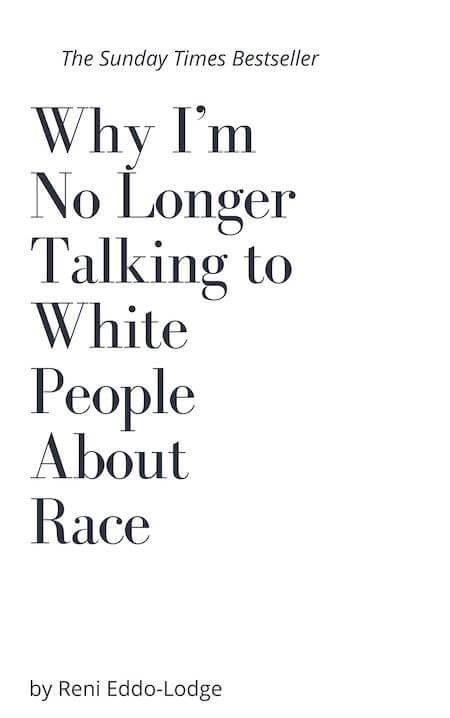
Why I'm No Longer Talking to White People About Race Book Summary
This Why I'm No Longer Talking to White People About Race Book Summary covers the key ideas, lessons, and takeaways in about 20 minutes.
If the racist influence of Britain’s colonial past is to be put to rest, then effective measures need to be implemented. This means white people need to be prepared to acknowledge their own white privilege and be open to a discussion about it.
Culturally, people of color need to be given the opportunity to become positive role models. The continued prioritization of whites leads to perpetuating negative stereotypes that contribute to society’s structural racism.
For Britain to become a truly progressive nation with equal opportunities for all, white Britons need to make serious changes. Recognizing privilege is a start but being engaged in rectifying many other aspects of society is also essential. If Britain as a nation can address its racism, then it can take the necessary steps to erase it.
Helps with these goals
Want the complete 20-minute summary?
- Full structured summary
- Video Summary
- Podcast Summary
- Audio summary
- Key takeaways
- Exercises
- Quiz
- Highlights and notes
- Ask the book with AI
What is in the Why I'm No Longer Talking to White People About Race book summary?
Below is a preview of Sumizeit’s expert-written summary of Why I'm No Longer Talking to White People About Race by Reni Eddo-Lodge . The full summary covers the book’s key ideas in text, audio, and video.
Racism still exists in Britain today. But many don’t realize how deep its roots in British society are. The history of racism in Britain goes back more than two centuries.
If you are one of the majority of white British people who believe racism is not an issue, it’s because you have the luxury of not seeing it. You can ignore the racist rhetoric aimed at minorities. While it may not be as overt as it was in the past, racism is still deeply embedded in British society.
If you want to be part of the solution, a better understanding of the challenges that face non-white Britons is needed. This requires you to understand Britain’s history of racism and how it affects the people who live there today.
While challenging, you have to engage more people in the conversation.
Trying to engage everyone on the subject of race can be tricky. It can lead to further tensions between white and non-white Britons. If you’re white and get defensive when asked your view on racism, this is mostly due to your white fragility. It’s important to remember this is not about your feelings. This about the bigger issue of racism in Britain.
You are probably like many Britons and don’t believe that you are racist. Perhaps you are someone who believes you are “colorblind”. Believe it or not, this does not equate to racism. In fact, by not acknowledging someone’s race is the equivalent of not recognizing their identity.
If Britain’s racist tendencies are going to be addressed, an open dialogue is the only way to do it. Most people agree that a real conversation about racism is the best way to move forward. Despite the frustration implied by the title, talking to white people about race is essential if things are to progress.
Britain’s racist history is often overlooked or swept under the rug.
The Atlantic slave trade is often discussed with a focus on America’s participation in it. Britain, however, was also a key player in the trade and many of its ports were used for the transporting of slaves to the new world.
While it is true the Abolition of Slavery Act ended Britain’s trade in the 19th Century, it had been in existence for nearly 300 years. Even after its end, the British Empire used racist ideology to rule over its colonies.
During wartime, the colonies were treated as Britain’s own disposable army surplus. In World War One, Britain bolstered its ranks with soldiers from Asia and Africa, yet continued to view them as less than equal. Soldiers were segregated in the base camps, and white soldiers were given preferential treatment.
You may know that Britain suffered large numbers of casualties during the war. But you may not realize that more than 70,000 Indian soldiers died fighting for Britain. India did not join the fighting out of loyalty to Britain, but with the belief that Britain would end its colonial rule after the war.
Want the complete 20-minute summary?
- Full structured summary
- Video Summary
- Podcast Summary
- Audio summary
- Key takeaways
- Exercises
- Quiz
- Highlights and notes
- Ask the book with AI
Who should read Why I'm No Longer Talking to White People About Race?
This book is essential for anyone seeking to understand racism's deep roots in British society, particularly white British people who may be unaware of their privilege. It's also valuable for people of color who want historical context for the discrimination they face daily. Educators, policymakers, and anyone committed to building a more equitable society will find Eddo-Lodge's insights crucial.
Why does Why I'm No Longer Talking to White People About Race matter?
Britain often overlooks its own racist history, focusing instead on American racism while ignoring centuries of slavery, colonialism, and institutional discrimination at home. Today's racial disparities in employment, education, housing, and policing are direct consequences of this unexamined past. Understanding this connection is vital for any meaningful progress toward equality in modern Britain.
What are the key themes in Why I'm No Longer Talking to White People About Race?
- Britain's hidden racist history and colonial legacy
- White privilege and the invisibility of systemic racism
- Institutional discrimination in employment and education
- The failure of movements to center marginalized voices
- Immigration policy as a tool of racial control
- Media representation and white-centered culture
What are the key lessons from the Why I'm No Longer Talking to White People About Race book summary?
Racism is structural, not just individual
Racial inequality persists through systemic barriers in hiring, housing, and education rather than through individual prejudice alone. Understanding these structures is essential to addressing them.
White privilege often goes unrecognized
Those with white privilege may not see advantages they receive because the system is designed to center their experience as normal. Recognition of this privilege is the first step toward change.
Britain's slave trade legacy is rarely taught
British ports and merchants profited from the Atlantic slave trade for nearly 300 years, yet this history is minimized in favor of focusing on American slavery. This erasure allows modern racism to persist unchallenged.
Colonial soldiers faced discrimination at home
Tens of thousands of Indian, African, and Asian soldiers fought for Britain in World War One, yet returned to face harassment and segregation. This contradiction reveals the depth of British racial hierarchy.
Immigration restrictions perpetuate racial cycles
Post-war immigration policies that once welcomed Commonwealth citizens were reversed, making integration harder and racial tensions worse. These restrictions remain in place today.
Hiring discrimination is measurable and persistent
Studies show employers select candidates with white-sounding names at significantly higher rates, meaning qualified non-white applicants are systematically overlooked. This bias compounds economic disadvantage across generations.
Colorblindness is not the same as equality
Claiming not to see race erases people's identities and ignores the real experiences shaped by racism. True equality requires acknowledging and addressing racial differences.
White fragility derails honest conversations
When white people become defensive about being asked to examine racism, they shift focus from systemic problems to their own feelings. This emotional response blocks progress.
Representation shapes perception across generations
Children of color receive few positive role models in media while being exposed to negative stereotypes. This imbalance reinforces racist hierarchies and limits aspirations.
Feminist movements often exclude women of color
Mainstream feminism focuses on white women's experiences and ignores how racism compounds the sexism women of color face. True feminism must address intersecting oppressions.
Class analysis in Britain ignores race
British class frameworks describe only white experience, leaving people of color invisible in discussions of inequality. Austerity measures hurt people of color disproportionately, yet their struggles are overlooked.
Past racism directly shapes present inequality
Britain often treats its racist history as resolved, but its colonial past continues to inform current policies, attitudes, and outcomes. Progress requires acknowledging this unbroken chain.
Diversity is feared as a loss of power
Opposition to diverse casting, hiring, and representation often stems from unfounded fears that including others means diminishing white influence. This fear-based resistance blocks necessary change.
Police harassment reflects systemic racism
Even after soldiers and immigrants have settled in Britain, police targeting and harassment of non-white citizens continues institutional racism beyond individual prejudice.
Dialogue across race requires white engagement
Despite the book's confrontational title, real change requires white people to join conversations about race rather than withdraw. Avoidance perpetuates the status quo.
Subtle discrimination is as damaging as overt racism
Being watched, judged, overlooked, or given lower grades for the same work creates a hostile environment that compounds over time. These daily indignities reinforce systemic racism.
Britain's narrative centers itself as white
British identity and institutions are built around whiteness, making people of color feel like perpetual outsiders despite being citizens. This cultural centering must shift.
Government inaction enables institutional racism
Rather than preventing discrimination against immigrants, British governments have made the country harder for them to live in. Policy choices reflect and reinforce racist priorities.
Want the complete 20-minute summary?
- Full structured summary
- Video Summary
- Podcast Summary
- Audio summary
- Key takeaways
- Exercises
- Quiz
- Highlights and notes
- Ask the book with AI
How can you apply ideas from Why I'm No Longer Talking to White People About Race?
- Implement blind recruitment processes by having third parties evaluate applications and exam results to reduce bias in hiring and education
- Ensure diverse hiring panels interview candidates from underrepresented backgrounds for every open position to counter overlooking qualified candidates
- Audit media representation in your organization to identify gaps and actively seek diverse talent in visible, positive roles
- Educate yourself on Britain's colonial and racist history to understand how the past shapes present inequalities
- Listen when people of color describe their experiences with racism instead of becoming defensive or offering counterarguments
- Examine your own workplace, school, or community institutions for racial disparities and advocate for concrete changes to address them
- Support intersectional approaches in social movements by centering voices of women and people of color, not just privileged members of the group
What common mistakes do readers make with Why I'm No Longer Talking to White People About Race?
- Believing racism is primarily an individual attitude rather than a systemic problem embedded in institutions and culture
- Claiming colorblindness as a virtue when it actually erases people's identities and ignores real experiences shaped by racism
- Assuming Britain's racist past is resolved and has no bearing on present-day inequalities and discrimination
- Taking criticism of white privilege as a personal attack rather than examining how systemic advantages affect opportunities and outcomes
Sumizeit Exercises Apply what you've learned
Turn ideas from Why I'm No Longer Talking to White People About Race into action with a short guided reflection: identify the biggest takeaway, connect it to your life, and commit to one step you can take in the next 24 hours.
What is the expert analysis of Why I'm No Longer Talking to White People About Race?
Overview
Why I'm No Longer Talking to White People About Race is a seminal work by British journalist and author Reni Eddo-Lodge. Published amidst growing global conversations on race and systemic injustice, the book stands out for its incisive examination of racism within the specific context of Britain—a narrative often overshadowed by American-centric discourse. Eddo-Lodge’s background as a respected journalist and her recognition through prestigious awards lend considerable authority to her exploration of racial dynamics, historical legacies, and cultural structures in contemporary British society.
Core Thesis
Eddo-Lodge argues that racism in Britain is deeply entrenched, not only as a residue of colonial history but as a living, systemic force perpetuated through cultural norms, institutional practices, and societal attitudes. Central to her thesis is the concept of white privilege and the widespread denial or ignorance of its existence among white Britons, which hinders genuine dialogue and progress. She contends that confronting Britain’s imperial past, acknowledging ongoing racial disparities, and fostering open, uncomfortable conversations about race are essential steps toward dismantling structural racism and creating equitable opportunities for all citizens.
Strengths
- Historical Contextualization: Eddo-Lodge excels at tracing the roots of British racism through a detailed recounting of colonialism, the slave trade, and post-war immigration policies, illuminating how these histories shape present inequalities.
- Intersectional Awareness: The book thoughtfully addresses the intersection of race and gender, particularly critiquing mainstream feminist movements for their failure to represent women of color adequately.
- Clear Articulation of White Privilege: By unpacking the concept of white privilege in everyday settings—from education to policing—Eddo-Lodge makes an abstract idea tangible and relevant to readers.
- Cultural Critique: The analysis of media representation and the white-centric nature of British society provides a compelling argument about how cultural narratives reinforce systemic racism.
- Engagement with Difficult Conversations: The book challenges readers, especially white Britons, to confront uncomfortable truths and move beyond defensiveness toward active participation in anti-racist efforts.
Critiques & Counterarguments
- Potential Oversimplification of White Audiences: While the book’s provocative title and tone aim to jolt white readers into reflection, some critics argue it risks alienating precisely the audience it seeks to engage by framing white people as monolithic or uniformly defensive.
- Limited Exploration of Class Complexities: Although the book addresses class, its focus on race sometimes overshadows the nuanced interplay between socioeconomic status and racial identity, which other scholars emphasize as critical to understanding British inequality.
- Comparative Research Perspectives: Competing research from sociologists like David Goodhart, who emphasize cultural integration and social cohesion, might challenge Eddo-Lodge’s framing of immigration and multiculturalism as primarily racialized struggles.
- Debate on "Colorblindness": Some psychological and social science studies suggest that "colorblind" approaches, while imperfect, can sometimes reduce bias by focusing on commonalities rather than differences—contrasting with Eddo-Lodge’s critique of colorblindness as erasure of identity.
- Evolution of British Society: Real-world evidence points to increasing diversity and some institutional reforms in Britain, which may suggest a more complex and evolving racial landscape than the book’s sometimes static portrayal of systemic racism.
Who Should Read This
This book is essential reading for anyone seeking a profound understanding of race relations in Britain, especially readers interested in the intersections of history, culture, and systemic inequality. It is particularly valuable for white Britons who wish to confront their own positionality and engage meaningfully in anti-racist work. Scholars and students of sociology, postcolonial studies, and social justice will find Eddo-Lodge’s analysis a vital contribution. Additionally, policymakers and educators aiming to foster inclusive environments will benefit from the book’s call for structural change and honest dialogue.
Frequently asked questions about the Why I'm No Longer Talking to White People About Race book summary
What is Why I'm No Longer Talking to White People About Race about?
Reni Eddo-Lodge's book examines how racism remains deeply embedded in British society despite being widely overlooked or dismissed. The title reflects frustration with repeatedly explaining racism to white people, but the book ultimately argues that honest conversation across racial lines is essential for progress. Eddo-Lodge traces Britain's hidden racist history—from slavery and colonialism to immigration restrictions and institutional discrimination—and explores how white privilege and systemic inequality persist today.
Who should read Why I'm No Longer Talking to White People About Race?
This book is essential for white British people who believe racism is not a significant issue or who are unaware of their own privilege. It's equally valuable for people of color seeking historical context and validation of their experiences. Educators, policymakers, journalists, and anyone involved in social justice work will find Eddo-Lodge's analysis crucial for understanding how to build a more equitable society.
What are the main takeaways from Why I'm No Longer Talking to White People About Race?
The main takeaways are that Britain's racist past is not resolved but continues to shape present-day inequality through institutional structures, that white privilege operates invisibly for those who benefit from it, and that meaningful progress requires white people to acknowledge their advantage and engage in difficult conversations. Eddo-Lodge emphasizes that systemic change requires diversifying representation, implementing blind recruitment processes, and centering the voices and experiences of people of color in all movements for equality.
How does Britain's history of slavery and colonialism relate to modern racism?
Britain profited from the slave trade for nearly 300 years through its ports and merchants, yet this history is rarely taught compared to American slavery. The colonial ideology that justified racial hierarchies persists in modern institutions, policies, and attitudes. Post-war immigration restrictions, employment discrimination, and police harassment of minorities are direct continuations of this hierarchical system.
What does Eddo-Lodge mean by white privilege, and why is it hard to recognize?
White privilege refers to systemic advantages white people receive—in hiring, housing, education, and policing—simply because society is centered around whiteness. It's hard to recognize because those with privilege experience it as normal rather than as an advantage. People without privilege can see the disadvantages clearly, but privileged people often only see individual merit or effort, not the structural support beneath their success.
How does institutional racism show up in employment and education?
Research shows employers select candidates with white-sounding names at higher rates, meaning qualified non-white applicants are overlooked based on ethnicity alone. In education, white students receive preferential treatment and higher grades for the same work. These practices compound over time, creating wealth and opportunity gaps that persist across generations.
What is intersectionality and why does Eddo-Lodge emphasize it?
Intersectionality recognizes that people experience overlapping forms of discrimination—for example, women of color face both racism and sexism, which cannot be separated. Eddo-Lodge critiques mainstream feminist movements for focusing only on white women's experiences while ignoring how racism compounds sexism for women of color. True equality requires addressing all interconnected forms of oppression.
What concrete steps does Eddo-Lodge suggest for addressing racism?
Eddo-Lodge recommends implementing blind recruitment and evaluation processes, ensuring diverse candidates are interviewed for opportunities, increasing positive representation of people of color in media and leadership, and actively educating white people about their privilege and Britain's racist history. She emphasizes that institutional changes combined with cultural shifts in representation are necessary to dismantle systemic racism.
About Sumizeit
Sumizeit is a profitable Scomy LLC company based in Miami, Florida. It has been helping readers learn from nonfiction books for 7 years with expert-written summaries in text, audio, podcast, and video.
Want the complete 20-minute summary?
- Full structured summary
- Video Summary
- Podcast Summary
- Audio summary
- Key takeaways
- Exercises
- Quiz
- Highlights and notes
- Ask the book with AI
Here's why readers love Sumizeit
Join thousands of learners getting smarter every day
"Great experience. Detailed summaries. Loved the gamification feature. Makes learning fun. Good customer service. I recommend Sumizeit to anyone. You'll learn a lot."
"I always felt busy but still wanting to keep up with the book discussion in my friend group. This was a great supplement to help me keep reading the books I find fun while keeping up with important books."
"I love this website. Instead of scrolling social media, I find myself learning a lot. I use it everyday. I recommend this app for anyone who is too busy and wants to get up to speed with their favorite books."
Why I'm No Longer Talking to White People About Race Book Summary PDF
Looking for a Why I'm No Longer Talking to White People About Race Book Summary PDF you can save and revisit offline? Our Why I'm No Longer Talking to White People About Race Book Summary PDF captures the book’s core ideas in a clean, printable format — the key frameworks, takeaways, and structure without the fluff. Download the Why I'm No Longer Talking to White People About Race Book Summary PDF when you want a reference you can annotate, share with your team, or review on the go. Get your Why I'm No Longer Talking to White People About Race Book Summary PDF from the download page below.
Download Why I'm No Longer Talking to White People About Race Book Summary PDFPeople also liked these summaries
Readers who explored Why I'm No Longer Talking to White People About Race often enjoyed these titles next.



Want the complete 20-minute summary?
- Full structured summary
- Video Summary
- Podcast Summary
- Audio summary
- Key takeaways
- Exercises
- Quiz
- Highlights and notes
- Ask the book with AI
Featured Book Titles
Popular Book Summaries at sumizeit, leading book summary app