New users get 3 free summaries! Upgrade for unlimited access to 1,000+ book summaries.

Upgrade Now
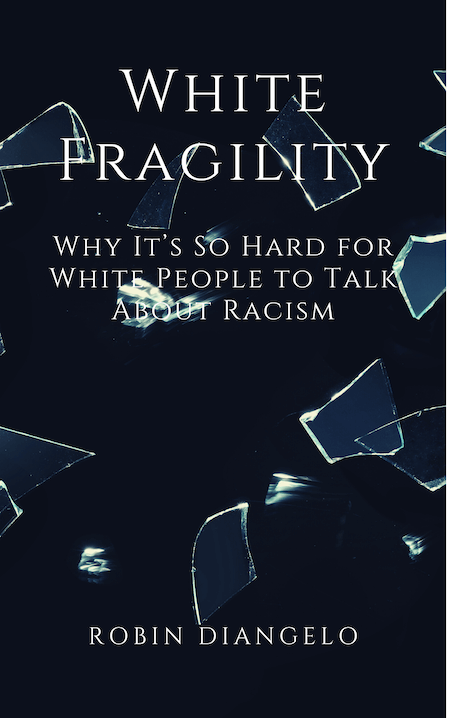
White Fragility by Robin DiAngelo book cover
Buy Book on Amazon

As an Amazon Associate, Sumizeit earns from qualifying purchases.

Book Summary

White Fragility Book Summary

By Robin DiAngelo

This White Fragility Book Summary covers the key ideas, lessons, and takeaways in about 20 minutes.

20 min read Audio available
Racism is not just the white supremacist in the media who is seen assaulting a black man. Instead, the roots of race-based bias are far deeper and include actions and language that masquerade as being politically correct. As history has shown, racism is wrapped up in a set of long-held assumptions that can be difficult to challenge and detect. As members of society, we must all embrace the discomfort that often comes with conversations about race. It is only through honest dialogue that change will take place on a large and permanent scale.

4.8

Stars

Average ratings on iOS and Google Play

100,000+

Users

On all platforms

6+

Years

Experience igniting personal growth

Want the complete 20-minute summary?

  • Full structured summary
  • Video Summary
  • Podcast Summary
  • Audio summary
  • Key takeaways
  • Exercises
  • Quiz
  • Highlights and notes
  • Ask the book with AI

What is in the White Fragility book summary?

Below is a preview of Sumizeit’s expert-written summary of White Fragility by Robin DiAngelo. The full summary covers the book’s key ideas in text, audio, and video.

This is a book for white people who feel uncomfortable talking about race. It is also for people of color who wonder why it is so hard for white people to talk about race. White Fragility: Why It’s So Hard for White People to Talk about Racism examines the complex, multifaceted phenomenon of ‘white fragility’ and, in doing so, deconstructs the underlying reasons why so many individuals are afraid to speak out in the name of racial equality.

A Fundamental Contradiction

Race is not a genetic reality. While people of different races physically look different based on the color of their skin, this is actually a reflection of geography, not genetics.

As such, race is not biological--it is a social construct.

Race is a collection of ideas that teach us to see people who look a certain way as being part of a particular race. From there, we make assumptions about the societal role of these individuals, for better or for worse.

What function does race serve as a social construct?

Historically, race solves a fundamental contradiction in the United States. This country was built with the intention of creating an ideal reality. Instead, extreme inequalities developed, such as European Americans owning African Americans as slaves.

In order to justify this dichotomy, some look to the concept of race science, a pseudo-science ideology that claims African Americans are inherently lesser than European Americans. Therefore, African Americans do not require the same rights as their European counterparts.

While we now know that this flawed argument was really an excuse to enslave African Americans and used them for cheap labor, it was a commonly held belief in the early days of the United States.

Discrimination v. Racial Prejudice

When having a conversation about race, you may find that the person you are speaking with uses the words discrimination and racial prejudice interchangeably. While similar, the two terms have different meetings:

Racial Prejudice--When you are prejudiced, you are literally pre-judging someone. In the case of racial prejudice, you are pre-judging that person based on race.

Discrimination--Discrimination takes racial prejudice a step further. Now, not only are you being prejudiced against a person on account of their race, but you are also acting on these biases.

In combining these two terms, we arrive at racism. By definition, racism refers to one powerful racial group using their power and privilege against a less dominant group in a systematic way.

This is why it is factually inaccurate to say that black people are racist towards white people. The power imbalance between the two racial groups is a defining component of racism.

That said, it is still possible for a black person to discriminate against or be prejudiced towards white people, but this concept is not racism. White people create laws and act like the majority.

For instance, if a black realtor tells a white woman that she will not work with her based on her race, that is racial prejudice and discrimination.


The full structured summary is available after upgrading

Want the complete 20-minute summary?

  • Full structured summary
  • Video Summary
  • Podcast Summary
  • Audio summary
  • Key takeaways
  • Exercises
  • Quiz
  • Highlights and notes
  • Ask the book with AI

Who should read White Fragility?

White Fragility is essential reading for white people who feel defensive or uncomfortable discussing race, as well as for people of color seeking to understand why these conversations prove so difficult. Anyone committed to meaningful dialogue about systemic racism and its ongoing impact will find value in DiAngelo's analysis of the psychological and social barriers that prevent honest conversations.

Why does White Fragility matter?

In today's society, racism persists not primarily through overt bigotry but through coded language, institutional systems, and deeply ingrained ideologies that most people don't recognize or acknowledge. Understanding white fragility—the defensive reactions that shut down racial conversations—is critical for dismantling systemic racism and building a more equitable society through genuine dialogue.

What are the key themes in White Fragility?

  • Race as a social construct rather than biological reality
  • Systemic racism versus individual prejudice and discrimination
  • White fragility as defensive avoidance of racial accountability
  • Coded language and how prejudice disguises itself in politically correct speech
  • Historical context: how mid-20th century events shaped denial of ongoing racism
  • Individualism, meritocracy, and objectivity as ideologies that mask racial inequality

What are the key lessons from the White Fragility book summary?

  1. Race Is a Social Construct, Not Biology

    Physical differences between racial groups reflect geography, not genetics. Race serves as a social construct created to justify historical inequalities and power imbalances.

  2. Racism Requires Systemic Power

    Racism is defined by the systematic use of power and privilege by a dominant group against a marginalized group. This distinction means that individual prejudice and discrimination are different from institutional racism.

  3. The Civil Rights Era Created False Closure

    The 1960s civil rights movement and the Civil Rights Act of 1964 led many white people to believe racism was solved, allowing them to view racism as extreme and cartoonish rather than systemic and ongoing.

  4. Coded Language Disguises Racial Bias

    Words like 'poor,' 'crime,' 'clean,' and 'affluent' function as racial code, allowing people to express racist preferences without explicitly mentioning race.

  5. White Fragility Is a Defensive Response

    White fragility describes the emotional discomfort and defensiveness white people experience when confronted with the reality of racism, causing them to shut down conversations rather than engage honestly.

  6. Individualism Ignores Systemic Barriers

    The belief that individuals control their own destiny ignores how systemic racism creates unequal starting points and obstacles that have nothing to do with effort or merit.

  7. Meritocracy Assumes a Level Playing Field

    The ideology that people earn what they deserve obscures the structural advantages given to white people and the barriers built into systems that disadvantage people of color.

  8. Objectivity Is a Myth That Enables Inaction

    Claiming to be unbiased allows people to believe they don't need to do the work of understanding or addressing racism, even when they benefit from racist systems.

  9. Segregation Perpetuates Ignorance

    Racial and economic segregation in neighborhoods, schools, and workplaces insulates white people from the reality of black America and reinforces stereotypes through isolation.

  10. Historical Justifications Continue Today

    The pseudo-scientific racism used to justify slavery never fully disappeared; it evolved into more subtle forms embedded in language, policy, and cultural beliefs.

  11. White People Must Challenge Their Discomfort

    Moving toward racial justice requires white people to sit with discomfort during conversations about race rather than shutting down or becoming defensive.

  12. Racism Operates Beyond Individual Intent

    You can participate in and benefit from racist systems without conscious racist beliefs or deliberate racist actions, making systemic awareness essential.

  13. Defensiveness Prevents Understanding

    When white people respond to accusations of racism with defensiveness rather than curiosity, they miss opportunities to learn and grow in their racial awareness.

  14. Majority Status Creates Blind Spots

    White people's majority status means racism often goes unnoticed by them because they are not forced to navigate a world shaped by their marginalization.

  15. Dialogue Is Essential for Change

    Lasting social change requires honest conversations about race, which means moving beyond the defensive fragility that currently prevents meaningful dialogue.

Want the complete 20-minute summary?

  • Full structured summary
  • Video Summary
  • Podcast Summary
  • Audio summary
  • Key takeaways
  • Exercises
  • Quiz
  • Highlights and notes
  • Ask the book with AI

How can you apply ideas from White Fragility?

  • Recognize and challenge coded language in everyday conversations, media, and policy discussions
  • Examine your own defensiveness when race is discussed and practice sitting with discomfort rather than shutting down
  • Question meritocratic assumptions by researching the structural barriers and systemic advantages embedded in systems you navigate
  • Educate yourself about the actual history of racism in America rather than relying on simplified narratives of progress
  • Build authentic relationships across racial lines to counter the segregation that enables racial ignorance
  • Speak up when you hear race-neutral language being used to mask racist attitudes or policies
  • Support institutional changes that address systemic racism rather than assuming individual effort alone solves inequality

What common mistakes do readers make with White Fragility?

  • Believing that racism ended with the Civil Rights Act and that the problem is now solved
  • Using race-neutral language as a substitute for directly addressing racial bias and systemic racism
  • Assuming that because you don't hold consciously racist beliefs, you cannot benefit from or perpetuate racist systems
  • Becoming defensive when confronted with racism rather than listening and seeking to understand the other person's experience

Sumizeit Exercises Apply what you've learned

Turn ideas from White Fragility into action with a short guided reflection: identify the biggest takeaway, connect it to your life, and commit to one step you can take in the next 24 hours.

Unlock book-specific exercises with a Sumizeit membership

Unlock Exercises

What is the expert analysis of White Fragility?

Overview

White Fragility, authored by Dr. Robin DiAngelo, is a seminal work published in 2018 that has profoundly influenced contemporary discourse on race relations, particularly within the United States. DiAngelo, a seasoned academic in multicultural education and social justice, leverages her extensive experience to dissect the defensive responses white people often exhibit when confronted with discussions about racism. This book is significant not only for its timely intervention in racial dialogue but also for its role in popularizing the concept of "white fragility"—a term that encapsulates the discomfort and resistance white individuals display when their racial biases are challenged.

Core Thesis

The central argument of White Fragility posits that racism is not merely the product of overtly racist acts or extremist ideologies but is deeply embedded in the social fabric and maintained through subtle, often unconscious, defensive behaviors by white individuals. DiAngelo contends that these defensive reactions—termed white fragility—serve to uphold systemic racial inequalities by shutting down meaningful conversations about race and perpetuating a status quo that privileges whiteness. The book further elucidates how societal ideologies such as individualism, meritocracy, and objectivity obscure the realities of systemic racism, enabling white people to deny their complicity and resist accountability.

Strengths

l>
  • Conceptual Clarity: DiAngelo adeptly unpacks complex sociological and psychological phenomena into accessible language, making the intricate dynamics of race and power comprehensible to a broad audience.
  • Systemic Focus: The book shifts the conversation from individual acts of prejudice to the systemic nature of racism, emphasizing institutional power and historical context.
  • Practical Framework: By introducing the concept of white fragility, the author provides a useful lens for understanding defensive behaviors that often derail racial discussions, offering readers a vocabulary to identify and address these patterns.
  • Historical Contextualization: The integration of historical analysis, such as the legacy of slavery, segregation, and civil rights movements, grounds the discussion in a broader socio-political framework.
  • Call to Action: The book encourages white readers to embrace discomfort and engage in honest dialogue, fostering self-reflection and societal change.
  • Critiques & Counterarguments

    l>
  • Overgeneralization of White Responses: Critics argue that DiAngelo’s portrayal of white fragility risks homogenizing white individuals, potentially alienating those who do not fit the described defensive patterns and overlooking the diversity of white experiences and intentions.
  • Limited Empirical Evidence: While the book is rich in anecdotal and qualitative observations, some scholars note a relative paucity of rigorous empirical data supporting the universality or causality of white fragility as a psychological or sociological phenomenon.
  • Potential for Reinforcing Divisions: The framing of racism as a primarily white phenomenon with an emphasis on white defensiveness may inadvertently entrench racial divides by fostering guilt or resentment rather than constructive dialogue.
  • Competing Theories on Racism: Alternative frameworks, such as those emphasizing class, economic inequality, or intersectionality, suggest that race cannot be fully understood outside of broader social hierarchies and that focusing narrowly on whiteness may obscure other critical dimensions.
  • Meritocracy and Individualism Debates: Opposing schools of thought argue that while systemic barriers exist, individual agency and meritocratic principles still play significant roles in social mobility, challenging the book’s more structuralist interpretation.
  • Who Should Read This

    White Fragility is essential reading for educators, social justice advocates, policymakers, and any individuals seeking to deepen their understanding of systemic racism and the sociopsychological barriers to racial equity. It is particularly valuable for white readers who wish to confront their own biases and engage more effectively in conversations about race. Additionally, the book serves as a foundational text for those interested in critical race theory and multicultural education, providing a framework to navigate the complexities of race in contemporary society.

    Frequently asked questions about the White Fragility book summary

    What is White Fragility about?

    White Fragility: Why It's So Hard for White People to Talk About Racism by Robin DiAngelo explores why white people feel defensive and uncomfortable discussing race. The book examines how systemic racism operates through coded language, historical denial, and deeply held ideologies like individualism and meritocracy that allow white people to avoid acknowledging their role in perpetuating racial inequality.

    Who should read White Fragility?

    White Fragility is essential for white people who feel defensive or uncomfortable during conversations about race, as well as for people of color seeking to understand these defensive reactions. Anyone interested in having meaningful conversations about systemic racism and wanting to contribute to racial justice will benefit from DiAngelo's insights.

    What are the main takeaways from White Fragility?

    The main takeaways include understanding that race is a social construct used to justify inequality, recognizing that racism is systemic rather than just individual prejudice, learning how coded language masks racial bias, and understanding that white fragility—defensive reactions to racial discussions—prevents the honest dialogue necessary for change. DiAngelo emphasizes that lasting social change requires white people to embrace discomfort and engage authentically in conversations about race.

    What is white fragility?

    White fragility refers to the emotional discomfort and defensive reactions that white people experience when confronted with information about racism and their role in perpetuating it. Rather than engaging with these difficult truths, white fragility causes people to shut down conversations, deflect blame, or respond with anger—preventing the honest dialogue needed to address systemic racism.

    How does DiAngelo define racism?

    DiAngelo defines racism as the systematic use of power and privilege by a dominant racial group against a less dominant group. This definition distinguishes racism from individual prejudice or discrimination, emphasizing that racism requires institutional power. This is why it is factually inaccurate to claim that people of color can be racist toward white people in the same systemic way.

    What role does history play in understanding modern racism?

    DiAngelo argues that events like the Civil Rights Movement and the Civil Rights Act of 1964 created a false sense of closure, causing many white people to view racism as extreme and solved rather than systemic and ongoing. This historical misunderstanding enabled white people to deny their complicity in racism and avoid engaging in meaningful conversations about it.

    How does coded language perpetuate racism?

    Coded language allows people to express racist preferences and biases without explicitly mentioning race. Words like 'poor,' 'crime,' 'clean,' and 'affluent' function as racial code words tied to predominantly black or white neighborhoods. This allows racism to persist while maintaining plausible deniability and the appearance of objectivity.

    About Sumizeit

    Sumizeit is a profitable Scomy LLC company based in Miami, Florida. It has been helping readers learn from nonfiction books for 7 years with expert-written summaries in text, audio, podcast, and video.

    Want the complete 20-minute summary?

    • Full structured summary
    • Video Summary
    • Podcast Summary
    • Audio summary
    • Key takeaways
    • Exercises
    • Quiz
    • Highlights and notes
    • Ask the book with AI

    Here's why readers love Sumizeit

    Join thousands of learners getting smarter every day

    "Great experience. Detailed summaries. Loved the gamification feature. Makes learning fun. Good customer service. I recommend Sumizeit to anyone. You'll learn a lot."

    Chen, TrustPilot

    "I always felt busy but still wanting to keep up with the book discussion in my friend group. This was a great supplement to help me keep reading the books I find fun while keeping up with important books."

    Daniel, TrustPilot

    "I love this website. Instead of scrolling social media, I find myself learning a lot. I use it everyday. I recommend this app for anyone who is too busy and wants to get up to speed with their favorite books."

    Erica, TrustPilot

    White Fragility Book Summary PDF

    Looking for a White Fragility Book Summary PDF you can save and revisit offline? Our White Fragility Book Summary PDF captures the book’s core ideas in a clean, printable format — the key frameworks, takeaways, and structure without the fluff. Download the White Fragility Book Summary PDF when you want a reference you can annotate, share with your team, or review on the go. Get your White Fragility Book Summary PDF from the download page below.

    Download White Fragility Book Summary PDF

    People also liked these summaries

    Readers who explored White Fragility often enjoyed these titles next.

    Browse all books →

    Want the complete 20-minute summary?

    • Full structured summary
    • Video Summary
    • Podcast Summary
    • Audio summary
    • Key takeaways
    • Exercises
    • Quiz
    • Highlights and notes
    • Ask the book with AI