


As an Amazon Associate, Sumizeit earns from qualifying purchases.
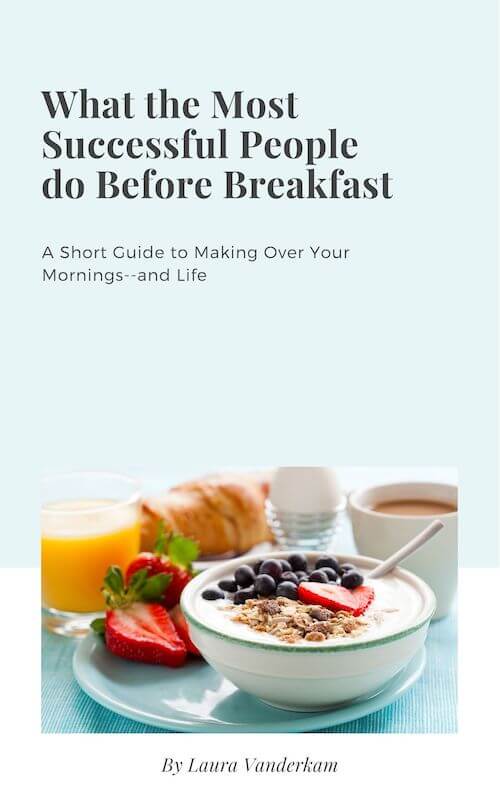
What the Most Successful People do Before Breakfast Book Summary
This What the Most Successful People do Before Breakfast Book Summary covers the key ideas, lessons, and takeaways in about 20 minutes.
Helps with these goals
Want the complete 20-minute summary?
- Full structured summary
- Video Summary
- Podcast Summary
- Audio summary
- Infographic
- Key takeaways
- Exercises
- Quiz
- Highlights and notes
- Ask the book with AI
What is in the What the Most Successful People do Before Breakfast book summary?
Below is a preview of Sumizeit’s expert-written summary of What the Most Successful People do Before Breakfast by Laura Vanderkam. The full summary covers the book’s key ideas in text, audio, and video.
Time-management expert Laura Vanderkam knows the importance of a good morning routine. Vanderkam argues that although days may feel short, we aren’t capitalizing enough on the best-kept secret of some of the most successful people: the hours before breakfast. This is where you can find time to work on a dream project, get ahead on your career, and stay on top of your relationships. In this book, Vanderkam reveals how hyper-productive people use this time and how you can too.
Mornings can be hectic for most households so it can be easy to fill them with small chores or inconsequential tasks.
The author explains how in her household, mornings can get pretty hectic. After her 7 AM wake-up time, she has to run around making sure her children get out the door and to school on time before getting herself ready for work. Oftentimes, she’s tempted to spend the rest of the morning online, checking e-mails and decompressing.
But having studied how the most productive people use their time, Vanderkam knows that this isn’t the only way. The most productive people know that mornings can be sacred: a time square away the things that are most important to us so they don’t get pushed down the to-do list during the rest of the day.
Think of the things that you value that get lost in the hustle and bustle of day to day life. It could be exercise and stretching, reading and working on writing a book, or writing an annual report for work. These precious tasks are important to do the first thing because otherwise, the day can wear us out before we’ve had a chance to get to them. This makes morning the perfect time to fit these things in, while we’re still fresh-brained and energetic.
James Citrin, the leader of a headhunting agency called Spencer Stuart’s North American Board and CEO Practice, interviewed executives about morning routines and unsurprisingly found that 18 of 20 woke up before 6 A.M. every day.
Steve Reinemund, the former CEO of PepsiCo and dean of the School of Business at Wake Forest University is another example. He starts his day at 5 a.m. and goes for a four-mile run. After that, he either reads or prays. Only then is it time for breakfast and morning-time with the kids.
How do you know which “important things” to do in the morning? Choose the hard but rewarding things.
The author notes that it may be difficult to distinguish the things that are important to you from the things that will get done anyway. But this distinction is crucial—the best morning routines are those that fit in projects that require extra willpower that we always find excuses not to do.
Vanderkam explains that research has shown that tasks requiring self-discipline are easier to do when the day is young, and our energy reserves aren’t depleted.
Want the complete 20-minute summary?
- Full structured summary
- Video Summary
- Podcast Summary
- Audio summary
- Infographic
- Key takeaways
- Exercises
- Quiz
- Highlights and notes
- Ask the book with AI
Who should read What the Most Successful People do Before Breakfast?
This book is ideal for ambitious professionals, entrepreneurs, and anyone feeling time-starved by competing demands. If you struggle to make progress on meaningful projects or personal goals while managing work and family, Laura Vanderkam's insights will resonate with you. Particularly valuable for those who want to reclaim control of their schedule without sacrificing relationships or well-being.
Why does What the Most Successful People do Before Breakfast matter?
In an era of constant distraction and overcommitment, mornings represent untapped potential that most people waste on routine tasks and digital clutter. What the Most Successful People do Before Breakfast reveals that the difference between those who achieve their dreams and those who don't often comes down to how they spend their early hours. The book offers a practical roadmap to reclaim this sacred time and redirect it toward what truly matters.
What are the key themes in What the Most Successful People do Before Breakfast?
- Morning hours as a strategic advantage for focused work
- The relationship between willpower, self-discipline, and time of day
- Intentional time use as a driver of career, relationships, and personal growth
- How successful people prioritize what matters over what's urgent
- Time tracking and awareness as the foundation for change
- The importance of logistics and realistic planning in habit formation
What are the key lessons from the What the Most Successful People do Before Breakfast book summary?
Early mornings provide the highest-quality hours of your day
When you're fresh and your willpower is intact, you can accomplish what feels impossible later. Most successful executives wake before 6 AM to protect this time for priorities.
Distinguish between important tasks and tasks that will get done anyway
Focus morning time on work that requires discipline and long-term thinking—things that don't have immediate payoff but transform your life once completed.
Three life domains deserve morning time: career, relationships, and self-care
Strategic work, quality time with loved ones, and personal nourishment are the categories where morning energy creates the most impact.
Lack of interruptions makes mornings ideal for deep work
Before the world wakes up, you have uninterrupted focus that allows complex thinking and creative output impossible during a typical workday.
Mornings are the best time for quality relationships
When you're not depleted by the day's demands, you can be fully present with your partner or children, building connection that busy evenings rarely allow.
Morning exercise has stronger long-term benefits than evening workouts
People who exercise early are more consistent and gain physiological advantages, as morning movement counteracts stress hormones before they accumulate throughout the day.
Spiritual and meditative practices anchor your entire day
Starting with prayer, meditation, or reflection provides clarity, reduces stress, and helps professionals communicate their vision more effectively to others.
Track your time to reveal where unproductive hours actually are
Most people misjudge how they spend their time; logging a full week reveals where real hours are lost and where you can reallocate activities.
Don't add morning routines on top of existing commitments
Instead of extending your day, replace low-value nighttime activities with meaningful morning pursuits by examining what truly needs to happen.
Visualize your ideal morning before attempting to build it
Clarity about what you want to accomplish creates motivation and helps you work backward to determine logistics and required wake-up times.
Start with one habit, then layer in others gradually
Building sustainable routines requires patience; adding too much too fast leads to burnout and abandoned goals.
Make your new routine easier through environmental design
Lay out exercise clothes, prep breakfast, or position your easel nearby to reduce friction and strengthen habit formation.
Reward yourself after completing habits to build positive association
Small rewards like your favorite coffee or a treat after sticking to your routine creates anticipation and reinforces the behavior.
Adapt your routine as life circumstances change
Flexibility is essential; what works during one life season may need adjustment later, and that's a sign of wisdom, not failure.
Plan weekend activities in advance to avoid wasting free time
Creating a list of three to five intentional activities before the weekend prevents mindless screen time and builds anticipation for genuine rest and pleasure.
Time tracking at work reveals whether you're actually working as much as you think
People typically overestimate their work hours; accurate logging shows where time actually goes and exposes tasks that don't produce meaningful results.
Break large goals into smaller daily targets for better accountability
Focusing on one achievable daily goal creates momentum and prevents overwhelm that comes from pursuing distant, abstract objectives.
Batch-process low-value tasks rather than scattering them throughout your day
Designating specific time blocks for email and administrative work prevents constant context-switching that kills deeper, more valuable work.
Build and maintain career capital through relationships and reliable performance
Career advancement depends on growing your network, skills, and reputation; consistent connection and delivery build opportunities others remember and recommend.
Recognize progress and celebrate wins to sustain happiness and productivity
Research shows 76% of breakthrough days coincide with emotional highs; deliberately noticing positive feedback and accomplishments compounds your motivation and resilience.
Want the complete 20-minute summary?
- Full structured summary
- Video Summary
- Podcast Summary
- Audio summary
- Infographic
- Key takeaways
- Exercises
- Quiz
- Highlights and notes
- Ask the book with AI
How can you apply ideas from What the Most Successful People do Before Breakfast?
- Start a one-week time audit to identify where you're actually spending hours and where unproductive time is hidden
- Set a specific wake-up time 30-60 minutes earlier than usual and block that time for a single priority activity
- Create a three-to-five item weekend activity list at the start of each week to replace aimless screen time
- Apply time-blocking at work to batch similar tasks and protect deep work hours from constant interruptions
- Schedule one career-building activity, one relationship moment, and one self-care practice into your week to address all three life domains
- Establish an accountability partnership where you check in daily or weekly on specific goals
- Design your environment to make morning habits easier (lay out clothes, prep breakfast, position equipment the night before)
What common mistakes do readers make with What the Most Successful People do Before Breakfast?
- Assuming your current schedule has no flexibility and accepting time poverty as inevitable rather than examining where unproductive hours accumulate
- Trying to add all desired habits at once instead of building one routine solidly before layering in additional practices
- Treating morning time as additional hours rather than reallocating time from lower-value nighttime or workday activities
- Confusing busy-ness with productivity by filling mornings with tasks that don't advance your career, relationships, or well-being
- Abandoning a new routine after a few weeks because results aren't immediate, rather than giving habits time to settle and compound
Sumizeit Exercises Apply what you've learned
Turn ideas from What the Most Successful People do Before Breakfast into action with a short guided reflection: identify the biggest takeaway, connect it to your life, and commit to one step you can take in the next 24 hours.
What is the expert analysis of What the Most Successful People do Before Breakfast?
Overview
What the Most Successful People Do Before Breakfast is authored by Laura Vanderkam, a renowned time-management expert with a prolific background in productivity literature. Vanderkam’s expertise, honed through extensive research and practical experience, has earned her recognition in major media outlets and a dedicated following among professionals seeking to optimize their daily routines. This book stands out for its focused exploration of the often-overlooked early morning hours as a strategic window for personal and professional growth. Vanderkam’s approach synthesizes empirical insights with relatable narratives, making the book both accessible and actionable for a broad audience.
Core Thesis
Vanderkam’s central argument is that the early morning hours before breakfast represent a uniquely fertile period for cultivating success across multiple domains of life. She posits that these hours, when one’s willpower and energy reserves are highest and distractions minimal, are ideal for engaging in meaningful, high-impact activities that are often neglected during the busyness of the day. By deliberately structuring mornings to prioritize career development, relationship building, and self-care, individuals can dramatically enhance their productivity, well-being, and overall life satisfaction. The book advocates for intentional time tracking, thoughtful planning, and incremental habit formation to unlock the potential of this sacred time.
Strengths
- Empirical grounding: Vanderkam supports her recommendations with research on willpower, energy cycles, and productivity, lending scientific credibility to her claims.
- Practical frameworks: The book offers concrete strategies such as time logging, prioritization, and habit stacking, making it a useful guide rather than mere motivational rhetoric.
- Holistic approach: By addressing career, relationships, and self-care, Vanderkam acknowledges the multifaceted nature of success and fulfillment.
- Rich anecdotal evidence: Profiles of executives, creatives, and professionals provide vivid illustrations of the principles in action, enhancing reader engagement.
- Adaptability and patience: The emphasis on gradual habit formation and routine fine-tuning respects individual differences and real-world constraints.
Critiques & Counterarguments
- Overemphasis on mornings: While mornings can be productive, the book may underplay the value of other times of day for peak performance, which varies by chronotype and personal circumstance. Research on evening productivity and flexible work patterns challenges the universality of early rising as a success factor.
- Socioeconomic blind spots: The idealized morning routines described often assume a degree of privilege—such as stable childcare, flexible schedules, and safe environments—that may not be accessible to all readers, limiting the book’s applicability.
- Potential for burnout: The encouragement to optimize every morning hour risks promoting a culture of overwork and self-exploitation, especially if readers feel pressured to perform relentlessly without adequate rest.
- Limited engagement with opposing views: The book does not deeply address alternative productivity philosophies, such as mindfulness-based approaches that prioritize presence over output, or critiques of time management that emphasize systemic rather than individual change.
- Evidence scope: Although Vanderkam cites studies and interviews, some recommendations rely heavily on anecdotal evidence, which may not generalize across diverse populations or professions.
Who Should Read This
This book is ideally suited for entrepreneurs, professionals, and ambitious individuals who seek to reclaim control over their time and maximize their daily productivity. It appeals particularly to those who feel overwhelmed by competing demands and are looking for structured, research-informed strategies to carve out space for meaningful work and personal growth. Readers open to experimenting with their routines and committed to incremental habit change will find Vanderkam’s guidance both inspiring and practical. However, those with unconventional schedules, caregiving responsibilities, or a preference for flexible productivity models may need to adapt the advice thoughtfully to their contexts.
Frequently asked questions about the What the Most Successful People do Before Breakfast book summary
What is What the Most Successful People do Before Breakfast about?
What the Most Successful People do Before Breakfast by Laura Vanderkam is a practical guide to reclaiming your early morning hours for meaningful work, relationships, and self-care. The book reveals how high-performing executives and entrepreneurs use the pre-dawn hours to advance their careers, strengthen relationships, and nurture themselves—and how you can adopt these strategies regardless of your schedule. Through real examples and actionable steps, Vanderkam shows that mornings are not just about waking early, but about protecting time for what matters most.
Who should read What the Most Successful People do Before Breakfast?
This book is ideal for busy professionals, entrepreneurs, and anyone who feels time-starved by competing demands. It's particularly valuable if you struggle to make progress on important goals or long-term projects while juggling work and family responsibilities. Whether you're seeking to deepen relationships, advance your career, invest in self-care, or simply feel like you have more control over your day, Laura Vanderkam's insights will help you reclaim and redirect your time.
What are the main takeaways from What the Most Successful People do Before Breakfast?
The book's core message is that mornings represent untapped potential where your highest-quality hours and strongest willpower reside. Key takeaways include: track your time to understand where it actually goes, protect early hours for work requiring discipline and focus, use mornings for career advancement, relationship building, and personal growth, and plan your weekends and workdays intentionally. Success comes not from adding more to your plate but from reallocating low-value activities and building sustainable habits gradually.
How do I start implementing What the Most Successful People do Before Breakfast?
Begin by tracking your time for one full week to see where hours are actually spent, particularly late-night and early-morning activities. Next, visualize your ideal morning and identify one priority to focus on first—whether that's exercise, creative work, family time, or career strategy. Finally, work backward from your desired wake time to determine necessary bedtime and logistics, then start small by building a single habit before layering in additional practices. Remember that consistency matters more than perfection, and expect several weeks for new routines to feel natural.
Can these strategies work if I'm not naturally a morning person?
Yes. While What the Most Successful People do Before Breakfast features examples of successful early risers, Laura Vanderkam emphasizes that the core principle is protecting focused time for priorities—whether that's dawn or another part of your day. The key is identifying your highest-quality hours and barriers to uninterrupted time, then building your routine around that reality. Many people discover they have more flexibility than they assumed once they truly track their time and question assumptions about what's non-negotiable.
How long does it take to build a morning routine using these principles?
According to Vanderkam, building a sustainable habit typically takes weeks or months rather than days. She recommends starting with one practice and resisting the urge to add multiple habits simultaneously, as overcommitting leads to burnout and abandoned routines. Patience and gradual progression are essential. Many successful people adjust their routines periodically as life circumstances change, treating habit-building as an ongoing practice rather than a one-time achievement.
What if my morning is already full with family responsibilities or a commute?
What the Most Successful People do Before Breakfast addresses this directly: don't add to your hours; reallocate them. The book suggests examining what truly must happen in your morning versus assumptions you've accepted. Many people discover they can wake 20-30 minutes earlier by going to bed earlier, or create morning time by cutting activities that provide no real value. Some also combine priorities—like using commute time with a partner for conversation or bringing children into morning exercise routines.
About Sumizeit
Sumizeit is a profitable Scomy LLC company based in Miami, Florida. It has been helping readers learn from nonfiction books for 7 years with expert-written summaries in text, audio, podcast, and video.
Want the complete 20-minute summary?
- Full structured summary
- Video Summary
- Podcast Summary
- Audio summary
- Infographic
- Key takeaways
- Exercises
- Quiz
- Highlights and notes
- Ask the book with AI
Here's why readers love Sumizeit
Join thousands of learners getting smarter every day
"Great experience. Detailed summaries. Loved the gamification feature. Makes learning fun. Good customer service. I recommend Sumizeit to anyone. You'll learn a lot."
"I always felt busy but still wanting to keep up with the book discussion in my friend group. This was a great supplement to help me keep reading the books I find fun while keeping up with important books."
"I love this website. Instead of scrolling social media, I find myself learning a lot. I use it everyday. I recommend this app for anyone who is too busy and wants to get up to speed with their favorite books."
What the Most Successful People do Before Breakfast Book Summary PDF
Looking for a What the Most Successful People do Before Breakfast Book Summary PDF you can save and revisit offline? Our What the Most Successful People do Before Breakfast Book Summary PDF captures the book’s core ideas in a clean, printable format — the key frameworks, takeaways, and structure without the fluff. Download the What the Most Successful People do Before Breakfast Book Summary PDF when you want a reference you can annotate, share with your team, or review on the go. Get your What the Most Successful People do Before Breakfast Book Summary PDF from the download page below.
Download What the Most Successful People do Before Breakfast Book Summary PDFPeople also liked these summaries
Readers who explored What the Most Successful People do Before Breakfast often enjoyed these titles next.




Want the complete 20-minute summary?
- Full structured summary
- Video Summary
- Podcast Summary
- Audio summary
- Infographic
- Key takeaways
- Exercises
- Quiz
- Highlights and notes
- Ask the book with AI
Featured Book Titles
Popular Book Summaries at sumizeit, leading book summary app