


As an Amazon Associate, Sumizeit earns from qualifying purchases.
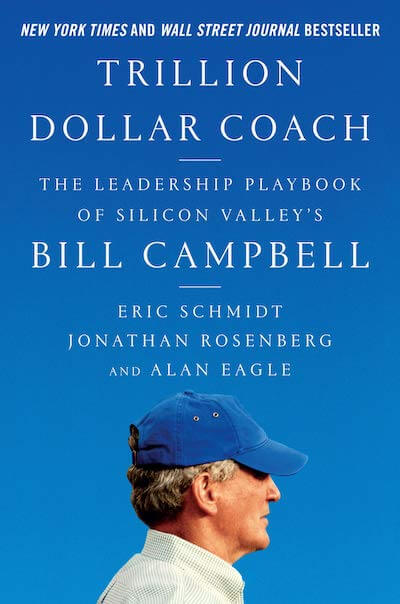
Trillion Dollar Coach Book Summary
This Trillion Dollar Coach Book Summary covers the key ideas, lessons, and takeaways in about 20 minutes.
Helps with these goals
Want the complete 20-minute summary?
- Full structured summary
- Video Summary
- Podcast Summary
- Audio summary
- Key takeaways
- Exercises
- Quiz
- Highlights and notes
- Ask the book with AI
What is in the Trillion Dollar Coach book summary?
Below is a preview of Sumizeit’s expert-written summary of Trillion Dollar Coach by Eric Schmidt. The full summary covers the book’s key ideas in text, audio, and video.
Bill Campbell is a football and business legend.
This working-class Pennsylvania man took the lessons he learned as a college football coach to the world of business. His untraditional business ideas about leadership and team-building made him one of the most influential business coaches of his time.
With influences on Apple and Google, Campbell made a name for himself in the business world in the last few decades of his life.
“This is the power of coaching in general: the ability to offer a different perspective, one unaffected by being “in the game.”- Eric Schmidt
In “Trillion Dollar Coach” by Eric Schmidt, Jonathan Rosenberg, and Alan Eagle you will learn about Campbell’s life and ideas through interviews of the people that knew him.
Bill Campbell Started As A Football Coach
Campbell was born in Homestead, Pennsylvania in 1940. Campbell’s dad was a gym teacher, as well as a millworker at night.
Campbell was always a very passionate and hardworking person. When he was a teen, he wrote an op-ed in his school newspaper to remind his fellow classmates that good grades were important.
And although grades were important to Campbell, his main passion and priority was football.
In 1958, Campbell started attending Columbia University where he studied economics and joined the football team, the Lions. At this time in his life, Campbell was only 165 lbs. and was 5’10”. He was the smallest member of his team.
But, although he was small he had willpower. His team rightly nicknamed him, “Ballsy.”
“Coaching is no longer a specialty; you cannot be a good manager without being a good coach.”- Eric Schmidt
When Campbell was captain, the Lions won the 1961 Ivy League title, which is a title they haven’t received since.
When Campbell graduated, he was offered a job as an assistant football coach at Boston College. He accepted in 1964 and moved to New England.
Over the next ten years, Campbell gained recognition as a top-notch football coach and received many offers from universities around the country.
One of the offers was from Penn State, which at the time was the home of the best football coach in the states, Joe Paterno. Campbell, however, turned it down in favor of taking an offer from Columbia, where he graduated.
In 1974, Campbell returned to Columbia University. The football team was in terrible shape and there was not enough funding. This affected the team’s performance. During Campbell’s time as a coach, the team won 12 games and lost 41.
In 1979, Campbell resigned from Columbia University.
Campbell Moves To California
When Campbell was 39 years old he said ‘goodbye’ to football and entered the business world.
His first job was at J. Walter Thompson, which was an ad agency. Campbell was successful because of his positive demeanor and determination. Kodak, one of the clients at the time, loved Campbell, and decided to steal him from the agency and put him as head of consumer products in Europe.
In 1983, Campbell was contacted…
Want the complete 20-minute summary?
- Full structured summary
- Video Summary
- Podcast Summary
- Audio summary
- Key takeaways
- Exercises
- Quiz
- Highlights and notes
- Ask the book with AI
Who should read Trillion Dollar Coach?
Trillion Dollar Coach is essential for executives, managers, and entrepreneurs who want to build high-performing teams and create winning cultures. It's also valuable for anyone in a leadership position looking to understand how coaching principles from sports can transform business outcomes. If you've ever struggled with team dynamics, decision-making, or creating an environment where people bring their best selves to work, this book offers practical wisdom from someone who shaped Apple and Google.
Why does Trillion Dollar Coach matter?
Bill Campbell's coaching philosophy proved transformative for some of the world's most valuable companies, yet his insights remain underutilized in modern leadership. In an era of remote work, rapid scaling, and leadership burnout, Campbell's emphasis on compassion, trust, and active listening offers a refreshing counterpoint to purely data-driven management. This book matters because it demonstrates that business success and human connection aren't opposing forces—they're interdependent, and leaders who master both create lasting competitive advantages.
What are the key themes in Trillion Dollar Coach?
- Leadership as coaching rather than command-and-control management
- The critical role of trust and psychological safety in high-performing teams
- Emotional intelligence and genuine compassion in business
- Diversity and inclusion as drivers of team intelligence
- Clear alignment with organizational mission during difficult decisions
- Active listening as a foundational leadership skill
What are the key lessons from the Trillion Dollar Coach book summary?
Coaching is not a specialty—it's a core management skill
Effective modern managers must combine their functional expertise with the ability to develop and guide their people. The coaching mindset transforms how leaders approach problem-solving and decision-making.
Work the team first, then the problem
Before diving into analytical solutions, great leaders assess whether their team has the capability and alignment to execute. People problems often precede technical problems.
Hierarchies and flat structures both have their place
Flat hierarchies excel at generating creative ideas, but companies need clear decision-making authority to implement those ideas. The best structure balances innovation with accountability.
Managers should remind teams of core values during difficult choices
When teams face tempting off-mission opportunities, a manager's role is to reconnect the team to their original vision and values, helping them make decisions aligned with long-term purpose.
Emotion and warmth are signs of strength, not weakness
Leaders who show genuine care, authenticity, and emotional presence create environments where people feel valued and perform better. Compassion drives employee satisfaction and retention.
Listening beats waiting for your turn to speak
Free-form listening—giving undivided attention without planning your response—builds trust faster than any other leadership behavior. It signals that you genuinely value the other person's perspective.
Ensure all voices are heard, especially those pushed to the margins
Leaders must actively invite contributions from quieter team members and underrepresented groups. The diversity of thought and backgrounds strengthens team decision-making.
Women and diversity measurably improve team intelligence
Research shows that the most intelligent teams have higher IQs, emotional intelligence, and gender diversity. Intentionally building diverse teams is a competitive advantage.
Trust enables creative problem-solving in disagreement
When team members trust each other and their leader, disagreements transform from destructive conflicts into collaborative problem-solving opportunities. Trust is the foundation of psychological safety.
Show up consistently for people in crisis
Leadership isn't just about decisions and strategy—it's about being present for people when they're struggling. Showing genuine care during difficult times deepens relationships and loyalty.
Small gestures of acknowledgment create culture
Simple rituals like asking board members to stand and applaud good presentations reinforce what the organization values and celebrate contributions. Symbolic actions shape culture.
Informality and authenticity build stronger relationships
Being casual, warm-hearted, and genuine—including showing personality quirks—makes leaders more relatable and trustworthy. Perfection creates distance; authenticity creates connection.
A coach's perspective comes from outside the immediate game
External coaches and advisors can see patterns and dynamics that people inside the action miss. Their value comes from offering an unbiased, broader perspective.
Help first, strategize second
Leaders who are known for helping others without calculation build deep reservoirs of goodwill and loyalty. A helping orientation signals that you're part of the team, not separate from it.
Winning is the ultimate measure of leadership effectiveness
Good coaches and great leaders are defined by their ability to create winning teams and organizations. The principles only matter if they produce results.
Loyalty during hard times is remembered and returned
Standing by people when they're under pressure or facing criticism builds lasting relationships. Jobs remembered Campbell's loyalty during his near-ouster and rewarded it with decades of partnership.
Want the complete 20-minute summary?
- Full structured summary
- Video Summary
- Podcast Summary
- Audio summary
- Key takeaways
- Exercises
- Quiz
- Highlights and notes
- Ask the book with AI
How can you apply ideas from Trillion Dollar Coach?
- Schedule weekly one-on-one coaching conversations with direct reports to discuss their development, challenges, and career aspirations
- Before addressing a team problem, conduct listening sessions with team members to understand perspectives and build alignment before proposing solutions
- Create a simple ritual that acknowledges and celebrates good work in your team or board meetings (standing ovations, public recognition, etc.)
- Audit your leadership team's composition for diversity of gender, background, and thinking style—and implement mentoring programs to develop underrepresented talent
- Develop a personal practice of active listening: go into meetings with the intention to understand rather than convince, and resist the urge to formulate your response while others speak
- Clarify and regularly communicate your organization's core mission and values so the team uses them as a decision filter during difficult choices
- Document the informal ways you stay accessible and supportive to your team during both victories and crises
What common mistakes do readers make with Trillion Dollar Coach?
- Assuming that being tough and distant makes you a stronger leader—when research shows compassionate leaders drive better engagement and results
- Focusing management attention entirely on organizational structure and strategy while neglecting the human dynamics and relationships that actually execute the strategy
- Creating flat hierarchies without decision-making authority, leaving teams paralyzed when disagreements arise instead of energized by creative input
- Listening passively (planning your response while others speak) instead of genuinely trying to understand different perspectives and build trust
Sumizeit Exercises Apply what you've learned
Turn ideas from Trillion Dollar Coach into action with a short guided reflection: identify the biggest takeaway, connect it to your life, and commit to one step you can take in the next 24 hours.
What is the expert analysis of Trillion Dollar Coach?
Overview
Trillion Dollar Coach is a compelling tribute to Bill Campbell, a transformative figure in the realms of business leadership and team dynamics. Authored by Eric Schmidt, Jonathan Rosenberg, and Alan Eagle—each intimately connected to Silicon Valley’s tech giants—the book chronicles Campbell’s journey from a college football coach to a revered business mentor whose influence shaped titans like Apple and Google. Eric Schmidt’s stature as former CEO of Google and Alphabet lends the narrative both credibility and insider perspective, making this work a significant contribution to leadership literature.
Core Thesis
The central argument of Trillion Dollar Coach is that effective leadership and organizational success hinge on the principles of coaching: empathy, active listening, trust-building, and fostering a strong team culture grounded in shared values. Campbell’s unique blend of sports coaching techniques with business acumen underscores the thesis that leadership is less about hierarchical authority and more about nurturing people, resolving conflicts through compassion, and maintaining clarity of purpose. The book posits that this coaching mindset was instrumental in transforming struggling companies into trillion-dollar enterprises.
Strengths
- Rich Anecdotal Evidence: The book draws on intimate interviews and firsthand accounts from industry leaders, providing vivid portraits of Campbell’s character and methods.
- Integration of Sports and Business Leadership: By tracing Campbell’s roots in football coaching, the narrative compellingly bridges the disciplines of sports psychology and corporate management.
- Humanizing Leadership: The emphasis on emotional intelligence, compassion, and vulnerability challenges the often impersonal corporate leadership models, offering a more holistic approach.
- Practical Insights: The book offers actionable lessons on team-building, decision-making, and conflict resolution that resonate beyond the tech industry.
- Endorsement by Silicon Valley Icons: The involvement of figures like Eric Schmidt and Steve Jobs not only enriches the narrative but also situates Campbell’s impact within the broader context of modern innovation.
Critiques & Counterarguments
- Potential Hagiography: The book occasionally veers toward reverence, risking an overly idealized portrayal of Campbell that may gloss over the complexities and failures inherent in leadership.
- Limited Critical Distance: Given the authors’ close relationships with Campbell and their roles within companies he influenced, there is a possibility of bias, reducing critical scrutiny of his methods.
- Overemphasis on Individual Influence: The narrative centers heavily on Campbell’s role, potentially underestimating systemic factors and the contributions of broader teams and market conditions in corporate success.
- Contrasting Leadership Theories: The coaching-centric model contrasts with other leadership frameworks such as transformational leadership, servant leadership, or more data-driven, analytical approaches favored in some contemporary management science.
- Flat Hierarchy Debate: Campbell’s critique of flat organizational structures, while supported by anecdotal evidence, is contested by research advocating for flat hierarchies to enhance innovation and agility, suggesting that the efficacy of management layers depends heavily on context.
Who Should Read This
Trillion Dollar Coach is essential reading for executives, team leaders, and aspiring managers seeking to deepen their understanding of leadership beyond traditional metrics and command structures. It will particularly resonate with those interested in the intersection of emotional intelligence and business performance, as well as readers fascinated by Silicon Valley’s unique culture. Additionally, coaches, organizational psychologists, and students of leadership theory will find valuable case studies and insights into how empathy and trust can be operationalized in high-stakes environments.
Frequently asked questions about the Trillion Dollar Coach book summary
What is Trillion Dollar Coach about?
Trillion Dollar Coach by Eric Schmidt, Jonathan Rosenberg, and Alan Eagle is a biography and business philosophy book centered on Bill Campbell, a college football coach turned business mentor who profoundly shaped Apple and Google. The book distills Campbell's leadership principles—coaching, trust, active listening, diversity, and compassion—and shows how these principles helped take companies from crisis to trillion-dollar valuations.
Who should read Trillion Dollar Coach?
This book is essential for executives, managers, entrepreneurs, and anyone in a leadership position who wants to build high-performing teams and create winning cultures. It's particularly valuable for leaders struggling with team dynamics, company scaling, or creating psychological safety in their organizations.
What are the main takeaways from Trillion Dollar Coach?
The core takeaways include: modern managers must be coaches who develop people, not just task-assigners; trust built through active listening is foundational to team performance; emotional intelligence and compassion are business strengths, not weaknesses; diversity improves team intelligence; and clear alignment with organizational mission helps teams navigate difficult decisions. Campbell's philosophy proves that business success and human connection are interdependent.
How did Bill Campbell start his career?
Bill Campbell began as a college football coach at Columbia University, where he earned recognition for leading teams and developing players. After a decade of coaching, he transitioned to business at advertising and technology companies, eventually becoming a trusted advisor and board member at Apple and Google. His coaching mindset became the foundation for his business success.
What role did Bill Campbell play at Apple and Google?
At Apple, Campbell was vice president of sales, then later a board member and trusted advisor to Steve Jobs, particularly during the company's near-bankruptcy and resurrection. At Google, he met with Eric Schmidt and other leaders weekly for 15 years as a mentor and coach. In both companies, he helped leaders navigate crises and shaped organizational culture.
Why does the book emphasize diversity and women in leadership?
Campbell believed—and research cited in the book confirms—that diverse teams are measurably more intelligent and creative. The book highlights how Campbell actively ensured women and other underrepresented voices were heard in meetings and promoted into leadership positions, viewing diversity not as a social initiative but as a competitive business advantage.
What is the difference between flat hierarchies and traditional management structures according to the book?
The book explains that flat hierarchies excel at generating creative ideas and fostering innovation, but struggle with decision-making and execution. Traditional hierarchies with clear authority move faster on decisions but can stifle creativity. Campbell advocated for a balanced approach with clear decision-making authority that keeps teams aligned with organizational mission.
About Sumizeit
Sumizeit is a profitable Scomy LLC company based in Miami, Florida. It has been helping readers learn from nonfiction books for 7 years with expert-written summaries in text, audio, podcast, and video.
Want the complete 20-minute summary?
- Full structured summary
- Video Summary
- Podcast Summary
- Audio summary
- Key takeaways
- Exercises
- Quiz
- Highlights and notes
- Ask the book with AI
Here's why readers love Sumizeit
Join thousands of learners getting smarter every day
"Great experience. Detailed summaries. Loved the gamification feature. Makes learning fun. Good customer service. I recommend Sumizeit to anyone. You'll learn a lot."
"I always felt busy but still wanting to keep up with the book discussion in my friend group. This was a great supplement to help me keep reading the books I find fun while keeping up with important books."
"I love this website. Instead of scrolling social media, I find myself learning a lot. I use it everyday. I recommend this app for anyone who is too busy and wants to get up to speed with their favorite books."
Trillion Dollar Coach Book Summary PDF
Looking for a Trillion Dollar Coach Book Summary PDF you can save and revisit offline? Our Trillion Dollar Coach Book Summary PDF captures the book’s core ideas in a clean, printable format — the key frameworks, takeaways, and structure without the fluff. Download the Trillion Dollar Coach Book Summary PDF when you want a reference you can annotate, share with your team, or review on the go. Get your Trillion Dollar Coach Book Summary PDF from the download page below.
Download Trillion Dollar Coach Book Summary PDFPeople also liked these summaries
Readers who explored Trillion Dollar Coach often enjoyed these titles next.


Want the complete 20-minute summary?
- Full structured summary
- Video Summary
- Podcast Summary
- Audio summary
- Key takeaways
- Exercises
- Quiz
- Highlights and notes
- Ask the book with AI
Featured Book Titles
Popular Book Summaries at sumizeit, leading book summary app