


As an Amazon Associate, Sumizeit earns from qualifying purchases.
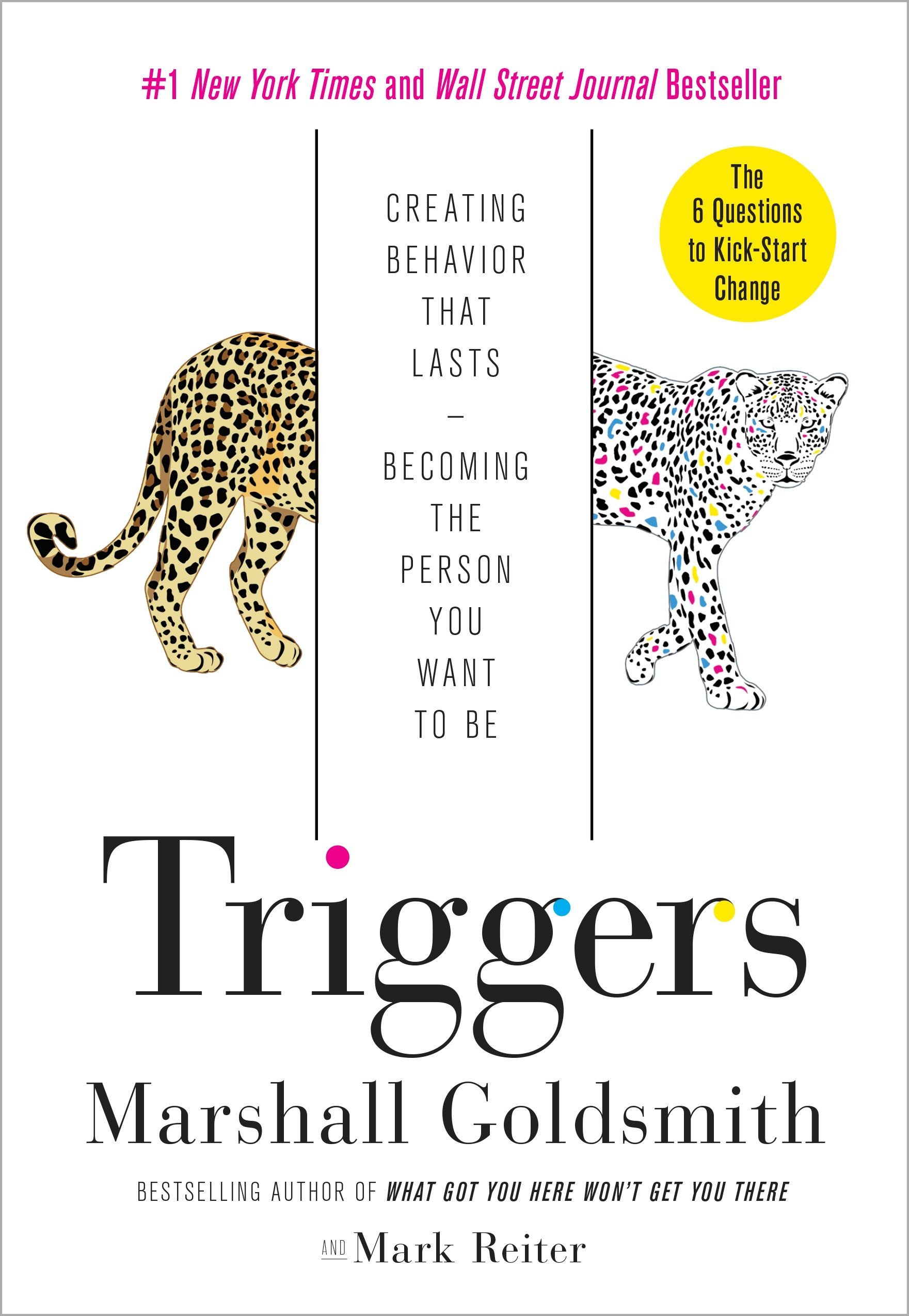
Triggers Book Summary
This Triggers Book Summary covers the key ideas, lessons, and takeaways in about 20 minutes.
Helps with these goals
Want the complete 20-minute summary?
- Full structured summary
- Video Summary
- Podcast Summary
- Key takeaways
- Exercises
- Quiz
- Highlights and notes
- Ask the book with AI
What is in the Triggers book summary?
Below is a preview of Sumizeit’s expert-written summary of Triggers by Marshall Goldsmith. The full summary covers the book’s key ideas in text, audio, and video.
If you’ve ever struggled to change a behavior or break a habit, you know just how challenging it can be. Sometimes it can even feel like there is something more powerful than you are, breaking your discipline and pushing you towards the behavior or thing you promised yourself you wouldn’t do. Believe it or not, those things getting in the way of you reaching your goals are real. They’re called triggers, and they might be influencing you more than you think. Marshall Goldsmith, author of Triggers, realized that he too was being unconsciously triggered by his environment while he was getting a haircut. The hairstylist cut the hair on top too short: and he realized that he had been cultivating a combover on his own head without realizing it. After pondering, he discovered he had felt triggered by his environment to appear more youthful than he actually was, and the combover helped him cope. That’s the thing about triggers: they’re mostly unconscious even though they can have a huge influence on our behavior. Read on to learn to make unconscious triggers conscious. Plus learn why your beliefs about change may be preventing it, how to get out of a never-ending behavior loop and how you can fix relationship trouble (and so many other things) by simply increasing your awareness!
Your beliefs about change could be preventing it
People’s beliefs about changing their behavior can be a HUGE part of why they are not able to accomplish it. For instance, let's say you think making a change will be simple and permanent. That’s a positive outlook, right? Unfortunately, it prevents you from seeing how difficult change truly is, or how many steps you will need to take to implement it. This lack of awareness can lead to a lack of preparation, or impatience with yourself if you experience a setback. Another idea people often have is that they won’t give in to temptation because of willpower. That idea is also false. Willpower dwindles: it's simply not consistent enough. Denial is another common problem that can make changing difficult. If you don’t believe you have a problem, you don’t have to address it. Unfortunately, whether you believe it or not, the problem is still there. Many people don’t change because they refuse to acknowledge they need to. Once you become aware of these limiting beliefs, making change becomes possible… as long as you are aware of triggers.
What is a trigger?
So what exactly is a trigger? A trigger is a stimulus that causes someone to engage in a type of behavior. There are different kinds of triggers: internal, external, unconscious, or conscious, and many others. The thing they all have in common is that they occur in the environment and cause people to do things. The anniversary of the loss of a loved one could act as a trigger for depression: conversely, the anniversary of the death of a loathed foe could trigger happiness or glee.
Want the complete 20-minute summary?
- Full structured summary
- Video Summary
- Podcast Summary
- Key takeaways
- Exercises
- Quiz
- Highlights and notes
- Ask the book with AI
Who should read Triggers?
Triggers is ideal for anyone struggling to break habits or change behaviors despite their best intentions. This book speaks to professionals wanting to improve performance, people in relationships seeking to understand conflict patterns, and anyone feeling controlled by unconscious reactions rather than deliberate choices.
Why does Triggers matter?
In our fast-paced world, we're bombarded by environmental cues that drive behavior below our conscious awareness, often sabotaging our goals and relationships. Marshall Goldsmith's Triggers reveals how becoming aware of these hidden influences is the first step to reclaiming control over your actions and creating lasting change.
What are the key themes in Triggers?
- Unconscious triggers shape behavior more than willpower
- Limiting beliefs about change prevent progress
- Self-awareness and mindfulness break behavioral loops
- Strategy beats willpower in sustaining change
- Feedback loops accelerate behavioral transformation
- Environmental design influences behavior more than motivation
What are the key lessons from the Triggers book summary?
Triggers are environmental stimuli that drive behavior
Triggers can be internal or external, conscious or unconscious, and shape our actions in ways we rarely recognize. Understanding that triggers exist is the foundation for taking control of your behavior.
Your beliefs about change may be blocking your progress
If you believe change is simple or that willpower alone will sustain it, you're setting yourself up for failure. Recognizing these limiting beliefs creates space for more realistic, achievable approaches.
Willpower is a depleting resource, not a reliable tool
Willpower diminishes throughout the day as your mental resources get exhausted. Relying on it alone is ineffective; instead, design your environment and strategy to reduce the need for willpower.
Awareness is the critical moment in the behavior cycle
The sequence is trigger, impulse, awareness, choice, and action. Catching yourself in the awareness phase gives you the power to choose a different response than your habitual one.
Feedback loops accelerate positive behavioral change
The cycle of evidence, relevance, consequence, and action creates momentum. When you see tangible results from your efforts, it motivates continued progress toward your goal.
Strategy matters more than motivation
Having a concrete plan for difficult moments—when willpower is depleted—ensures you stay on track. Strategy removes decision-making burden and automates better choices.
Regular self-check-ins increase accountability and awareness
Asking yourself structured questions hourly or nightly keeps you mindful of your effort toward goals. Logging answers creates a record of progress and reveals patterns you need to address.
You often need to change your reaction before changing others
Shifting your response to a trigger frequently leads others to change their behavior in return. This breaks destructive cycles without requiring someone else to change first.
Identifying your triggers puts you in control
By listing situations, people, and environmental factors that influence your goal achievement, you move from reactive to proactive. This clarity lets you strategize which triggers to preserve, eliminate, or adapt to.
Not all triggers are negative or should be eliminated
Some triggers provide valuable social awareness or signal important relationships. The key is choosing whether to preserve, eliminate, or adapt your response to each trigger based on your goals.
Environmental design reduces reliance on discipline
Removing temptations or creating friction around unwanted behaviors is more effective than hoping willpower carries you through. Small environmental tweaks have outsized impact on consistency.
Denial prevents change from happening
If you don't acknowledge a problem exists, you'll never address it. Honest assessment of your current behavior is the prerequisite for any meaningful transformation.
Mindlessness is the enemy of behavioral change
Most problematic behaviors happen on autopilot because triggers and habits bypass conscious thought. Breaking this requires bringing attention and intention to normally automatic actions.
You have multiple response options to every trigger
Rather than seeing triggers as fixed, you can choose to eliminate them, preserve them, or accept and adapt your response. This flexibility empowers smarter decision-making aligned with your values.
Effort-focused questions promote better self-awareness than outcome questions
Asking 'How much effort did I put in?' rather than 'Did I succeed?' keeps you focused on what you control and reduces discouragement from setbacks.
Small deliberate choices compound into lasting behavior change
Lasting transformation comes from consistent, conscious decision-making at moments of choice—not from dramatic willpower displays or motivation spikes.
Tracking progress is a powerful motivator and learning tool
Logging your daily check-in answers reveals patterns, documents improvement, and provides concrete evidence that effort is working—fueling continued commitment.
Environmental awareness enhances social intelligence
Triggers serve as cues about what's happening around you and how to respond appropriately. Paying attention to them makes you more socially attuned and empathetic.
Change is harder and slower than most people believe
Acknowledging the true difficulty of change prevents impatience with yourself and unrealistic expectations that lead to abandonment of goals.
Want the complete 20-minute summary?
- Full structured summary
- Video Summary
- Podcast Summary
- Key takeaways
- Exercises
- Quiz
- Highlights and notes
- Ask the book with AI
How can you apply ideas from Triggers?
- Identify and list all triggers affecting a specific behavioral goal, then categorize which help and which hinder your progress
- Design your environment to remove or reduce access to temptations that undermine your goals (e.g., don't keep candy visible if you're trying to eat healthier)
- Implement hourly or nightly check-in questions to build self-awareness and catch yourself in behavioral loops before they escalate
- Create a written strategy for how you'll respond to predictable high-pressure moments before willpower depletes later in the day
- Start changing your reaction to relationship triggers instead of waiting for the other person to change, then observe how their behavior shifts
- Use feedback loops by tracking visible evidence of progress (weight loss, money saved, work completed) to reinforce positive behavioral patterns
- Simplify daily decisions through environmental design, so willpower is reserved for moments that truly matter
What common mistakes do readers make with Triggers?
- Assuming willpower alone is enough to sustain behavior change when willpower is a finite resource that depletes over time
- Believing change will be simple and permanent, which leads to inadequate preparation and impatience when obstacles arise
- Trying to change others' behavior instead of first changing your own reaction to their triggers
- Eliminating all triggers rather than strategically choosing which to preserve, eliminate, or adapt to based on your goals
Sumizeit Exercises Apply what you've learned
Turn ideas from Triggers into action with a short guided reflection: identify the biggest takeaway, connect it to your life, and commit to one step you can take in the next 24 hours.
What is the expert analysis of Triggers?
Overview
Triggers: Creating Behavior That Lasts—Becoming the Person You Want to Be is authored by Marshall Goldsmith, a renowned leadership coach and management thinker with a distinguished academic background and extensive experience in executive coaching. Goldsmith’s reputation as a prolific author and educator at Dartmouth's Tuck School of Business lends considerable authority to his exploration of behavioral change. This book is significant for its practical approach to understanding the unconscious environmental stimuli—“triggers”—that shape our actions, often without our awareness. Goldsmith’s work stands at the intersection of psychology, self-improvement, and leadership development, offering readers actionable insights to foster lasting personal and professional transformation.
Core Thesis
Goldsmith’s central argument posits that behavior change is profoundly influenced by external and internal triggers—stimuli that unconsciously prompt habitual responses. Crucially, these triggers often operate beneath conscious awareness, undermining willpower and thwarting change efforts. The book contends that by increasing awareness of these triggers and strategically managing our reactions to them, individuals can break destructive behavior loops and cultivate lasting change. Goldsmith challenges common misconceptions about change, such as the overreliance on willpower and simplistic beliefs about permanence, advocating instead for mindful strategies, feedback loops, and deliberate behavioral adjustments.
Strengths
- Practical Framework: The book excels in translating complex behavioral science concepts into accessible, actionable strategies, such as identifying triggers, employing feedback loops, and designing personalized behavioral check-ins.
- Integration of Psychological Insights: Goldsmith effectively incorporates established psychological research, including Baumeister’s ego depletion theory, to ground his recommendations in credible science.
- Focus on Awareness and Mindfulness: By emphasizing the awareness phase between trigger and action, the book empowers readers to exert conscious control over automatic behaviors, a cornerstone of effective self-regulation.
- Balanced View of Triggers: Goldsmith acknowledges that triggers are not inherently negative, highlighting their role as environmental cues that can enhance social sensitivity and adaptive behavior.
- Relatable Anecdotes and Examples: The use of real-life scenarios, such as interpersonal conflicts and workplace habits, makes the concepts tangible and relevant to a broad audience.
Critiques & Counterarguments
- Potential Oversimplification of Behavior Change: While the book offers practical tools, it may understate the complexity of deep-seated behavioral patterns influenced by neurobiological, socio-cultural, and emotional factors beyond conscious triggers.
- Limited Engagement with Competing Models: The framework centers heavily on environmental triggers and conscious awareness but pays less attention to alternative approaches such as cognitive-behavioral therapy, motivational interviewing, or habit formation theories emphasizing automaticity and reward systems.
- Willpower and Ego Depletion Debate: The reliance on Baumeister’s ego depletion theory, though influential, has faced recent empirical challenges questioning the robustness and universality of ego depletion effects, suggesting that motivation and context might play a more significant role than resource depletion.
- Evidence Base and Empirical Rigor: The book’s insights, while grounded in some research, lean heavily on anecdotal evidence and the author’s coaching experience. This may limit the generalizability and scientific rigor compared to peer-reviewed behavioral science literature.
- Contextual and Cultural Nuances: The strategies may not fully account for cultural differences in behavior triggers or the structural constraints individuals face, such as socioeconomic factors that complicate behavior change efforts.
Who Should Read This
Triggers is ideally suited for professionals, leaders, coaches, and individuals committed to self-improvement who seek a pragmatic, psychologically informed roadmap for behavior change. Readers who appreciate a blend of anecdotal wisdom and accessible behavioral science will find this book valuable. It is particularly beneficial for those who struggle with habitual behaviors and want to develop greater self-awareness and strategic control over their actions. However, readers seeking a deeply scientific or therapeutic exploration of behavior change might consider supplementing this with more specialized psychological literature.
Frequently asked questions about the Triggers book summary
What is Triggers about?
Triggers by Marshall Goldsmith is about identifying and managing the environmental stimuli that unconsciously drive your behavior. The book reveals how most people are unaware of the triggers influencing them and teaches practical strategies to break unhelpful behavioral loops, change limiting beliefs about change itself, and create lasting personal transformation through awareness and smart strategy.
Who should read Triggers?
Triggers is ideal for anyone struggling to break habits, people in challenging relationships seeking to understand conflict patterns, professionals wanting to improve performance, and anyone who feels controlled by unconscious reactions. Whether your goal is weight loss, better relationships, career advancement, or general habit change, this book provides actionable frameworks.
What are the main takeaways from Triggers?
The key takeaways are: triggers shape behavior more than willpower, your beliefs about change may be blocking progress, awareness is the critical moment to choose differently, strategy beats motivation, and environmental design reduces reliance on discipline. Marshall Goldsmith emphasizes that identifying your specific triggers and consciously choosing how to respond is the path to lasting behavior change.
How do triggers affect behavior?
Triggers work through a sequence: stimulus (trigger), impulse, awareness, choice, and action. Most people repeat this cycle mindlessly, acting on impulse without conscious choice. The key is catching yourself in the awareness phase—the moment between impulse and action—where you have the power to choose a different response than your habitual one.
Can willpower really help you change behavior?
According to Goldsmith, willpower is unreliable because it depletes throughout the day as your mental resources get exhausted. Rather than relying on willpower alone, the book recommends using environmental design, strategy, and scheduled check-ins to reduce your dependence on willpower and make consistent progress toward your goals.
How do you identify your triggers?
The book provides an exercise: identify a behavioral goal, list all people, situations, smells, and environmental factors that influence your ability to achieve it, then categorize which motivate you toward the goal and which work against it. Once you see your triggers clearly, you can strategize which ones to preserve, eliminate, or adapt your response to.
Can you change someone else's behavior by changing your own?
Yes, according to Triggers. By changing your reaction to someone's trigger behavior, you often break the destructive cycle and give them opportunity to respond differently in return. The book illustrates this with the example of a woman who stopped nagging her husband and found his behavior shifted without her explicitly asking him to change.
What is the difference between feedback loops and behavioral loops?
Behavioral loops are trigger-impulse-awareness-choice-action cycles that often repeat mindlessly. Feedback loops are the evidence-relevance-consequence-action cycle that helps you learn from results and stay motivated. Using feedback loops strategically—like tracking progress on the scale or logging money spent—reinforces positive behavioral patterns and accelerates change.
About Sumizeit
Sumizeit is a profitable Scomy LLC company based in Miami, Florida. It has been helping readers learn from nonfiction books for 7 years with expert-written summaries in text, audio, podcast, and video.
Want the complete 20-minute summary?
- Full structured summary
- Video Summary
- Podcast Summary
- Key takeaways
- Exercises
- Quiz
- Highlights and notes
- Ask the book with AI
Here's why readers love Sumizeit
Join thousands of learners getting smarter every day
"Great experience. Detailed summaries. Loved the gamification feature. Makes learning fun. Good customer service. I recommend Sumizeit to anyone. You'll learn a lot."
"I always felt busy but still wanting to keep up with the book discussion in my friend group. This was a great supplement to help me keep reading the books I find fun while keeping up with important books."
"I love this website. Instead of scrolling social media, I find myself learning a lot. I use it everyday. I recommend this app for anyone who is too busy and wants to get up to speed with their favorite books."
Triggers Book Summary PDF
Looking for a Triggers Book Summary PDF you can save and revisit offline? Our Triggers Book Summary PDF captures the book’s core ideas in a clean, printable format — the key frameworks, takeaways, and structure without the fluff. Download the Triggers Book Summary PDF when you want a reference you can annotate, share with your team, or review on the go. Get your Triggers Book Summary PDF from the download page below.
Download Triggers Book Summary PDFPeople also liked these summaries
Readers who explored Triggers often enjoyed these titles next.
Want the complete 20-minute summary?
- Full structured summary
- Video Summary
- Podcast Summary
- Key takeaways
- Exercises
- Quiz
- Highlights and notes
- Ask the book with AI
Featured Book Titles
Popular Book Summaries at sumizeit, leading book summary app