


As an Amazon Associate, Sumizeit earns from qualifying purchases.
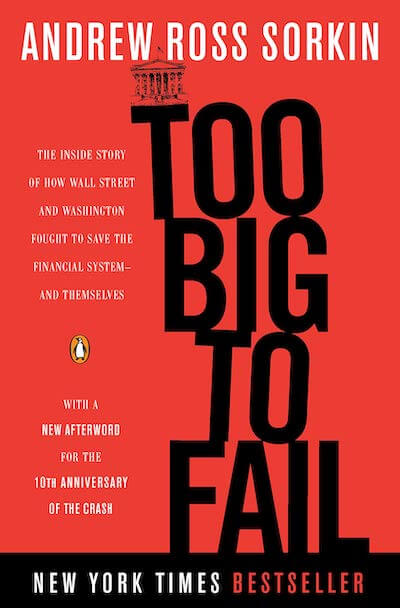
Too Big to Fail Book Summary
This Too Big to Fail Book Summary covers the key ideas, lessons, and takeaways in about 20 minutes.
Want the complete 20-minute summary?
- Full structured summary
- Video Summary
- Podcast Summary
- Audio summary
- Key takeaways
- Exercises
- Quiz
- Highlights and notes
- Ask the book with AI
What is in the Too Big to Fail book summary?
Below is a preview of Sumizeit’s expert-written summary of Too Big to Fail by Andrew Ross Sorkin. The full summary covers the book’s key ideas in text, audio, and video.
In 2008, Wall Street was facing a financial crisis. It started with the smallest of the “Big Five” investment banks, coming forward to express their concern that they were about to either go bankrupt or be sold as a result of the subprime mortgage collapse.
If the smallest of the Big Five was in trouble, it was not hard to assume that the fourth largest could be next. With stocks plummeting, and all of the Big Five banks facing bankruptcy or worse, something needed to be done to protect an institution that had been in place since 1850.
In Too Big to Fail: The Inside Story of How Wall Street and Washington Fought to Save the Financial System - and Themselves, Andrew Ross Sorkin breaks down the near-collapse of Wall Street and what was done to save the financial system following the collapse of the subprime mortgage market.
How Too Big to Fail breaks down to financial crisis that hit Wall Street and Washington
This is a look at the 2008 financial crisis that includes a look at the men and women who were at the heart of the problem. At the same time, we get details about what went wrong, what steps went into trying to avert a complete collapse of Wall Street, and the ultimatum that finally ended the disaster, as Washington made it clear that all the banks involved would take funds whether they were needed or not.
Not only do we learn about all the key players involved in both the crisis and averting the financial collapse, but we also see all the ways that Wall Street went wrong in their decision making.
The fate of the economy was in the hands of a group of fallible individuals
During the financial crisis in 2008, a handful of people, all of whom were capable of making mistakes, were in charge of the fate of the economy.
Things really began to unfold after a single phone call to the Lehman Brothers CEO, Richard S. Fuld Jr. from Henry Paulson the Treasury Secretary. Paulson was trying to alert Fuld to the news that the smallest of the Big Five banks was on the brink of bankruptcy.
Paulson was concerned that Lehman Brothers would be next. And it did not take long for Fuld to grow concerned as the bank’s own stocks began to drop.
In an effort to protect the bank, Fuld attempted to negotiate a sale to groups such as Bank of America and Korea Development Bank. The sale failed, and negotiations fell apart.
Lehman Brothers ultimately collapsed even with a warning from Washington
Even with the warning from Paulson, Lehman Brothers found itself collapsing without a sale. By September of 2008, Paulson determined that Lehman Brothers had to file for bankruptcy.
The goal was to show that the continual risks that Fuld and his Wall Street competitors had made came with consequences.
Prior warnings about the risks that he was taking went ignored by Fuld, who chose…
Want the complete 20-minute summary?
- Full structured summary
- Video Summary
- Podcast Summary
- Audio summary
- Key takeaways
- Exercises
- Quiz
- Highlights and notes
- Ask the book with AI
Who should read Too Big to Fail?
Too Big to Fail is essential reading for anyone seeking to understand the 2008 financial crisis and its systemic causes. This book is particularly valuable for students of economics, finance professionals, policymakers, and engaged citizens who want to comprehend how institutional failures and regulatory gaps nearly brought down the global financial system.
Why does Too Big to Fail matter?
Andrew Ross Sorkin's account reveals how interconnected financial institutions had become by 2008, and how decisions made by a handful of fallible leaders shaped the fate of millions. Understanding this crisis is crucial today, as many of the underlying structural issues remain unresolved and financial markets continue to grapple with systemic risk and regulatory oversight.
What are the key themes in Too Big to Fail?
- Institutional interconnectedness and systemic risk
- The role of government intervention in financial markets
- Executive decision-making under crisis conditions
- The disconnect between risk-taking and accountability
- Regulatory failures and oversight gaps
- The global impact of American financial collapse
What are the key lessons from the Too Big to Fail book summary?
Warning Signs Go Unheeded
Long before the 2008 crisis reached critical mass, credible warnings about excessive risk-taking circulated throughout Wall Street, yet institutional leaders chose to ignore them in pursuit of profit.
Leverage Creates Fragility
Banks that borrowed heavily to fund increasingly risky deals faced collapse once market conditions shifted, leaving no safety net when volatility struck.
The Problem of Valuation
When financial institutions hold toxic assets whose true value cannot be determined, market transactions freeze because buyers and sellers cannot agree on prices.
Interconnection Means Contagion
The failure of one major financial institution threatened to trigger cascading failures across the entire system due to hidden exposures and mutual dependencies.
Government Coordination Is Essential
Only coordinated action among the Federal Reserve, Treasury Department, and other agencies—led by figures like Henry Paulson and Timothy Geithner—prevented total collapse.
Mergers Cannot Solve Fundamental Problems
Attempted fire sales and mergers of failing institutions (Lehman, Merrill Lynch) could not proceed because the underlying assets were impossible to value accurately.
Individual Leadership Under Pressure
The crisis hinged on decisions made by fallible people operating under extreme time pressure with incomplete information and conflicting interests.
Moral Hazard in Bailouts
The government's ultimate decision to inject $700 billion into banks—some of which didn't need it—created the perception that institutions were 'too big to fail.'
Regulatory Gaps Enable Crisis
The absence of proper regulation allowed financial institutions to take unsustainable risks without adequate oversight or consequences until the system broke.
Government-Sponsored Enterprises Are Not Immune
Even entities like Fannie Mae and Freddie Mac, backed by taxpayer guarantees, failed when they took on excessive risk during the housing boom.
Time Pressure Distorts Decision-Making
The need to act immediately to prevent total system collapse forced policymakers to make compromises and adopt solutions that might not have been considered under normal circumstances.
Global Spillovers Are Rapid and Severe
Wall Street's crisis quickly became a global economic emergency, spreading across borders and affecting economies worldwide within months.
Consensus Building Is Difficult During Crisis
Even high-ranking officials like Treasury Secretary Paulson had to negotiate constantly with Congress, the Federal Reserve, and other agencies to maintain coordination.
Asset Uncertainty Destroys Market Confidence
When participants cannot trust the value of assets on a counterparty's balance sheet, credit markets seize up and normal financial operations become impossible.
Risk Transfer Creates Hidden Exposures
Complex financial instruments designed to distribute risk instead created opaque interconnections that nobody fully understood until the system collapsed.
Institutional Pride Blinds Leadership
CEOs like Richard Fuld at Lehman Brothers resisted accepting difficult realities about their institutions' viability until it was too late to save them.
Regulation Requires Implementation and Will
Laws like TARP only became viable when sweetened with tax breaks and higher FDIC insurance—showing that pure logic cannot overcome political resistance.
The Cost of Inaction May Exceed Intervention
Sorkin suggests that without government intervention—despite its moral hazard implications—the economic devastation would have been far worse than the cost of the bailout.
Want the complete 20-minute summary?
- Full structured summary
- Video Summary
- Podcast Summary
- Audio summary
- Key takeaways
- Exercises
- Quiz
- Highlights and notes
- Ask the book with AI
How can you apply ideas from Too Big to Fail?
- Learn to identify early warning signs of systemic financial stress by understanding how the 2008 crisis developed over years before exploding
- Evaluate your own institution's leverage ratios and interconnectedness to understand your exposure to systemic risk
- Recognize when pride and institutional loyalty prevent leaders from making necessary hard decisions
- Understand how government agencies coordinate during financial emergencies to prepare for future crises
- Assess the transparency of financial instruments you're exposed to—if true value cannot be determined, that's a warning sign
- Develop contingency plans that account for the possibility that mergers and asset sales may not be viable during extreme market stress
- Study how time pressure can force compromises in policy—both to understand its effects and to plan for it
What common mistakes do readers make with Too Big to Fail?
- Assuming that risk diversification through complex financial instruments actually reduces systemic risk when it may instead hide it
- Believing that a single institution cannot threaten the entire financial system if it's large enough or interconnected enough
- Ignoring regulatory warnings and historical precedents about the dangers of excessive leverage and risky lending practices
- Overestimating the ability of market forces alone to correct themselves when fundamental confidence in asset valuations collapses
Sumizeit Exercises Apply what you've learned
Turn ideas from Too Big to Fail into action with a short guided reflection: identify the biggest takeaway, connect it to your life, and commit to one step you can take in the next 24 hours.
What is the expert analysis of Too Big to Fail?
Overview
Too Big to Fail by Andrew Ross Sorkin stands as a seminal work chronicling the 2008 financial crisis from an insider’s perspective. Sorkin, a seasoned financial journalist and New York Times columnist, leverages his access to key players on Wall Street and in Washington to deliver a meticulously detailed narrative of the events that nearly brought down the global financial system. The book’s significance lies not only in its comprehensive reportage but also in its ability to humanize the crisis by focusing on the decisions and personalities behind the headlines. Its adaptation into a Hollywood film and Sorkin’s role in shaping contemporary financial discourse underscore the book’s enduring impact.
Core Thesis
The central argument of Too Big to Fail is that the 2008 financial meltdown was precipitated by a combination of reckless risk-taking by major financial institutions and a reactive, often improvisational response from government officials. Sorkin posits that the crisis was not merely a systemic failure but also a consequence of individual misjudgments and institutional hubris. The book underscores the concept that certain financial entities had become “too big to fail,” necessitating unprecedented government intervention to prevent a total economic collapse. This thesis highlights the precarious balance between market freedom and regulatory oversight in modern capitalism.
Strengths
- Insider Access and Detail: Sorkin’s journalistic rigor and access to key figures provide an unparalleled, minute-by-minute account of the crisis, enriching the reader’s understanding of complex financial maneuvers and political negotiations.
- Humanizing the Crisis: By focusing on the personalities involved—CEOs, Treasury officials, and regulators—the book transcends dry economic analysis, illustrating how fallible individuals shaped momentous events.
- Clarity in Complexity: Despite the intricate financial instruments and policies discussed, Sorkin maintains a clear, engaging narrative that is accessible to both specialists and informed lay readers.
- Contextualizing Government Intervention: The book effectively conveys the rationale behind controversial bailouts and regulatory decisions, providing insight into the difficult trade-offs faced by policymakers.
Critiques & Counterarguments
- Potential Overemphasis on Personalities: While the focus on individual actors adds drama, it risks underplaying broader structural and systemic factors such as deregulation trends and global financial imbalances that also fueled the crisis.
- Limited Critical Distance: Sorkin’s close relationships with some subjects may introduce subtle biases, potentially softening critique of Wall Street’s role or government missteps.
- Oversimplification of Complex Causes: The narrative occasionally simplifies the multifaceted causes of the crisis, which include international capital flows, shadow banking, and monetary policy, in favor of a more linear storyline.
- Competing Perspectives: Alternative analyses, such as those from post-Keynesian economists or proponents of stricter financial regulation, argue that the crisis was an inevitable outcome of neoliberal policies and insufficient regulatory frameworks, perspectives that receive less emphasis in the book.
- Real-World Evidence on Bailouts: Critics contend that the bailouts, while stabilizing in the short term, may have perpetuated moral hazard, encouraging future risky behavior by insulating large institutions from consequences—a debate Sorkin touches on but does not fully explore.
Who Should Read This
Too Big to Fail is essential reading for professionals and scholars in finance, economics, and public policy who seek a richly detailed, narrative-driven account of the 2008 crisis. It also appeals to informed readers interested in the interplay between government and markets, as well as those fascinated by the human dimensions of financial decision-making. While not a technical manual, its accessible prose makes it suitable for educated general readers aiming to grasp the complexities and stakes of one of the most consequential economic events of the 21st century.
Frequently asked questions about the Too Big to Fail book summary
What is Too Big to Fail about?
Too Big to Fail by Andrew Ross Sorkin is an insider's account of the 2008 financial crisis, detailing how the collapse of the subprime mortgage market threatened to bring down major Wall Street institutions and the global financial system. The book chronicles the desperate negotiations, failed mergers, and government interventions—including the $700 billion TARP bailout—that ultimately prevented complete economic collapse while revealing the personal decisions and institutional failures that led to the crisis.
Who should read Too Big to Fail?
Too Big to Fail is essential for finance professionals, policymakers, economics students, and anyone interested in understanding modern financial systems and the 2008 crisis. The book is also valuable for general readers seeking to understand how institutional interconnectedness, regulatory failures, and individual decision-making can trigger global economic emergencies and what role government must play in managing systemic risk.
What are the main takeaways from Too Big to Fail?
The main takeaways include: warning signs about excessive risk-taking are often ignored by leaders pursuing profit; leverage and interconnectedness create fragility that can trigger cascading failures; government coordination and intervention are essential to prevent total system collapse; and regulation must be implemented with real enforcement to prevent institutions from taking unsustainable risks. Sorkin argues that without government intervention, the 2008 crisis would have caused far greater devastation than the bailout itself.
How did the 2008 financial crisis unfold according to Too Big to Fail?
The crisis began with the collapse of Lehman Brothers after Treasury Secretary Henry Paulson determined it had to file for bankruptcy as a lesson about consequences. However, this triggered panic across the financial system, threatening other major banks like Merrill Lynch, AIG, Morgan Stanley, and Goldman Sachs, as well as government-sponsored mortgage companies Fannie Mae and Freddie Mac. The government responded with emergency measures including AIG's rescue, takeover of the mortgage companies, and ultimately the $700 billion TARP bailout approved by Congress in October 2008.
Why couldn't banks be saved through mergers during the 2008 crisis?
Mergers and fire sales failed because participants could not accurately value the assets held by failing institutions. Without reliable valuation, buyers and sellers could not agree on prices, and the deals that were attempted—such as the sale of Lehman Brothers or Merrill Lynch—either fell through or barely succeeded. This valuation problem was central to the crisis and highlighted how complex, opaque financial instruments had become impossible to assess.
What was TARP and why was it necessary?
TARP (Troubled Asset Relief Program) was a $700 billion government initiative created in 2008 to purchase toxic assets from banks and stabilize the financial system. Initially rejected by Congress, the bill passed after tax breaks were added and FDIC insurance was raised to $250,000, showing how political negotiations shaped the response. The funds were distributed to nine major banks whether they needed them or not, partly to avoid stigmatizing institutions that actually required rescue.
Who were the key decision-makers in preventing financial collapse?
Key figures included Treasury Secretary Henry Paulson, Federal Reserve Chair Ben Bernanke, Federal Reserve Bank of New York President Timothy Geithner, and President George W. Bush. On the industry side, CEOs like Richard Fuld at Lehman Brothers, Bank of America's leadership, and executives at other major institutions made critical decisions. The interplay between government officials and financial leaders—their negotiations, conflicts, and eventual coordination—determined whether the system would survive.
Could the 2008 financial crisis have been prevented?
According to Sorkin, the crisis resulted from years of ignored warnings about excessive risk-taking, inadequate regulation, and unsustainable leverage in the financial system. While the immediate collapse might have been prevented with earlier regulatory intervention, the underlying conditions that made crisis inevitable were allowed to build throughout the years leading up to 2008. The book suggests that proper regulatory oversight and enforcement could have prevented the severity of what occurred.
About Sumizeit
Sumizeit is a profitable Scomy LLC company based in Miami, Florida. It has been helping readers learn from nonfiction books for 7 years with expert-written summaries in text, audio, podcast, and video.
Want the complete 20-minute summary?
- Full structured summary
- Video Summary
- Podcast Summary
- Audio summary
- Key takeaways
- Exercises
- Quiz
- Highlights and notes
- Ask the book with AI
Here's why readers love Sumizeit
Join thousands of learners getting smarter every day
"Great experience. Detailed summaries. Loved the gamification feature. Makes learning fun. Good customer service. I recommend Sumizeit to anyone. You'll learn a lot."
"I always felt busy but still wanting to keep up with the book discussion in my friend group. This was a great supplement to help me keep reading the books I find fun while keeping up with important books."
"I love this website. Instead of scrolling social media, I find myself learning a lot. I use it everyday. I recommend this app for anyone who is too busy and wants to get up to speed with their favorite books."
Too Big to Fail Book Summary PDF
Looking for a Too Big to Fail Book Summary PDF you can save and revisit offline? Our Too Big to Fail Book Summary PDF captures the book’s core ideas in a clean, printable format — the key frameworks, takeaways, and structure without the fluff. Download the Too Big to Fail Book Summary PDF when you want a reference you can annotate, share with your team, or review on the go. Get your Too Big to Fail Book Summary PDF from the download page below.
Download Too Big to Fail Book Summary PDFPeople also liked these summaries
Readers who explored Too Big to Fail often enjoyed these titles next.


Want the complete 20-minute summary?
- Full structured summary
- Video Summary
- Podcast Summary
- Audio summary
- Key takeaways
- Exercises
- Quiz
- Highlights and notes
- Ask the book with AI
Featured Book Titles
Popular Book Summaries at sumizeit, leading book summary app