


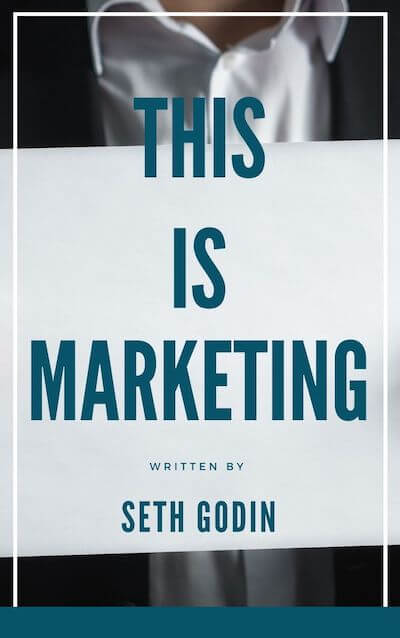
This is Marketing Book Summary
This This is Marketing Book Summary covers the key ideas, lessons, and takeaways in about 20 minutes.
Helps with these goals
Want the complete 20-minute summary?
- Full structured summary
- Video Summary
- Podcast Summary
- Audio summary
- Key takeaways
- Exercises
- Quiz
- Highlights and notes
- Ask the book with AI
What is in the This is Marketing book summary?
Below is a preview of Sumizeit’s expert-written summary of This is Marketing by Seth Godin. The full summary covers the book’s key ideas in text, audio, and video.
In This Is Marketing, Seth Godin argues that we need a more philosophical approach to marketing. To do marketing well, Godin recommends identifying the smallest “viable product”, identifying your goals, gaining “permission to engage” and telling the right story.
Today, marketing and advertising are not the same. Before marketers primarily used commercials on television and radio, billboards and print advertisements to gain people's attention. Traditional advertising no longer makes sense, especially with the Internet, which is fragmented because of the many channels such as curated Youtube feeds. Online advertising is usually ignored because there is too much of it. Many companies use SEO to market their products but it’s hard to get SEO right and most Google searches yield many pages of results. That is why a different approach, where the marketer needs to learn how to create engaged customers, to marketing is needed.
According to Godin, there are five steps to marketing
The first step is to create a worthwhile product with an effective story.
The second step is to design a product that appeals to a small viable audience that shares a similar world view
The third step is to tell a story that satisfies your audience's underlying desires.
The fourth step is to spread the word about your product.
The last step is to keep improving and promoting the business even if the business doesn't catch on after release. For some products, only by delivering on promises for years did they catch on and change the marketplace.
Your marketing promise might follow the template:
My product is for people who believe _________________.
I will focus on people who want _________________.
I promise that engaging with what I make will help you get _________________.
Marketing should help people live their best lives by making a worthwhile product. People are not always rational and do not always make sensible decisions. Effective marketing understands people’s underlying needs and desires, which often boil down to their need for status, validation, and connectedness.
To create an engaging campaign that caters to the right people, marketing should first try to understand who and what their product is for. According to Godin, effective marketing promotes a small group of people that shares a similar worldview and tries to satisfy their needs and desires. Focus on one specific problem for a specific type of person. Once you have that problem and audience, make that your business’ primary goal. Use psychographics, grouping customers based o their beliefs, to find the smallest viable audience for your business. If you can’t find the smallest viable audience, how will you market to a larger audience? Over time, you will improve at solving these problems, word will spread and your products and services will get more popular.
Appeal to the stories that people tell themselves. Understand people’s views and intercept the internal conversation your fans are having.
People care about their status and that influences the decisions they make. People care about affiliation and domination.
Want the complete 20-minute summary?
- Full structured summary
- Video Summary
- Podcast Summary
- Audio summary
- Key takeaways
- Exercises
- Quiz
- Highlights and notes
- Ask the book with AI
Who should read This is Marketing?
This is Marketing by Seth Godin is ideal for entrepreneurs, business leaders, and marketing professionals who want to move beyond traditional advertising. It's essential reading for anyone launching a product or service who needs to understand how to connect with the right audience in today's fragmented digital landscape.
Why does This is Marketing matter?
In an era where traditional advertising is ignored and attention is fragmented across countless channels, This is Marketing offers a philosophical framework for building genuine customer engagement. Godin's approach is timely because it recognizes that effective marketing today depends on understanding human psychology, telling authentic stories, and building loyal communities rather than broadcasting messages to everyone.
What are the key themes in This is Marketing?
- Shifting from mass advertising to permission-based marketing
- Understanding your smallest viable audience and their worldview
- Crafting stories that resonate with deep human desires for status and connection
- Building products that solve specific problems for specific people
- Leveraging network effects and early adopters to drive growth
- Recognizing the role of psychological needs in purchasing decisions
What are the key lessons from the This is Marketing book summary?
Marketing and advertising are not the same
Traditional advertising broadcasts to everyone and gets ignored in today's fragmented media landscape. Effective marketing builds permission and engagement with a specific audience.
Start with your smallest viable audience
Rather than trying to appeal to everyone, identify the smallest group of people who share a worldview and solve their specific problem brilliantly. Growth follows naturally from this focus.
Identify what your product is actually for
Before launching, clearly define who your product serves and what specific problem it solves for them. This clarity becomes the foundation for all marketing decisions.
Tell a story that satisfies underlying desires
People make decisions based on deep psychological needs for status, validation, and connectedness. Your marketing should address these underlying human desires, not just product features.
Use psychographics to define your audience
Group potential customers by their beliefs and values rather than demographics alone. This reveals who truly aligns with your offering and why they care.
Understand the internal conversation your audience is having
Intercept and appeal to the stories people tell themselves about who they are and what they want to become. Effective marketing validates and extends these narratives.
Status and affiliation drive behavior
People seek either status (domination) or belonging (affiliation). Craft your story around which of these your audience prioritizes to create powerful resonance.
Differentiate through your unique story
Stand out by articulating the specific change you want to create and building your narrative around what your audience already believes about their future.
Tension and FOMO fuel adoption
New things create tension, but fear of missing out motivates people to try them anyway. Acknowledge this dynamic and give early adopters reasons to feel they're part of something important.
Network effects amplify your reach
As more people use your product, it becomes more valuable to each person. This creates a self-reinforcing cycle that turns initial fans into powerful evangelists.
Neophiliacs are your secret weapon
People who love discovering new things are crucial early adopters. Give them the tools and permission to spread the word about your product.
Persistence matters more than immediate success
Many successful products didn't catch on immediately. Deliver on your promises for years and improve continuously, even when early adoption is slow.
Create a worthwhile product first
Marketing can't save a bad product. The foundation of effective marketing is building something genuinely valuable that people actually want to recommend.
Permission is more valuable than attention
In a world of unlimited information, the ability to reach people who want to hear from you is far more valuable than grabbing random attention through traditional advertising.
Focus on one specific problem for one specific person type
Trying to serve everyone dilutes your message and effectiveness. Excellence comes from deep focus on solving one problem brilliantly for your ideal customer.
Your business plan should address truth, assertions, people, money, and alternatives
A solid marketing strategy requires clear assumptions about your market, explicit promises to customers, strong team alignment, financial clarity, and contingency plans.
Appeal to the change people want to see
Position your product as a vehicle for the transformation or status your audience desires, connecting it to their aspirations rather than just solving a problem.
Marketing helps people live better lives
The highest purpose of marketing is helping people achieve what they genuinely care about. When you succeed here, you build something that lasts.
People are not always rational
Effective marketing acknowledges that emotions, identity, and belonging often outweigh logical decision-making. Design your marketing around these deeper drivers.
Build your marketing template with clear promises
Clarify: who your product is for, what specific desire you're addressing, and what transformation they'll experience. This template guides all communication.
Want the complete 20-minute summary?
- Full structured summary
- Video Summary
- Podcast Summary
- Audio summary
- Key takeaways
- Exercises
- Quiz
- Highlights and notes
- Ask the book with AI
How can you apply ideas from This is Marketing?
- Define your smallest viable audience by identifying people who already believe in something related to your solution, then craft your entire go-to-market strategy around that group
- Create a marketing promise statement using Godin's template to clarify who you serve, what they want, and what change you deliver
- Map your target audience's psychological drivers (status vs. affiliation) and ensure your messaging and brand positioning speak directly to these motivations
- Identify 10-20 neophiliacs in your market and give them exclusive access, resources, and permission to spread word about your product
- Design your business plan around the five required sections to ensure your team aligns on truth, assertions, people, money, and contingencies
- Build network effects into your product roadmap by making the offering more valuable as more people use it
- Audit your current marketing to eliminate traditional advertising approaches and shift budget toward permission-based channels that reach your specific audience
What common mistakes do readers make with This is Marketing?
- Trying to appeal to everyone instead of focusing on the smallest viable audience that shares a worldview
- Building a product first without understanding the specific desires and problems of your target customer
- Confusing marketing with advertising and relying on interruption-based tactics that get ignored in today's landscape
- Overlooking the psychological drivers of status and affiliation and instead leading with product features
- Giving up too early when a product doesn't catch on immediately, rather than persisting and improving over time
Sumizeit Exercises Apply what you've learned
Turn ideas from This is Marketing into action with a short guided reflection: identify the biggest takeaway, connect it to your life, and commit to one step you can take in the next 24 hours.
What is the expert analysis of This is Marketing?
Overview
This is Marketing is a seminal work by Seth Godin, a renowned entrepreneur, marketer, and author whose influence on modern marketing theory is profound. Godin’s extensive background in pioneering permission marketing and his entrepreneurial ventures lend considerable authority to his insights. This book is significant because it challenges traditional advertising paradigms, advocating for a more human-centered, philosophical approach to marketing in the digital age. It addresses the fragmentation of audiences and the ineffectiveness of mass advertising, offering a strategic framework for engaging a focused, meaningful customer base.
Core Thesis
Godin’s central argument is that effective marketing is no longer about broadcasting to the masses but about creating value for a carefully defined “smallest viable audience.” Marketing should be rooted in empathy, storytelling, and understanding the deep psychological needs of customers—such as status, belonging, and validation. The book posits that marketers must craft authentic narratives that resonate with the worldview of their audience, build trust, and cultivate communities that spread the message organically. This approach leverages network effects and human psychology to build sustainable brands rather than relying on intrusive advertising tactics.
Strengths
- Human-Centered Philosophy: Godin’s insistence on empathy and storytelling elevates marketing from mere persuasion to a meaningful exchange that respects consumer intelligence and desires.
- Practical Framework: The five-step marketing process and the business plan structure provide actionable guidance that balances strategic thinking with creative execution.
- Recognition of Modern Media Landscape: The book adeptly diagnoses the challenges posed by digital fragmentation and information overload, making its prescriptions highly relevant for contemporary marketers.
- Psychological Insight: By focusing on status, affiliation, and domination as core motivators, Godin integrates psychological theory into marketing practice, enriching the discipline’s intellectual rigor.
- Emphasis on Long-Term Relationship Building: The advocacy for patience and continual improvement counters the short-termism prevalent in marketing, encouraging sustainable brand development.
Critiques & Counterarguments
- Overemphasis on Small Audiences: While targeting niche markets is valuable, some critics argue that Godin underestimates the potential of scalable mass marketing strategies, especially for products with broad appeal.
- Limited Empirical Evidence: The book relies heavily on anecdotal examples and case studies like Slack and the Grateful Dead, which may not generalize across industries or cultural contexts.
- Potential Oversimplification of Consumer Behavior: The framework may underplay complexities such as irrational consumer biases, economic constraints, and cultural diversity that affect buying decisions beyond status and affiliation.
- Competing Schools of Thought: Traditional marketing theories emphasizing the 4 Ps (Product, Price, Place, Promotion) and data-driven analytics present alternative or complementary approaches that Godin’s narrative may overlook.
- Challenges in Execution: The ideal of crafting a perfect story aligned with a worldview is conceptually appealing but practically difficult, especially for startups lacking resources or deep market insights.
Who Should Read This
This is Marketing is essential reading for marketing professionals, entrepreneurs, and business leaders who seek to transcend conventional advertising and build authentic connections with their customers. It is particularly valuable for those operating in digital, niche, or startup environments where engagement and community are critical. Additionally, students and scholars interested in the intersection of psychology, storytelling, and business strategy will find Godin’s synthesis insightful. However, readers looking for rigorous empirical research or comprehensive tactical marketing tools may need to supplement this book with more data-driven or traditional marketing texts.
Frequently asked questions about the This is Marketing book summary
What is This is Marketing about?
This is Marketing by Seth Godin is about rethinking how businesses connect with customers in the digital age. Rather than relying on traditional advertising, Godin argues for a philosophical approach centered on understanding your smallest viable audience, telling stories that resonate with their deepest desires, and building permission-based relationships that drive genuine engagement and loyalty.
Who should read This is Marketing?
This is Marketing is essential for entrepreneurs, business leaders, marketing professionals, and anyone launching a product or service. It's particularly valuable for those frustrated with traditional advertising approaches and seeking a framework for building customer loyalty through authentic storytelling and deep audience understanding.
What are the main takeaways from This is Marketing?
The main takeaways include: focus on your smallest viable audience rather than trying to appeal to everyone; understand the psychological drivers of your customers (status, validation, and connectedness); craft stories that resonate with what your audience believes about themselves; build permission-based relationships instead of relying on interruption advertising; and persist in improving your product and message over time. Godin emphasizes that effective marketing helps people live better lives by solving specific problems for specific people.
How does Seth Godin define the difference between marketing and advertising?
Godin argues that advertising is traditional mass-broadcasting through TV, radio, and billboards that interrupts people and gets ignored. Marketing, by contrast, is about understanding your audience, building permission to engage with them, and telling stories that matter to them. In today's fragmented digital landscape, advertising no longer works, but marketing—built on genuine understanding and connection—remains powerful.
What is a smallest viable audience and why does it matter?
A smallest viable audience is the smallest group of people who share a similar worldview and have a specific problem you can solve brilliantly. It matters because focusing your energy on a well-defined, aligned audience makes it easier to craft relevant messages, build community, and create network effects. If you can't identify and reach a small viable audience, you can't effectively reach larger audiences either.
How do status and affiliation drive marketing decisions according to Godin?
Godin identifies two key psychological drivers: people seeking status (domination) want power and victory, while people seeking affiliation want trust and connection. Effective marketing recognizes which motivates your specific audience and crafts stories around those desires. Understanding these drivers reveals why people make the choices they do and how to position your product as a vehicle for the status or belonging they crave.
What role do neophiliacs play in This is Marketing?
Neophiliacs are early adopters who love discovering new things. Godin emphasizes they're crucial to any product's success because they naturally evangelize new offerings and help drive network effects. By identifying and empowering your neophiliacs with tools and permission to share, you can accelerate word-of-mouth growth and reach customers who want to hear about your innovation.
What are the five sections of a business plan according to This is Marketing?
Godin recommends five sections: Truth (your market assumptions and competitive landscape), Assertions (how you'll satisfy customer needs and create change), People (your team), Money (investment needs and financial projections), and Alternatives (strategies for handling errors and unexpected outcomes). This structure ensures you've thought through both the philosophical and practical aspects of your marketing strategy.
About Sumizeit
Sumizeit is a profitable Scomy LLC company based in Miami, Florida. It has been helping readers learn from nonfiction books for 7 years with expert-written summaries in text, audio, podcast, and video.
Want the complete 20-minute summary?
- Full structured summary
- Video Summary
- Podcast Summary
- Audio summary
- Key takeaways
- Exercises
- Quiz
- Highlights and notes
- Ask the book with AI
Here's why readers love Sumizeit
Join thousands of learners getting smarter every day
"Great experience. Detailed summaries. Loved the gamification feature. Makes learning fun. Good customer service. I recommend Sumizeit to anyone. You'll learn a lot."
"I always felt busy but still wanting to keep up with the book discussion in my friend group. This was a great supplement to help me keep reading the books I find fun while keeping up with important books."
"I love this website. Instead of scrolling social media, I find myself learning a lot. I use it everyday. I recommend this app for anyone who is too busy and wants to get up to speed with their favorite books."
This is Marketing Book Summary PDF
Looking for a This is Marketing Book Summary PDF you can save and revisit offline? Our This is Marketing Book Summary PDF captures the book’s core ideas in a clean, printable format — the key frameworks, takeaways, and structure without the fluff. Download the This is Marketing Book Summary PDF when you want a reference you can annotate, share with your team, or review on the go. Get your This is Marketing Book Summary PDF from the download page below.
Download This is Marketing Book Summary PDFPeople also liked these summaries
Readers who explored This is Marketing often enjoyed these titles next.

Want the complete 20-minute summary?
- Full structured summary
- Video Summary
- Podcast Summary
- Audio summary
- Key takeaways
- Exercises
- Quiz
- Highlights and notes
- Ask the book with AI
Featured Book Titles
Popular Book Summaries at sumizeit, leading book summary app
