


As an Amazon Associate, Sumizeit earns from qualifying purchases.
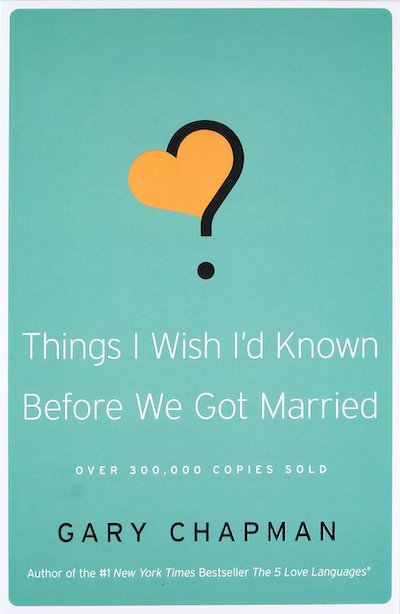
Things I Wish I’d Known Before We Got Married Book Summary
This Things I Wish I’d Known Before We Got Married Book Summary covers the key ideas, lessons, and takeaways in about 20 minutes.
Helps with these goals
Want the complete 20-minute summary?
- Full structured summary
- Video Summary
- Podcast Summary
- Audio summary
- Key takeaways
- Exercises
- Quiz
- Highlights and notes
- Ask the book with AI
What is in the Things I Wish I’d Known Before We Got Married book summary?
Below is a preview of Sumizeit’s expert-written summary of Things I Wish I’d Known Before We Got Married by Gary Chapman. The full summary covers the book’s key ideas in text, audio, and video.
Marriage is not always easy. Many people go into it thinking they know their partner through and through. Then they come to find out that the phrase ‘I do’ can change a relationship in drastic and unexpected ways.
Falling in love is an experience full of passion and excitement. But, marriage is not always like that. The heightened feelings start to deplete and many people are left feeling alone and isolated. So, how do you recover from that?
“People do not get married planning to divorce. Divorce is the result of a lack of preparation for marriage and the failure to learn the skills of working together as teammates in an intimate relationship.”- Gary Chapman
Gary Chapman has been a marriage counselor for decades and in his book, “Things I Wish I’d Known Before We Got Married,” he shares his insights on how to work as a team, practice observation of your partner, and overcome common romantic conflicts.
After The Two Year Mark
When you fall in love with someone, the emotions are heightened. Even during the first stage of marriage, your mental, physical, and emotional self are all full of happy thoughts and disillusioned ideas about the person you’re with.
But, when these emotions begin to fade, suddenly, all of your partner’s flaws come to the forefront. This can make the transition into the second stage, or the non-euphoric stage, of marriage difficult for couples to handle.
When you are in the ‘honeymoon stage,’ your physical body reacts by releasing chemicals such as testosterone and estrogen, which are categorized as sex hormones.
Your brain also releases oxytocin and dopamine, which activate the reward center of the brain. These chemicals are associated with pleasure.
All of these hormone surges make a person feel happy, giddy, and eager. However, some of these symptoms actually are quite similar to the evolutionary fight-or-flight situation, so, in turn, these feelings of love can actually create disillusions and clouded thinking.
When you’re in love, you may also experience an increased heart-rate, ‘butterflies’ in your stomach, or a flushed face. These are all short-term symptoms, but they can reoccur.
All of these symptoms make it hard for a person to clearly see their partner as they are. It makes it easy to look over a person’s faults.
These symptoms last for about the first two years and then subside.
People Love Differently
Not everyone shows love in the same way. And, the way someone shows love usually stems from their upbringing.
When people jump into marriage, they assume that their partner shows and feels love in the same way as them, but that’s rarely the case. This can cause a lot of issues surrounding miscommunication.
It’s important that partners become skilled in showing their partner the right kind of love based on their preferred love language.
The love languages as described in Gary Chapman’s book, “The 5 Love Languages” are:
Marriages last and grow strong when partners use the correct love language to show their affection.…
Want the complete 20-minute summary?
- Full structured summary
- Video Summary
- Podcast Summary
- Audio summary
- Key takeaways
- Exercises
- Quiz
- Highlights and notes
- Ask the book with AI
Who should read Things I Wish I’d Known Before We Got Married?
Things I Wish I'd Known Before We Got Married is ideal for couples preparing for marriage or those in the early stages of their relationship who want to build a stronger foundation. It's also valuable for married couples experiencing conflict or feeling disconnected after the initial honeymoon phase fades. Anyone wanting to understand how childhood patterns, communication styles, and practical planning shape long-term relationship success will find this book essential.
Why does Things I Wish I’d Known Before We Got Married matter?
Most people enter marriage unprepared for the dramatic shift that occurs once the initial euphoria wears off, leading to preventable conflicts and, in many cases, divorce. Gary Chapman's decades of marriage counseling experience provide science-backed insights into why relationships change and how couples can navigate these transitions deliberately. In a world where financial stress and miscommunication are leading causes of divorce, this book offers practical tools to prevent these common pitfalls before they become critical.
What are the key themes in Things I Wish I’d Known Before We Got Married?
- The honeymoon phase is temporary and understanding its biology prepares you for change
- People express and receive love in five distinct languages that must be learned
- Childhood experiences and parental patterns deeply influence adult relationships
- Conflict resolution requires empathy and teamwork, not winning arguments
- Financial transparency and planning are crucial to relationship stability
- Forgiveness has both emotional and physical healing properties
- Shared household responsibility and role clarity prevent resentment
- Apologies have different languages just like love does
What are the key lessons from the Things I Wish I’d Known Before We Got Married book summary?
Brain Chemistry Clouds Judgment in Early Love
Hormones like oxytocin, dopamine, and sex hormones create a state similar to fight-or-flight that lasts about two years and makes it impossible to see your partner clearly. Understanding this biological reality helps couples prepare for the reality check that follows.
The Five Love Languages Framework
People give and receive love through affirmation, acts of service, gifts, quality time, or physical touch—and most partners have different primary languages. Learning your partner's language and consciously using it transforms how loved your spouse feels.
You Cannot Separate from Your Parents' Influence
Personality traits, emotional patterns, and how you express love are inherited through mimicry starting in infancy and reinforced by neurotransmitters activated by parental affection. Observing your partner's same-sex parent reveals likely personality evolution.
Disagreements Are Healthy When Handled Right
Conflict is inevitable and necessary in marriage, but arguments with judgment are unproductive while empathetic disagreements solve problems. Reframing wants as neutral statements rather than demands creates space for genuine resolution.
Three Paths Exist for Every Disagreement
Rather than fighting to win, couples can compromise, settle on one partner's idea, or agree to postpone the decision. Accepting these options removes the false pressure that every conflict needs a victor.
Financial Conversations Must Precede Marriage
Money is the strongest predictor of divorce—more than any other variable—because couples often hide debt, spending habits, and financial goals until after vows. Planning finances and responsibility before marriage prevents a primary source of chronic stress.
Household Responsibility Must Be Explicitly Negotiated
Women disproportionately take on domestic duties even when working full-time, causing resentment and fatigue. Couples must deliberately discuss and redistribute household roles to feel equitable partnership.
The Five Languages of Apology
People receive apologies differently—through expressing regret, accepting responsibility, making restitution, promising change, or asking forgiveness. An apology that doesn't match your partner's language will feel incomplete.
Forgiveness Has Measurable Physical Benefits
Scientific research shows forgiveness accelerates physical healing, reduces stress hormones like cortisol, and improves mental health outcomes. Withholding forgiveness harms the person holding the grudge more than anyone else.
Observation Replaces Assumption in Healthy Relationships
Most couple conflict stems from assuming your partner feels, loves, and thinks exactly as you do. Deliberately observing and asking about differences prevents misunderstandings rooted in false equivalence.
Detachment Is Necessary During Conflict
The heat of the moment triggers judgment and defensiveness, but stepping back to focus on your own needs rather than criticizing your partner's character creates room for problem-solving. Nonviolent communication requires this emotional distance.
Value Systems Must Align Before Marriage
Being in love masks deeper incompatibilities in spiritual beliefs, intellectual interests, and life goals that later create irreconcilable conflict. Premarital conversations about values prevent discovering misalignment after commitment.
Divorce Is a Skill Deficit, Not Inevitable
Chapman argues that divorce results from lack of preparation and failure to learn relationship teamwork skills, not from falling out of love. This reframes divorce as preventable through deliberate practice and learning.
Women's Devalued Work Creates Domestic Inequality
Society and marriages often devalue women's paid work, leading women to accept dual burdens of career and household management. Recognizing this pattern helps couples consciously counter cultural conditioning.
Teamwork Replaces Romance as the Marriage Foundation
After the honeymoon phase, successful marriage depends on functioning as an effective team with shared goals and mutual support rather than chasing passionate feelings. This shift requires deliberate skill-building, not hope.
Self-Awareness About Love Language Is Half the Battle
Partners often cannot articulate their own love language, let alone recognize their spouse's, creating a cycle of feeling unloved while attempting to show love. Identifying your needs and communicating them clearly is foundational.
Isolation Follows the End of Honeymoon Chemistry
When brain chemicals recede and the partner's flaws become visible, many couples feel suddenly alone and betrayed rather than understanding this transition is universal and navigable. Preparation prevents despair.
Neurotransmitters Affect Self-Esteem and Love Expression
The parental love you received as a child literally shaped your brain's neurotransmitter development, influencing self-worth and emotional capacity. Understanding this science reduces shame about inherited patterns.
Around Age 33-34, Similarity to Parents Becomes Undeniable
Research shows people recognize their resemblance to their same-sex parent in their thirties, both physically and personality-wise. Partners who observe this pattern in their spouse gain insight into likely long-term personality expression.
Preparation and Skills Trump Passion and Hope
Most couples rely on love feeling good enough to sustain marriage, but Chapman's core message is that preparation, communication skills, and deliberate teamwork are what actually keep couples together beyond the initial euphoria.
Want the complete 20-minute summary?
- Full structured summary
- Video Summary
- Podcast Summary
- Audio summary
- Key takeaways
- Exercises
- Quiz
- Highlights and notes
- Ask the book with AI
How can you apply ideas from Things I Wish I’d Known Before We Got Married?
- Take the Five Love Languages assessment together and commit to expressing love in your partner's primary language for one month to notice the difference in how appreciated they feel
- Schedule a comprehensive premarital or marital finances conversation covering debt disclosure, spending histories, savings goals, and specific responsibility assignments before resentment builds
- During your next disagreement, practice reframing your needs as neutral statements rather than demands and focus on your own feelings instead of judging your partner's character
- Interview or observe your partner's same-sex parent to gain insight into likely personality traits and relationship patterns your partner may develop over time
- Identify your apology language and your partner's, then deliberately practice apologizing in their language to repair disconnection more effectively
- Create a household responsibility chart that explicitly divides all tasks and responsibilities, ensuring both partners feel the distribution is equitable
- When holding a grudge, practice forgiveness by focusing on stress relief and mental health benefits rather than thinking of it as letting your partner off the hook
What common mistakes do readers make with Things I Wish I’d Known Before We Got Married?
- Assuming your partner shows and receives love exactly as you do, rather than learning their unique love language and deliberately using it
- Entering marriage without discussing finances, debt, spending habits, and financial responsibility, then being shocked when money becomes a source of chronic conflict
- Fighting to win arguments instead of empathetically problem-solving, which leaves partners feeling judged and unheard rather than understood and resolved
- Failing to recognize that the honeymoon phase is temporary brain chemistry, then interpreting its natural fade as a sign the relationship is failing or that you married the wrong person
Sumizeit Exercises Apply what you've learned
Turn ideas from Things I Wish I’d Known Before We Got Married into action with a short guided reflection: identify the biggest takeaway, connect it to your life, and commit to one step you can take in the next 24 hours.
What is the expert analysis of Things I Wish I’d Known Before We Got Married?
Overview
Things I Wish I’d Known Before We Got Married is authored by Gary Chapman, a seasoned marriage counselor renowned for his work on interpersonal relationships and communication, particularly through his influential book The 5 Love Languages. This work builds upon Chapman's expertise, offering practical insights aimed at couples preparing for or navigating the early years of marriage. Its significance lies in addressing the often unspoken challenges that arise post-honeymoon phase, providing readers with tools to foster understanding, empathy, and resilience within intimate partnerships.
Core Thesis
Chapman’s central argument is that successful marriages require more than initial romantic passion; they demand intentional preparation, mutual understanding, and skillful communication. He posits that the fading of euphoric feelings after approximately two years exposes underlying differences and challenges that can destabilize relationships. By recognizing distinct love and apology languages, understanding the psychological and biological underpinnings of love, and proactively managing practical matters such as finances and household roles, couples can build a durable partnership grounded in empathy, forgiveness, and teamwork.
Strengths
- Integration of Psychological and Biological Insights: Chapman effectively incorporates neuroscience and psychology, such as the role of hormones and neurotransmitters in early love, lending scientific credibility to his observations about the emotional trajectory of marriage.
- Practical Frameworks: The delineation of love and apology languages provides accessible, actionable tools for couples to improve communication and emotional connection, a hallmark of Chapman’s work that resonates widely.
- Attention to Real-World Dynamics: The book addresses common but often overlooked issues such as the impact of parental models, gender roles in household labor, and financial disagreements, grounding its advice in everyday realities.
- Emphasis on Forgiveness and Empathy: By highlighting forgiveness’s biological and psychological benefits, Chapman elevates it from a moral imperative to a healthful practice essential for relational longevity.
Critiques & Counterarguments
- Potential Oversimplification of Complex Dynamics: While the love language framework is popular, some critics argue it risks reducing multifaceted emotional experiences to categorical boxes, potentially neglecting cultural, contextual, and individual variability in expressions of love and apology.
- Limited Engagement with Structural and Societal Factors: The discussion of gender roles and domestic labor touches on inequality but does not deeply interrogate systemic societal pressures or propose transformative solutions beyond individual negotiation.
- Reliance on Anecdotal and Selective Evidence: Some of the biological claims, such as the healing effects of forgiveness on burn victims, while compelling, are drawn from specific cases and may not generalize broadly; more rigorous empirical validation is warranted.
- Competing Schools of Thought: Attachment theory and contemporary relational models emphasize early childhood experiences and unconscious patterns in ways that sometimes contrast with Chapman's more behaviorally oriented and communication-focused approach.
- Financial Conflict Complexity: The book rightly underscores finances as a major stressor but could benefit from integrating economic and sociological research that explores how systemic economic instability and inequality shape marital financial conflicts beyond individual spending habits.
Who Should Read This
This book is ideal for engaged or newly married couples seeking to deepen their understanding of the emotional and practical challenges inherent in early marriage. It also serves marriage counselors, therapists, and educators looking for accessible frameworks to facilitate communication and conflict resolution among couples. Readers interested in the intersection of psychology, biology, and relationship dynamics will find Chapman’s synthesis both informative and applicable, though those seeking a more critical or systemic analysis of marriage may need to supplement with additional sources.
Frequently asked questions about the Things I Wish I’d Known Before We Got Married book summary
What is Things I Wish I'd Known Before We Got Married about?
Things I Wish I'd Known Before We Got Married by Gary Chapman is a practical guide to navigating the often-difficult transition from the honeymoon phase of marriage into a stable partnership. The book combines Chapman's decades of marriage counseling experience with scientific research on communication, love languages, forgiveness, and financial planning to show couples how to build lasting relationships through deliberate preparation and skill development rather than relying solely on romantic feelings.
Who should read Things I Wish I'd Known Before We Got Married?
This book is essential for engaged couples preparing for marriage, newlyweds experiencing the shift from passion to reality, and any married couple struggling with communication or connection. It's also valuable for anyone curious about why relationships change after the initial excitement fades and how to navigate those changes successfully.
What are the main takeaways from Things I Wish I'd Known Before We Got Married?
The core takeaways are: the honeymoon phase is temporary brain chemistry lasting about two years, people express love and apologies in five distinct languages that must be learned, childhood patterns deeply influence adult relationships, financial transparency prevents the leading cause of divorce, and forgiveness has measurable emotional and physical benefits. Chapman argues that divorce is preventable through preparation and skill-building rather than inevitable.
What are the five love languages in Gary Chapman's book?
The five love languages are: affirmation (verbal praise), acts of service (helping with tasks), receiving gifts (tangible tokens), quality time (focused attention), and physical touch (affection). Most people have one or two primary languages through which they feel most loved, and partners often have different languages, requiring deliberate learning and adaptation.
How does the honeymoon phase affect marriage expectations?
During the honeymoon phase, hormones like oxytocin, dopamine, and sex hormones create a state that lasts about two years and prevents couples from seeing their partner's flaws clearly. When these chemicals fade, partners suddenly notice incompatibilities they overlooked, causing many couples to feel blindsided or to question whether they married the right person, when in fact this transition is universal and navigable.
Why does Gary Chapman say finances are critical to marriage?
Research shows financial conflict is the strongest predictor of divorce—more predictive than any other factor. Many couples enter marriage without discussing debt, spending habits, or financial goals, then face chronic stress and resentment when these differences surface. Chapman emphasizes that premarital financial conversations and clear responsibility assignments can prevent this leading source of relationship breakdown.
What does Chapman say about forgiveness in marriage?
Chapman cites scientific research showing forgiveness accelerates physical healing, reduces stress hormones, and improves mental health outcomes. Rather than a sign of weakness or letting your partner off the hook, forgiveness is reframed as self-care that frees both partners from the biological stress of holding grudges.
How do parental patterns affect adult relationships according to this book?
Chapman explains that personality traits, emotional patterns, and how you express love are inherited through childhood mimicry and shaped by neurotransmitters activated by parental affection. By observing your partner's same-sex parent, you gain insight into personality traits and relationship patterns your partner may develop, often becoming evident around age 33-34.
About Sumizeit
Sumizeit is a profitable Scomy LLC company based in Miami, Florida. It has been helping readers learn from nonfiction books for 7 years with expert-written summaries in text, audio, podcast, and video.
Want the complete 20-minute summary?
- Full structured summary
- Video Summary
- Podcast Summary
- Audio summary
- Key takeaways
- Exercises
- Quiz
- Highlights and notes
- Ask the book with AI
Here's why readers love Sumizeit
Join thousands of learners getting smarter every day
"Great experience. Detailed summaries. Loved the gamification feature. Makes learning fun. Good customer service. I recommend Sumizeit to anyone. You'll learn a lot."
"I always felt busy but still wanting to keep up with the book discussion in my friend group. This was a great supplement to help me keep reading the books I find fun while keeping up with important books."
"I love this website. Instead of scrolling social media, I find myself learning a lot. I use it everyday. I recommend this app for anyone who is too busy and wants to get up to speed with their favorite books."
Things I Wish I’d Known Before We Got Married Book Summary PDF
Looking for a Things I Wish I’d Known Before We Got Married Book Summary PDF you can save and revisit offline? Our Things I Wish I’d Known Before We Got Married Book Summary PDF captures the book’s core ideas in a clean, printable format — the key frameworks, takeaways, and structure without the fluff. Download the Things I Wish I’d Known Before We Got Married Book Summary PDF when you want a reference you can annotate, share with your team, or review on the go. Get your Things I Wish I’d Known Before We Got Married Book Summary PDF from the download page below.
Download Things I Wish I’d Known Before We Got Married Book Summary PDFPeople also liked these summaries
Readers who explored Things I Wish I’d Known Before We Got Married often enjoyed these titles next.

Want the complete 20-minute summary?
- Full structured summary
- Video Summary
- Podcast Summary
- Audio summary
- Key takeaways
- Exercises
- Quiz
- Highlights and notes
- Ask the book with AI
Featured Book Titles
Popular Book Summaries at sumizeit, leading book summary app
