


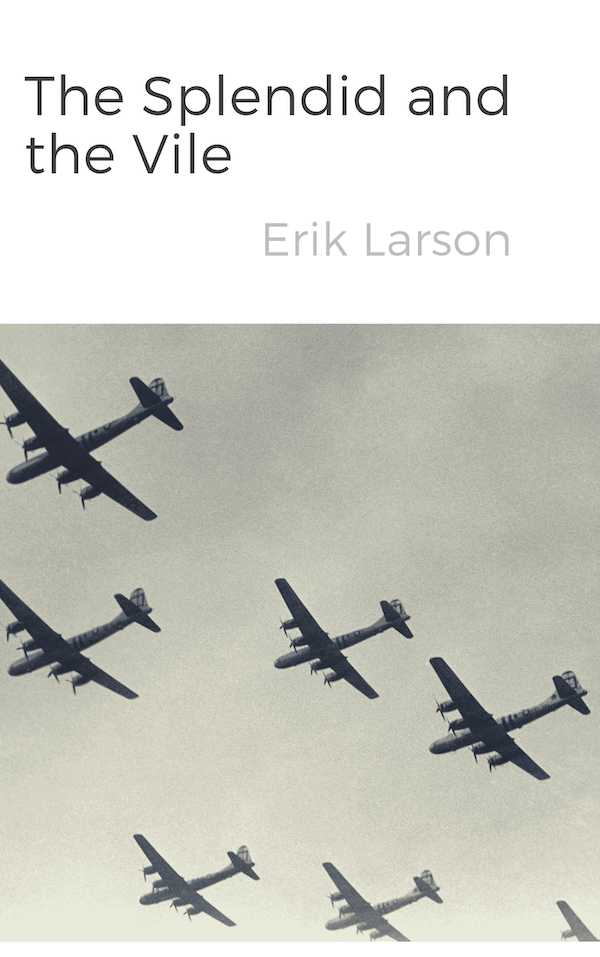
Prefer the print book? Buy on Amazon
As an Amazon Associate, Sumizeit earns from qualifying purchases.
The Splendid and the Vile Book Summary
This The Splendid and the Vile Book Summary covers the key ideas, lessons, and takeaways in about 20 minutes.
Short Description:
Churchill’s leadership helped UK endure WWII and secure victory.
Helps with these goals
Preview the The Splendid and the Vile book summary
Below is a preview of Sumizeit’s comprehensive human-written summary of The Splendid and the Vile by Erik Larson. The full summary is 15-20 minutes long and covers the book’s key ideas in text, audio, visual, and video formats. Unlock the full 20 Minute Summary
Prime Minister Winston Churchill’s first year of leadership was marked by continuous air raids, death, and destruction, but he met these challenges with resilience and grim resolve. He refused to back down to the Nazis and focused his efforts on enlisting the American aid and support that would help the British win the war. Despite sustaining high civilian death tolls and mass homelessness, the UK held against the Nazis until Churchill was able to secure Roosevelt’s support. A third-ranking Nazi official, Rudolf Hess, tried to arrange a secret peace deal with Britain, but by the time he delivered his message, Churchill had no interest in pursuing peace. In June of 1941, Hitler diverted his attention to the east, launching an attack on Russian Bolsheviks, which distracted him from his efforts in England and ended the threat of a Nazi invasion of the UK. In December of 1941, the Japanese attacked Pearl Harbor, bringing the United States fully into the war and securing Churchill’s confidence that the Allies would emerge victoriously.
Churchill Needed To Enlist American Help
By May of 1940, the Nazis had invaded France, and Winston Churchill, the new Prime Minister of the United Kingdom, knew that Britain would soon be forced to enter the war to defend their ally. Churchill had only recently been appointed Prime Minister, after the Parliament's vote of no confidence in his predecessor, Neville Chamberlain, who had tried to appease Hitler and failed.
The Nazis possessed formidable military force, and most people doubted that the UK had any chance of defeating them. However, Churchill had confidence in Britain’s ability to win the war, but he also knew that American involvement would be necessary in order to ensure victory. Convincing the US to help Britain was Churchill’s main goal. However, in order to convince the US President, Franklin D Roosevelt, to enter the war in support of the UK, he had to convince them that Britain had a good chance of defeating the Nazis.
The US government did not want to get involved in the war, especially so soon after they had come back from World War I. They were also mistrustful of Churchill. They feared he would be an unreliable ally, and some were skeptical of his drinking habits. Churchill was an eccentric man, who had unusual working habits. He liked to bathe twice a day, and would retrieve phone calls naked from his private secretary if he received one while in the bath. He kept odd hours and would wander the halls in flowery dressing downs.
Despite Churchill’s eccentricities, the British people put their trust in him, and he took his job very seriously. He was realistic about the grim predicament the country was in, but demonstrated a firm resolve and provided some measure of hope to his countrymen. He focused all his energy on preventing a Nazi invasion of England and committed all his efforts to ensure Britain would win the war.
The Dunkirk Rescue Boosted British Morale
The Nazis were already…
Want the complete 20-minute summary?
- Full structured summary
- Video Summary
- Podcast Summary
- Audio summary
- Key takeaways
- Exercises
- Quiz
- Highlights and notes
- Ask the book with AI
Who should read The Splendid and the Vile?
The Splendid and the Vile appeals to World War II history enthusiasts, students of leadership, and readers fascinated by Britain's finest hour. It's ideal for those who want to understand how Churchill inspired a nation under siege and for anyone interested in the political and military dynamics that shaped the war's outcome.
Why does The Splendid and the Vile matter?
Erik Larson's account reveals how one leader's resolve and diplomacy changed the course of history during humanity's darkest hour. The book illuminates the critical role of American support, the psychological power of civilian resilience, and how strategic decisions—or mistakes—can alter the fate of nations, making it deeply relevant to understanding modern leadership and international alliances.
What are the key themes in The Splendid and the Vile?
- Leadership under existential threat
- The power of civilian resilience and morale
- Diplomatic negotiation and building international alliances
- Military strategy and technological innovation
- The human cost of war and urban destruction
- How dictatorial miscalculation can shift war outcomes
How can you apply ideas from The Splendid and the Vile?
- Develop a clear, compelling vision of victory even in desperate circumstances, and communicate it consistently to build organizational morale
- Invest strategically in innovation and modernization to compete against better-resourced competitors
- Identify and cultivate key stakeholders and decision-makers; persistence and relationship-building can overcome initial resistance
- Lead visibly during crises by being present and sharing in the hardship of those you lead
- Distinguish between realism about obstacles and pessimism about outcomes; acknowledge difficulty while maintaining conviction in success
- Monitor enemy or competitor intelligence for potential blindspots and errors you can exploit
- Use strategic communication and narrative to shape perception and build support for your cause
What common mistakes do readers make with The Splendid and the Vile?
- Assuming that military or technical superiority alone guarantees victory without securing political and diplomatic support
- Allowing initial setbacks or skepticism to weaken your conviction and cause you to abandon your core strategy prematurely
- Underestimating the resilience of civilian populations or the power of morale in sustaining resistance
- Relying solely on intelligence reports without validating them through multiple sources or challenging assumptions
Sumizeit Exercises Apply what you've learned
Turn ideas from The Splendid and the Vile into action with a short guided reflection: identify the biggest takeaway, connect it to your life, and commit to one step you can take in the next 24 hours.
What is the expert analysis of The Splendid and the Vile?
Overview
The Splendid and the Vile by Erik Larson is a meticulously researched narrative nonfiction work that illuminates Winston Churchill’s leadership during the harrowing first year of Britain’s involvement in World War II. Larson, an acclaimed journalist and bestselling author known for his ability to weave historical detail with compelling storytelling, focuses on the London Blitz and the political and military strategies that shaped the conflict’s trajectory. This book stands out for its intimate portrayal of Churchill’s character and the resilience of the British people amid relentless Nazi air raids, situating their struggle within the larger geopolitical shifts of the time.
Core Thesis
Larson’s central argument is that Churchill’s steadfast leadership, personal resolve, and strategic diplomacy were pivotal in sustaining British morale and securing crucial American support, which ultimately altered the course of the war. The author posits that despite overwhelming odds, including devastating bombings and initial military setbacks, Churchill’s ability to inspire hope and mobilize resources prevented Britain’s collapse. Furthermore, Larson highlights how Hitler’s diversion of attention to the Eastern Front with Operation Barbarossa inadvertently spared Britain from invasion, enabling the Allies to gain a critical foothold in the war.
Strengths
- Vivid Characterization: Larson excels at humanizing Churchill, portraying not only his political acumen but also his eccentricities and personal vulnerabilities, which adds depth beyond the typical heroic narrative.
- Rich Detail and Narrative Drive: The book combines rigorous historical research with a narrative style that reads with the tension and immediacy of a novel, making complex military and political developments accessible and engaging.
- Balanced Focus on Multiple Perspectives: Larson integrates the experiences of civilians, military personnel, and political figures, providing a comprehensive picture of wartime Britain’s social and psychological landscape.
- Strategic Contextualization: The work situates the British struggle within the broader international context, particularly emphasizing the critical role of American aid and the impact of Nazi strategic decisions.
Critiques & Counterarguments
- Potential Oversimplification of Complex Politics: While Larson’s narrative is compelling, some may argue that the book simplifies the nuanced political dynamics between Britain and the United States, underplaying the complexities and internal debates within the US about intervention.
- Limited Exploration of Alternative British Leadership Views: The focus on Churchill’s leadership may overshadow dissenting voices within Britain at the time, such as those advocating for negotiated peace or differing military strategies.
- Overemphasis on Individual Agency: The portrayal of Churchill as the linchpin of British survival risks minimizing structural factors such as industrial capacity, intelligence breakthroughs (e.g., codebreaking), and the contributions of other Allied nations.
- Competing Historical Interpretations: Some historians emphasize the role of the Royal Air Force’s technological innovations and intelligence work (like radar and Ultra decrypts) as equally decisive, suggesting that leadership alone does not fully account for Britain’s endurance.
- Real-World Evidence of Civilian Hardship: Although the book acknowledges civilian suffering, critics might argue that it underrepresents the long-term social and psychological toll of the Blitz on British society, which shaped post-war politics and culture.
Who Should Read This
- Historians and Students: Those seeking a richly detailed, narrative-driven account of Britain’s wartime experience and Churchill’s leadership will find this book invaluable.
- World War II Enthusiasts: Readers interested in the London Blitz, military strategy, and the interplay of political and military decisions during the early war years will appreciate Larson’s thorough treatment.
- Leadership Scholars and Psychologists: Individuals studying crisis leadership, resilience, and decision-making under pressure will gain insights from Churchill’s example as portrayed in the book.
- General Readers: Anyone drawn to compelling historical narratives that combine personal stories with grand geopolitical shifts will find this book both informative and engrossing.
Frequently asked questions about the The Splendid and the Vile book summary
What is The Splendid and the Vile about?
The Splendid and the Vile by Erik Larson chronicles Winston Churchill's first year as Prime Minister of Britain, from May 1940 to May 1941, during the Nazi Blitz and the Battle of Britain. The book follows Churchill's extraordinary efforts to secure American support while defending Britain against relentless German air raids that killed tens of thousands of civilians. It ultimately shows how Churchill's resolve, combined with Hitler's strategic mistakes and American aid, preserved Britain and shaped the course of World War II.
Who should read The Splendid and the Vile?
The Splendid and the Vile appeals to World War II enthusiasts, history students, and anyone interested in leadership under extreme pressure. It's ideal for readers seeking to understand how Churchill inspired a nation under siege, those curious about the London Blitz and the Battle of Britain, and people interested in how diplomatic negotiation and resilience can alter historical outcomes. The book also fascinates general readers drawn to narrative history and compelling personal stories.
What are the main takeaways from The Splendid and the Vile?
The main takeaways include the critical importance of unwavering leadership and morale during existential crises, the essential role of securing powerful allies through persistent diplomacy, and how military innovation can level uneven odds. The book also demonstrates how enemy miscalculation and chance events can change the course of history, and how a leader's authentic commitment and visible presence during suffering builds trust and inspires national resilience. Finally, it shows that victory often depends on a combination of strategy, timing, and conviction.
How did Churchill secure American support for Britain?
Churchill persistently communicated Britain's desperate need to President Roosevelt through daily telegrams, carefully framing his requests to show both the stakes and Britain's viability as an ally. He worked with key American officials to develop the Lend-Lease Plan, which allowed the US to provide military equipment without formally entering the war. Churchill also benefited from Roosevelt's growing sympathy, especially after American officials like Harry Hopkins visited bomb-ravaged London and witnessed the destruction firsthand. Roosevelt's public commitment to Britain in his December 1940 Fireside Chat marked the turning point in American support.
What was Operation Barbarossa and why did it matter?
Operation Barbarossa was Hitler's June 1941 invasion of the Soviet Union, which opened a devastating second front in the war. Instead of invading Britain, Hitler diverted massive military resources to fight the Russians, a miscalculation that Churchill had anticipated. Operation Barbarossa eliminated the immediate threat of Nazi invasion of Britain and marked the beginning of Hitler's downfall, fundamentally shifting the war's trajectory in the Allies' favor and validating Churchill's refusal to surrender or seek peace.
How did the London Blitz affect British civilians and morale?
The London Blitz, which lasted from September 1940 to May 1941, killed nearly 30,000 Londoners and injured tens of thousands more, destroying homes and causing widespread homelessness and trauma. Yet rather than breaking British morale, the continuous bombing seemed to strengthen civilian resolve and unity. Churchill's visible presence in bombed areas, combined with the population's resilience and British military successes in aerial combat, sustained hope and determination. The destruction also generated sympathy for Britain internationally, particularly in America, which strengthened Churchill's diplomatic hand.
What was Rudolf Hess's role in the book?
Rudolf Hess, Hitler's former deputy, attempted to broker a secret peace deal between Britain and Germany because he and some other Nazi officials viewed the British as racial allies and opposed continued warfare. After multiple failed attempts, Hess flew his own plane to Scotland to deliver his message in person but was captured. Though Churchill was uninterested in peace negotiations, the Hess affair captured public attention and demonstrated internal conflicts within Nazi leadership. Churchill strategically used the story for propaganda purposes to boost British and American morale.
Why did Germany's aerial assault on Britain ultimately fail?
Germany's aerial assault failed due to a combination of factors: the Royal Air Force's use of radar technology gave them a crucial advantage despite inferior numbers, British aircraft production under Lord Beaverbrook's leadership was faster than German intelligence anticipated, and British fighter pilots fought with desperate resolve knowing their homes were at stake. Additionally, Hitler's strategic miscalculations—halting tanks at Dunkirk, delaying Operation Sea Lion, and eventually prioritizing Operation Barbarossa—gave Britain time to strengthen defenses. The Luftwaffe lost more planes than the Royal Air Force, and by May 1941, Hitler abandoned the bombing campaign to focus on invading Russia.
About Sumizeit
Sumizeit is a profitable Scomy LLC company based in Miami, Florida. Our founders, Clemens Raemy and Weina Scott, are successful entrepreneurs with several exits. Sumizeit is a popular book summary app / micro learning app used by busy professionals and entrepreneurs with over 2,500 non-fiction book summaries and 10,000 podcast summaries in text, audio, visual, podcast, and video format. We also have stellar retention tools to make ideas stick - such as flashcards with spaced repetition, quizzes, streaks, highlighting and notes, daily challenges, riddles, mini-courses, meditation, and more. You won't only learn the idea, but also remember it. Over 90% of our users change their habits with Sumizeit.
Upgrade Now
Here's why readers love Sumizeit
Join thousands of learners getting smarter every day
"Great experience. Detailed summaries. Loved the gamification feature. Makes learning fun. Good customer service. I recommend Sumizeit to anyone. You'll learn a lot."
"I always felt busy but still wanting to keep up with the book discussion in my friend group. This was a great supplement to help me keep reading the books I find fun while keeping up with important books."
"I love this website. Instead of scrolling social media, I find myself learning a lot. I use it everyday. I recommend this app for anyone who is too busy and wants to get up to speed with their favorite books."
The Splendid and the Vile Book Summary PDF
Looking for a The Splendid and the Vile Book Summary PDF you can save and revisit offline? Our The Splendid and the Vile Book Summary PDF captures the book’s core ideas in a clean, printable format — the key frameworks, takeaways, and structure without the fluff. Download the The Splendid and the Vile Book Summary PDF when you want a reference you can annotate, share with your team, or review on the go. Get your The Splendid and the Vile Book Summary PDF from the download page below.
Download The Splendid and the Vile Book Summary PDFPeople also liked these summaries
Readers who explored The Splendid and the Vile often enjoyed these titles next.



Ready to read the whole thing?
- Full structured summary
- Video Summary
- Podcast Summary
- Audio summary
- Key takeaways
- Exercises
- Quiz
- Highlights and notes
- Ask the book with AI
Featured Book Titles
Popular Book Summaries at sumizeit, leading book summary app