


As an Amazon Associate, Sumizeit earns from qualifying purchases.
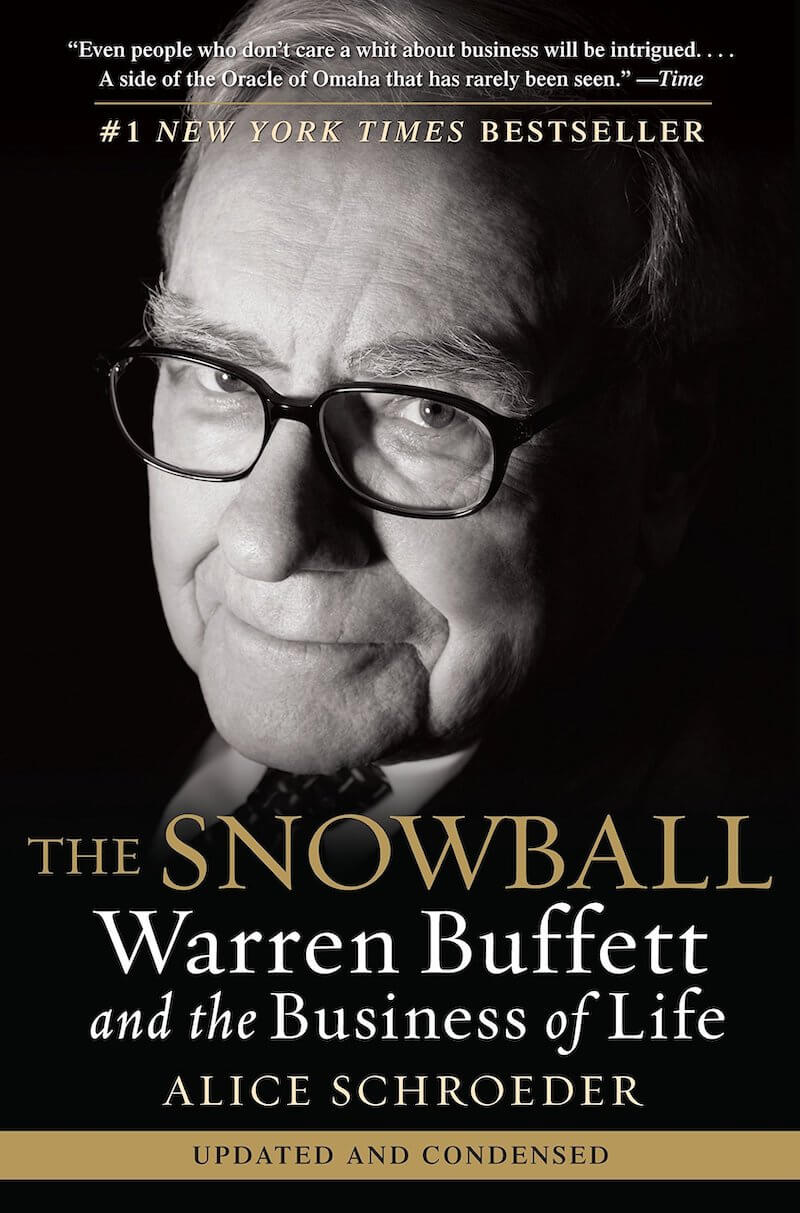
The Snowball Book Summary
This The Snowball Book Summary covers the key ideas, lessons, and takeaways in about 20 minutes.
Helps with these goals
Want the complete 20-minute summary?
- Full structured summary
- Video Summary
- Podcast Summary
- Audio summary
- Key takeaways
- Exercises
- Quiz
- Highlights and notes
- Ask the book with AI
What is in the The Snowball book summary?
Below is a preview of Sumizeit’s expert-written summary of The Snowball by Alice Schroeder. The full summary covers the book’s key ideas in text, audio, and video.
You have probably heard of him as “the Wizard of Omaha,” the boy who, by eleven, had already saved up $120, which was a lot of money in 1941, and who used this money to make his first investment in the company Cities Served Preferred.
Warren Edward Buffett, one of the world’s few billionaires, has a net worth of $89,4 billion.
In her book, to understand how Buffett went from a broke young boy in Omaha to one of the richest and most successful men in the world, author Alice Schroeder leads us through his journey as the most famous investor of the twentieth and twentieth-first centuries in a way that anyone can learn how to get rich as Buffett himself did.
Start Them Young: How Warren Buffett Made His First Investment at the Age of 11
Warren Buffett was born on August 20, 1930, only a few months after the Great Depression hit the country, leaving most investors broke, to Howard Buffett, a stockbroker and member of Congress, and Leila Buffett (née Stahl).
Young Warren’s early interest in numbers, probabilities, and statistics was noticed and encouraged by his family. When he was nine years old, he was already making money by working several jobs, such as selling peanuts and Coke at football games.
At the age of eleven, having saved $120, he bought six shares of the company Cities Service Preferred: three for himself and three for his sister Doris. In 1942, after his father was elected to Congress, Warren began working as a newspaper delivery boy; at some point, he was earning $175 a month, and it was not long before his savings summed up to $1,000.
At the age of fourteen, Warren Buffett would fill his first tax return.
Years later, during his college years at Columbia University, Warren would come to learn several of the most important lessons and fundamental investment strategies in his life: for example, the importance of investigating a company from top to bottom before investing in it. He took a particular liking to study his professor Benjamin Graham’s “buy and hold” investment theories, and would later call him “the Albert Einstein of the investments.”
It was also during his Columbia years that he would meet his wife, Susie Thompson. Though her father liked Warren immediately, it took a while before Susie herself finally fell for his nerdy, awkward charm. Their daughter, Susie Alice Buffett, was born in 1953, the very same year Buffett got his dream job at his mentor Ben Graham’s investment firm, Graham-Newman. Warren quickly became the company’s rising star, yet he realized he hated being a stockbroker for multiple reasons. He would eventually launch his own company, Buffett Associates, Ltd, in 1956, after the birth of his second child, Howie Graham Buffett.
Buffett Associates only included friends and relatives, and there were straightforward rules, which were listed in his company’s original partnership agreement, behind investments so that no one would be disappointed afterward or have unrealistic expectations.
Want the complete 20-minute summary?
- Full structured summary
- Video Summary
- Podcast Summary
- Audio summary
- Key takeaways
- Exercises
- Quiz
- Highlights and notes
- Ask the book with AI
Who should read The Snowball?
The Snowball is essential reading for investors, entrepreneurs, and anyone interested in understanding how wealth compounds over time. Whether you're building a business, managing investments, or simply curious about one of history's greatest financial minds, this biography offers insights applicable to personal finance and decision-making at any wealth level.
Why does The Snowball matter?
Warren Buffett's approach to investing revolutionized how we think about long-term wealth creation and patient capital accumulation. In an era of quick trades and short-term thinking, Alice Schroeder's biography demonstrates why fundamental principles like understanding what you invest in, reinvesting earnings, and surrounding yourself with trustworthy people remain timeless. The book also reveals how personal values and relationships shaped one of the world's most successful investors.
What are the key themes in The Snowball?
- Compound growth and the snowball effect of reinvested returns
- The importance of understanding a business before investing
- Patient, long-term thinking versus short-term speculation
- Character and integrity in business partnerships
- Balancing professional ambition with personal relationships and philanthropy
- Building wealth through undervalued assets and disciplined acquisition
What are the key lessons from the The Snowball book summary?
Start early and think long-term
Buffett began investing at age eleven and maintained a decades-long perspective on wealth accumulation, allowing compound returns to work their magic over time.
Master the fundamentals before investing
Buffett studied Benjamin Graham's investment principles deeply at Columbia University, learning to analyze companies thoroughly rather than chase market trends.
Reinvest your earnings
The 'snowball' metaphor captures Buffett's core strategy: rolling profits back into existing positions to accelerate compound growth rather than cashing out early.
Only invest in what you understand
Buffett developed a strict rule to avoid industries or business models he couldn't fully grasp, protecting himself from speculative losses.
Look for undervalued opportunities others miss
When American Express faced scandal, Buffett saw opportunity and invested heavily while skeptics fled, demonstrating contrarian thinking.
People matter more than numbers
Buffett prioritized acquiring businesses based on the quality and character of their managers, recognizing that competent leadership drives long-term success.
Build your network intentionally
Buffett's partnerships with Charlie Munger, Kay Graham, and later Bill Gates shaped his decisions and expanded his perspective beyond pure finance.
Avoid 'human problems' in acquisitions
Buffett deliberately steered clear of companies facing labor disputes, plant closures, or internal conflict, knowing these create hidden costs and risks.
Patience is a competitive advantage
While Wall Street rushed into hostile takeovers and debt-fueled deals, Buffett's cash-only, patient approach proved more sustainable and profitable.
Success doesn't require Wall Street validation
Operating from Omaha rather than New York, Buffett proved that distance from traditional financial centers was no barrier to outsized returns.
Maintain humility despite wealth
Even as a billionaire, Buffett remained indifferent to material display and status symbols, keeping focus on what truly creates value.
Diversify through ownership, not stock picking
Rather than holding diverse individual stocks, Buffett acquired controlling stakes in businesses where he could influence strategy and operations.
Preserve capital during uncertainty
During personal crises and market turbulence, Buffett shifted toward businesses offering certainty and essential goods rather than speculative growth.
Align your business structure with your philosophy
Buffett's partnership agreements were deliberately designed to manage expectations and ensure alignment with his conservative, long-term approach.
Give back when you've accumulated enough
Late in life, Buffett donated 85% of his wealth to the Bill and Melinda Gates Foundation, demonstrating that accumulation without purpose loses meaning.
Build deep, lasting professional relationships
Buffett's 30-year friendship with Kay Graham and his bond with Charlie Munger provided emotional support and strategic counsel through difficult periods.
Let your reputation precede you
Buffett's association with stable, well-run companies became so trusted that his presence on a board signaled safety to investors and regulators.
Stick to your principles even when criticized
Despite skepticism from Wall Street, Buffett maintained his philosophy of value investing and cash discipline, ultimately proving doubters wrong.
Recognize when to step in and lead
When Salomon Brothers faced scandal, Buffett took interim leadership and personally intervened to protect stakeholders and restore trust.
Evolve while staying true to core values
Though personal circumstances and markets changed dramatically, Buffett's fundamental principles of patience, integrity, and value-seeking remained constant.
Want the complete 20-minute summary?
- Full structured summary
- Video Summary
- Podcast Summary
- Audio summary
- Key takeaways
- Exercises
- Quiz
- Highlights and notes
- Ask the book with AI
How can you apply ideas from The Snowball?
- Apply the snowball principle to your own savings by consistently reinvesting returns rather than spending investment gains
- Develop a personal investment thesis: identify industries or business models you understand deeply before committing capital
- Build a personal board of advisors—trusted friends and mentors who challenge your thinking and offer diverse perspectives
- Create clear, written guidelines for your investment or business decisions to manage expectations and maintain discipline during volatile periods
- Practice due diligence by thoroughly researching any major business or investment decision before committing resources
- Evaluate potential partners and hires based on character, competence, and shared values rather than credentials alone
- Maintain a long-term perspective in all financial decisions, resisting pressure to chase short-term returns or market trends
- Plan for eventual wealth transfer and philanthropy, considering what lasting impact you want your accumulated resources to create
What common mistakes do readers make with The Snowball?
- Investing in businesses or industries you don't fully understand, leading to unexpected losses and poor decision-making during crises
- Selling positions prematurely when facing short-term losses, rather than allowing the snowball effect to work over decades
- Prioritizing rapid growth and market validation over sustainable fundamentals, a trap that catches many entrepreneurs and investors
- Neglecting relationships and personal life in pursuit of wealth accumulation, as Buffett himself experienced with his family during his most productive decades
Sumizeit Exercises Apply what you've learned
Turn ideas from The Snowball into action with a short guided reflection: identify the biggest takeaway, connect it to your life, and commit to one step you can take in the next 24 hours.
What is the expert analysis of The Snowball?
Overview
The Snowball: Warren Buffett and the Business of Life by Alice Schroeder stands as a definitive biography of one of the most iconic figures in investment history. Schroeder, a seasoned insurance analyst and financial expert, was uniquely positioned to delve deeply into Buffett’s life, gaining unprecedented access to his personal and professional world. Published in 2008, the book not only chronicles Buffett’s ascent from a precocious child investor in Omaha to a billionaire magnate but also explores the intricate interplay between his business acumen and personal values. Its significance lies in offering both a comprehensive narrative and an intimate portrait of Buffett, revealing the human dimensions behind his legendary financial success.
Core Thesis
At the heart of The Snowball is the metaphor of Buffett’s wealth and wisdom accumulation as a “snowball” — a process of patient, disciplined reinvestment that grows exponentially over time. Schroeder argues that Buffett’s success is not merely a product of shrewd investment strategies but also of his unwavering adherence to principles such as integrity, deep understanding of businesses, and long-term thinking. The book emphasizes that Buffett’s approach is holistic, blending rigorous financial analysis with a strong ethical compass and a focus on the human elements within business. Ultimately, the thesis suggests that true wealth and influence arise from this combination of intellect, patience, and character.
Strengths
- Depth of Research and Access: Schroeder’s direct access to Buffett and his inner circle allows for a richly detailed and authoritative account, filled with anecdotes and insights unavailable elsewhere.
- Balanced Portrayal: The biography does not mythologize Buffett but presents his flaws, personal struggles, and family dynamics alongside his triumphs, offering a nuanced human portrait.
- Integration of Business and Personal Life: The narrative skillfully intertwines Buffett’s investment philosophy with his personal relationships and values, illustrating how each influenced the other.
- Educational Value: The book distills complex investment principles into accessible lessons, making it valuable not only as biography but also as a guide for aspiring investors and business leaders.
- Contextualization of Historical and Economic Events: By situating Buffett’s career within broader economic trends and crises, Schroeder enriches the reader’s understanding of the challenges and opportunities that shaped his decisions.
Critiques & Counterarguments
- Potential Hagiography: While comprehensive, the book occasionally borders on reverential, which may obscure critical scrutiny of Buffett’s decisions and the broader systemic implications of his investment style.
- Oversimplification of Investment Success: The “snowball” metaphor, while evocative, risks reducing the complexity of market dynamics and luck’s role in Buffett’s rise, potentially underplaying external factors beyond his control.
- Limited Engagement with Competing Investment Philosophies: The book largely champions Buffett’s value investing without deeply contrasting it with other schools such as quantitative or behavioral finance, which have challenged traditional paradigms.
- Underexplored Ethical Dimensions: Although Buffett’s integrity is emphasized, the narrative does not fully engage with critiques of capitalism and wealth concentration, nor with the social consequences of the corporate behaviors he endorsed or overlooked.
- Temporal Focus: The biography’s primary focus on Buffett’s earlier decades means it offers less insight into his more recent philanthropic endeavors and evolving views on wealth redistribution, which are crucial for understanding his legacy today.
Who Should Read This
The Snowball is essential reading for investors, business professionals, and scholars interested in the mechanics of wealth accumulation and the psychology of one of the most successful investors in history. It also appeals to readers fascinated by the intersection of personal character and professional achievement, offering lessons on leadership, ethics, and resilience. Furthermore, those curious about American economic history and the evolution of modern capitalism will find Schroeder’s work a valuable resource. However, readers seeking a critical or theoretical analysis of investment strategies may need to supplement this biography with texts from financial theory and economic critique.
Frequently asked questions about the The Snowball book summary
What is The Snowball about?
The Snowball: Warren Buffett and the Business of Life by Alice Schroeder is a comprehensive biography of Warren Buffett, following his journey from a curious boy saving money in Depression-era Omaha to becoming one of the world's wealthiest investors. The book explores his investment philosophy, business partnerships, personal relationships, and eventual philanthropic transformation, revealing how disciplined reinvestment of returns—like a snowball rolling downhill—created exponential wealth over decades.
Who should read The Snowball?
The Snowball appeals to investors and entrepreneurs seeking practical wisdom about wealth creation and business strategy, as well as readers interested in biography and personal development. Whether you manage investments professionally, run a business, or simply want to understand how patience and discipline drive long-term success, this book offers insights applicable far beyond finance.
What are the main takeaways from The Snowball?
Key takeaways include the power of compound returns through reinvestment, the critical importance of understanding what you invest in before committing capital, and the value of patient, long-term thinking over speculation. The book also emphasizes that character, relationships, and integrity matter as much as financial returns, and that accumulated wealth has greater meaning when eventually directed toward philanthropy and helping others.
How did Warren Buffett become so wealthy?
Buffett started investing at age eleven and built his wealth through a disciplined strategy of identifying undervalued companies, acquiring them at low prices, and reinvesting profits back into his positions for decades. His partnership model, combined with his refusal to follow Wall Street trends and his focus on businesses he deeply understood, allowed his capital to compound exponentially from the 1950s onward.
What is the 'snowball' metaphor in the book?
The snowball metaphor represents how Buffett's investment strategy created exponential growth: by reinvesting earnings continuously rather than cashing out, his portfolio grew larger and larger, like a snowball rolling downhill and accumulating more snow. This compounding effect over decades transformed relatively modest initial savings into billions.
Did Warren Buffett struggle with work-life balance?
Yes, Buffett's intense focus on building wealth came at significant personal cost. His marriage suffered as he prioritized work over family time, and his wife Susie eventually left him, moving to San Francisco. Later in life, after losses including Susie's death and the 9/11 attacks, Buffett reassessed his priorities and committed more time to family and philanthropy.
What role did Charlie Munger and Kay Graham play in Buffett's life?
Charlie Munger became Buffett's closest business partner and collaborator, complementing his thinking and expanding his perspective beyond pure finance. Kay Graham, publisher of The Washington Post, became a trusted friend for 30 years and introduced Buffett to high-level political and cultural circles, helping him mature beyond his Oklahoma roots and informing his later philanthropic vision.
How did Buffett become the owner of Berkshire Hathaway?
Buffett acquired controlling interest in Berkshire Hathaway, a struggling Massachusetts textile manufacturer, in 1965 by purchasing shares at $11 per share. Though initially regretful about the acquisition, he transformed it by continually reinvesting profits into winning stocks, eventually turning it into one of the world's most valuable holding companies.
About Sumizeit
Sumizeit is a profitable Scomy LLC company based in Miami, Florida. It has been helping readers learn from nonfiction books for 7 years with expert-written summaries in text, audio, podcast, and video.
Want the complete 20-minute summary?
- Full structured summary
- Video Summary
- Podcast Summary
- Audio summary
- Key takeaways
- Exercises
- Quiz
- Highlights and notes
- Ask the book with AI
Here's why readers love Sumizeit
Join thousands of learners getting smarter every day
"Great experience. Detailed summaries. Loved the gamification feature. Makes learning fun. Good customer service. I recommend Sumizeit to anyone. You'll learn a lot."
"I always felt busy but still wanting to keep up with the book discussion in my friend group. This was a great supplement to help me keep reading the books I find fun while keeping up with important books."
"I love this website. Instead of scrolling social media, I find myself learning a lot. I use it everyday. I recommend this app for anyone who is too busy and wants to get up to speed with their favorite books."
The Snowball Book Summary PDF
Looking for a The Snowball Book Summary PDF you can save and revisit offline? Our The Snowball Book Summary PDF captures the book’s core ideas in a clean, printable format — the key frameworks, takeaways, and structure without the fluff. Download the The Snowball Book Summary PDF when you want a reference you can annotate, share with your team, or review on the go. Get your The Snowball Book Summary PDF from the download page below.
Download The Snowball Book Summary PDFPeople also liked these summaries
Readers who explored The Snowball often enjoyed these titles next.




Want the complete 20-minute summary?
- Full structured summary
- Video Summary
- Podcast Summary
- Audio summary
- Key takeaways
- Exercises
- Quiz
- Highlights and notes
- Ask the book with AI
Featured Book Titles
Popular Book Summaries at sumizeit, leading book summary app