


As an Amazon Associate, Sumizeit earns from qualifying purchases.
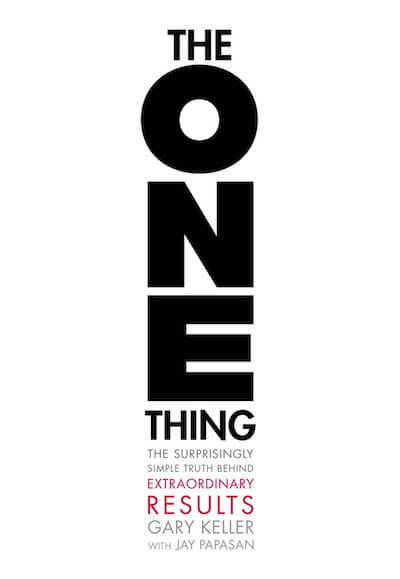
The One Thing Book Summary
This The One Thing Book Summary covers the key ideas, lessons, and takeaways in about 20 minutes.
Helps with these goals
Want the complete 20-minute summary?
- Full structured summary
- Video Summary
- Podcast Summary
- Audio summary
- Key takeaways
- Exercises
- Quiz
- Highlights and notes
- Ask the book with AI
What is in the The One Thing book summary?
Below is a preview of Sumizeit’s expert-written summary of The One Thing by Gary Keller. The full summary covers the book’s key ideas in text, audio, and video.
Ever had one of those days where you promised yourself you’d do something, but you continue to put it off instead? Maybe you promised you’d go to the gym, but you skip the workout and head home instead. Or maybe you’ve been trying to get a passion project off the ground, but you can’t seem to find the time to work on it.
The key to following through with your goals might be simpler than you think. In fact, simplicity is the aim of The One Thing: The Surprisingly Simple Truth Behind Extraordinary Results. This book helps you narrow your focus to one primary thing at which you can excel. Then, it guides you through developing the tools to successfully get the one thing you’re most passionate about getting.
Ready for some extraordinary results? First, you’ve got to dream big.
Dream Big
Think of your biggest, wildest dream. For this exercise, the bigger the better.
Now that you have that dream in mind, what if I asked you to go ahead and achieve it?
Most people would argue that attempting to reach that dream is useless because the dream feels impossible to achieve. It's too big. You might wonder why anyone bothers to have big dreams at all since the likelihood of achieving them might feel smaller and smaller with each passing day.
However, failing to dream big leads to, well… smaller things. Which can be ok, but why strive for that?
JK Rowling, when she first wrote Harry Potter, wasn’t thinking to herself that she would just write a single book. Even as she was writing the very first book, she knew there would be seven. Arthur Guinness, when purchasing his first brewery, got a lease for 9,000 years. Neither of them failed to dream big, and it paid off BIG time.
Thinking big is scary. Having dreams is scary. Especially if you’ve experienced failure. However, if it weren’t for thinking big, much of our scientific expansion wouldn’t have happened. A man on the moon seemed impossible at one point, but because of expansive thinking, it became possible.
Let yourself dream big, or you risk missing possibilities and opportunities.
Dream big, and determine what you would like to accomplish. This is ONE thing on which you want to focus all of your energy.
Got it? Good! Let's step into action!
Know how to prioritize your to-do list
Every item on your to-do list is not equally important.
When Joseph M. Juran was working for General Motors, he noticed most of the errors made in the manufacturing of cars were from only a few specific production flaws. A few flaws created a lot of mistakes. Juran called this finding the “Pareto Principle” After Pareto, an economist, who had shown that 80% of the land was owned by 20% of the people. His findings were echoed when Juran realized that 20% of the errors had caused 80% of the flaws. He speculated that the 80/20 principle could be a universal law.
Want the complete 20-minute summary?
- Full structured summary
- Video Summary
- Podcast Summary
- Audio summary
- Key takeaways
- Exercises
- Quiz
- Highlights and notes
- Ask the book with AI
Who should read The One Thing?
The One Thing is for anyone feeling overwhelmed by competing priorities and struggling to make meaningful progress on their goals. Whether you're an entrepreneur, professional, student, or someone seeking greater purpose, this book is ideal if you want to cut through distractions and focus your energy on what truly matters.
Why does The One Thing matter?
In today's distraction-filled world, the ability to identify and relentlessly pursue your most important goal has become a rare competitive advantage. The One Thing by Gary Keller provides a practical framework for simplifying your life and achieving extraordinary results by rejecting the myth that you must do everything and instead mastering the art of selective focus.
What are the key themes in The One Thing?
- The power of singular focus over multitasking
- Identifying the 20% of effort that produces 80% of results
- Building sustainable habits to replace willpower
- Saying no to protect your time and energy
- Balancing ambition with personal well-being
- Using the Focusing Question to clarify priorities
- The importance of dreaming big before acting
What are the key lessons from the The One Thing book summary?
Dream Big First
Before you can achieve extraordinary results, you must give yourself permission to dream big. Small dreams lead to small outcomes, while expansive thinking opens doors to possibilities you might otherwise miss.
Apply the Pareto Principle
Not all tasks are created equal. The 80/20 principle reveals that approximately 20% of your efforts typically drive 80% of your results, so identifying and prioritizing that vital 20% is essential.
Ask the Focusing Question
Use the simple but powerful question: 'What's the one thing I can do such that by doing it everything else will become easier or unnecessary?' Ask it at both macro and micro levels to clarify your direction and immediate next steps.
Build Habits, Not Willpower
Discipline doesn't come from relentless willpower but from consistently building small, manageable habits that compound over time. Once a habit is established, it becomes easier to maintain than to start something new.
Willpower Is a Finite Resource
Your willpower depletes with use, making you vulnerable to poor decisions later in the day or when you're hungry and tired. Protect your willpower by managing stress, eating well, and avoiding unnecessary decision fatigue.
Eliminate Multitasking
Multitasking is an illusion that costs time and quality. Every switch between tasks requires cognitive recovery; giving one thing your complete, undivided attention produces faster and better results.
Master the Power of No
Saying no to good opportunities protects your ability to say yes to your most important goal. It's not about being unkind; it's about being intentional with your limited time and resources.
Embrace Strategic Chaos
When you focus intensely on one major goal, other areas of life may become temporarily chaotic. This is expected and acceptable if you delegate, use time management strategies, and trust that your primary focus will eventually resolve underlying issues.
Visualize Your Path to Success
Mental visualization of achieving your goal and the steps to get there increases motivation and improves actual performance. Seeing yourself succeed primes you to take better action.
Create a Meaningful Goal, Not Just Any Goal
Goals with deeper purpose and meaning drive sustained effort. Understanding why your goal matters—beyond surface-level achievements—gives you resilience to weather difficult periods.
Protect Glass Balls Over Rubber Balls
Work is a rubber ball that bounces back if dropped, but family, health, friends, and integrity are glass balls that shatter. Ruthlessly manage work tasks so you don't sacrifice what can't be repaired.
Ruthlessly Manage Work Tasks
Don't compromise personal life for work; instead, be relentless about determining which work tasks are truly essential, which can be delegated, and which can wait. This protects your non-negotiable personal priorities.
Defend Your Focused Time
Treat your dedicated time for your primary goal as your most important appointment. Guard it against distractions, interruptions, and competing demands with the same commitment you'd give to a critical meeting.
Find a Distraction-Free Environment
Your physical workspace significantly impacts your ability to focus. Seek out or create an environment with minimal distractions—sometimes this means working away from your regular office.
Understand the Two Levels of Focus
Apply the Focusing Question at the macro level to clarify your overall goal, then continuously apply it at the micro level to identify the single most important action you can take right now.
Start Small With New Habits
Don't try to overhaul your life overnight. Introduce new habits gradually, mastering each one before adding the next. Small, incremental changes compound into extraordinary transformation.
Separate Ambition From Anxiety
Big dreams feel scary, especially after past failures, but fear is not a reason to dream small. History shows that bold, expansive thinking—not timidity—drives human progress and personal breakthroughs.
Make Your Big Goal Specific and Workable
Transform vague ambitions into concrete, actionable goals by continuously asking what one thing you can do next. Specificity turns dreams into executable plans.
Use Time Blocking as a Defense
Allocate specific chunks of time in your calendar dedicated solely to your primary goal. Defend these blocks as non-negotiable to ensure your most important work receives the attention it deserves.
Accept That Excellence Requires Trade-offs
You cannot do everything well. Extraordinary results in one area require accepting that other areas will be less polished or may temporarily fall behind. Choose what matters most and commit fully to it.
Want the complete 20-minute summary?
- Full structured summary
- Video Summary
- Podcast Summary
- Audio summary
- Key takeaways
- Exercises
- Quiz
- Highlights and notes
- Ask the book with AI
How can you apply ideas from The One Thing?
- Identify your one thing by asking the Focusing Question at both macro (overall goal) and micro (next immediate action) levels each day
- Apply the 80/20 principle to your current to-do list by highlighting the 20% of tasks that drive 80% of your outcomes, then schedule dedicated time for those tasks
- Build a new habit by starting with a small, manageable change and adding to it only after you've mastered the previous habit
- Block time on your calendar for your primary goal and defend it like your most important meeting—avoid scheduling conflicts or allowing interruptions
- Practice saying no to requests that don't align with your primary goal, offering alternative solutions or referrals to make it kind and helpful
- Reduce willpower depletion by eating regular meals, managing stress, and making important decisions early in the day when your willpower is fresh
- Eliminate multitasking by turning off notifications, closing unused applications, and giving one task your complete attention for focused work periods
- Evaluate your work tasks ruthlessly: determine what's truly essential, what can be delegated, and what can wait while you focus on your one thing
What common mistakes do readers make with The One Thing?
- Trying to pursue multiple major goals simultaneously instead of focusing on one primary thing, which dilutes effort and delays progress on what matters most
- Waiting for perfect conditions or inspiration before starting, when building small habits and taking action immediately is what creates momentum
- Saying yes to every opportunity or request out of fear of missing out or disappointing others, which scatters focus and depletes resources
- Confusing busyness with productivity by working on many tasks rather than identifying and protecting time for the few tasks that drive real results
- Neglecting personal health, relationships, and integrity in pursuit of work success, creating irreparable damage that no career achievement can justify
- Relying solely on willpower to stay focused instead of building supporting habits and removing distractions from your environment
Sumizeit Exercises Apply what you've learned
Turn ideas from The One Thing into action with a short guided reflection: identify the biggest takeaway, connect it to your life, and commit to one step you can take in the next 24 hours.
What is the expert analysis of The One Thing?
Overview
The One Thing is a bestselling self-improvement and productivity book authored by Gary Keller, a prominent entrepreneur and founder of Keller Williams, the world’s largest real estate company by agent count and sales volume. Keller leverages his extensive business experience to distill a philosophy centered on focus and prioritization, advocating for simplicity as the pathway to extraordinary results. The book’s significance lies in its accessible yet profound approach to cutting through the noise of multitasking and distraction, offering readers a strategic framework to identify and dedicate themselves to the most impactful task or goal.
Core Thesis
Keller’s central argument is elegantly simple: success and productivity stem from identifying the single most important goal or “one thing” that will make all other tasks easier or unnecessary, and then relentlessly focusing on it. By narrowing one’s attention and energy to this priority, individuals can overcome overwhelm, avoid the pitfalls of multitasking, and cultivate habits that foster discipline and sustained progress. The book intertwines psychological insights—such as the limitations of willpower and the power of habit formation—with practical strategies like the Pareto Principle and the “focusing question” to create a holistic model for achieving extraordinary outcomes.
Strengths
- Clarity and Simplicity: Keller’s framework is straightforward and actionable, making complex productivity challenges approachable for a broad audience.
- Integration of Psychological Research: The book effectively incorporates empirical findings on willpower depletion, habit formation, and attention management, grounding its advice in scientific understanding.
- Practical Tools: Concepts like the “focusing question” and the emphasis on saying “no” provide readers with concrete methods to implement focus and prioritization in daily life.
- Inspirational Examples: Anecdotes about figures like JK Rowling, Steve Jobs, and Michael Phelps illustrate how big dreams combined with disciplined focus can yield remarkable success.
- Balanced Perspective on Work-Life Integration: The analogy of “glass balls” versus “rubber balls” underscores the importance of protecting personal life while ruthlessly managing work priorities.
Critiques & Counterarguments
- Oversimplification of Complex Realities: While the “one thing” approach is compelling, real-world goals often require juggling multiple interdependent priorities simultaneously, especially in complex organizational or creative contexts.
- Limited Discussion of External Constraints: The book emphasizes individual agency but pays less attention to systemic barriers, resource limitations, or collaborative dependencies that can impede focusing on a single priority.
- Potential Neglect of Flexibility: The rigid focus on one goal may discourage adaptive thinking or responsiveness to emergent opportunities and challenges that require shifting attention.
- Competing Research on Multitasking: Although multitasking is generally inefficient, some cognitive science research suggests that certain types of task-switching or parallel processing can be effective, particularly with well-practiced or automatic tasks.
- Willpower as a Limited Resource: The concept of willpower depletion, while influential, has faced critique and mixed replication results in psychology, suggesting that motivation and context may modulate self-control more dynamically than a simple resource model implies.
Who Should Read This
The One Thing is ideal for professionals, entrepreneurs, and ambitious individuals seeking to enhance their productivity through clearer focus and prioritization. It resonates particularly with readers overwhelmed by multitasking or struggling to translate big dreams into actionable steps. Additionally, those interested in habit formation and the psychological underpinnings of discipline will find valuable insights. However, readers in highly complex or collaborative environments may need to adapt Keller’s principles to accommodate the multifaceted nature of their work. Ultimately, this book serves as a powerful primer for anyone aiming to cultivate purposeful, effective action toward meaningful goals.
Frequently asked questions about the The One Thing book summary
What is The One Thing about?
The One Thing by Gary Keller is about identifying your single most important goal and organizing your life to focus exclusively on achieving it. The book provides practical strategies for eliminating distractions, building sustainable habits, managing your time ruthlessly, and achieving extraordinary results by rejecting the myth that you must do everything and embracing the power of singular focus.
Who should read The One Thing?
Anyone feeling overwhelmed by competing priorities and struggling to make meaningful progress should read The One Thing. It's especially valuable for entrepreneurs, professionals, students, and anyone seeking to break through plateaus and achieve ambitious goals without burning out or sacrificing their personal life.
What are the main takeaways from The One Thing?
The main takeaways include: identify your one most important goal using the Focusing Question, apply the 80/20 principle to focus on high-impact activities, build habits instead of relying on willpower, eliminate multitasking and distractions, learn to say no to protect your time, use visualization to increase motivation, and ruthlessly manage lower-priority tasks to protect your personal life and well-being.
How do I find my one thing?
Use the Focusing Question: 'What's the one thing I can do such that by doing it everything else will become easier or unnecessary?' Ask it at the macro level to clarify your overall goal and vision, then ask it at the micro level repeatedly to identify the single most important action you can take right now to move toward that goal.
What is the 80/20 principle mentioned in The One Thing?
The 80/20 principle, also called the Pareto Principle, states that approximately 20% of your efforts typically produce 80% of your results. The One Thing teaches you to identify that vital 20%—the high-impact tasks and activities that truly move you toward your goal—and prioritize them above all else.
How does The One Thing address work-life balance?
The One Thing rejects the idea of equal balance but emphasizes protecting what truly matters. Using the metaphor of rubber and glass balls, it teaches you to ruthlessly manage work tasks so they don't damage irreplaceable relationships, health, and integrity. The goal is not balance but intentional prioritization of what cannot be repaired.
Can I use The One Thing approach in both my career and personal life?
Yes, absolutely. The Focusing Question and the principles of identifying your one thing can be applied at any level—your career, your health, your relationships, or personal projects. You can have a one thing for your professional life and a separate meaningful goal for your personal development, but the key is focused, protected time for each.
What does Gary Keller say about habits and discipline?
Keller emphasizes that true discipline comes from building sustainable habits, not from relentless willpower. He illustrates this with the example of Olympic swimmer Michael Phelps, who overcame ADHD through consistent daily practice. The strategy is to introduce new habits gradually, mastering each one before adding the next, which makes sustained behavior change achievable and lasting.
About Sumizeit
Sumizeit is a profitable Scomy LLC company based in Miami, Florida. It has been helping readers learn from nonfiction books for 7 years with expert-written summaries in text, audio, podcast, and video.
Want the complete 20-minute summary?
- Full structured summary
- Video Summary
- Podcast Summary
- Audio summary
- Key takeaways
- Exercises
- Quiz
- Highlights and notes
- Ask the book with AI
Here's why readers love Sumizeit
Join thousands of learners getting smarter every day
"Great experience. Detailed summaries. Loved the gamification feature. Makes learning fun. Good customer service. I recommend Sumizeit to anyone. You'll learn a lot."
"I always felt busy but still wanting to keep up with the book discussion in my friend group. This was a great supplement to help me keep reading the books I find fun while keeping up with important books."
"I love this website. Instead of scrolling social media, I find myself learning a lot. I use it everyday. I recommend this app for anyone who is too busy and wants to get up to speed with their favorite books."
The One Thing Book Summary PDF
Looking for a The One Thing Book Summary PDF you can save and revisit offline? Our The One Thing Book Summary PDF captures the book’s core ideas in a clean, printable format — the key frameworks, takeaways, and structure without the fluff. Download the The One Thing Book Summary PDF when you want a reference you can annotate, share with your team, or review on the go. Get your The One Thing Book Summary PDF from the download page below.
Download The One Thing Book Summary PDFPeople also liked these summaries
Readers who explored The One Thing often enjoyed these titles next.


Want the complete 20-minute summary?
- Full structured summary
- Video Summary
- Podcast Summary
- Audio summary
- Key takeaways
- Exercises
- Quiz
- Highlights and notes
- Ask the book with AI
Featured Book Titles
Popular Book Summaries at sumizeit, leading book summary app