


As an Amazon Associate, Sumizeit earns from qualifying purchases.
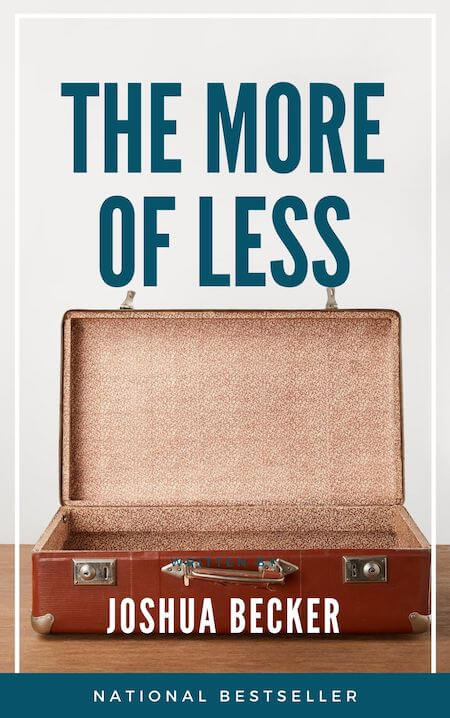
The More of Less Book Summary
This The More of Less Book Summary covers the key ideas, lessons, and takeaways in about 20 minutes.
Helps with these goals
Want the complete 20-minute summary?
- Full structured summary
- Video Summary
- Podcast Summary
- Audio summary
- Key takeaways
- Exercises
- Quiz
- Highlights and notes
- Ask the book with AI
What is in the The More of Less book summary?
Below is a preview of Sumizeit’s expert-written summary of The More of Less by Joshua Becker. The full summary covers the book’s key ideas in text, audio, and video.
Don’t you feel sometimes overwhelmed by the things you buy? If so you are not alone. When the author was sorting through his garage, he realized he bought a lot of stuff. Instead of spending so much time in his garage, he could have been spending time with family. He decided to start reducing the things he owned. He wrote a blog — Becoming a Minimalist - that reached millions of people and converted thousands to minimalism.
Minimalism changes lives. Decluttering your home allows you to live more freely. For example, Anne decided to live a free-spirited life. She sold her house and belongings and started to live a life as a global nomad in South East Asia living in apartment shares, housesits, and hotels. However, you don’t have to go that extreme to be a minimalist. Dan decided to sell his big house and downgraded to a smaller house across the street. That gave him more time to spend with his family and his career.
Companies nowadays spend billions on advertising to get people to buy more. The Average American owns twice as much as that did 50 years ago. A normal house contains 300,000 more items. It’s easier than ever before to get cut up owning “things,” even when you have no need for them.
Minimalism is more than decluttering your life. It allows you to focus on the things that are important to you. To start, think about what your goals are? Are you trying to save money for retirement? Then divide your belongings based on importance. Get rid of items that have less value to you.
It’s going to be hard to remove sentimental items from your life. You need to decide what’s important. Decluttering will help you manage your stress. Keep your favorite items and get rid of the rest. If you are having trouble, spend a few months with items you have questions about and see how that goes. Eventually, you’ll get less use for them. By giving things away, you are being kind to people who have less!
Now how do you handle the increased consumerism that you’ll see in everyday life? There are advertisements everywhere. Even though you have begun to adopt a minimalist approach, you’ll be tempted for sure. Well, take a break from shopping. Jenny is an Ivy League graduated who had a good job. However, she was making little money by the end of the month because she spent her money on useless things. Eventually, she took a break from shopping and had more time for other things.
What happens when you receive gifts? When it comes to receiving gifts, you might want to be proactive and tell your family and friends what gifts you want to receive. You can also encourage them to donate to charity. That way you can keep your minimalist style in tact.
Rejecting endless consumerism can help you live a more prosperous life.
Want the complete 20-minute summary?
- Full structured summary
- Video Summary
- Podcast Summary
- Audio summary
- Key takeaways
- Exercises
- Quiz
- Highlights and notes
- Ask the book with AI
Who should read The More of Less?
The More of Less is for anyone feeling overwhelmed by their possessions and seeking a more intentional life. Whether you're drowning in clutter, struggling financially due to overconsumption, or simply wanting to reclaim time for what matters most, this book offers a practical roadmap. It's especially valuable for those caught in the cycle of constant consumption and ready to break free.
Why does The More of Less matter?
In today's consumer-driven culture, Americans own more than ever before, yet experience less fulfillment and more stress as a result. Joshua Becker's The More of Less addresses this cultural crisis by showing how minimalism isn't about deprivation—it's about liberation and intentionality. As advertisements bombard us daily and consumerism becomes the default, learning to live with less has become essential for financial freedom, mental clarity, and meaningful relationships.
What are the key themes in The More of Less?
- Intentional living and mindful consumption
- Breaking free from consumerism and advertising influence
- Reclaiming time and energy for relationships and personal goals
- Financial prosperity through reduced spending
- Managing sentimental attachments to possessions
- Leading by example in a consumer-obsessed culture
- Generosity and giving as part of minimalist philosophy
What are the key lessons from the The More of Less book summary?
Possessions require more than money
Every item you own demands time, energy, and mental space to maintain, organize, and care for. Recognizing this hidden cost helps you see that reducing possessions gives you back far more than just closet space.
Define your goals before decluttering
Minimalism works best when aligned with your personal values and objectives. Whether saving for retirement, spending time with family, or pursuing a passion, your goals should guide which items to keep and which to release.
Sentimental items deserve honest evaluation
Emotional attachment to possessions is real, but keeping everything 'just in case' prevents you from living fully today. Give yourself permission to honor memories without hoarding the physical reminders.
Gradual decluttering beats radical purging
Taking time to live with uncertain items before deciding shows their real utility in your life. This slower approach reduces regret and builds confidence in your decluttering decisions.
Advertising is designed to manipulate
Understanding that billions are spent to convince you to buy things you don't need is the first step toward resistance. Awareness of these tactics helps you make purchases based on actual needs rather than manufactured desires.
Shopping breaks can reset your relationship with consumption
Pausing purchases for a set period reveals how much time and mental energy you were spending on shopping. This reset helps you distinguish between genuine wants and habitual consumption.
You can be proactive about gifts
Communicating your preferences to loved ones and suggesting charitable donations keeps your home aligned with your values. This removes the guilt of refusing gifts while maintaining meaningful connections.
Family alignment requires patience and modeling
You cannot force minimalism on others, but consistent demonstration of its benefits and clear boundaries will gradually influence those around you. Leading by example works better than preaching.
Clear boundaries work better than shame
Setting practical limits—like keeping toys only if they fit in a closet—is more effective than vague rules or emotional appeals. Specific boundaries are easier to understand and maintain across the whole family.
Minimalism enables generosity
When you stop accumulating for yourself, you gain both the resources and the mindset to give to others. Donating or supporting charitable causes becomes part of a minimalist lifestyle, not an afterthought.
Your home's contents reflect your time allocation
Every hour spent managing, cleaning, or organizing possessions is an hour not spent on people and priorities you love. Reducing possessions directly frees up time for what truly matters.
Minimalism looks different for everyone
You don't need to become a nomad or sell your home to be a minimalist. The philosophy adapts to your circumstances—whether that's downsizing, buying smaller, or simply being selective about what you own.
Overconsumption is a modern epidemic
The average American home contains 300,000 items and people own twice as much as 50 years ago. Understanding this trend helps you recognize that the urge to buy constantly is not personal failure but cultural conditioning.
Financial relief comes from spending less
Earning more means little if your expenses consume everything you make. Reducing consumption addresses the root problem and creates actual surplus for savings and meaningful goals.
Stress reduction is a physical benefit
Living in a cluttered environment creates ongoing cognitive load and anxiety. Decluttering produces measurable improvements in mental clarity and emotional well-being.
Nostalgia can be honored without hoarding
Keeping one special item from a collection preserves the memory without burdening your space. You can honor your past selectively rather than storing everything associated with previous phases of life.
Minimalism is a values-based system
It's fundamentally about deciding what deserves your resources and attention. The practice aligns your environment with your authentic priorities rather than society's expectations.
Consumer culture creates artificial needs
When advertisements tell you to buy more and easier payment methods exist, people accumulate items they would never have sought naturally. Recognizing this separation between desire and genuine need is liberating.
Small spaces work better when truly minimalist
Downgrading to a smaller home forces intentionality about what stays. The constraint becomes an asset, preventing the gradual re-accumulation that larger spaces enable.
Freedom comes from ownership boundaries
Setting clear rules about what you'll accept into your home—whether gifts, hand-me-downs, or impulse purchases—prevents future overwhelm. Preventive boundaries are easier to maintain than decluttering crises.
Want the complete 20-minute summary?
- Full structured summary
- Video Summary
- Podcast Summary
- Audio summary
- Key takeaways
- Exercises
- Quiz
- Highlights and notes
- Ask the book with AI
How can you apply ideas from The More of Less?
- Conduct a garage or closet audit to assess how much time and money you've invested in items you don't use
- Establish clear family boundaries (like the toy-closet rule) to prevent re-accumulation while involving everyone
- Schedule regular shopping breaks to break the habit loop and discover what you actually miss buying
- Create a gift preference list and communicate it to family and friends, suggesting charitable donations as alternatives
- Start with one category or room instead of overhauling your entire home at once to build confidence and momentum
- Document items you're unsure about for a few months to see their real utility before deciding to discard
- Identify your core goals and values, then evaluate each possession against them as your decluttering standard
- Reduce your exposure to advertising through app blockers, streaming without ads, and conscious media choices
What common mistakes do readers make with The More of Less?
- Treating minimalism as a one-time event rather than an ongoing intentional practice against consumerism
- Trying to force family members into minimalism instead of modeling benefits and letting them choose their own path
- Feeling guilty about discarding gifts or inherited items, preventing you from living the life you actually want
- Underestimating how much time and mental energy your possessions consume, making the payoff of decluttering seem unworth it
- Decluttering without identifying your goals first, resulting in unclear decisions about what to keep or remove
Sumizeit Exercises Apply what you've learned
Turn ideas from The More of Less into action with a short guided reflection: identify the biggest takeaway, connect it to your life, and commit to one step you can take in the next 24 hours.
What is the expert analysis of The More of Less?
Overview
The More of Less is a seminal work on minimalism authored by Joshua Becker, a prominent figure in the intentional living movement. Becker’s background as a pastor and theologian, combined with his experience as a bestselling author and influential blogger, lends the book both philosophical depth and practical resonance. His journey from consumer overwhelm to minimalist advocate has inspired millions through his blog Becoming Minimalist, making this book a cornerstone for those seeking to rethink their relationship with possessions in a consumer-driven society.
Core Thesis
At its heart, Becker’s thesis is that owning fewer possessions is not merely about decluttering physical space but about reclaiming time, focus, and freedom to pursue what truly matters. He argues that consumerism, fueled by relentless advertising and cultural pressures, leads to an accumulation of unnecessary items that distract from meaningful life goals. Minimalism, therefore, is a deliberate lifestyle choice that prioritizes value and intentionality over quantity, enabling individuals to live more generously, reduce stress, and deepen relationships.
Strengths
- Accessible and Practical Guidance: Becker offers actionable strategies for decluttering and managing possessions, such as categorizing items by importance and experimenting with trial periods for sentimental belongings.
- Relatable Anecdotes: The inclusion of diverse personal stories—from global nomads to families downsizing—illustrates the adaptability of minimalism across different lifestyles and circumstances.
- Integration of Psychological and Social Insights: The book thoughtfully addresses emotional attachments, family dynamics, and societal pressures, offering a holistic approach rather than a purely material one.
- Encouragement of Generosity: Becker connects minimalism with philanthropy and community impact, framing it as a means to enhance not just personal well-being but social good.
Critiques & Counterarguments
- Oversimplification of Consumer Behavior: While Becker highlights advertising’s role in consumerism, the book underestimates the complexity of psychological and economic factors driving overconsumption, such as identity formation and social status.
- Limited Engagement with Structural Issues: The focus on individual lifestyle change may obscure broader systemic critiques of capitalism and consumer culture that scholars like Juliet Schor or Naomi Klein emphasize.
- Potential Elitism: Minimalism as presented can sometimes feel accessible primarily to those with economic stability and the luxury to choose less, whereas lower-income individuals may face different constraints and priorities.
- Contrasting Research on Well-being: Some psychological studies suggest that material possessions can contribute positively to well-being when they foster identity or social connection, complicating the notion that less is always more.
- Family Dynamics Complexity: The book’s advice on influencing family members is optimistic but may downplay the real conflicts and emotional labor involved in negotiating consumption habits within households.
Who Should Read This
The More of Less is ideally suited for readers who feel overwhelmed by material clutter and seek a thoughtful, compassionate guide to simplifying their lives. It resonates with individuals interested in self-improvement, intentional living, and those curious about how lifestyle changes can foster greater freedom and generosity. Professionals in psychology, social work, or sustainability may also find Becker’s insights useful as a cultural touchstone, even if they approach the topic from a more critical or systemic perspective. Ultimately, the book serves as an accessible entry point for anyone contemplating the intersection of consumption, values, and personal fulfillment.
Frequently asked questions about the The More of Less book summary
What is The More of Less about?
The More of Less by Joshua Becker is about escaping consumer culture through minimalism and intentional living. The book guides readers through decluttering their homes and lives, revealing how owning less creates more time, money, and freedom for what truly matters—family, goals, and personal fulfillment.
Who should read The More of Less?
This book is ideal for anyone feeling overwhelmed by possessions, drowning in debt due to overspending, or seeking a more meaningful life. It's valuable for people caught in the cycle of endless consumption, those wanting to spend more time with family, and anyone curious about whether minimalism could improve their quality of life.
What are the main takeaways from The More of Less?
Key takeaways include recognizing that possessions consume time and mental energy beyond their financial cost, understanding that minimalism is about values alignment rather than deprivation, and learning that you can resist consumerism through intentional boundaries and awareness. The book emphasizes that leading by example works better than forcing others to embrace minimalism, and that reducing possessions creates freedom for generosity and what you genuinely care about.
Do you have to be extreme to practice minimalism?
No. The More of Less shows that minimalism exists on a spectrum—from selling everything and living as a nomad to simply downsizing your home or being selective about purchases. Joshua Becker illustrates through examples like Dan, who downsized to a smaller house, that you can reap minimalism's benefits (more family time, reduced stress, financial relief) without radical life changes.
How do I handle family members who don't want to be minimalist?
Joshua Becker recommends leading by example rather than forcing minimalism on others. Set clear, practical boundaries—like the toy-closet rule—establish healthy consumption habits, and patiently demonstrate the benefits. While some family members may eventually join you, others may not, and that's acceptable as long as you maintain healthy limits in shared spaces.
How can I resist advertising and consumer culture?
The More of Less suggests taking shopping breaks to reset your consumption habits and recognizing that advertising is designed to manipulate. You can reduce exposure through ad blockers and intentional media choices, and you can build awareness of the difference between genuine needs and manufactured desires planted by billion-dollar marketing campaigns.
What should I do with sentimental items I can't bear to throw away?
Joshua Becker acknowledges that emotional attachment to possessions is real and valid. Rather than forcing yourself to discard everything, give yourself time to live with uncertain items and see if you truly use them. You can also honor memories by keeping one special item from a collection rather than storing everything, preserving the sentiment without the burden.
About Sumizeit
Sumizeit is a profitable Scomy LLC company based in Miami, Florida. It has been helping readers learn from nonfiction books for 7 years with expert-written summaries in text, audio, podcast, and video.
Want the complete 20-minute summary?
- Full structured summary
- Video Summary
- Podcast Summary
- Audio summary
- Key takeaways
- Exercises
- Quiz
- Highlights and notes
- Ask the book with AI
Here's why readers love Sumizeit
Join thousands of learners getting smarter every day
"Great experience. Detailed summaries. Loved the gamification feature. Makes learning fun. Good customer service. I recommend Sumizeit to anyone. You'll learn a lot."
"I always felt busy but still wanting to keep up with the book discussion in my friend group. This was a great supplement to help me keep reading the books I find fun while keeping up with important books."
"I love this website. Instead of scrolling social media, I find myself learning a lot. I use it everyday. I recommend this app for anyone who is too busy and wants to get up to speed with their favorite books."
The More of Less Book Summary PDF
Looking for a The More of Less Book Summary PDF you can save and revisit offline? Our The More of Less Book Summary PDF captures the book’s core ideas in a clean, printable format — the key frameworks, takeaways, and structure without the fluff. Download the The More of Less Book Summary PDF when you want a reference you can annotate, share with your team, or review on the go. Get your The More of Less Book Summary PDF from the download page below.
Download The More of Less Book Summary PDFPeople also liked these summaries
Readers who explored The More of Less often enjoyed these titles next.

Want the complete 20-minute summary?
- Full structured summary
- Video Summary
- Podcast Summary
- Audio summary
- Key takeaways
- Exercises
- Quiz
- Highlights and notes
- Ask the book with AI
Featured Book Titles
Popular Book Summaries at sumizeit, leading book summary app