


As an Amazon Associate, Sumizeit earns from qualifying purchases.
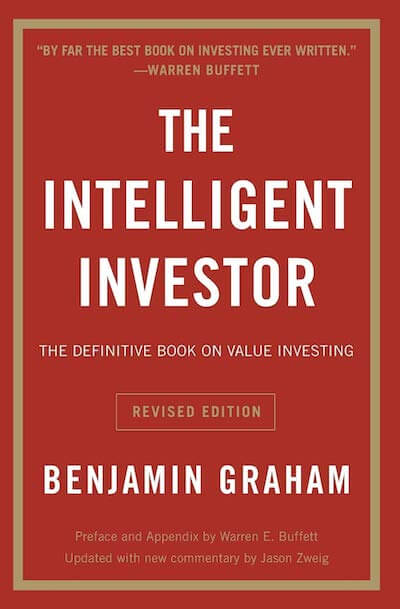
The Intelligent Investor Book Summary
This The Intelligent Investor Book Summary covers the key ideas, lessons, and takeaways in about 20 minutes.
Helps with these goals
Want the complete 20-minute summary?
- Full structured summary
- Video Summary
- Podcast Summary
- Audio summary
- Infographic
- Key takeaways
- Exercises
- Quiz
- Highlights and notes
- Ask the book with AI
What is in the The Intelligent Investor book summary?
Below is a preview of Sumizeit’s expert-written summary of The Intelligent Investor by Benjamin Graham. The full summary covers the book’s key ideas in text, audio, and video.
Are you wondering how people make big payouts with their investments?
Have you been timid to try investing money because of the current economy?
Well, have no fear, author of “The Intelligent Investor” Benjamin Graham is here to help you with your investing questions and woes.
According to Graham in order to keep your money in your wallet, it’s all about investing intelligently and strategically. It’s all about being patient.
Don’t expect quick wins! Slow and steady wins the race.
“On the other hand, investing is a unique kind of casino—one where you cannot lose in the end, so long as you play only by the rules that put the odds squarely in your favor.” - Benjamin Graham
Short-Term Gains Shouldn’t Be Your Goal
According to the Graham Plan that has been utilized since 1949, it is important to study the company before investing in it.
“You must thoroughly analyze a company, and the soundness of its underlying businesses, before you buy its stock; you must deliberately protect yourself against serious losses; you must aspire to ‘adequate’, not extraordinary, performance.” - Benjamin Graham
Many people focus on short-term gains based on the fluctuation of the market. This is not a sustainable way to earn a big pay-out through investments. The market is unpredictable, so by trying to study market patterns to theorize your investments, you risk losing your hard-earned cash.
Focus on Pricing
Intrinsic value is the calculated value of an asset. A smart investor will buy stock in a company when it is below the intrinsic value.
An intelligent investor should only buy a stock if there is some sort of profit to be had.
Buying a stock when it is above its intrinsic value may seem desirable because it looks as if the stock is doing really well. But, overtime the value will go down as people discover that the stock really isn’t worth as much as it was letting on. Think of it as a fading trend or a marketing hype! Ultimately, by buying a stock when it’s above its intrinsic value, you will end up losing money in the end.
The Three Principles
Once again, it’s important to analyze the long-term potential of a company before investing. Investing takes time, so you want to put your focus on companies that will continue to grow and develop despite the effects of the current market.
Important things to look at while investigating a company for investment opportunities in the financial structure, the management quality, the pay to its employees, and of course, what part of the profit you will receive through an investment.
Protect Yourself Against Losses
It’s vital that you protect yourself against losses that you can’t afford.
You never want to put all your eggs in one basket, even if the company looks flawless. Some things such as tax evasion or fraud are out of your hands. These are situations that you can’t predict.
So, by investing in multiple companies at once, your money is in…
Want the complete 20-minute summary?
- Full structured summary
- Video Summary
- Podcast Summary
- Audio summary
- Infographic
- Key takeaways
- Exercises
- Quiz
- Highlights and notes
- Ask the book with AI
Who should read The Intelligent Investor?
The Intelligent Investor is essential for anyone looking to build wealth through the stock market without falling prey to market hype and speculation. Whether you're a complete beginner intimidated by investing or someone who has lost money chasing quick gains, this book provides a framework for making rational, long-term investment decisions. It's particularly valuable for people who want to take control of their financial future but lack confidence in their investment knowledge.
Why does The Intelligent Investor matter?
In today's volatile markets filled with endless financial noise and get-rich-quick schemes, Benjamin Graham's principles of value investing are more relevant than ever. The book teaches you to distinguish between genuine investment opportunities and marketing hype, helping you protect your hard-earned money from predictable mistakes that cost most investors significantly. Graham's timeless advice cuts through the Wall Street mentality and offers a disciplined approach that has proven effective for decades.
What are the key themes in The Intelligent Investor?
- Value investing and intrinsic worth
- Long-term wealth building over short-term gains
- Emotional discipline and rational decision-making
- Portfolio diversification and risk management
- Understanding market psychology and avoiding hype
- Fundamental company analysis before investing
What are the key lessons from the The Intelligent Investor book summary?
Investing is not speculation
True investing involves thorough analysis and strategic patience, not gambling on market fluctuations or chasing trends. The difference between investing and speculation determines whether you build wealth or lose money.
Buy below intrinsic value
An intelligent investor only purchases stocks when the market price is below the calculated intrinsic value of the company. This margin of safety is what separates profitable investing from overpaying for hype.
Analyze before you invest
Study a company's financial structure, management quality, employee compensation, and long-term growth potential before committing your money. Thorough due diligence prevents costly mistakes.
Diversification protects against catastrophic loss
Spreading investments across multiple companies and asset types ensures that unexpected problems in one investment won't wipe out your entire portfolio. Never put all your eggs in one basket, no matter how promising.
Market cycles are inevitable and survivable
Stock market history shows predictable patterns of ups and downs that cannot be foreseen precisely, but understanding this volatility prepares you mentally and financially for downturns. Markets always recover for those patient enough to wait.
Ignore Mr. Market's emotional swings
The market constantly sends false signals through hype and panic, pushing prices to irrational extremes. Successful investors stay grounded in fundamental analysis rather than being swayed by market psychology.
Adequate returns beat extraordinary expectations
Pursuing modest but consistent profits through intelligent investing is far more reliable than chasing extraordinary returns that require excessive risk. Sustainable wealth comes from realistic goals, not greedy ambitions.
Dollar-cost averaging reduces timing risk
Investing the same amount regularly over time smooths out market volatility and removes the pressure of timing perfect entry points. This formula investing approach works for defensive investors seeking stability.
Different strategies suit different risk tolerances
The defensive investor prioritizes safety with bonds and stocks balanced fifty-fifty, while the enterprising investor can take more risk with a stock-heavy portfolio. Choose a strategy aligned with your comfort level and financial situation.
Control yourself, not the market
Investment success depends on disciplined personal decision-making rather than beating professional traders at their game. Your competitive advantage comes from emotional control and rational thinking, not market timing.
Don't panic sell during market downturns
Fear often drives investors to sell everything when markets drop, locking in losses. Historical evidence shows that staying invested and continuing to buy during downturns leads to stronger long-term results.
Consider external factors beyond company performance
Evaluate how inflation, economic conditions, and industry trends affect a company's earnings and stock price. Understanding these correlations prevents overvaluing stocks in unsustainable market conditions.
Quality management matters significantly
A company's leadership and how they treat employees directly impacts long-term profitability and reliability. Assessing management quality is as important as analyzing financial statements.
Slow and steady building beats quick wins
The path to significant wealth through investing requires patience and consistency rather than dramatic breakthroughs. Compounding returns over decades outperforms sporadic, risky bets.
Protect yourself against unpredictable risks
Some catastrophes like fraud or tax evasion can't be prevented through analysis alone, making diversification and conservative positioning essential safeguards. Accept what you can't control and prepare accordingly.
Study market history to prepare mentally
Learning how markets have behaved through various crises and booms prepares your mindset for inevitable volatility. Historical perspective reduces panic and improves decision-making during chaotic periods.
Hyped stocks eventually decline to reality
When everyone overpays for a trendy stock, the price eventually corrects downward as reality meets inflated expectations. Buying into hype guarantees eventual losses.
Enterprise investors need professional guidance
Those pursuing higher-risk investment strategies should consult financial planners to navigate complexity safely. Greater risk tolerance requires greater expertise to manage effectively.
Formula investing removes emotional decision-making
Committing to regular, predetermined investment amounts prevents emotional reactions to market swings. Mechanical investing discipline often outperforms discretionary decision-making.
Long-term company fundamentals trump short-term price movements
What matters for investment returns is the underlying business quality and growth trajectory, not daily or monthly stock price fluctuations. Focus your analysis on multi-year company performance, not market noise.
Want the complete 20-minute summary?
- Full structured summary
- Video Summary
- Podcast Summary
- Audio summary
- Infographic
- Key takeaways
- Exercises
- Quiz
- Highlights and notes
- Ask the book with AI
How can you apply ideas from The Intelligent Investor?
- Calculate a stock's intrinsic value using financial analysis before making any purchase decision
- Build a diversified portfolio across multiple companies and asset classes to manage risk
- Create a monthly or quarterly dollar-cost averaging plan for consistent investment discipline
- Research company management quality, employee satisfaction, and financial structure as part of due diligence
- Design a defensive or enterprising investment strategy that matches your personal risk tolerance and financial goals
- Review historical stock market cycles to mentally prepare yourself for inevitable downturns
- Establish a written investment policy that guides your decisions and prevents emotional reactions to market swings
- Monitor your portfolio for alignment with intrinsic values rather than reacting to daily price movements
What common mistakes do readers make with The Intelligent Investor?
- Chasing short-term gains through market speculation instead of building long-term wealth
- Buying stocks at inflated prices during hype cycles without analyzing intrinsic value
- Concentrating investments in one or two companies, leaving yourself vulnerable to catastrophic loss
- Panic selling during market downturns, locking in losses instead of waiting for recovery
- Neglecting to research a company's fundamentals before investing or trusting market buzz instead of facts
Sumizeit Exercises Apply what you've learned
Turn ideas from The Intelligent Investor into action with a short guided reflection: identify the biggest takeaway, connect it to your life, and commit to one step you can take in the next 24 hours.
What is the expert analysis of The Intelligent Investor?
Overview
The Intelligent Investor, authored by Benjamin Graham, stands as a seminal work in the field of investment literature. Graham, often hailed as the father of value investing, crafted this book to provide a disciplined framework for investors seeking to navigate the complexities of the stock market with prudence and insight. First published in 1949, the book’s enduring relevance is anchored in its foundational principles that continue to influence both individual investors and professional fund managers. Its significance lies not only in its practical guidance but also in its philosophical approach to investment as a methodical and patient endeavor rather than a speculative gamble.
Core Thesis
At the heart of Graham’s argument is the conviction that intelligent investing is predicated on thorough analysis, a focus on intrinsic value, and a long-term perspective. He posits that investors should prioritize capital preservation and steady, adequate returns over chasing quick, speculative gains. The book emphasizes the importance of understanding the underlying business, protecting oneself against avoidable losses through diversification, and maintaining emotional discipline in the face of market volatility. Graham’s concept of “Mr. Market” serves as a metaphor for the often irrational and emotionally driven stock market, underscoring the need for investors to remain detached and rational.
Strengths
- Timeless Investment Principles: Graham’s advocacy for value investing and intrinsic value assessment remains foundational, influencing generations of investors including Warren Buffett.
- Emphasis on Risk Management: The book’s insistence on protecting capital and diversifying investments addresses the often overlooked psychological and financial risks inherent in stock market participation.
- Clear Distinction Between Investor Types: By delineating the “defensive” and “enterprising” investor profiles, Graham provides tailored strategies that accommodate different risk tolerances and investment goals.
- Psychological Insight: The metaphor of “Mr. Market” effectively captures market irrationality and guides investors to avoid herd mentality, fostering a disciplined investment mindset.
- Practical Guidance: The book offers actionable advice on portfolio construction, dollar-cost averaging, and the importance of patience, making it accessible to both novices and seasoned investors.
Critiques & Counterarguments
- Oversimplification of Market Dynamics: While Graham’s principles are foundational, the book occasionally underestimates the complexity and efficiency of modern markets, where information asymmetry is reduced by technology and regulation.
- Historical Context Limitations: Some examples and market conditions referenced stem from mid-20th century America, which may not fully translate to today’s globalized and algorithm-driven markets.
- Competing Theories: The rise of behavioral finance challenges the assumption that investors can consistently act rationally, suggesting that cognitive biases and emotional factors are more pervasive and harder to control than Graham implies.
- Growth Investing Contrast: Graham’s value-centric approach contrasts with growth investing strategies that focus on future earnings potential rather than current intrinsic value, which have proven successful in certain market cycles.
- Limited Discussion on Macroeconomic Factors: The book focuses heavily on company fundamentals but gives less attention to broader economic indicators and geopolitical risks that can profoundly impact investment outcomes.
Who Should Read This
The Intelligent Investor is indispensable for serious individual investors, financial professionals, and students of finance who seek a rigorous, principled approach to investing. It is particularly suited for those who value a disciplined, long-term strategy over speculative trading and are willing to cultivate patience and emotional resilience. Readers interested in understanding the psychological pitfalls of investing and the importance of fundamental analysis will find Graham’s insights invaluable. However, those looking for quick trading tactics or speculative strategies may find the book’s conservative approach less immediately gratifying.
Frequently asked questions about the The Intelligent Investor book summary
What is The Intelligent Investor about?
The Intelligent Investor by Benjamin Graham is a comprehensive guide to rational, long-term stock market investing based on fundamental analysis and disciplined decision-making. The book teaches readers how to distinguish between genuine investment opportunities and market hype, with practical strategies for building wealth through calculated risk management rather than speculation. Graham's core message is that intelligent investing focuses on understanding a company's intrinsic value and buying at a discount, then holding patiently for long-term returns.
Who should read The Intelligent Investor?
Anyone interested in building wealth through stock market investing should read this book, especially beginners who feel intimidated by investing and those who have lost money chasing quick gains. The Intelligent Investor is essential for people who want to take control of their financial future with a disciplined, rational approach rather than following Wall Street trends. Both defensive investors seeking safety and enterprising investors willing to take calculated risks will find valuable strategies tailored to their comfort level.
What are the main takeaways from The Intelligent Investor?
The primary takeaways are: invest for long-term wealth building rather than short-term speculation, buy stocks only when priced below their intrinsic value, diversify your portfolio to protect against catastrophic loss, and maintain emotional discipline regardless of market swings. Benjamin Graham emphasizes analyzing company fundamentals before investing, understanding market history to prepare mentally for volatility, and choosing an investment strategy aligned with your risk tolerance. The overarching lesson is that patience, research, and rational decision-making—not timing or luck—determine investment success.
How does intrinsic value relate to stock prices?
Intrinsic value is the calculated true worth of a company based on its financial fundamentals, while stock price is what the market charges at any given moment. An intelligent investor buys when the stock price is below intrinsic value, creating a margin of safety that protects against losses. Graham teaches that market prices often deviate from intrinsic value due to hype or panic, but prices eventually correct toward true value, rewarding patient investors who buy wisely.
What is the difference between defensive and enterprising investors?
Defensive investors prioritize safety through a balanced portfolio of roughly 50% high-grade bonds and 50% stocks, using dollar-cost averaging to reduce timing risk. Enterprising investors pursue higher returns by allocating more heavily to stocks and are willing to take greater risks, often consulting financial advisors to navigate complexity. Both strategies follow Graham's principles but at different risk and return levels depending on the investor's temperament and financial situation.
Why does Benjamin Graham warn against market hype?
Graham calls the market 'Mr. Market' because it constantly sends false emotional signals through irrational pricing driven by hype and fear. When everyone overpays for trendy stocks, prices eventually crash as reality sets in, causing investors who bought the hype to lose money. By staying grounded in fundamental analysis rather than following the crowd, intelligent investors avoid these predictable losses and capitalize on the irrationality of others.
How should I prepare for stock market downturns?
The Intelligent Investor recommends studying market history to understand that downturns are inevitable and recoverable, mentally preparing you to stay invested rather than panic sell. Build a diversified portfolio so downturns in one company don't devastate your overall wealth, and consider continuing to buy quality stocks when prices drop during downturns. Graham emphasizes that investors who panic sell lock in losses, while those patient enough to hold or buy during downturns benefit from eventual recovery and lower entry prices.
About Sumizeit
Sumizeit is a profitable Scomy LLC company based in Miami, Florida. It has been helping readers learn from nonfiction books for 7 years with expert-written summaries in text, audio, podcast, and video.
Want the complete 20-minute summary?
- Full structured summary
- Video Summary
- Podcast Summary
- Audio summary
- Infographic
- Key takeaways
- Exercises
- Quiz
- Highlights and notes
- Ask the book with AI
Here's why readers love Sumizeit
Join thousands of learners getting smarter every day
"Great experience. Detailed summaries. Loved the gamification feature. Makes learning fun. Good customer service. I recommend Sumizeit to anyone. You'll learn a lot."
"I always felt busy but still wanting to keep up with the book discussion in my friend group. This was a great supplement to help me keep reading the books I find fun while keeping up with important books."
"I love this website. Instead of scrolling social media, I find myself learning a lot. I use it everyday. I recommend this app for anyone who is too busy and wants to get up to speed with their favorite books."
The Intelligent Investor Book Summary PDF
Looking for a The Intelligent Investor Book Summary PDF you can save and revisit offline? Our The Intelligent Investor Book Summary PDF captures the book’s core ideas in a clean, printable format — the key frameworks, takeaways, and structure without the fluff. Download the The Intelligent Investor Book Summary PDF when you want a reference you can annotate, share with your team, or review on the go. Get your The Intelligent Investor Book Summary PDF from the download page below.
Download The Intelligent Investor Book Summary PDFPeople also liked these summaries
Readers who explored The Intelligent Investor often enjoyed these titles next.



Want the complete 20-minute summary?
- Full structured summary
- Video Summary
- Podcast Summary
- Audio summary
- Infographic
- Key takeaways
- Exercises
- Quiz
- Highlights and notes
- Ask the book with AI
Featured Book Titles
Popular Book Summaries at sumizeit, leading book summary app