


As an Amazon Associate, Sumizeit earns from qualifying purchases.
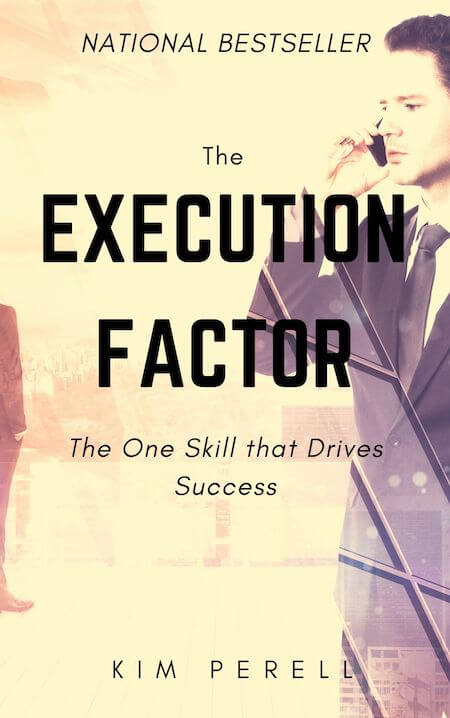
The Execution Factor Book Summary
This The Execution Factor Book Summary covers the key ideas, lessons, and takeaways in about 20 minutes.
Fortunately, the execution factor isn’t just a trait you have or don’t have. It is made up of five components, all of which can be developed. The five parts of the execution factor are vision, passion, action, resilience, and building relationships. These work together for meaningful execution.
If you think of yourself as a driver on a journey in a car, the execution factor is how you get where you want to go. The vision is your destination. You think about it and you have to be specific. It is hard to go to a general place. You need an actual location to be able to drive there.
Passion is the gas in the tank. You need it to get your engine going and you can’t run out. Small tasks related to your end goal and celebrating victories help keep the gas tank full.
Action is actually putting the car in drive and moving. There may be different routes to your destination, but you have to pick one and start moving. Pay attention to your progress and adjust your route as needed.
Resilience helps you deal with unplanned obstacles. Maybe you hit a small pothole and you just have to deal with the brief rough patch. Or you get stuck in a major traffic jam. Cars have safety equipment to handle the worst stuff and keeping a positive attitude even will help you even when things get frustrating.
Sure, you can drive alone. But maybe there are parts of your journey that would be better with some company. Long road trips can get lonely and tiring. If there is more than one driver and you share the burden, you can get there quicker. Or you need special skills on a road that is difficult to navigate. The relationships you build will support you on your journey. Make sure you surround yourself with positive relationships.
With the five pieces coming together, you have what you need. Make it a priority to reach your goals and execute on your plans. Reaching the destination you set out for will be well worth the journey.
Helps with these goals
Want the complete 20-minute summary?
- Full structured summary
- Video Summary
- Podcast Summary
- Audio summary
- Key takeaways
- Exercises
- Quiz
- Highlights and notes
- Ask the book with AI
What is in the The Execution Factor book summary?
Below is a preview of Sumizeit’s expert-written summary of The Execution Factor by Kim Perell. The full summary covers the book’s key ideas in text, audio, and video.
If you’re an entrepreneur, you probably know all about hard work. You know you have to be determined and persevere. Likely, you have some idea of what achieving your goals means. Maybe you want to be your own boss or you want financial independence.
But the reality is that not everyone succeeds. Some people have good ideas that never take off or a great product that doesn’t sell. For many aspiring entrepreneurs, this may feel disheartening. Why do some people succeed where others fail?
The difference between dreams and success comes down to execution. You have to be able to take meaningful action to make your goals a reality. This capacity to chart a course of action and carry it out is known as the execution factor.
Kim Perell knows all about execution. She went from an unemployed 23-year-old to a multimillionaire in seven years. As an angel investor, she’s seen that the execution factor over and over in the successful companies she’s invested in.
Perell explores the execution factor. The factor is made up of five traits: vision, passion, action, resilience, and relationship-building. The good news is you can learn this critical component of entrepreneurial success. You just have to be willing to put in the work.
Having a vision is critical for mapping out where you want to go.
Vision is the first part of the execution factor. You need to have an articulated idea of where you want to go. This is the long-term aspiration you have. If things don’t go as planned, you try to get back on course towards that goal.
President John F. Kennedy set an ambitious mission for America in 1961. It was the middle of the Cold War. The United States was competing with the Soviet Union, trying to determine who had more power and influence on a global scale. Yuri Gagarin, a Soviet cosmonaut, became the first person to go to space. President Kennedy responded by stating that the United States would put a man on the Moon by the end of the decade.
President Kennedy’s statement was a vision. It was something you could visualize and work towards. Inspiring the nation, it set the tone for actions that culminated in the 1969 Apollo 11 mission. Neil Armstrong took those steps on the lunar landscape and realized the vision.
Your goal doesn’t have to require leaving the planet. But you need to know what you want to accomplish if you’re going to figure out how to accomplish it. You won’t know if the work you’re doing is helping you meet your goals if you don’t have a final destination in mind.
A vision is any sort of goal that isn’t immediate. You could be trying to complete an ambitious task that requires a lot of preparation, such as running a marathon. You may want to acquire a new skill, like baking. Your goal may be broader, like helping the environment or achieving financial freedom.
The path to achieving your vision will…
Want the complete 20-minute summary?
- Full structured summary
- Video Summary
- Podcast Summary
- Audio summary
- Key takeaways
- Exercises
- Quiz
- Highlights and notes
- Ask the book with AI
Who should read The Execution Factor?
The Execution Factor is for entrepreneurs, business leaders, and anyone with ambitious goals who wonder why their ideas haven't come to fruition. Whether you're starting a side hustle, launching a company, or pursuing a major life change, this book is essential if you recognize that having a great idea isn't enough—you need the skills to actually make it happen.
Why does The Execution Factor matter?
In a world where countless people have brilliant ideas but few achieve their goals, The Execution Factor by Kim Perell reveals the critical gap between dreaming and doing. As success rates for startups remain low and professional ambitions go unfulfilled, understanding and developing the five components of execution—vision, passion, action, resilience, and relationships—has never been more relevant to turning potential into results.
What are the key themes in The Execution Factor?
- Execution separates dreamers from achievers
- The five pillars of execution are learnable skills
- Vision provides direction and clarity
- Passion requires willingness to endure hardship
- Action trumps perfectionism and overthinking
- Resilience enables you to thrive through adversity
What are the key lessons from the The Execution Factor book summary?
Execution is the bridge between dreams and success
Most people fail not because of bad ideas, but because they lack the ability to execute. The execution factor is the critical skill that separates successful entrepreneurs from those who remain stuck.
A clear vision must be specific, brief, and personally motivating
Your vision should be articulated in one sentence, capture exactly what you want to achieve, and genuinely excite you personally—not reflect someone else's idea of what you should do.
Test your vision before committing everything
Before quitting your job or investing heavily, validate your vision through low-risk experiments. This helps confirm you actually want it as more than a hobby before you sacrifice everything.
Make your vision a daily priority
Write down your vision and review it daily. Prioritize tasks based on how directly they move you toward your goal, which often means declining enjoyable activities that don't serve your core objective.
Passion comes from the Latin word meaning to suffer
True passion isn't just enthusiasm—it's the willingness to endure difficulty and perform unglamorous tasks because you're deeply committed to your goal. This capacity to push through hardship fuels execution.
Feed your passion through related activities and small wins
Maintain your passion by regularly engaging in activities connected to your goal and celebrating both big and small accomplishments. These practices deepen your commitment and sustain your energy.
Avoid analysis paralysis by acting with 40-70% information
Waiting for perfect information wastes precious time. Gather enough data to make an informed decision, then move forward. You'll learn more from action than from additional planning.
Start small to minimize risk and test your assumptions
Rather than going all-in immediately, begin with a smaller version of your goal—like a weekend side hustle—to validate your concept, build a customer base, and fund your larger vision.
Constant progress matters more than perfection
Don't rest after initial success. Implement daily review processes to assess what's working and what isn't, then adjust your actions accordingly to keep moving toward your vision.
Resilience is both a mindset and a learnable skill
You can develop resilience by building calmness through journaling, exercise, and meditation, then training yourself to view challenges as opportunities for growth rather than defeats.
Stay positive to maintain resilience during setbacks
Maintaining confidence and looking for solutions keeps you moving forward. When obstacles arise, focus on fixing the situation or finding how it could actually lead to something better.
Relationships multiply your capacity and expertise
No one can do everything alone. Building a diverse network allows you to leverage others' skills, share the workload, and access knowledge and resources you don't possess.
Relationships must be mutually beneficial and maintained intentionally
Strong networks require reciprocity and ongoing effort. Send handwritten notes, remember important dates, and connect with people outside of times when you need help from them.
Periodically audit your relationships and eliminate toxic ones
Not all relationships serve you. Regularly assess which relationships energize and support you versus which drain your energy, and actively minimize contact with negative influences when possible.
Show grace for temporarily difficult relationships
Some relationships become challenging due to circumstances like grief or illness. Rather than cutting ties, consider supporting people through hardship—they would likely do the same for you.
Diversity in your network increases your access to opportunities
Seek relationships across industries and backgrounds. A varied network exposes you to different perspectives, skills, and potential opportunities you wouldn't encounter in a homogeneous group.
Your network supports all four other components of execution
Relationships help sustain your passion, celebrate wins, support resilience through challenges, encourage action, and provide input to refine your vision. They are force multipliers for all other aspects.
The execution factor is not innate—it can be developed
Unlike some traits, execution is a set of learnable skills. Anyone willing to work on vision, passion, action, resilience, and relationships can improve their ability to achieve ambitious goals.
Prioritize ruthlessly to protect time for what matters most
You have finite time and energy. Saying no to good things that don't serve your vision is essential to protecting time and focus for the actions that actually move you toward your goals.
Want the complete 20-minute summary?
- Full structured summary
- Video Summary
- Podcast Summary
- Audio summary
- Key takeaways
- Exercises
- Quiz
- Highlights and notes
- Ask the book with AI
How can you apply ideas from The Execution Factor?
- Write your personal vision statement in one sentence and post it where you see it daily
- Conduct a weekly review process identifying which actions moved you toward your goal and which didn't
- Start a side project related to your goal at low risk before committing full-time or major resources
- Create a resilience toolkit of calming activities like journaling, exercise, or meditation to deploy during setbacks
- Audit your relationships and actively reduce time with draining contacts while deepening positive ones
- Implement a practice of celebrating small wins to maintain passion and momentum toward bigger goals
- Gather only 40-70% of desired information before making a decision, then act and learn from results
What common mistakes do readers make with The Execution Factor?
- Adopting someone else's vision rather than identifying what truly motivates you personally
- Waiting for perfect information and conditions instead of starting small with incomplete data
- Stopping momentum after initial success rather than continuing to assess and adjust
- Trying to do everything alone instead of building relationships to multiply your capacity and expertise
- Maintaining toxic relationships that drain energy and distract from your goals
Sumizeit Exercises Apply what you've learned
Turn ideas from The Execution Factor into action with a short guided reflection: identify the biggest takeaway, connect it to your life, and commit to one step you can take in the next 24 hours.
What is the expert analysis of The Execution Factor?
Overview
The Execution Factor by Kim Perell is a compelling exploration of the often-overlooked skill that differentiates successful entrepreneurs from those who falter: execution. Perell, a seasoned entrepreneur and angel investor, draws on her personal journey from unemployment to multimillionaire status, as well as her extensive experience evaluating startups, to articulate a practical framework for turning vision into reality. The book stands out in the crowded field of business and self-improvement literature by focusing not just on ideas or motivation, but on the disciplined, multifaceted process of execution.
Core Thesis
Perell’s central argument is that success hinges on the ability to execute effectively, which she defines as the capacity to translate vision into action through a combination of five interrelated traits: vision, passion, action, resilience, and relationship-building. She contends that while many may possess good ideas or ambition, it is the disciplined cultivation and integration of these five components that ultimately drives meaningful progress and achievement. Importantly, Perell frames execution not as an innate talent but as a learnable and developable skill set.
Strengths
- Practical Framework: The division of execution into five clear, actionable traits offers readers a structured approach to self-assessment and growth, making the abstract concept of “execution” tangible and manageable.
- Authoritative Voice: Perell’s credibility as a successful entrepreneur and investor lends weight to her insights, grounding the book in real-world experience rather than purely theoretical musings.
- Balanced Emphasis on Mindset and Action: The book skillfully balances the importance of internal qualities like passion and resilience with external behaviors such as taking action and cultivating relationships, acknowledging the complexity of entrepreneurial success.
- Use of Illustrative Examples: Historical and contemporary examples, such as JFK’s moon mission and Apple’s iterative innovation, effectively illustrate key points and inspire readers to think expansively about their own goals.
- Encouragement of Self-Reflection: The emphasis on testing visions for authenticity and regularly reviewing progress encourages a thoughtful, adaptive approach rather than blind perseverance.
Critiques & Counterarguments
- Overemphasis on Individual Agency: While Perell highlights execution as learnable, the book may understate structural and contextual factors—such as socioeconomic background, access to capital, and systemic barriers—that significantly influence entrepreneurial outcomes.
- Potential Oversimplification of Passion: The framing of passion as a willingness to “suffer or endure” risks romanticizing hardship and may not fully address the complexities of burnout or mental health challenges faced by entrepreneurs.
- Limited Engagement with Contrasting Perspectives: The book largely assumes that execution is the primary determinant of success, with less attention to alternative theories emphasizing luck, timing, or market dynamics, which some research suggests are equally critical.
- Examples May Feel Dated or Idealized: The use of high-profile examples like JFK’s moon mission and Apple’s innovation, while inspirational, might not resonate with all readers, especially those in different industries or cultural contexts.
- Relationship Building as a Double-Edged Sword: While Perell advocates for broad and diverse networks, some scholarship points to the risks of over-networking or superficial connections that can drain resources without yielding meaningful support.
Who Should Read This
The Execution Factor is ideal for aspiring and current entrepreneurs seeking a grounded, actionable guide to bridging the gap between ideas and results. It will particularly benefit readers who appreciate a blend of motivational insight and practical advice, and who are willing to engage in self-reflection and disciplined effort. Additionally, professionals in leadership roles or those interested in personal development will find value in its holistic approach to cultivating traits that drive sustained success. However, readers looking for a deep dive into systemic challenges or alternative business philosophies may need to supplement this book with other perspectives.
Frequently asked questions about the The Execution Factor book summary
What is The Execution Factor about?
The Execution Factor by Kim Perell explains why having great ideas isn't enough—success depends on the ability to execute. The book identifies five learnable components of execution: vision, passion, action, resilience, and relationship-building. These five elements work together to bridge the gap between dreams and actual achievement.
Who should read The Execution Factor?
The Execution Factor is ideal for entrepreneurs, business leaders, and anyone pursuing ambitious goals who recognize their ideas aren't translating into results. It's especially useful for people starting side hustles, launching companies, or making major life changes who want to understand the critical skills needed to actually execute their plans.
What are the main takeaways from The Execution Factor?
The main takeaways are that execution requires five interconnected skills: a clear, personally motivating vision; passion to endure hardship; willingness to act despite incomplete information; resilience to handle setbacks; and strong relationships to multiply your capacity. Kim Perell emphasizes that all five components are learnable skills that can be developed with intentional practice.
Why do some entrepreneurs succeed while others fail?
The difference typically comes down to execution rather than idea quality. Many people have good ideas or products but fail because they lack the combination of clear vision, sustained passion, decisive action, resilience through challenges, and supportive relationships. The Execution Factor teaches these skills to close that gap.
How does Kim Perell define passion in The Execution Factor?
Perell defines passion not as enthusiasm but as a willingness to suffer and endure hardship for something you deeply believe in. It comes from the Latin word meaning to suffer or endure, and it's the capacity to perform unglamorous tasks and push through difficulty because you're committed to your goal.
What does it mean to start small according to The Execution Factor?
Starting small means testing your goal with lower risk before committing everything—like operating a food truck at a farmers market before opening a full restaurant, or freelancing on weekends before quitting your job. This approach minimizes financial risk, helps you validate your concept, and provides funding and learning for future growth.
How can I develop resilience according to The Execution Factor?
Resilience can be developed by building a calm mindset through activities like journaling, exercise, and meditation, and by training yourself to view obstacles as opportunities for growth. The book emphasizes maintaining positivity and asking how you can salvage difficult situations or turn them into something better.
What role do relationships play in achieving goals according to this book?
Relationships are essential because they multiply your capacity and provide access to expertise and resources you don't possess. A diverse network offers varied perspectives and opportunities, and mutual relationships allow everyone to focus on their strengths. Relationships also support you through challenges and celebrate your wins.
About Sumizeit
Sumizeit is a profitable Scomy LLC company based in Miami, Florida. It has been helping readers learn from nonfiction books for 7 years with expert-written summaries in text, audio, podcast, and video.
Want the complete 20-minute summary?
- Full structured summary
- Video Summary
- Podcast Summary
- Audio summary
- Key takeaways
- Exercises
- Quiz
- Highlights and notes
- Ask the book with AI
Here's why readers love Sumizeit
Join thousands of learners getting smarter every day
"Great experience. Detailed summaries. Loved the gamification feature. Makes learning fun. Good customer service. I recommend Sumizeit to anyone. You'll learn a lot."
"I always felt busy but still wanting to keep up with the book discussion in my friend group. This was a great supplement to help me keep reading the books I find fun while keeping up with important books."
"I love this website. Instead of scrolling social media, I find myself learning a lot. I use it everyday. I recommend this app for anyone who is too busy and wants to get up to speed with their favorite books."
The Execution Factor Book Summary PDF
Looking for a The Execution Factor Book Summary PDF you can save and revisit offline? Our The Execution Factor Book Summary PDF captures the book’s core ideas in a clean, printable format — the key frameworks, takeaways, and structure without the fluff. Download the The Execution Factor Book Summary PDF when you want a reference you can annotate, share with your team, or review on the go. Get your The Execution Factor Book Summary PDF from the download page below.
Download The Execution Factor Book Summary PDFPeople also liked these summaries
Readers who explored The Execution Factor often enjoyed these titles next.





Want the complete 20-minute summary?
- Full structured summary
- Video Summary
- Podcast Summary
- Audio summary
- Key takeaways
- Exercises
- Quiz
- Highlights and notes
- Ask the book with AI
Featured Book Titles
Popular Book Summaries at sumizeit, leading book summary app