


As an Amazon Associate, Sumizeit earns from qualifying purchases.
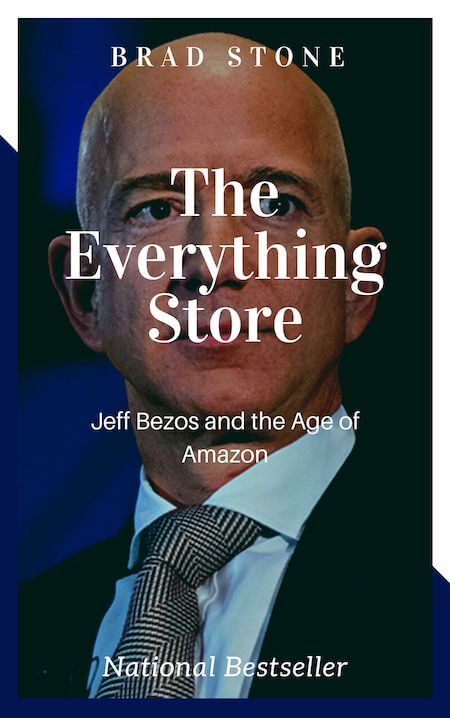
The Everything Store: Jeff Bezos and the Age of Amazon Book Summary
This The Everything Store: Jeff Bezos and the Age of Amazon Book Summary covers the key ideas, lessons, and takeaways in about 20 minutes.
Want the complete 20-minute summary?
- Full structured summary
- Video Summary
- Podcast Summary
- Audio summary
- Key takeaways
- Exercises
- Quiz
- Highlights and notes
- Ask the book with AI
What is in the The Everything Store: Jeff Bezos and the Age of Amazon book summary?
Below is a preview of Sumizeit’s expert-written summary of The Everything Store: Jeff Bezos and the Age of Amazon by Brad Stone. The full summary covers the book’s key ideas in text, audio, and video.
When Jeff Bezos started Amazon in his garage in 1994, he had no idea that more than two decades later, his now multibillion-dollar company would be a highly-regarded household name. While the hugely successful corporation’s path has been a long and winding one, The Everything Store: Jeff Bezos and the Age of Amazon provides a broad overview of the company’s successes and failures over the years as well as highlighting some of the more controversial business practices and policies. Ultimately, the reader can decide, is Amazon a true force for good, or is employing unethical tactics to dominate the e-commerce sector? Or is the reality a mix of both?
Prioritizing Customer Service
In terms of customer service, Amazon has always been a step ahead.
Why?
Because the retail superpower takes calculated risks.
And usually, they pay off.
For instance, when Amazon initially developed a feature to allow customer reviews, the corporation was met with strong resistance from publishers, because they assumed that critical feedback would lead to a reduction in product sales. As it turned out, the review feature was well-received by the consumer base and has remained a key aspect of Amazon’s process ever since.
Here is another example. When Amazon made the decision to allow the sale of used products, they were met with opposition once again. However, to this day, Amazon’s ability to connect consumers to a wide variety of cost-reduced, used products has contributed significantly to the corporation’s overall success.
While calculated risks, such as the above, are essential in providing top-notch customer service, so is the integration of another operating factor: efficiency.
To this end, Jeff Bezos moved the needle forward on Amazon when he discovered a key efficiency advantage that would set the company apart from industry competitors: e-commerce.
Unlike traditional business models, e-commerce allows for easy data collection that can then be turned into predictive analytics for consumer behavior. Amazon has the ability to track website hits, purchases, time spent on a particular page, etc. Then, Amazon uses this information to modify the user experience, such as by suggesting other items that are related to what the consumer has recently purchased. In creating these connections between the habits of consumers and their customized Amazon interface, Bezos and his team uncovered metrics for driving the efficiency and sales trajectory of the site.
Less is More
Limitations promote innovation.
How?
Because when you have fewer resources at your disposal, you are forced to get creative in your problem-solving techniques. You work with what you have.
Based on this philosophy of frugality, employees are required to pay for their own snacks, sleep two to a room on company trips, and fund their own parking permits.
And do not expect any cash prizes from Amazon, even if you win a company award. Embodying its trademark thriftiness, Amazon provides winners with products rather than money, such as Nike sneakers that were worn by famous basketball players.
But at what point is cost-cutting more of a hindrance than a…
Want the complete 20-minute summary?
- Full structured summary
- Video Summary
- Podcast Summary
- Audio summary
- Key takeaways
- Exercises
- Quiz
- Highlights and notes
- Ask the book with AI
Who should read The Everything Store: Jeff Bezos and the Age of Amazon?
The Everything Store is essential reading for entrepreneurs, business students, and anyone curious about how Amazon became a global powerhouse. If you want to understand the strategic decisions, cultural practices, and controversial trade-offs behind one of the world's most influential companies, this book offers critical insights into both Bezos's visionary leadership and the human costs of his relentless efficiency model.
Why does The Everything Store: Jeff Bezos and the Age of Amazon matter?
Understanding Amazon's rise is crucial for grasping modern commerce, technology, and corporate culture in the 21st century. Brad Stone's balanced examination reveals how Bezos's long-term thinking and willingness to sacrifice short-term profits redefined retail while raising important questions about worker treatment and corporate ethics that remain relevant today.
What are the key themes in The Everything Store: Jeff Bezos and the Age of Amazon?
- Long-term strategic vision over short-term profits
- Customer obsession and data-driven decision making
- Frugality and cost optimization as competitive advantage
- Corporate culture shaped by efficiency and innovation
- Risk-taking and accepting failure as part of growth
- Expansion beyond retail into technology and services
What are the key lessons from the The Everything Store: Jeff Bezos and the Age of Amazon book summary?
Calculated risks drive customer satisfaction
Amazon's willingness to implement features like customer reviews and used product sales—despite initial resistance—demonstrates how taking strategic risks on customer benefits can become lasting competitive advantages.
Data collection enables personalization at scale
By leveraging e-commerce technology to track user behavior, Amazon transformed raw data into predictive analytics that continuously improve the customer experience and drive sales.
Constraints force creative problem-solving
Amazon's philosophy of frugality and limited resources pushes employees to innovate and work efficiently, though the company must balance cost-cutting with employee welfare.
Small teams execute faster than large committees
The two-pizza rule keeps teams small and autonomous, allowing rapid decision-making and implementation while reducing time spent in lengthy discussions and debates.
Evidence-based arguments trump anecdotes
Amazon's culture demands that ideas be supported by hard data and statistics rather than customer stories, ensuring decisions are grounded in measurable outcomes.
Short-term sacrifice enables long-term dominance
Bezos's willingness to lose money on e-books at $9.99 was a deliberate strategy to establish market position and prepare for future profitability—a lesson in patient capital.
Action beats perfection in fast-moving markets
Amazon's bias toward launching and learning rather than over-analyzing means some ventures fail, but the company gains speed and market intelligence that larger competitors cannot match.
Failure deserves recognition when it teaches
The 'Just Do It' award celebrates bold initiatives regardless of outcome, embedding a culture where intelligent risk-taking and learning from mistakes are valued over risk aversion.
Diversification into complementary services multiplies value
Amazon Web Services transformed the company from a retailer into a technology platform provider, demonstrating how expanding beyond core business can unlock entirely new revenue streams and influence.
Operational autonomy requires resource competition
Decentralized teams operating independently creates efficiency but also forces internal competition for funding, maintaining frugality discipline across the organization.
Vision scales beyond initial assumptions
Bezos's belief that eventually everything can be sold on Amazon has guided strategic expansions into publishing, media, cloud services, and other sectors once thought unrelated to retail.
Technology platforms amplify retail advantages
By building AWS, Amazon created infrastructure that strengthened its own operations while becoming a profit engine serving Netflix, Instagram, and government agencies.
Market timing and pricing strategy drive adoption
The Kindle's rapid sell-out and consistent weekly sales growth show how the right product at the right price point can reshape entire industries like e-reading.
Cost reduction can clash with employee dignity
Amazon's extreme efficiency measures—from fulfillment center conditions to seasonal hiring and firing—raise ethical questions about whether all cost-cutting serves long-term brand strength.
Document culture creates rigor and accountability
Requiring six-page essays instead of presentations forces deeper thinking and creates written records that can be critiqued, refined, and held accountable over time.
Failed acquisitions can catalyze strategic pivots
Amazon's losses during the dot-com boom, rather than discouraging the company, prompted a shift from acquiring products to building proprietary offerings—a turning point in company evolution.
Founder vision requires disciplined execution
Bezos's grand vision for 'The Everything Store' is credible only because it's backed by ruthless operational discipline, data analysis, and willingness to invest billions for future returns.
Transparency about trade-offs builds informed perspective
Understanding both Amazon's innovations and ethical concerns allows customers and stakeholders to make conscious choices about supporting the company.
Scale allows investment in moonshot projects
Bezos's side ventures like Blue Origin and the 10,000-year clock reflect how massive corporate success can fund visionary personal projects that extend beyond immediate business returns.
Want the complete 20-minute summary?
- Full structured summary
- Video Summary
- Podcast Summary
- Audio summary
- Key takeaways
- Exercises
- Quiz
- Highlights and notes
- Ask the book with AI
How can you apply ideas from The Everything Store: Jeff Bezos and the Age of Amazon?
- Implement data collection and analytics to personalize customer experiences and predict behavior rather than relying on intuition
- Organize teams into small, autonomous units with clear resource constraints to improve decision speed and accountability
- Adopt a written-first culture requiring evidence-based arguments for major decisions, reducing low-quality group discussions
- Build long-term strategy with the willingness to sacrifice short-term profits, especially when establishing market position
- Create an innovation award system that celebrates bold attempts even when they fail, encouraging experimentation across the organization
- Evaluate your business model for opportunities to expand into complementary services or technology platforms that amplify core value
- Audit your cost-cutting practices to ensure efficiency gains don't harm employee morale, safety, or long-term brand reputation
What common mistakes do readers make with The Everything Store: Jeff Bezos and the Age of Amazon?
- Assuming that customer feedback is always negative and avoiding features like reviews that might show product shortcomings
- Mistaking frugality for corner-cutting that damages employee welfare or customer experience—Amazon shows costs can go too far
- Over-analyzing decisions and delaying launches in pursuit of perfection instead of learning from market feedback quickly
- Building a company culture without clear metrics and data discipline, allowing decisions to be driven by opinion rather than evidence
Sumizeit Exercises Apply what you've learned
Turn ideas from The Everything Store: Jeff Bezos and the Age of Amazon into action with a short guided reflection: identify the biggest takeaway, connect it to your life, and commit to one step you can take in the next 24 hours.
What is the expert analysis of The Everything Store: Jeff Bezos and the Age of Amazon?
Overview
The Everything Store: Jeff Bezos and the Age of Amazon is a comprehensive biography and corporate chronicle authored by Brad Stone, a seasoned technology journalist with extensive experience covering Silicon Valley’s most influential companies. Published in 2013, the book offers an incisive exploration of Amazon’s meteoric rise from a modest online bookstore to a global e-commerce and technology powerhouse. Stone’s insider access and journalistic rigor provide readers with a nuanced portrait of Jeff Bezos—the visionary founder—and the corporate culture that has propelled Amazon’s unprecedented growth. The significance of this work lies in its balanced treatment of Amazon’s innovative strategies alongside its controversial labor practices, making it essential reading for those seeking to understand the complex dynamics of modern capitalism and technological disruption.
Core Thesis
At its core, Stone’s narrative advances the thesis that Amazon’s extraordinary success is the product of Jeff Bezos’s relentless focus on customer-centric innovation, operational efficiency, and long-term strategic vision, underpinned by a corporate culture that prizes frugality, bold risk-taking, and data-driven decision-making. The book argues that Amazon’s ability to disrupt traditional retail and technology sectors stems from its willingness to embrace short-term sacrifices for future gains, as well as its unconventional management practices that foster small, autonomous teams. However, this thesis is complicated by the ethical and human costs embedded in Amazon’s labor policies and aggressive competitive tactics, inviting readers to grapple with the dual nature of the company as both a transformative force and a contentious corporate entity.
Strengths
- Depth of Research and Access: Stone’s journalistic background and access to Amazon insiders lend the book a level of detail and authenticity that enriches its narrative, providing vivid anecdotes and concrete examples of Bezos’s leadership style and Amazon’s operational innovations.
- Balanced Perspective: The book adeptly balances admiration for Amazon’s technological and business achievements with critical scrutiny of its labor practices and corporate ethics, avoiding hagiography while acknowledging complexity.
- Insight into Corporate Culture: Stone’s exposition of Amazon’s unique culture—such as the two-pizza team rule and the six-page memo tradition—offers valuable insights into how organizational structures and norms can drive innovation and efficiency.
- Contextualization of Innovation: By situating Amazon’s growth within the broader evolution of e-commerce and digital technology, the book illuminates how Bezos’s strategic decisions were both visionary and responsive to market forces.
- Engaging Narrative Style: The prose is accessible yet sophisticated, making complex business and technological concepts comprehensible without sacrificing analytical depth.
Critiques & Counterarguments
- Overreliance on Anecdotal Evidence: While richly detailed, the book sometimes leans heavily on anecdotal accounts and insider testimonies, which may introduce bias or limit the generalizability of its conclusions about Amazon’s culture and practices.
- Limited Critical Engagement with Labor Issues: Although the book acknowledges Amazon’s controversial labor practices, it stops short of a thorough ethical analysis or engagement with broader critiques from labor economists and sociologists who highlight systemic worker exploitation in gig and warehouse economies.
- Technological Determinism: The narrative occasionally implies that technological innovation inevitably leads to progress, underplaying the role of regulatory frameworks, market competition, and societal values in shaping outcomes.
- Opposing Perspectives on Corporate Culture: Alternative management theories emphasize collaborative, inclusive cultures rather than Amazon’s intense, metrics-driven environment. Research in organizational psychology suggests that such high-pressure cultures may lead to burnout and high turnover, challenging the sustainability of Amazon’s model.
- Market Concentration Concerns: Critics from antitrust scholarship argue that Amazon’s dominance raises significant concerns about market monopolization and its impact on small businesses and consumer choice, a dimension that receives limited attention in Stone’s largely descriptive account.
Who Should Read This
The Everything Store is ideally suited for readers interested in the intersection of technology, business strategy, and contemporary capitalism. Business professionals, entrepreneurs, and students of corporate strategy will find valuable lessons in Bezos’s long-term vision and Amazon’s operational innovations. Additionally, those engaged in labor studies, ethics, and organizational behavior will benefit from the book’s candid portrayal of Amazon’s workplace culture and the attendant controversies. Finally, readers fascinated by biographies of transformative leaders and the evolution of digital economies will appreciate Stone’s compelling storytelling and analytical depth.
Frequently asked questions about the The Everything Store: Jeff Bezos and the Age of Amazon book summary
What is The Everything Store: Jeff Bezos and the Age of Amazon about?
The Everything Store: Jeff Bezos and the Age of Amazon by Brad Stone is a comprehensive biography of Amazon's rise from a garage startup in 1994 to a multi-billion-dollar retail and technology powerhouse. The book explores Bezos's strategic vision, Amazon's unconventional corporate culture, key business practices like extreme frugality and customer obsession, and the company's controversial labor practices, ultimately presenting a balanced view of Amazon's successes and ethical challenges.
Who should read The Everything Store: Jeff Bezos and the Age of Amazon?
This book is ideal for entrepreneurs, business leaders, technology enthusiasts, and anyone seeking to understand how modern e-commerce and digital platforms work. Managers interested in organizational culture, students of business strategy, and consumers wanting to understand the company behind their purchases will all find valuable insights in Stone's detailed exploration of Amazon's principles and practices.
What are the main takeaways from The Everything Store: Jeff Bezos and the Age of Amazon?
Key takeaways include the power of long-term thinking over short-term profits, the importance of data-driven decision-making and customer obsession, the use of constraints to drive innovation, the value of small autonomous teams, and the balance between operational excellence and ethical responsibility. The book also highlights how Bezos's willingness to enter new markets and accept strategic losses has enabled Amazon to become an 'everything store' spanning retail, cloud services, and beyond.
How did Amazon's customer review feature change the company?
Despite publisher resistance, Amazon implemented customer reviews as a calculated risk that proved transformative. The feature was widely embraced by customers, built trust in product quality, and became a cornerstone of Amazon's customer-centric approach. This willingness to take calculated risks on customer benefits became emblematic of Bezos's strategy for long-term competitive advantage.
What is the two-pizza rule at Amazon?
The two-pizza rule is Amazon's principle that teams should be small enough to be fed by two pizzas, typically 6-10 people. Bezos believes small teams operate more autonomously, make faster decisions, and waste less time in unnecessary debate. Teams compete internally for resources, maintaining frugality while enabling decentralized execution of strategic initiatives.
What is Amazon Web Services and why does it matter?
Amazon Web Services (AWS) is Amazon's cloud computing platform that allows businesses, governments, and tech giants like Netflix and Instagram to rent computing infrastructure. AWS transformed Amazon from a pure retailer into a technology company and became a massive profit generator, demonstrating how expanding into complementary services can create entirely new revenue streams and strategic leverage.
What are the ethical concerns with Amazon's business practices?
Brad Stone highlights Amazon's extreme cost-cutting measures that burden employees, including requiring fulfillment center workers to walk up to 18 miles per day for sub-standard pay and firing employees for talking during shifts. Additionally, Amazon hires tens of thousands of seasonal workers only to lay them off after peak periods. These practices raise important questions about whether relentless efficiency sacrifices worker dignity and long-term brand sustainability.
About Sumizeit
Sumizeit is a profitable Scomy LLC company based in Miami, Florida. It has been helping readers learn from nonfiction books for 7 years with expert-written summaries in text, audio, podcast, and video.
Want the complete 20-minute summary?
- Full structured summary
- Video Summary
- Podcast Summary
- Audio summary
- Key takeaways
- Exercises
- Quiz
- Highlights and notes
- Ask the book with AI
Here's why readers love Sumizeit
Join thousands of learners getting smarter every day
"Great experience. Detailed summaries. Loved the gamification feature. Makes learning fun. Good customer service. I recommend Sumizeit to anyone. You'll learn a lot."
"I always felt busy but still wanting to keep up with the book discussion in my friend group. This was a great supplement to help me keep reading the books I find fun while keeping up with important books."
"I love this website. Instead of scrolling social media, I find myself learning a lot. I use it everyday. I recommend this app for anyone who is too busy and wants to get up to speed with their favorite books."
The Everything Store: Jeff Bezos and the Age of Amazon Book Summary PDF
Looking for a The Everything Store: Jeff Bezos and the Age of Amazon Book Summary PDF you can save and revisit offline? Our The Everything Store: Jeff Bezos and the Age of Amazon Book Summary PDF captures the book’s core ideas in a clean, printable format — the key frameworks, takeaways, and structure without the fluff. Download the The Everything Store: Jeff Bezos and the Age of Amazon Book Summary PDF when you want a reference you can annotate, share with your team, or review on the go. Get your The Everything Store: Jeff Bezos and the Age of Amazon Book Summary PDF from the download page below.
Download The Everything Store: Jeff Bezos and the Age of Amazon Book Summary PDFPeople also liked these summaries
Readers who explored The Everything Store: Jeff Bezos and the Age of Amazon often enjoyed these titles next.


Want the complete 20-minute summary?
- Full structured summary
- Video Summary
- Podcast Summary
- Audio summary
- Key takeaways
- Exercises
- Quiz
- Highlights and notes
- Ask the book with AI
Featured Book Titles
Popular Book Summaries at sumizeit, leading book summary app