


As an Amazon Associate, Sumizeit earns from qualifying purchases.
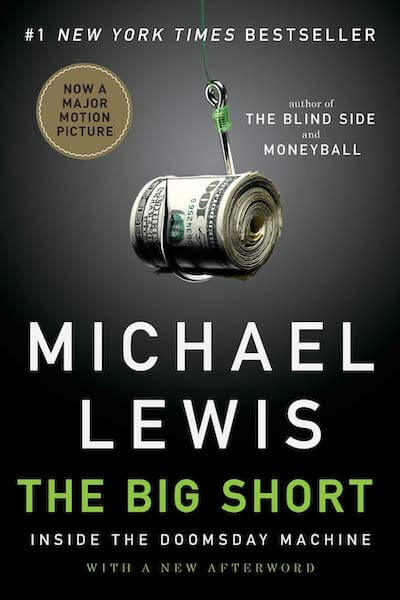
The Big Short Book Summary
This The Big Short Book Summary covers the key ideas, lessons, and takeaways in about 20 minutes.
Want the complete 20-minute summary?
- Full structured summary
- Video Summary
- Podcast Summary
- Audio summary
- Key takeaways
- Exercises
- Quiz
- Highlights and notes
- Ask the book with AI
What is in the The Big Short book summary?
Below is a preview of Sumizeit’s expert-written summary of The Big Short by Michael Lewis. The full summary covers the book’s key ideas in text, audio, and video.
There is a great disparity between what those who work in finance know and what is accessible to the average American: and this can be a huge detriment for American’s in successful financial planning. In fact, even something as seemingly small as the lack of knowledge the average American has about financial terminology played a key role in something huge: the historical financial crisis of 2008. In Michael Lewis’ The Big Short, he chronicles the reasons behind the financial collapse, and how much of it had to do with those who preyed on low-income American’s with a lack of foresight or financial awareness. The book also details the experiences of those who managed to profit off of the economic downturn: those individuals who bet against the housing bubble and won. These outsiders included Greg Lippman, a trader: Steve Eisman, an investor: Charlie Ledley and Jamie Mai, founders of Cornwall Capital: and Ben Hocket, a former investor. Each one profited from the collapse of the housing market by “shorting” big bankers and the like: meaning they invested against credit default swipes, which would only become profitable if the housing market failed. Read on to learn more about the circumstances that lead up to this historical crisis, why those who caused the collapse didn’t bear the brunt of the financial burden (and who did), and why these seemingly random folks were able to profit.
Unchecked optimism was a big problem for sellers and bankers
There were many factors that lead to the 2008 financial crisis. One of which was unchecked optimism on the part of those who were selling the houses. Many of those who were selling houses like crazy were doing so because they had two unchecked beliefs. First, they assumed that since the housing market had never failed in the past, it couldn’t possibly fail now. Second, they held onto the belief that there was no way that all of the people who had taken out loans could possibly default at the same time, which would cause a financial crisis. Both beliefs didn’t have much data to support them but were widely held anyway. Bankers, investors, and others made the mistake of assuming that since they hadn’t ever experienced the housing market crash, it was not going to happen. This lapse in logical reasoning is called the optimism bias. This bias is the tendency for people to underestimate risk in a situation because they can’t remember any recent experiences showing that this sort of risk would end in an undesirable result. Sellers had no recent experience of a housing collapse to draw on: so it seemed like an impossibility while they were selling houses and profiting.
Overconfidence and manipulation ruled sales tactics
In combination with underestimating just how risky giving out those loans was, financial analysts also indulged in another bias: overconfidence. They were overconfident in their ability to predict whether they had the abilities, skills, and judgment to accurately predict the future.
Want the complete 20-minute summary?
- Full structured summary
- Video Summary
- Podcast Summary
- Audio summary
- Key takeaways
- Exercises
- Quiz
- Highlights and notes
- Ask the book with AI
Who should read The Big Short?
The Big Short is essential reading for anyone who wants to understand how the 2008 financial crisis happened and why average Americans bore the brunt of Wall Street's recklessness. It's particularly valuable for those interested in finance, economics, investing, or simply how systemic failures in oversight can devastate millions of lives. Even readers without a financial background will find it accessible and eye-opening, as Michael Lewis reveals the human stories behind the collapse rather than drowning readers in jargon.
Why does The Big Short matter?
Understanding the causes and consequences of the 2008 financial crisis remains urgently relevant today, as the same structural vulnerabilities and incentive problems persist in the financial system. The book exposes how financial illiteracy, unchecked greed, and perverse incentive structures allowed catastrophic risk-taking to go undetected and unpunished. By learning how a small group of outsiders saw what insiders missed, readers gain insight into critical thinking, contrarian analysis, and the dangers of groupthink in high-stakes industries.
What are the key themes in The Big Short?
- Financial illiteracy as a vulnerability exploited by the powerful
- The danger of unchecked optimism bias in high-risk industries
- Misaligned incentives that reward fraud and punish honesty
- How outsider perspectives can reveal systemic blindness
- The disconnect between those who cause crises and those who suffer them
- Regulatory capture and the failure of oversight mechanisms
What are the key lessons from the The Big Short book summary?
Optimism Bias Prevents Risk Recognition
When an industry has no recent history of failure, participants develop a false sense of security and assume catastrophic risk is impossible. This cognitive bias blinded bankers and sellers to the housing bubble despite mounting evidence.
Overconfidence Leads to Reckless Decision-Making
Financial professionals vastly overestimated their ability to predict markets and assess risk, leading them to approve loans to borrowers who clearly couldn't afford them. This unfounded confidence in their own judgment created systemic fragility.
Jargon Serves as a Tool for Manipulation
Terms like 'securitization' obscure rather than clarify, allowing financial professionals to exploit the knowledge gap between themselves and ordinary people. Financial literacy became essential armor against deception.
Temporal Discounting Undermines Long-Term Planning
Low-income individuals struggling to meet immediate needs naturally discount future consequences, making them vulnerable to predatory lending despite catastrophic long-term outcomes. This psychological reality was weaponized against vulnerable borrowers.
Incentive Misalignment Corrupts Entire Systems
When credit rating agencies profit from issuing high ratings rather than accurate ratings, they inevitably compromise their integrity. The shift from performance-based to volume-based compensation fundamentally changed their behavior.
Insiders Cannot See Systemic Problems
Those deeply embedded in an industry often lack the perspective to recognize fundamental flaws, as they're subject to the same biases and incentive structures. Outsiders with enough knowledge but emotional distance can spot what insiders miss.
Academia Struggles to Predict Market Realities
Economists relying heavily on mathematical models often fail to account for behavioral, political, and market-driven factors that don't fit neat formulas. Pure theoretical knowledge can't capture the messy reality of financial systems.
Regulatory Agencies Can Be Captured by the Industries They Oversee
When regulators depend on industry approval or funding, they lose independence and become enablers rather than enforcers. This creates a moral hazard where oversight becomes merely performative.
Consequences Are Distributed Unfairly
While executives received government bailouts, ordinary Americans lost homes and jobs, and taxpayers footed the bill. Systemic crises don't affect all parties equally; power determines who suffers.
Fraudulent Practices Were Built Into the System
Income falsification, credit score manipulation, and deceptive loan terms weren't anomalies but rather standard operating procedures across the lending industry. Fraud was systematized and normalized.
Knowledge Gaps Create Exploitable Vulnerabilities
The disparity between what financial professionals know and what average Americans understand became a mechanism for wealth extraction. Financial literacy is not optional but necessary for self-protection.
Contrarian Thinking Requires Conviction Against the Crowd
Those who profited from the crash had to resist overwhelming social pressure and maintain their positions despite years of losses and ridicule. Clear thinking often demands comfort with being wrong before proven right.
Complexity Can Be Used as a Smokescreen
Deliberately obscure financial instruments like CDOs and credit default swaps allowed hidden risks to masquerade as sophisticated investments. Opacity was a feature, not a bug, in the system.
Self-Interest Without Oversight Becomes Destruction
When individuals are incentivized to maximize short-term profits without accountability for long-term consequences, they will naturally choose explosion over sustainability. Individual rationality doesn't guarantee collective wellbeing.
Global Crises Have Geopolitical Consequences
The financial collapse's ripple effects weren't limited to economics; they fueled nationalist movements and political instability worldwide. Financial crises can destabilize entire societies beyond the market sphere.
Outsider Status Can Be an Advantage
Those who hadn't profited from the housing bubble's rise maintained skepticism that insiders had lost. Distance from the system provided clearer vision than proximity and involvement.
Making the Future Tangible Improves Decision-Making
The tendency to discount distant consequences can be countered by consciously making future scenarios feel immediate and real. Behavioral awareness allows people to override their worst impulses.
Questioning Consensus Is Often Profitable
When everyone agrees something is safe, it's often because collective belief rather than evidence supports that view. The biggest opportunities lie in identifying what the crowd has systematically mispriced.
Whistleblowing From Within Is Nearly Impossible
Even those like Greg Lippmann who recognized the fraud within their own banks couldn't stop it; they could only profit from the inevitable collapse. Individuals lack power against systemic incentives.
Understanding Financial Mechanisms Is a Form of Power
The ability to read dense financial documents and understand how instruments like credit default swaps work separated those who could exploit the system from those exploited by it. Technical knowledge became survival knowledge.
Want the complete 20-minute summary?
- Full structured summary
- Video Summary
- Podcast Summary
- Audio summary
- Key takeaways
- Exercises
- Quiz
- Highlights and notes
- Ask the book with AI
How can you apply ideas from The Big Short?
- Develop basic financial literacy to protect yourself from predatory lending and deceptive financial products
- Question consensus in your industry or investments—what everyone agrees on may be systematically wrong
- Create tangible representations of future financial goals to overcome temporal discounting and short-term thinking
- Look for misaligned incentives in any organization or market that seem too good to be true
- Maintain healthy skepticism of optimistic narratives, especially when supported by those profiting from them
- Diversify your information sources and seek outsider perspectives on systems you're embedded in
- Scrutinize the credentials and incentives of experts before trusting their recommendations
What common mistakes do readers make with The Big Short?
- Assuming past stability guarantees future safety—history doesn't repeat but patterns often rhyme
- Trusting expert consensus without understanding the incentive structures that shape their opinions
- Allowing financial jargon to intimidate you into accepting terms you don't fully understand
- Failing to see how predatory lending exploits psychological vulnerabilities rather than just greed
- Believing that complexity and sophistication in finance inherently indicate quality or safety
Sumizeit Exercises Apply what you've learned
Turn ideas from The Big Short into action with a short guided reflection: identify the biggest takeaway, connect it to your life, and commit to one step you can take in the next 24 hours.
What is the expert analysis of The Big Short?
Overview
The Big Short, authored by Michael Lewis, stands as a seminal work in contemporary financial literature, dissecting the catastrophic 2008 housing market collapse through a compelling narrative lens. Lewis, a distinguished financial journalist and bestselling author, leverages his extensive background in economics and firsthand experience within Wall Street to illuminate the complex interplay of greed, ignorance, and systemic failure that precipitated the crisis. The book’s significance lies not only in its exposé of the financial industry's opaque mechanisms but also in its humanization of the few contrarian investors who foresaw the disaster and profited by betting against the market. Lewis’s skillful storytelling transforms dense financial jargon into accessible prose, making a critical historical event comprehensible to a broad audience while maintaining intellectual rigor.
Core Thesis
At the heart of The Big Short is the argument that the 2008 financial crisis was the inevitable outcome of widespread cognitive biases, systemic conflicts of interest, and regulatory failures within the American financial system. Lewis contends that unchecked optimism, overconfidence, and manipulation permeated the housing market, while credit rating agencies compromised their integrity to serve brokers’ interests. This toxic cocktail was exacerbated by a profound knowledge gap between financial insiders and the average American, who were ill-equipped to navigate or challenge the complex financial instruments that ultimately led to economic devastation. The book further posits that the crisis was not only foreseeable but was indeed predicted by a small cadre of outsiders who, due to their unique perspectives and detachment from mainstream finance, were able to identify and capitalize on the impending collapse.
Strengths
- Accessible yet Sophisticated Narrative: Lewis excels at translating intricate financial concepts and jargon into engaging storytelling without sacrificing analytical depth, making the subject matter approachable for both lay readers and experts.
- Multi-Perspective Characterization: By profiling diverse protagonists—from an autistic hedge fund manager to self-exiled investors—Lewis humanizes the abstract forces behind the crisis and illustrates how unconventional thinking can challenge systemic complacency.
- Insightful Exploration of Behavioral Biases: The book adeptly integrates psychological concepts such as optimism bias, overconfidence, and temporal discounting to explain the irrational behaviors that fueled the housing bubble.
- Critical Examination of Institutional Failures: Lewis’s critique of credit rating agencies and regulatory bodies exposes the structural incentives that undermined market integrity, offering a nuanced understanding of systemic risk.
- Historical and Global Context: The narrative situates the American financial collapse within a broader socio-economic framework, highlighting its devastating domestic and international repercussions.
Critiques & Counterarguments
- Selective Anecdotal Evidence: While compelling, Lewis’s reliance on a few key characters may oversimplify the multifaceted causes of the crisis, potentially underrepresenting the roles of other actors and systemic factors.
- Overemphasis on Individual Agency: The portrayal of contrarian investors as heroic figures risks minimizing the structural and regulatory complexities that enabled the crisis, inadvertently promoting a narrative of individual foresight over collective failure.
- Limited Engagement with Macroprudential Perspectives: The book largely sidesteps deeper economic debates about monetary policy, global financial imbalances, and the role of international capital flows, which many scholars argue were critical contributors to the crisis.
- Critique of Credit Rating Agencies: Although Lewis highlights their failures, some research suggests that rating agencies operated within flawed but widely accepted models, and that ultimate responsibility also lies with market participants who relied unquestioningly on these ratings.
- Competing Schools of Thought: Alternative analyses, such as those from post-Keynesian economists or proponents of stricter financial regulation, argue that the crisis was a predictable outcome of deregulation and neoliberal policies, perspectives that receive limited attention in the book.
Who Should Read This
The Big Short is essential reading for a sophisticated audience interested in the intersection of finance, psychology, and systemic risk. It appeals to economists, financial professionals, policymakers, and intellectually curious readers seeking to understand the human and institutional dynamics behind one of the most consequential economic events of the 21st century. Moreover, it serves as a cautionary tale for anyone invested in the future stability of financial markets, emphasizing the necessity of financial literacy and critical scrutiny of prevailing economic orthodoxies.
Frequently asked questions about the The Big Short book summary
What is The Big Short about?
The Big Short by Michael Lewis chronicles the causes of the 2008 financial crisis, focusing on how unchecked optimism, fraudulent lending practices, and corrupted oversight mechanisms created a housing bubble that devastated millions. The book also tells the story of a handful of outsiders—including Michael Burry, Greg Lippman, Steve Eisman, Charlie Ledley, Jamie Mai, and Ben Hockett—who recognized the impending collapse and profited by betting against the housing market through credit default swaps.
Who should read The Big Short?
Anyone seeking to understand how the 2008 financial crisis happened and why it matters today should read The Big Short. It's valuable for investors, policy makers, economists, and ordinary citizens who want to develop financial literacy and understand how systemic vulnerabilities can be exploited. The book is accessible to readers without finance backgrounds, as Lewis reveals the human motivations and psychology behind the crisis rather than relying on technical jargon.
What are the main takeaways from The Big Short?
The main takeaways include: financial illiteracy is a vulnerability exploited by the powerful; optimism bias and overconfidence blind insiders to systemic risk; misaligned incentives reward fraud; outsiders with sufficient knowledge but emotional distance can see what insiders miss; and consequences fall disproportionately on those least responsible. The Big Short reveals that the 2008 crisis was neither accident nor anomaly, but rather the inevitable outcome of structures designed to prioritize short-term profit over long-term stability.
How did a small group of investors predict the housing market collapse?
Lewis profiles individuals like Michael Burry, a former doctor with autism, and the team at Cornwall Capital who meticulously studied dense financial documents and realized the housing market was built on fraudulent foundations. They recognized that loan standards had deteriorated catastrophically, that borrowers couldn't actually afford their mortgages, and that when defaults eventually occurred, it would trigger a cascade of losses. These outsiders invested heavily in credit default swaps, which would become profitable only if the housing market failed.
Why couldn't economists and rating agencies predict the 2008 financial crisis?
Economists relied too heavily on mathematical models that didn't account for human behavior and market realities. Rating agencies had been corrupted by misaligned incentives—they profited more from issuing high ratings to bad mortgages than from honest assessment. Additionally, those most embedded in the system suffered from optimism bias and couldn't imagine a scenario that contradicted their recent experience of continuous housing appreciation.
What role did financial jargon play in the housing crisis?
Financial professionals deliberately used confusing terminology like 'securitization' and 'CDO' to obscure the true risk of mortgage-backed securities from ordinary borrowers and less sophisticated investors. This knowledge gap allowed lenders to deceive borrowers about their loan terms and enabled Wall Street to hide the toxic nature of their investments behind layers of complex language and instruments.
How were ordinary Americans victimized by predatory lending?
Lenders targeted low-income borrowers who struggled with temporal discounting—the psychological tendency to prioritize immediate needs over future consequences. Lenders falsified income documents, misrepresented loan terms, and sold homes to borrowers who clearly couldn't afford them. When the market collapsed, these families lost their homes while the financial professionals who orchestrated the fraud were rewarded with government bailouts.
About Sumizeit
Sumizeit is a profitable Scomy LLC company based in Miami, Florida. It has been helping readers learn from nonfiction books for 7 years with expert-written summaries in text, audio, podcast, and video.
Want the complete 20-minute summary?
- Full structured summary
- Video Summary
- Podcast Summary
- Audio summary
- Key takeaways
- Exercises
- Quiz
- Highlights and notes
- Ask the book with AI
Here's why readers love Sumizeit
Join thousands of learners getting smarter every day
"Great experience. Detailed summaries. Loved the gamification feature. Makes learning fun. Good customer service. I recommend Sumizeit to anyone. You'll learn a lot."
"I always felt busy but still wanting to keep up with the book discussion in my friend group. This was a great supplement to help me keep reading the books I find fun while keeping up with important books."
"I love this website. Instead of scrolling social media, I find myself learning a lot. I use it everyday. I recommend this app for anyone who is too busy and wants to get up to speed with their favorite books."
The Big Short Book Summary PDF
Looking for a The Big Short Book Summary PDF you can save and revisit offline? Our The Big Short Book Summary PDF captures the book’s core ideas in a clean, printable format — the key frameworks, takeaways, and structure without the fluff. Download the The Big Short Book Summary PDF when you want a reference you can annotate, share with your team, or review on the go. Get your The Big Short Book Summary PDF from the download page below.
Download The Big Short Book Summary PDFPeople also liked these summaries
Readers who explored The Big Short often enjoyed these titles next.



Want the complete 20-minute summary?
- Full structured summary
- Video Summary
- Podcast Summary
- Audio summary
- Key takeaways
- Exercises
- Quiz
- Highlights and notes
- Ask the book with AI
Featured Book Titles
Popular Book Summaries at sumizeit, leading book summary app