


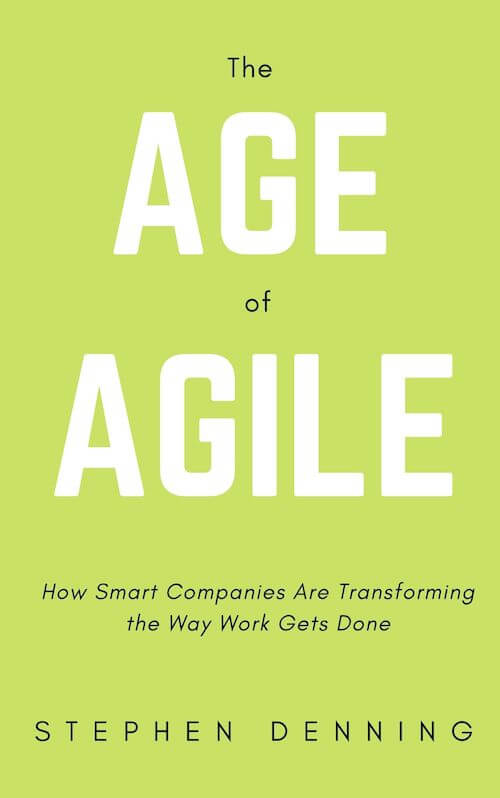
The Age of Agile Book Summary
This The Age of Agile Book Summary covers the key ideas, lessons, and takeaways in about 20 minutes.
Want the complete 20-minute summary?
- Full structured summary
- Video Summary
- Podcast Summary
- Audio summary
- Key takeaways
- Exercises
- Quiz
- Highlights and notes
- Ask the book with AI
What is in the The Age of Agile book summary?
Below is a preview of Sumizeit’s expert-written summary of The Age of Agile by Stephen Denning. The full summary covers the book’s key ideas in text, audio, and video.
Management expert Stephen Denning explains the origin of agile management practices, which came from developments in the organization of the U.S. Army in Iraq. Agile management was first adopted by the software industry, who were bogged down by the lack of flexibility in their management practices. In an uncertain and rapidly changing world, agile management leaves behind some of the core philosophies of traditional management to allow companies to move faster and focus on the future. Agile management allows a company to work more quickly and flexibly on short-term projects and focus on the customer.
Agile management began its life during the War in Iraq.
In 2003, General Stanley McChrystal was struggling with a perplexing problem in Iraq. The U.S. Army was highly trained and had better equipment, but could not defeat insurgents on the ground. His task force was, by all measurable accounts, the best it could be. And yet, they were losing to poorly armed, poorly trained terrorist militias.
But McChrystal was an acclaimed commander, and he wouldn’t sit down and accept defeat. He began to realize that despite being well-trained, his task force was not flexible enough to defeat a highly adaptable insurgent network. The task force waited for word from their distant commander before acting and missed opportunities because commands weren’t coming from someone on the ground. It was impossible to communicate well with the FBI and NSA, and none of the task force teams were working collaboratively. He realized that to defeat the insurgents, he would need to adapt some of their methods.
McChrystal’s agile management method focused on creating small collaborative teams. Decisions were made based on competence, not rank - someone close to the action didn’t need to wait anymore to make an important call. He put TVs and electronic communication at the forefront and had daily briefings to keep teams up to date. His new strategy formed the foundation of agile management - rather than a hierarchy, McChrystal created a network.
The basic principle of agile management is flexibility.
Meanwhile, tech and software companies were struggling with outdated management strategies. Technology changed daily, sometimes hourly, but out-dated management kept companies from embracing growth and change. On top of that, there was little room for flexibility. Companies could be put out of business because of their inadequate response to the rapidly shifting market.
Software companies looking to agile management to solve their problems. They created a network of small teams to focus on limited-scope projects. This meant better communication, more flexibility, and more opportunities for success.
Traditional managers, however, often struggle to implement agile management principles. Three main principles make up the foundation of agile management - by following these “laws,” traditional managers can shift their practices toward flexibility and agility.
The first principle of the Agile Manifesto is the “Law of the Small Team.”
In agile management, the small team is king. Teams should consist of seven to twelve people, and be cross-functional.
Want the complete 20-minute summary?
- Full structured summary
- Video Summary
- Podcast Summary
- Audio summary
- Key takeaways
- Exercises
- Quiz
- Highlights and notes
- Ask the book with AI
Who should read The Age of Agile?
The Age of Agile is essential for business leaders, managers, and organizational decision-makers who want to improve operational flexibility and response times. If you work in a rapidly changing industry—particularly technology, software, or any field where market conditions shift quickly—this book provides a practical framework for restructuring your team dynamics. It's also valuable for anyone struggling with outdated hierarchical management practices that slow down decision-making and innovation.
Why does The Age of Agile matter?
As markets become increasingly competitive and uncertain, companies that fail to adapt quickly risk obsolescence. The Age of Agile by Stephen Denning reveals how even traditional enterprises can implement agile methods originally developed by the U.S. military in Iraq to become more responsive to customer needs. In today's fast-paced business environment, understanding how to organize teams for maximum flexibility and collaboration is no longer optional—it's a competitive necessity.
What are the key themes in The Age of Agile?
- From military strategy to business operations: adapting agile methods across sectors
- Network structures as alternatives to rigid hierarchies
- Customer-centricity as a competitive advantage
- Small, cross-functional teams as the building block of agility
- Transparency and daily communication as tools for alignment
- Iterative improvement and continuous experimentation
- Flexibility and adaptability in uncertain environments
- Managing large organizations through distributed decision-making
What are the key lessons from the The Age of Agile book summary?
Agile management emerged from military necessity
General Stanley McChrystal transformed military operations by moving away from rigid command hierarchies to adaptive networks, a model that became the foundation for modern agile management practices.
Flexibility beats traditional hierarchy in complex environments
Organizations that prioritize adaptability and rapid decision-making outperform those constrained by slow, top-down approval processes, especially when facing unpredictable challenges.
The Law of the Small Team optimizes collaboration and execution
Teams of seven to twelve cross-functional members with autonomy and clear shared goals produce faster results and better communication than larger, siloed departments.
Rank should not determine decision-making authority
In agile organizations, decisions are made by those closest to the problem with the relevant expertise, not by those highest in the organizational chart, enabling faster and more informed choices.
Daily communication prevents bottlenecks and misalignment
Regular team briefings and transparent information sharing ensure everyone stays synchronized and can address obstacles before they cascade into larger problems.
Customers, not shareholders, must be the primary focus
Competitive markets have shifted power to customers, making customer satisfaction and responsiveness far more important to long-term success than short-term profit maximization.
Target a specific audience rather than trying to serve everyone
Agile companies succeed by deeply understanding and serving a focused customer segment rather than spreading resources too thin attempting mass-market appeal.
Simplicity and design matter more than feature bloat
Products that are clean, easy to use, and adaptable to individual customer needs outperform overly complex offerings, even if the latter have more features.
Innovation should happen in small, manageable increments
Gradual, frequent improvements keep customers engaged and prevent the disruption caused by dramatic overhauls that confuse or alienate users.
Networks of teams act like interconnected gears
In a network model, small teams operate independently toward a shared purpose, creating organizational flexibility while maintaining overall alignment and efficiency.
Management's role shifts to enabling and coordinating teams
Instead of directing every decision, agile managers focus on ensuring teams have resources, clarity of purpose, and the collaboration mechanisms needed to succeed.
Large organizations can operate as networks if teams are well-managed
Companies like Spotify and Microsoft's Development Division prove that even organizations with thousands of employees can function as agile networks rather than traditional hierarchies.
Hybrid transition approaches minimize organizational tension
The most successful transformations use a blend of top-down sponsorship and bottom-up experimentation, allowing one department to pilot agile methods before company-wide rollout.
Sudden, radical restructuring creates confusion and resistance
The big-bang approach of immediately removing management layers or restructuring all departments at once often backfires because it leaves employees without clear models or expectations.
Working in focused batches improves productivity
When teams dedicate themselves to one project at a time rather than juggling multiple competing priorities, they reduce context-switching losses and deliver better results faster.
Regular retrospectives drive continuous improvement
Post-project reviews that examine strengths, weaknesses, and customer feedback provide the data needed for teams to refine processes and increase efficiency over time.
Experimentation with new products reveals customer preferences
Rather than relying on assumptions, agile companies test variations and gather real customer data to identify which approaches actually resonate in the market.
Adaptability is the strongest competitive advantage
In uncertain markets, the ability to pivot quickly, learn from feedback, and adjust strategy matters more than initial perfection or raw resources.
Bottom-up transformation without top support creates tension
When lower-level teams shift to agile practices without upper management alignment, friction arises between different organizational layers operating under incompatible models.
Software companies faced the most urgent agile adoption pressure
The tech industry's rapid pace of change exposed the inadequacy of traditional management practices, making software teams early adopters and validators of agile methodologies.
Want the complete 20-minute summary?
- Full structured summary
- Video Summary
- Podcast Summary
- Audio summary
- Key takeaways
- Exercises
- Quiz
- Highlights and notes
- Ask the book with AI
How can you apply ideas from The Age of Agile?
- Restructure teams into cross-functional groups of 7-12 people with clear autonomy and shared goals
- Institute daily team briefings to maintain transparency, identify obstacles, and keep everyone aligned
- Shift decision-making authority to the people closest to the problem rather than requiring approval from senior management
- Implement post-project reviews with both internal teams and customers to capture lessons and guide future improvements
- Conduct a pilot transformation in one department with CEO support before rolling out agile practices company-wide
- Create a shared digital repository or dashboard where team information is publicly visible to reduce confusion
- Focus product development on a specific target customer segment rather than trying to appeal to everyone
- Release product updates in small, iterative steps to keep customers engaged without overwhelming them with change
What common mistakes do readers make with The Age of Agile?
- Assuming agile methods only work for small teams or tech companies, overlooking their applicability to large enterprises and diverse industries
- Attempting a big-bang transformation by eliminating all middle management at once, which creates confusion and employee disorientation
- Implementing agile practices only at lower levels while keeping traditional hierarchy at the top, creating misalignment and tension
- Losing sight of the customer when optimizing internal processes, defeating the primary purpose of agile methodology
Sumizeit Exercises Apply what you've learned
Turn ideas from The Age of Agile into action with a short guided reflection: identify the biggest takeaway, connect it to your life, and commit to one step you can take in the next 24 hours.
What is the expert analysis of The Age of Agile?
Overview
The Age of Agile by Stephen Denning emerges as a pivotal contribution to contemporary management literature, authored by a seasoned expert whose extensive experience at the World Bank and in consulting with governments and large organizations lends considerable authority to his insights. Denning’s work is significant for its synthesis of military strategy and business management, tracing the origins of agile management to General Stanley McChrystal’s innovative restructuring of U.S. Army operations in Iraq. This historical grounding provides a compelling narrative that bridges disciplines and offers a fresh lens through which to view organizational adaptability in an increasingly volatile global economy.
Core Thesis
Denning’s central argument is that traditional hierarchical management structures are ill-suited to the demands of the modern, fast-paced, and uncertain business environment. Instead, he advocates for agile management—a flexible, network-based approach characterized by small, autonomous, cross-functional teams that prioritize customer-centricity and iterative progress. Agile management, as Denning presents it, is not merely a set of techniques but a fundamental reimagining of organizational dynamics, emphasizing decentralization of decision-making, transparency, and continuous adaptation to change.
Strengths
- Interdisciplinary Foundation: The book’s grounding in military strategy provides a robust and novel framework for understanding agility beyond the software industry, enriching the discourse with real-world, high-stakes examples.
- Clear Principles: Denning distills agile management into three accessible laws—the Law of the Small Team, the Law of the Customer, and the Law of the Network—offering practical guidance that managers can implement.
- Emphasis on Customer Focus: The shift from shareholder to customer-centric thinking is well articulated, aligning with contemporary trends in business philosophy that prioritize value creation and user experience.
- Balanced Change Management Strategies: The discussion on top-down, bottom-up, and hybrid approaches to transitioning towards agile networks demonstrates an awareness of organizational complexity and human factors in change initiatives.
- Use of Contemporary Examples: References to companies like Spotify and Microsoft provide tangible illustrations of agile principles in action, enhancing the book’s relevance.
Critiques & Counterarguments
- Overreliance on Military Analogy: While the military origin story is compelling, it risks oversimplifying the complexities of civilian organizational contexts, where motivations, cultures, and stakeholder dynamics differ substantially.
- Potential Undervaluation of Hierarchy: The book tends to portray traditional hierarchies as inherently rigid and obsolete, yet extensive research in organizational theory suggests that hierarchies can coexist with agility when designed thoughtfully, especially in large-scale enterprises.
- Limited Discussion of Power Dynamics: The decentralization of decision-making is idealized, but the book could engage more critically with how power, politics, and resistance within organizations affect the implementation of agile networks.
- Evidence Base and Empirical Support: Denning’s arguments lean heavily on anecdotal and case-based evidence; a more rigorous empirical analysis or engagement with quantitative studies on agile transformations would strengthen the claims.
- Competing Schools of Thought: Alternative frameworks such as Lean management, Six Sigma, or the Theory of Constraints offer different pathways to flexibility and efficiency, sometimes emphasizing process optimization over networked autonomy, which the book does not sufficiently address.
Who Should Read This
The Age of Agile is ideally suited for senior managers, organizational leaders, and consultants who are grappling with how to adapt legacy structures to contemporary challenges. It also benefits readers interested in the intersection of military strategy and business innovation, as well as practitioners in technology and software industries seeking to deepen their understanding of agile beyond the technical methodologies. Finally, scholars and students of organizational behavior and change management will find Denning’s synthesis a valuable, if somewhat introductory, perspective on agility as a paradigm shift in management thought.
Frequently asked questions about the The Age of Agile book summary
What is The Age of Agile about?
The Age of Agile by Stephen Denning explains how agile management practices—originally developed by the U.S. military in Iraq—can transform how modern organizations work. The book outlines three core principles: the Law of the Small Team, the Law of the Customer, and the Law of the Network, providing a practical framework for companies to shift from rigid hierarchies to flexible, adaptive structures that respond quickly to market changes and customer needs.
Who should read The Age of Agile?
The Age of Agile is essential for business leaders, managers, and organizational decision-makers seeking to improve operational flexibility and speed. It's particularly valuable for those in rapidly changing industries like technology and software, but also applicable to any organization struggling with slow decision-making, outdated hierarchies, or difficulty adapting to shifting market conditions.
What are the main takeaways from The Age of Agile?
The main takeaways are that agile management—based on small collaborative teams, customer focus, and network structures—enables organizations to be more adaptable and responsive. Success requires delegating authority to those closest to problems, maintaining daily transparency, and continuously learning from customer feedback. Even large enterprises can operate as agile networks if they structure teams effectively and make thoughtful transitions from traditional hierarchies.
How did agile management originate?
Agile management originated during the War in Iraq when General Stanley McChrystal realized his highly trained, well-equipped task force was losing to more adaptable insurgents. He redesigned operations around small collaborative teams, decentralized decision-making, and network communication rather than rigid hierarchy. This military innovation was later adopted by software companies facing similar challenges with outdated management practices in rapidly changing markets.
What is the Law of the Small Team in agile management?
The Law of the Small Team establishes that effective organizational units consist of 7-12 cross-functional members with autonomy and a shared goal. These teams should focus on one project at a time, communicate daily about progress and obstacles, maintain transparent information sharing, and conduct post-project reviews. This structure enables faster collaboration and decision-making compared to larger, siloed departments.
How do you transition a traditional organization to agile management?
Stephen Denning recommends a hybrid approach combining top-down and bottom-up strategies: select one department and get CEO sponsorship for a pilot transformation. This experimental approach reduces organizational tension and allows other departments to learn from the results before implementing company-wide changes. Sudden, complete restructuring typically creates confusion and resistance, while gradual piloting proves more sustainable.
What is the Law of the Network in agile organizations?
The Law of the Network describes how small collaborative teams operate like interconnected gears in a machine—independently but toward a shared purpose. Management ensures teams have resources, clarity of direction, and collaboration mechanisms rather than directing every decision. This model allows large organizations to maintain flexibility and responsiveness even with thousands of employees, as proven by companies like Spotify and Microsoft.
Why is customer focus central to agile management?
In competitive global markets, customers have more choice than ever before, giving them power to choose competitors. The Law of the Customer emphasizes that businesses must prioritize customer satisfaction over short-term profits. Agile companies target specific customer segments, experiment with products based on feedback, and design simple, adaptable solutions that meet individual customer needs rather than trying to serve everyone.
About Sumizeit
Sumizeit is a profitable Scomy LLC company based in Miami, Florida. It has been helping readers learn from nonfiction books for 7 years with expert-written summaries in text, audio, podcast, and video.
Want the complete 20-minute summary?
- Full structured summary
- Video Summary
- Podcast Summary
- Audio summary
- Key takeaways
- Exercises
- Quiz
- Highlights and notes
- Ask the book with AI
Here's why readers love Sumizeit
Join thousands of learners getting smarter every day
"Great experience. Detailed summaries. Loved the gamification feature. Makes learning fun. Good customer service. I recommend Sumizeit to anyone. You'll learn a lot."
"I always felt busy but still wanting to keep up with the book discussion in my friend group. This was a great supplement to help me keep reading the books I find fun while keeping up with important books."
"I love this website. Instead of scrolling social media, I find myself learning a lot. I use it everyday. I recommend this app for anyone who is too busy and wants to get up to speed with their favorite books."
The Age of Agile Book Summary PDF
Looking for a The Age of Agile Book Summary PDF you can save and revisit offline? Our The Age of Agile Book Summary PDF captures the book’s core ideas in a clean, printable format — the key frameworks, takeaways, and structure without the fluff. Download the The Age of Agile Book Summary PDF when you want a reference you can annotate, share with your team, or review on the go. Get your The Age of Agile Book Summary PDF from the download page below.
Download The Age of Agile Book Summary PDFPeople also liked these summaries
Readers who explored The Age of Agile often enjoyed these titles next.

Want the complete 20-minute summary?
- Full structured summary
- Video Summary
- Podcast Summary
- Audio summary
- Key takeaways
- Exercises
- Quiz
- Highlights and notes
- Ask the book with AI
Featured Book Titles
Popular Book Summaries at sumizeit, leading book summary app
