


As an Amazon Associate, Sumizeit earns from qualifying purchases.
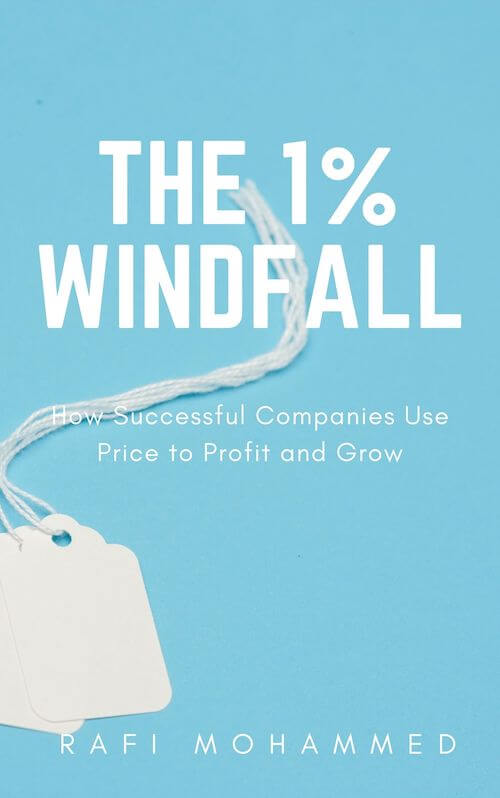
The 1% Windfall Book Summary
This The 1% Windfall Book Summary covers the key ideas, lessons, and takeaways in about 20 minutes.
Cost-plus pricing is an outdated method that can leave profits on the table. Think about the value to your customer by comparing your product to alternatives to set a price. Adjust your price up or down to maximize total profits by targeting a price that balances quantity sold with profit margins. Plan for challenging situations like a recession and offer alternatives to that accommodate resistant customers. Creative pricing strategies can lead to greater profitability.
Want the complete 20-minute summary?
- Full structured summary
- Video Summary
- Podcast Summary
- Audio summary
- Key takeaways
- Exercises
- Quiz
- Highlights and notes
- Ask the book with AI
What is in the The 1% Windfall book summary?
Below is a preview of Sumizeit’s expert-written summary of The 1% Windfall by Rafi Mohammed. The full summary covers the book’s key ideas in text, audio, and video.
If you’re not thinking about how to price strategically, your company is probably missing out on profit.
The standard advice for pricing is based on adding a profit margin to what it cost you. This cost-based pricing strategy is problematic because what you’re selling is about more than what it cost you.
Your price should be based on the value it brings to your customers. What they’re willing to pay is not based on what it cost you. Value-based pricing strategies can help you plan for different situations, and keep the profits rolling.
The 1% Windfall refers to a study from McKinsey & Company that found that imposing a 1% increase in prices can create an 11% increase in operating profits. Thinking about your prices creatively for all situations can lead to a big payout.
If you just need to think about one customer, price relative to their alternatives.
A value-based pricing strategy for one customer or one product prices according to the target customer. Specifically, you need to price relative to the next-best alternative for your customer.
This is a one-on-one pricing calculation. You identify who you want to sell to. Then, you identify what the alternative is priced at. Use your best judgment to adjust your price above or below that price.
For example, if you have a home to rent, you can compare it to the nearest neighbor also renting out their home. If your home is a little better, bigger, or has an extra feature, you can adjust upward. If the neighbor’s home has the upper hand, you can adjust downward.
Of course, you should try to get a sense of the market. Make sure you’re not tethering yourself to an outlier. Think through the comparison to the next-best alternative.
By looking at what is selling and what it’s selling for, you can introduce your product with a pricing strategy that fits the market.
If you have a broader customer base, maximize profits by finding the ideal balance between demand and margin.
A one-on-one pricing strategy may be ideal for introducing a product to a single customer or a small number of customers. But a multi-customer value-based pricing strategy is a little different.
Let’s say you produce large quantities of your goods and there’s more variability in your target customer base. Start with a general idea of the right price using the one-on-one pricing strategy you would have used for a single customer.
Then, you need to estimate how many units you can sell at that price. Your profit margin per unit multiplied by the quantity sold will be your total profit.
But that estimated price based on a single customer may not maximize your profits. When you take a small dip in profit per unit, you could sell a lot more units. The total profit may end up being higher even if the profit per unit is lower.
On the flip side, you could have a higher price with a greater profit for every unit…
Want the complete 20-minute summary?
- Full structured summary
- Video Summary
- Podcast Summary
- Audio summary
- Key takeaways
- Exercises
- Quiz
- Highlights and notes
- Ask the book with AI
Who should read The 1% Windfall?
The 1% Windfall is essential reading for business leaders, entrepreneurs, and managers who want to unlock hidden profit potential. Whether you're running a startup, managing a product line, or leading a larger organization, this book shows you how strategic pricing decisions can dramatically improve your bottom line without requiring significant operational changes.
Why does The 1% Windfall matter?
Most companies leave substantial money on the table by using outdated cost-based pricing methods that ignore customer value perception. In today's competitive market, understanding how to price strategically—and adapt pricing across different customer segments and market conditions—has become a critical competitive advantage. A simple 1% price increase can translate to an 11% boost in operating profits, making pricing strategy one of the highest-leverage decisions a business can make.
What are the key themes in The 1% Windfall?
- Value-based pricing versus cost-based pricing
- Balancing profit margins with demand and volume
- Variable pricing and product versioning strategies
- Addressing customer resistance through creative solutions
- Recession-proof pricing strategies
- Behavioral economics and customer decision-making
What are the key lessons from the The 1% Windfall book summary?
Cost-Plus Pricing Leaves Money on the Table
Basing prices solely on production costs ignores what customers actually value and are willing to pay. Value-based pricing captures the true worth of your offering to the customer.
Price Relative to the Next-Best Alternative
For single customers or small segments, set your price by comparing your offering to what competitors charge. Adjust up if you're superior, down if you're not, ensuring you stay competitive without undervaluing your product.
The Demand-Margin Trade-Off
A lower price per unit often leads to higher total profits by selling more volume, while a higher margin may reduce sales volume enough to decrease total profit. Finding the optimal price requires understanding how price changes affect customer demand.
Versioning Captures Multiple Customer Segments
By offering premium, standard, and budget versions of your product, you can serve price-sensitive and premium customers without competing solely on price. Versioning preserves the core price while capturing broader market share.
Bundling Increases Perceived Value
Combining multiple products or services into a single offering allows you to take a smaller per-unit margin while selling more overall volume and generating higher total profit.
Address the Real Reason for Customer Resistance
Customers reject purchases for different reasons—commitment concerns, budget constraints, uncertainty, or variable pricing anxiety. Tailoring your solution to the specific objection is more effective than simply lowering price.
Rental and Leasing Options Unlock Customer Value
Customers reluctant to own outright may happily rent or lease. Offering alternative ownership models lets you capture sales you'd otherwise lose while generating ongoing revenue streams.
Financing Removes Affordability Barriers
When a customer can't afford the upfront cost, financing options—especially 0% interest—can convert them into a buyer. They often end up purchasing more than originally intended once payment becomes manageable.
Guarantees and Contingency Models Build Trust
When customers doubt whether your product is worth the investment, offering a money-back guarantee or contingency-based payment structure transfers risk from the customer to you, increasing conversion rates.
Predictable Pricing Reduces Customer Anxiety
Customers uncomfortable with variable usage-based pricing respond well to flat monthly fees or membership models that offer predictability and eliminate surprise charges.
Plan Budget Product Lines Before a Recession Hits
Proactively creating a lower-price product line during good times lets you maintain sales during downturns without having to slash prices on your core offerings, which damages long-term pricing power.
Price Cuts During Recessions Create Lasting Damage
Lowering prices to stimulate sales during economic downturns trains customers to expect lower prices permanently, eroding your profitability even after the economy recovers.
Reformulate Rather Than Reduce Price During Inflation
When raw material costs rise, shrinking product size or features while keeping price constant preserves margins without the customer backlash that comes with visible price increases.
Luxury Positioning Enables Premium Pricing
Positioning your product as an elite or luxury brand allows you to maintain higher prices because customers perceive greater value, enabling higher margins with lower required sales volume.
Understand Your Demand Curve
Different customer segments have different price sensitivities. Mapping how demand changes at different price points helps you identify the sweet spot where total profit is maximized, not just per-unit margin.
The 1% Windfall Effect
Research shows that a modest 1% price increase can yield an 11% increase in operating profits, demonstrating why pricing strategy deserves executive attention and why even small improvements compound significantly.
Segment Your Market, Don't Serve Everyone at One Price
Not all customers value your product equally or have the same budget. Creating different offerings and price points for different segments captures more total profit than forcing a one-size-fits-all price.
Use Auctions When Value Is Uncertain
When both you and the customer are unsure of fair value, an auction process with open bidding quickly reveals true market value and can optimize pricing in uncertain conditions.
Licensing and Royalty Models Reduce Customer Risk
Offering a lower upfront licensing cost with ongoing royalty payments lets customers try your solution with less initial capital commitment while you capture long-term value if the relationship is successful.
Pricing Strategy Is a Core Competitive Advantage
A thoughtful, flexible pricing strategy that responds to customer segments, market conditions, and behavioral objections becomes a lasting source of competitive advantage that's harder to replicate than product features alone.
Want the complete 20-minute summary?
- Full structured summary
- Video Summary
- Podcast Summary
- Audio summary
- Key takeaways
- Exercises
- Quiz
- Highlights and notes
- Ask the book with AI
How can you apply ideas from The 1% Windfall?
- Conduct a competitive audit to identify what similar products sell for, then price your offering relative to the closest alternative in your category
- Create at least three product versions (premium, standard, budget) to serve different customer segments without eroding your core price
- Map your customer demand curve by testing different price points and analyzing conversion rates to find your profit-maximizing price
- Design a recession-proof product line during economic growth so you're not forced to slash prices when demand softens
- Offer financing, leasing, or rental options alongside ownership to convert price-resistant customers into buyers
- Use guarantees or contingency-based payment models to reduce customer uncertainty about product fit and value
- Implement versioning through product size, features, or service levels to prevent high-value customers from selecting budget options
What common mistakes do readers make with The 1% Windfall?
- Basing prices primarily on production costs rather than customer-perceived value, leaving substantial profit on the table
- Setting a single price for all customers without segmentation, missing opportunities to serve price-sensitive and premium segments simultaneously
- Slashing prices during recessions instead of offering a lower-tier product, permanently damaging pricing power even after recovery
- Assuming that the price that works for one customer or market segment is optimal for all, ignoring demand curve differences across segments
Sumizeit Exercises Apply what you've learned
Turn ideas from The 1% Windfall into action with a short guided reflection: identify the biggest takeaway, connect it to your life, and commit to one step you can take in the next 24 hours.
What is the expert analysis of The 1% Windfall?
Overview
The 1% Windfall is a seminal work by Rafi Mohammed, a distinguished pricing strategist with over 25 years of experience and an academic pedigree that includes Boston University, the London School of Economics, and Cornell University. Mohammed brings a rare combination of scholarly rigor and practical insight to the complex domain of pricing strategy. His extensive consulting background and media presence lend credibility and real-world relevance to his arguments. This book stands out in the crowded field of business literature by focusing specifically on how nuanced, value-based pricing can unlock substantial profit gains, challenging the entrenched norm of cost-plus pricing.
Core Thesis
Mohammed’s central argument is that traditional cost-based pricing is fundamentally flawed because it ignores the customer's perceived value and willingness to pay. Instead, he advocates for a value-based pricing approach that aligns prices with the alternatives available to customers and the value those customers derive. By strategically adjusting prices—even marginally, as the McKinsey study cited suggests—a company can significantly enhance its operating profits. The book further elaborates on how to tailor pricing strategies for different customer segments, product versions, and economic conditions, emphasizing flexibility and creativity as keys to maximizing profitability.
Strengths
- Practical Framework: Mohammed offers actionable strategies such as one-on-one pricing, versioning, and bundling, which are immediately applicable across industries.
- Integration of Demand and Margin: The nuanced discussion of the trade-off between unit margin and sales volume demonstrates a sophisticated understanding of market dynamics.
- Attention to Customer Psychology: The book excels in recognizing diverse customer motivations and resistance points, offering tailored solutions like financing, guarantees, and auctions.
- Contextual Awareness: The recession-proof pricing strategies and examples like C.F. Martin & Co. and Breyers ice cream showcase the author’s ability to connect theory with real-world business challenges.
- Authoritative Voice: Mohammed’s academic credentials and consulting experience underpin the book’s credibility, making it a trusted resource for executives and pricing professionals.
Critiques & Counterarguments
- Overreliance on Value Perception: While value-based pricing is compelling, the book sometimes underestimates the difficulty of accurately assessing customer value, especially in markets with heterogeneous or rapidly changing preferences.
- Limited Discussion of Competitive Dynamics: The analysis could benefit from deeper engagement with competitive responses to pricing changes, such as price wars or regulatory constraints, which can erode the anticipated windfall.
- Potential Oversimplification of Demand Curves: The treatment of demand elasticity is somewhat simplified; real-world demand curves can be non-linear and influenced by factors beyond price and perceived value, such as brand loyalty or network effects.
- Counterpoint from Behavioral Economics: Research in behavioral economics suggests that consumers do not always act rationally or value products linearly, complicating the straightforward application of value-based pricing.
- Empirical Variability: The cited McKinsey finding of an 11% profit increase from a 1% price hike may not generalize across all industries or economic contexts, especially in highly commoditized markets.
Who Should Read This
The 1% Windfall is essential reading for business leaders, pricing strategists, product managers, and consultants who seek to move beyond simplistic cost-plus pricing models and harness pricing as a strategic lever for profit maximization. It is particularly valuable for those operating in competitive markets where differentiation through pricing can yield outsized returns. Additionally, academics and students interested in the intersection of economics, marketing, and behavioral science will find Mohammed’s insights a rich foundation for understanding the complexities of pricing in practice.
Frequently asked questions about the The 1% Windfall book summary
What is The 1% Windfall about?
The 1% Windfall by Rafi Mohammed is a pricing strategy guide that explains how to shift from cost-based pricing to value-based pricing. The title refers to a McKinsey study showing that even a 1% price increase can boost operating profits by 11%, illustrating why strategic pricing decisions are so powerful. The book provides frameworks for pricing individual customers, serving multiple segments, handling customer objections, and surviving economic downturns through intelligent pricing tactics.
Who should read The 1% Windfall?
Business leaders, entrepreneurs, product managers, and anyone responsible for pricing decisions should read this book. It's particularly valuable for companies frustrated with stagnant profits or those wanting to maximize margins without cutting costs or increasing sales volume. Whether you run a startup, manage a product line, or lead a larger organization, the strategies apply across industries and business models.
What are the main takeaways from The 1% Windfall?
The main takeaways are: abandon cost-based pricing and focus on what customers value; price relative to your customer's next-best alternative; balance profit margins with sales volume to maximize total profit; use product versioning to serve multiple customer segments; offer creative payment and ownership models to overcome customer resistance; and plan recession-proof pricing strategies in advance rather than cutting prices during downturns. Together, these strategies can unlock substantial hidden profits in any business.
What is value-based pricing and how does it differ from cost-plus pricing?
Cost-plus pricing adds a profit margin to your production costs, ignoring what customers actually value. Value-based pricing sets prices based on the value your product delivers compared to customer alternatives. In The 1% Windfall, Mohammed argues that value-based pricing is superior because it captures the true worth of your offering while cost-plus pricing leaves money on the table and can price you uncompetitively if costs are unusually high or low.
How can product versioning improve profitability?
Product versioning creates premium, standard, and budget versions of your offering to serve different customer segments without discounting your core price. For example, a theme park can offer standard admission, discounted evening tickets for budget-conscious visitors, and premium VIP packages for those seeking extra value. This strategy lets you capture more total profit by serving broader market demand while preserving the integrity of your standard price.
Why is it harmful to lower prices during a recession?
Lowering prices during a recession trains customers to expect those lower prices permanently, damaging your pricing power even after the economy recovers. The 1% Windfall recommends instead creating a lower-tier product line proactively during good times, so you have a recession-ready option that doesn't require cutting prices on your core offerings and doesn't reset customer price expectations.
What creative solutions does The 1% Windfall suggest for customers who resist buying?
The book outlines multiple customer resistance types and solutions: customers hesitant about commitment can rent or lease; those facing budget constraints can use financing; those uncertain about value can receive guarantees or contingency-based pricing; those uncomfortable with variable costs can pay flat monthly fees. By diagnosing why a customer resists and offering the appropriate solution, you convert objections into sales without sacrificing margin.
How do you find the optimal price that maximizes profit?
The 1% Windfall explains that optimal price requires understanding the demand curve—how many units you'll sell at different price points. While a higher price yields higher per-unit margin, lower volume might reduce total profit. Conversely, a lower price increases volume but reduces margin per unit. The optimal price balances these factors to maximize total profit, which requires estimating how your target customers respond to different prices.
About Sumizeit
Sumizeit is a profitable Scomy LLC company based in Miami, Florida. It has been helping readers learn from nonfiction books for 7 years with expert-written summaries in text, audio, podcast, and video.
Want the complete 20-minute summary?
- Full structured summary
- Video Summary
- Podcast Summary
- Audio summary
- Key takeaways
- Exercises
- Quiz
- Highlights and notes
- Ask the book with AI
Here's why readers love Sumizeit
Join thousands of learners getting smarter every day
"Great experience. Detailed summaries. Loved the gamification feature. Makes learning fun. Good customer service. I recommend Sumizeit to anyone. You'll learn a lot."
"I always felt busy but still wanting to keep up with the book discussion in my friend group. This was a great supplement to help me keep reading the books I find fun while keeping up with important books."
"I love this website. Instead of scrolling social media, I find myself learning a lot. I use it everyday. I recommend this app for anyone who is too busy and wants to get up to speed with their favorite books."
The 1% Windfall Book Summary PDF
Looking for a The 1% Windfall Book Summary PDF you can save and revisit offline? Our The 1% Windfall Book Summary PDF captures the book’s core ideas in a clean, printable format — the key frameworks, takeaways, and structure without the fluff. Download the The 1% Windfall Book Summary PDF when you want a reference you can annotate, share with your team, or review on the go. Get your The 1% Windfall Book Summary PDF from the download page below.
Download The 1% Windfall Book Summary PDFPeople also liked these summaries
Readers who explored The 1% Windfall often enjoyed these titles next.

Want the complete 20-minute summary?
- Full structured summary
- Video Summary
- Podcast Summary
- Audio summary
- Key takeaways
- Exercises
- Quiz
- Highlights and notes
- Ask the book with AI
Featured Book Titles
Popular Book Summaries at sumizeit, leading book summary app