

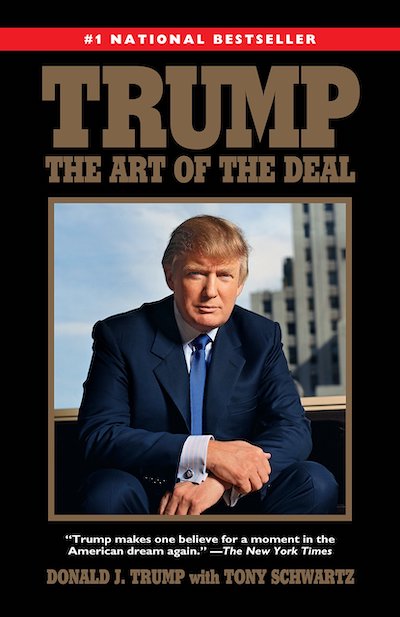
The Art of the Deal blends Donald Trump’s personal story with his business philosophy, showing how bold thinking, persistence, and strategic negotiation built his real estate empire.
Trump argues that success comes from thinking big, negotiating from strength, and using publicity to your advantage. He shares lessons from landmark deals like transforming the failing Commodore Hotel into the Grand Hyatt and developing Trump Tower into a global symbol of luxury.
He emphasizes staying calm under pressure, turning setbacks into opportunities, and always protecting one’s reputation. Above all, Trump insists that business is an art — a creative game that rewards vision, confidence, and relentless drive.
In his words, “I don’t do it for the money. I do it to do it.”
Helps with these goals
As an Amazon Associate, Sumizeit earns from qualifying purchases.
Why Read This Book
The Art of the Deal remains one of the most influential business books of the 20th century. It offers:
A firsthand look into the mind of one of the most polarizing entrepreneurs in history.
Timeless lessons on negotiation, resilience, and branding.
Real-world examples of deals that built modern Manhattan.
A blueprint for anyone who wants to think bigger, negotiate smarter, and build their legacy.
Whether you admire or critique him, Trump’s story is a rare look at how boldness, persistence, and showmanship can redefine success.
Donald J. Trump’s The Art of the Deal is both a memoir and a masterclass in ambition, negotiation, and the psychology of success.
Before the fame of The Apprentice or the presidency, Trump was a relentless real estate visionary who turned declining properties into landmarks and skepticism into billion-dollar success. The book chronicles his rise from a young developer in Queens to one of the most recognizable names in business — revealing not just what he did, but how he thinks.
Across his stories, Trump’s lessons are simple yet profound: think big, negotiate smart, use leverage, embrace publicity, and never stop pushing until you win.
“If you’re going to be thinking anyway, you might as well think big.” — Donald Trump
Trump’s philosophy begins with bold thinking. He believes most people fail not because they lack talent, but because they aim too low. Growing up in Queens, he watched his father, Fred Trump, build affordable housing for middle-income families. Fred was disciplined and frugal — traits that Donald absorbed — but Donald also wanted glamour, scale, and fame. He dreamed not of modest apartment buildings, but of skyscrapers with his name on them.
At just 27 years old, Trump took on his first Manhattan project, the Commodore Hotel. The hotel was nearly bankrupt, but Trump saw opportunity where others saw decay. By securing financing, a tax break from the city, and a partnership with Hyatt, he transformed it into the Grand Hyatt New York, a dazzling success that revived the neighborhood around Grand Central Station.
This project proved his point: when you dream big and back it with action, even the impossible can become profitable.
“The worst thing you can possibly do in a deal is seem desperate to make it.” — Donald Trump
Trump’s view of negotiation is both psychological and strategic.
He believes the best deals come from leverage, not luck — having something the other party wants, and projecting confidence whether you have it or not.
He illustrates this with the Trump Tower deal. The site on Fifth Avenue was owned by multiple parties: one company owned the land, Tiffany & Co. owned the air rights, and the city controlled the zoning. Most developers would have given up. Trump, however, found creative leverage points:
He convinced Tiffany that selling him the air rights would increase their prestige by having a luxury tower next door.
He persuaded the landowners to become equity partners instead of landlords, offering them higher returns in the long run.
He offered Bonwit Teller, the existing department store, retail space in his new building to win zoning approval.
By reframing every obstacle as mutual benefit, he secured one of Manhattan’s most valuable pieces of real estate. Trump Tower became not just a skyscraper but a global brand — proof that smart leverage turns negotiation into art.
“I play to people’s fantasies… People want to believe that something is the biggest, the greatest, the most spectacular.” — Donald Trump
Long before “personal branding” was a business buzzword, Trump was its pioneer.
He understood that name recognition is currency — and built “Trump” into a symbol of luxury and confidence.
Even before his company had major holdings, he started calling it The Trump Organization, a move designed to sound large and established. He placed his name on every property — Trump Tower, Trump Plaza, Trump Castle — transforming it into a signature of prestige.
Trump also mastered media manipulation. He cultivated relationships with reporters and often leaked stories about upcoming projects, even before they broke ground. Controversy never scared him — it fueled curiosity.
As he famously said, “Good publicity is preferable to bad, but bad publicity is sometimes better than none.”
By keeping his name in the headlines, Trump created a feedback loop: attention brought investors, investors brought projects, and projects brought more attention.
Trump’s real estate strategy rests on one simple truth: value can be created through perception and improvement.
He doesn’t overpay for perfection — he buys distressed assets with potential and turns them into something people desire.
His first major investment was Swifton Village in Cincinnati, a foreclosed apartment complex that was half empty and poorly managed.
Trump and his father bought it for just $6 million (half its original cost), invested $800,000 in aesthetic improvements — painting hallways, landscaping, replacing doors and shutters — and raised rents to attract better tenants. Within a year, the complex had zero vacancies.
When the neighborhood began to decline, Trump sold Swifton for $12 million, doubling his money.
The principle was clear: buy good and make it better.
Trump repeated this approach with the Commodore Hotel, turning decay into grandeur, and later with the Wollman Ice Rink in Central Park, where he completed a project the city had failed to finish in six years — in just four months and $750,000 under budget.
“If you can handle the worst, the good will take care of itself.”
Trump always enters deals expecting setbacks. His philosophy is to plan for the downside first. If you can survive the worst-case scenario, every other outcome is a win.
During his Atlantic City casino venture, most developers began construction while waiting for gaming licenses — risking millions if their applications were delayed. Trump waited for approval before building, paying extra carrying costs in the short term but saving millions in potential losses.
This cautious aggressiveness — bold yet calculated — became a signature of his strategy.
Adaptability separates amateurs from professionals.
Trump’s success isn’t a string of perfect decisions — it’s a string of quick recoveries.
When his plan to build middle-income housing in Manhattan collapsed after the city lost its housing subsidies, he switched strategies and proposed a convention center on the same site.
When tenant protests derailed his luxury condo project near Central Park, he changed designs, kept the hotel portion, and still made a profit.
When the economy slumped, he paused projects instead of forcing bad timing.
Even his foray into sports — purchasing the New Jersey Generals football team in the struggling USFL — taught him resilience. Though the league ultimately failed, he learned how competition, media power, and timing could make or break an enterprise. Every loss, he says, carried lessons for his next win.
“If you want something done right, pick the right people and stay close to the action.”
Trump prizes loyalty above all else. He believes betrayal costs more than incompetence. His organization is small and tightly run, allowing him to maintain direct control over decisions while giving trusted lieutenants room to operate.
He expects team members to share his intensity, but he also rewards performance. Bonuses, public praise, and high expectations keep his employees motivated. At the same time, he stays involved in the details — from marble finishes to marketing copy — because “the details are what make the dream real.”
Trump’s management style mirrors his deal-making: bold vision combined with microscopic attention.
Trump embraces risk, but never blindly. He studies every scenario, runs numbers, and trusts instinct when logic alone isn’t enough.
He calls it controlled boldness — being unafraid to move, but never gambling recklessly.
When buying the Hilton casino in Atlantic City, Trump acted swiftly after Hilton lost its gaming license just 12 weeks before opening. He purchased the property for $320 million, renamed it Trump Castle, and turned a near-disaster into a profitable enterprise.
The Trump Castle grossed $226 million in its first year.
His rule: always know your exit. Even when betting big, he ensures multiple fallback options. That combination of nerve and foresight allows him to take opportunities others fear.
“I aim very high, and then I just keep pushing and pushing and pushing to get what I’m after.”
Trump’s persistence is legendary. He sees rejection as negotiation, not defeat.
When New York City refused his offer to fix the crumbling Wollman Ice Rink, he kept applying pressure through the media until the city relented.
He then completed the six-year project in less than half a year — under budget — making the city look incompetent and cementing his own reputation as a man who gets things done.
He also understands timing — knowing when to persist and when to pause. For example, when he failed to get zoning approval for his West Side Rail Yards project, he held onto the property rather than forcing the issue, confident that time would turn the tide.
Persistence, he insists, is not stubbornness — it’s strategic endurance.
Trump treats the media as a business tool.
He recognizes that people are drawn to spectacle, and that attention itself can create value.
He calls his style “truthful hyperbole” — exaggeration that sparks interest without straying into lies. Whether unveiling a new tower or sparring with critics, Trump ensures his name dominates the conversation.
For instance, during the backlash over Trump Tower’s design, critics accused him of arrogance and vanity. Instead of retreating, Trump capitalized on the controversy — and sales of luxury apartments surged. The publicity had turned curiosity into profit.
He understands that in business, being talked about is better than being ignored.
“If you ever catch someone stealing, go after him hard, even if it costs you ten times more than he stole.”
Trump portrays himself as ruthless in defense of his reputation.
He argues that success attracts envy — and that the only way to deter exploitation is to enforce consequences. If someone cheats or underdelivers, he makes sure everyone knows. It’s not revenge, he says — it’s business deterrence.
He also emphasizes fulfilling promises. Whether paying contractors, meeting deadlines, or delivering quality, credibility compounds over time. A single broken promise can undo years of progress.
Integrity, to Trump, is both moral and strategic — the foundation of future leverage.
Despite his fierce ambition, Trump insists that the true reward is not money — it’s the game.
He thrives on the creative energy of deal-making, the challenge of outmaneuvering competitors, and the thrill of watching a skyscraper rise from blueprints.
He compares business to art — fluid, improvisational, and deeply personal.
“I don’t do it for the money,” he writes. “I do it to do it.” The deals, the projects, the negotiations — they’re the fuel that keeps him alive.
Think big and never apologize for ambition.
Negotiate from strength, not need.
Build a powerful brand — perception shapes reality.
Buy undervalued assets and transform them.
Prepare for setbacks and plan for multiple outcomes.
Surround yourself with loyalty and competence.
Take bold but calculated risks.
Be relentlessly persistent.
Master publicity and control your narrative.
Protect integrity and enforce accountability.
Love the process — success is the art itself.
Donald J. Trump is an American businessman, television personality, and political figure best known for his work in real estate and his tenure as the 45th President of the United States. Born in 1946 in Queens, New York, he was influenced early on by his father, Fred Trump, a successful property developer. After graduating from the Wharton School of Finance at the University of Pennsylvania, Trump joined his father’s company and later renamed it The Trump Organization, expanding its focus from residential projects in Brooklyn and Queens to large-scale developments in Manhattan.
Throughout his career, Trump built a brand synonymous with luxury, power, and ambition. His notable projects include Trump Tower, the Grand Hyatt New York, and several high-profile resorts and golf courses around the world. Beyond real estate, he became a global celebrity as the host of the hit TV show The Apprentice, famous for his catchphrase, “You’re fired.”
In 2016, Trump transitioned from business to politics, winning the U.S. presidency as a Republican candidate. His leadership style, communication, and policies sparked both strong support and intense controversy, making him one of the most polarizing figures in modern history.
Despite his critics, Trump remains a defining example of confidence, branding, and perseverance — traits that continue to shape his legacy in business and beyond.
Looking for a Trump: The Art of the Deal Book Summary PDF you can save and revisit offline? Our Trump: The Art of the Deal Book Summary PDF captures the book’s core ideas in a clean, printable format — the key frameworks, takeaways, and structure without the fluff. Download the Trump: The Art of the Deal Book Summary PDF when you want a reference you can annotate, share with your team, or review on the go. Get your Trump: The Art of the Deal Book Summary PDF from the download page below.
Download Trump: The Art of the Deal Book Summary PDFGet full access to 2,500+ book summaries with audio and video
Start Free Trial →
